Category Archives: Bishops

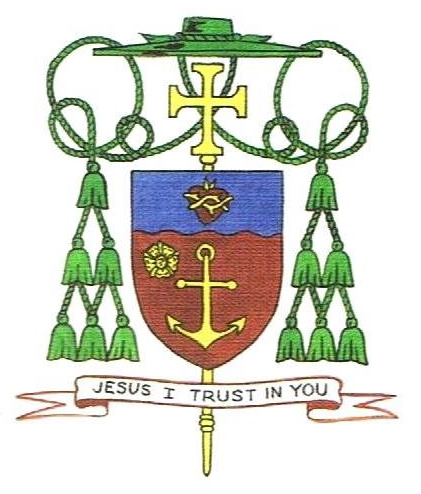
Bishop Cheri

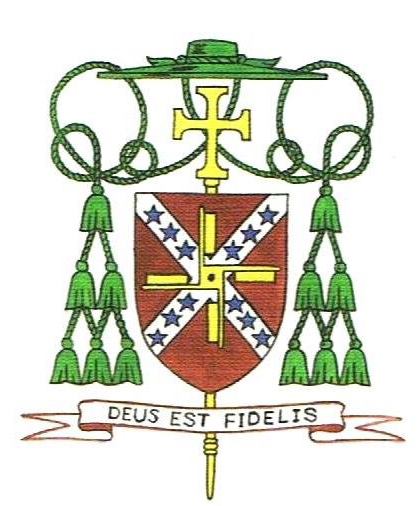
Bishop Cheri Coat of Arms

Today Bishop Fernand Cheri, OFM was ordained as the auxiliary bishop of New Orleans, Louisiana. His coat of arms has so many things about it that go against accepted heraldic practices, to say nothing of good taste, that I won’t even begin to comment on it.

Except to say no…just…no.

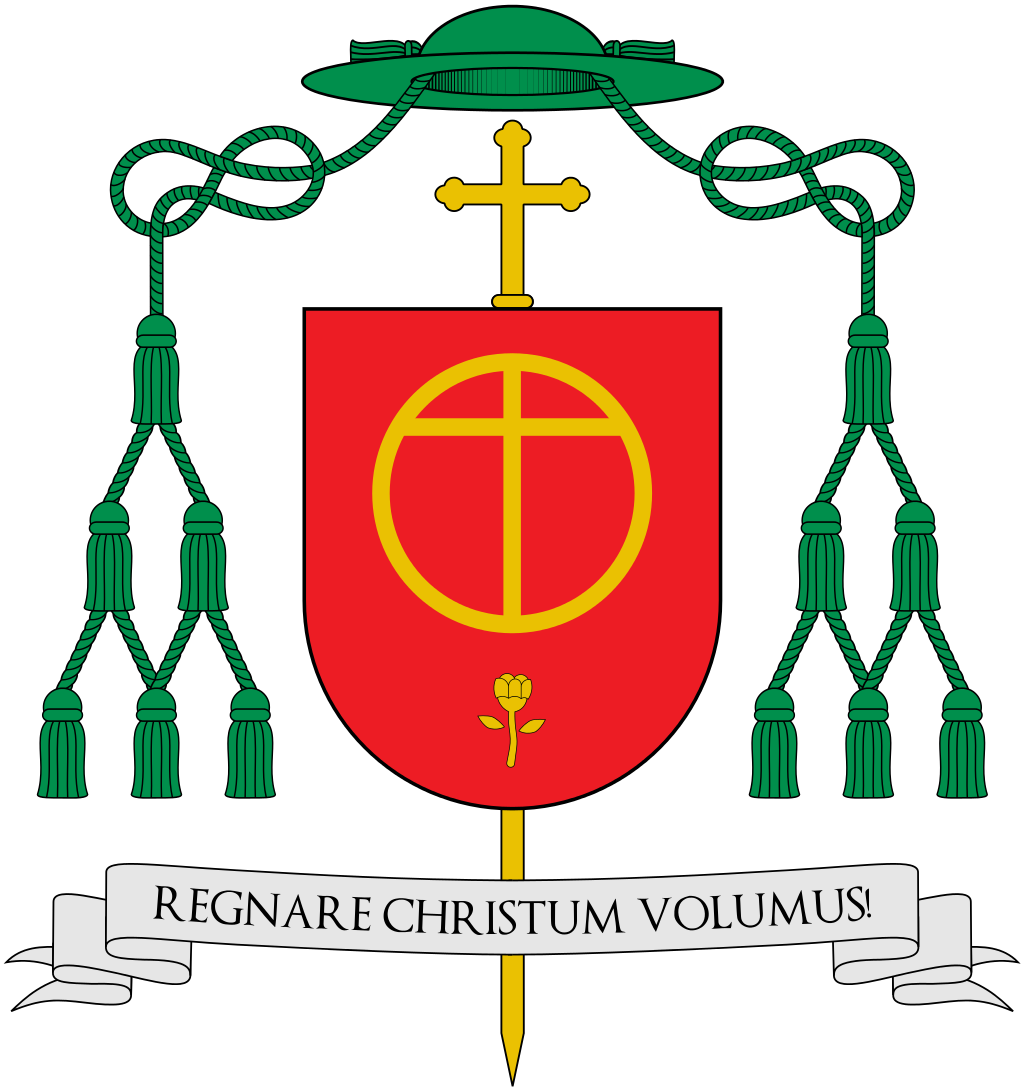
Bishop Hanefeldt of Grand Island, Nebraska

On March 19 the Most Rev. Joseph Hanefeldt, a priest of the archdiocese of Omaha was ordained and installed as the 8th bishop of Grand Island, Nebraska. His personal arms (below) allude to his devotion to Our Lady and to St. Joseph. These will alternately be displayed impaled with those of the diocese as well.

hanefeldt_simple


Faenza-Modigliana

Stemma Toso

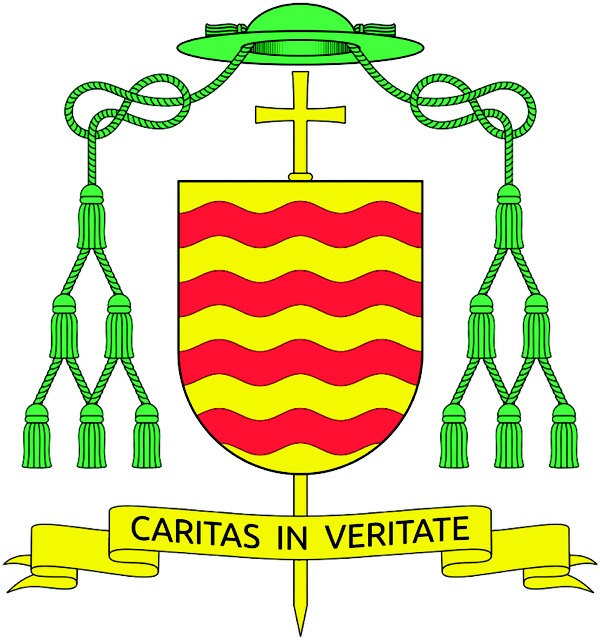
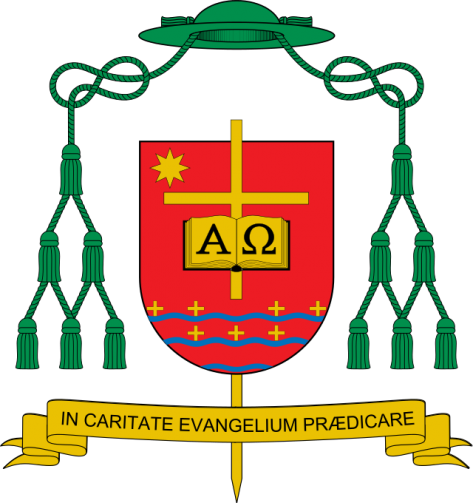
On March 15 the Most Rev. Mario Toso, SDB will be installed as the bishop of Faenza-Modigliana, Italy. His very attractive coat of arms makes reference to the motto he has chosen. The motto, “Caritas in Veritate” is taken from the first line of the encyclical of Pope Benedict XVI. The red wavy bars on the shield represent love and the gold background the splendor of the truth. Thus, the arms illustrate the motto, “Love in Truth”.

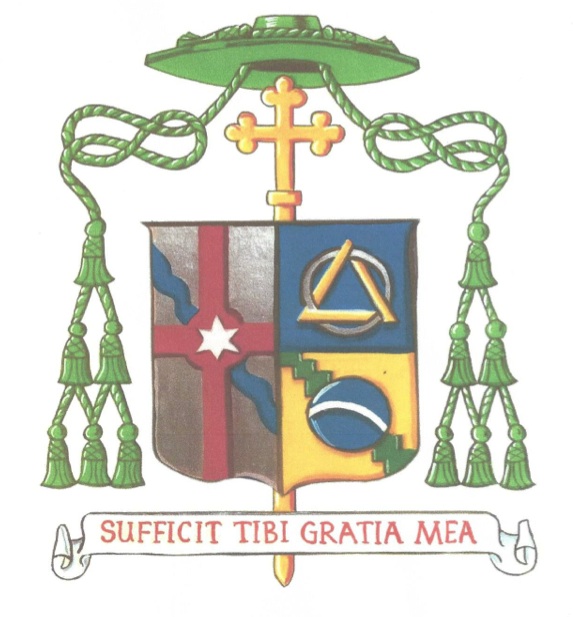
Bishop Garcia

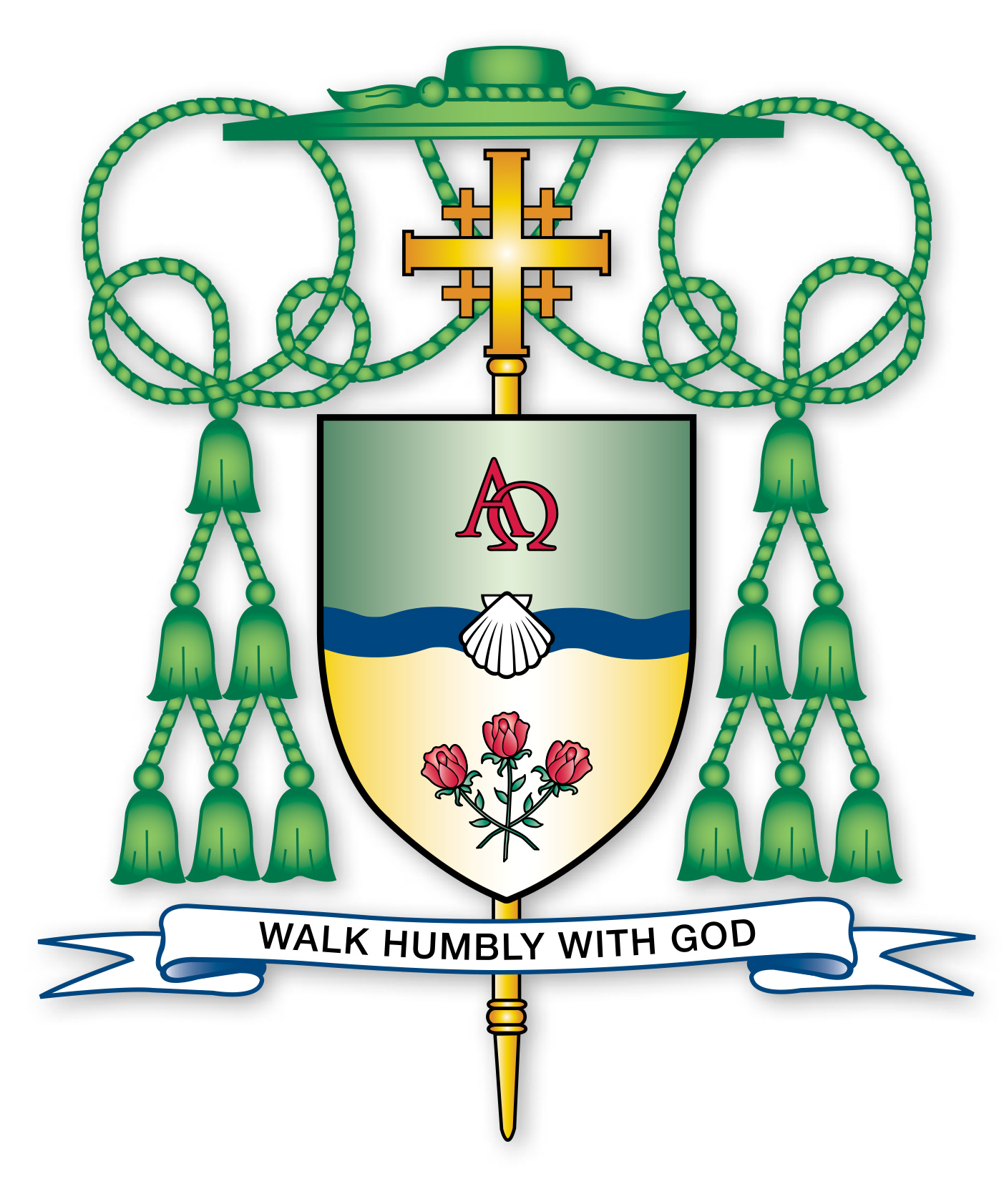
On March 3, the Most Rev. Daniel Elias Garcia was ordained as Titular Bishop of Capsus and Auxiliary Bishop of Austin, Texas. His adopted coat of arms (below) depicts his devotion to Our Lady (the roses), baptism (the shell), the Colorado River and Christ who is the First and the Last.

Dividing the field into two colors (green and gold) by a blue line isn’t really the best design choice. It would have been better if the whole field were gold. In addition, the description of the arms from the ordination program describes the “processional cross” as being in the form of a Jerusalem cross for apparently no reason. First of all it is not a processional cross. The external ornament in a bishop’s coat of arms more than any other that marks it as the coat of arms of a bishop (even more than a mitre or a galero) is the episcopal cross that stands vertically behind the shield. This type of cross, which resembles a processional cross, used to be carried directly in front of a bishop. Like the galero, also no longer in use, such episcopal crosses are no longer used but are retained as not only one of but actually as THE ensign of the coat of arms of a bishop. The galero is optional; the cross isn’t.

Second, it is not permitted to mandate that an external ornament like the episcopal cross, be depicted in a certain shape or style. The blazon concerns itself only with what is on the shield. That may indeed be mandated to be depicted in a particular way. No other artist is bound to depict the episcopal cross of Bp. Garcia’s arms as a Jerusalem cross. It may be his preference but it is not one to which others must adhere.

BishopGarciaBlazon

Bishop O’Regan of Sale, Australia

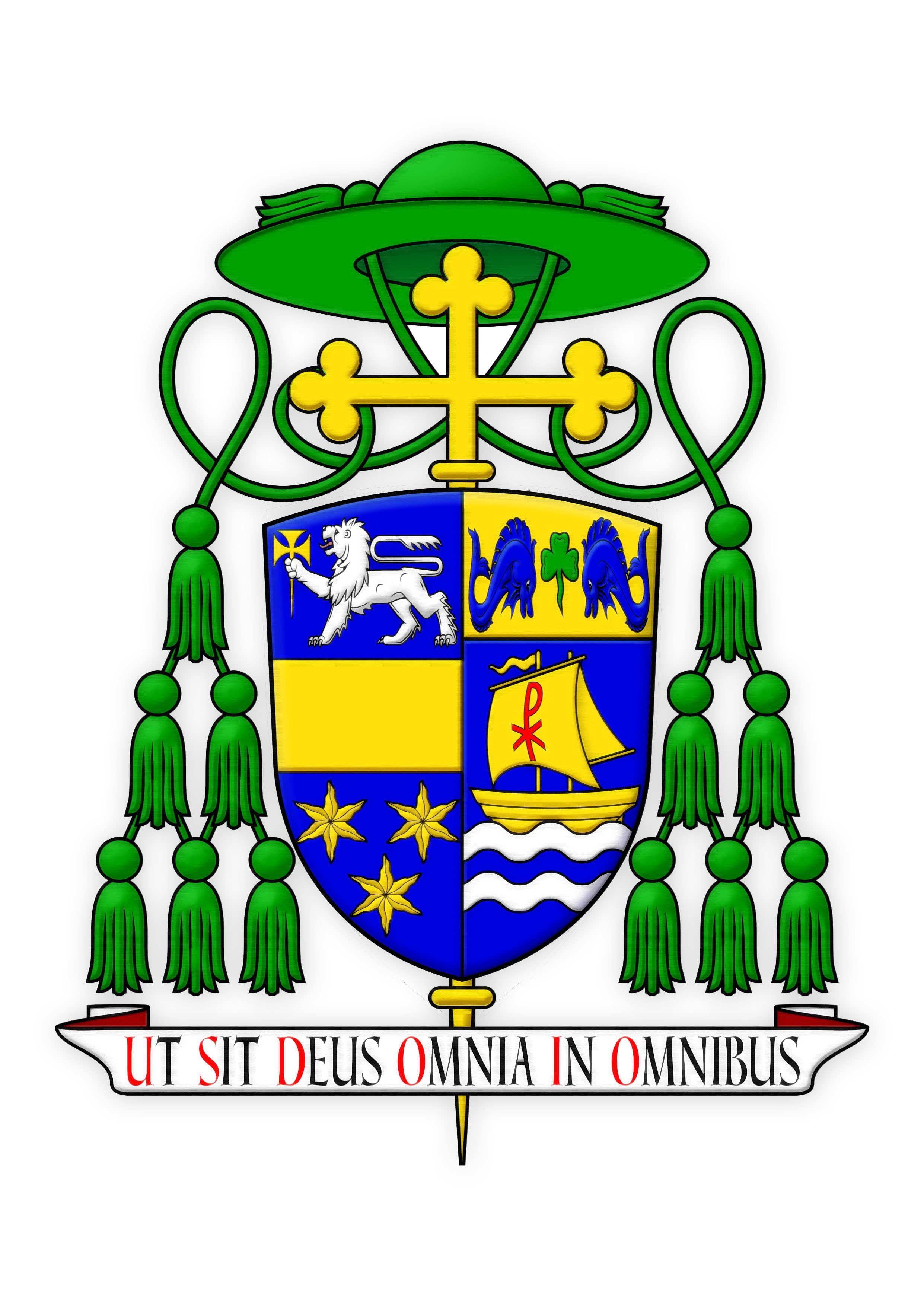
On February 26 Patrick M. O’Regan will be ordained and installed as the IX bishop of Sale, Victoria, Australia. The ship at sea is a reference to the diocese of Bathurst where the bishop previously served as a priest. In chief are charges that allude to St. patrick and to the arms traditionally associated with families of the name O’Regan or Regan. The arms were designed by me and Mr. Richard d’Apice and rendered by Mr. Sandy Turnbull.

Image 1

Bishop Christopher Coyne of Burlington, Vermont

Coat-of-Arms

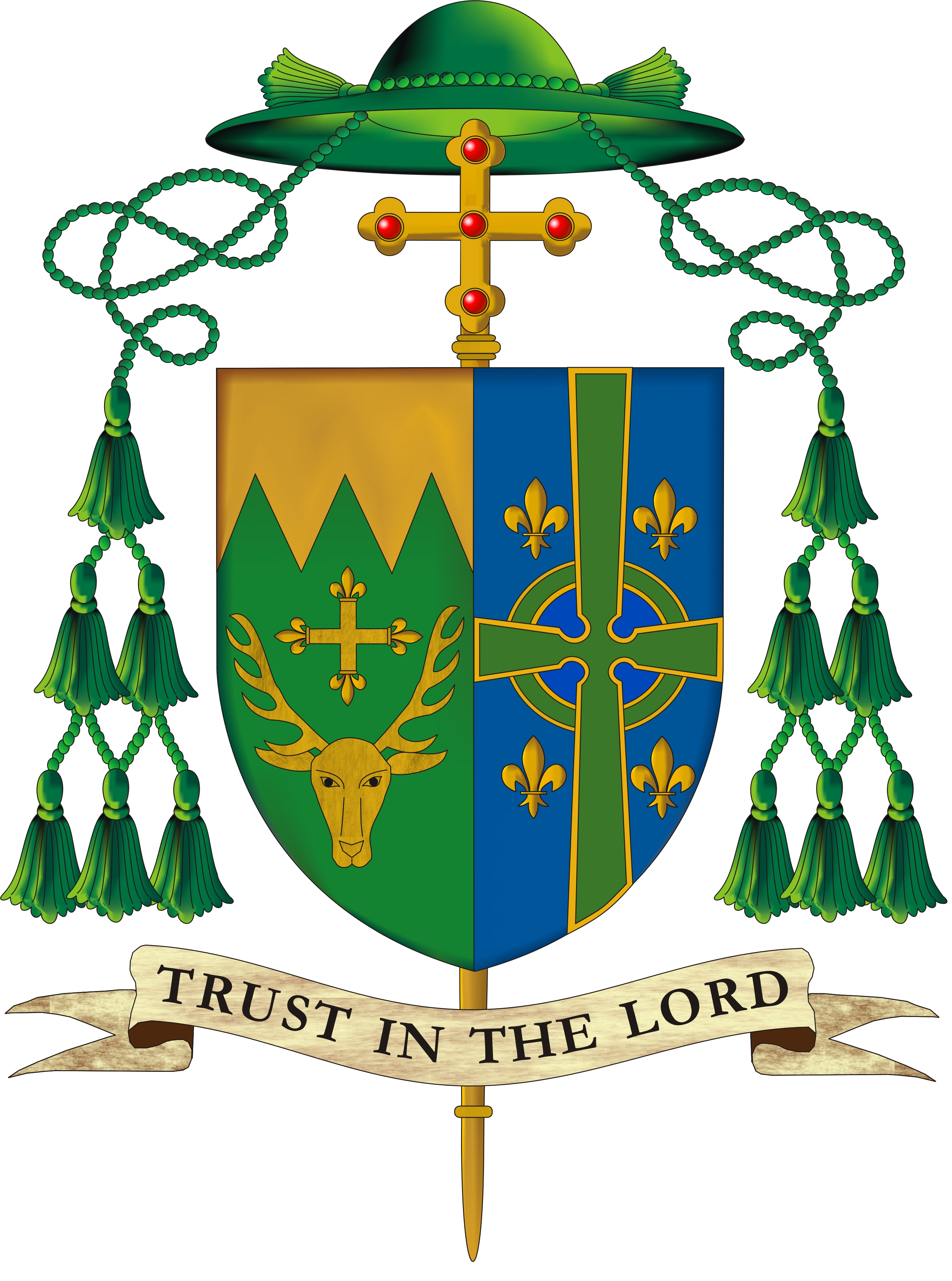
On January 29 Bishop Christopher Coyne, until now Auxiliary Bishop of Indianapolis and before that a priest of the Archdiocese of Boston, will be installed as the 10th Bishop of Burlington, Vermont.

The dexter side of the shield (to the viewer’s left), represents the coat of arms of the Diocese of Burlington and is composed of a green field, which meets a gold chief (upper one-third of the design) at a jagged line, called “dancetty,” to give the impression of green mountain peaks, thus honoring the Green Mountain State of Vermont. Below the mountain is a golden stag’s head that is taken from the arms of Lord Cavendish, Earl of Burlington, for whom the See City is named. Between the stag’s antlers, as seen in the arms of the Archdiocese of Boston, is a golden cross fleuretty. This cross, honoring the French missionaries who first brought The Faith to the region, signifies that the first priest to be stationed in the service of the people of Vermont, Father Jeremiah O’Callaghan, was sent by Boston Bishop Benedict Fenwick.

The sinister side (to the viewers right) ‘s occupied by the personal heraldry of Bishop Coyne; upon a blue (azure) field is Bishop Coyne’s coat of arms which blends images representing his love for God, family genealogy and ministry history in the Archdiocese of Boston.

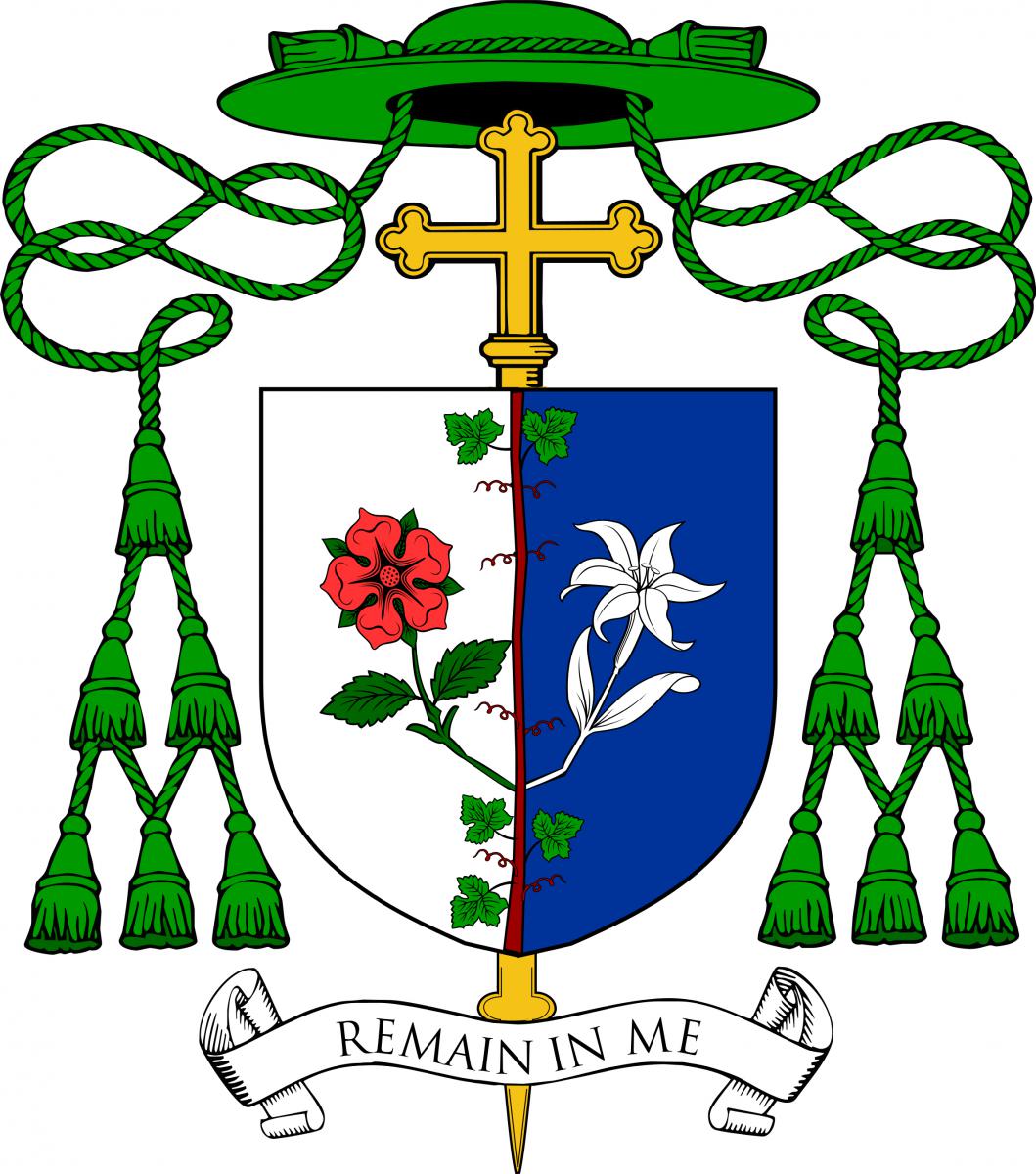
Bishop Coyne’s grandfathers were Irish and his grandmothers were French. The coat of arms reflects those two heritages with the Celtic cross and the fleur de lis. The Celtic cross also calls to mind the centrality of the cross in the history of salvation and the sacrifice of Jesus which brings redemption. The fleur de lis also represent Mary, the Mother of our Savior, and Saint Joseph, her most chaste spouse. Finally, the blue (azure) field also calls to mind Mary, the Immaculate Conception, under whose patronage the Diocese of Burlington has been placed.

Not Louisiana, Paris, France, New York or Rome! But Gary, Indiana, Gary, Indiana, Gary, Indiana; My Home Sweet Home.

123014

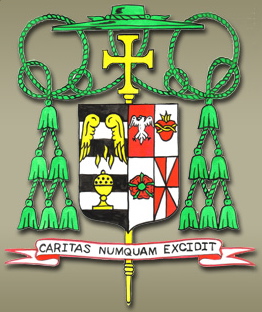
On January 6, 2015 the Most Rev. Donald J. Hying, a priest of the Archdiocese of Milwaukee, former Rector of the seminary there and, since 2011, Auxiliary Bishop of Milwaukee will be installed as the IV Bishop of the diocese of Gary, Indiana.

The Bishop’s coat of arms (above) depicting the arms of the See (dexter) which allude to the titular patron of the cathedral of the Holy Angels and his personal arms (sinister) which allude, in part, to the arms of the See of Milwaukee.

The motto translates to “Love never fails”. (1 Cor: 13)

(artwork by Paul Sullivan)

Bishop Mark Edwards, OMI

Image 1

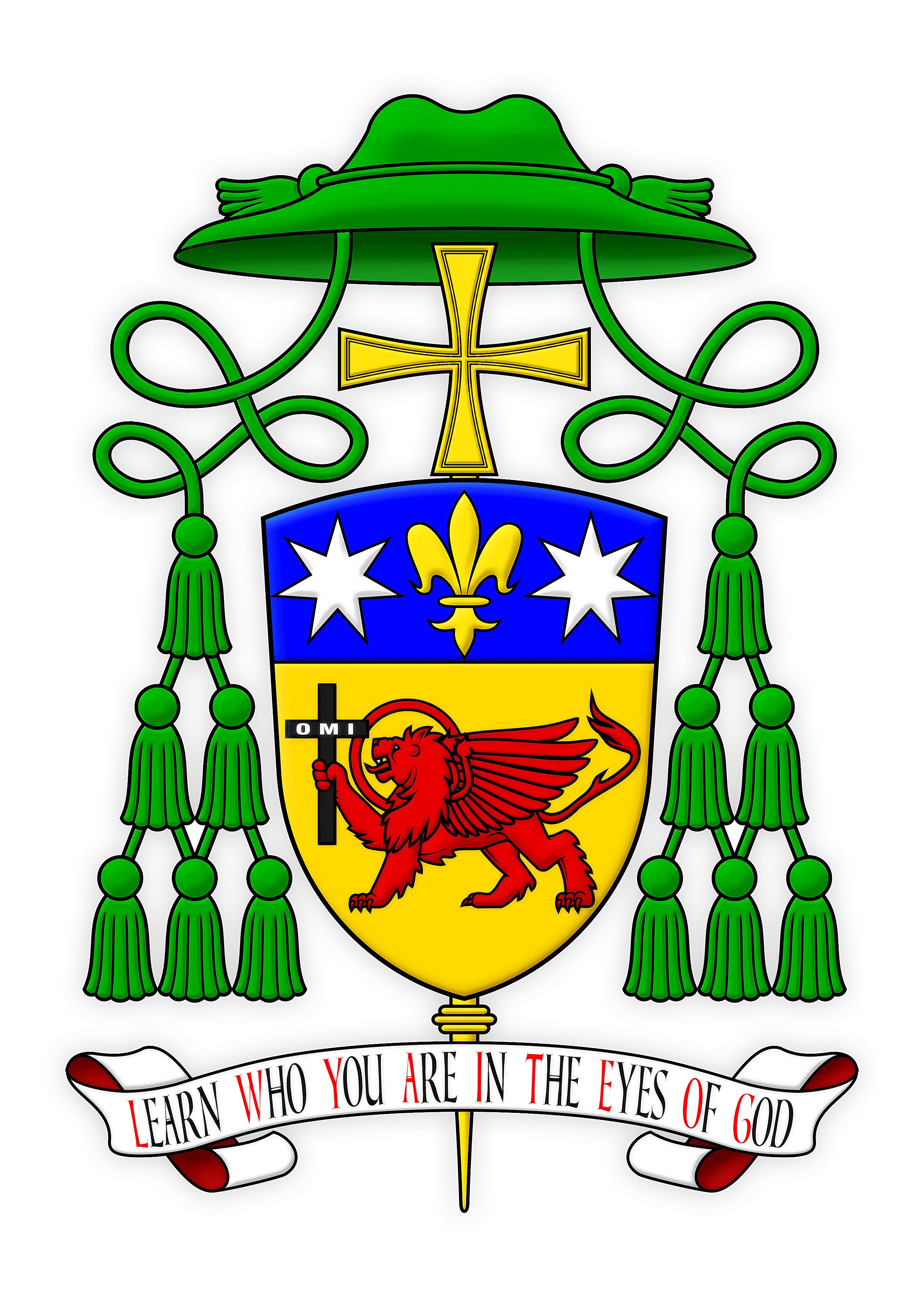
On December 17 Mark Stuart edwards, OMI will be ordained (along with Terence Curtin) as auxiliary bishop of Melbourne, Australia. Bishop Edwards is also the Titular Bishop of Garba.

His newly assumed arms (above) reflect his baptismal patron, St. Mark, as well as the Oblates of Mary Immaculate, the Religious community to which he belongs. In addition, Our Lady and Australia are alluded to on the chief.

These arms were designed by me and Mr. Richard d’Apice of the Australian Heraldry Society and emblazoned by Sandy Turnbull also of the Australian Heraldry Society.

Bishop Comensoli of Broken Bay, Australia

Image 11

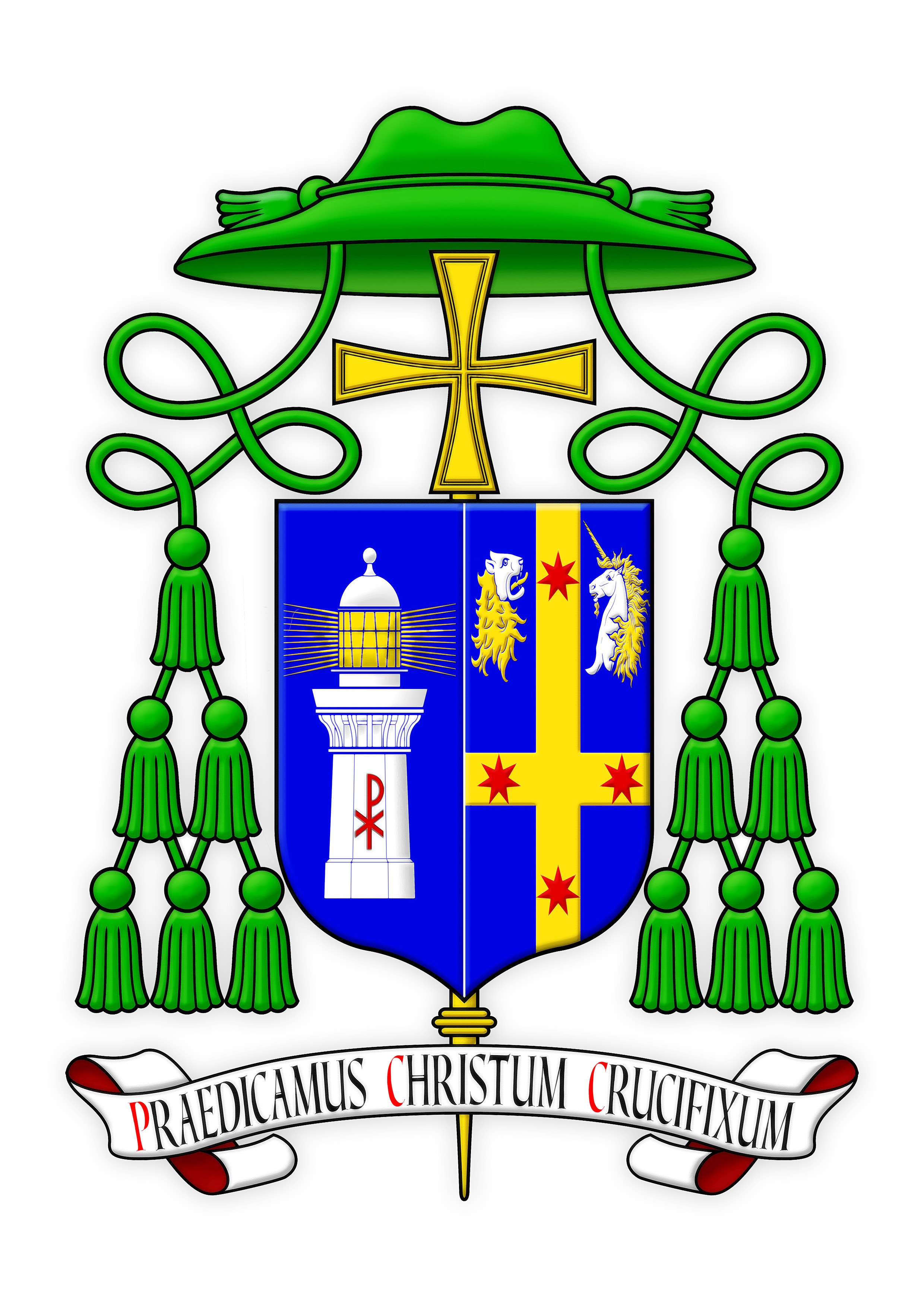
The Broken Bay diocesan Arms display a lighthouse spreading the light of the gospel over the diocese. The detail echoes the detail of the Barrenjoey lighthouse which unites the two main land masses that comprise the regions of the diocese.

The arms and motto which Bishop Comensoli adopted at the time he was named Auxiliary Bishop of Sydney in 2011 are of a personal character and are blazoned: Azure, on a Latin cross inverted Or four seven-pointed mullets (or Commonwealth stars) Gules, in the first quarter a lion’s head erased Argent crined and langued Or and in the second a unicorn’s head erased Argent crined and armed Or respectant.

In layman’s terms, the arms may be described as: On a blue field, a gold cross inverted with a red seven-pointed (or Commonwealth) star at each extremity, in the upper left quarter, a silver lion’s head erased at the neck with gold mane and tongue and in the upper right quarter a silver unicorn’s head erased at the neck with gold mane and horn. The motto ‘Praedicamus Christum Crucifixum’ is a quotation from the Apostle Paul’s first epistle to the Corinthians (1Cor1.23), and can be translated as ‘We preach Christ crucified’.

The inverted Latin Cross symbolises the Bishop’s nominal patron, the Apostle Peter and the stars reflect the Southern Cross, which shines out over the Great South Land of the Holy Spirit. The lion and the unicorn respectively symbolise the mind and the heart of love. The meaning of these symbols, while of medieval provenance, is especially associated with the seminal work on Christian love by the English Jesuit, Martin C D’Arcy SJ, “The Mind and Heart of Love: Lion and Unicorn: A Study in Eros and Agape”. Bishop Comensoli will be installed as the Third Bishop of Broken Bay on Dec. 12.

The personal arms were designed by me and Mr. Richard d’Apice of the Australian Heraldry Society and originally emblazoned as well as marshaled with the arms of the diocese and emblazoned again by Mr. Sandy Turnbull also of the Australian Heraldry Society.

Another Example of What NOT To Do

herb_bp._jana_piotrowskiego.svg_

Above is the coat of arms of Jan Piotrowski who will be installed on November 29 as the Bishop of Kielce, Poland. The bishop’s arms contain perfectly good charges and are arranged nicely with good composition with one exception. The episcopal cross (often mistakenly thought of as a processional cross) which is the one external ornament that indicates the arms belong to a bishop, since other prelates may use the green galero with 12 tassels, is depicted as passing in front of the shield and piercing it with the bottom of the cross protruding from behind the shield. It is as if the cross is depicted as both a charge on the field and an external ornament at the same time. This is most incorrect. Charges must never extend beyond the edges of the shield; external ornaments should not be placed in a position to obscure any of the shield; objects cannot be depicted as piercing the shield; external ornaments are to be just that: external to the shield. I’m sure the person who designed this and/or depicted it thought he was being very clever and innovative. Instead, it’s just wrong. EPIC FAIL.

And Still More Noble Cardinals

Since these have been so well received I thought I would share some more of my favorites from among those Cardinals of the Holy Roman Church who were from well known armigerous and noble aristocratic families.

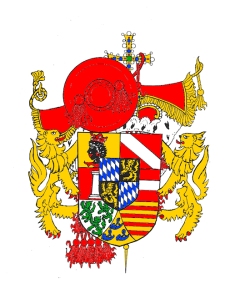
First we see the arms of Johann Theodor Cardinal Wittelsbach von Bayern, Cardinal Priest of S. Lorenzo in Panisperna. He was created cardinal “in pectore” in 1743 and proclaimed in 1746. He was also Prince-Bishop of Liège, Friesing & Regensburg. The arms are:

Quarterly of six; 1 (Friesing) Or a moor’s head Sable couped at the neck crowned and collared Gules, 2 (Regensburg) Gules a bend Argent, 3 to 6  (Liège) Gules a column Argent, Gules a fess Argent, Argent three lions rampant vert, Barry Or and Gules a point in point Or three hunting horns Azure; Overall on an escutcheon Bavaria (fussily in bend Argent and Azure) quartering Palatinate (Sable a lion rampant Or). The supporters are two lions Or.
sc01ad6190a

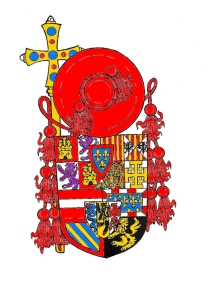
Next are the arms of Luis Antonio Jaime de Borbón y Farnesio, de Baviera y d’Este who was born the youngest son of King Philip V, King of Spain, and his second wife, Elizabeth Farnese. While barely eight years of age, Luis was created 699th Knight of the Order of the Golden Fleece in 1735 and ordained Archbishop of Toledo and Primate of Spain on 9 September 1735, and subsequently named Cardinal Deacon of the Title of the church of Santa Maria della Scala in Rome on 19 December. On 18 December 1754 he abandoned the ecclesiastical life for lack of vocation, renounced his ecclesiastical titles and dignities and assumed the title of 13th Conde de Chinchón granted by his brother Infante Felipe.

When his older half-brother King Ferdinand VI died without issue in 1759, Luis claimed the throne on the grounds that, he was the only surviving son of Philip V who was born in Spain, and the only one still residing in Spain (his older brothers were Charles, King of Naples and Sicily, and Philip, Duke of Parma, both reigning in Italy). However valid his claim, Luis lost the succession to his oldest brother Charles, while Charles’ third son became Ferdinand I of the Two Sicilies.

The arms are: Quarterly 1: (Castile) Gules a triple towered castle Or quartering (Leon) Argent a lion rampant Purpure; 2: (Argaon) Or five pallets Gules impaling (Sicily) Per saltire Aragon and Argent two eagles in fess displayed Sable; a point in point between the two quarters of (Granada) Argent a pomegranate Proper; 3: Per fess (Austria) Gules a fess Argent and (Burgundy  ancient) bendy Or and Azure, a border Gules; 4: Per fess (Burgundy modern) Azure, semeé de lis Or, a border compony Argent and Gules and (Brabant) Sable a lion rampant Or; two inescutcheon in pale the first (Bourbon) Azure three fleurs-de-lis Or, a bordure Gules; the second tierces in pale (Visconti) Argent a viper vorant Azure crowned Or and devouring a child Gules; (Flanders) Or a lion rampant Sable membered Gules, And (Tyrol) Argent, an eagle displayed Gules.
sc01ad84d4a

This cardinal, because of his failed claim to the throne, could also be numbered among the “royal” cardinals as well.

(artwork by the late Michael McCarthy)
New Eparch of Parma, Ohio

Coat_of_arms_of_Bohdan_Danylo

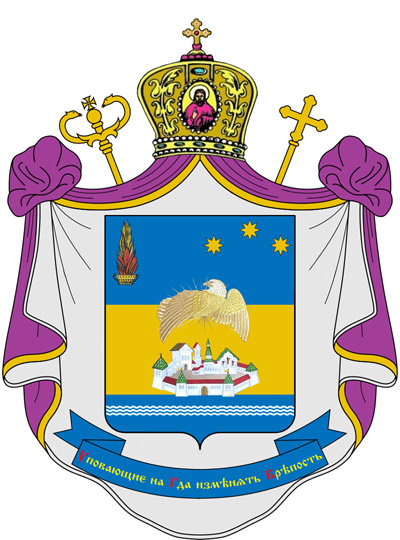
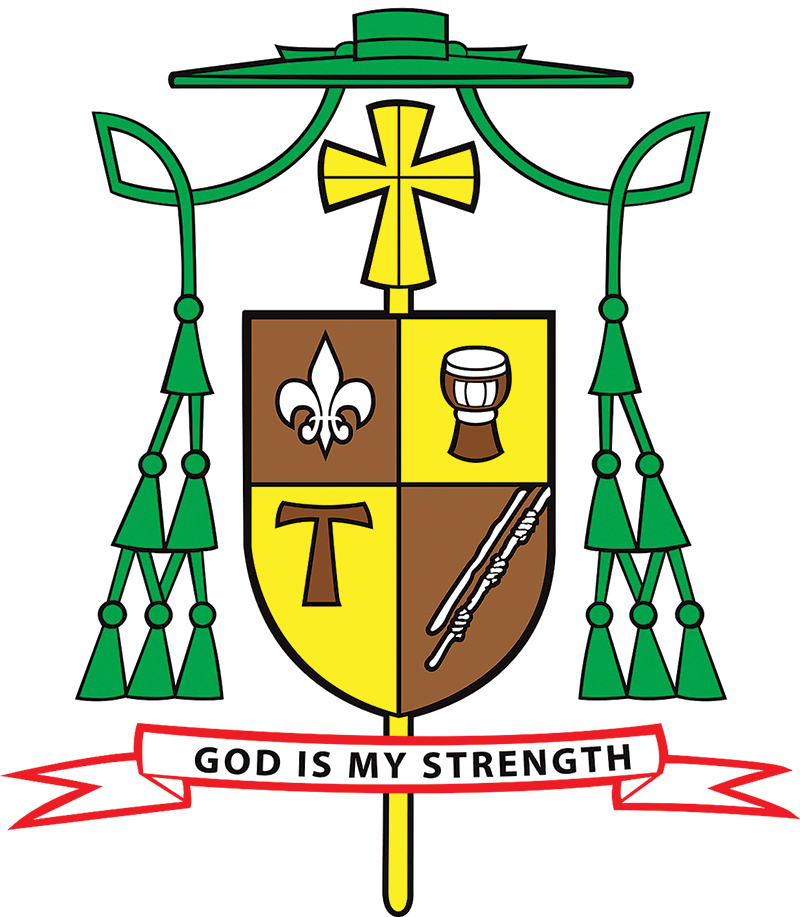
On November 4 , 2014 Bohdan J. Danylo will be ordained by His Beatitude Sviatoslav Shevchuck, Archbishop-Major of Lviv, and installed as the Second Eparch of the Ukrainian Eparchy of St. Josaphat in Parma, Ohio. The new Eparch, age 43, was born in Poland but ordained a priest here in the USA. He succeeds Eparch Robert Moskal who resigned for health reasons in 2009.


Bishop Daniel Thomas of Toldeo, OH

Thomas-Toledo-1-jpg

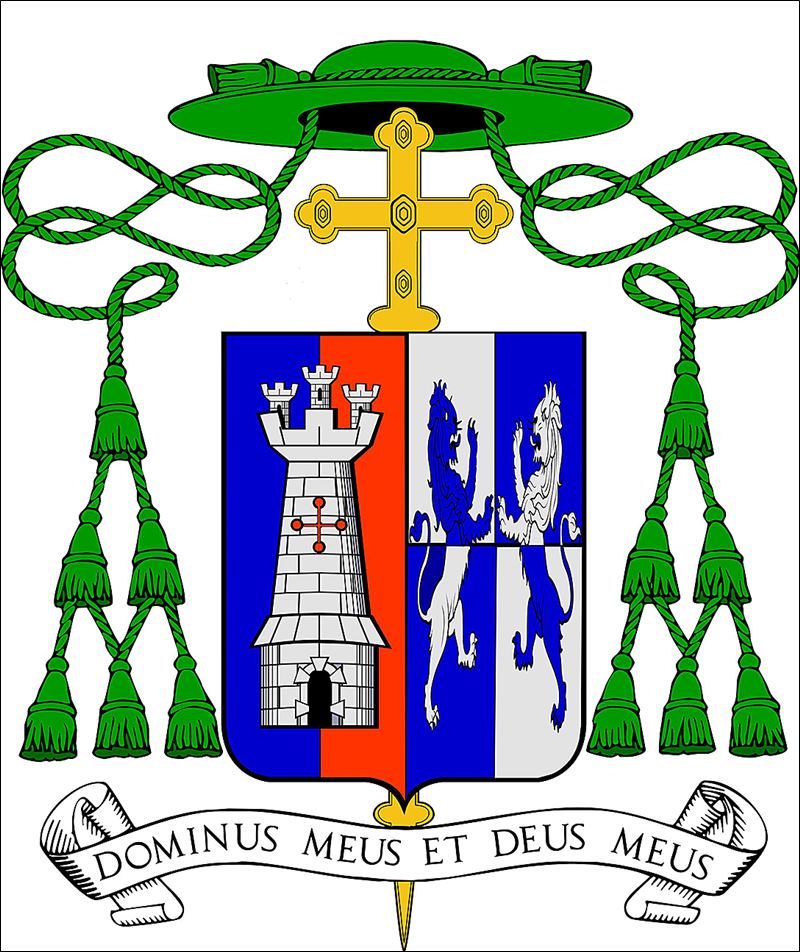
The Most Rev. Daniel Thomas, latterly auxiliary bishop of Philadelphia will be installed today as the IX bishop of Toldeo in Ohio. His arms (above) show the arms of the See impaled with his personal arms, assumed at the time he became a bishop. The lions are an allusion to the name Daniel and there are two of them as a heraldic representation of the name Thomas, which means “twin”.

New Armigerous Saint (well…a Blessed really not a Saint)

The second most important figure in the Opus Dei order, Alvaro Del Portillo, was beatified on September 27 at an open air Mass attended by tens of thousands of Catholics. Del Portillo succeeded Opus founder,St. Josemaria Escriva de Balaguer, as Opus Dei’s leader. The miracle attributed for Del Portillo’s beatification was confirmed last year by Pope Francis.

NOTE: This post was updated when a reader pointed out I had used an image of the incorrect coat of arms.

1024px-Coat_of_arms_of_Álvaro_del_Portillo.svg

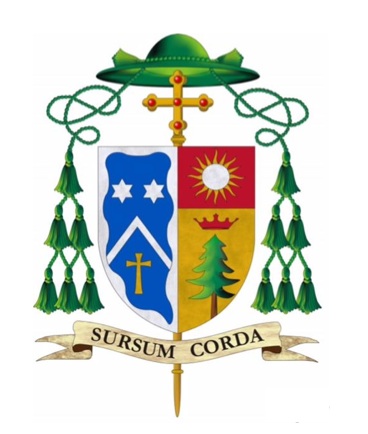
Bishop Raica of Gaylord

Today the Most Rev. Steven Raica was ordained and installed as the fifth bishop of Gaylord, Michigan. the tree and sun allude to the places from which his family came and the red crown is symbolic of his patron, the martyr, St. Stephen.

Raica