Most Rev. Anthony G. Bosco RIP

Image

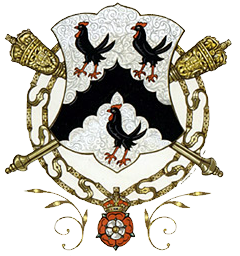
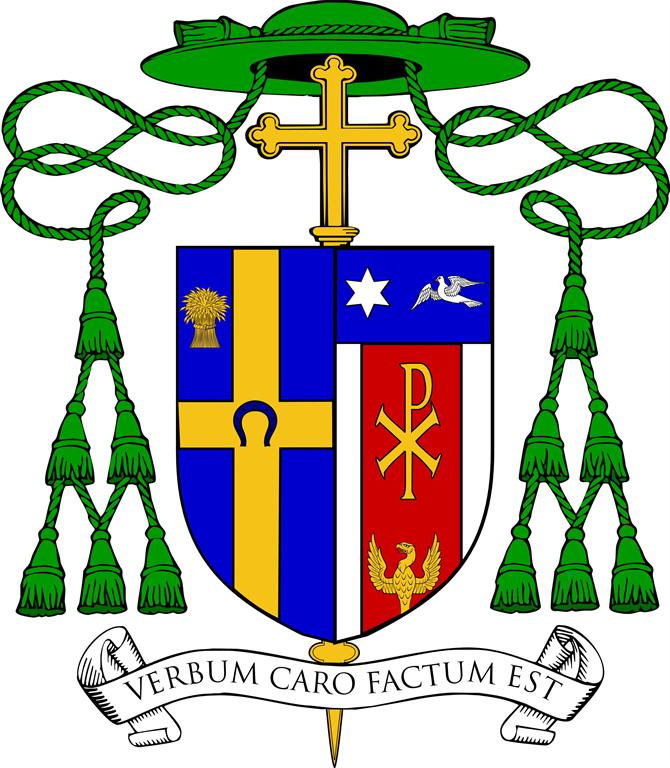
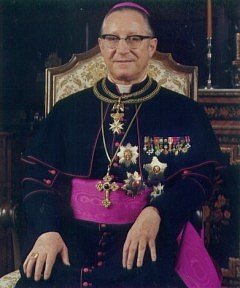
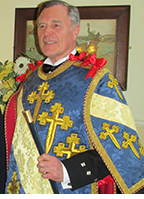
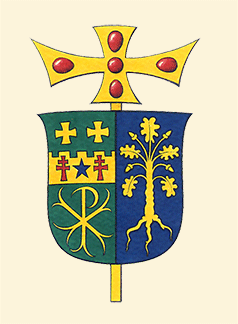
The Most Rev. Anthony G. Bosco (August 1, 1927-July 2, 2013) who served as Third Bishop of Greensburg, Pennsylvania from 1987-2004 has passed away. He was the bishop who installed me in the Ministry of Acolyte on my way to the priesthood. His coat of arms with the distinctive single charge of an oak tree as an allusion to the name “Bosco” was designed by the late Prof. Géza Grosschmid, who was my mentor in heraldry, and emblazoned by none other than the late (great) Abp. Bruno B. Heim. In fact, the bishop’s personal arms were used by Heim as part of the cover art for his seminal work, “Heraldry In The Catholic Church” (1978). Bishop Bosco purposely didn’t use a galero in his coat of arms and preferred to use the one external ornament that is exclusive to and truly indicates the coat of arms of a bishop. Namely, the episcopal cross. May he rest in peace.
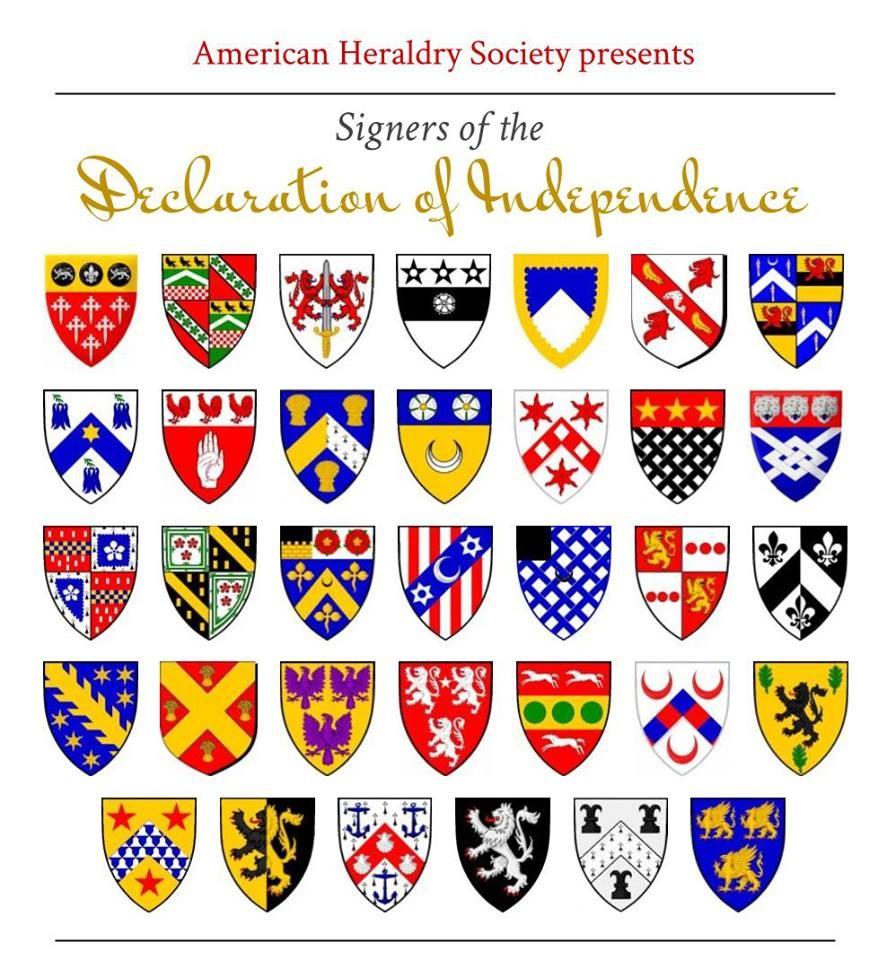
Armigerous Signers of the Declaration of Independence

Image

Thanks to the fine research and work of Mr. Joseph McMillan of the American Heraldry Society we know what the coats of arms of those armigerous (i.e. bearing a coat of arms) signers of the Declaration of Independence are. So much for the erroneous idea that heraldry is pointless and foreign in American culture. If you wish to see a key identifying them you can view it at the website of the American Heraldry Society.

Impalement is Not the Only Option

Image

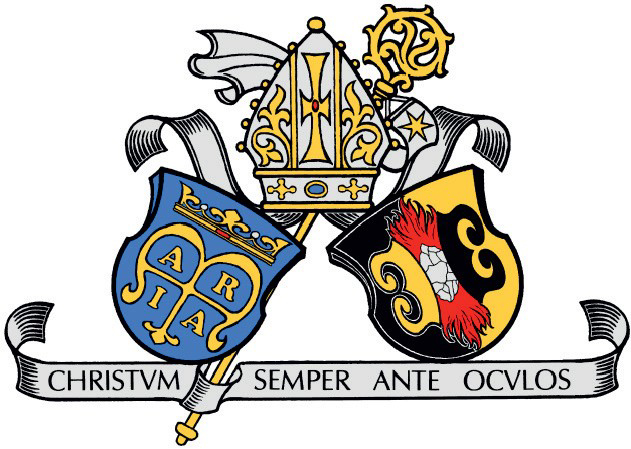
Here we see the coat of arms of Cistercian Abbot Christian Feuerstein, the Abbot of Monastery Rein in Steryia. Rather than marshaling his own arms with those of his abbey together on one shield by impaling them or by dimidiation his personal arms are depicted on a separate shield from those of the abbey thus retaining the clarity of each. His family name means “fire-stone” so his personal arms depict a flint being struck by steel to make fire. The two shields are then both surmounted by the external ornaments of an abbot, in this case the method often favored in Europe outside Italy of using the mitre and veiled crozier instead of the Roman galero. This is not, in the opinion of many, myself included, exactly correct. The galero should be used but, as I said, this more ancient method of ensigning the arms of an abbot is still employed by some.

Sir Saint Thomas More (Feast day: June 22)

Image

Saturday, June 22 is the Feast day of St. Thomas More (along with his fellow martyr to conscience, St. John Fisher) who was brutally murdered by the heretic-adulterer, Henry VIII for defending the Catholic faith. He served as Henry’s Chancellor and was one of the greatest intellects of his day. He is also regarded as one of the first great Christian Humanists.

Saint John Cardinal Fisher (Feast day: June 22)

Image

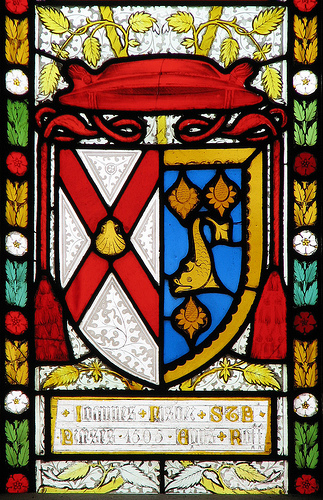
Saturday, June 22 is the Feast day of St. John Fisher (along with his fellow martyr to conscience, St. Thomas More) who was brutally murdered by the heretic-adulterer, Henry VIII for defending the Catholic faith. He was the Bishop of Rochester in southern England and was created a cardinal while under harsh imprisonment by his cruel tyrant of a king.

Bishop Seitz of El Paso

officialseitzcoa

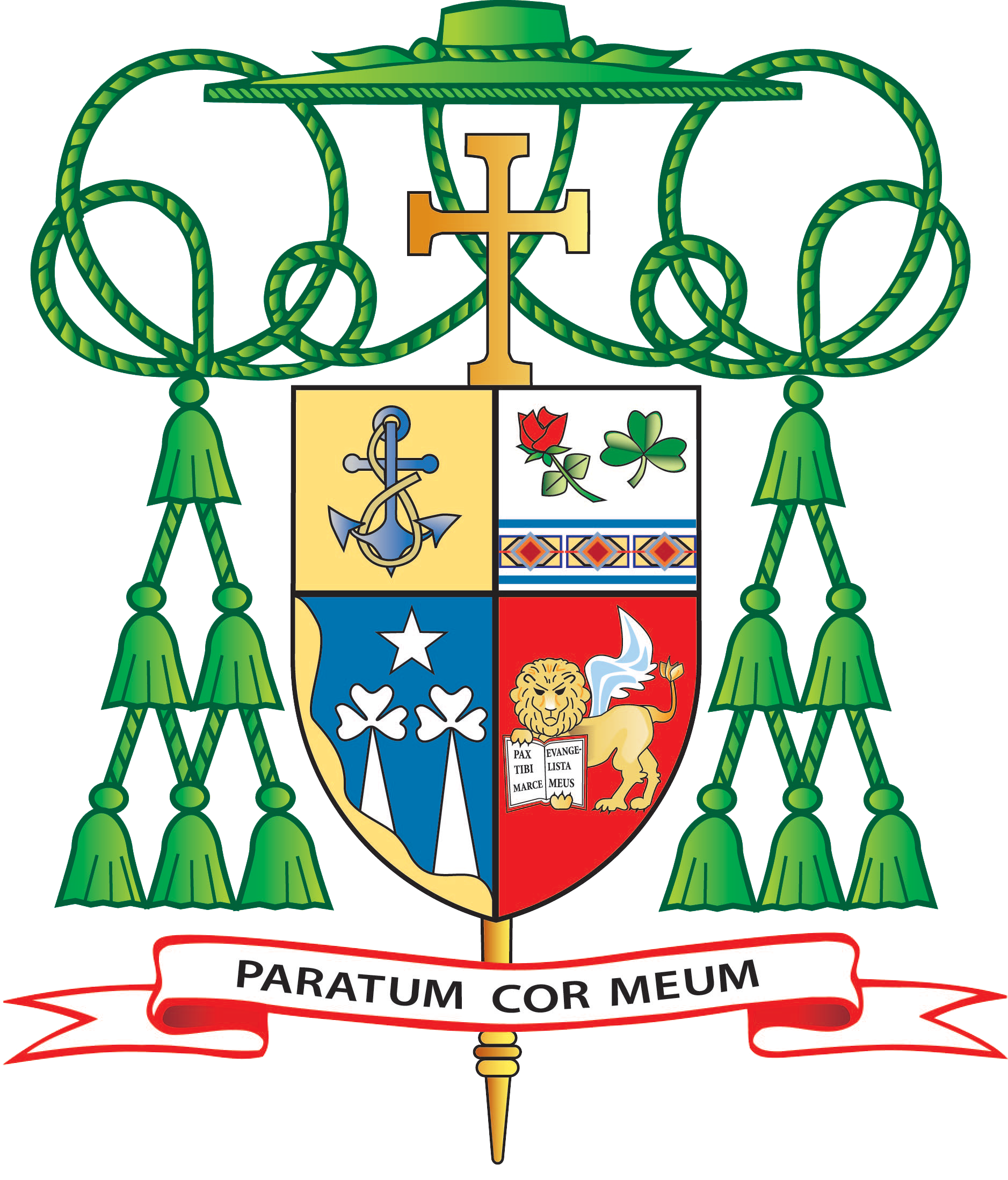
On July 9, Bishop Mark Seitz will be installed as the new bishop of El Paso, Texas. The bishop himself explains the symbolism of his coat of arms on the diocesan website:

In the diocesan arms (left) the blue and white honor Our Lady under the title of the Immaculate Conception, Patroness of the United States.  The wavy border symbolizes the Rio Grande River.  In the diocesan crest the river surrounds the “Ysleta”, or little island, which was the first name of El Paso. The two long triangular forms represent the mountains that form the pass for which the diocese is named.  They are topped by trefoils.  These, along with the triangular mountains, both invoke the Trinity which is at the foundation of the Faith.  The trefoils are also a homage to the titular patron of the Cathedral, St. Patrick. The star above the lower image is both a remembrance of the Lone Star for which Texas is named and the North Star, a reference to the full early name of “El Paso del Norte”.  For Christians, the North Star is also Christ who points them to their true home in heaven. In the upper left-hand corner is an anchor from the coat of arms of St. Pope Pius X, who erected the diocese.

The bishop’s personal arms contain the red “Rose for Life”.  The trefoil (shamrock) speaks to his Irish heritage. The pattern dividing the chief from the rest of the field is intended to honor the Native American heritage that he shares and his desire to serve our first Americans. It is really rather un-heraldic and un-blazonable. The winged lion is the symbol for St. Mark the Evangelist.

Bishop Walkowiak of Grand Rapids, Michigan

Image

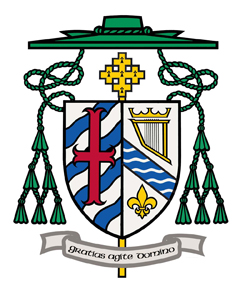
The coat of arms of the Most Rev. David Walkowiak who was ordained and installed today as Bishop of Grand Rapids, Michigan. In his personal arms the bend with wavy lines alludes to St. Mary’s Seminary in Cleveland where he studied for the priesthood. The five small silver lines or “barrulets” that make up the waves stand for the five great lakes. The crowned harp is an allusion to King David, his baptismal patron, who is thought to have composed the Psalms. In base the flour-de-lis is a symbol of Our Lady and also of St. Joan of Arc, the patroness of the parish in Ohio where the bishop used to serve as a pastor.

The arms of the diocese represent falling water or rapids in the Grand River, hence, Grand Rapids and the cross moline alludes to a mill rind thus symbolizing the agrarian roots of the region.

A Moment of the Genuine Heraldry Nerd in Me Coming to the Fore

A true gem for my collection came in the mail today. The deluxe edition in publisher’s morocco binding of “The Heralds’ Commemorative Exhibition 1484-1934”, example no. 252/300 which also happens to have George Viner, FSA’s bookplate in it. This is one I’ve been trying to get hold of for some time and now I finally have it. It’s going to be a highly prized addition to my personal library.

Bishop Folda of Fargo

Image

The colors of the arms of the diocese of Fargo, Or and Azure, are traditionally used to allude to the Virgin Mary, who is invoked as patron of the diocese under the title of her Immaculate Conception. In the center of the Cross is a horseshoe, alluding to William George Fargo (1818–81), the namesake of the See city and co-founder of Wells Fargo & Co. In dexter chief (upper left) is a garb of wheat which recalls the important agricultural product of North Dakota, as well as the bread that becomes the Body of Christ in the celebration of the Eucharist.

The arms of Bishop Folda utilize the colors and general design of the arms of the Diocese of Lincoln, Nebraska for which the bishop was ordained a priest in 1989. In the blue chief is a star to represent Our Lady. Next to the star is a dove, a symbol of the Holy Spirit and an attribute of Saint Gregory the Great, the pope and doctor of the Church, who is often depicted with the dove hovering at his ear as he writes. Bishop Folda served as Rector of Saint Gregory the Great Seminary in Seward, Nebraska, from 1999 to 2013. On the red pale is a Chi-Rho, the ancient monogram for Our Lord composed of the first two Greek letters in the name Christ. Rising from the base of the shield is an eagle, which has been used from ancient times to allude to St. John the Evangelist, Bishop Folda’s baptismal patron.

Bishop Folda will be ordained and installed in Fargo on June 18, 2013.

Not thrilling, but nice.

Benedict XVI to Montezemolo: “No Thanks”

It has been uncovered in a recent article that the proposal from Andrea Cardinal di Montezemolo that Pope-Emeritus Benedict XVI should modify his coat of arms and place the crossed keys of St. Peter on the shield has been politely REJECTED. Benedict thanked His Eminence for the interesting study he made of the subject but declined to adopt any of the cardinal’s proposed changes. Good for him! The precedent set would have been a bad one…just like Montezemolo’s bright idea of dropping the tiara as a heraldic emblem in favor of a stylized tiara/mitre hybrid. It’s time that Montezemolo realized he’s no Bruno Heim!

Archbishop Jackels of Dubuque, IA

Image

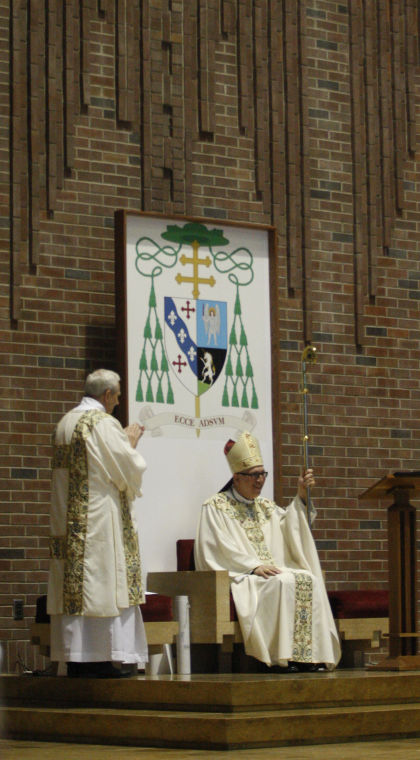
As mentioned in an earlier post the coat of arms of the former bishop of Wichita, now the newly installed archbishop of Dubuque, Iowa, The Most Rev. Michael Jackels, presented a challenge to the heraldic artist insofar as they were already impaled arms. In order to impale his personal arms with those of the see of Dubuque (as is customary in N. America) the archbishop’s personal arms would have to be modified in some way. I opined that perhaps dividing the personal arms horizontally, or “per fess”, and placing the two charges in each half would provide the opportunity then to impale the arms of the see with them. Someone else was obviously thinking along the same lines. As you can see from the photo above taken at the archbishop’s May 30 installation this is precisely what was done. I’m glad to see the handsome arms of the see of Dubuque were able to be incorporated into the overall achievement.

Heralds The World Over (#9: Flanders [Belgium])

Image

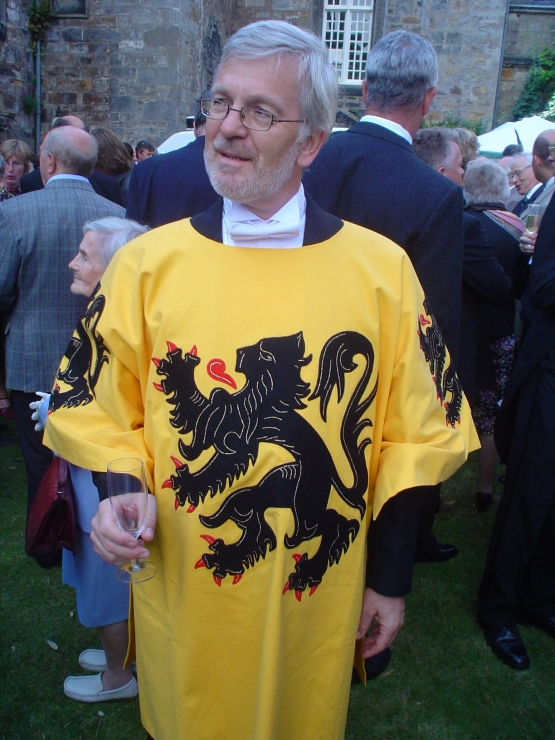
We see here the Flemish herald Andre Vandewalle. Flanders is the northern Dutch-speaking part of modern Belgium. Historically, Flanders referred to a region in the southern part of the Netherlands. A friend once asked when referring to Flemish as a language, “Is there such a place as a country called Flem?” Hardly an original, or a very funny, joke.

An Extraordinary “Herald” (of sorts)

Image

While certainly never holding the title of herald and not being appointed as an officer of arms in any way by anyone this man was, in his own way, the most extraordinary of contributors to the world, the science and the art of heraldry. It can be said that he was a kind of “herald of the Church” during his long career as a Churchman and Papal diplomat. A one-time assistant to the then Nuncio to France, Angelo Cardinal Roncalli (later Bl. Pope John XXIII), the first Pro-Nuncio to the United Kingdom and the first Papal diplomat above the rank of Apostolic Delegate in England in the modern era since the Reformation as well as the man who quite literally wrote the book on ecclesiastical heraldry in the Roman Catholic Church: Archbishop Bruno Bernard Heim. His original work, “Coutumes et Droits d’Heraldique de l’Eglise” was later expanded and republished with lavish illustrations as “Heraldry in the Catholic Church” (1978). This Swiss priest and diplomat designed the coats of arms for Popes John XXIII, Paul VI, John Paul I and John Paul II. One can only imagine what the outspoken Helvetian would have made of the arms of Pope Benedict XVI or, far worse, the arms of the present pope. He was, in my opinion, the most knowledgeable person in the XX Century on the subject of ecclesiastical heraldry. As far as I’m concerned one need only justify a particular point of heraldic design or art by saying, “Heim says so”. He was also tremendously knowledgeable about heraldry in general. His book is a must read for anyone interested in the topic in addition to the four other books on heraldry he authored. Sadly, his influence over the revival of good heraldic practices in the Church is beginning to wane since his death in 2003 at age 92.

More on Private Officers of Arms

installation-of-the-slains-pursuivant-peregrine-moncrieffe-of-that-ilk-lord-hay-the-earl-of-erroll-john-stirling_2  321px-Hon_Alexander_Lindsay_Endure Lady Mar with Garioch Pursuivant_2

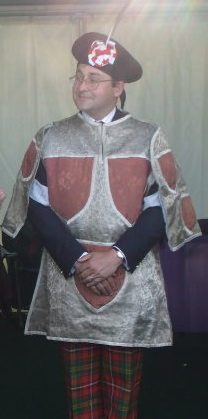
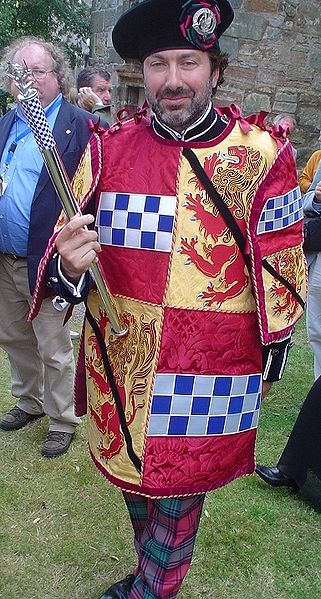
In addition to Finlaggen Pursuivant there are three other private officers of arms currently in existence in Scotland. Slains Pursuivant is the officer of arms appointed by the Chief of the Name and Arms of Hay, currently the Earl of Erroll, Lord High Constable of Scotland. Garioch Pursuivant is athe officer of arms appointed by the Chief of the Name and Arms of Mar, currently the Countess of Mar. Endure Pursuivant is the officer of arms appointed by the Chief of the Name and Arms of Lindsay, currently the Earl of Crawford and Balcarres. Pictured above (l.-r.) are John Stirling, Slains Pursuivant; The Hon. Alexander Lindsay, Endure Pursuivant: Lt-Cmdr. Laurence of Mar, Garioch Pursuivant;

Heralds The World Over (#7: Ireland)

Image 8_2

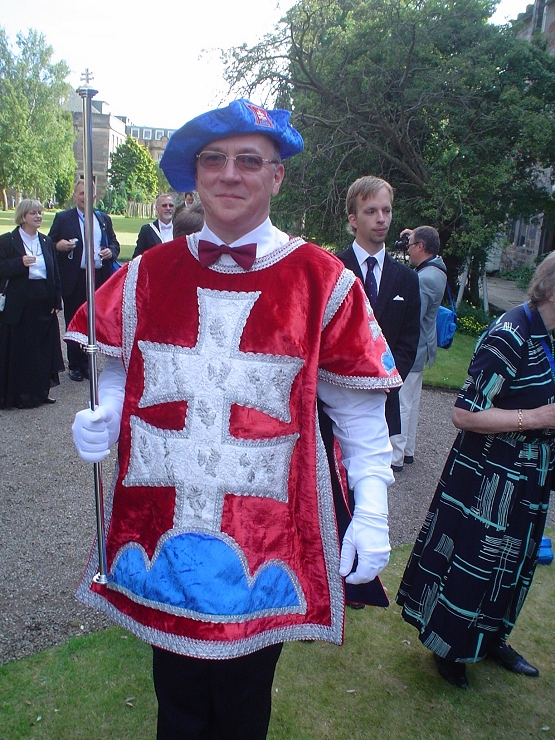
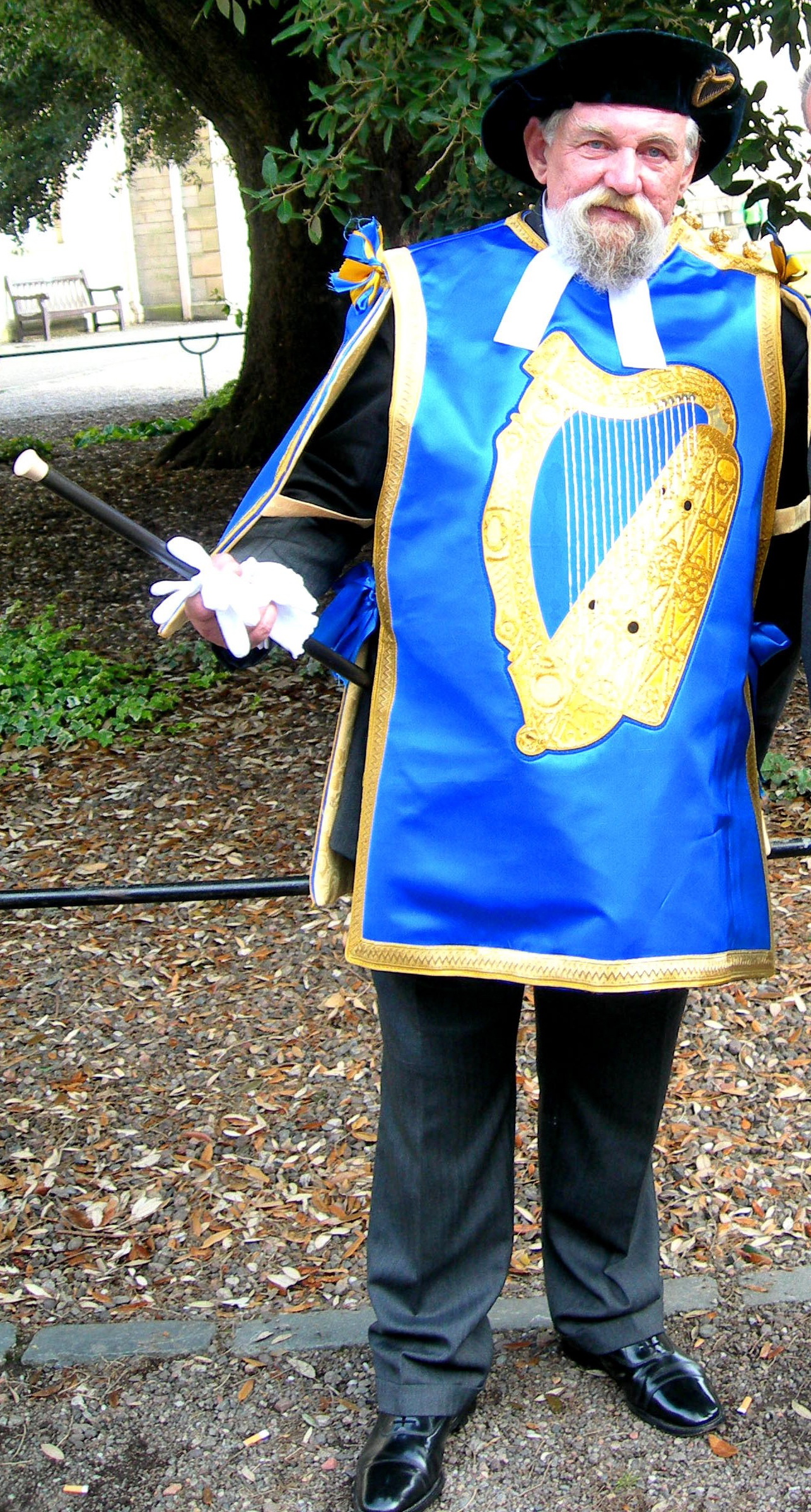
This photo is also from the 2006 International Congress of Genealogical & Heraldic Sciences. We see Micheál Ó Comáin, an official of the Office of the Chief Herald of Ireland, who represented that Office and wore (again, made for the occasion) a tabard bearing the arms of Ireland.