The coat of arms of The Most Rev. Camillo Cibotti ordained on June 11 as bishop of Isernia-Venafro, Italy.
Meh.
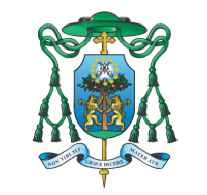
The coat of arms of The Most Rev. Camillo Cibotti ordained on June 11 as bishop of Isernia-Venafro, Italy.
Meh.
The new Archbishop of Gniezno, Poland, the Most Rev. Wojciech Polak, will be installed on June 7. In 1948 it was decided that the Archbishops of Warsaw would also be the Archbishops of Gniezno and, thus, Primates of Poland. These two offices were joined “in persona episcopi”. However, later in March of 1992 it was decided once again to separate the two archdioceses with each having its own archbishop. Josef Cardinal Glemp who was Archbishop of Gniezno and warsaw at the time was permitted to retain the title of Primate of Poland until he stepped down in 2009. From 2009 onwards the title Primate of Poland once again rests solely with the Archbishop of Gniezno and not with the Archbishop of Warsaw.
The arms of Archbishop Polak (below) show a simple design. However, the galero is shown with 30 green tassels instead of 20 and those tassels also appear ro have a skein of gold interwoven in them. Such a hat is used in Roman Catholic heraldry by Patriarchs, not Primates. Frequently, it is erroneously asserted that Primates are entitled to the same external ornaments as Patriarchs. This is false and untrue! So, this new Archbishop-Primate begins his tenure by claiming additaments on his coat of arms to which he has no credible claim.
Heraldry: FAIL
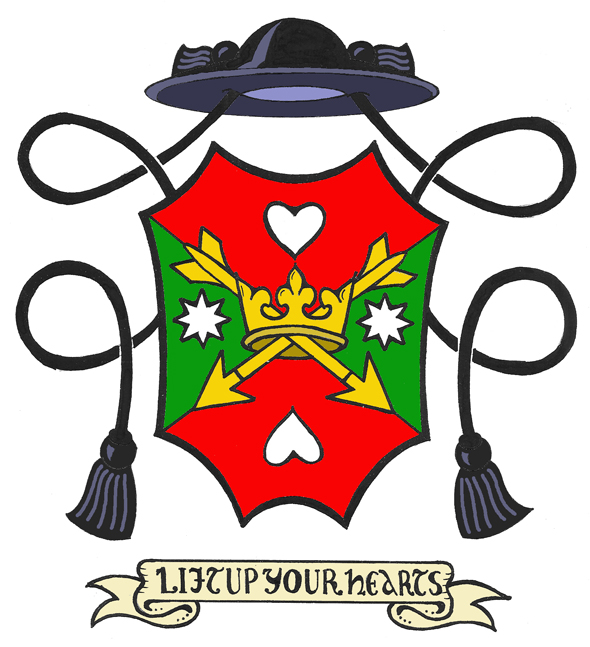
Below is the recently designed coat of arms for a priest. The shield is divided per saltire, the upper and lower quarters being red and the other two being green. These colors, along with the silver (white) are the national colors of Italy, the country of the bearer’s ancestry. In the center there is an open royal crown with two arrows, points downward, passing through it crossed in saltire and the crown and arrows are gold (yellow). This is the heraldic device used to symbolize the armiger’s patron saint. The two silver (white) stars on either side evoke the armiger’s last name which, translated into English, means a bringer of light. The stars are the firmaments fixed lights. Above and below the main charge are two hearts. This is an allusion to the Sacred and Immaculate Hearts as well as to the fact that the armiger has had a heart transplant and so has also had two hearts. The motto “Lift Up Your Hearts” is taken from the opening dialogue of the Preface of the Mass.
We had been in discussion about a coat of arms for some time but couldn’t seem to settle on a design that satisfied us both or, for that matter, even come up with a good starting point. This design, somewhat oddly, simply came to me in my minds eye all at once one afternoon and was accepted immediately by the armiger.

Here is a coat of arms I just completed for a Roman Catholic priest. He has a devotion to St. Michael the Archangel and wanted to incorporate a charge that suggested St. Michael defeating the Evil One. In addition, he was rather inspired by the personal arms of Archbishop Georg Gänswein, The Prefect of the Pontifical Household, whose arms depict a dragon slain by a spear as an allusion to St. George. In this coat of arms the dragon is once again used this time to allude to Satan and he is depicted pierced by a flaming sword, a heraldic symbol of St. Michael. The three stars represent both Our Lady and the Blessed Trinity. The motto is a translation of the name Michael. The phrase, “Quis Ut Deus” means “Who Is Like God”. The shield is ensigned with the simple black galero of a priest. The similarity to the arms of Abp. Gänswein can be seen but there is enough of a difference in the design to make these arms unique.

Above is the coat of arms recently designed for St. James Parish in Jamesburg, NJ. I’m not pleased with this design but much of it is the result of what the client requested. The sad reality is that frequently the heraldic designer and/or the heraldic artist must compromise their own tastes and even their knowledge of heraldry in order to accommodate the wishes of the client who has commissioned them. This one has been a little too ambitious in its use of color and has also overcharged the shield a bit. But, the client was happy with the design.
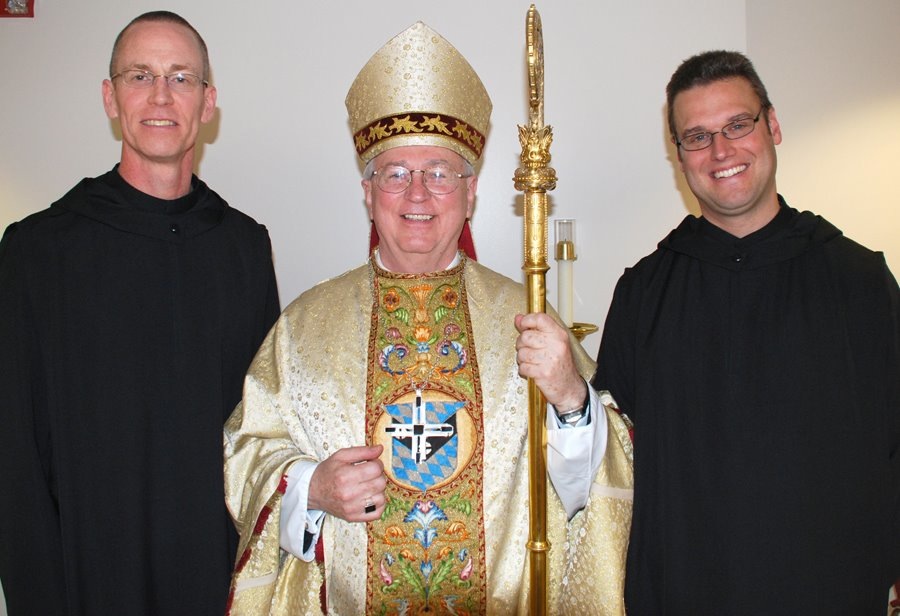
Back in February I posted about a nice set of vestments decorated with coats of arms worn by the Archbishop of Newark. Generally speaking I don’t think this is usually pulled off very well. But, every now and again you come across an example where the use of heraldry as a decoration on vesture actually works rather nicely. I recently came across another example. At the Archabbey of St. Vincent in Latrobe, Pennsylvania there is a very nice set of festive vestments which had been a gift to the Archabbey from the Abbey of Montserrat in Spain. That community had been the beneficiary of some financial aid from the monks at St. Vincent after the Spanish Civil War when they were in great need. In gratitude, the Spanish monks presented the community with some of their handiwork in the form of beautifully embroidered vestments with the coat of arms of St. Vincent on the front of the chasuble. What you can’t see is the beautifully embroidered portrait of St. Benedict that is on the back of the chasuble. Nevertheless, the embroidered coat of arms on the front is very nicely done. Unfortunately, because the Archabbot insists on wearing his pectoral cross on the outside of the chasuble, incorrectly I might add, he obscures part of the shield from view. The chasuble has recently been slightly reconstructed because the base material began to fall apart but the front of the vestment with all the embroidery has remained intact despite being 70+ years old.

Back in 2012 a priest who, like me, grew up on Long Island and who, unlike me served as a priest of the diocese of Rockville Centre and also went on to serve the U.S. Air Force as a chaplain rising to the rank of Colonel, was honored by the then Pope, Benedict XVI, with the rank of Chaplain to His Holiness. This is the lowest of the three grades of prelates in the papal household who are collectively addressed as “Monsignor” (Italian for “My Lord”). Fr. Mark Rowan contacted me and asked if I could assist him with the design of a coat of arms. I jumped at the chance to help out a fellow Long Islander as well as a chance to assist someone who was serving not only the Lord but our country. Below is the end result:
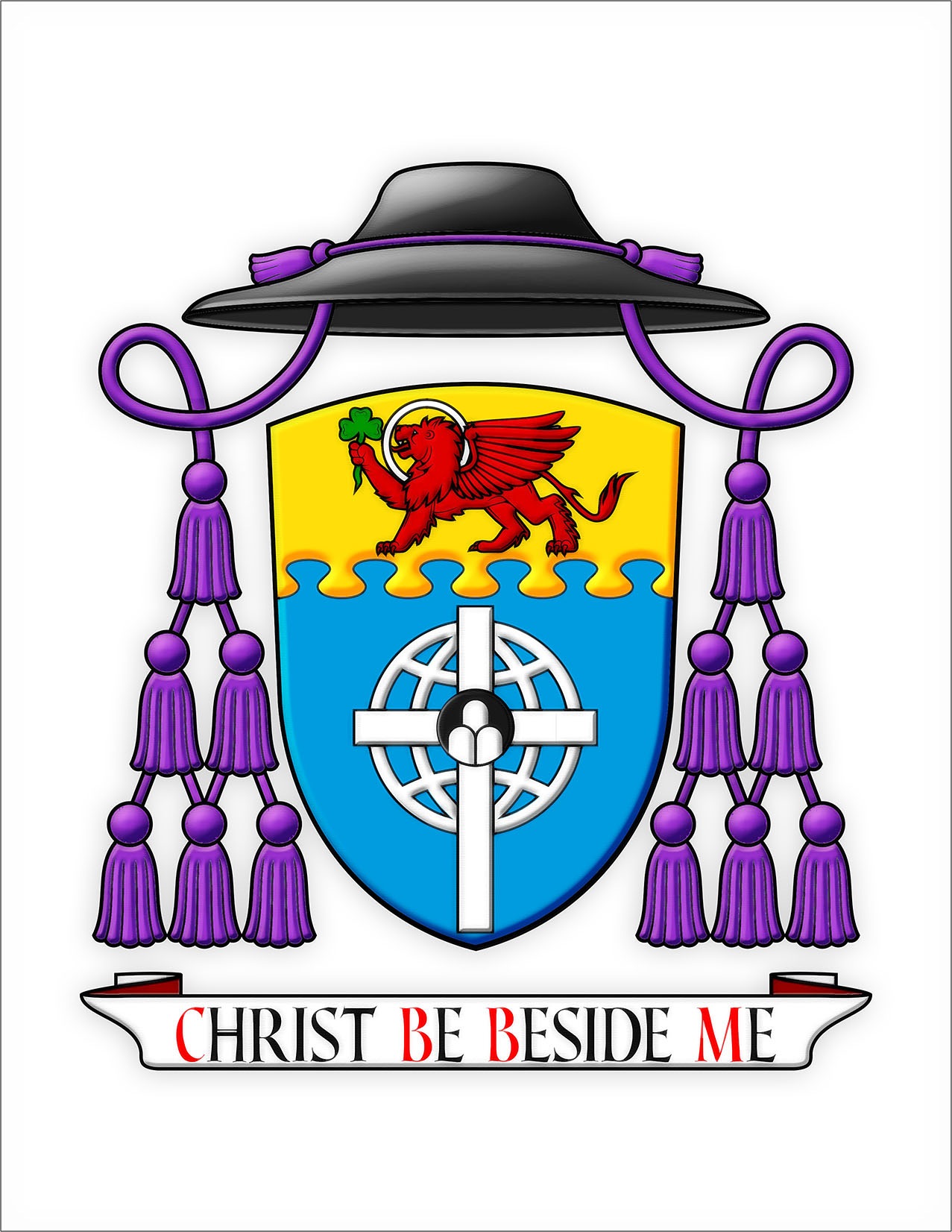
The main background of the field is a shade of blue called, in heraldry, Bleu Celeste. It is borrowed from the coat of arms of the U.S. Air Force. Obviously, it alludes to the blue of the sky. On this is the single charge of the open globe combined with a Latin cross (one where the lower arm is longer than the other three) in silver. This charge is taken from the arms of the Archdiocese for the Military Services, USA. Superimposed over this is a small black roundel, called a “pellet”. This, in turn, has three small silver hills. It is borrowed from the coat of arms of the diocese of Rockville Centre, NY. The three small hills are, in turn, taken from the arms of Pope Pius XII who founded the diocese of Rockville Centre in 1957. That diocese is composed of territory taken from the diocese of Brooklyn so the black tincture represents the marshes, which recalled to the Dutch their homeland in Breuckelen on the Vecht in the Province of Utrecht. The Dutch who settled Brooklyn at first called it “Breuck-Landt,” meaning “broken land,” or “marshland,” inasmuch as a great deal of land was broken up by patches of water.
The upper third of the shield (called the “chief”) is separated from the rest of the background by a line whose shape is referred to as “nebuly”. This type of line in heraldry is used to suggest clouds. This same dividing line is also used in the coat of arms of the U.S. Air Force. Here, along with the bleu celeste, it alludes to Msgr. Rowan’s service as a Chaplain. The bumps or nebuli are six in number. This is a reference to the fact that Msgr. Rowan has served or provided support on six different continents in the course of his service as a Chaplain and has also administered six of the seven sacraments. (The seventh sacrament, holy orders, is reserved to bishops). On the gold (or yellow) colored chief stands a red winged lion that is the symbol of his patron saint, St. Mark, the Evangelist. The lion holds, in his right front paw a green trefoil, more commonly known as a shamrock, which is the symbol of Msgr. Rowan’s Irish ancestry.
The galero, or ecclesiastical hat, is used in Church heraldry in place of the more martial helmet, mantling and crest. Originally a pilgrim’s hat it was worn and used in heraldry by Cardinals. Later, it was adopted by the lesser prelates. Eventually a system of both colors and number of tassels was devised to indicate the various ranks within the hierarchy. Msgr. Rowan’s arms use a black galero like any priest but the cords and tassels are purple indicating he is a member of the papal household. This galero indicates the bearer is a Chaplain to His Holiness according to the Motu Proprio, “Inter Multiplices” of Pope St. Pius X in 1905.
On a scroll below the shield Msgr. Rowan has chosen the motto, “Christ Be Beside Me” which is taken from the prayer known as “St. Patrick’s Breastplate”. After I completed this design and Msgr. Rowan approved the artwork was quickly and expertly executed by Mr. Sandy Turnbull of Australia. Mr. Turnbull is a member of the Australian Heraldry Society.
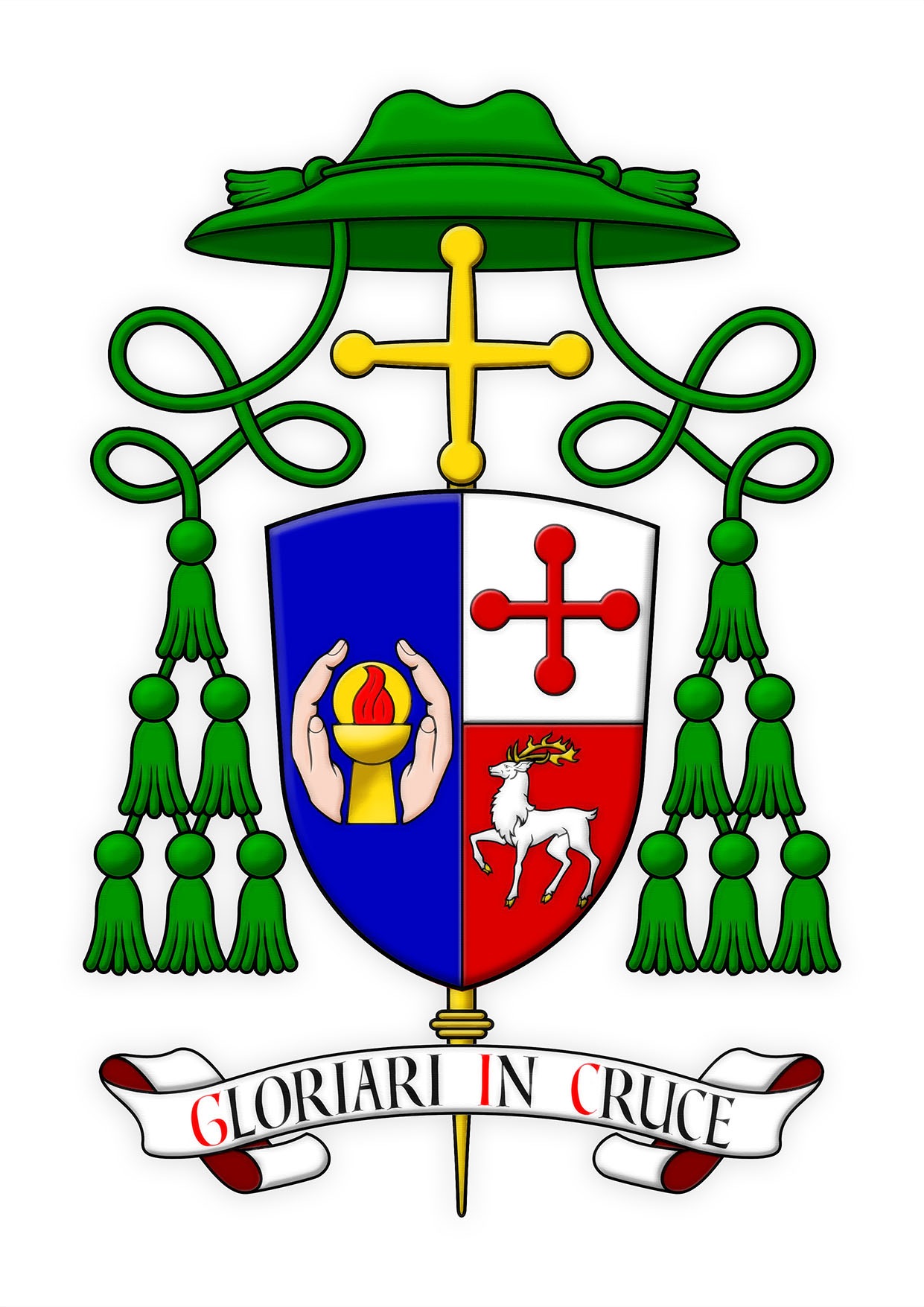
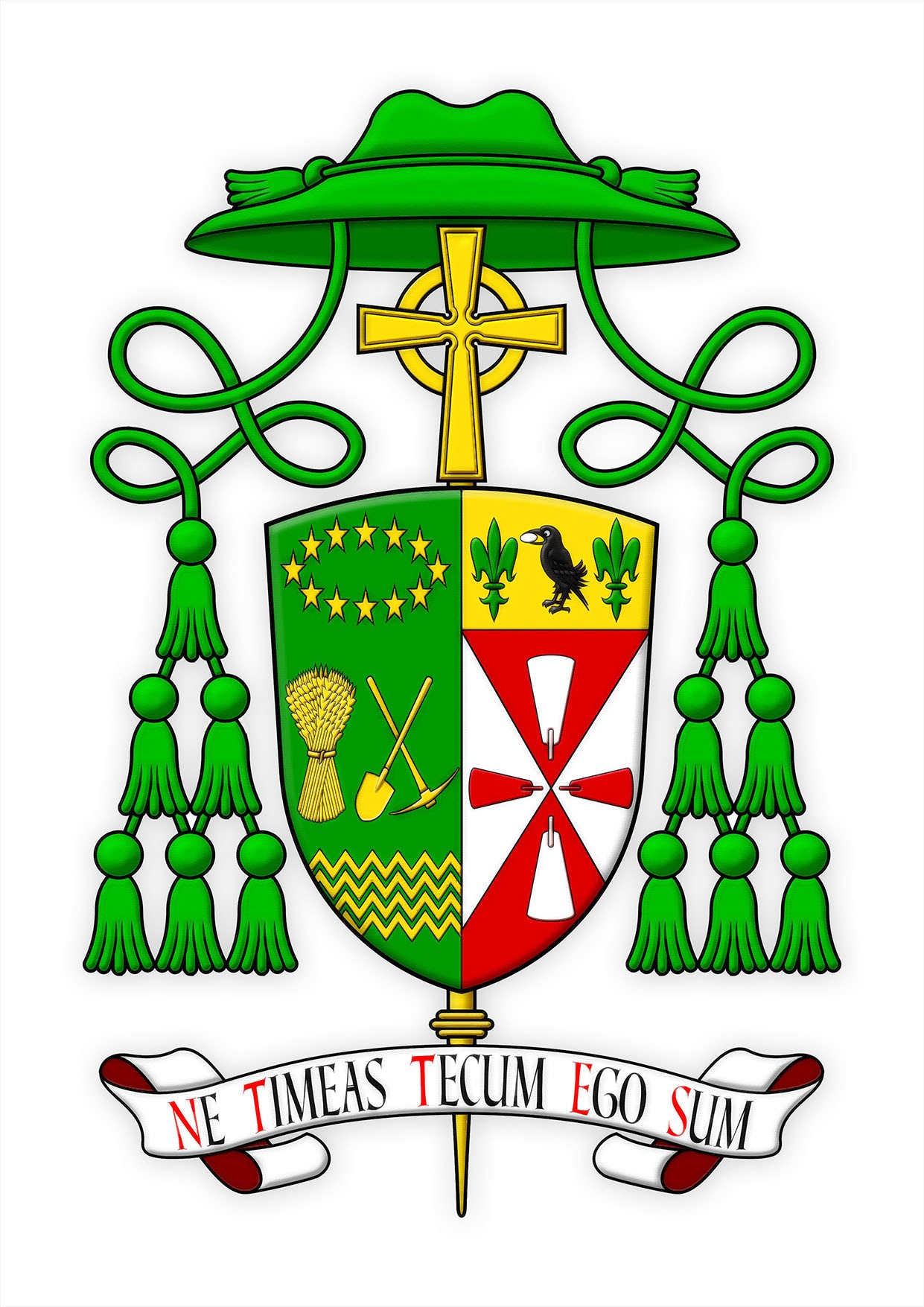
In recent years I have often had the great good fortune to collaborate on the design or re-design of coats of arms for various prelates and corporate bodies within the Catholic Church in Australia. My acquaintance and growing friendship with Mr. Richard d’Apice, President of the Australian Heraldry Society as well as a member of the Collegium Ecclesiastica Exarandorum, led to his occasionally consulting with me on designs upon which he was working. These days he acts as the agent with the bishop in question and we consult back and forth via email on the design itself. This happy collaboration is then added to even further by the artistic abilities of Mr. Sandy Turnbull who is also a member of the Australian Heraldry Society. With ease and great efficiency Mr. Turnbull is able to take our ideas and sketches and turn them into first rate heraldic depictions. To date we have worked together on approximately 28 commissions. Here are some examples of our most recent collaborations:
The coat of arms of the Most Rev. Michael F. McCarthy of Rockhampton who will be ordained and installed on May 29th.
The coat of arms of the Most Rev. Columba Macbeth-Green, OSPPE of Wilcannia-Forbes who will be ordained and installed on July 3rd.

The archdiocese of Westminster (UK) recently launched the use of a new rendering of the archdiocesan coat of arms. Previously, they had used the arms of the See (Gules a pall Proper) under the galero of an archbishop with the patriarchal (double-barred) cross. This was technically incorrect as the cross and galero imply the arms of an individual archbishop rather than a corporate body like a diocese. So, that has now been rectified with the use of this new rendering that more correctly indicates this is the coat of arms of the archdiocese, rather than of the Cardinal-Archbishop.
As for the artwork: isn’t it hideous?
On May 1 the Most Rev. Malcolm McMahon, OP, formerly bishop of Nottingham, was installed as the 12th archbishop of Liverpool, England. His coat of arms is depicted on the cathedra of the metropolitan cathedral. It is interesting how the personal arms impale the arms of the See but both are then placed under one chief.
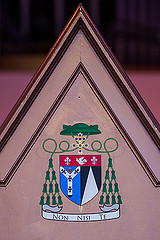
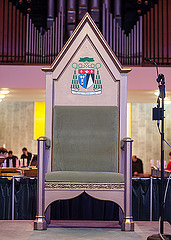
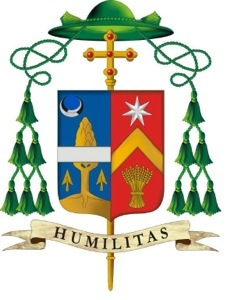
Today, the Most Rev. Carl A. Kemme, a priest of the diocese of Springfield in Illinois will be ordained and installed as the bishop of Wichita, Kansas. His coat of arms (below) combines, or impales, the arms of the See (left) clearly based on those of Pope Leo XIII, with his personal arms (right). The design is clear, uncomplicated, and very nicely conceived. The artwork is well done.
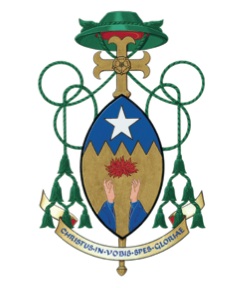
The Most Rev. Peter L. Smith will be ordained auxiliary bishop of the archdiocese of Portland in Oregon on April 29 by Archbishop Alexander Sample. The new bishop is a priest of that archdiocese. The shield is shaped like that of a Zulu warrior because the bishop was born in the province of KwaZulu-Natal in South Africa. The flame represents the Holy Spirit, the upraised hands prayer and worship, the gold field stands for devotion to Christ. The jagged division line represents several mountain ranges important to the bearer and the star Our Lady as well as the star of Bethlehem.
The rose on the episcopal cross supposedly stands for Portland, “the rose city”. The designer of this coat of arms, James Noonan, repeatedly likes to design distinctive external ornaments that are particular to each coat of arms which is really heraldically unsupportable. The blazon can only specify that which is on the shield, not the external ornaments.
Design: James Noonan
Artwork: Linda Nicholson
Last May while I was vacationing in France I posted about saints who had been armigerous (i.e. who bore a coat of arms). On Sunday, April 27 there will be two more added to that number when Pope Francis canonizes his predecessors in the Chair of St. Peter, Pope John XXIII and Pope John Paul II.
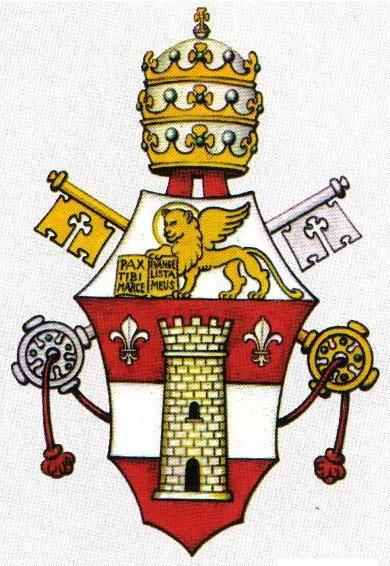
The coat of arms of Pope John XXIII (above) was identical to the one he used as Patriarch of Venice with the addition of the external ornaments of a pope. The arms are: “Gules a fess Argent; in chief two fleur-de-lis Argent and overall a tower embattled Argent; on a chief Argent the lion of St. Mark Or”. The lower portion consists of the coat of arms that was adopted by Angelo Giuseppe Roncalli when he was named a bishop. Later, when he was promoted to Patriarch of Venice he added the chief (upper third of the shield) with the golden lion of St. Mark, the patron saint of the Venetian church, as is customary for all Patriarchs of Venice. This is one of the few examples in Italian Church heraldry where arms of the See are used. When he was stationed as Papal Nuncio to Paris, Roncalli had a young Bruno Heim serving as his secretary at the Paris Nunciature. The two shared an abiding interest in heraldry. At the time of his election to the papacy John XXIII was not in immediate touch with Heim who was serving elsewhere. John, himself an amateur heraldist approved his arms as they were with the Venetian lion included to be used as his papal coat of arms. A short time later he did employ his former secretary, Heim, to produce the artwork for the official version of the coat of arms. Heim tried to talk him out of retaining the chief of Venice in his papal arms but it was too late. So, it remained.
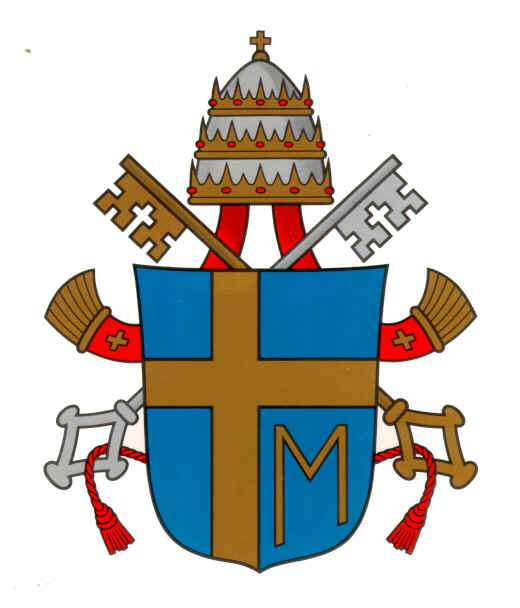
The coat of arms of Pope John Paul II (above) are also connected to the late Archbishop Heim. The arms are: “Azure a Latin cross skewed to dexter throughout Or; in sinister base the letter “M” Or”. These arms are also the ones adopted by Karol Wojtyła at the time he was made a bishop. However, in the earlier version the cross and “M” were black. On his election to the papacy Heim tried in vain to persuade the new pope to drop the letter “M” and replace it with another Marian symbol. The use of letters in heraldry is considered poor design. The new pope was adamant that his arms had to remain the same as those he had borne under a repressive Communist regime in order to show that he would not modify or weaken the stance he held as a bishop and cardinal in Poland. As a concession to good taste and design, however, so as not to have a color on a color he agreed to change the cross and “M” to gold on blue. Heim, who was afraid that his reputation as a knowledgeable expert in heraldry would suffer did his homework and then added an entire chapter to a second edition of his book, “Heraldry in the Catholic Church” on the use of what are called house markings, which resemble letters, as being particular to both Polish and Swiss heraldry (Heim was Swiss).
So, the age of saints is not long ago and distant but is with us right now. In addition, both of these down-to-earth men (John was the son of peasant farmers from Northern Italy and John Paul the son of a Polish civil servant) had coats of arms. Heraldry is often misunderstood as elitist, exclusive, snobbish and pretentious. Yet, these two men who were holy to a heroic degree such that they are now being held up as worthy of emulation by the faithful and who were known for their genuine humility each had a coat of arms.
Artwork: Bruno B. Heim
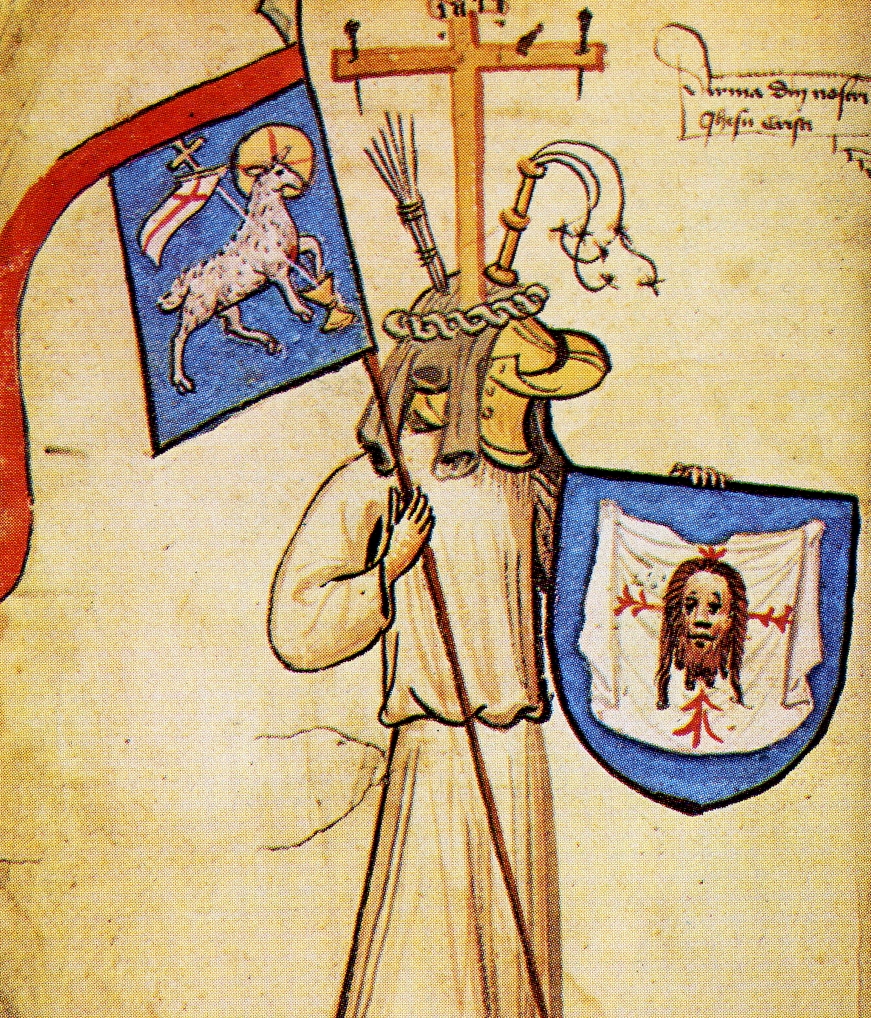
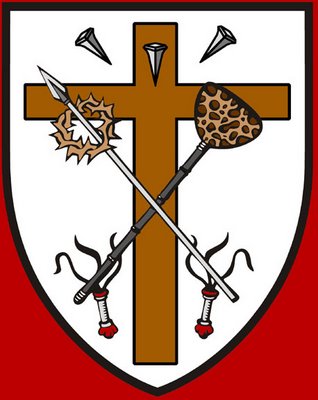
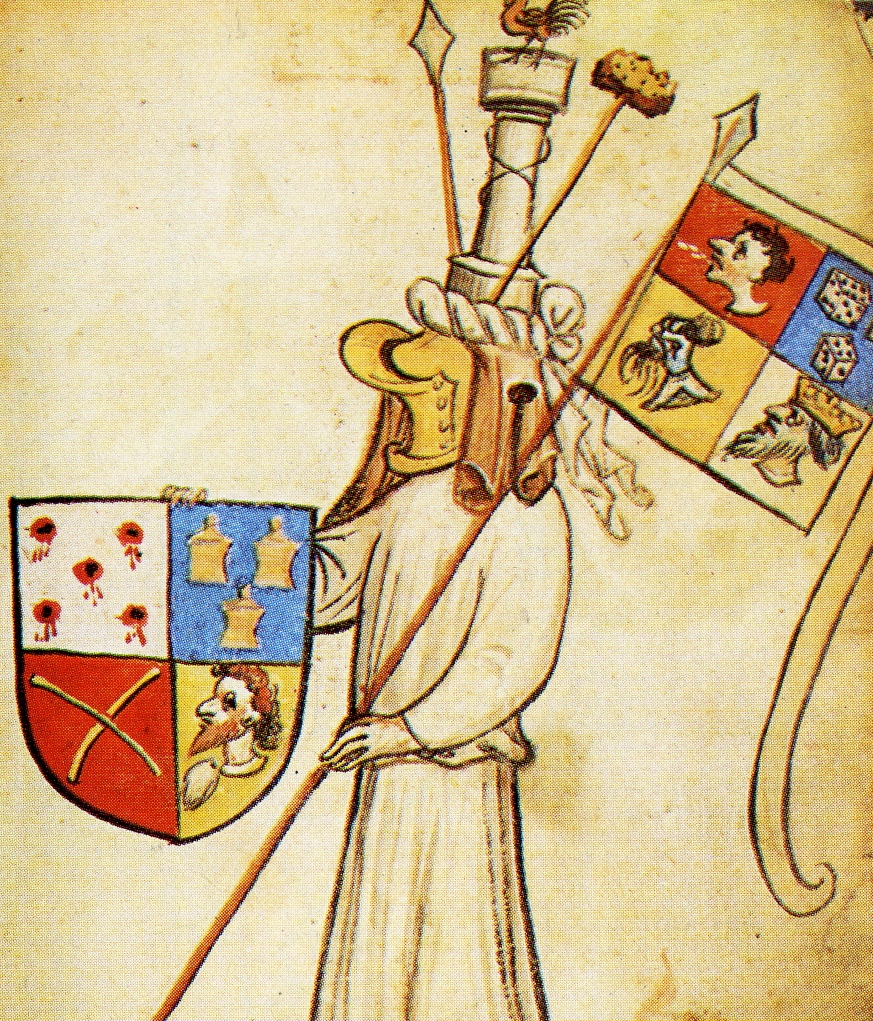
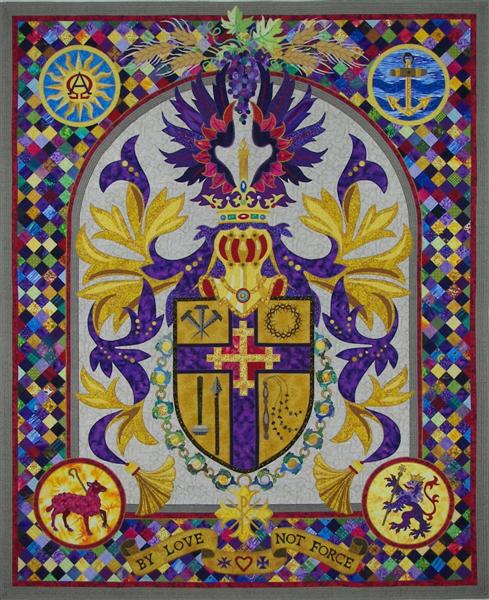
There is an old custom in the world of heraldry of attributing a coat of arms to fictional characters or to people who were real but who lived long before the dawn of heraldry. Great figures from throughout history have had a coat of arms devised for them and attributed to them. This includes people such as Constantine the Great, King Arthur, the Blessed Virgin Mary and even her divine Son, Jesus Christ. On this Good Friday I wanted to highlight some examples of the arms attributed to Jesus. Most include the instruments of His Passion. In addition, this fascination with attributing arms to Jesus seems to have been at its height in the medieval period but the last example I share today is very recent.
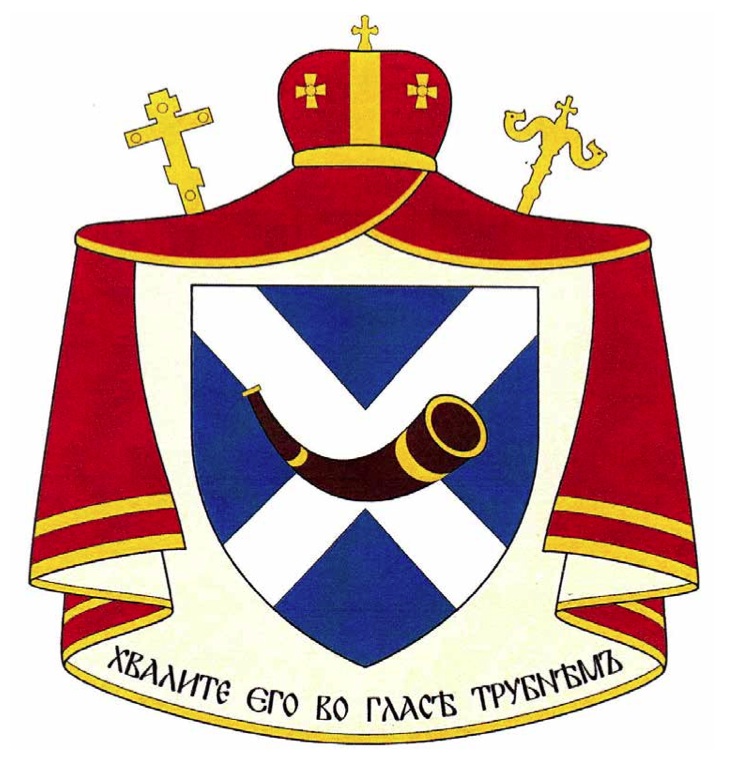
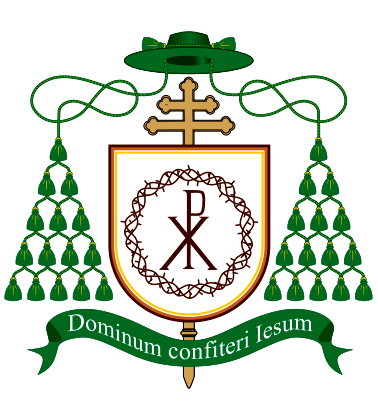
The arms of the Most Rev. Kurt Burnette, Ruthenian Byzantine Catholic Eparch of the Eparchy of Passaic which has parishes on the eastern seaboard of the USA from Connecticut to Florida. He was ordained and enthroned several months ago. Recently, Byzantine bishops in the USA have taken to using emblems composed of icons with the external ornaments of a coat of arms in a kind of hybrid. Bishop Kurt has chosen a genuine coat of arms. The motto is from Psalm 150 and says, “Praise him with the sound of the trumpet”. It alludes to the main charge of a hunting horn fashioned after the horn of Leys given to Alexander Burnett by Robert the Bruce in 1363. The Burnette family traces its origins back to the 11th Century. One of the bishop’s ancestors emigrated from Scotland to the American colony of New jersey in 1700. The cross of St. Andrew is a further allusion to Scotland as well as to the first called Apostle so revered in the Eastern Churches.
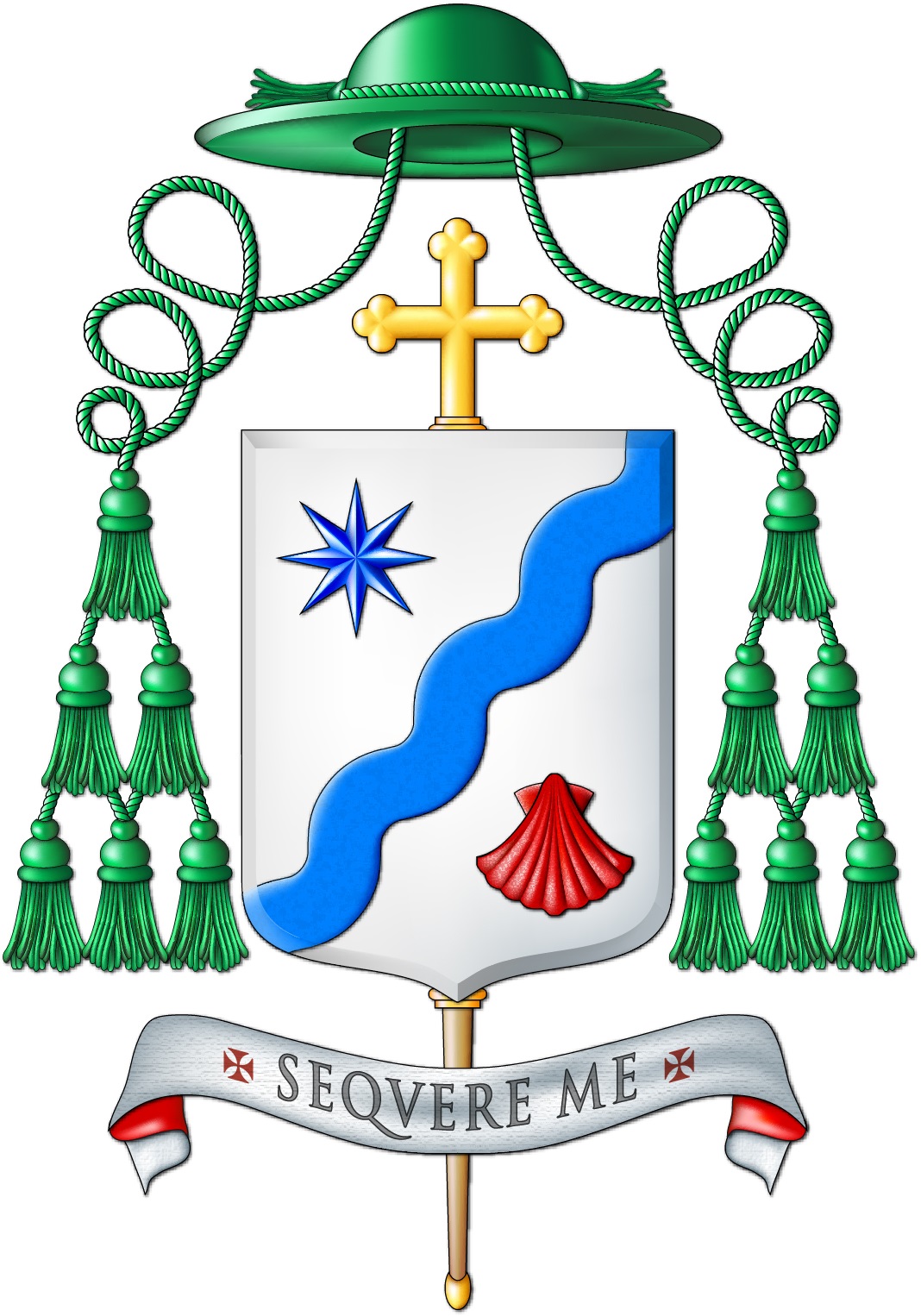
The arms (above) of the Most Rev. Stefano Manetti, installed April 13 as the Bishop of Montepulciano-Chiusi-Pienza, Italy. The wavy line is a reference to the waters of baptism; the star to Our Lady and the scallop shell to the pilgrim journey of faith. Very nice!
The recently granted arms of Canon Robin Ward, Principal of St. Stephen’s House, Oxford. He has two versions; one with the hat of a Canon and the other with helm, mantle and crest. VERY nice!


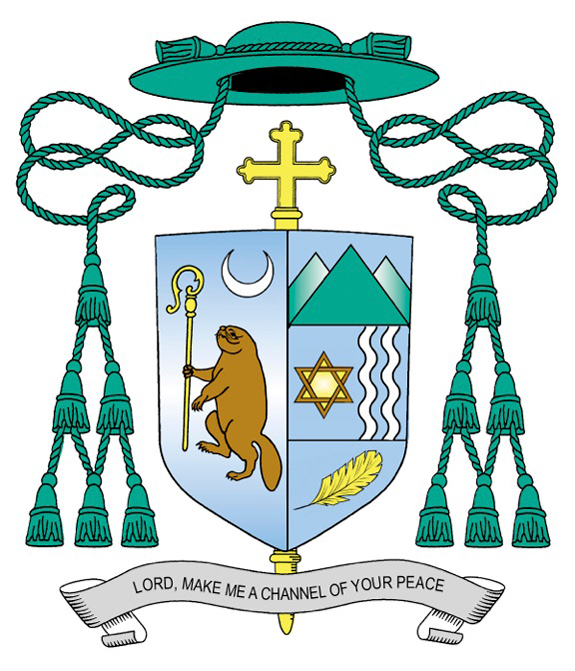
Thanks to the tireless efforts of one of my intrepid readers we see below the coat of arms of Edward Bernard Scharfenberger who will be ordained and installed today as the 10th Bishop of Albany, NY. The design of his arms is simple and clear and borrows from the arms associated with a family called Scharfenberger (the mountains). The star of David represents his mother, Miriam, who was of Jewish origin. The wavy lines allude to the various rivers associated with the bishop’s life and the golden feather in base is an allusion to both the Holy Spirit and the native Americans of upstate NY. My criticism would have to do mostly with this particular artistic rendering and so, I will refrain from commenting further as that is often simply a matter of taste. The beaver holding a crozier in the arms of the see come from the fact that the original name of Albany was “Beaverwyck” as it was a major outpost on the trade route for traders. It holds a crozier as an indication of Albany as the seat of a bishop. The crescent alludes to the Immaculate Conception, the titular of the cathedral church.
Fr. Guy Selvester's blog of Ecclesiastical Heraldry
Fr. Guy Selvester's blog of Ecclesiastical Heraldry
Fr. Guy Selvester's blog of Ecclesiastical Heraldry
Fr. Guy Selvester's blog of Ecclesiastical Heraldry
Fr. Guy Selvester's blog of Ecclesiastical Heraldry
Fr. Guy Selvester's blog of Ecclesiastical Heraldry
Fr. Guy Selvester's blog of Ecclesiastical Heraldry
Fr. Guy Selvester's blog of Ecclesiastical Heraldry
Fr. Guy Selvester's blog of Ecclesiastical Heraldry
Fr. Guy Selvester's blog of Ecclesiastical Heraldry
Fr. Guy Selvester's blog of Ecclesiastical Heraldry
Fr. Guy Selvester's blog of Ecclesiastical Heraldry
 EXARANDORUM