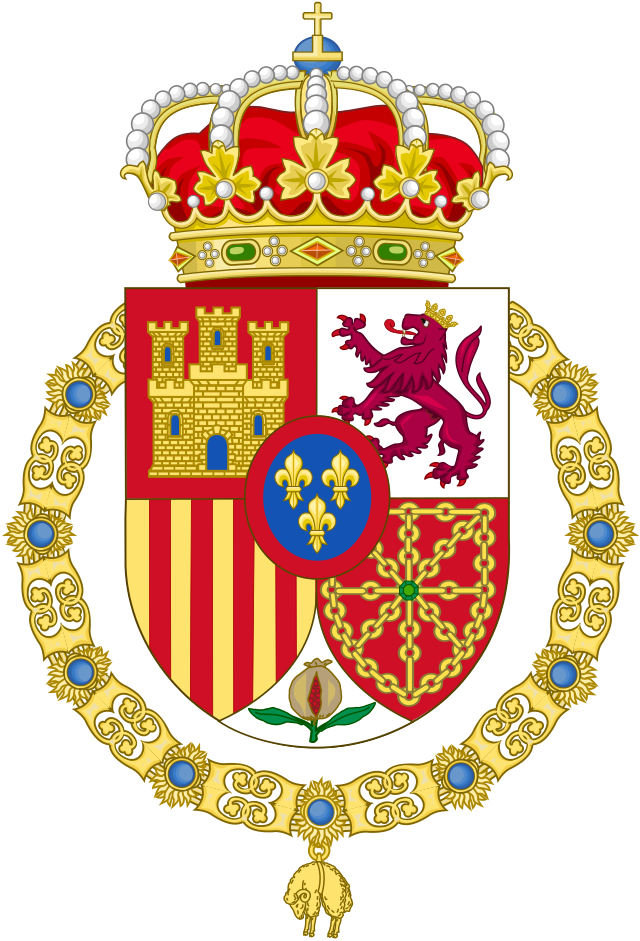
The coat of arms that will be used by King Felipe VI after his proclamation as king on June 19. The lion of Leon is correctly depicted as Purpure rather than Gules. In addition, the yoke and arrows used by Juan Carlos I as well as the Burgundian saltire behind the shield will not be used by Felipe VI.
Category Archives: External Ornaments
New Primate of Poland
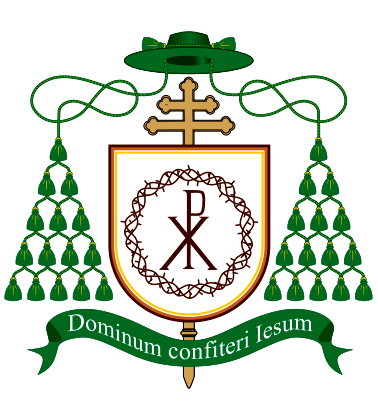
The new Archbishop of Gniezno, Poland, the Most Rev. Wojciech Polak, will be installed on June 7. In 1948 it was decided that the Archbishops of Warsaw would also be the Archbishops of Gniezno and, thus, Primates of Poland. These two offices were joined “in persona episcopi”. However, later in March of 1992 it was decided once again to separate the two archdioceses with each having its own archbishop. Josef Cardinal Glemp who was Archbishop of Gniezno and warsaw at the time was permitted to retain the title of Primate of Poland until he stepped down in 2009. From 2009 onwards the title Primate of Poland once again rests solely with the Archbishop of Gniezno and not with the Archbishop of Warsaw.
The arms of Archbishop Polak (below) show a simple design. However, the galero is shown with 30 green tassels instead of 20 and those tassels also appear ro have a skein of gold interwoven in them. Such a hat is used in Roman Catholic heraldry by Patriarchs, not Primates. Frequently, it is erroneously asserted that Primates are entitled to the same external ornaments as Patriarchs. This is false and untrue! So, this new Archbishop-Primate begins his tenure by claiming additaments on his coat of arms to which he has no credible claim.
Heraldry: FAIL
A Chaplain to His Holiness
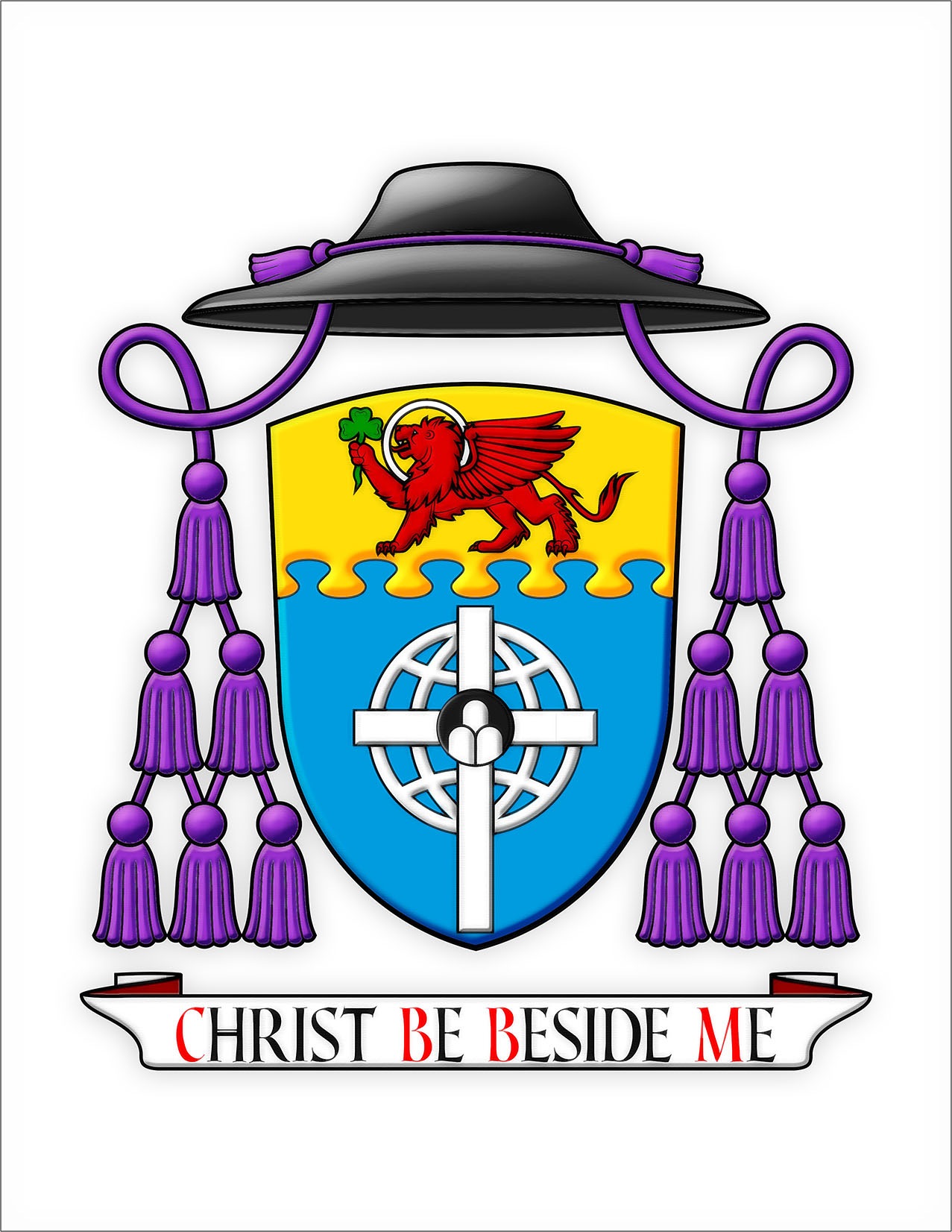
Back in 2012 a priest who, like me, grew up on Long Island and who, unlike me served as a priest of the diocese of Rockville Centre and also went on to serve the U.S. Air Force as a chaplain rising to the rank of Colonel, was honored by the then Pope, Benedict XVI, with the rank of Chaplain to His Holiness. This is the lowest of the three grades of prelates in the papal household who are collectively addressed as “Monsignor” (Italian for “My Lord”). Fr. Mark Rowan contacted me and asked if I could assist him with the design of a coat of arms. I jumped at the chance to help out a fellow Long Islander as well as a chance to assist someone who was serving not only the Lord but our country. Below is the end result:
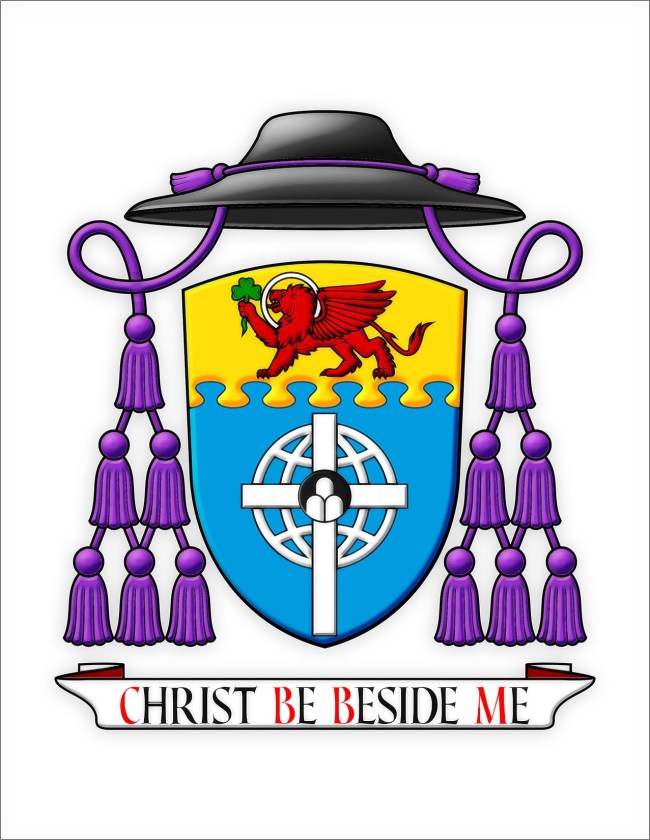
The main background of the field is a shade of blue called, in heraldry, Bleu Celeste. It is borrowed from the coat of arms of the U.S. Air Force. Obviously, it alludes to the blue of the sky. On this is the single charge of the open globe combined with a Latin cross (one where the lower arm is longer than the other three) in silver. This charge is taken from the arms of the Archdiocese for the Military Services, USA. Superimposed over this is a small black roundel, called a “pellet”. This, in turn, has three small silver hills. It is borrowed from the coat of arms of the diocese of Rockville Centre, NY. The three small hills are, in turn, taken from the arms of Pope Pius XII who founded the diocese of Rockville Centre in 1957. That diocese is composed of territory taken from the diocese of Brooklyn so the black tincture represents the marshes, which recalled to the Dutch their homeland in Breuckelen on the Vecht in the Province of Utrecht. The Dutch who settled Brooklyn at first called it “Breuck-Landt,” meaning “broken land,” or “marshland,” inasmuch as a great deal of land was broken up by patches of water.
The upper third of the shield (called the “chief”) is separated from the rest of the background by a line whose shape is referred to as “nebuly”. This type of line in heraldry is used to suggest clouds. This same dividing line is also used in the coat of arms of the U.S. Air Force. Here, along with the bleu celeste, it alludes to Msgr. Rowan’s service as a Chaplain. The bumps or nebuli are six in number. This is a reference to the fact that Msgr. Rowan has served or provided support on six different continents in the course of his service as a Chaplain and has also administered six of the seven sacraments. (The seventh sacrament, holy orders, is reserved to bishops). On the gold (or yellow) colored chief stands a red winged lion that is the symbol of his patron saint, St. Mark, the Evangelist. The lion holds, in his right front paw a green trefoil, more commonly known as a shamrock, which is the symbol of Msgr. Rowan’s Irish ancestry.
The galero, or ecclesiastical hat, is used in Church heraldry in place of the more martial helmet, mantling and crest. Originally a pilgrim’s hat it was worn and used in heraldry by Cardinals. Later, it was adopted by the lesser prelates. Eventually a system of both colors and number of tassels was devised to indicate the various ranks within the hierarchy. Msgr. Rowan’s arms use a black galero like any priest but the cords and tassels are purple indicating he is a member of the papal household. This galero indicates the bearer is a Chaplain to His Holiness according to the Motu Proprio, “Inter Multiplices” of Pope St. Pius X in 1905.
On a scroll below the shield Msgr. Rowan has chosen the motto, “Christ Be Beside Me” which is taken from the prayer known as “St. Patrick’s Breastplate”. After I completed this design and Msgr. Rowan approved the artwork was quickly and expertly executed by Mr. Sandy Turnbull of Australia. Mr. Turnbull is a member of the Australian Heraldry Society.
Archdiocese of Westminster
The archdiocese of Westminster (UK) recently launched the use of a new rendering of the archdiocesan coat of arms. Previously, they had used the arms of the See (Gules a pall Proper) under the galero of an archbishop with the patriarchal (double-barred) cross. This was technically incorrect as the cross and galero imply the arms of an individual archbishop rather than a corporate body like a diocese. So, that has now been rectified with the use of this new rendering that more correctly indicates this is the coat of arms of the archdiocese, rather than of the Cardinal-Archbishop.
As for the artwork: isn’t it hideous?
Bishop Burnette of Passaic
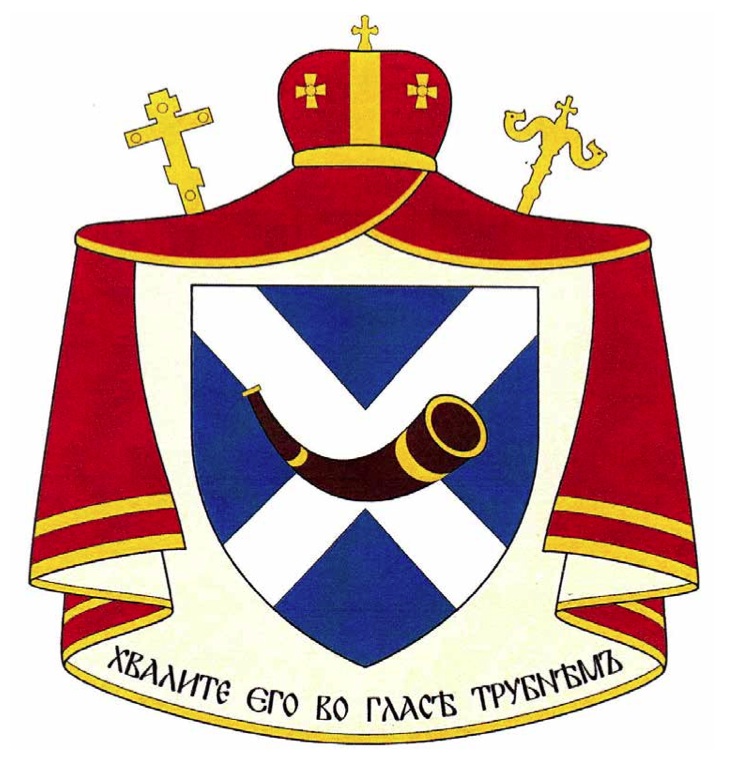
The arms of the Most Rev. Kurt Burnette, Ruthenian Byzantine Catholic Eparch of the Eparchy of Passaic which has parishes on the eastern seaboard of the USA from Connecticut to Florida. He was ordained and enthroned several months ago. Recently, Byzantine bishops in the USA have taken to using emblems composed of icons with the external ornaments of a coat of arms in a kind of hybrid. Bishop Kurt has chosen a genuine coat of arms. The motto is from Psalm 150 and says, “Praise him with the sound of the trumpet”. It alludes to the main charge of a hunting horn fashioned after the horn of Leys given to Alexander Burnett by Robert the Bruce in 1363. The Burnette family traces its origins back to the 11th Century. One of the bishop’s ancestors emigrated from Scotland to the American colony of New jersey in 1700. The cross of St. Andrew is a further allusion to Scotland as well as to the first called Apostle so revered in the Eastern Churches.
Canon Ward
Parish of St. Catherine Labouré in Harrisburg, PA
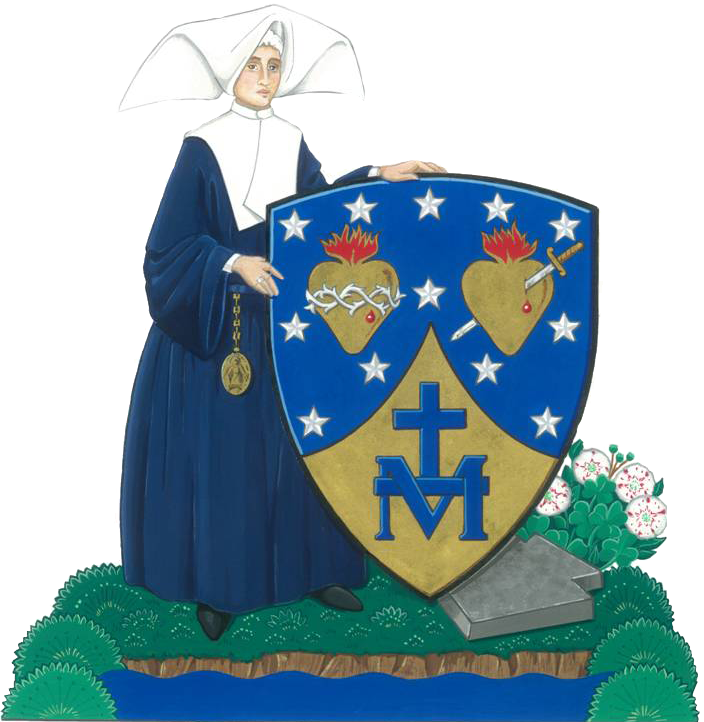
The arms naturally incorporate images found on the Miraculous Medal, which had been first entrusted to Catherine Labouré by the Blessed Virgin Mary. The shield incorporates four images found on the Medal, the Marian monogram, the stars from Sacred Scripture (as ascribed to Mary in the Apocalypse: 12-13), and the Sacred Heart of Jesus and the Immaculate Heart of Mary side by side. The shield is worked in blue and in gold. On this gold field is found the Marian cipher, a letter “M” surmounted by a Christian Cross, an image presented to Saint Catherine by the Virgin Mary herself. It is blue, as it represents the Blessed Mother specifically.
The blue field above represents the Blessed Virgin, of course, but more so in Her title of Our Lady of Grace. Upon this field appear the Sacred Heart of Jesus and the Immaculate Heart of Mary, linked theologically as Mary always stood beside her Son. These two images associated with the Miraculous Medal are surrounded by the twelve stars that surround Mary’s head as a halo in many Marian images, most definitely those associated with Her as Our Lady of the Miraculous Medal as seen on the reverse side of the medal itself. Both hearts suffer and bleed for the world.
Saint Catherine supports the shield in her historic and colorful habit of a Daughter of Charity of Saint Vincent de Paul as it was worn at the time of her life on earth. Saint Catherine stands on a compartment upon a green river bank above the blue waters of the Susquehanna River that runs through the state capital city to which the parish is near. The shield rests upon a stone, specifically a keystone, the emblem of the Commonwealth of Pennsylvania. Next to the keystone is found a floral spray composed of shamrocks honoring the patron saint of the Diocese of Harrisburg, Saint Patrick of Ireland; and mountain laurel, the official flower of the Commonwealth of Pennsylvania.
Design: J. Noonan Art: L. Nicholson
Heraldic Vestments
Usually, I am not a big fan of heraldry being used as a decorative motif on vestments and pontificalia. Every now and again, however, it can work. The example below shows the Most Rev. John J. Myers, Metropolitan Archbishop of Newark, NJ. The chasuble he wears is decorated with a shield (partially obscured by his pallium) bearing his personal coat of arms as is the base of the mitre he is wearing. I think this is a good example of how heraldry can be used to decorate vestments in a way that is neither overpowering nor inappropriate.
New Archbishop of Salzburg
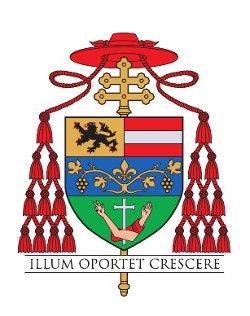
The new archbishop of Salzburg, Austria, Dr. Franz Lackner, OFM will be installed on January 12. His coat of arms employs the traditional red galero used by ancient custom by the archbishops of Salzburg (who hold the title “Primate of Germany”) because of their role as Papal Legate. This red galero with 20 tassels is used even if the archbishop is not a Cardinal. If he is promoted to Cardinal then another row of tassels is added to the galero. Similarly, the archbishops of Salzburg wear red, not purple, even if they are not Cardinals.
The arms also illustrate that the method of marshaling coats of arms preferred in many places, impalement, is far from the only option. The ancient arms of the See of Salzburg make up the upper third of the shield. The center section of blue with the gold grapevine is primarily emblematic of those referred to in Jn 15:1-5 the Lord’s vineyard and the strong connection between Christ and the believer (“I am the vine; you are the branches.”) . At the same time the vine but is also reference to the origin of Dr. Lackner from the wine area , namely that of Eastern Styria around Kapfenstein and St. Anna am Aigen. The golden heraldic lily is the actual symbol for Mary. The threefold division of the fleur-de-lis symbolizes the Holy Trinity of the Father, the Son and the Holy Spirit. The green base shows the “Franciscan Conformities” or the coat of arms of the Franciscan Order (without the clouds).
Bishop Cozzens
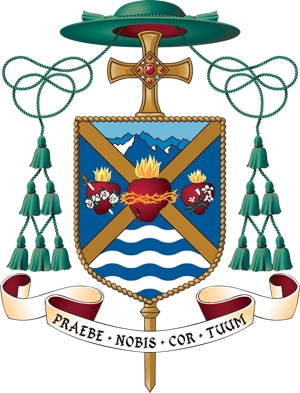
In an earlier post I noted how Auxiliary Bishop of St. Paul-Minneapolis, Andrew Cozzens, had his coat of arms carved into the crook of his crozier. Here now we see the coat of arms in its full achievement.
Hmmm. Less than wonderful.
The shield is divided by a saltire which is traditionally the X-shaped “St. Andrew Cross”. The three hearts represent the Sacred Heart of Jesus (center) the Immaculate Heart of Mary (to dexter) and the Heart of St. Joseph (to sinister). I have never heard of the latter being depicted either in heraldry or in any Catholic religious symbolism and art. Perhaps it was made up by the armiger to balance the other two? Either way, three hearts is a bit much and, if they were to be used, in heraldry it would have been better NOT to depict them in the traditional form with flames, roses, thorns, etc. and simply to depict three heart-shaped charges to stand for these three hearts.
The waves in base are from the arms of the See, which the bishop now serves and had served as a priest as well. However, the mountains in chief, to allude to his native Colorado, should be stylized and not depicted in a portrait landscape style. When…When…WHEN are people going to get it through their heads that you cannot simply take any image or picture you want, slap it onto a shield and call it heraldry???
The cord around the perimeter of the shield represents the bond of fraternity that the bishop has with a group of priests who form a priestly fraternity of which he is a member. That’s a perfectly good symbol for such a bond but should have been depicted within the edge of the shield as a bordure. Depicting it as the actual edge of the shield is heraldically unsupportable.
In the description of the achievement the episcopal cross is described as being Celtic. There are two problems there. The first is my often mentioned admonition that individual armigers are not free to determine the shape, style and manner of the depiction of the external ornaments. That creative freedom applies only to that which is on the shield. The second problem in this case is that the cross depicted is not even Celtic!
So, all in all there are nice ideas here and the charges were chosen to represent wonderful priestly and personal virtues but the overall effect is disappointing at best.
Papal Throne Modified to Include Heraldry of Pope Francis
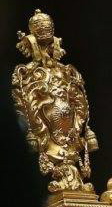
From the photos below which were taken on November 30th during a celebration of Vespers for the First Sunday of Advent we see that the throne chair used for papal liturgies (originally emblazoned with the arms of Pope St. Pius X and later modified to bear the arms of Pope Benedict XVI) have once again been slightly modified. The finials on the chair retain their original composition while the charges on the shield itself have been changed to bear the coat of arms of Pope Francis. It is nice to see some things are still being done. It is also odd to see the arms of Pope Francis topped by the tiara!
Royal Cardinal
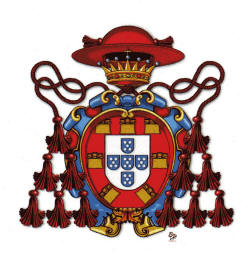
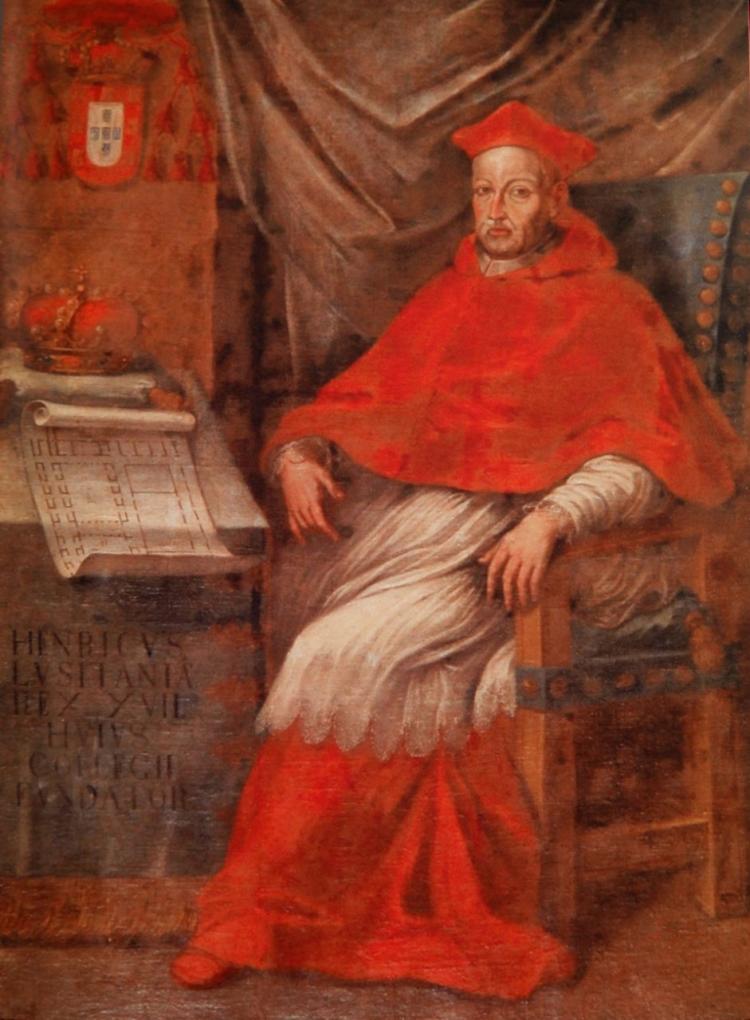
Henry (or Henrique) born on January 31, 1512 and died on January 31, 1580 reigned as King of Portugal and the Algarves and at the same time was a Cardinal of the Church. He ruled in Portugal between 1578 and 1580 and was known, for obvious reasons, as “Henry the Chaste”.
Henry was the fifth son of King Manuel I of Portugal and Maria of Aragon and the younger brother of King John III. He was not expected to succeed to the Portuguese throne since he was a younger son. Ordained as a priest in order to promote Portuguese interests within the Church then dominated by the Spanish he, not surprisingly as the son of a king, rose fast through the hierarchy, becoming in quick succession Archbishop Braga, then Archbishop of Évora and eventually of Lisbon before receiving the red hat in 1545, along with the Titular Roman church of Quattro Coronati.
Henry served as regent for his grandnephew, Sebastian, after 1557, and then succeeded him as king after Sebastian was killed at the Battle of Alcázarquibir. Henry renounced his clerical offices on his own volition and sought to marry for the continuation of the House of Avis, but Pope Gregory XIII, closely tied to the Habsburgs who controlled Spain, did not release him from his vows. The Cardinal-King died in Almeirim without having appointed a Council of Regency to choose a successor. Philip II of Spain who had a strong dynastic claim was elected King of Portugal at the Portuguese Cortes of Tomar in 1581.
For his arms he bore the royal arms of Portugal ensigned with a crown and a cardinal’s hat. (NOTE: the number of tassels was not fixed at 30 until the late 19th Century and prior to that cardinals often employed varying numbers of tassels on their galeri)
Crest or Coat-of-Arms?
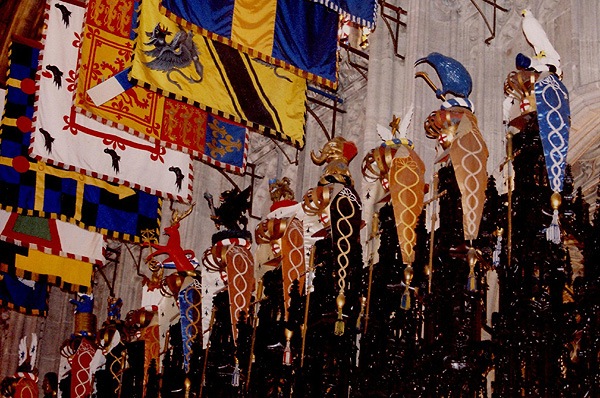
This photo illustrates something well. The banners at the top of the photo contain the coats-of-arms of the individuals who bear them. In the middle part of the photo there are those sort of dorky looking statues standing on top of the helmets. THOSE are crests. (They are placed at the crest of the helmet…get it?) The two terms are NOT synonymous. Many people use the word crest to mean a coat-of-arms. I know, those extra two syllables are a killer to have to say! A crest is a part of the full achievement of arms but it may be depicted alone. However a coat-of-arms and a crest are different things.
Basilica of Regina Pacis, Brooklyn, NY
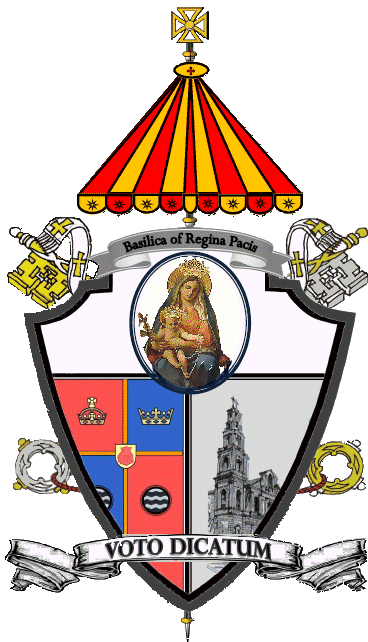
Arrrrrgh! This is horrible, Horrible, HORRIBLE!!! This coat of arms devised for the newly-designated Basilica Church of Regina Pacis in the Diocese of Brooklyn, NY is an excellent example of everything heraldry should NOT be. Do the “designers” (and I use the term loosely) of this monstrosity think that you simply take whatever images you want in whatever style you want and tack it to a shield and that’s called heraldry?
The only correct thing about this coat of arms is that basilica churches do, in fact, have the use of the ombrellino or pavilion and keys as external ornaments. Literally, everything else about it is horribly incorrect and completely lacking in imagination, creativity or even a passing knowledge of heraldic design.
The motto should not cross the shield but be depicted below it. Why is there a second scroll above the shield bearing only the name of the church? Is a coat of arms not identifying enough? The inclusion of the arms of the See of Brooklyn in its entirety is questionable but since it was done it would be good if part of it weren’t cut off! The pictorial images of Our Lady and of the church itself are wholly inappropriate and the whole is clearly a mish-mash of images cut and pasted together that don’t even match in style!
This is the worst kind of slap-dash, indifferent, ignorant heraldry that it sadly in use in far too many parts of the United States. IT STINKS!
Impalement is Not the Only Option
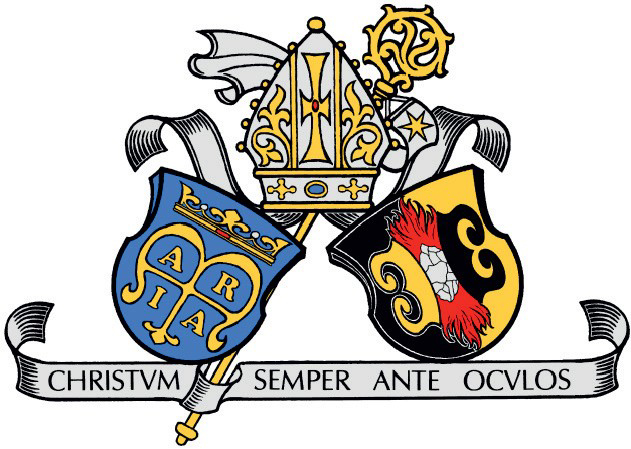
Here we see the coat of arms of Cistercian Abbot Christian Feuerstein, the Abbot of Monastery Rein in Steryia. Rather than marshaling his own arms with those of his abbey together on one shield by impaling them or by dimidiation his personal arms are depicted on a separate shield from those of the abbey thus retaining the clarity of each. His family name means “fire-stone” so his personal arms depict a flint being struck by steel to make fire. The two shields are then both surmounted by the external ornaments of an abbot, in this case the method often favored in Europe outside Italy of using the mitre and veiled crozier instead of the Roman galero. This is not, in the opinion of many, myself included, exactly correct. The galero should be used but, as I said, this more ancient method of ensigning the arms of an abbot is still employed by some.
Rosary As An External Ornament
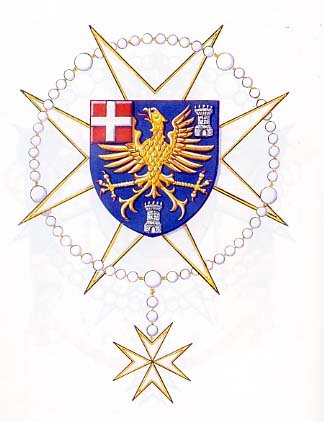
The rosary, or chaplet, is used in heraldry as an external ornament for those who are Professed Religious (men or women) and who are not also ordained to the priesthood. It is sometimes used by those who are officials and, therefore, entitled to use some other external ornament like a prior’s staff or even a crozier, in the case of Abbesses. The rosary is usually black and consists of five sets of ten beads, called decades, separated by five larger beads. It completely surrounds the shield and terminates at the bottom with three small beads and a cross.
The Prince and Grand Master of the Sovereign Military and Hospitaller Order of St. John of Jerusalem, Rhodes and Malta as well as professed knights of Justice of that order also make use of the rosary since they are actually Professed Religious in the Roman Catholic Church. However, they make use of a silver or white rosary that usually terminates in a Maltese cross.
Below is the coat of arms of the current Prince and Grand Master of the Order of Malta, His Most Eminent Highness, Frá Matthew Festing when he was Grand Prior of England which illustrates the use of the rosary well.
Prior’s Staff
One of the lesser known and, indeed, lesser used external ornaments in ecclesiastical heraldry is the Prior’s Staff, sometimes called the Cantor’s Staff. Like the crozier of bishops and abbots it has its origin in the staff used by pilgrims as a walking stick. As it evolved it came to be depicted as a simple staff usually of metal which terminated at the top in a small ball, or an apple, a fleur-de-lis or even the small representation of a house or chapel.
It is most often used in ecclesiastical heraldry for monastics but can also be seen in those places that still have cathedral chapters. Those officials of the chapter who do not enjoy the right to pontifical insignia, such as Priors, Provosts, Precentors or Cantors make use of it as a sign of their office. At one time Precentors or First Cantors were in charge of music for the chapter and cathedral and actually used this long staff to conduct the choir. It’s easy to see how from there it became a symbol of their office. This type of staff was also used to direct ceremonies.
Using the Prior’s Staff as a heraldic emblem was for those officials who actually used one in real life. As its use became less frequent it then evolved into an emblem for those who held the office that used to employ such staves. It is seen very little in heraldry these days.
(The example above is the coat of arms of the Collegiate Chapter of Canons of St. Vittore of Arcisate rendered beautifully by Marco Foppoli)