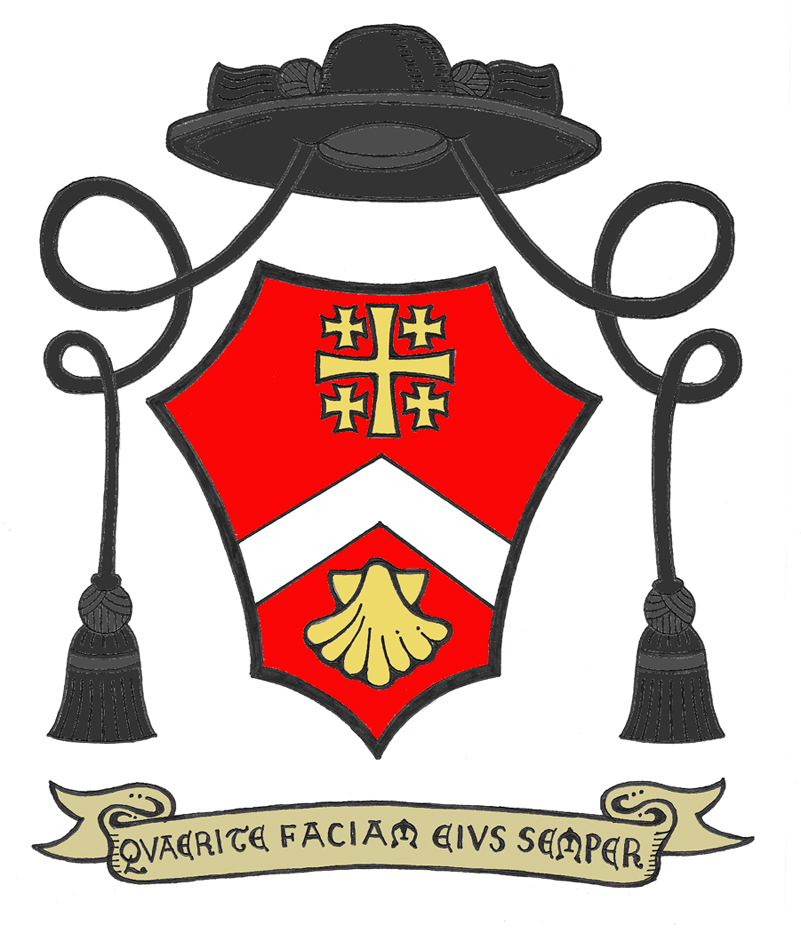
Bishop Cheri

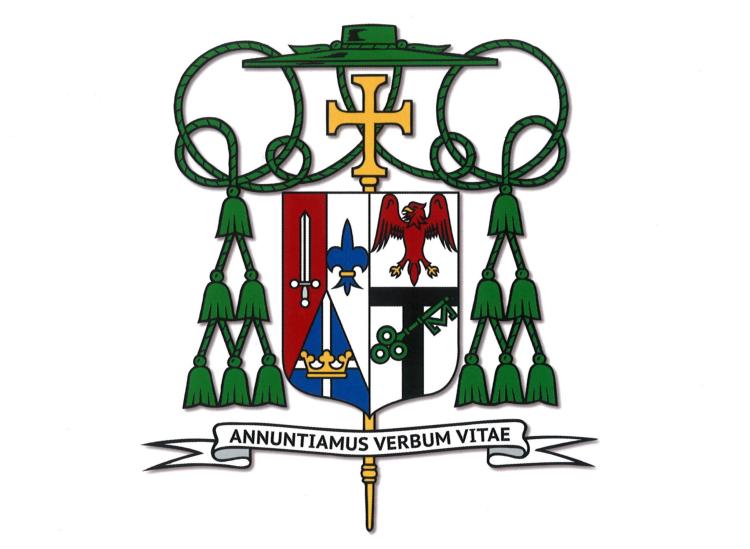
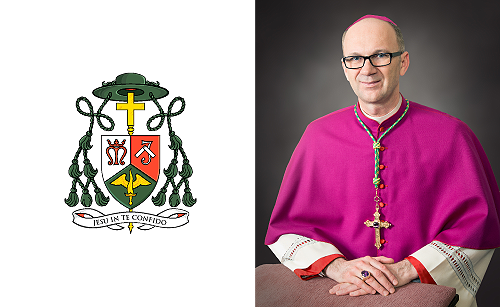
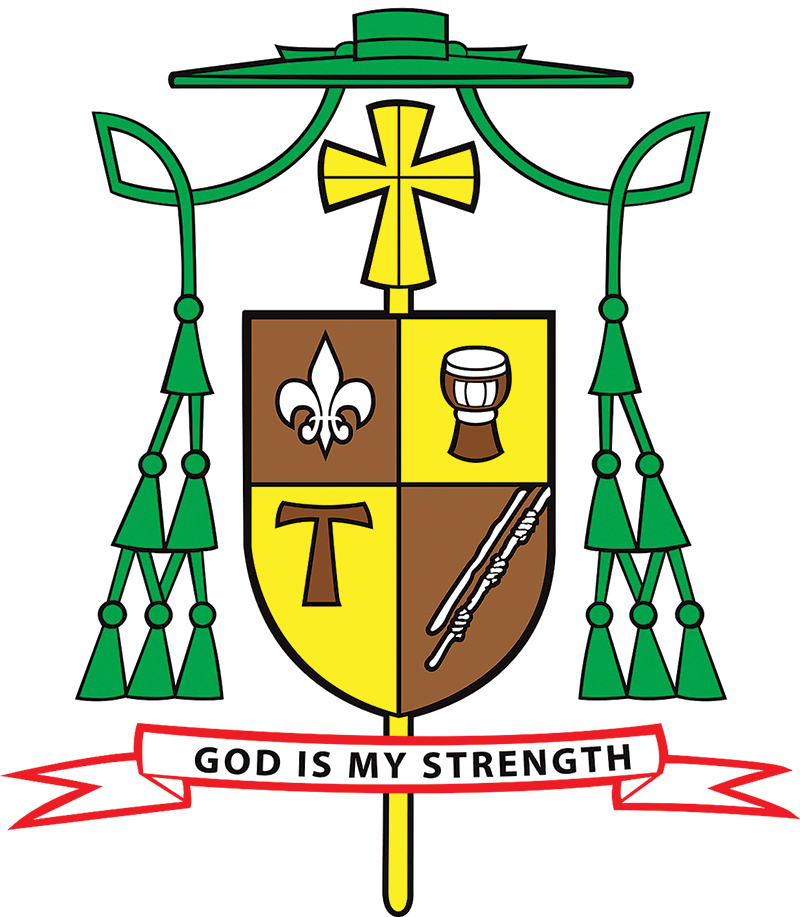
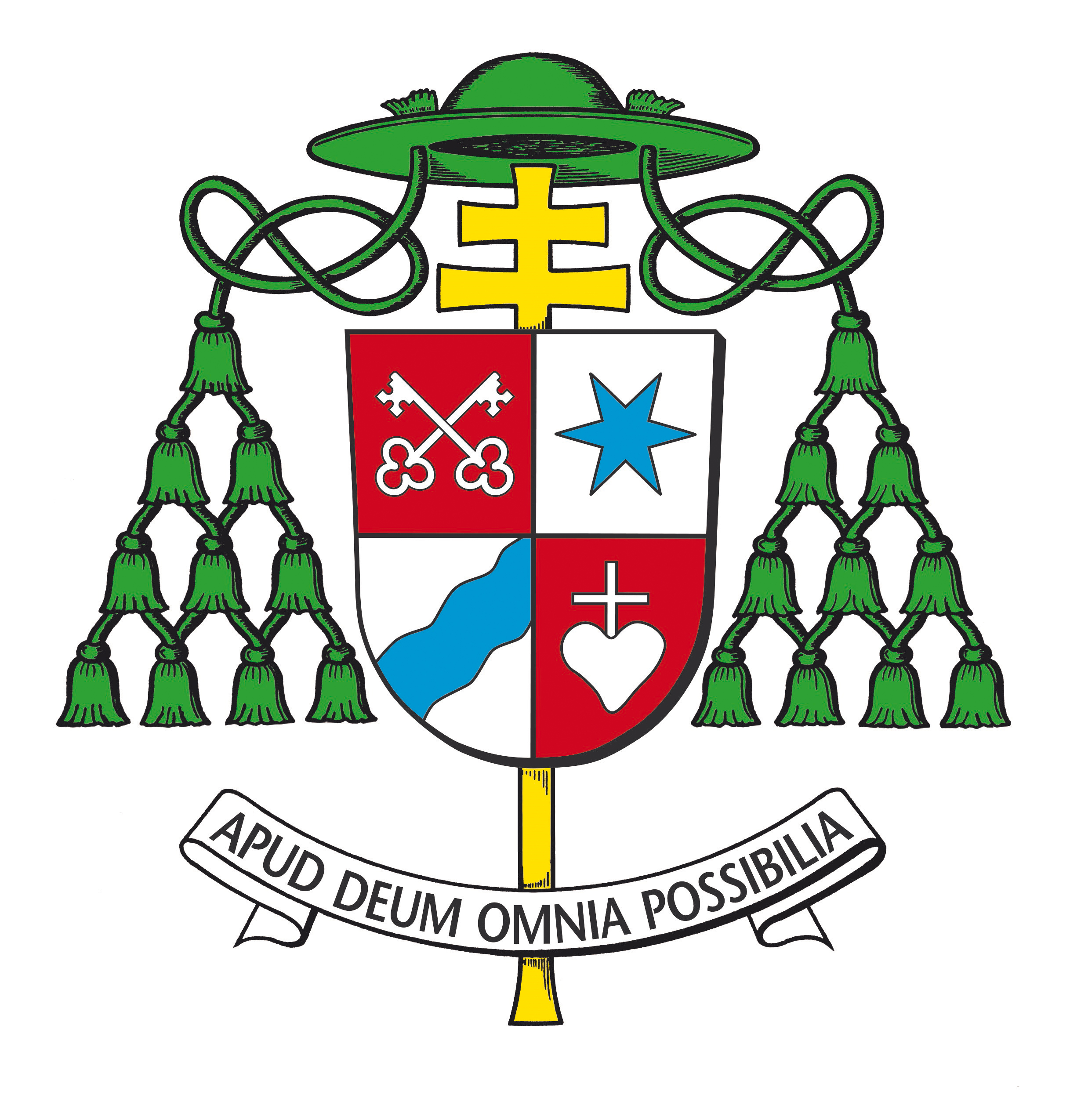
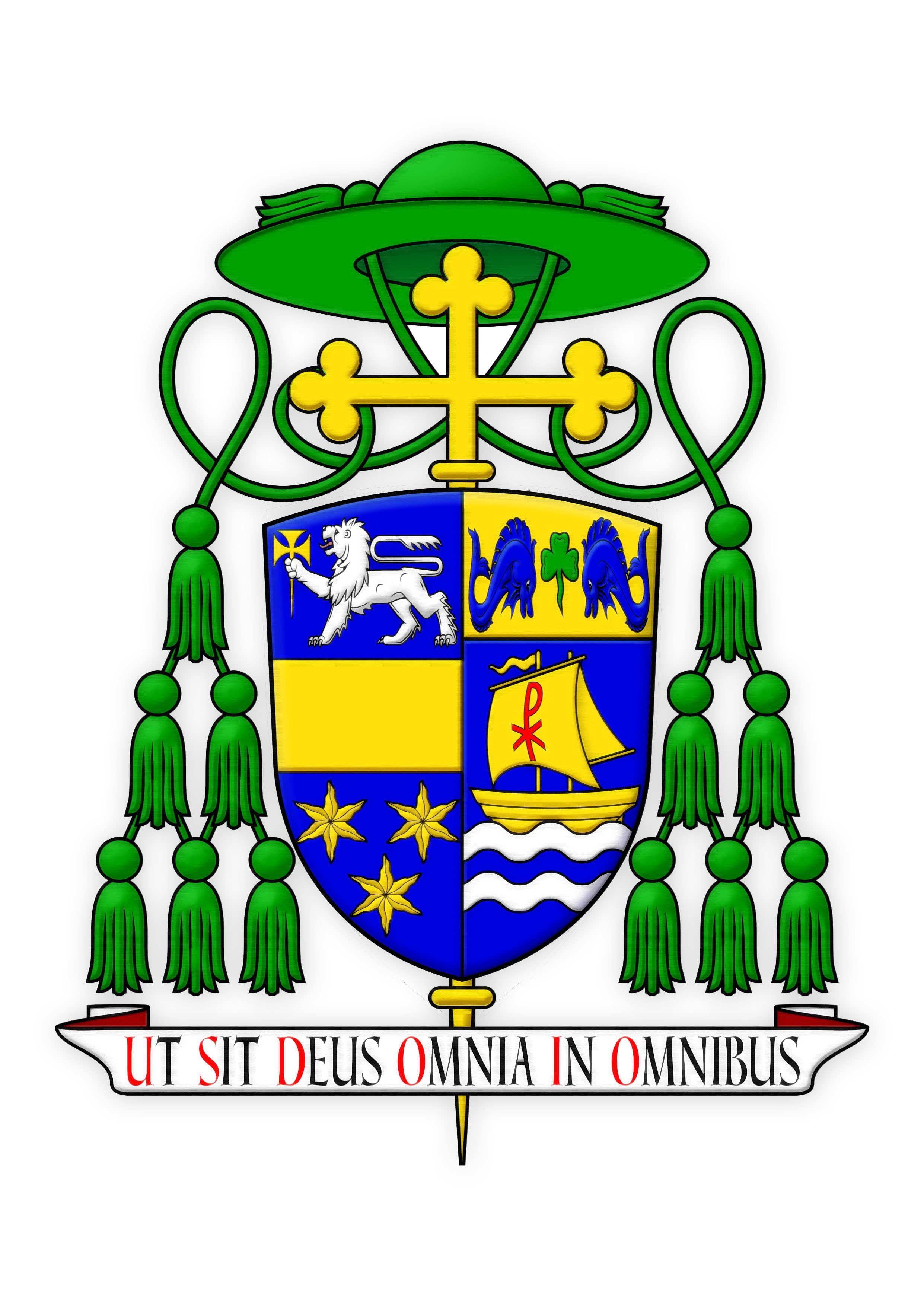
Bishop Cheri Coat of Arms

Today Bishop Fernand Cheri, OFM was ordained as the auxiliary bishop of New Orleans, Louisiana. His coat of arms has so many things about it that go against accepted heraldic practices, to say nothing of good taste, that I won’t even begin to comment on it.

Except to say no…just…no.

Bishop Hanefeldt of Grand Island, Nebraska

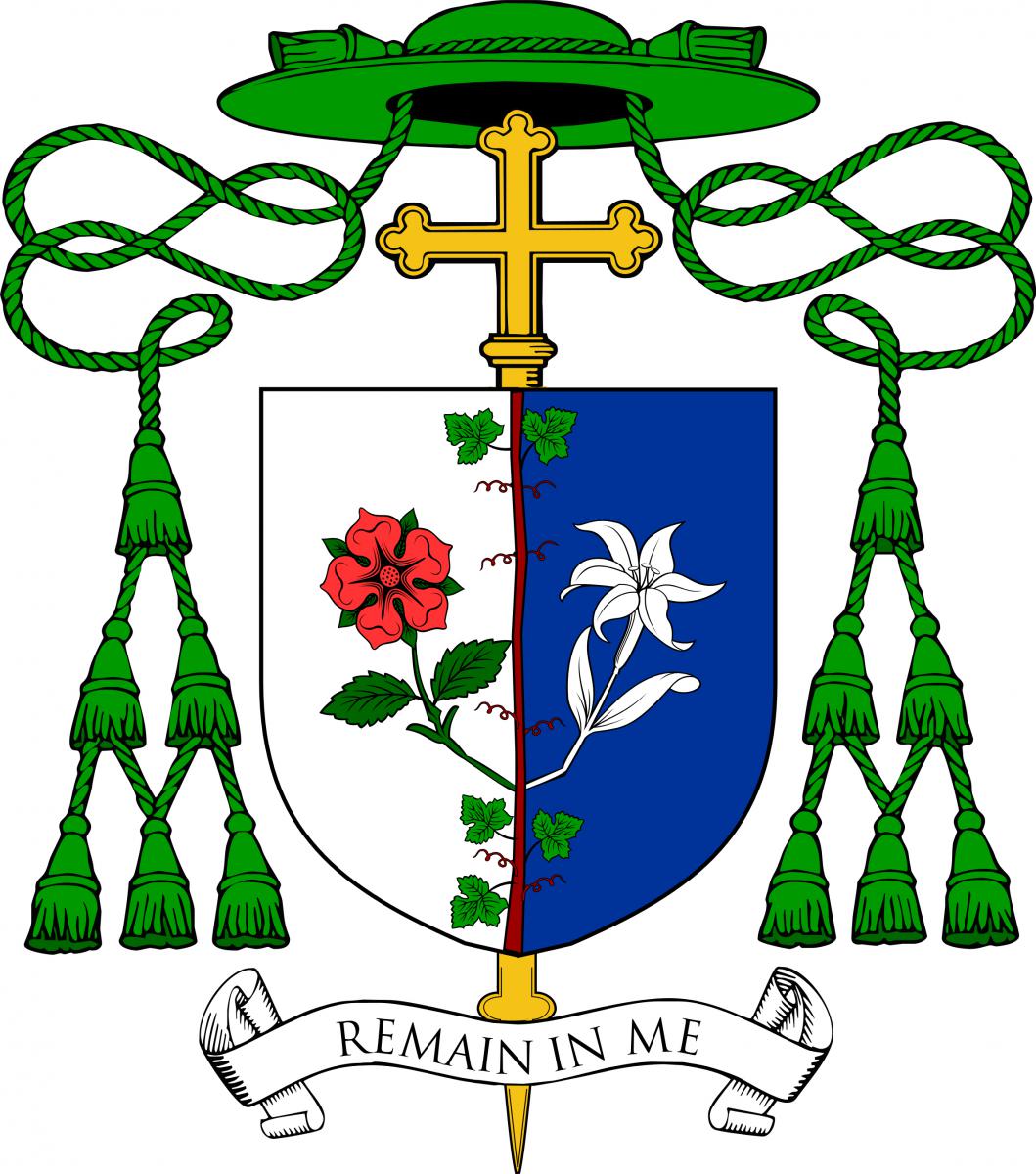
On March 19 the Most Rev. Joseph Hanefeldt, a priest of the archdiocese of Omaha was ordained and installed as the 8th bishop of Grand Island, Nebraska. His personal arms (below) allude to his devotion to Our Lady and to St. Joseph. These will alternately be displayed impaled with those of the diocese as well.

hanefeldt_simple


Faenza-Modigliana

Stemma Toso

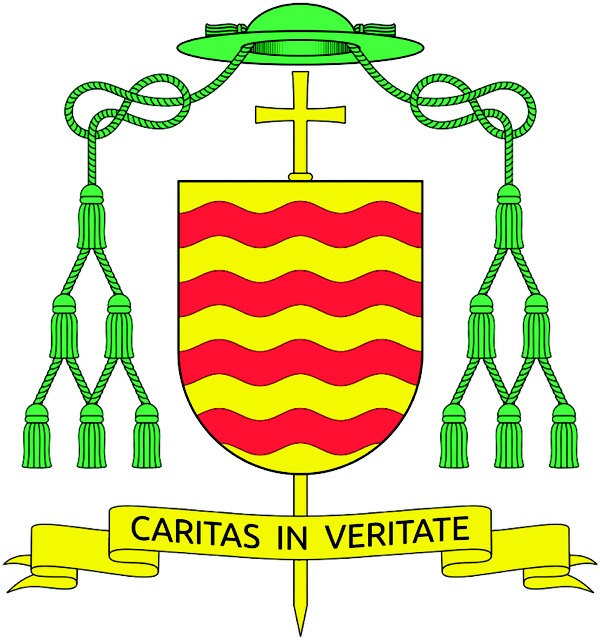
On March 15 the Most Rev. Mario Toso, SDB will be installed as the bishop of Faenza-Modigliana, Italy. His very attractive coat of arms makes reference to the motto he has chosen. The motto, “Caritas in Veritate” is taken from the first line of the encyclical of Pope Benedict XVI. The red wavy bars on the shield represent love and the gold background the splendor of the truth. Thus, the arms illustrate the motto, “Love in Truth”.

Is the “Swastika” Able To Be Rehabilitated?

swastika

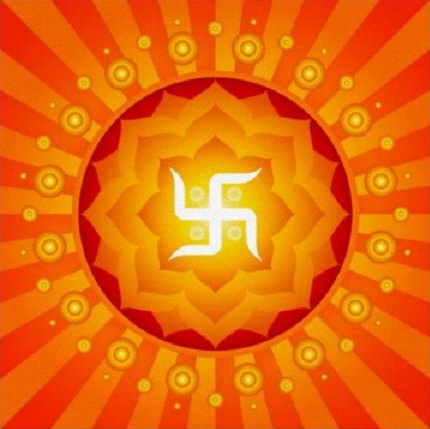
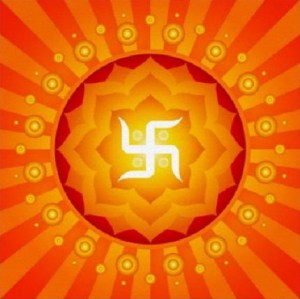
I recently came across an article on Huffpost about the swastika, the ancient religious symbol co-opted by the National Socialist German Worker’s Party, more commonly known as the Nazis, and whether or not the symbol which has deep significance for Buddhists, Hindus and Jains (the populations of which are growing in the USA) could ever be rehabilitated or is forever associated with evil, hatred and genocide.

This is something that has long interested me as a devotee of heraldry. I have often said, long before I knew about the religious significance of the swastika, that the Nazis chose a particularly striking symbol but that it was ruined for all time. In the summer of 1989 I was working in a parish in Baltimore that had been built in the 1920s before the Nazis came to dominate Germany and Europe. The floor tiles were plain but were interspersed with colored tiles depicting the cross in various forms. One such form was a swastika, or hooked cross (hakenkreuz) as the Germans called it. At first I was appalled seeing it there until I was told that it used to be seen simply as a form of the cross long before it became associated with the Nazis. From that point on I became interested in how this ancient symbol had been ruined forever and wondered if it might ever lose that connection with evil.
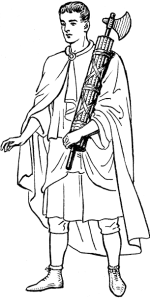
Fasces_(PSF)

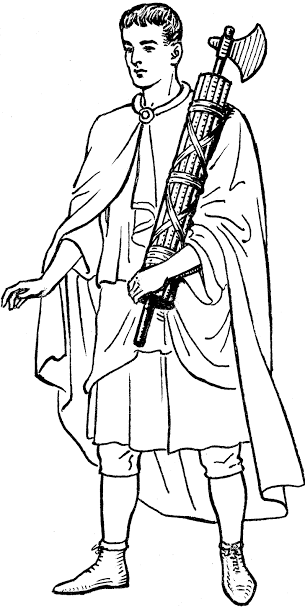
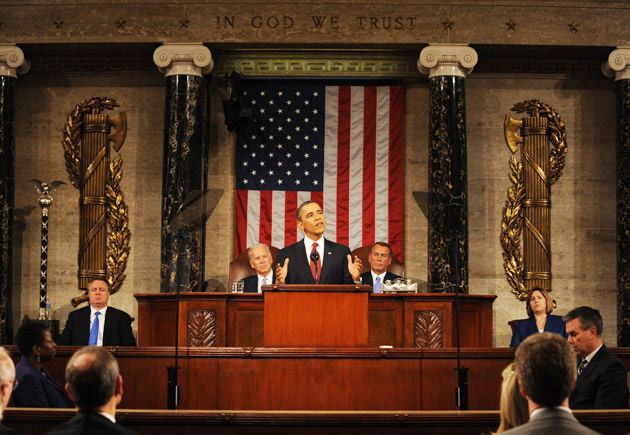
After all, the other big symbol associated with Fascism was also an ancient one: the fasces. This symbol, dating from the time of the Roman Empire, was the symbol used by Mussolini and his blackshirts in Italy after their rise to power. For centuries it had already existed as a symbol of justice and of legislative power. The fasces were used in the ancient Roman Senate in the time of the Republic and also, later, carried before the Emperor. Yet, during and after World War II no one seemed to feel the need to destroy this ancient symbol. Indeed depictions of the fasces appear on the wall behind the dais in the United States House of Representatives to this very day.

obama-getty-imagines

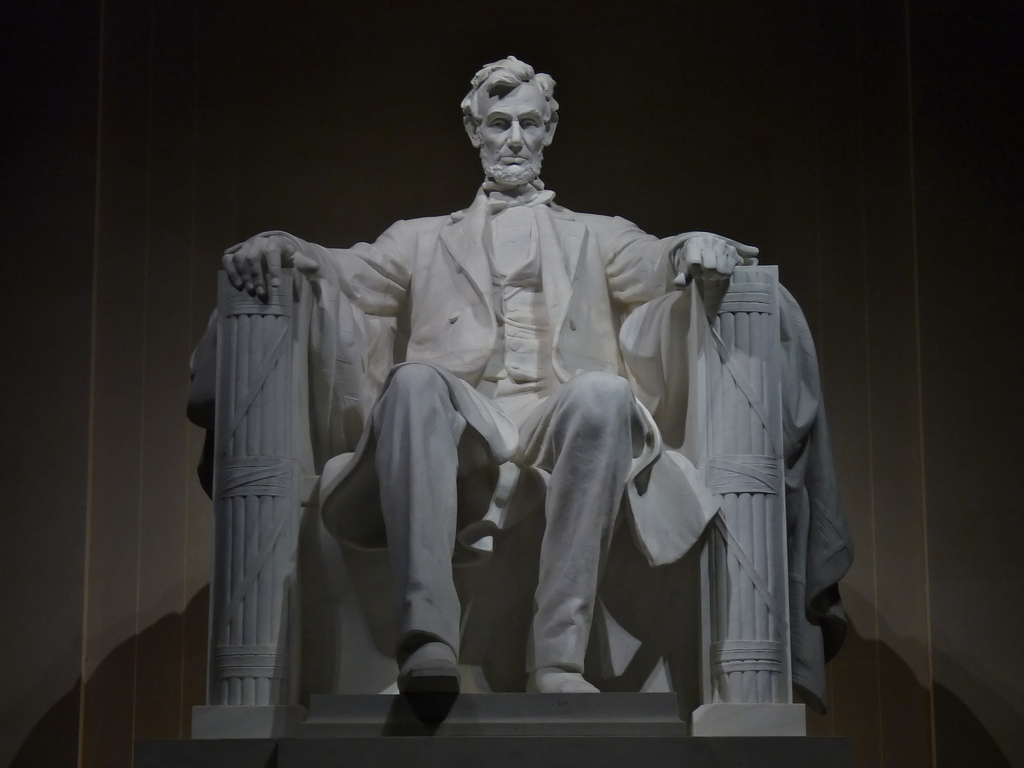
And the famous statue of Abraham Lincoln in the Lincoln Memorial in Washington, DC does not depict Honest Abe seated between two books, as is often erroneously thought. Rather, he is seated on a chair the arms of which are composed of fasces!
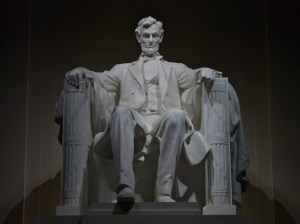
Lincolns-Fasces

So, why did the fasces get a pass and not the hakenkreuz? Why was one symbol so closely associated with the totalitarianism and oppression of Fascism allowed simply to continue in its original use while another with equally ancient origins and religious significance for several different religions become vilified as a universally deplored symbol signifying hatred especially when one considers that it was only used as a Nazi symbol for about 20 years? It helps to look at what Adolf Hitler did with a pre-existing symbol and how that affected its transformation.

Hitler didn’t invent the swastika, we know that. In fact, as I have already mentioned swastika is the word used for this symbol coming from the Sanskrit word for “well-being” and used by Buddhists, Hindus and Jains who consider it an auspicious sign. It was also seen as a sign of well-being and prosperity by Mesopotamian, Mayan and other early indigenous cultures. However, as a form of the Christian cross with hooked ends it was referred to by Europeans as the hooked cross (hakenkreuz). The Nazis never used the word “swastika” for their party symbol. But why would they, a neo-pagan cult which rejected the basic tenets of Christianity, adopt a form of the cross as a symbol? One theory is rooted in, of all things, Adolf Hitler’s Roman Catholic upbringing.

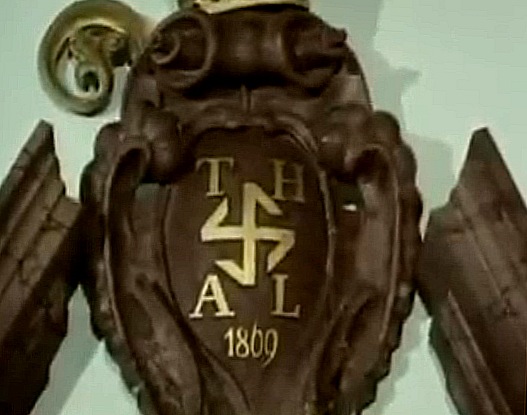
Born in Austria, a country that remained staunchly Catholic even after the Reformation, the young Hitler was educated at Lambach Abbey School run by Benedictine monks. Day after day the boy was surrounded by decorative motifs placed on doors and gateways throughout the abbey by one of its former (and deceased) abbots, Theodor Hagn. The device Hagn had used to decorate the abbey (below) contained his initials, T-H and the abbreviation A-L for Abbey Lambach surrounding an ancient form of the cross: a hooked cross. It was thought by many that this symbol stayed in the mind of the impressionable boy and he recalled it years later when choosing a symbol for the party in which he was rapidly rising to the top as its leader.
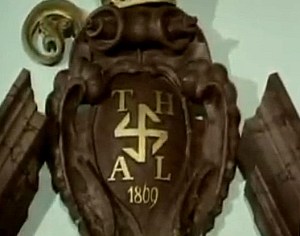
Image 2

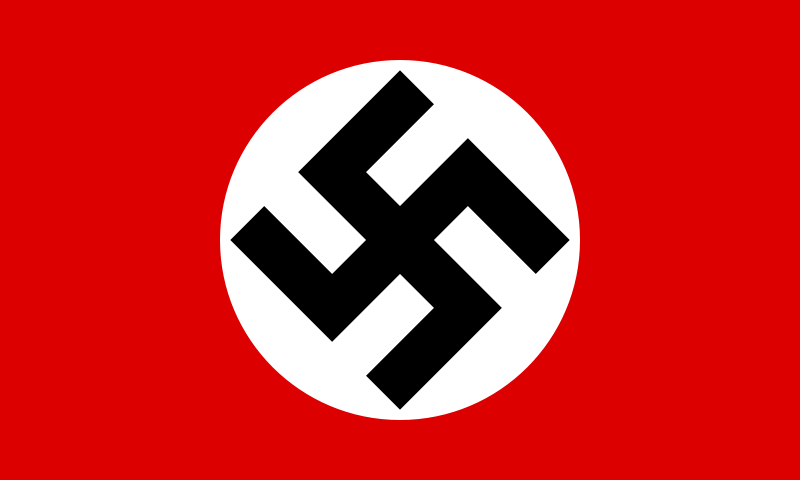
There is good reason to doubt this as the origin of the Nazi party symbol since party members had already been using the hakenkreuz as a symbol even before Adolf Hitler became a member. In addition, it is worth mentioning the ridiculous and false claims that the Nazis had that somehow they, as a “master race” were descended from the ancient Aryans for whom the swastika was a symbol used in their ancient culture. However, one thing is certain. Regardless of where Hitler got the symbol he is the one who decided on its particular depiction as the Nazi Party emblem. It was Hitler, the talentless frustrated artist who took the normally squared off swastika and tilted it on an angle. He then also insisted it be depicted in black on a white circle and the whole surrounded in red. Thus, did Hitler take an ancient form of the Christian cross (as well as an even more ancient symbol of well-being and auspiciousness to other religions of the world) and turn it into the forever recognizable armband and flag of the Nazis still associated with them long after their well-deserved demise.
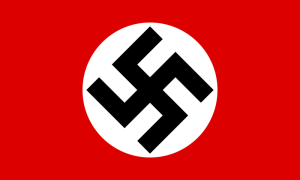
800px-Flag_of_Germany_1933.svg

So, since the hakenkreuz had a particular depiction (tilted, black on white surrounded by red) and the swastika has a similar but distinct depiction, as it also has a distinct meaning, and since the world was content to allow the fasces to continue in use as understood to have a distinct original meaning why has the swastika become so reviled?

The simple answer is, I think, because it has, that’s why. Because it became associated with man’s inhumanity to man. It became associated with the senseless slaughter of millions motivated by nothing other than blind, irrational hatred. It became associated with the people who perpetrated one of the greatest, if not the greatest, crime against humanity ever recorded. It became associated with the terrifying hatred of others as less valuable and less than valuable as human beings to be seen, instead, as a lower form of life to be exterminated.

In addition, unlike the fasces which, in a sense, reverted to their formerly respected and respectable symbolism and adopted by no one else as a symbol of attempting a continuance of the misguided oppression of the Fascists the hakenkreuz, or swastika, continues to be used by groups who represent nothing other than hatred and racism. The Nazi party as a party may no longer exist but there remain pockets of those who still espouse its ideas and its twisted philosophies. They think of themselves as the natural heirs to the Third Reich and imagine that they, too, are somehow descended of the “master race” of Arayans. Their delusion is all the more frightening because it persists so long after its originators were vanquished.

Nevertheless, despite the clear association with hatred of the hakenkreuz, itself most unfortunate because it is a bastardization of the cross of Christ which, for faithful Christians, is the symbol of their faith and a sign of life and salvation and mercy and reconciliation, the swastika, a different though unfortunately similar symbol, remains one of auspice and well-being to millions of people around the world. I think it is precisely because of their migration to the Western world that this has become more of an issue. In places like India the swastika is as commonly seen as the cross is in Europe or America.

The article I mentioned in Huffpost mentions how most people who adhere to one of the religions that make use of the swastika don’t feel an urgent need to assert its rehabilitation. That’s not because they don’t think it’s a good idea. Rather, it just isn’t seen as an important fight right now. They are able to see and understand the horrible connotation that symbol has in the eyes of many. As one man interviewed in the article states, “(it isn’t) up to the Hindus or necessarily in their interest to change what the swastika means to the Jews. They should be allowed to be repulsed by it just like Hindus should be allowed to be bolstered by its auspiciousness.”

Perhaps, several hundred years from now people will be able to look at a swastika and primarily see the symbol of well-being that it is for Hindus and acknowledge as footnote that, for a time, it had been appropriated as a symbol by a bunch of thugs who tried to take over the world and that bad connotation hung on for a century or two. That would be progress, I think. As to whether or not the hakenkreuz (I’ll never incorrectly use the term “swastika” for the Nazi symbol again) will ever be rehabilitated in Western society I think that the answer is certainly not in my lifetime and, i suspect, not for quite some time after that as well. As long as Holocaust survivors still live and the immediate families of both Holocaust victims and survivors, whose lives were torn apart and irrevocably changed by that horrible event, still live how can it be? In addition, as long as hate-filled anti-Semites still appropriate the symbol as theirs how can it? The Nazis may have used it for only about 20 years but countless numbers of bigots continue to infuse the symbol with their racial, religious and cultural hatred. The Nazis may have, in my poor opinion, “ruined” the swastika by using the hakenkreuz for a time but others continue to ruin it, and to misuse it as symbol that strikes fear into the hearts of all good people even now.

Can the swastika ever be allowed to be used in the West without being associated with the Nazis? Can the hakenkreuz ever be rehabilitated as merely one form of the cross? Perhaps. But, not now…nor anytime soon.
Bishop Garcia

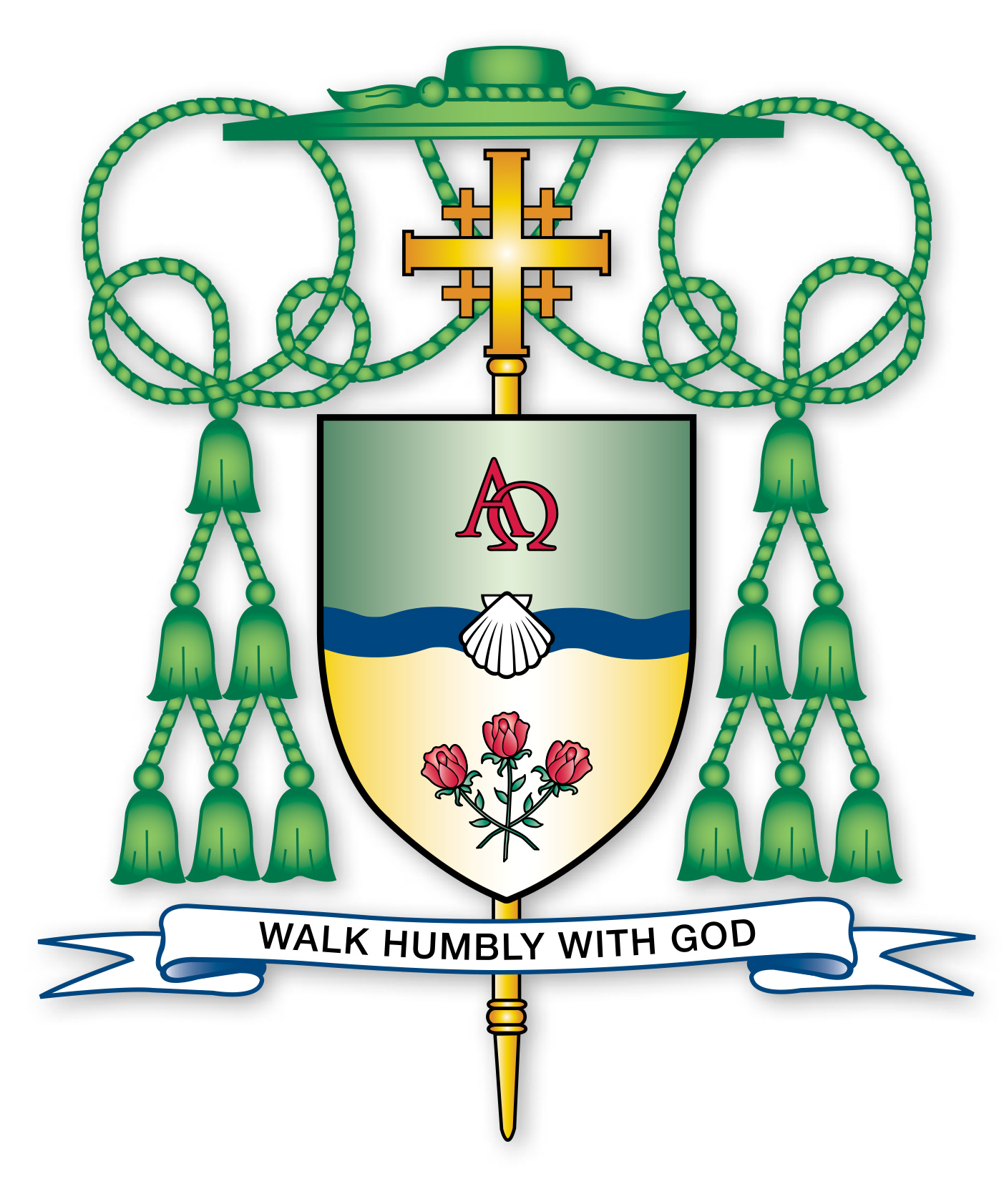
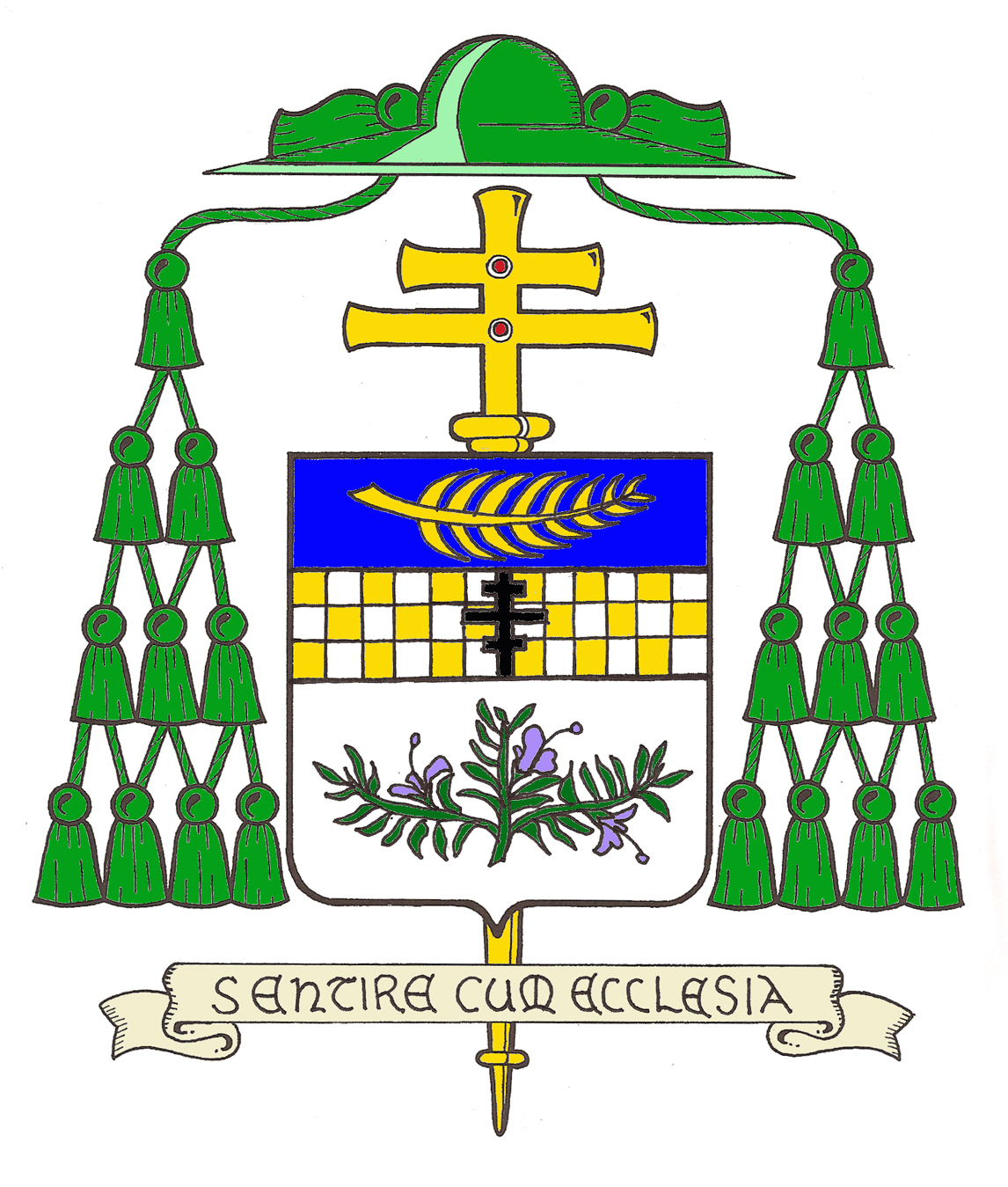
On March 3, the Most Rev. Daniel Elias Garcia was ordained as Titular Bishop of Capsus and Auxiliary Bishop of Austin, Texas. His adopted coat of arms (below) depicts his devotion to Our Lady (the roses), baptism (the shell), the Colorado River and Christ who is the First and the Last.

Dividing the field into two colors (green and gold) by a blue line isn’t really the best design choice. It would have been better if the whole field were gold. In addition, the description of the arms from the ordination program describes the “processional cross” as being in the form of a Jerusalem cross for apparently no reason. First of all it is not a processional cross. The external ornament in a bishop’s coat of arms more than any other that marks it as the coat of arms of a bishop (even more than a mitre or a galero) is the episcopal cross that stands vertically behind the shield. This type of cross, which resembles a processional cross, used to be carried directly in front of a bishop. Like the galero, also no longer in use, such episcopal crosses are no longer used but are retained as not only one of but actually as THE ensign of the coat of arms of a bishop. The galero is optional; the cross isn’t.

Second, it is not permitted to mandate that an external ornament like the episcopal cross, be depicted in a certain shape or style. The blazon concerns itself only with what is on the shield. That may indeed be mandated to be depicted in a particular way. No other artist is bound to depict the episcopal cross of Bp. Garcia’s arms as a Jerusalem cross. It may be his preference but it is not one to which others must adhere.

BishopGarciaBlazon

Bishop O’Regan of Sale, Australia

On February 26 Patrick M. O’Regan will be ordained and installed as the IX bishop of Sale, Victoria, Australia. The ship at sea is a reference to the diocese of Bathurst where the bishop previously served as a priest. In chief are charges that allude to St. patrick and to the arms traditionally associated with families of the name O’Regan or Regan. The arms were designed by me and Mr. Richard d’Apice and rendered by Mr. Sandy Turnbull.

Image 1

Coat of Arms of Pope Pius XII (Before and After)

Much has been written in recent years about the practice of a prelate modifying the design of his coat of arms when he moves from one position to another in the Church. Generally speaking I am against the practice. A coat of arms, even an assumed one, becomes a unique personal symbol and is associated with the person who bears the arms. To change the original design simply because one is taking up a new position or ministry is ill advised.

I am, of course, not referring to marshaling the personal arms with those of a jurisdiction (see, abbey, or even a parish). When a cleric is translated from one jurisdiction to another of course he will then marshal his personal arms to those of the new jurisdiction because, after all, impaling or quartering the personal arms with those of a jurisdiction is a means of displaying two or more separate coats of arms together on one shield. The arms of a diocese do not “become” part of the bishops personal coat of arms. They are displayed along with the personal arms of the incumbent during the tenure of his office as part of the overall achievement but that is all.

Rather, I am speaking of a cleric slightly modifying or even changing entirely the design on the shield of his personal coat of arms. In some cases the change is a result of unhappiness with the design originally adopted. Sometimes it is the case that a cleric is appointed to be a bishop and wishes to make use of his new coat of arms at his episcopal ordination which may be as soon as only six weeks away. So, a design is hastily adopted. later, when being translated to a new see the bishop has had time to second guess his original arms and wishes to tweak the design or even change it altogether. While this is understandable it still should be frowned upon. His new position doesn’t mean he is becoming an entirely new person.

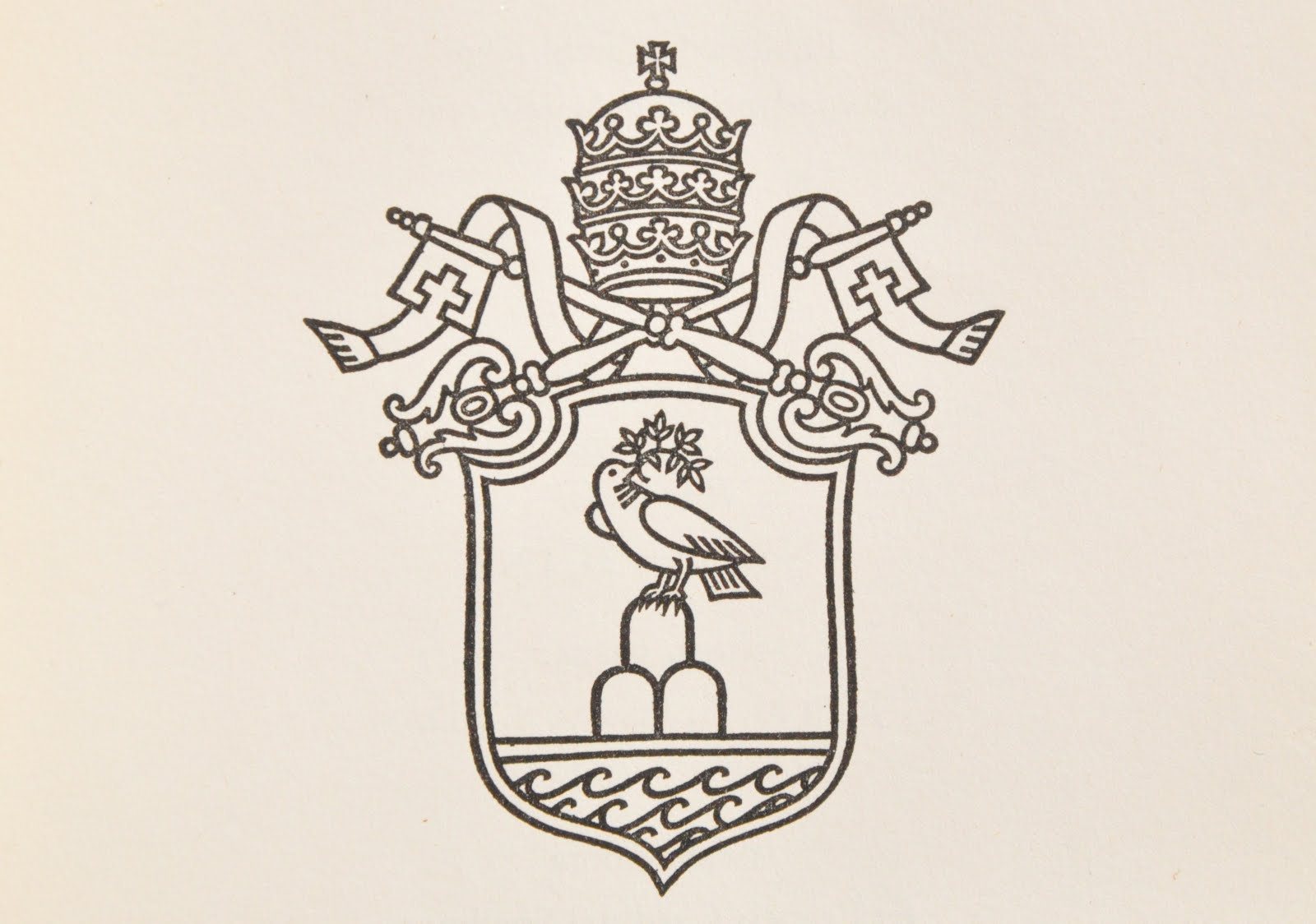
Yet we see that this has and continues to happen. Even no less than Pope Pius XII (Eugenio Pacelli 1939-1958) bore arms that were slightly different before and after he became pope. When a bishop and cardinal his arms depicted a dove displayed (i.e. with its wings spread) holding an olive branch in its beak. This is a reference to the name Pacelli which means “peace”. The dove was perched on a trimount and sitting below the arc of a rainbow, an allusion to the story of Noah from the Scriptures.

Danesi20

However, after his election to the papacy there are some differences. The dove now has folded wings and sits perched on the trimount which is depicted on field and above waves of water. In addition, the rainbow is now gone. Perhaps Pius XII felt the reference to the story of Noah was redundant or superfluous? Perhaps he wished to express a global desire for peace since he was elected at a time when the world was on the brink of World War II? Perhaps he simply liked this newer design more? We shall never know yet here is a good example of arms modified when going from one position in the Church to another.

piua xii arms in pen and ink

Bishop Christopher Coyne of Burlington, Vermont

Coat-of-Arms

On January 29 Bishop Christopher Coyne, until now Auxiliary Bishop of Indianapolis and before that a priest of the Archdiocese of Boston, will be installed as the 10th Bishop of Burlington, Vermont.

The dexter side of the shield (to the viewer’s left), represents the coat of arms of the Diocese of Burlington and is composed of a green field, which meets a gold chief (upper one-third of the design) at a jagged line, called “dancetty,” to give the impression of green mountain peaks, thus honoring the Green Mountain State of Vermont. Below the mountain is a golden stag’s head that is taken from the arms of Lord Cavendish, Earl of Burlington, for whom the See City is named. Between the stag’s antlers, as seen in the arms of the Archdiocese of Boston, is a golden cross fleuretty. This cross, honoring the French missionaries who first brought The Faith to the region, signifies that the first priest to be stationed in the service of the people of Vermont, Father Jeremiah O’Callaghan, was sent by Boston Bishop Benedict Fenwick.

The sinister side (to the viewers right) ‘s occupied by the personal heraldry of Bishop Coyne; upon a blue (azure) field is Bishop Coyne’s coat of arms which blends images representing his love for God, family genealogy and ministry history in the Archdiocese of Boston.

Bishop Coyne’s grandfathers were Irish and his grandmothers were French. The coat of arms reflects those two heritages with the Celtic cross and the fleur de lis. The Celtic cross also calls to mind the centrality of the cross in the history of salvation and the sacrifice of Jesus which brings redemption. The fleur de lis also represent Mary, the Mother of our Savior, and Saint Joseph, her most chaste spouse. Finally, the blue (azure) field also calls to mind Mary, the Immaculate Conception, under whose patronage the Diocese of Burlington has been placed.

Pontifical Colleges and Schools

Pontifical College Josephinum (USA)

Image 4


Pontifical Catholic University of Sāo Paolo (Brazil)

PUC-logo

Pontifical Catholic University of Rio de Janeiro (Brazil)

Brasaov

Pontifical Lateran University (Rome)

sensi

Pontifical University of St. Thomas Aquinas (Rome)

Pontifical_University_of_Saint_Thomas_Aquinas_logo

Pontifical Gregorian University (Rome)

Estemma_UniGreg

Pontifical Scots College (Rome)

pontificio

Venerable English College (Rome)

coat_of_arms

Pontifical North American College (Rome)

nac-logo

Pontifical Athenaeum of Saint Anselm (Rome)

ateneo1


Not Louisiana, Paris, France, New York or Rome! But Gary, Indiana, Gary, Indiana, Gary, Indiana; My Home Sweet Home.

123014

On January 6, 2015 the Most Rev. Donald J. Hying, a priest of the Archdiocese of Milwaukee, former Rector of the seminary there and, since 2011, Auxiliary Bishop of Milwaukee will be installed as the IV Bishop of the diocese of Gary, Indiana.

The Bishop’s coat of arms (above) depicting the arms of the See (dexter) which allude to the titular patron of the cathedral of the Holy Angels and his personal arms (sinister) which allude, in part, to the arms of the See of Milwaukee.

The motto translates to “Love never fails”. (1 Cor: 13)

(artwork by Paul Sullivan)

“Christmas” Heraldry

Each year at this time I always seem to get involved in a conversation with at least one other heraldry enthusiast about coats of arms associated with Christmas or the Christmas season. Here are a few tidbits I offer for your amusement. (Keep in mind the ancient custom of attributed arms, that is, coats of arms attributed to people who were not necessarily armigerous themselves, especially if they lived prior to the advent of heraldry and/or coats of arms devised for and attributed to people who may or may not be fictitious!)

Santa Claus (Saint Nicholas)

Here is a a coat of arms recently devised by a friend for St. Nicholas

10704163_656270491979_8257133350987141788_n

Here is another said to be of “Father Christmas”

10428443_962514470444895_2628170149422247155_n

The Three Wise Men (or Kings)

The arms attributed to Kaspar, Balthasaar and Melchior (depicted beautifully by the Italian heraldic artist, Marco Foppoli)

260210_2

The Blessed Virgin Mary

A coat of arms attributed to the Mother of Jesus, Mary

Mar_a_la_madre_de_Jes_s_CON_CORONA

Jesus (you know…the One whose birthday we’re celebrating?)

This is just one of many different attributed arms for Jesus, the Christ depicting the implements of His passion.

Arms of Christ

The Holy Family

A wonderful Christmas scene showing all the principal armigerous figures of the story of the Nativity with their corresponding attributed arms. (by daSilva)

966494_618639514870198_1761667505_o

Bishop Mark Edwards, OMI

Image 1

On December 17 Mark Stuart edwards, OMI will be ordained (along with Terence Curtin) as auxiliary bishop of Melbourne, Australia. Bishop Edwards is also the Titular Bishop of Garba.

His newly assumed arms (above) reflect his baptismal patron, St. Mark, as well as the Oblates of Mary Immaculate, the Religious community to which he belongs. In addition, Our Lady and Australia are alluded to on the chief.

These arms were designed by me and Mr. Richard d’Apice of the Australian Heraldry Society and emblazoned by Sandy Turnbull also of the Australian Heraldry Society.

Bishop Comensoli of Broken Bay, Australia

Image 11

The Broken Bay diocesan Arms display a lighthouse spreading the light of the gospel over the diocese. The detail echoes the detail of the Barrenjoey lighthouse which unites the two main land masses that comprise the regions of the diocese.

The arms and motto which Bishop Comensoli adopted at the time he was named Auxiliary Bishop of Sydney in 2011 are of a personal character and are blazoned: Azure, on a Latin cross inverted Or four seven-pointed mullets (or Commonwealth stars) Gules, in the first quarter a lion’s head erased Argent crined and langued Or and in the second a unicorn’s head erased Argent crined and armed Or respectant.

In layman’s terms, the arms may be described as: On a blue field, a gold cross inverted with a red seven-pointed (or Commonwealth) star at each extremity, in the upper left quarter, a silver lion’s head erased at the neck with gold mane and tongue and in the upper right quarter a silver unicorn’s head erased at the neck with gold mane and horn. The motto ‘Praedicamus Christum Crucifixum’ is a quotation from the Apostle Paul’s first epistle to the Corinthians (1Cor1.23), and can be translated as ‘We preach Christ crucified’.

The inverted Latin Cross symbolises the Bishop’s nominal patron, the Apostle Peter and the stars reflect the Southern Cross, which shines out over the Great South Land of the Holy Spirit. The lion and the unicorn respectively symbolise the mind and the heart of love. The meaning of these symbols, while of medieval provenance, is especially associated with the seminal work on Christian love by the English Jesuit, Martin C D’Arcy SJ, “The Mind and Heart of Love: Lion and Unicorn: A Study in Eros and Agape”. Bishop Comensoli will be installed as the Third Bishop of Broken Bay on Dec. 12.

The personal arms were designed by me and Mr. Richard d’Apice of the Australian Heraldry Society and originally emblazoned as well as marshaled with the arms of the diocese and emblazoned again by Mr. Sandy Turnbull also of the Australian Heraldry Society.