Category Archives: Work of Other Artists

Primate of the Swedish Church

Image

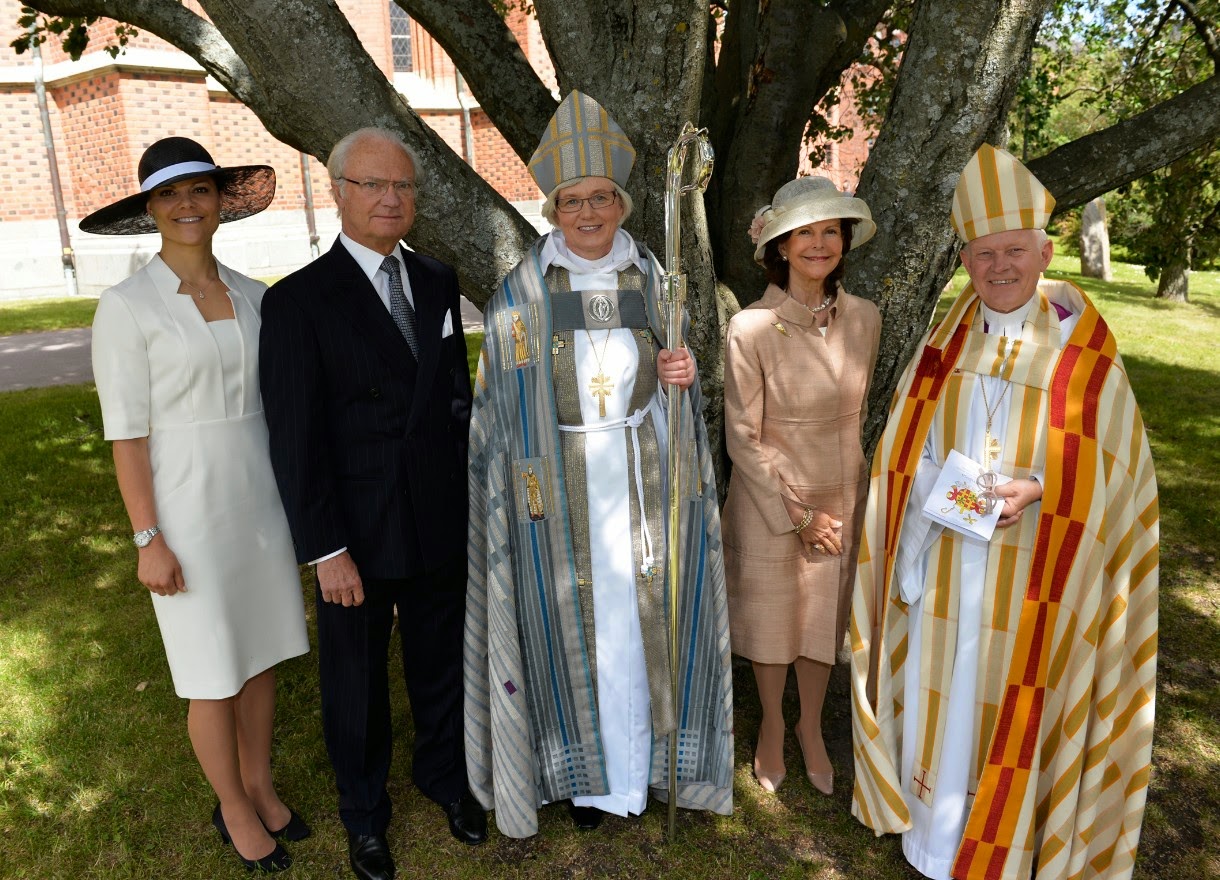
Above is the coat of arms of Archbishop Antje Jackelén, the Bishop of Lund in the Church of Sweden elected as the first woman to be Archbishop of Uppsala and Primate of the Church of Sweden. She was installed at Uppsala on June 15, 2014. Below is a photo of the new archbishop with (l.-r.) Crown Princess Victoria of Sweden, King Carl XVI Gustaf, Queen Silvia and Archbishop Anders Wejryd, her predecessor as archbishop. The coat of arms follows a typical pattern in Scandinavian countries of the personal arms (in the 2nd and 3rd quarters) being quartered with those of the (arch)diocese. The motto translates to, “God is Greater”.

Image

artwork: Ronny Andersen


A Franciscan Bishop

Image

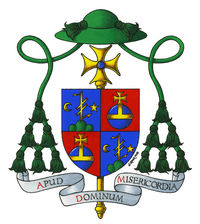
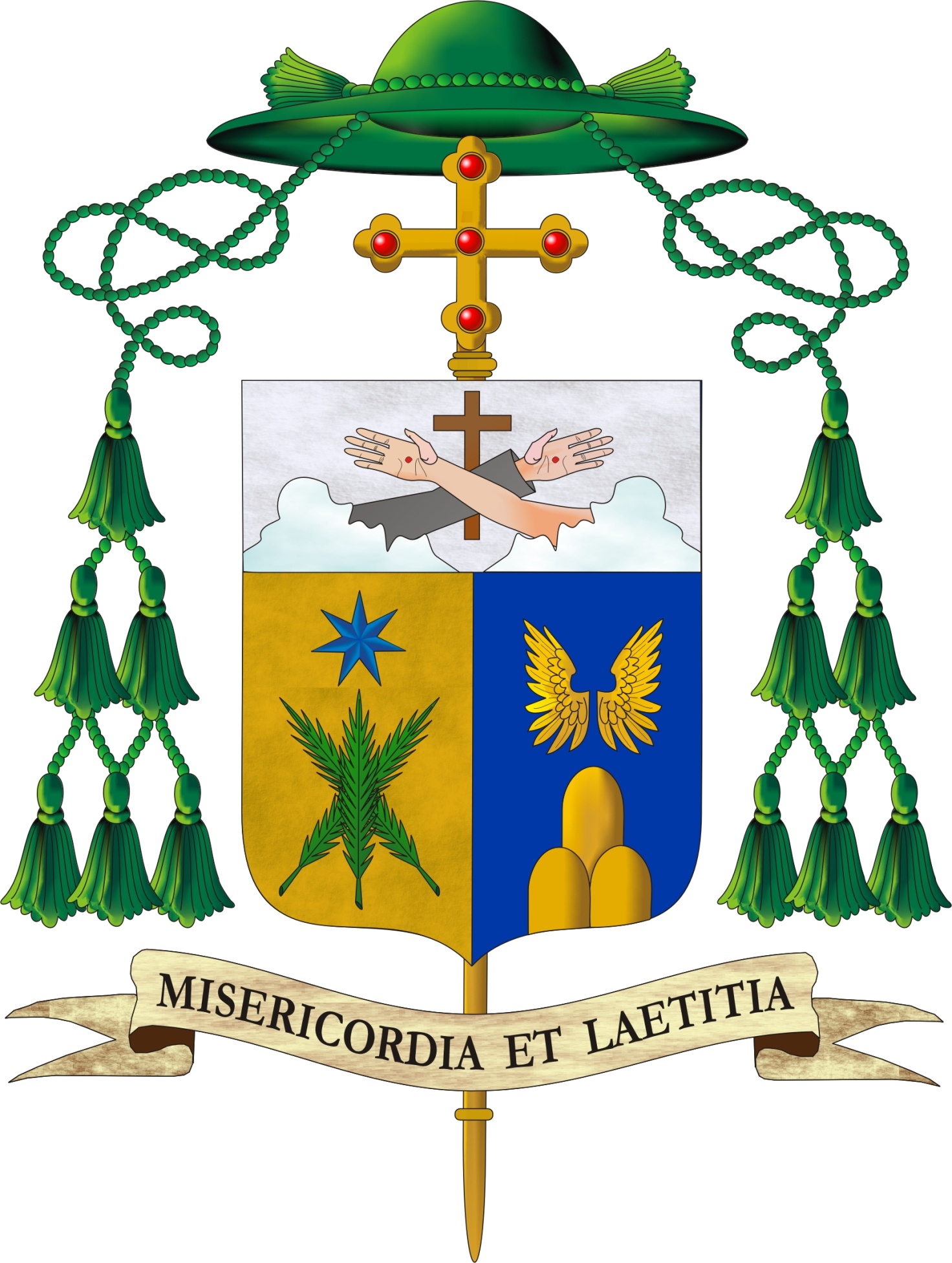
The coat of arms above is that of Giuseppe Piemontese, OFM Conv who will be ordained on June 21 as the bishop of Terni-Narni-Amelia, Italy. A very pleasing design.

(…and if you say the name of the diocese very quickly the middle part sounds like you’re saying “Narnia”)

New Primate of Poland

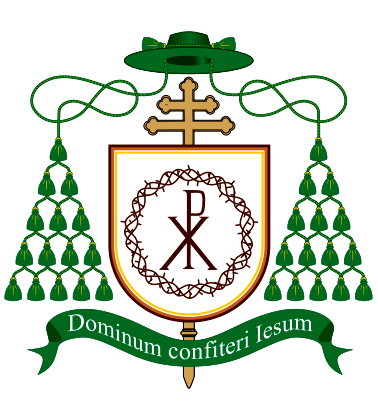
The new Archbishop of Gniezno, Poland, the Most Rev. Wojciech Polak, will be installed on June 7. In 1948 it was decided that the Archbishops of Warsaw would also be the Archbishops of Gniezno and, thus, Primates of Poland. These two offices were joined “in persona episcopi”. However, later in March of 1992 it was decided once again to separate the two archdioceses with each having its own archbishop. Josef Cardinal Glemp who was Archbishop of Gniezno and warsaw at the time was permitted to retain the title of Primate of Poland until he stepped down in 2009. From 2009 onwards the title Primate of Poland once again rests solely with the Archbishop of Gniezno and not with the Archbishop of Warsaw.

The arms of Archbishop Polak (below) show a simple design. However, the galero is shown with 30 green tassels instead of 20 and those tassels also appear ro have a skein of gold interwoven in them. Such a hat is used in Roman Catholic heraldry by Patriarchs, not Primates. Frequently, it is erroneously asserted that Primates are entitled to the same external ornaments as Patriarchs. This is false and untrue! So, this new Archbishop-Primate begins his tenure by claiming additaments on his coat of arms to which he has no credible claim.

Heraldry: FAIL

herb_polak


A Chaplain to His Holiness

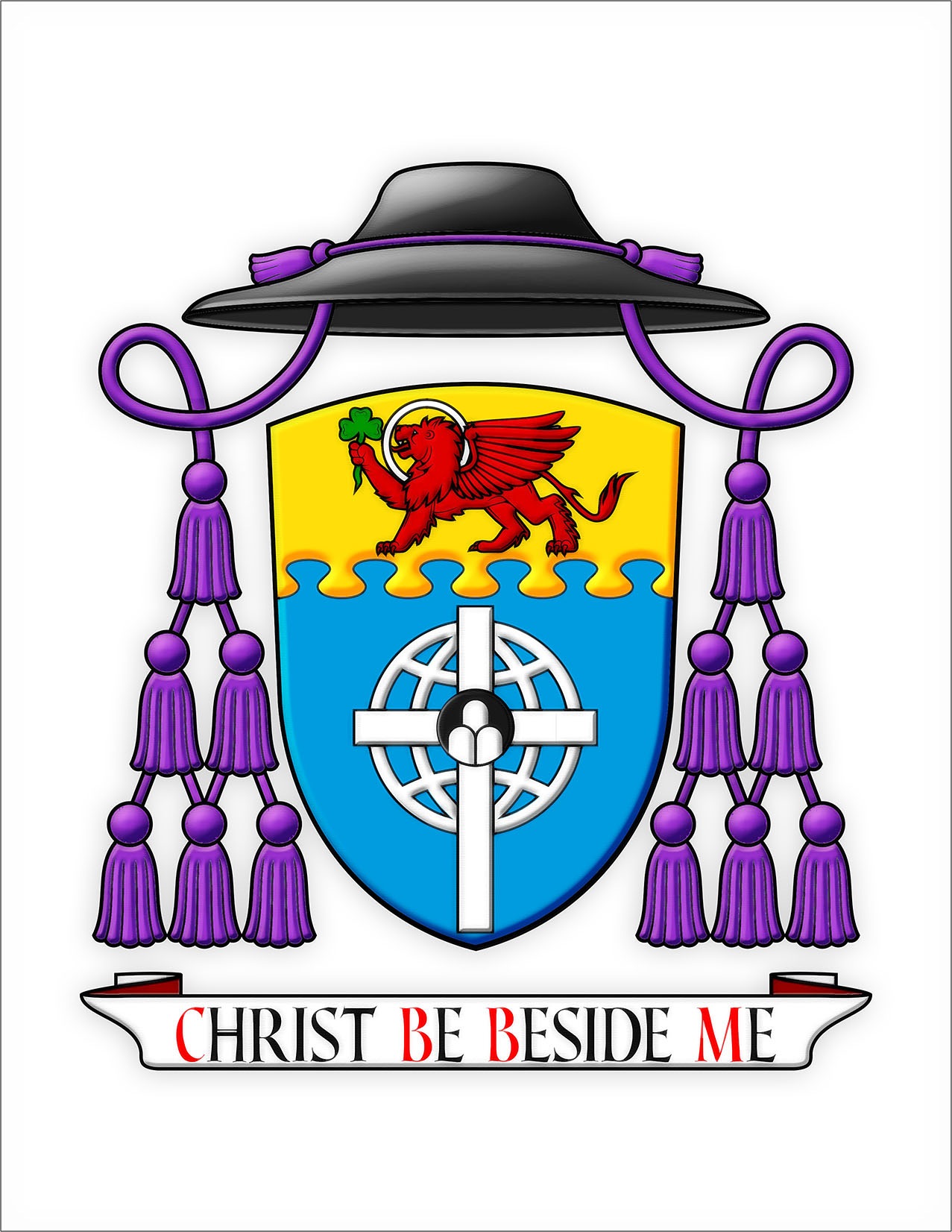
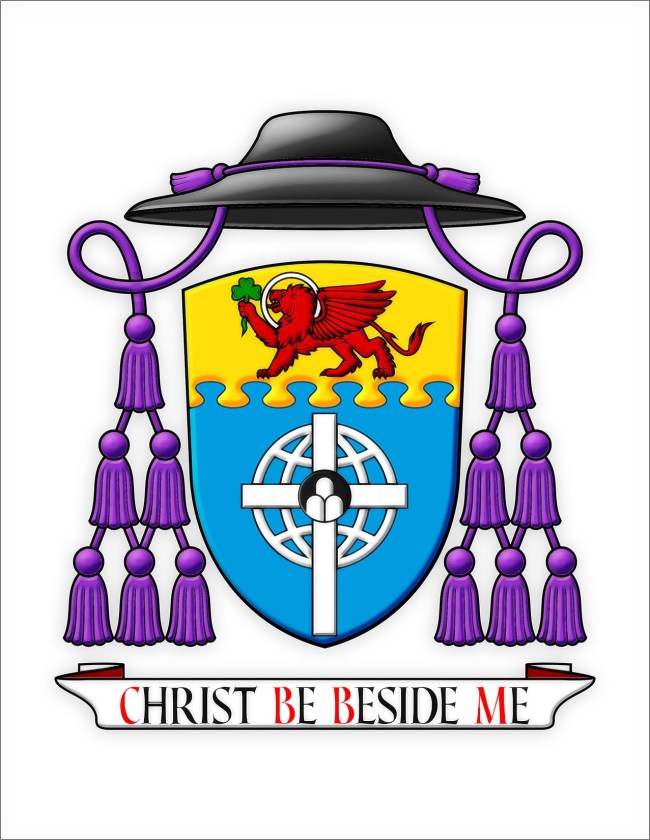
Back in 2012 a priest who, like me, grew up on Long Island and who, unlike me served as a priest of the diocese of Rockville Centre and also went on to serve the U.S. Air Force as a chaplain rising to the rank of Colonel, was honored by the then Pope, Benedict XVI, with the rank of Chaplain to His Holiness. This is the lowest of the three grades of prelates in the papal household who are collectively addressed as “Monsignor” (Italian for “My Lord”). Fr. Mark Rowan contacted me and asked if I could assist him with the design of a coat of arms. I jumped at the chance to help out a fellow Long Islander as well as a chance to assist someone who was serving not only the Lord but our country. Below is the end result:
Image

The main background of the field is a shade of blue called, in heraldry, Bleu Celeste. It is borrowed from the coat of arms of the U.S. Air Force. Obviously, it alludes to the blue of the sky. On this is the single charge of the open globe combined with a Latin cross (one where the lower arm is longer than the other three) in silver. This charge is taken from the arms of the Archdiocese for the Military Services, USA. Superimposed over this is a small black roundel, called a “pellet”. This, in turn, has three small silver hills. It is borrowed from the coat of arms of the diocese of Rockville Centre, NY. The three small hills are, in turn, taken from the arms of Pope Pius XII who founded the diocese of Rockville Centre in 1957. That diocese is composed of territory taken from the diocese of Brooklyn so the black tincture represents the marshes, which recalled to the Dutch their homeland in Breuckelen on the Vecht in the Province of Utrecht. The Dutch who settled Brooklyn at first called it “Breuck-Landt,” meaning “broken land,” or “marshland,” inasmuch as a great deal of land was broken up by patches of water.

The upper third of the shield (called the “chief”) is separated from the rest of the background by a line whose shape is referred to as “nebuly”. This type of line in heraldry is used to suggest clouds. This same dividing line is also used in the coat of arms of the U.S. Air Force. Here, along with the bleu celeste, it alludes to Msgr. Rowan’s service as a Chaplain. The bumps or nebuli are six in number. This is a reference to the fact that Msgr. Rowan has served or provided support on six different continents in the course of his service as a Chaplain and has also administered six of the seven sacraments. (The seventh sacrament, holy orders, is reserved to bishops). On the gold (or yellow) colored chief stands a red winged lion that is the symbol of his patron saint, St. Mark, the Evangelist. The lion holds, in his right front paw a green trefoil, more commonly known as a shamrock, which is the symbol of Msgr. Rowan’s Irish ancestry.

The galero, or ecclesiastical hat, is used in Church heraldry in place of the more martial helmet, mantling and crest. Originally a pilgrim’s hat it was worn and used in heraldry by Cardinals. Later, it was adopted by the lesser prelates. Eventually a system of both colors and number of tassels was devised to indicate the various ranks within the hierarchy. Msgr. Rowan’s arms use a black galero like any priest but the cords and tassels are purple indicating he is a member of the papal household. This galero indicates the bearer is a Chaplain to His Holiness according to the Motu Proprio, “Inter Multiplices” of Pope St. Pius X in 1905.

On a scroll below the shield Msgr. Rowan has chosen the motto, “Christ Be Beside Me” which is taken from the prayer known as “St. Patrick’s Breastplate”. After I completed this design and Msgr. Rowan approved the artwork was quickly and expertly executed by Mr. Sandy Turnbull of Australia. Mr. Turnbull is a member of the Australian Heraldry Society.

Some Australian Bishops’ Arms

In recent years I have often had the great good fortune to collaborate on the design or re-design of coats of arms for various prelates and corporate bodies within the Catholic Church in Australia. My acquaintance and growing friendship with Mr. Richard d’Apice, President of the Australian Heraldry Society as well as a member of the Collegium Ecclesiastica Exarandorum, led to his occasionally consulting with me on designs upon which he was working. These days he acts as the agent with the bishop in question and we consult back and forth via email on the design itself. This happy collaboration is then added to even further by the artistic abilities of Mr. Sandy Turnbull who is also a member of the Australian Heraldry Society. With ease and great efficiency Mr. Turnbull is able to take our ideas and sketches and turn them into first rate heraldic depictions. To date we have worked together on approximately 28 commissions. Here are some examples of our most recent collaborations:
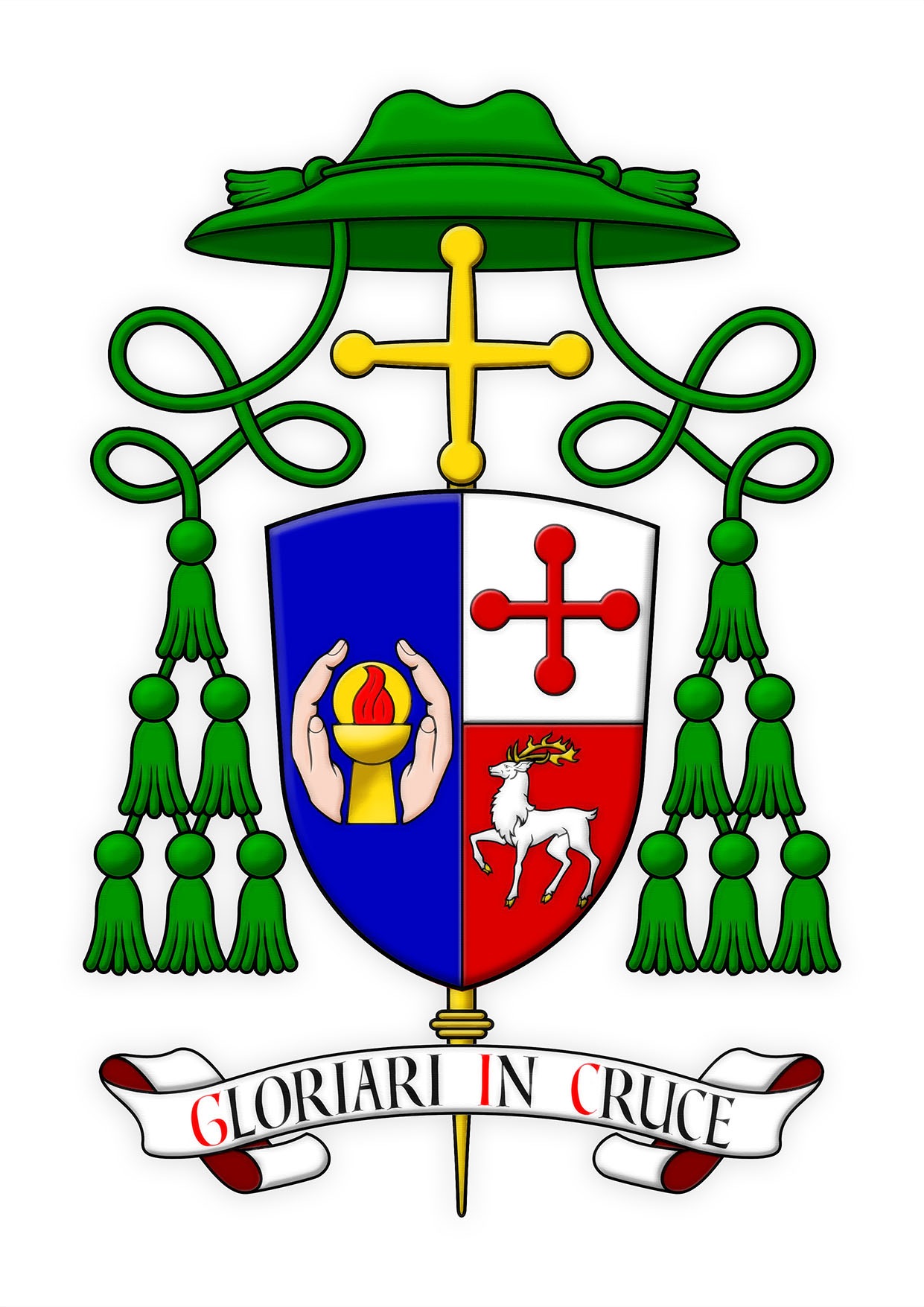
The coat of arms of the Most Rev. Michael F. McCarthy of Rockhampton who will be ordained and installed on May 29th.

Image

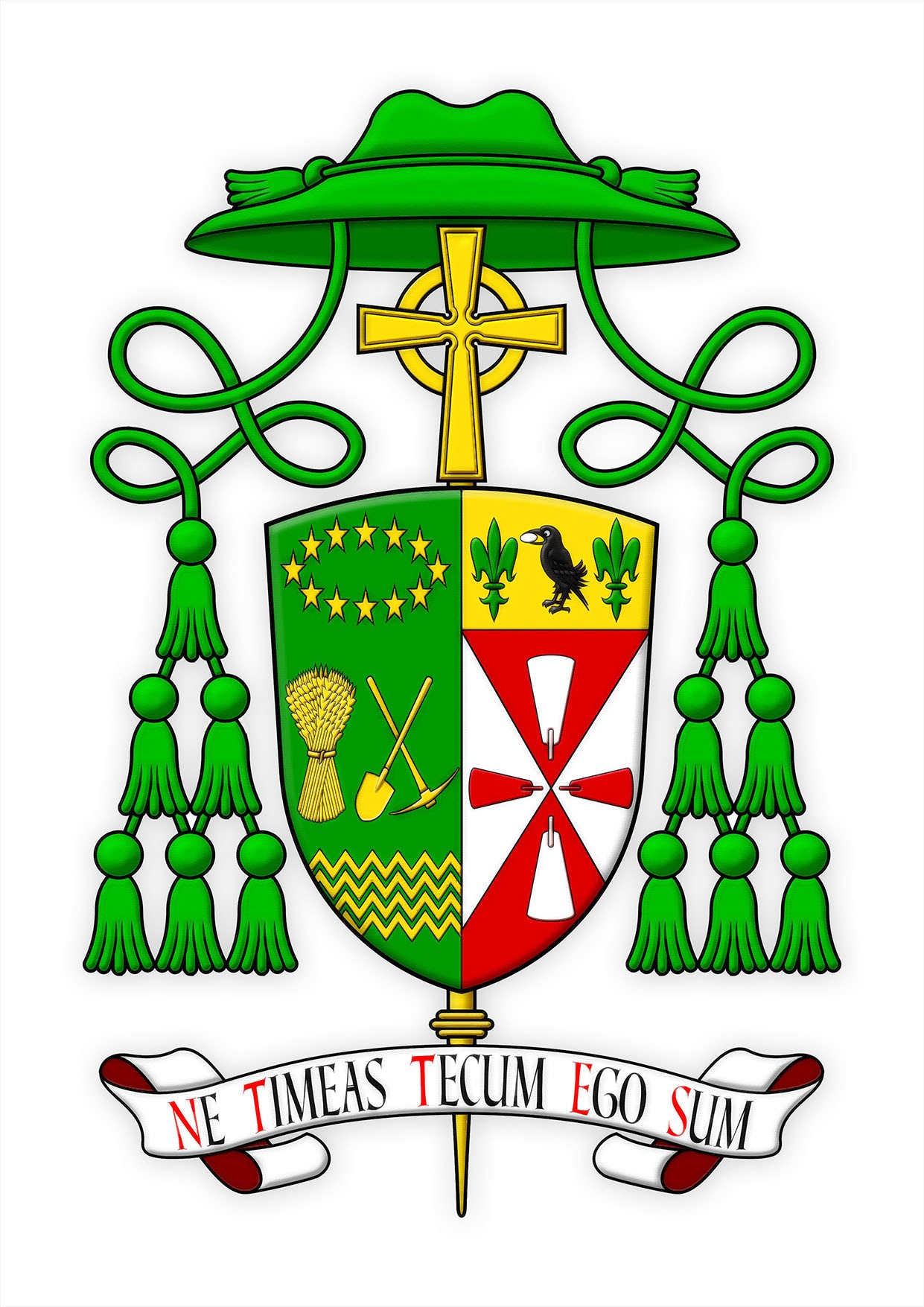
The coat of arms of the Most Rev. Columba Macbeth-Green, OSPPE of Wilcannia-Forbes who will be ordained and installed on July 3rd.

Image


Bishop Carl Kemme of Wichita

Today, the Most Rev. Carl A. Kemme, a priest of the diocese of Springfield in Illinois will be ordained and installed as the bishop of Wichita, Kansas. His coat of arms (below) combines, or impales, the arms of the See (left) clearly based on those of Pope Leo XIII, with his personal arms (right). The design is clear, uncomplicated, and very nicely conceived. The artwork is well done.

20140501-113220.jpg

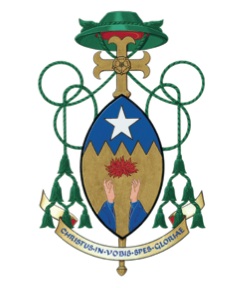
Bishop Smith (Auxiliary of Portland, OR)

Image

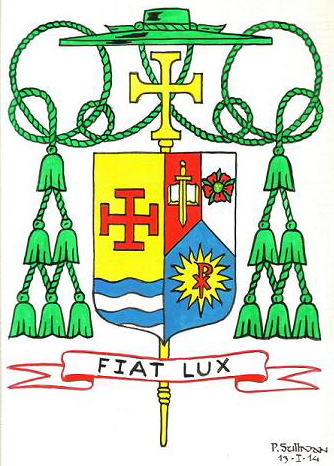
The Most Rev. Peter L. Smith will be ordained auxiliary bishop of the archdiocese of Portland in Oregon on April 29 by Archbishop Alexander Sample. The new bishop is a priest of that archdiocese. The shield is shaped like that of a Zulu warrior because the bishop was born in the province of KwaZulu-Natal in South Africa. The flame represents the Holy Spirit, the upraised hands prayer and worship, the gold field stands for devotion to Christ. The jagged division line represents several mountain ranges important to the bearer and the star Our Lady as well as the star of Bethlehem.

The rose on the episcopal cross supposedly stands for Portland, “the rose city”. The designer of this coat of arms, James Noonan, repeatedly likes to design distinctive external ornaments that are particular to each coat of arms which is really heraldically unsupportable. The blazon can only specify that which is on the shield, not the external ornaments.

Design: James Noonan

Artwork: Linda Nicholson

More Armigerous Saints!

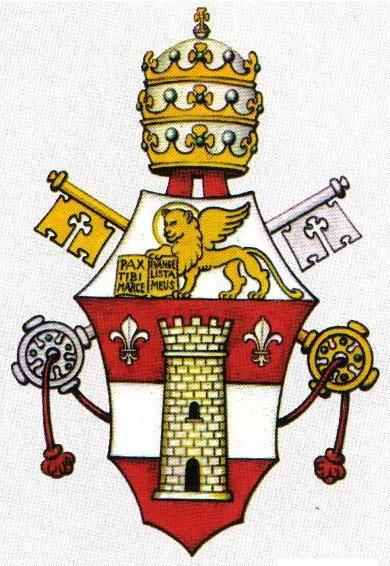
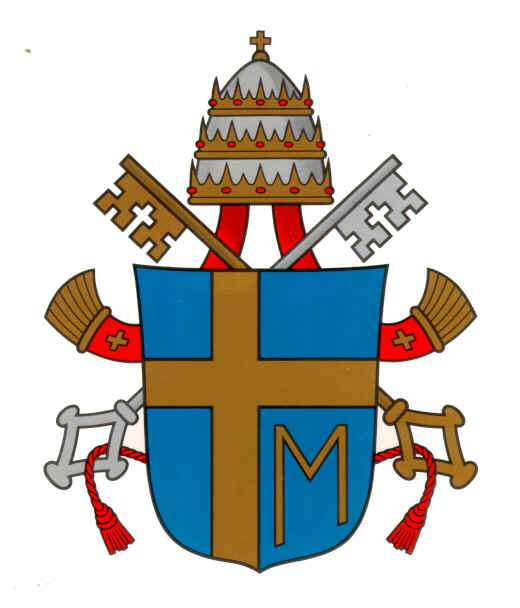
Last May while I was vacationing in France I posted about saints who had been armigerous (i.e. who bore a coat of arms). On Sunday, April 27 there will be two more added to that number when Pope Francis canonizes his predecessors in the Chair of St. Peter, Pope John XXIII and Pope John Paul II.

Image

The coat of arms of Pope John XXIII (above) was identical to the one he used as Patriarch of Venice with the addition of the external ornaments of a pope. The arms are: “Gules a fess Argent; in chief two fleur-de-lis Argent and overall a tower embattled Argent; on a chief Argent the lion of St. Mark Or”. The lower portion consists of the coat of arms that was adopted by Angelo Giuseppe Roncalli when he was named a bishop. Later, when he was promoted to Patriarch of Venice he added the chief (upper third of the shield) with the golden lion of St. Mark, the patron saint of the Venetian church, as is customary for all Patriarchs of Venice. This is one of the few examples in Italian Church heraldry where arms of the See are used. When he was stationed as Papal Nuncio to Paris, Roncalli had a young Bruno Heim serving as his secretary at the Paris Nunciature. The two shared an abiding interest in heraldry. At the time of his election to the papacy John XXIII was not in immediate touch with Heim who was serving elsewhere. John, himself an amateur heraldist approved his arms as they were with the Venetian lion included to be used as his papal coat of arms. A short time later he did employ his former secretary, Heim, to produce the artwork for the official version of the coat of arms. Heim tried to talk him out of retaining the chief of Venice in his papal arms but it was too late. So, it remained.

Image

The coat of arms of Pope John Paul II (above) are also connected to the late Archbishop Heim. The arms are: “Azure a Latin cross skewed to dexter throughout Or; in sinister base the letter “M” Or”. These arms are also the ones adopted by Karol Wojtyła at the time he was made a bishop. However, in the earlier version the cross and “M” were black. On his election to the papacy Heim tried in vain to persuade the new pope to drop the letter “M” and replace it with another Marian symbol. The use of letters in heraldry is considered poor design. The new pope was adamant that his arms had to remain the same as those he had borne under a repressive Communist regime in order to show that he would not modify or weaken the stance he held as a bishop and cardinal in Poland. As a concession to good taste and design, however, so as not to have a color on a color he agreed to change the cross and “M” to gold on blue. Heim, who was afraid that his reputation as a knowledgeable expert in heraldry would suffer did his homework and then added an entire chapter to a second edition of his book, “Heraldry in the Catholic Church” on the use of what are called house markings, which resemble letters, as being particular to both Polish and Swiss heraldry (Heim was Swiss).

So, the age of saints is not long ago and distant but is with us right now. In addition, both of these down-to-earth men (John was the son of peasant farmers from Northern Italy and John Paul the son of a Polish civil servant) had coats of arms. Heraldry is often misunderstood as elitist, exclusive, snobbish and pretentious. Yet, these two men who were holy to a heroic degree such that they are now being held up as worthy of emulation by the faithful and who were known for their genuine humility each had a coat of arms.

Artwork: Bruno B. Heim

Bishop Myron Cotta

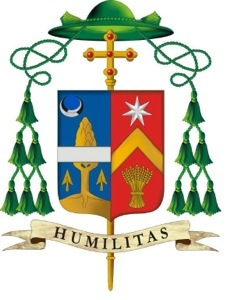
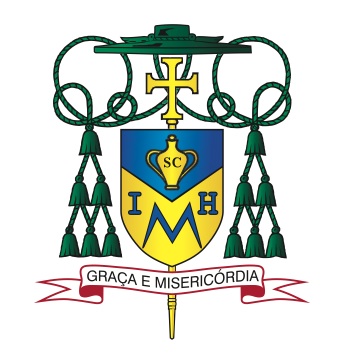
Earlier today the Most Rev. Myron Cotta was ordained as the Auxiliary Bishop of Sacramento, California. His newly assumed arms are below.

Image

The field is divided by an inverted chevron alluding to a carpenter’s square for St. Joseph and the San Joaquin Valley. In chief there is an amphora charged with the letters “SC” for sacred chrism. The bishop’s given name, Myron, is the Greek word for the sacred oil.

In base there appears a monogram composed of the letters “I”, “M” and “H”. This stands for (if you can believe it) the Immaculate heart of Mary with the “M” taking the most prominent place. The bishop has a great devotion to Our Lady under this title.

The motto translates to “Grace and Mercy” and is in Portuguese to reflect the bishop’s ethnicity as being from the Azores.

Well, there is an overabundance of the use of letters in this achievement. Someone clearly never heard that the use of letters in heraldry is considered port design. The “SC” on the amphora is, in my opinion, unnecessary. The amphora alone is a sufficient symbol for sacred oil. Why not actually depict the Immaculate Heart of Mary instead of abbreviating it? The monogram is an example of extremely poor design. It’s weak and not self evident where the image of the Immaculate heart would have been. In addition, since most people don’t know that the name Myron means sacred oil they will naturally assume that the gigantic “M” in the coat of arms stands for Myron and not for Mary.

This was done by Paul Sullivan. Not one of his best efforts.

Bishop Baldacchino

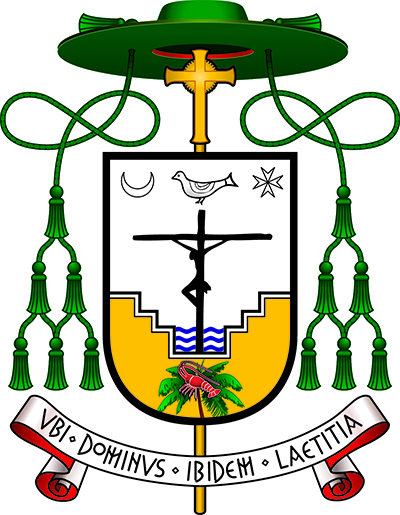
Below is an image from “The Florida Catholic” of the coat of arms of the newly ordained Auxiliary Bishop of Miami, the Most Rev. Peter Baldacchino. I am disappointed that the bishop chose to make no allusion to his baptismal patron, St. Peter, in the coat of arms. Similarly, I am disappointed that he passed up the obvious choice to have canting arms by depicting a baldacchino, or canopy, over an altar. In fact, it might have been interesting to depict the famous Bernini baldacchino of St. Peter’s Basilica as a way to combine the two. Instead, he has chosen a cluttered design filled with far too many charges in an attempt to create a “C.V. in pictures” which is precisely what a coat of arms is NOT.

Image

The description of the symbolism in the design is also from “The Florida Catholic”:

Dominating the coat of arms is Christ crucified. The Cross emerges as a sign of victory over death, represented by the waters of the baptismal font, the source of Christian life which communicates to every Christian the victory of Christ. The baptismal font is a reference also to his own rediscovery of baptism through the Neocatechumenal Way and to the work of evangelization: bringing people to live their baptism so that they may receive divine life.

Beneath the Cross and baptismal font is found an image of a palm tree upon which a lobster rests, a well-known symbol of the early Church, representing the mystery of salvation through baptism: a sea creature, accustomed to live in the waters of sin, through the work of the Holy Spirit, can leave behind its natural environment and live upon a palm tree, symbol of eternity and paradise.

Above the Cross hovers a dove, symbol of the Holy Spirit, who is the life of the Church, and without whom nothing can be done. In the upper part are found the moon, representing the Blessed Virgin Mary: “And a great sign was seen in heaven; a woman arrayed with the sun, and the moon under her feet, and upon her head a crown of twelve stars” (Rev 12:1); and the Cross of Malta, but also the star which leads the way to Christ. The palm tree is also a reference to the Archdiocese of Miami, and the lobster to the Turks and Caicos Islands, where Bishop Baldacchino ministered for 15 years. The coat of arms is completed by the three waves of the baptismal font representing the three rivers of the Archdiocese of Newark, where Bishop Baldacchino was ordained in 1996.

The motto translates to: “Where God is, there is joy”.

Bishop of Harrisburg, PA

On March 19, the Solemnity of St. Joseph, the Most Rev. Ronald W. Gainer, until now bishop of Lexington, Kentucky, will be installed as the 11th Bishop of Harrisburg, Pennsylvania the city which also serves as the capital of the Commonwealth of Pennsylvania. His coat of arms (below) is composed of the arms of the See of Harrisburg depicting a red cross on a silver field charged with a shamrock in honor of the titular of the cathedral, St. Patrick, below a black chief that is an allusion to the black fess charged with three plates from the arms of William Penn. The center plate is changed to a crescent from the arms of the Harris family from which Harrisburg gets its name.

The bishops personal arms are impaled with the arms of the See. The red field with the silver bar encircled by a gold ring are all taken from the arms of his native diocese of Allentown, PA. The tree above and the mountain with the double-barred cross below honor his parental heritage from Baden and Slovakia, respectively.

The motto is from John 1:16 and means “from His fullness, grace upon grace”. The artwork is by Paul Sullivan.

Image

Parish of St. Catherine Labouré in Harrisburg, PA

Image

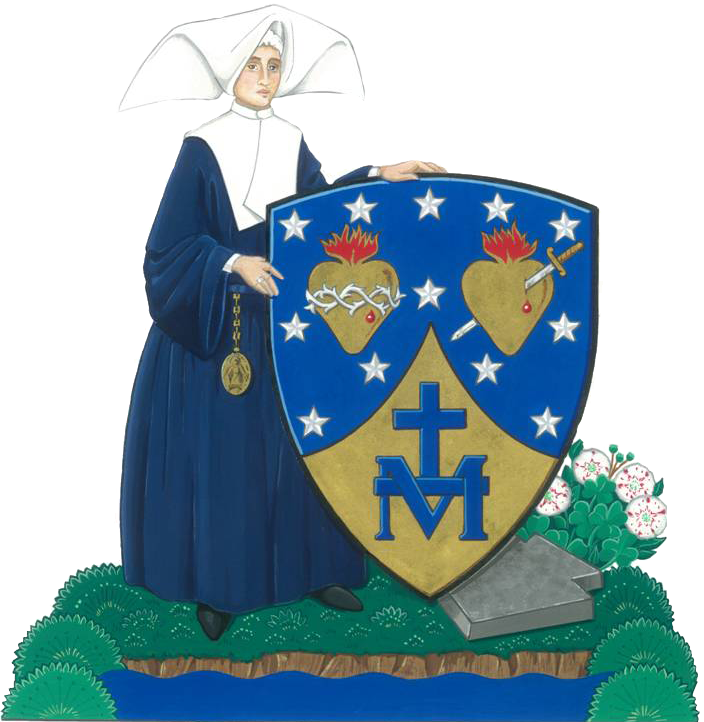
The arms naturally incorporate images found on the Miraculous Medal, which had been first entrusted to Catherine Labouré by the Blessed Virgin Mary.  The shield incorporates four images found on the Medal, the Marian monogram, the stars from Sacred Scripture (as ascribed to Mary in the Apocalypse: 12-13), and the Sacred Heart of Jesus and the Immaculate Heart of Mary side by side.  The shield is worked in blue and in gold.  On this gold field is found the Marian cipher, a letter “M” surmounted by a Christian Cross, an image presented to Saint Catherine by the Virgin Mary herself.  It is blue, as it represents the Blessed Mother specifically.

The blue field above represents the Blessed Virgin, of course, but more so in Her title of Our Lady of Grace.  Upon this field appear the Sacred Heart of Jesus and the Immaculate Heart of Mary, linked theologically as Mary always stood beside her Son.  These two images associated with the Miraculous Medal are surrounded by the twelve stars that surround Mary’s head as a halo in many Marian images, most definitely those associated with Her as Our Lady of the Miraculous Medal as seen on the reverse side of the medal itself.  Both hearts suffer and bleed for the world.

Saint Catherine supports the shield in her historic and colorful habit of a Daughter of Charity of Saint Vincent de Paul as it was worn at the time of her life on earth.  Saint Catherine stands on a compartment upon a green river bank above the blue waters of the Susquehanna River that runs through the state capital city to which the parish is near.  The shield rests upon a stone, specifically a keystone, the emblem of the Commonwealth of Pennsylvania.  Next to the keystone is found a floral spray composed of shamrocks honoring the patron saint of the Diocese of Harrisburg, Saint Patrick of Ireland; and mountain laurel, the official flower of the Commonwealth of Pennsylvania.

Design: J. Noonan  Art: L. Nicholson

Bishop Deeley of Portland, ME

Image

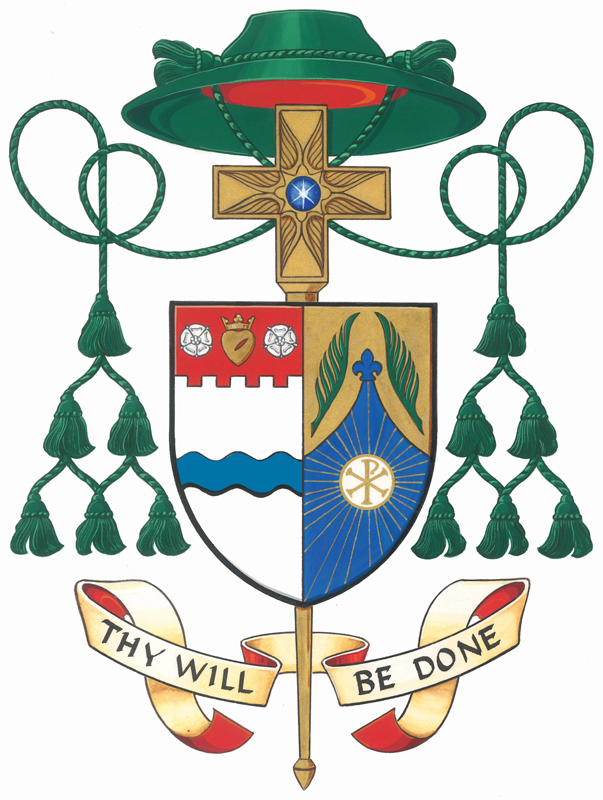
The coat of arms of Most Rev. Robert Deeley installed on February 14 as the 12th Bishop of Portland, Maine.

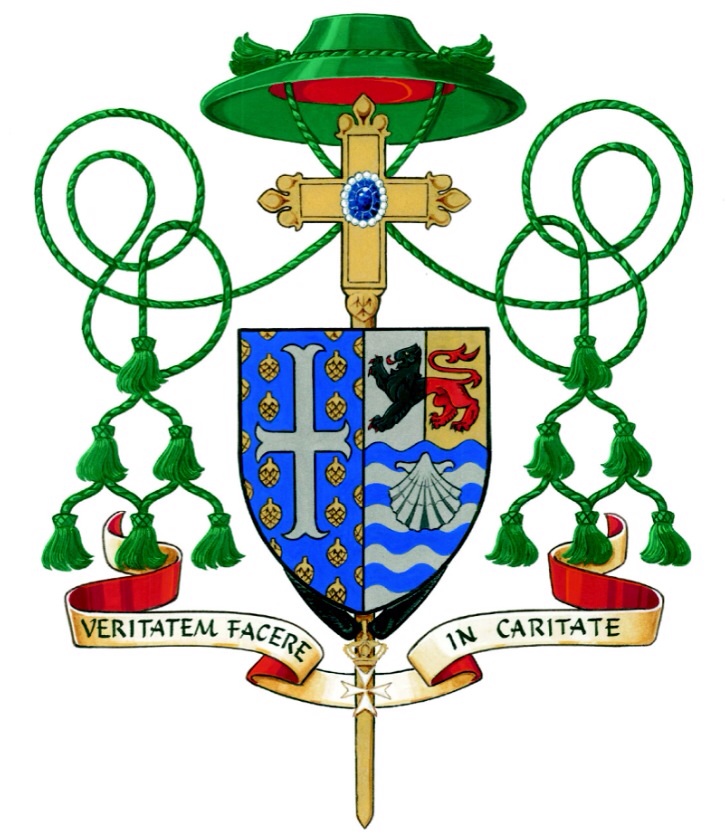
The right side of the shield is divided by a wavy line to suggest water. This theme continues in the lower portion with alternating silver and blue waves, suggesting deep waters and his home see of Boston. Resting on the waters is a scallop or pilgrim’s shell, which, for Bishop Deeley, represents both baptism and a special homage to Pope Benedict XVI, who chose Bishop Deeley for the episcopacy and whose own shield also includes a shell. The silver color of the shell represents the purity of God. Above this is a lion, which Bishop Deeley considers to be emblematic of his family. The front half of the lion is rendered in black and the hindquarters are in red, with the claws and tongue taking the opposite colors.

The left side of the shield, representing the Diocese of Portland, features the diocesan coat of arms, which includes a field of blue with a scattering of gold pine cones. It is based on an ancient French royal family coat of arms and reflects the French roots of the diocese, which date back to 1604.

At the time of his episcopal ordination last year, Bishop Deeley chose as his motto “Veritatem Facere in Caritate,” which he translates as “living the truth in love” (Ephesians 4:15).

Design: J. Noonan
Artwork: L. Nicholson

Bishop Olson of Fort Worth

Image

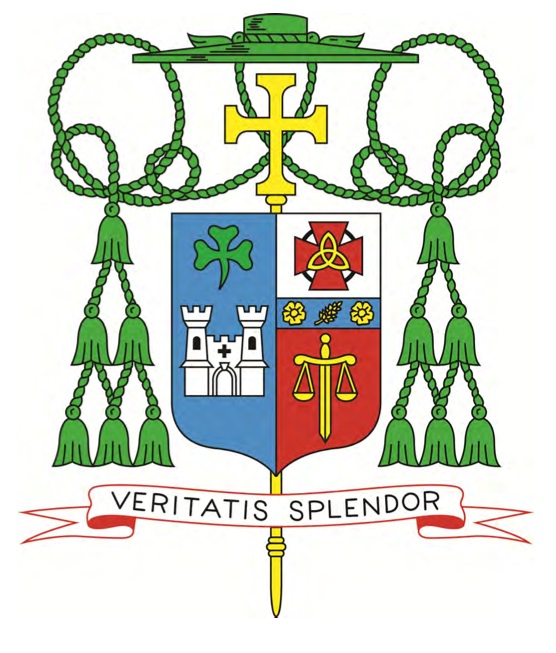
On January 29 the Most Rev. Michael Fors Olson will be ordained and installed as the fourth bishop of Fort Worth, Texas. His personal arms depict a symbol for the Holy Trinity as an allusion to Holy Trinity Seminary in Irving, Texas where the bishop served as Rector. Below the sword and pan balance is symbolic of his baptismal patron, St. Michael. The blue fess in the center bears the spikenard flower taken from the arms of Pope Francis as well as two yellow roses (a allusion to Texas) representing Our Lady of Guadalupe and St. Thérèse the “Little Flower”. The motto means “The Splendor of the Truth”. The coat of arms of Bishop Olson were designed and marshaled to those of the diocese by Deacon Paul Sullivan.

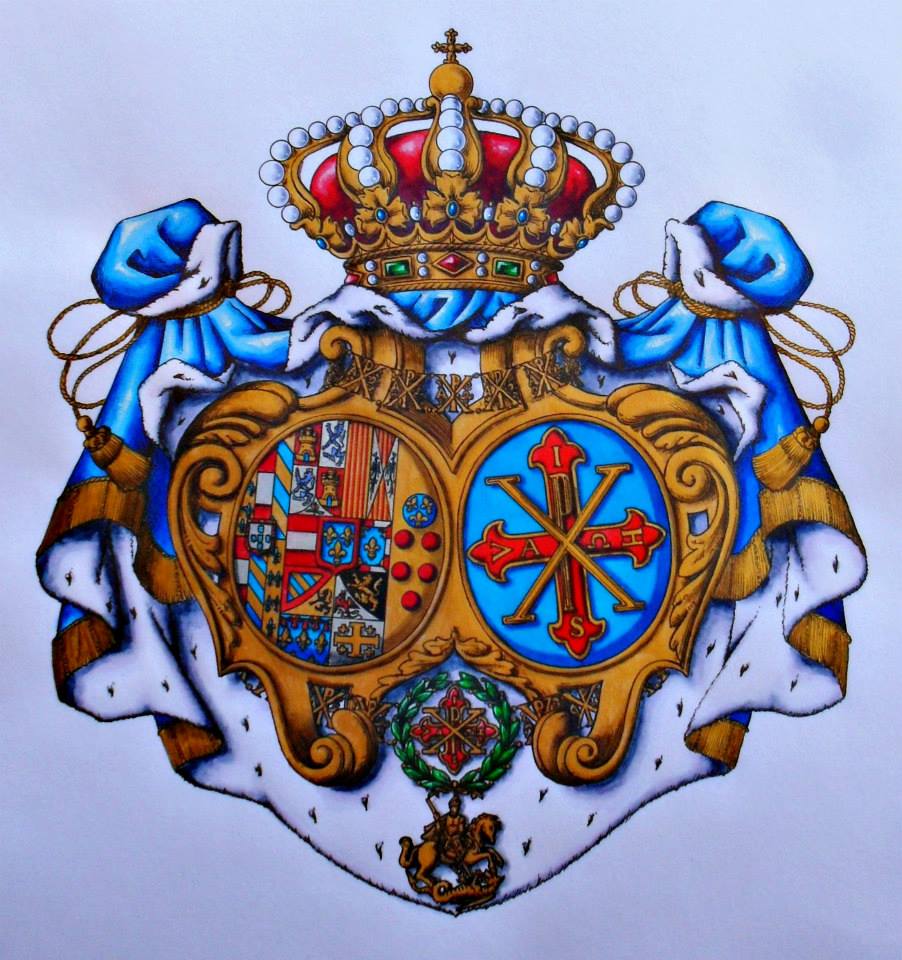
Constantinian Order Reconciliation

Image

It was announced yesterday that the Duke of Noto (Spanish branch) and the Duke of Castro (Neapolitan branch) of the royal house of the Two Sicilies signed an accord which, while it does not completely solve the issue of the headship of the royal house more closely ties the two heads of the royal orders together in closer cooperation as co-grand masters with equal footing of the Sacred Military and Constantinian Order of St. George. This is a positive step toward healing a very long-standing rift.

(artwork by Carlos Navarro)

Auxiliary Bishop of Lausanne, Genève & Fribourg

Image

The coat of arms of the newly ordained auxiliary bishop of Lausanne, Genève & Fribourg in Switzerland, the Most Rev. Alain de Raemy. His arms are colorful and interesting and, in continental fashion, employ lots of elements repeated in four quarters. This method seems odd to those who are used to arms that are marshaled only to indicate jurisdiction over a territory like a diocese or abbey. But, it is not uncommon in Switzerland, Germany and Austria.

The artwork is by Laurent Granier.