When NOT to Use Heraldry Decoratively

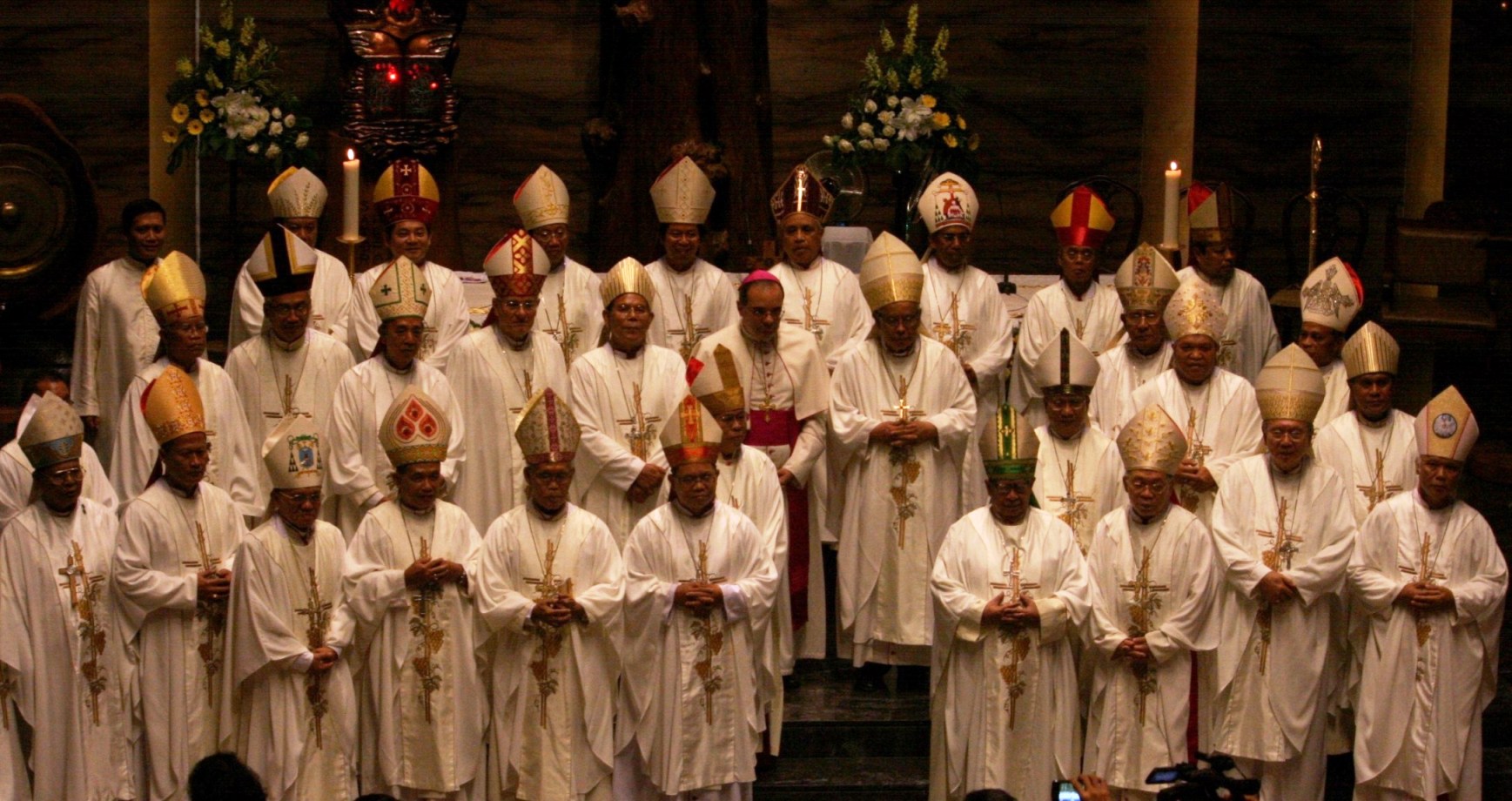
OK. I love heraldry. Can’t get enough of it. I like to see its use where and whenever I possibly can. I actually think it is underused in the Church. But, there are limits. As much as I love heraldry there are times and places when even I am forced to admit that slapping a coat of arms onto it is a bad idea. Case in point the photo below of the gathered bishops of Indonesia. The bishop in the back row third from the right and his fellow bishop in the front row third from the left look RIDICULOUS. Coats of arms on the front of a mitre? NO!

Image

Papal Throne Modified to Include Heraldry of Pope Francis

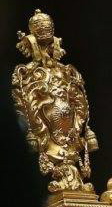
From the photos below which were taken on November 30th during a celebration of Vespers for the First Sunday of Advent we see that the throne chair used for papal liturgies (originally emblazoned with the arms of Pope St. Pius X and later modified to bear the arms of Pope Benedict XVI) have once again been slightly modified. The finials on the chair retain their original composition while the charges on the shield itself have been changed to bear the coat of arms of Pope Francis. It is nice to see some things are still being done. It is also odd to see the arms of Pope Francis topped by the tiara!

Image

Image

Image

Most Rev. James Daly, RIP

Image

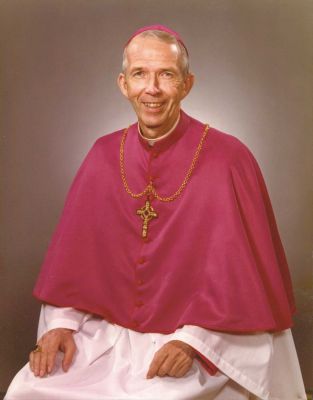
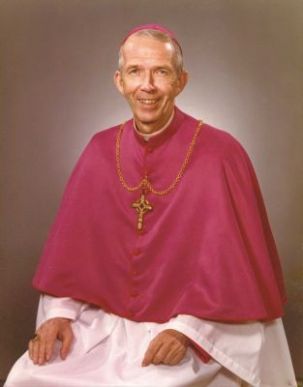
I learned only today of the October 14th death the the Most Rev. James J. Daly, DD Auxiliary Bishop of Rockville Centre, NY. He was 92. I grew up in that diocese and Bishop Daly (whose gentle demeanor and soft-spokeness earned him the ironic nickname “tiger”) was the bishop who confirmed me in 1977. In fact, he had only just become a bishop the same month. His first confirmation was, fittingly, for the parish where he had served as pastor up until becoming a bishop but ours was only the second time he had administered the sacrament of Confirmation.

The right-hand man to Bishop John McGann for years, Daly also served as dean of the Seminary of the Immaculate Conception in Huntington and was in charge of helping decide which parishes priests would serve in. Yet colleagues said he was unassuming and humble, and was happiest being a parish priest.

Daly was born in the Bronx, grew up in Jamaica, Queens attended a Catholic high school, and studied for the priesthood at the seminary in Huntington. His experience as a priest on Long Island started before the local diocese existed. When he was ordained in 1948, Nassau, Suffolk, Queens and Brooklyn made up the Diocese of Brooklyn. Nine years later, Nassau and Suffolk were carved out to create the Diocese of Rockville Centre. In 1958, Daly was assigned to the seminary, where he rose to the post of dean. By 1972, he was named pastor of St. Boniface parish in Elmont. By many accounts, it was one of the happiest times of his life. But the church hierarchy also needed him, and in 1977 Bishop John McGann requested that he be named auxiliary bishop. He eventually rose to vicar general, the No. 2 post in the diocese.

Daly retired in 1996, but remained active, visiting patients in hospitals and nursing homes. He also cared for a disabled brother in the house his family had bought decades ago in Blue Point, where Daly had his first assignment as a priest, from 1948 to 1951, at Our Lady of the Snow.

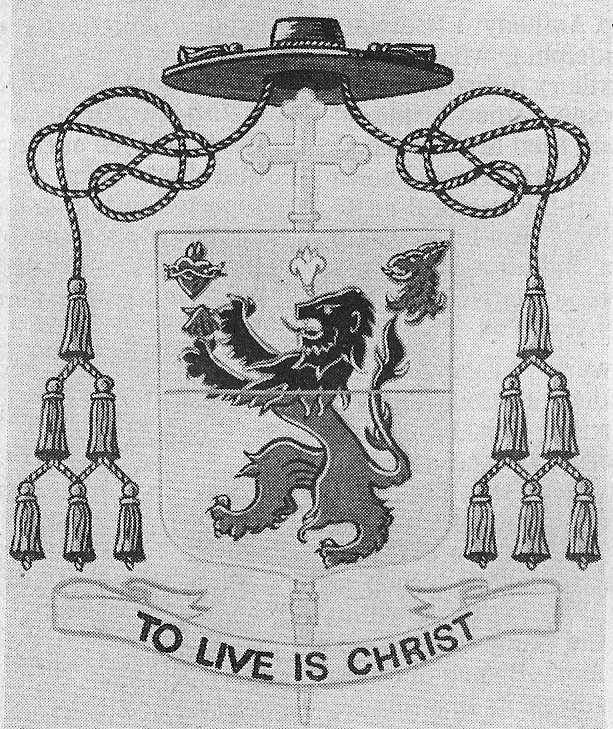
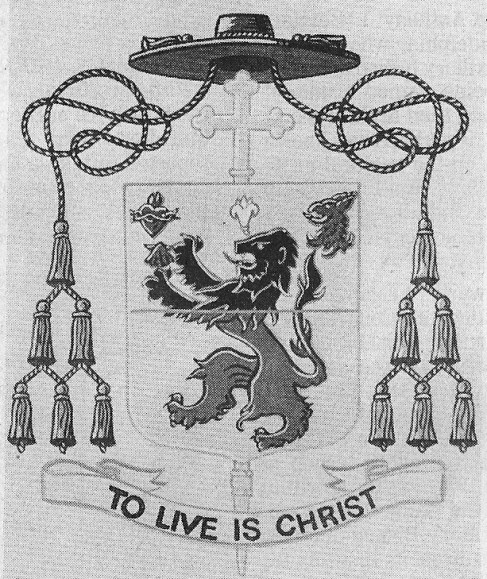
His coat of arms is based on the Irish arms associated with the name Daly. It has the addition of a scallop shell, a symbol of his baptismal patron, St. James, as well as the Sacred heart, a lily and a griffin’s head. These charges represent family allusions as well as his personal devotions. Unfortunately, I do not have a full color rendering.

He was a kind, gentle and very capable pastor, priest and bishop. Requiescat in pace.
Image

Lord Lyon To Step Down

Image

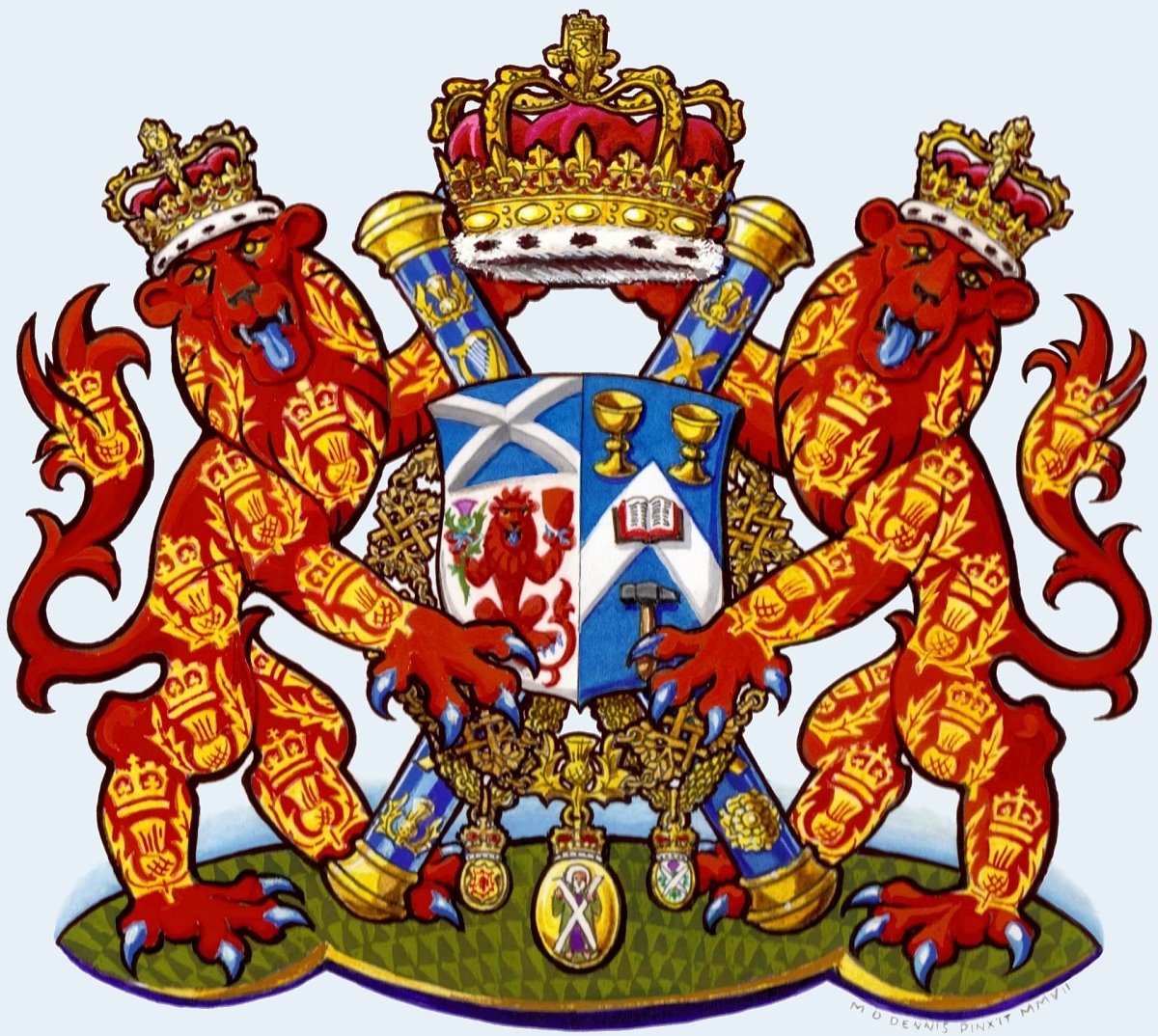
The Office of Lord Lyon King of Arms will fall vacant at the end of December 2013, when Mr. David Sellar the current Lord Lyon steps down. The Lord Lyon is appointed by Her Majesty, the Queen on the recommendation of the First Minister under section 3 of the Lyon Kings of Arms (Scotland) Act 1867.

The Lord Lyon is the sole King of Arms in Scotland. He is the Head of the Heraldic Executive and the Judge of the Court of the Lord Lyon, which has jurisdiction over all heraldic matters in Scotland. The office has both judicial and administrative functions. The Lord Lyon is also responsible for State Ceremonial in Scotland.

Applications to fill this Office must be legally qualified.  An independent panel will consider the applications and make recommendations to the First Minister.

Royal Cardinal

Image

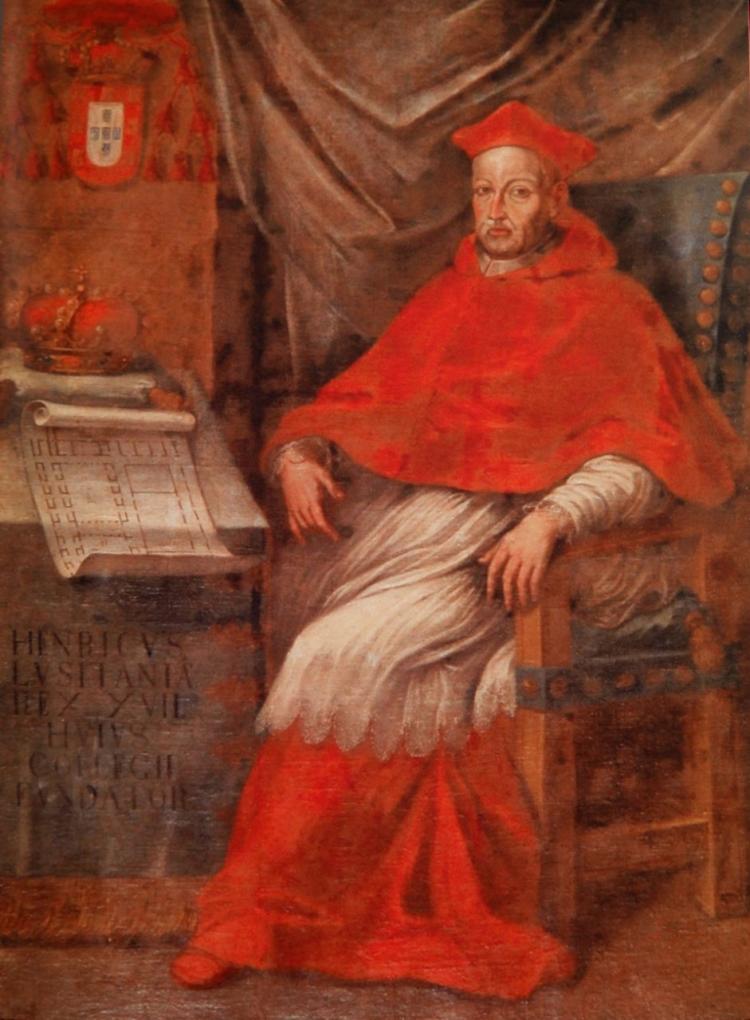
Henry (or Henrique) born on January 31, 1512 and died on January 31, 1580 reigned as King of Portugal and the Algarves and at the same time was a Cardinal of the Church. He ruled in Portugal between 1578 and 1580 and was known, for obvious reasons,  as “Henry the Chaste”.

Henry was the fifth son of King Manuel I of Portugal and Maria of Aragon and the younger brother of King John III. He was not expected to succeed to the Portuguese throne since he was a younger son. Ordained as a priest in order to promote Portuguese interests within the Church then dominated by the Spanish he, not surprisingly as the son of a king, rose fast through the hierarchy, becoming in quick succession Archbishop Braga, then Archbishop of Évora and eventually of Lisbon before receiving the red hat in 1545, along with the Titular Roman church of Quattro Coronati.

Henry served as regent for his grandnephew, Sebastian, after 1557, and then succeeded him as king after Sebastian was killed at the Battle of Alcázarquibir. Henry renounced his clerical offices on his own volition and sought to marry for the continuation of the House of Avis, but Pope Gregory XIII, closely tied to the Habsburgs who controlled Spain, did not release him from his vows. The Cardinal-King died in Almeirim without having appointed a Council of Regency to choose a successor.  Philip II of Spain who had a strong dynastic claim was elected King of Portugal at the Portuguese Cortes of Tomar in 1581.

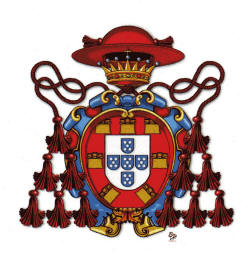
For his arms he bore the royal arms of Portugal ensigned with a crown and a cardinal’s hat. (NOTE: the number of tassels was not fixed at 30 until the late 19th Century and prior to that cardinals often employed varying numbers of tassels on their galeri)

Image

Assumption Anniversary

Image

Sixteen years ago today, on the feast of St. Vincent dePaul, I was ordained a priest by the late Bishop Vincent (dePaul) Breen. On that day as well I assumed my coat of arms since I was now able to ensign the shield with the galero of a priest. The rendering used at that time (above) was done by the late Richard Crossett, an American heraldic artist of great talent. So, in addition to celebrating sixteen years as a priest today I celebrate sixteen years being armigerous. (for those of you who don’t know…go look it up!)

Archbishop-Designate Hebda, Coadjutor of Newark

Image

This morning the pope appointed Bernard Hebda, a Pittsburgh priest serving until now as bishop of Gaylord, Michigan to be the Coadjutor Archbishop of Newark, NJ. He will be serving in assistance to the current Archbishop, John Myers (age 72) and will immediately succeed him upon Myers’ resignation, whenever that comes sometime in the next three years. A coadjutor (arch)bishop shares in the governance of the diocese and, unlike an auxiliary bishop, automatically succeeds to the See upon the death or retirement of the previous diocesan (arch)bishop.

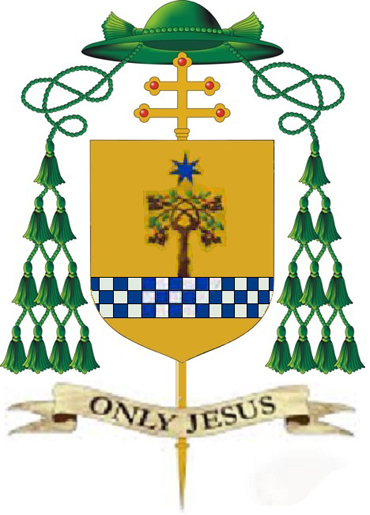
The coat of arms that Bishop Hebda will use during his time as coadjutor are pictured above. It is composed only of the personal arms he assumed at the time he became a bishop in 2009. It is not the custom for a coadjutor to combine his personal coat of arms with the coat of arms of the diocese on the same shield as a diocesan bishop does.

Archbishop Hebda’s personal arms use as the primary charge an elderberry tree which alludes to his surname, Hebda, itself similar to “ bez hebd ”, the Polish term for the type of elderberry tree that is widespread in the area of Southeastern Poland from which Bishop Hebda’s paternal grandparents emigrated. The tree thus also alludes to the Bishop’s parents and family. In addition, the berries of the tree are reminiscent of the beads of the Rosary, recalling that the Bishop, named to the episcopacy on October 7th, the feast of Our Lady of the Rosary, has entrusted his episcopal ministry to the Blessed Mother under that title. Over the elderberry tree appears a blue star, the shining symbol of Mary, to underline that Bishop Hebda has placed his new pastoral ministry under Her maternal protection.

The blue and white fess cheqy is taken from the coat of arms of the Diocese of Pittsburgh where they appear because they come from the arms of William Pitt. Placed as the foundation for the elderberry tree, the juxtaposition recalls that Bishop Hebda has his roots in the Diocese of Pittsburgh.

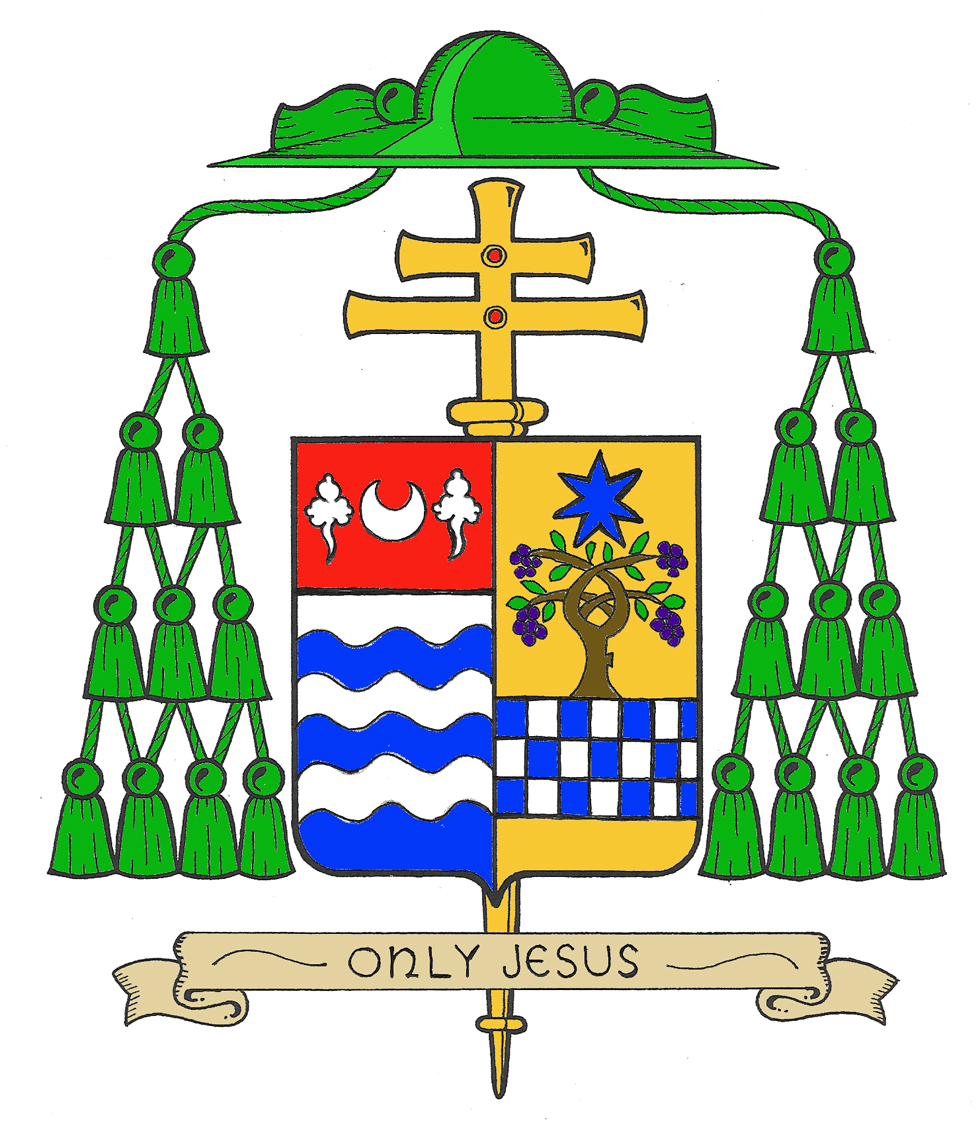
Archbishop Myers will continue to combine or impale his personal arms on the same shield as the arms of the archdiocese until such time as he steps down. It is at that time that archbishop Hebda, who will then succeed as Archbishop of Newark and Metropolitan of the Province of Newark (not the province of New Jersey as is often wrongly thought) will impale his own arms to those of the See of Newark (a preview of that below).

Image

New Bishop of San Diego

Image

The pope accepted Bishop Brom’s resignation as Bishop of San Diego, California since he has reached the age of 75. He was immediately succeeded by his Coadjutor Bishop, the Most Rev. Cirilo Flores, the former auxiliary of the diocese of Orange, CA. Bishop Flores now impales his personal coat of arms with that of the diocese.

Canting Arms

Image

There is a tradition in heraldry of so-called “canting arms” or armes parlantes where the design of the coat of arms literally depicts the meaning of the name of the armiger and, so, ‘says” his name. One that I came across recently which illustrates this well is the coat of arms of Cardinal Vegliò who was created cardinal by Pope Benedict XVI in 2012. The main charge on the shield is a crane standing with one foot off the ground and holding a stone. This is usually referred to as a crane “in its vigilance”. This comes from Pliny the Elder wrote that cranes would appoint one of their number to stand guard while they slept. The sentry would hold a stone in its claw, so that if it fell asleep it would drop the stone and waken. The cardinal’s name means “watchful”.

9/11 Depicted Heraldically

Image

This is the emblem containing the coat of arms of the USS New York a naval vessel of the US Navy. The ship was constructed with seven tons of steel recovered from the wreckage of the World Trade Center in its bow. The twin towers and a chevron. representing the bow of the ship form a central feature in the coat of arms. The phoenix rising from the ashes is an allusion to carrying on and rebuilding the World Trade Center in the aftermath of the terrorist attack. The escutcheon on the breast of the phoenix contains the colors of the first responders on 9/11: the NY police department, NY fire department and the Port Authority of New York & New Jersey. The drops of blood on the escutcheon commemorate the fallen. The three stars depicted are for those earned by the former battleship USS NEW YORK (BB34) in World War II at Iwo Jima, Okinawa and North Africa. Above the shield the crest is taken from the central landscape charges on the coat of arms of the State of New York. Here the rays of the sun are depicted as seven in imitation of those radiating off the crown atop the Statue of Liberty in New York harbor.

This may not be the best heraldic design I’ve ever seen but it is a fine example of how heraldry, even in our own time, can be filled with poignant meaning and, in a simple artistic design, depict and commemorate so much. This coat of arms was devised, as are all US military insignia by the US Army’s Institute of Heraldry in Virginia.

Crest or Coat-of-Arms?

Image

This photo illustrates something well. The banners at the top of the photo contain the coats-of-arms of the individuals who bear them. In the middle part of the photo there are those sort of dorky looking statues standing on top of the helmets. THOSE are crests. (They are placed at the crest of the helmet…get it?) The two terms are NOT synonymous. Many people use the word crest to mean a coat-of-arms. I know, those extra two syllables are a killer to have to say! A crest is a part of the full achievement of arms but it may be depicted alone. However a coat-of-arms and a crest are different things.

Basilica of Regina Pacis, Brooklyn, NY

Image

Arrrrrgh! This is horrible, Horrible, HORRIBLE!!! This coat of arms devised for the newly-designated Basilica Church of Regina Pacis in the Diocese of Brooklyn, NY is an excellent example of everything heraldry should NOT be. Do the “designers” (and I use the term loosely) of this monstrosity think that you simply take whatever images you want in whatever style you want and tack it to a shield and that’s called heraldry?

The only correct thing about this coat of arms is that basilica churches do, in fact, have the use of the ombrellino or pavilion and keys as external ornaments. Literally, everything else about it is horribly incorrect and completely lacking in imagination, creativity or even a passing knowledge of heraldic design.

The motto should not cross the shield but be depicted below it. Why is there a second scroll above the shield bearing only the name of the church? Is a coat of arms not identifying enough? The inclusion of the arms of the See of Brooklyn in its entirety is questionable but since it was done it would be good if part of it weren’t cut off! The pictorial images of Our Lady and of the church itself are wholly inappropriate and the whole is clearly a mish-mash of images cut and pasted together that don’t even match in style!

This is the worst kind of slap-dash, indifferent, ignorant heraldry that it sadly in use in far too many parts of the United States. IT STINKS!

An “Oldie” But a “Goodie” (amended)

Image

The coat of arms of the Most Reverend Hugh Charles Boyle, DD who served as the Sixth bishop of Pittsburgh, Pennsylvania from 1921-1950. His arms are in the older style popular at that time and include the mitre and crozier as well as the episcopal cross (not to be confused with a processional cross) and galero. In 1969 Pope Paul VI’s instructions discontinued the use of the mitre and crozier in the coats of arms of people even though they are frequently used as external ornaments in the coats of arms of corporate bodies such as dioceses and abbeys.

The arms of the See of Pittsburgh were based on those of the city of Pittsburgh which, in turn were based on those of William Pitt. In the diocesan arms the bezants (gold roundels) have been changed to crosses and the inclusion of the sword alludes to the titular patron of the cathedral: St. Paul.

Very nice! Unfortunately, I cannot find a color image.

UPDATE: An intrepid reader informs me this is actually the arms of Bishop Regis Canevin, also of Pittsburgh.

Archbishop Porteous of Hobart

Image

The coat of arms of the Most Rev. Julian Porteous, up until now the auxiliary bishop of Sydney, Australia who has been promoted to be the (non Metropolitan) Archbishop of Hobart, Tasmania, Australia. He will be installed on September 17th. The Archbishop decided to re-design his current coat of arms, assumed at the time he was named auxiliary bishop, to bring them into better harmony when impaled with the arms of the See of Hobart. Archbishop Julian’s original arms were: “Quarterly, Vert and Or, a cross throughout Counterchanged; in dexter chief a dove rising surrounded by a golden effulgence and in sinister base an open book Argent, bound Or charged with the Greek letters Alpha and Omega Gules”.

In the redesign he has retained the dove representing the Holy Spirit and requested in be surrounded by rays suggesting the famous Bernini window above the Altar of the Chair in St. Peter’s Basilica. In addition the open book alluding to the Sacred Scriptures has been retained. Thus showing the heraldic equivalent of Spirit and Wisdom.

The new blazon is: “Arms impaled. In the dexter Azure the letter “M” Argent crowned with a celestial crown Or (Hobart); In the sinister per fess Gules and Argent, in chief a sun in splendor, the rays of light depicted as straight lines radiating to the edge of the field, within a ring all Or, charged overall with a dove displayed affronté Argent; in base an open book Argent, bound Gules and charged on the pages with the letters alpha and omega, Gules”.

The arms were designed by me and Mr. Richard d’Apice of Australia and depicted by Mr. Sandy Turnbull, also of Australia.