Category Archives: Bishops

Not Louisiana, Paris, France, New York or Rome! But Gary, Indiana, Gary, Indiana, Gary, Indiana; My Home Sweet Home.

123014

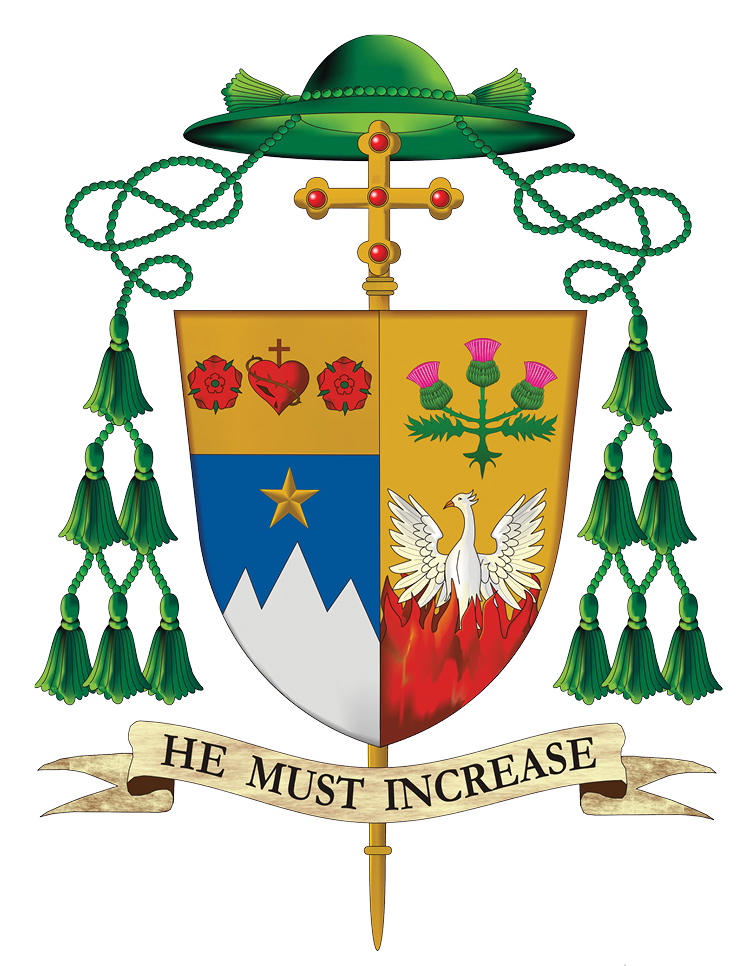
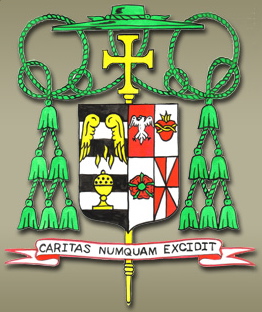
On January 6, 2015 the Most Rev. Donald J. Hying, a priest of the Archdiocese of Milwaukee, former Rector of the seminary there and, since 2011, Auxiliary Bishop of Milwaukee will be installed as the IV Bishop of the diocese of Gary, Indiana.

The Bishop’s coat of arms (above) depicting the arms of the See (dexter) which allude to the titular patron of the cathedral of the Holy Angels and his personal arms (sinister) which allude, in part, to the arms of the See of Milwaukee.

The motto translates to “Love never fails”. (1 Cor: 13)

(artwork by Paul Sullivan)

Bishop Mark Edwards, OMI

Image 1

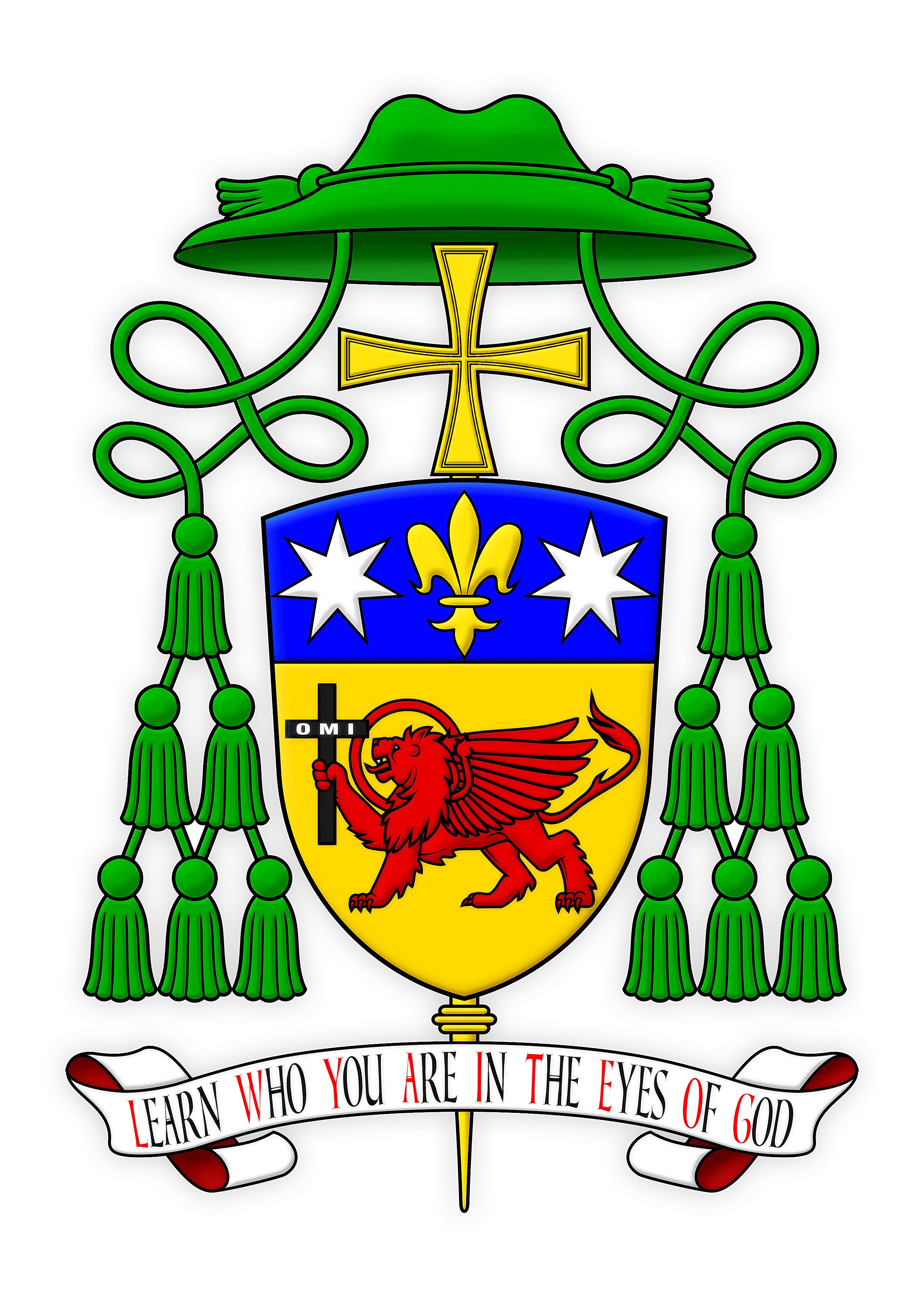
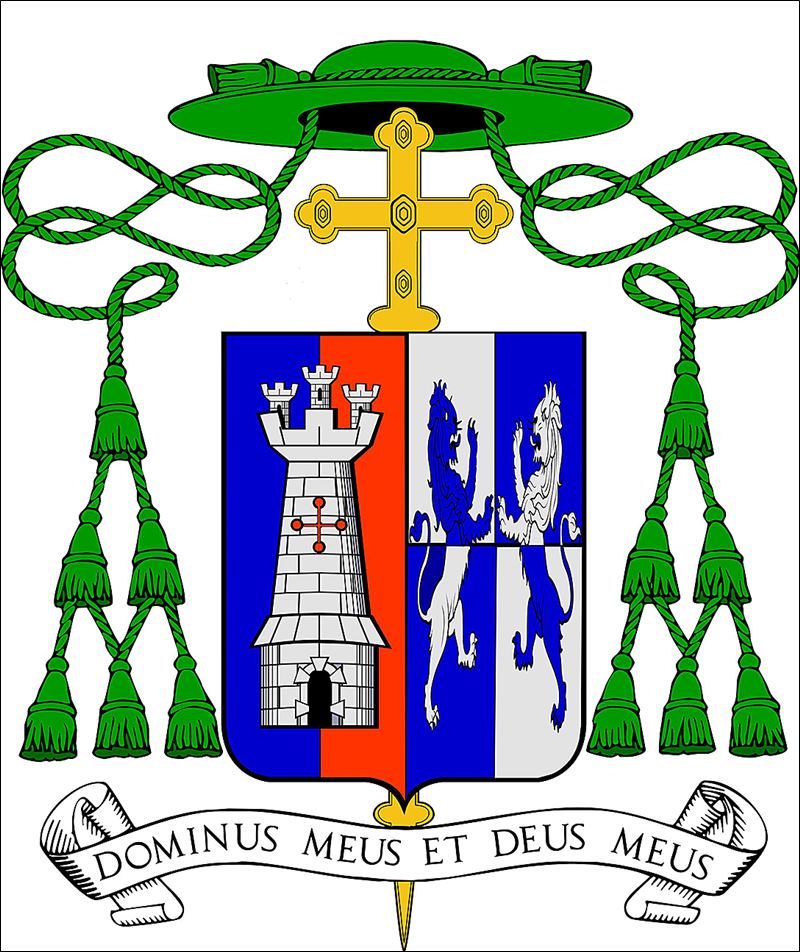
On December 17 Mark Stuart edwards, OMI will be ordained (along with Terence Curtin) as auxiliary bishop of Melbourne, Australia. Bishop Edwards is also the Titular Bishop of Garba.

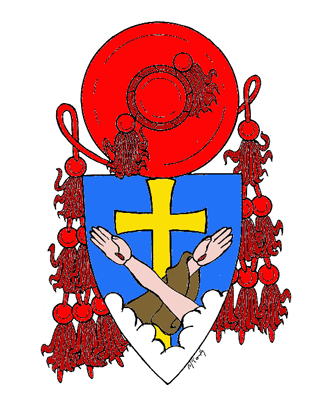
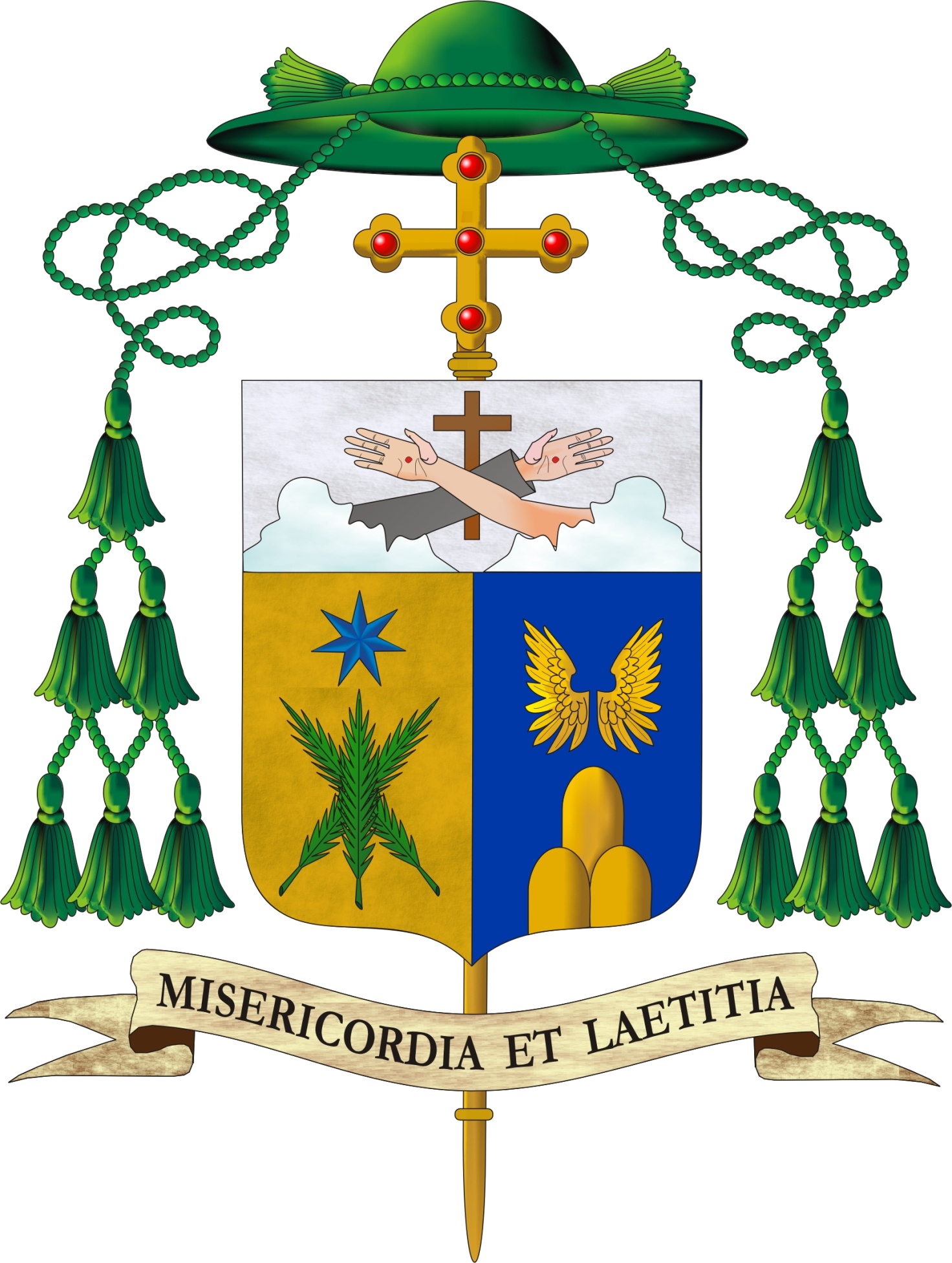
His newly assumed arms (above) reflect his baptismal patron, St. Mark, as well as the Oblates of Mary Immaculate, the Religious community to which he belongs. In addition, Our Lady and Australia are alluded to on the chief.

These arms were designed by me and Mr. Richard d’Apice of the Australian Heraldry Society and emblazoned by Sandy Turnbull also of the Australian Heraldry Society.

Bishop Comensoli of Broken Bay, Australia

Image 11

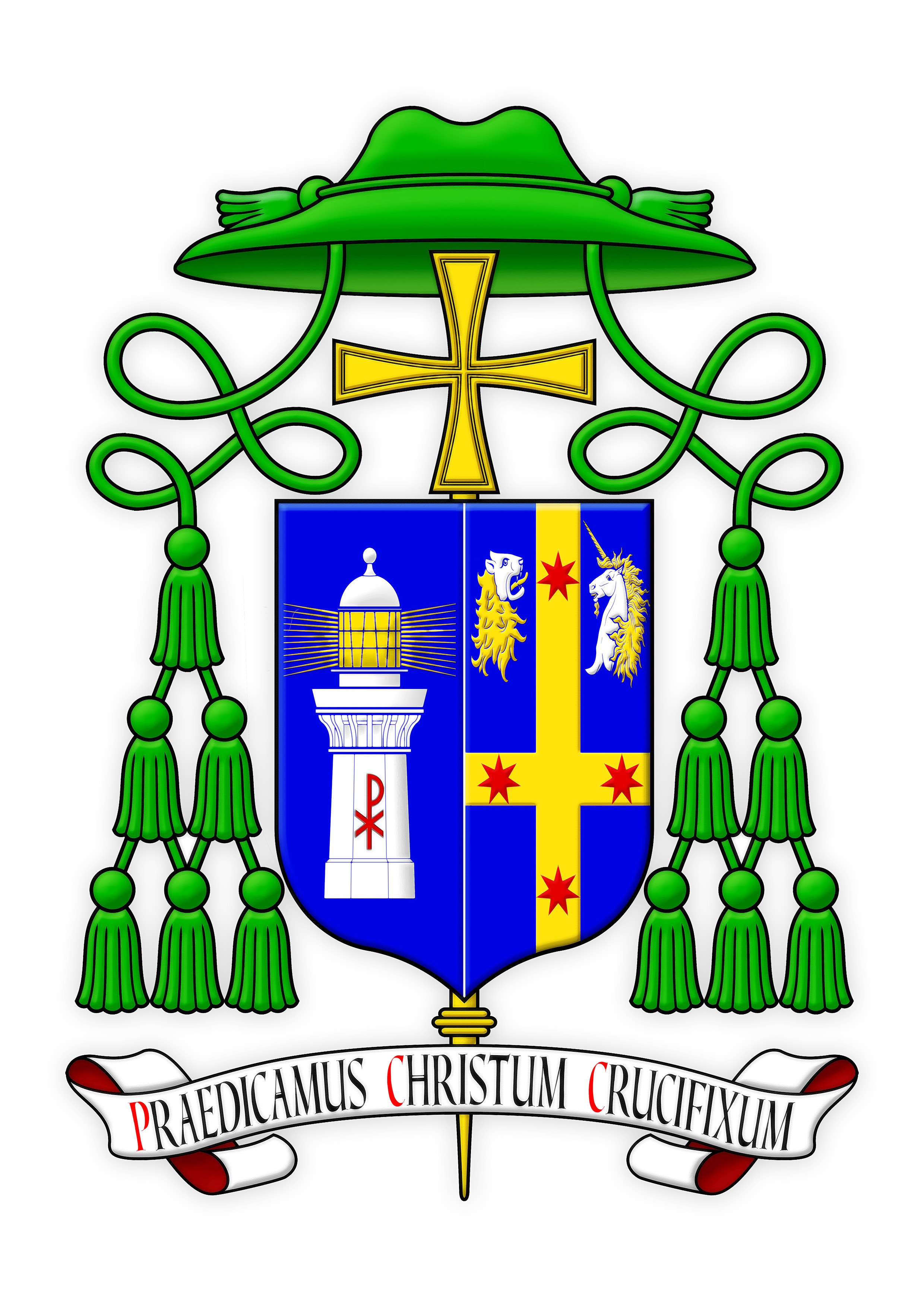
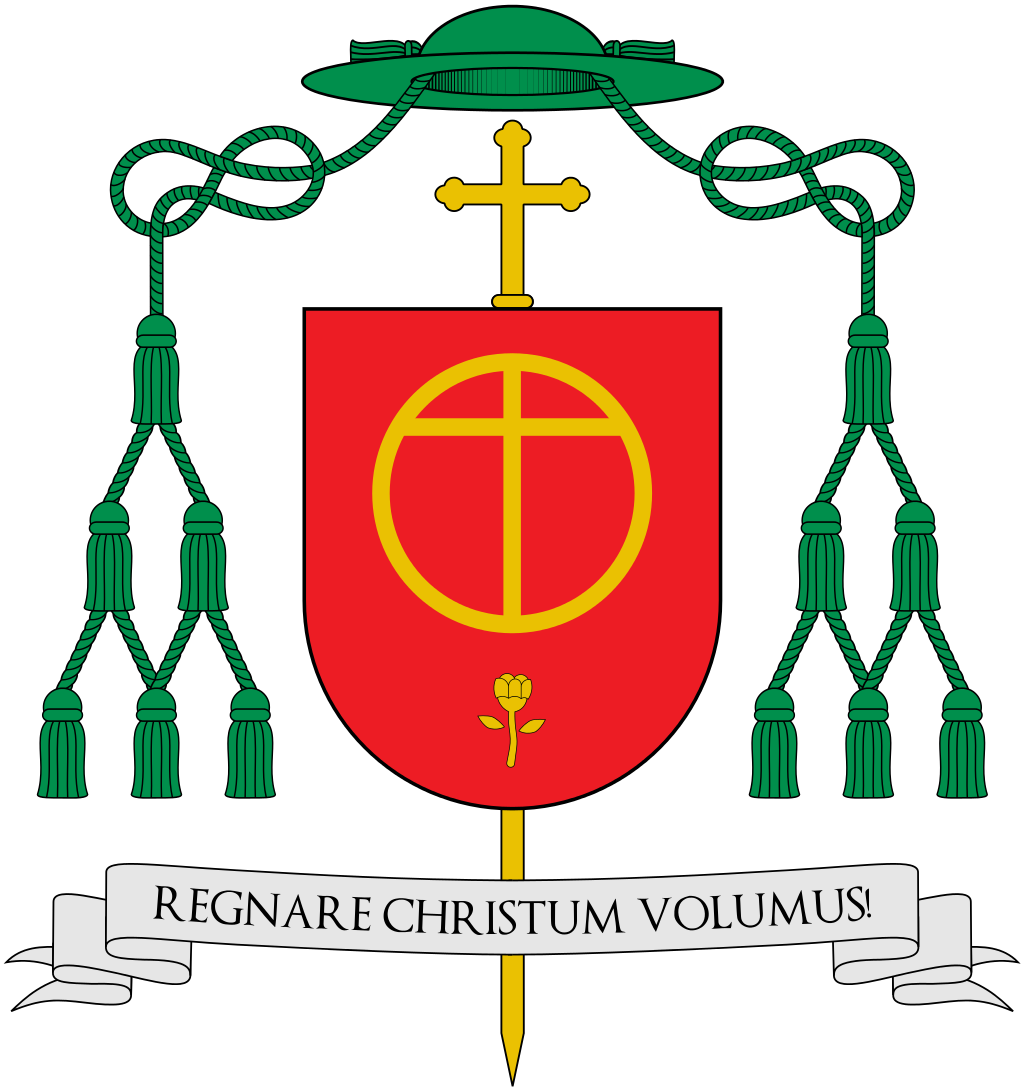
The Broken Bay diocesan Arms display a lighthouse spreading the light of the gospel over the diocese. The detail echoes the detail of the Barrenjoey lighthouse which unites the two main land masses that comprise the regions of the diocese.

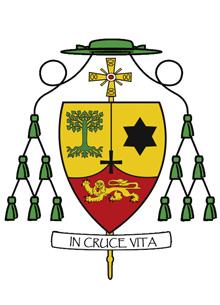
The arms and motto which Bishop Comensoli adopted at the time he was named Auxiliary Bishop of Sydney in 2011 are of a personal character and are blazoned: Azure, on a Latin cross inverted Or four seven-pointed mullets (or Commonwealth stars) Gules, in the first quarter a lion’s head erased Argent crined and langued Or and in the second a unicorn’s head erased Argent crined and armed Or respectant.

In layman’s terms, the arms may be described as: On a blue field, a gold cross inverted with a red seven-pointed (or Commonwealth) star at each extremity, in the upper left quarter, a silver lion’s head erased at the neck with gold mane and tongue and in the upper right quarter a silver unicorn’s head erased at the neck with gold mane and horn. The motto ‘Praedicamus Christum Crucifixum’ is a quotation from the Apostle Paul’s first epistle to the Corinthians (1Cor1.23), and can be translated as ‘We preach Christ crucified’.

The inverted Latin Cross symbolises the Bishop’s nominal patron, the Apostle Peter and the stars reflect the Southern Cross, which shines out over the Great South Land of the Holy Spirit. The lion and the unicorn respectively symbolise the mind and the heart of love. The meaning of these symbols, while of medieval provenance, is especially associated with the seminal work on Christian love by the English Jesuit, Martin C D’Arcy SJ, “The Mind and Heart of Love: Lion and Unicorn: A Study in Eros and Agape”. Bishop Comensoli will be installed as the Third Bishop of Broken Bay on Dec. 12.

The personal arms were designed by me and Mr. Richard d’Apice of the Australian Heraldry Society and originally emblazoned as well as marshaled with the arms of the diocese and emblazoned again by Mr. Sandy Turnbull also of the Australian Heraldry Society.

Another Example of What NOT To Do

herb_bp._jana_piotrowskiego.svg_

Above is the coat of arms of Jan Piotrowski who will be installed on November 29 as the Bishop of Kielce, Poland. The bishop’s arms contain perfectly good charges and are arranged nicely with good composition with one exception. The episcopal cross (often mistakenly thought of as a processional cross) which is the one external ornament that indicates the arms belong to a bishop, since other prelates may use the green galero with 12 tassels, is depicted as passing in front of the shield and piercing it with the bottom of the cross protruding from behind the shield. It is as if the cross is depicted as both a charge on the field and an external ornament at the same time. This is most incorrect. Charges must never extend beyond the edges of the shield; external ornaments should not be placed in a position to obscure any of the shield; objects cannot be depicted as piercing the shield; external ornaments are to be just that: external to the shield. I’m sure the person who designed this and/or depicted it thought he was being very clever and innovative. Instead, it’s just wrong. EPIC FAIL.

And Still More Noble Cardinals

Since these have been so well received I thought I would share some more of my favorites from among those Cardinals of the Holy Roman Church who were from well known armigerous and noble aristocratic families.

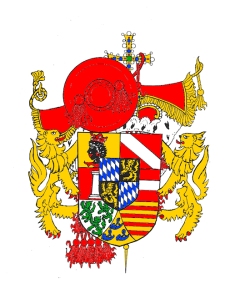
First we see the arms of Johann Theodor Cardinal Wittelsbach von Bayern, Cardinal Priest of S. Lorenzo in Panisperna. He was created cardinal “in pectore” in 1743 and proclaimed in 1746. He was also Prince-Bishop of Liège, Friesing & Regensburg. The arms are:

Quarterly of six; 1 (Friesing) Or a moor’s head Sable couped at the neck crowned and collared Gules, 2 (Regensburg) Gules a bend Argent, 3 to 6  (Liège) Gules a column Argent, Gules a fess Argent, Argent three lions rampant vert, Barry Or and Gules a point in point Or three hunting horns Azure; Overall on an escutcheon Bavaria (fussily in bend Argent and Azure) quartering Palatinate (Sable a lion rampant Or). The supporters are two lions Or.
sc01ad6190a

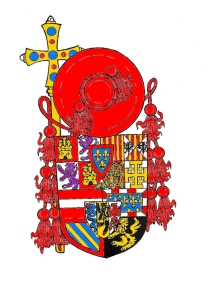
Next are the arms of Luis Antonio Jaime de Borbón y Farnesio, de Baviera y d’Este who was born the youngest son of King Philip V, King of Spain, and his second wife, Elizabeth Farnese. While barely eight years of age, Luis was created 699th Knight of the Order of the Golden Fleece in 1735 and ordained Archbishop of Toledo and Primate of Spain on 9 September 1735, and subsequently named Cardinal Deacon of the Title of the church of Santa Maria della Scala in Rome on 19 December. On 18 December 1754 he abandoned the ecclesiastical life for lack of vocation, renounced his ecclesiastical titles and dignities and assumed the title of 13th Conde de Chinchón granted by his brother Infante Felipe.

When his older half-brother King Ferdinand VI died without issue in 1759, Luis claimed the throne on the grounds that, he was the only surviving son of Philip V who was born in Spain, and the only one still residing in Spain (his older brothers were Charles, King of Naples and Sicily, and Philip, Duke of Parma, both reigning in Italy). However valid his claim, Luis lost the succession to his oldest brother Charles, while Charles’ third son became Ferdinand I of the Two Sicilies.

The arms are: Quarterly 1: (Castile) Gules a triple towered castle Or quartering (Leon) Argent a lion rampant Purpure; 2: (Argaon) Or five pallets Gules impaling (Sicily) Per saltire Aragon and Argent two eagles in fess displayed Sable; a point in point between the two quarters of (Granada) Argent a pomegranate Proper; 3: Per fess (Austria) Gules a fess Argent and (Burgundy  ancient) bendy Or and Azure, a border Gules; 4: Per fess (Burgundy modern) Azure, semeé de lis Or, a border compony Argent and Gules and (Brabant) Sable a lion rampant Or; two inescutcheon in pale the first (Bourbon) Azure three fleurs-de-lis Or, a bordure Gules; the second tierces in pale (Visconti) Argent a viper vorant Azure crowned Or and devouring a child Gules; (Flanders) Or a lion rampant Sable membered Gules, And (Tyrol) Argent, an eagle displayed Gules.
sc01ad84d4a

This cardinal, because of his failed claim to the throne, could also be numbered among the “royal” cardinals as well.

(artwork by the late Michael McCarthy)
New Eparch of Parma, Ohio

Coat_of_arms_of_Bohdan_Danylo

On November 4 , 2014 Bohdan J. Danylo will be ordained by His Beatitude Sviatoslav Shevchuck, Archbishop-Major of Lviv, and installed as the Second Eparch of the Ukrainian Eparchy of St. Josaphat in Parma, Ohio. The new Eparch, age 43, was born in Poland but ordained a priest here in the USA. He succeeds Eparch Robert Moskal who resigned for health reasons in 2009.


Bishop Daniel Thomas of Toldeo, OH

Thomas-Toledo-1-jpg

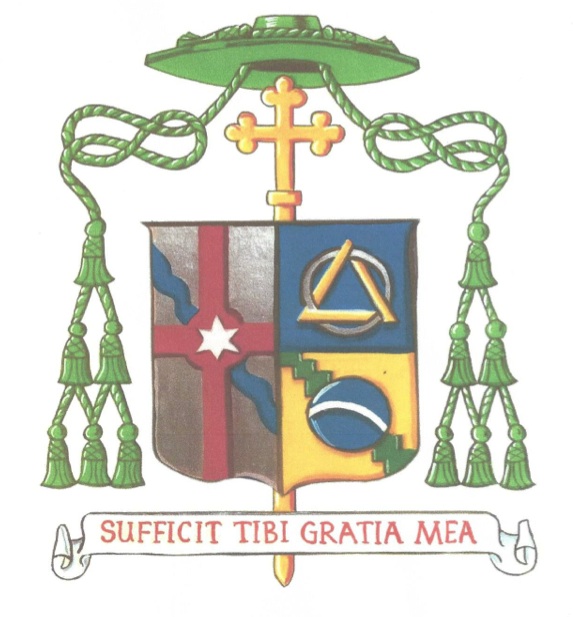
The Most Rev. Daniel Thomas, latterly auxiliary bishop of Philadelphia will be installed today as the IX bishop of Toldeo in Ohio. His arms (above) show the arms of the See impaled with his personal arms, assumed at the time he became a bishop. The lions are an allusion to the name Daniel and there are two of them as a heraldic representation of the name Thomas, which means “twin”.

New Armigerous Saint (well…a Blessed really not a Saint)

The second most important figure in the Opus Dei order, Alvaro Del Portillo, was beatified on September 27 at an open air Mass attended by tens of thousands of Catholics. Del Portillo succeeded Opus founder,St. Josemaria Escriva de Balaguer, as Opus Dei’s leader. The miracle attributed for Del Portillo’s beatification was confirmed last year by Pope Francis.

NOTE: This post was updated when a reader pointed out I had used an image of the incorrect coat of arms.

1024px-Coat_of_arms_of_Álvaro_del_Portillo.svg

Bishop Raica of Gaylord

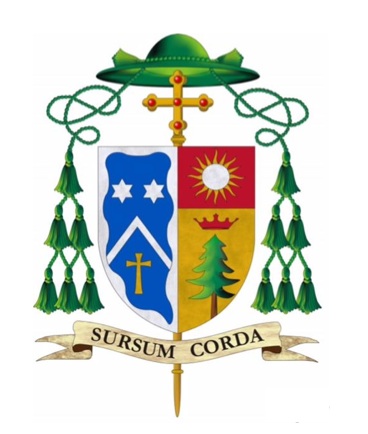
Today the Most Rev. Steven Raica was ordained and installed as the fifth bishop of Gaylord, Michigan. the tree and sun allude to the places from which his family came and the red crown is symbolic of his patron, the martyr, St. Stephen.

Raica


Bishop Rozanski of Springfield

15583692-large

On August 12 Bishop Mitchell Rozanski, until now Auxiliary Bishop of Baltimore, will be installed as the IX Bishop of Springfield, Massachusetts. The coat of arms of the new bishop (above) combines his personal arms with those of the see of Springfield. (the four roundels with waves symbolize a field of springs and the cross is associated with St. Michael, patron of the cathedral.)

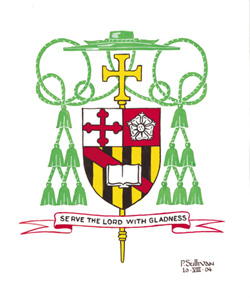
His personal arms (below) were assumed in 2004 at the time he became a bishop when he was appointed as Auxiliary in Baltimore.

RozanskiCrest

The small cross is symbolic of St. Michael (a name from which Mitchell is derived); the red and white colors allude to the national colors of Poland; the flower alludes to his surname which, in Polish, means “rose flower”. The lower portion uses the colors derived from the arms of Calvert, Lord Baltimore. The red bend (vertical stripe) and open book are for preaching the Word. The motto is taken from Psalm 100.

(Artwork by Paul Sullivan)

Bishop Jenik

Bishop_Jenik_Coat_of_Arms_2014

On August 4, 2014 Cardinal Dolan of New York ordained three Auxiliary Bishops for the Archdiocese. They are the Most Revs. Peter Byrne, John O’Hara and John Jenik. While I have not yet seen the coats of arms assumed by all three I did come across the interesting and distinctive coat of arms assumed by Bishop Jenik. He designed the coat of arms himself and I am not sure of the symbolism behind the design. Many might see this as strange because it does not follow the usual “lucky charms” notion of heraldry with an overloaded shield filled with charges meant to be a pictorial CV of the bearer. Good for him! Such heraldry is atrocious and all too common among the American Catholic hierarchy.

Rather, Bishop Jenik’s coat of arms is very simple. This is one of the earmarks of good heraldry. The use of black and white may make it stark but not knowing the meaning of the design there may very well be a good reason for the choice of these colors. In addition, since heraldry is, at its heart, about identification and nothing else, the design is clear to see and easily identifiable. Again, these are attributes of good heraldry. It reminds me of some of the most ancient heraldic designs that present clear images and use as few colors as possible.

I say hats off to Bishop Jenik for an excellent and unique design for his coat of arms!

(Artwork by Paul Sullivan)

Bishop Doran of Elphin, Ireland

crest of bishop kevin doran

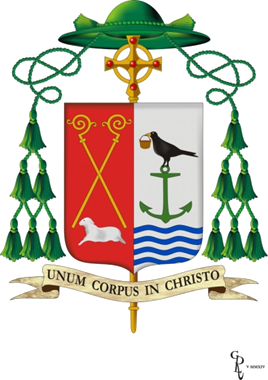
Father Kevin Doran is being ordained Bishop of Elphin, Ireland on July 13. The description of his coat of arms (above) taken from the website of the diocese:

In the right side of the shield (seen from the point of view of the one holding the shield) we find represented the Coat of Arms of the Diocese of Elphin; two golden crossed croziers surmounting a lamb as the central symbol reflecting Jesus, the Lamb of God who takes away the sins of the world.  The red (gules) color is the color of love, of blood; the infinite love of the Father who sent the Son to shed His blood for us, the ultimate act of love.

The personal arms of Bishop Kevin occupy the left side. This part of the shield is in silver (argent). The anchor, symbol of hope, is taken from the Doran family motto, Spes Ancora Vitae (Hope is the Anchor of Life).  The anchor is in green (vert), the symbolic colour of hope.

The blackbird references the legend of St. Kevin and the Blackbird, which is so well captured in the poem by Seamus Heaney. It reminds Bishop Kevin of the importance of fidelity to prayer and the relationship between prayer, compassion and service. The blackbird carries in his beak a copper pot, symbol of St Asicus, patron saint of the diocese of Elphin. St. Asicus was a coppersmith.

Fr. Kevin spent some years as parish priest of Glendalough, Co. Wicklow (The Valley of the Two Lakes). As he ministered to parishioners and pilgrims around the lakeshore, he was often reminded of the ministry of Jesus, much of which took place around the lake (or sea) of Galilee.  As he undertakes his new mission in the Diocese of Elphin, (a diocese bounded on one end by the River Shannon and on the other by the Atlantic Ocean), he takes the ministry of Jesus as his model and inspiration. This is the symbolism of the wavelets in the lower part of the shield.

A Franciscan Bishop

Image

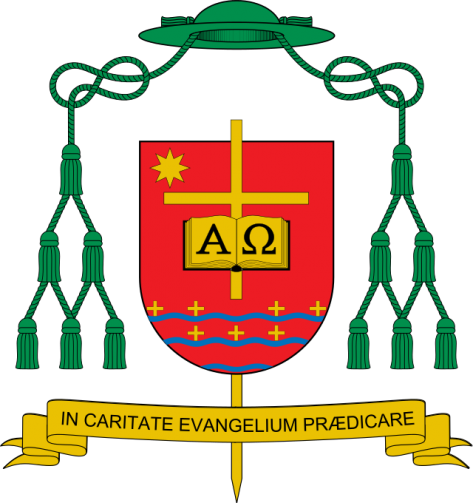
The coat of arms above is that of Giuseppe Piemontese, OFM Conv who will be ordained on June 21 as the bishop of Terni-Narni-Amelia, Italy. A very pleasing design.

(…and if you say the name of the diocese very quickly the middle part sounds like you’re saying “Narnia”)