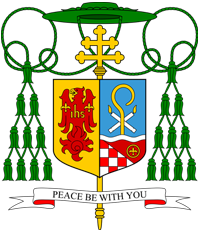
On March 14 the Most Rev. Stefan Hesse, 48, was ordained and installed as the 5th Archbishop of Hamburg, Germany.
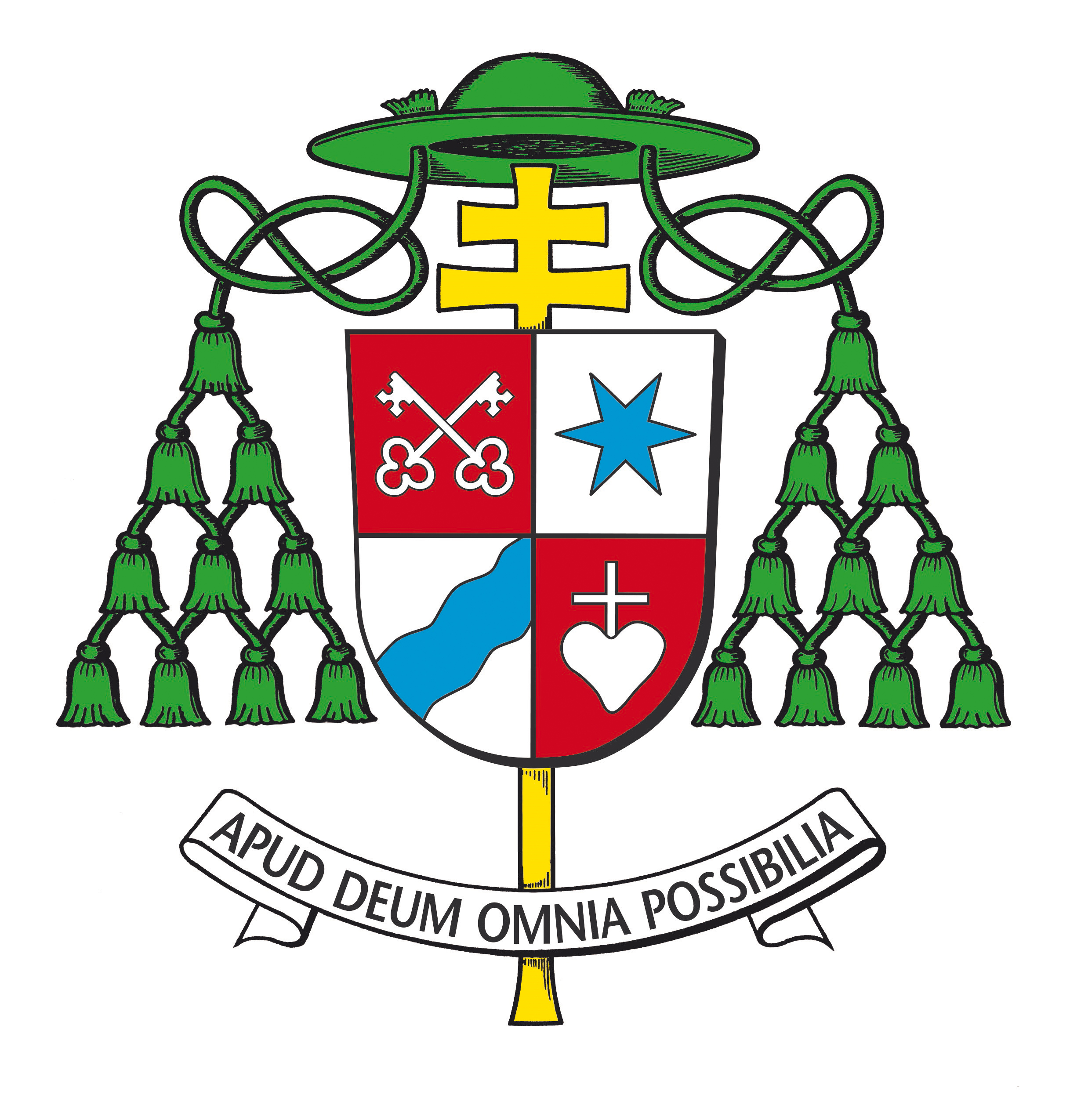
On March 14 the Most Rev. Stefan Hesse, 48, was ordained and installed as the 5th Archbishop of Hamburg, Germany.
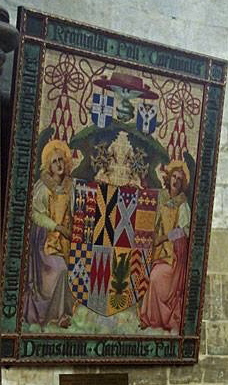
Previously, I have written about the coat of arms of Reginald Cardinal Pole, Archbishop of Canterbury, Cardinal Deacon of Ss. Nereus & Achilleus (1536), Cardinal Priest of Santa Maria in Cosmedin (1556) and Lagatus Natus. Here is another image of his rather elaborate arms.

The other day I neglected to make note of the anniversary of the death of Reginald Cardinal Pole, Archbishop of Canterbury and a man with a better claim to the English throne than the illegitimate Elizabeth I. His impressive coat of arms depicts: Quarterly of eight: 1. Quarterly France (modern) and England with a label of three points each charged with a canton Gules (Clarence); 2. Per pale Or and Sable a saltire engrailed counterchanged (Pole); 3. Gules a saltire Argent with a label of three points gobony Argent and Azure (neville); 4. Gules a fess between six cross cross lets Or (Beauchamp); 5. Chequy Or and Azure a chevron ermine (Newburgh); 6. Argent three fusils in fess Gules (Montague); 7. Or an eagle displayed Vert armed and beaked Gules (Monthermer); 8. Quarterly i and iv Or three chevrons Gules (Clare); ii and iii Quarterly Argent and Gules, a fret Or, overall a bend Sable (Despencer). The two crosses indicate his archiepiscopal and legantine powers. On the small shields are the arms of the See of Canterbury and the Cathedral Chapter. The image is of the achievement of his arms hanging above his tomb.
With the recent installation of the IX archbishop of Sydney Australia, The Most Rev. Anthony Fisher, OP several have asked about the arms of the other archbishops, five of whom have also been cardinals. Here they are:
1. Bede (John) Polding, OSB
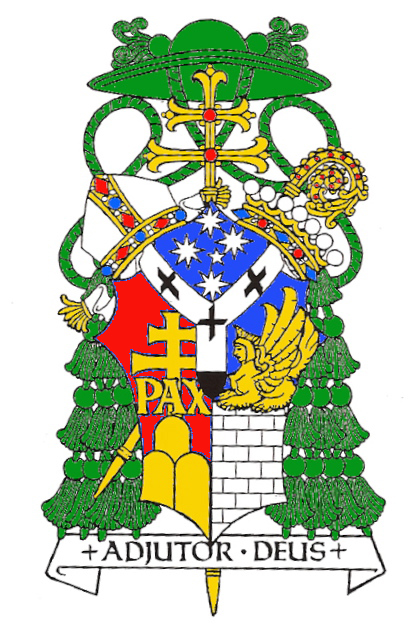
2. Bede (Roger) Vaughan, OSB
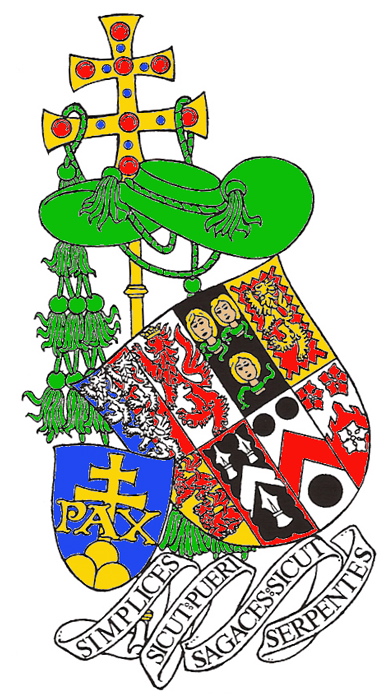
3. Patrick Francis Cardinal Moran
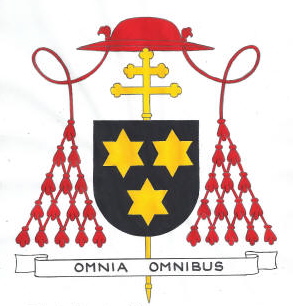
4. Michael Kelly
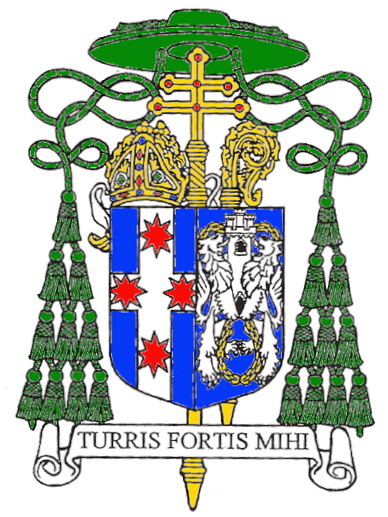
5. Norman Thomas Cardinal Gilroy, KBE
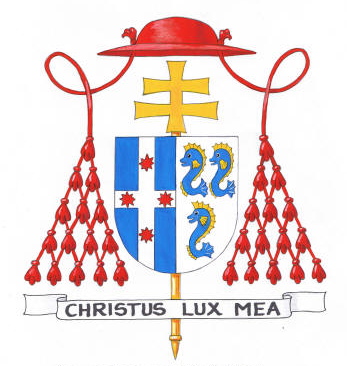
6. James Darcy Cardinal Freeman, KBE
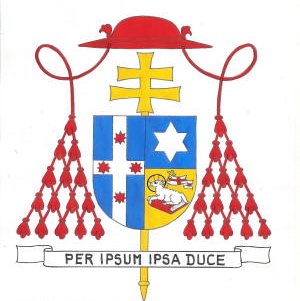
7. Edward Bede Cardinal Clancy
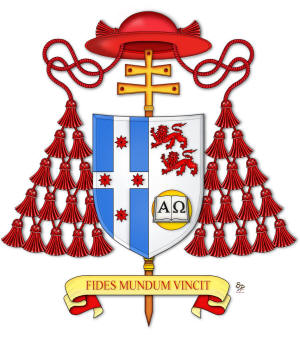
8. George Cardinal Pell, AC
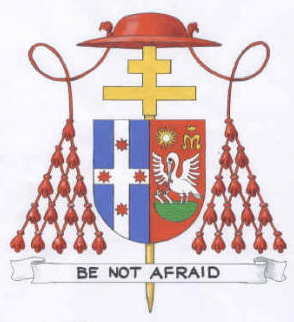
9. Anthony Colin Fisher, OP
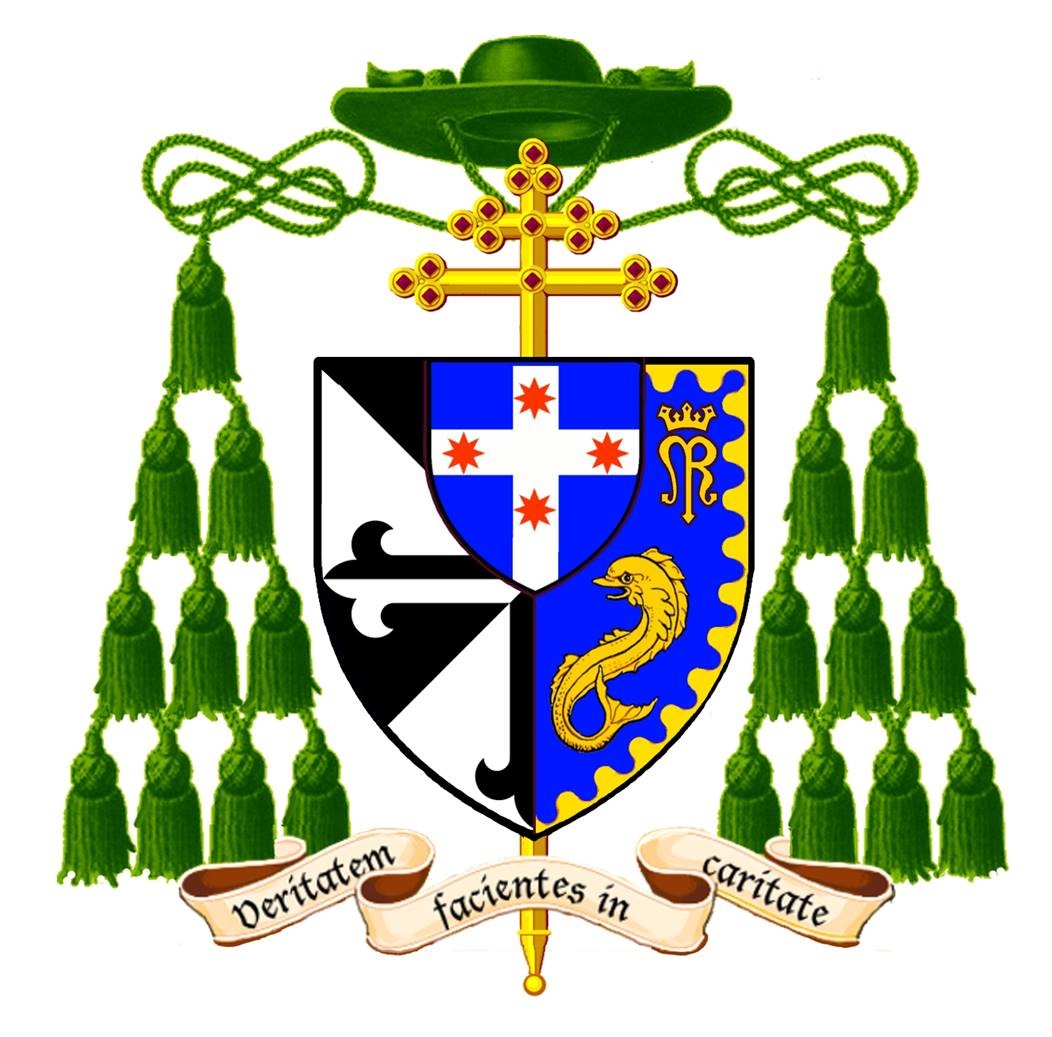
I have already written about the coat of arms of Archbishop Blase Cupich who will be installed today as the Archbishop of Chicago. Not only has the Archbishop modified his coat of arms when he moved from Rapid City to Spokane and again from Spokane to Chicago now he is also employing a new rendering of the coat of arms done by someone other than Paul Sullivan (below). May the Archbishop’s tenure in Chicago be a spiritually fruitful and successful one.
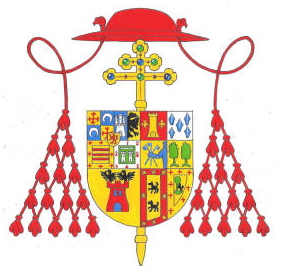
Lately I’ve been posting and commenting on the coats of arms newly assumed by bishops but I thought it would be nice to look back to an older coat of arms. I looked back to the XIX Century to Spain. Spanish bishops often have complex coats of arms because they come from armigerous families whose coats of arms are composed of several coats marshaled together on one shield. This one is no exception. The coat of arms of Juan de la Cruz Ignacio Cardinal Moreno y Maisonave, Archbishop of Toldeo (1875-1884) who was created Cardinal in 1868 while archbishop of Valladolid. He had also been bishop of Oviedo before that.
Here is a typical example of a complicated shield composed of several different coats of arms marshaled together. It may seem busy but it is also a feast for the eye!
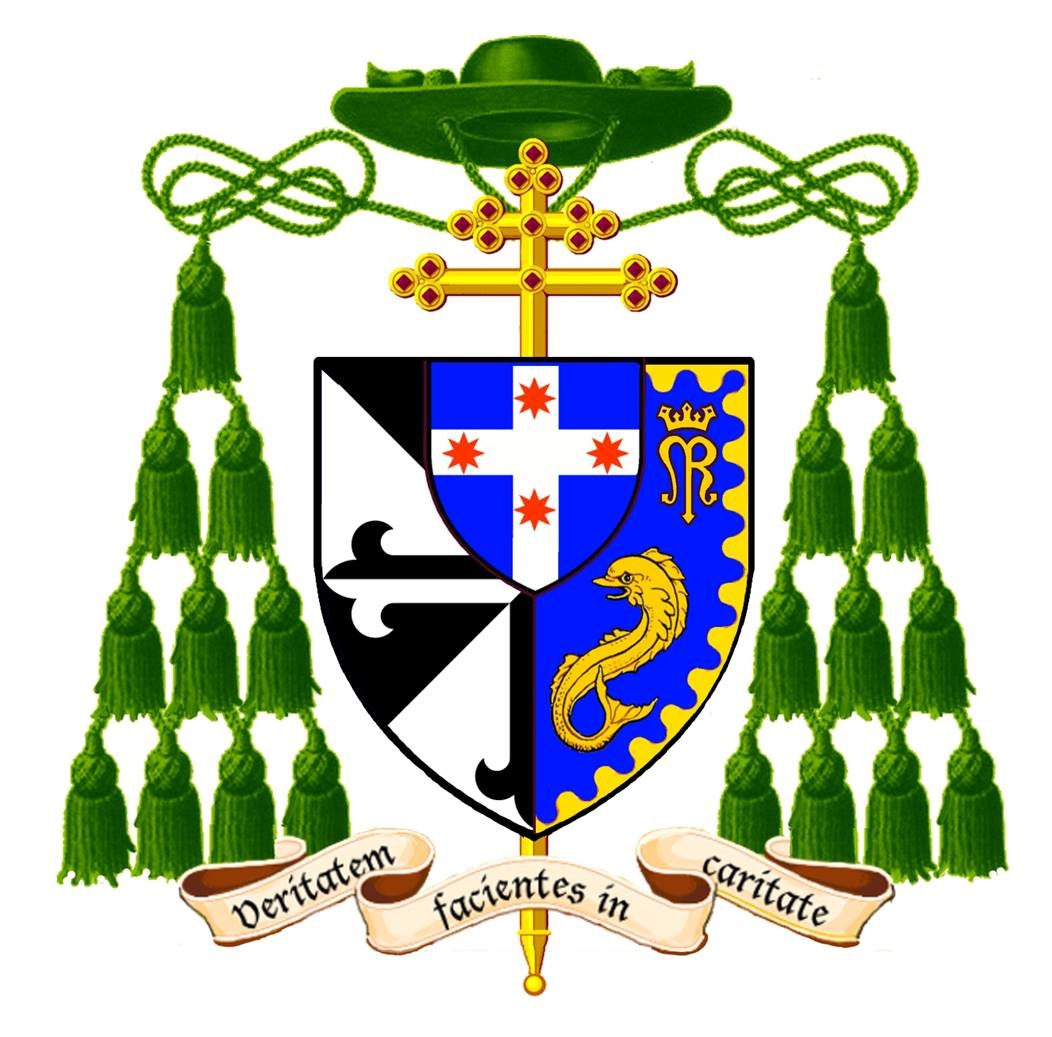
The Most Rev. Anthony Fisher, OP until now Bishop of Parramatta and previously auxiliary bishop of Sydney will be installed as the IX Archbishop of Sydney on November 12. His coat of arms (above) was prepared by Mr. Chris Wolter who had also done the work on the archbishop’s arms in Parramatta and as auxiliary bishop (below).
In the interest of full disclosure I, along with the President of the Australian Heraldry Society, Mr. Richard d’Apice, AM, were consulted on this coat of arms. As with any such consultation some of our advice was followed and some was not but the archbishop and Mr. Wolter were very open to hearing suggestions. Essentially, the archbishop retains the arms he first assumed when becoming auxiliary bishop of Sydney. Those arms combine the armorial bearings of the Order of Preachers (more commonly referred to as the Dominicans) of which he is a member impaled with arms that are based on the arms used by St. John Cardinal Fisher when bishop of Rochester, England with some minor alterations for difference (i.e. the inclusion of the Marian symbol). Over this on an inescutcheon (sometimes referred to as an escutcheon “in pretense” although that expression isn’t wholly appropriate in this case) is the arms of the See of Sydney.
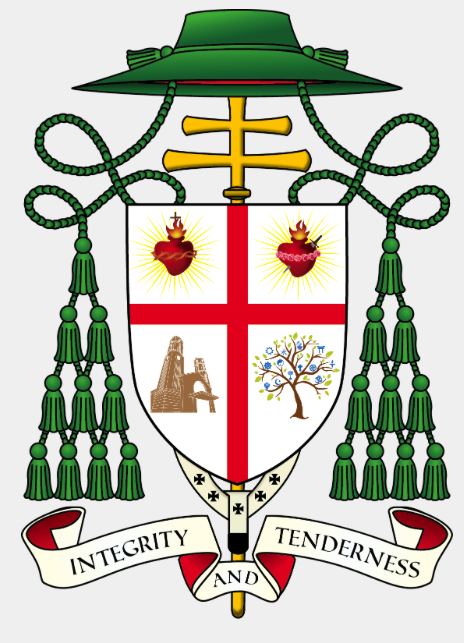
NO! HORRIBLE!
Cut and paste artwork (much of it STOLEN from someone else!), insipid charges, poor design. An example of the WORST kind of heraldry. It’s really not heraldry at all. Just a bunch of nonsense slapped onto a shield. This kind of heraldic device reveals an arrogance and conceit not befitting a bishop.
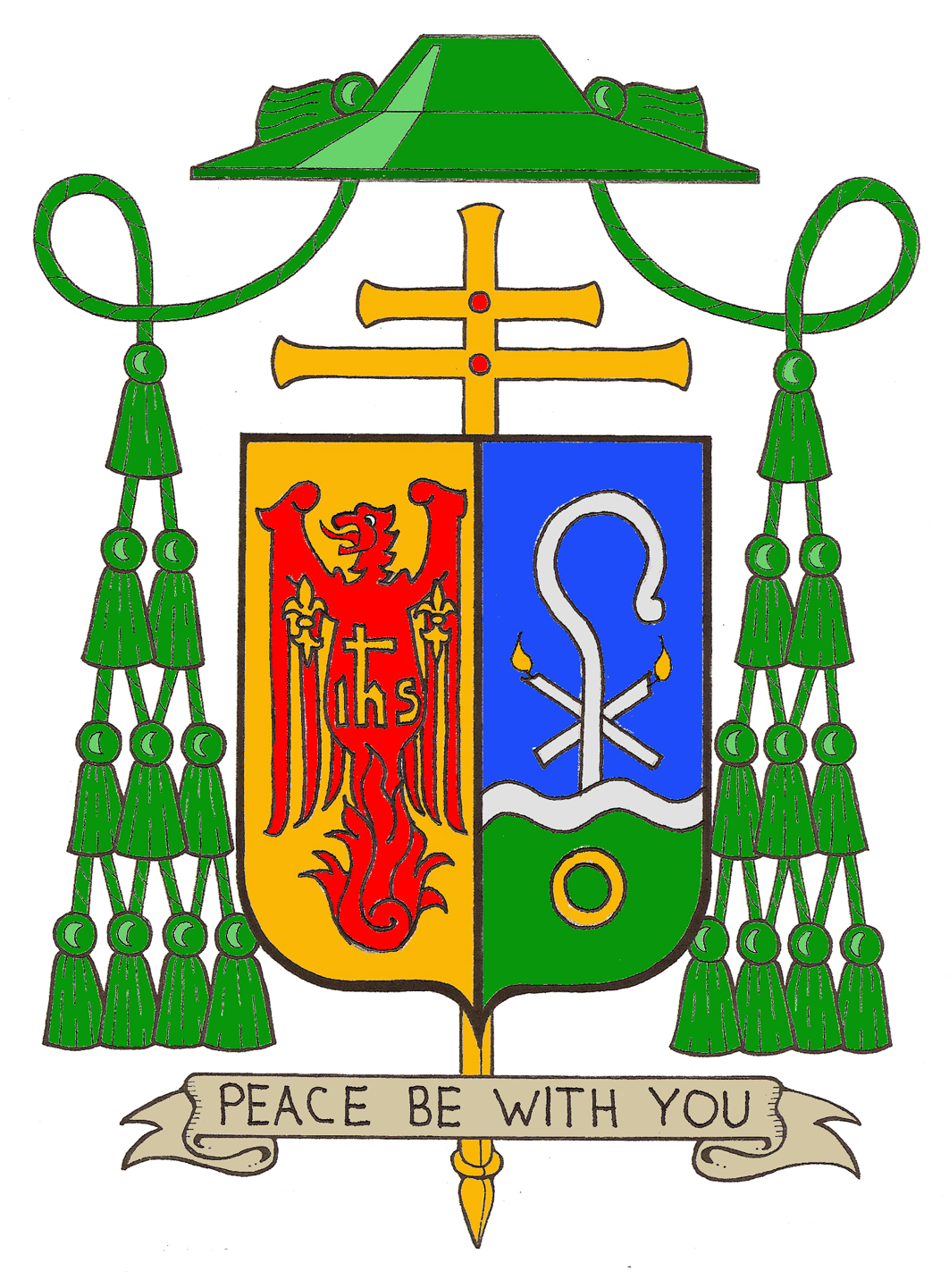
This morning Pope Francis appointed The Most Rev. Blase Cupich up until now Bishop of Spokane, Washington to be the 13th Archbishop of Chicago, Illinois. The arms of Archbishop-Designate Cupich allude to his baptismal patron, St. Blase. Traditionally, on the feast of that saint, the patron of those with diseases of the throat, two candles are used in the blessing of throats by placing them on either side of the throat and reciting the blessing. The arms of the venerable See of Chicago depict a phoenix rising from the ashes as an allusion to the famous Chicago fire and also include symbols of the French settlers in that area and the titular of the cathedral: The Most Holy Name. Cupich will be installed in Chicago on November 18.
UPDATE: The archbishop has decided slightly to modify his coat of arms (below)
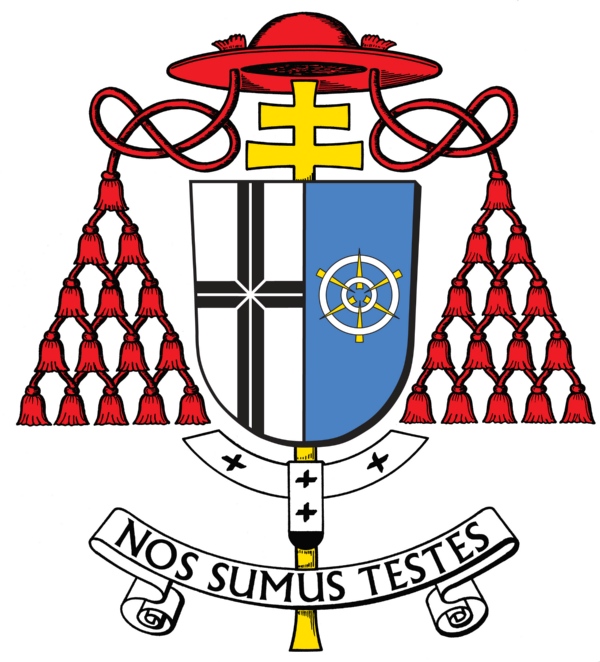
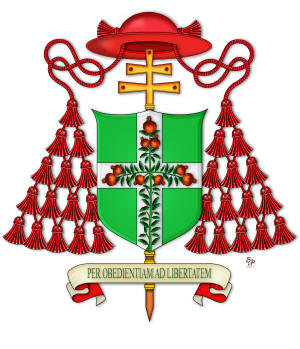
On September 20 Rainer Maria Cardinal Woelki of Berlin will be installed as the 32nd Archbishop of Cologne, Germany. The very simple arms of the see (Argent a cross throughout Sable) are impaled with the cardinal’s equally simple personal arms.
A blue field with a silver wheel with 6 golden wedges as spokes alternately directed outward or inward. This is the so-called Radbild of Brother Klaus, Niklaus von Flue (1417-1487), which refers to the cardinal’s home parish of St. Bruder Klaus in the Bruder Klaus settlement in Cologne-Mülheim. This circular pattern with the aufzufassenden as golden wedges combines theological, philosophical and mathematical elements. Three rays emanate from the center, just as God does not want to remain in Himself but in turn loves man . Three beams have the opposite disposition and lead to God, the response of those desires which are filled with His love.
The motto, from Acts 5:32, translates as, “We are Witnesses”.
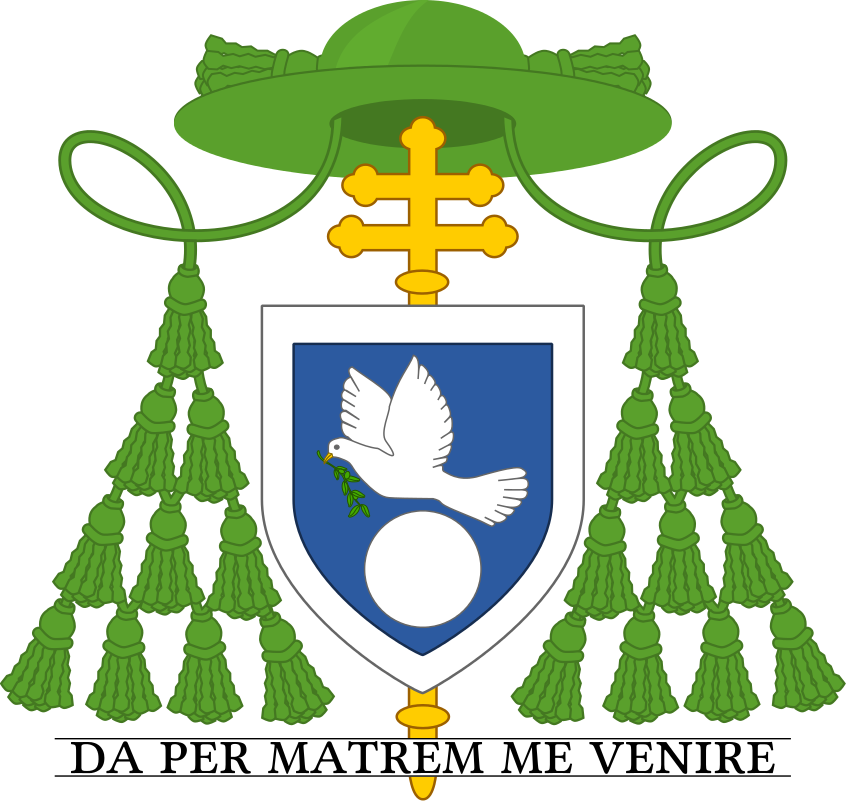
Because of the indefinite, and very likely merely temporary, suspension of the Cause for the Canonization of the Venerable Archbishop Fulton J. Sheen I thought some might be curious to see what the archbishop’s coat of arms looked like. It was a simple design playing on the name “Sheen” which is similar to “Shehan” in Gaelic and means “peace”. Hence, the dove. Sheen was Titular Archbishop of Newport, Wales a diocese that no longer exists as such but when it did had as its cathedral the abbey church at Belmont Abbey, a Benedictine monastery in the UK which still does exist to this day.
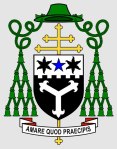
Below is the coat of arms of the Most Reverend Leo William Cushley, Metropolitan Archbishop of St. Andrews and Edinburgh, Scotland. He was installed in the position last year but just this past Sunday received his pallium from Pope Francis.
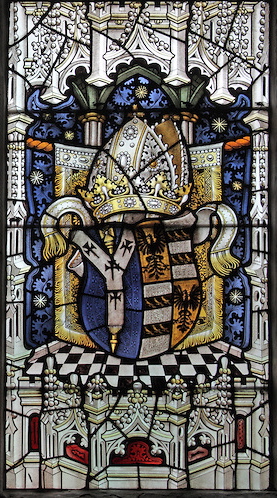
The coat of arms (above) of Frederick Temple, Archbishop of Canterbury from 1896-1902. His son, William Temple was also Archbishop of Canterbury from 1942-1944. I would presume, however, that as a second son he did not use the same arms as his father but differenced them in some manner.

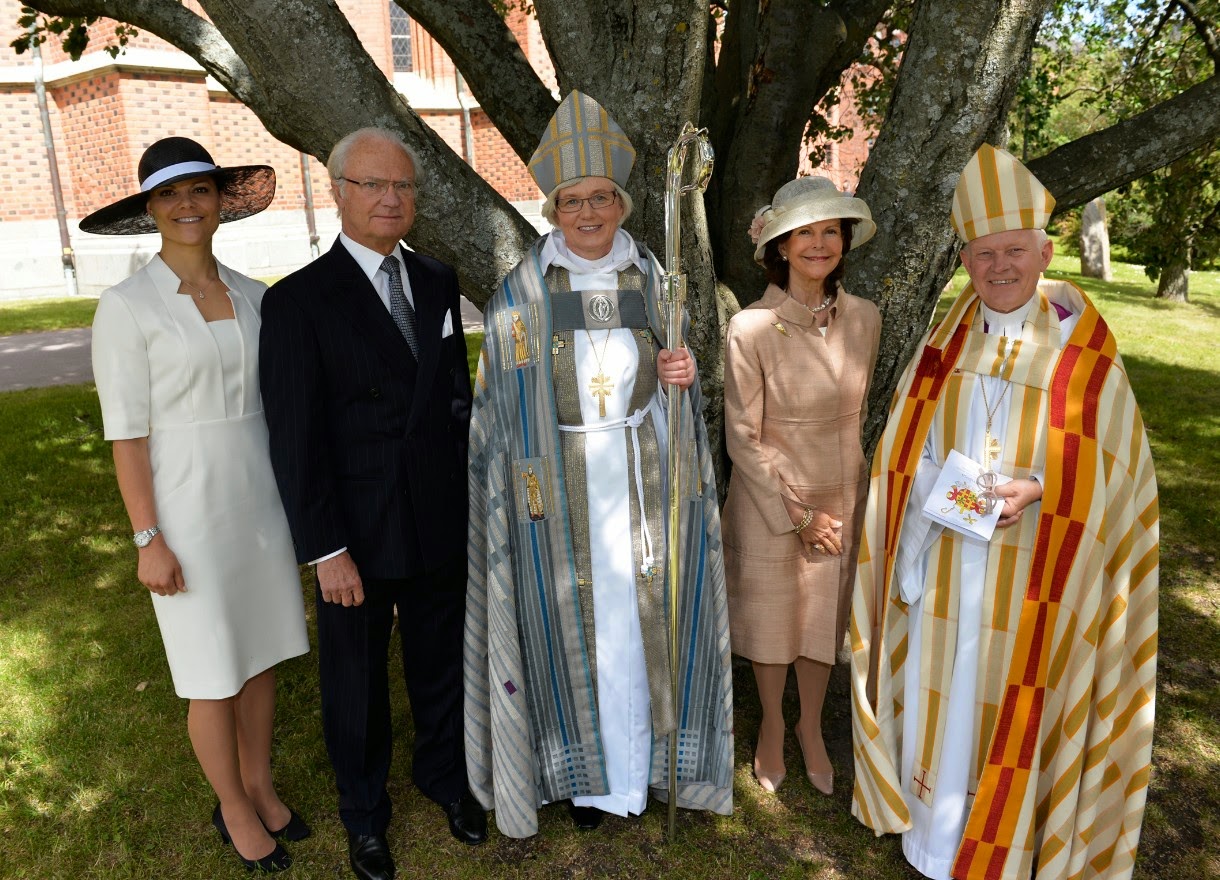
Above is the coat of arms of Archbishop Antje Jackelén, the Bishop of Lund in the Church of Sweden elected as the first woman to be Archbishop of Uppsala and Primate of the Church of Sweden. She was installed at Uppsala on June 15, 2014. Below is a photo of the new archbishop with (l.-r.) Crown Princess Victoria of Sweden, King Carl XVI Gustaf, Queen Silvia and Archbishop Anders Wejryd, her predecessor as archbishop. The coat of arms follows a typical pattern in Scandinavian countries of the personal arms (in the 2nd and 3rd quarters) being quartered with those of the (arch)diocese. The motto translates to, “God is Greater”.
artwork: Ronny Andersen
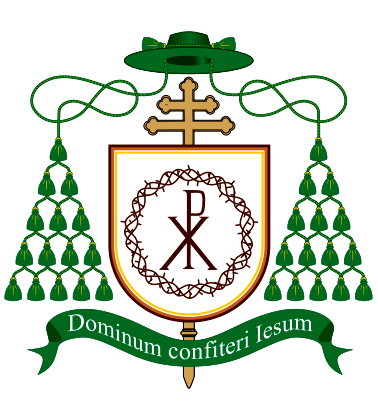
The new Archbishop of Gniezno, Poland, the Most Rev. Wojciech Polak, will be installed on June 7. In 1948 it was decided that the Archbishops of Warsaw would also be the Archbishops of Gniezno and, thus, Primates of Poland. These two offices were joined “in persona episcopi”. However, later in March of 1992 it was decided once again to separate the two archdioceses with each having its own archbishop. Josef Cardinal Glemp who was Archbishop of Gniezno and warsaw at the time was permitted to retain the title of Primate of Poland until he stepped down in 2009. From 2009 onwards the title Primate of Poland once again rests solely with the Archbishop of Gniezno and not with the Archbishop of Warsaw.
The arms of Archbishop Polak (below) show a simple design. However, the galero is shown with 30 green tassels instead of 20 and those tassels also appear ro have a skein of gold interwoven in them. Such a hat is used in Roman Catholic heraldry by Patriarchs, not Primates. Frequently, it is erroneously asserted that Primates are entitled to the same external ornaments as Patriarchs. This is false and untrue! So, this new Archbishop-Primate begins his tenure by claiming additaments on his coat of arms to which he has no credible claim.
Heraldry: FAIL
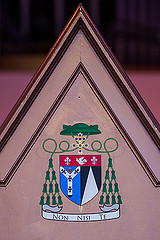
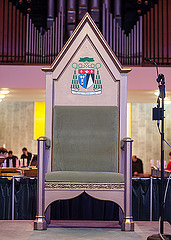
On May 1 the Most Rev. Malcolm McMahon, OP, formerly bishop of Nottingham, was installed as the 12th archbishop of Liverpool, England. His coat of arms is depicted on the cathedra of the metropolitan cathedral. It is interesting how the personal arms impale the arms of the See but both are then placed under one chief.
On March 14 the Most Rev. Herwig Gössl (age 47) will be ordained as Auxiliary Bishop of Bamberg, Germany. His coat of arms (below) employs an interesting modern style in its depiction. The design incorporates symbols of the Transfiguration, the rivers associated with the places the bishop has lived and colors taken from the archdiocesan arms. Beneath the arms of the new bishop I also show the coat of arms of the current archbishop of Bamberg, Ludwig Schick.
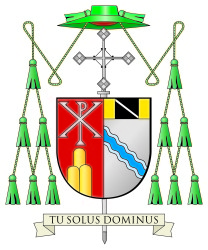
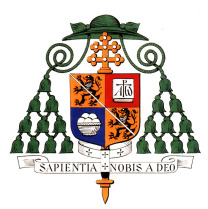
Yesterday, March 12, 2014 word was received of the death of the former Patriarch of Lisbon, His Eminence José da Cruz Cardinal Policarpo. He was age 78. May he rest in peace. As Cardinal Patriarch he used only his personal arms.
Fr. Guy Selvester's blog of Ecclesiastical Heraldry
Fr. Guy Selvester's blog of Ecclesiastical Heraldry
Fr. Guy Selvester's blog of Ecclesiastical Heraldry
Fr. Guy Selvester's blog of Ecclesiastical Heraldry
Fr. Guy Selvester's blog of Ecclesiastical Heraldry
Fr. Guy Selvester's blog of Ecclesiastical Heraldry
Fr. Guy Selvester's blog of Ecclesiastical Heraldry
Fr. Guy Selvester's blog of Ecclesiastical Heraldry
Fr. Guy Selvester's blog of Ecclesiastical Heraldry
Fr. Guy Selvester's blog of Ecclesiastical Heraldry
Fr. Guy Selvester's blog of Ecclesiastical Heraldry
Fr. Guy Selvester's blog of Ecclesiastical Heraldry
 EXARANDORUM