Parish of St. Catherine Labouré in Harrisburg, PA

Image

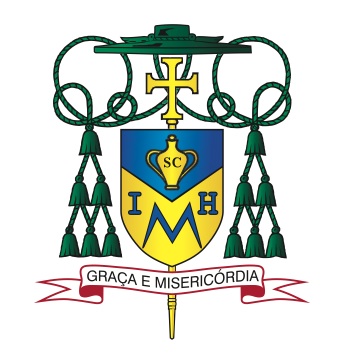
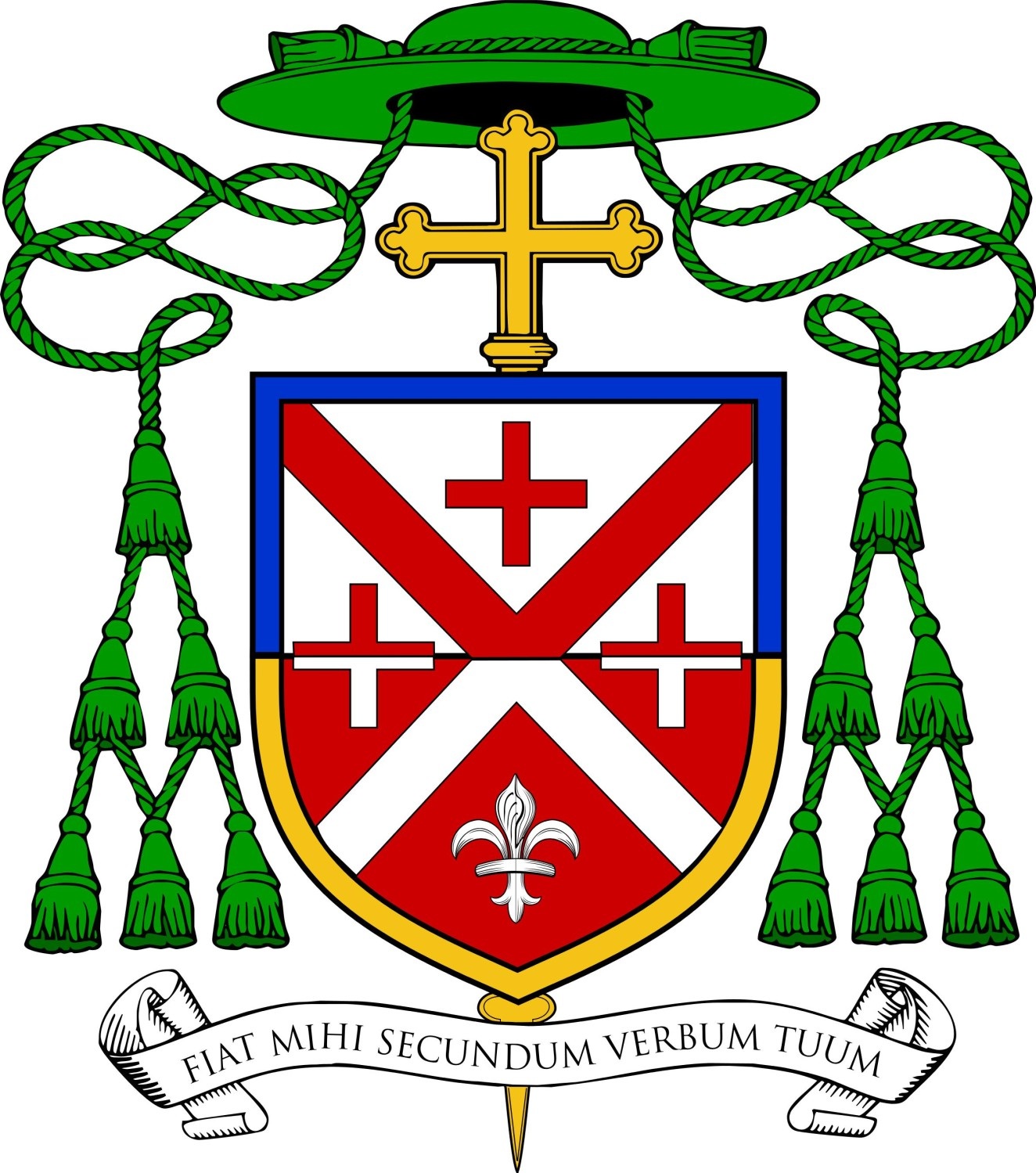
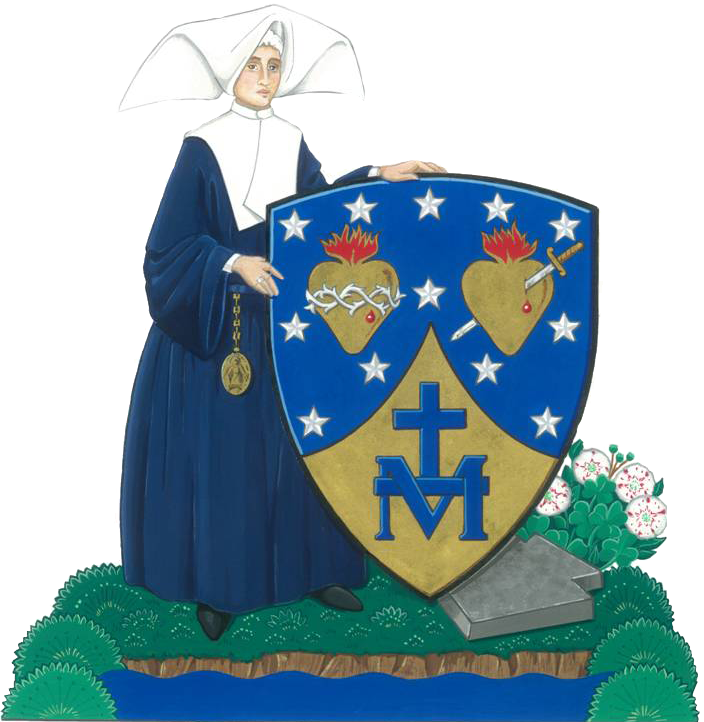
The arms naturally incorporate images found on the Miraculous Medal, which had been first entrusted to Catherine Labouré by the Blessed Virgin Mary.  The shield incorporates four images found on the Medal, the Marian monogram, the stars from Sacred Scripture (as ascribed to Mary in the Apocalypse: 12-13), and the Sacred Heart of Jesus and the Immaculate Heart of Mary side by side.  The shield is worked in blue and in gold.  On this gold field is found the Marian cipher, a letter “M” surmounted by a Christian Cross, an image presented to Saint Catherine by the Virgin Mary herself.  It is blue, as it represents the Blessed Mother specifically.

The blue field above represents the Blessed Virgin, of course, but more so in Her title of Our Lady of Grace.  Upon this field appear the Sacred Heart of Jesus and the Immaculate Heart of Mary, linked theologically as Mary always stood beside her Son.  These two images associated with the Miraculous Medal are surrounded by the twelve stars that surround Mary’s head as a halo in many Marian images, most definitely those associated with Her as Our Lady of the Miraculous Medal as seen on the reverse side of the medal itself.  Both hearts suffer and bleed for the world.

Saint Catherine supports the shield in her historic and colorful habit of a Daughter of Charity of Saint Vincent de Paul as it was worn at the time of her life on earth.  Saint Catherine stands on a compartment upon a green river bank above the blue waters of the Susquehanna River that runs through the state capital city to which the parish is near.  The shield rests upon a stone, specifically a keystone, the emblem of the Commonwealth of Pennsylvania.  Next to the keystone is found a floral spray composed of shamrocks honoring the patron saint of the Diocese of Harrisburg, Saint Patrick of Ireland; and mountain laurel, the official flower of the Commonwealth of Pennsylvania.

Design: J. Noonan  Art: L. Nicholson

Heraldic Vestments

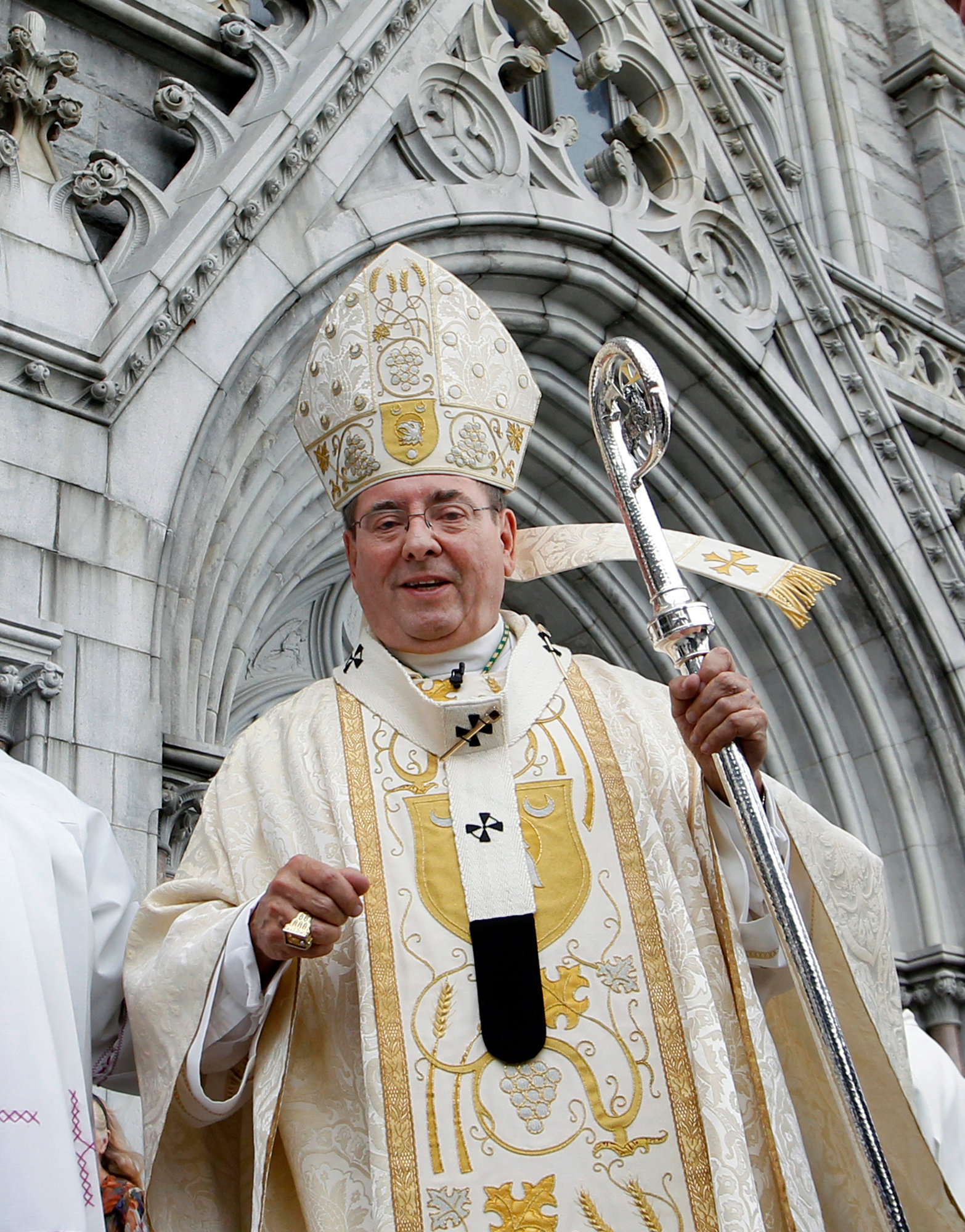
Usually, I am not a big fan of heraldry being used as a decorative motif on vestments and pontificalia. Every now and again, however, it can work. The example below shows the Most Rev. John J. Myers, Metropolitan Archbishop of Newark, NJ. The chasuble he wears is decorated with a shield (partially obscured by his pallium) bearing his personal coat of arms as is the base of the mitre he is wearing. I think this is a good example of how heraldry can be used to decorate vestments in a way that is neither overpowering nor inappropriate.

Image

Bishop Deeley of Portland, ME

Image

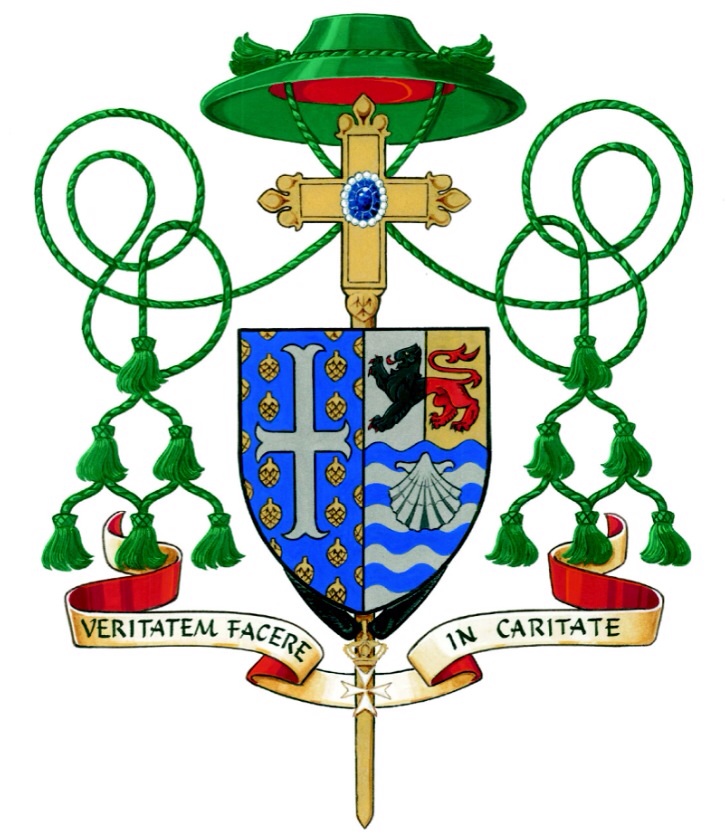
The coat of arms of Most Rev. Robert Deeley installed on February 14 as the 12th Bishop of Portland, Maine.

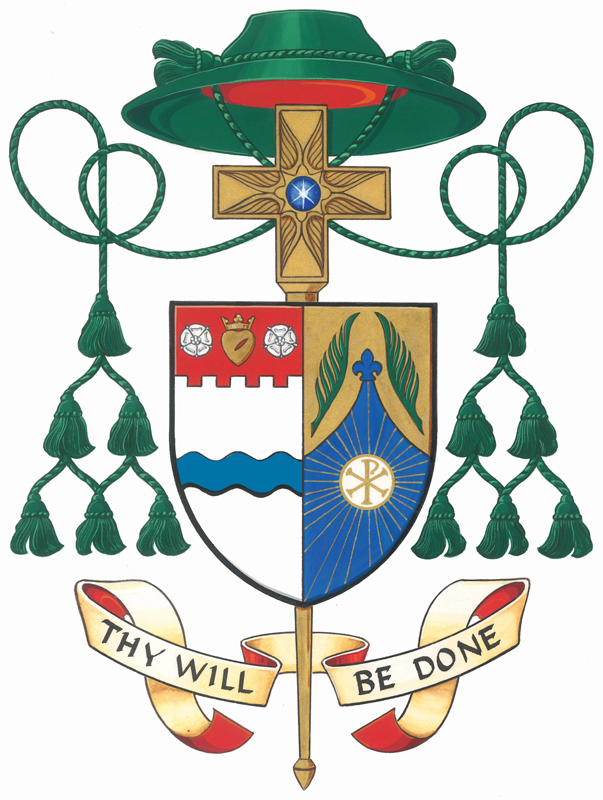
The right side of the shield is divided by a wavy line to suggest water. This theme continues in the lower portion with alternating silver and blue waves, suggesting deep waters and his home see of Boston. Resting on the waters is a scallop or pilgrim’s shell, which, for Bishop Deeley, represents both baptism and a special homage to Pope Benedict XVI, who chose Bishop Deeley for the episcopacy and whose own shield also includes a shell. The silver color of the shell represents the purity of God. Above this is a lion, which Bishop Deeley considers to be emblematic of his family. The front half of the lion is rendered in black and the hindquarters are in red, with the claws and tongue taking the opposite colors.

The left side of the shield, representing the Diocese of Portland, features the diocesan coat of arms, which includes a field of blue with a scattering of gold pine cones. It is based on an ancient French royal family coat of arms and reflects the French roots of the diocese, which date back to 1604.

At the time of his episcopal ordination last year, Bishop Deeley chose as his motto “Veritatem Facere in Caritate,” which he translates as “living the truth in love” (Ephesians 4:15).

Design: J. Noonan
Artwork: L. Nicholson

Two New Korean Bishops

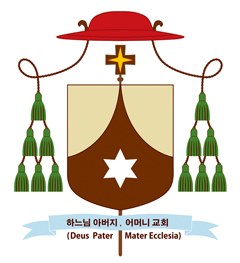
Two Auxiliary bishops of the Archdiocese of Seoul, Korea were ordained today. There coats of arms are interesting. They are Bishops Timothy Yu Gyoung-chon and Peter Chung Soon-taek, OCD. (that is, Order of Discalced Carmelites). The coat of arms of Bishop Timothy is unconventional bordering on the bizarre. It makes extensive use of writing and seems to have the motto on the shield itself. It also makes use of no external ornaments to indicate these are the arms of a bishop. On the other hand the coat of arms of Bishop Peter is more conventional in appearance. His arms are primarily composed of the coat of arms of the Order of Discalced Carmelites differenced by the exclusion of the two additional stars that usually appear in the upper left and right thirds of the shield. In addition, he employs a galero that is somewhat unique to Asian heraldry. The tassels are green as would be usual for a prelate with the rank of bishop. However, the hat is decidedly not green. Here it is a shade of red but sometimes a purple hat is used. This is to avoid the awkward and embarrassing situation that would arise from a bishop employing a green hat. To “wear a green hat” is a colloquial expression in many parts of Asia that means the man is a cuckold. To avoid this association with the well known expression many Asian bishops from various countries make use of a hat of some color other than green.

Image

Image

Bishop Olson of Fort Worth

Image

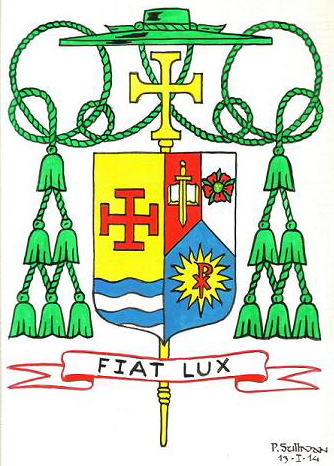
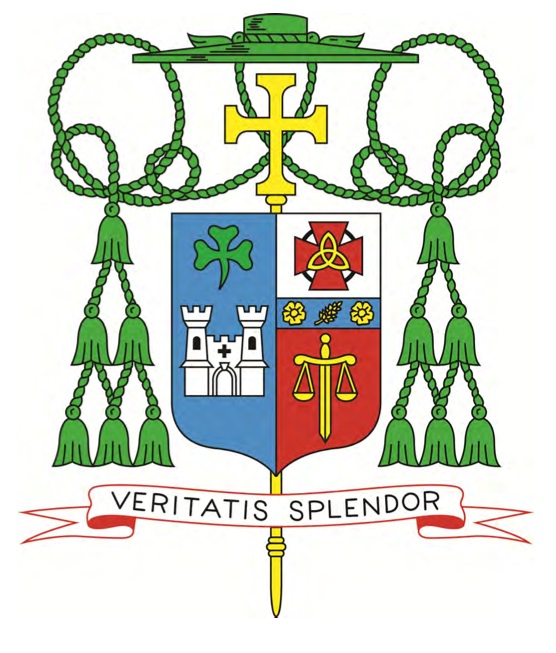
On January 29 the Most Rev. Michael Fors Olson will be ordained and installed as the fourth bishop of Fort Worth, Texas. His personal arms depict a symbol for the Holy Trinity as an allusion to Holy Trinity Seminary in Irving, Texas where the bishop served as Rector. Below the sword and pan balance is symbolic of his baptismal patron, St. Michael. The blue fess in the center bears the spikenard flower taken from the arms of Pope Francis as well as two yellow roses (a allusion to Texas) representing Our Lady of Guadalupe and St. Thérèse the “Little Flower”. The motto means “The Splendor of the Truth”. The coat of arms of Bishop Olson were designed and marshaled to those of the diocese by Deacon Paul Sullivan.

Constantinian Order Reconciliation

Image

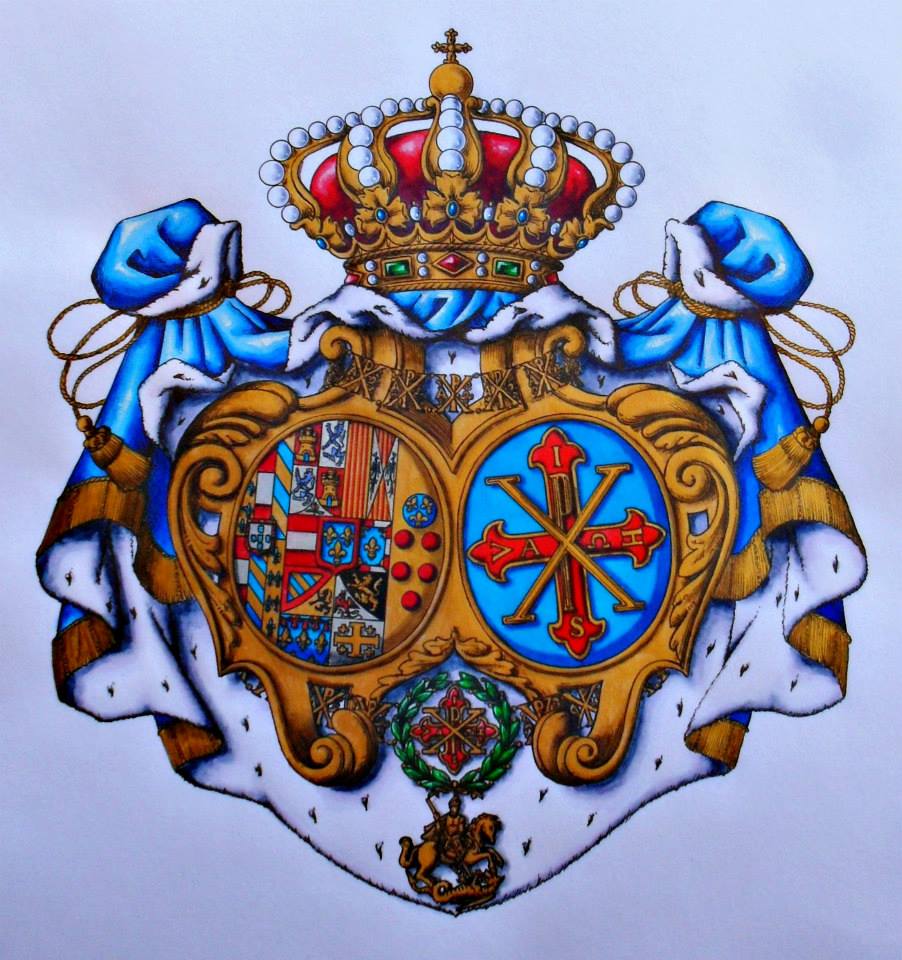
It was announced yesterday that the Duke of Noto (Spanish branch) and the Duke of Castro (Neapolitan branch) of the royal house of the Two Sicilies signed an accord which, while it does not completely solve the issue of the headship of the royal house more closely ties the two heads of the royal orders together in closer cooperation as co-grand masters with equal footing of the Sacred Military and Constantinian Order of St. George. This is a positive step toward healing a very long-standing rift.

(artwork by Carlos Navarro)

Auxiliary Bishop of Lausanne, Genève & Fribourg

Image

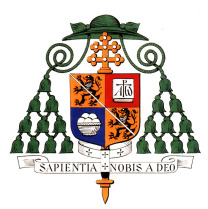
The coat of arms of the newly ordained auxiliary bishop of Lausanne, Genève & Fribourg in Switzerland, the Most Rev. Alain de Raemy. His arms are colorful and interesting and, in continental fashion, employ lots of elements repeated in four quarters. This method seems odd to those who are used to arms that are marshaled only to indicate jurisdiction over a territory like a diocese or abbey. But, it is not uncommon in Switzerland, Germany and Austria.

The artwork is by Laurent Granier.

New Archbishop of Salzburg

Image

The new archbishop of Salzburg, Austria, Dr. Franz Lackner, OFM will be installed on January 12. His coat of arms employs the traditional red galero used by ancient custom by the archbishops of Salzburg (who hold the title “Primate of Germany”) because of their role as Papal Legate. This red galero with 20 tassels is used even if the archbishop is not a Cardinal. If he is promoted to Cardinal then another row of tassels is added to the galero. Similarly, the archbishops of Salzburg wear red, not purple, even if they are not Cardinals.

The arms also illustrate that the method of marshaling coats of arms preferred in many places, impalement, is far from the only option. The ancient arms of the See of Salzburg make up the upper third of the shield. The center section of blue with the gold grapevine is primarily emblematic of those referred to in Jn 15:1-5 the Lord’s vineyard and the strong connection between Christ and the believer (“I am the vine; you are the branches.”) . At the same time the vine but is also reference to the origin of Dr. Lackner from the wine area , namely that of Eastern Styria around Kapfenstein and St. Anna am Aigen. The golden heraldic lily is the actual symbol for Mary. The threefold division of the fleur-de-lis symbolizes the Holy Trinity of the Father, the Son and the Holy Spirit. The green base shows the “Franciscan Conformities” or the coat of arms of the Franciscan Order (without the clouds).

Archbishop Gagnon of Winnipeg, Canada

Image

On January 3 Archbishop Richard Gagnon, formerly bishop of Victoria was installed as Archbishop of Winnipeg. The arms (above) which he assumed upon becoming a bishop are retained. The shield is partly inspired by the emblem of Bishop Gagnon’s predecessor, Modeste Demers (1809-1871), the first Bishop of Vancouver Island. Bishop Demers and Bishop Gagnon are closely related via a collateral branch of the Demers family. Bishop Demers’ emblem was red and gold and featured a gold Latin cross set on a mount with two figures praying at the base of the cross. These tinctures have been kept, as has the cross. Since Bishop Gagnon was ordained on June 24th, the feast day of St. John the Baptist, the two charges are gold Agnus Dei emblems, traditionally associated with St. John the Baptist. This is also a reference to Bishop Gagnon’s ancestral roots in Quebec.

He may impale these arms with those of the archdiocese (below). In addition, the episcopal cross behind the shield will become an archiepiscopal cross with two horizontal bars and another row of green tassels will be added to the galero.

Image


UPDATE: The only image I was able to obtain so far of the Archbishop’s arms impaled is in black and white. As one commenter on this post has already pointed out there have been slight changes made to the arms of the archdiocese.

Gagnon


Bishop Matano of Rochester, NY

Image

Salvatore Matano will be installed today as the ninth bishop of Rochester, New York succeeding Bishop matthew Clark who has served there for the last thirty four years. Rochester is also the diocese where the late Archbishop Fulton Sheen served as diocesan bishop briefly before being promoted to titular archbishop of Newport.

The description of the bishop’s coat of arms (taken from material provided by the diocese) is as follows:

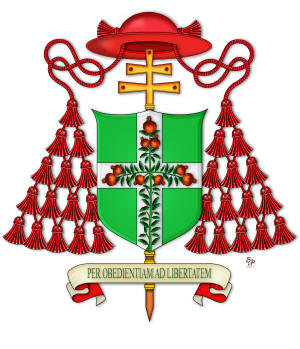
“On a blue field is a silver moline cross taken from the heraldry of the bishop’s native diocese of Providence, Rhode Island; a golden star with seven points simultaneously recalls the Divine institution of the Seven Sacraments and the Seven Sorrows of Our Lady.  The liturgical memorial of Our Lady of Sorrows is observed on the 15th day of September, the day of Bishop Matano’s birth. In base are seven silver hills on which the Eternal City of Rome – the city of the Bishop’s priestly formation and graduate education – and the City of Providence – the city of the Bishop’s birth and preliminary education – are said to be built. The blue background symbolizes the ascent of the human soul towards God, with whom each of us was created to dwell in unapproachable light.”

The personal arms are those he assumed when he became a bishop in 2005.

Bishop Caggiano UPDATE

Image

The diocese of Bridgeport, CT has finally released the coat of arms of Bishop Frank Caggiano which were posted here earlier. As has become increasingly frequent these days the bishop has chosen to completely redesign his personal arms in having them impaled (that is, marshaled together side-by-side on the same shield) with the arms of the See of Bridgeport. This is an ill-advised course of action. Nevertheless, many heraldic designers and artists who may be consulted to prepare the coat of arms of a bishop but who did not originally design the bishop’s personal arms encourage them to redesign their arms. One wonders if this is primarily because they wish to “have a crack at it” and improve on what they see to be an inferior design?

More often than not a competent artist can improve a poor design simply by the manner in which it is depicted artistically. This saves the unfortunate consequence of changing the personal arms of the bearer long after they have already become associated with him as his personal emblem. It can be seen as a repudiation of everything that came before. For a bishop this is, perhaps, not the best signal to send as it looks rather like he is negating all the ministry he did previous to the present moment and starting fresh rather than continuing in ministry. In fact, it was for this very reason that soon-to-be Saint John Paul II insisted on leaving the letter “M” in his coat of arms despite the protestations of the late great Bruno Heim that letters were inappropriate heraldic charges. John Paul II argued that even though it was heraldically a poor design he had already borne those arms for years and under Communist rule where the Church in Poland was seen as a haven for those who loved freedom. To change the arms upon election as pope might inadvertently send the signal that his stance against Communism would somehow modify or soften with his new position. This was something John Paul II wasn’t willing to risk even the appearance of. So, while he acquiesced to Heim’s suggestion of changing the colors from black on blue to gold on blue the “M” stayed.

So here we see that Bishop Caggiano, upon assuming the office of Diocesan Bishop of Bridgeport has chosen to mark the occasion not only by marshaling his personal arms with those of the diocese as is the usual custom in North America but also by abandoning the coat of arms he assumed upon becoming a bishop in favor of a redesigned coat of arms that retains the same basic elements rearranged in a new way…for reasons passing understanding.

If a redesign somehow greatly improves a coat of arms then it could be argued that it is justified. However, in this case any improvement is difficult to see.

Bishop Cozzens

In an earlier post I noted how Auxiliary Bishop of St. Paul-Minneapolis, Andrew Cozzens, had his coat of arms carved into the crook of his crozier. Here now we see the coat of arms in its full achievement.

Hmmm. Less than wonderful.

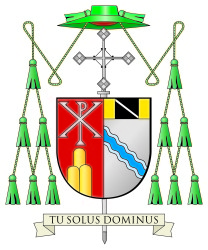
The shield is divided by a saltire which is traditionally the X-shaped “St. Andrew Cross”. The three hearts represent the Sacred Heart of Jesus (center) the Immaculate Heart of Mary (to dexter) and the Heart of St. Joseph (to sinister). I have never heard of the latter being depicted either in heraldry or in any Catholic religious symbolism and art. Perhaps it was made up by the armiger to balance the other two? Either way, three hearts is a bit much and, if they were to be used, in heraldry it would have been better NOT to depict them in the traditional form with flames, roses, thorns, etc. and simply to depict three heart-shaped charges to stand for these three hearts.

The waves in base are from the arms of the See, which the bishop now serves and had served as a priest as well. However, the mountains in chief, to allude to his native Colorado, should be stylized and not depicted in a portrait landscape style. When…When…WHEN are people going to get it through their heads that you cannot simply take any image or picture you want, slap it onto a shield and call it heraldry???

The cord around the perimeter of the shield represents the bond of fraternity that the bishop has with a group of priests who form a priestly fraternity of which he is a member. That’s a perfectly good symbol for such a bond but should have been depicted within the edge of the shield as a bordure. Depicting it as the actual edge of the shield is heraldically unsupportable.

In the description of the achievement the episcopal cross is described as being Celtic. There are two problems there. The first is my often mentioned admonition that individual armigers are not free to determine the shape, style and manner of the depiction of the external ornaments. That creative freedom applies only to that which is on the shield. The second problem in this case is that the cross depicted is not even Celtic!

So, all in all there are nice ideas here and the charges were chosen to represent wonderful priestly and personal virtues but the overall effect is disappointing at best.

Image

Hartford

The arms of the newly installed (Dec. 16th) Archbishop Leonard Blair of Hartford, Connecticut. He is the former bishop of Toledo, Ohio and also formerly the auxiliary bishop of Detroit, Michigan. Below his arms are those of his two immediate predecessors, Abp. Henry Mansell and Abp. Daniel Cronin both of whom are still living. The arms of the archdiocese employ nice canting arms for “hart” and “ford”.

Image

Image

Image