
Two hundred and forty three years ago a group of men in Philadelphia declared some “self-evident” truths. And we are still here. God Bless America!
Two hundred and forty three years ago a group of men in Philadelphia declared some “self-evident” truths. And we are still here. God Bless America!

On July 1, 1969 Prince Charles was formally invested as Prince of Wales and Earl of Chester. He had been given these titles in 1958 and had, from the time of his mother’s accession to the throne been the Duke of Cornwall, the title traditionally held by the heir apparent to the British throne. This year marks the 50th anniversary of the event.
In 2017 Prince Charles surpassed the record set by his illustrious ancestor, King Edward VII, by becoming the longest-serving Prince of Wales in history.
His arms (above) appear very much like those of his mother except that his are differenced by a white label (repeated on both supporters and the badge for Wales as well); in place of the compartment there is a device intertwining his motto and his badges as well as a small shield with the arms of Cornwall; there is an inescutcheon for Wales; and the crowns on the helm, the two small shields and the lion supporter all have a single arch as befits a Princely crown rather than a royal one which has two arches.
God Bless the Prince of Wales!
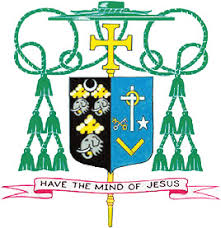
Bishop Joseph A. Galante, D.D., J.C.D. was born in Philadelphia and was ordained in 1964. He attended Lateran University in Rome, where he received his doctorate in canon law, and later the University of St. Thomas (Angelicum) in Rome, where he received his Master’s Degree in Spiritual Theology.
He served in the Archdiocese of Philadelphia until he was named by Pope John Paul II in December 1986 to be Undersecretary of the Congregation for Religious in Rome. He was a member of the Pontifical Council for Social Communications and chair of the United States Conference of Catholic Bishops’ Committee on Communications.
In October 1992 he was named Auxiliary Bishop of San Antonio, Texas. A year and a half later he was installed as Bishop of Beaumont, Texas. He became Coadjutor Bishop of Dallas in January 2000.
On April 30, 2004, Bishop Galante was installed as seventh bishop of the Diocese of Camden.
Bishop Galante retired on January 8, 2013. He entered into eternal life on May 25, 2019.
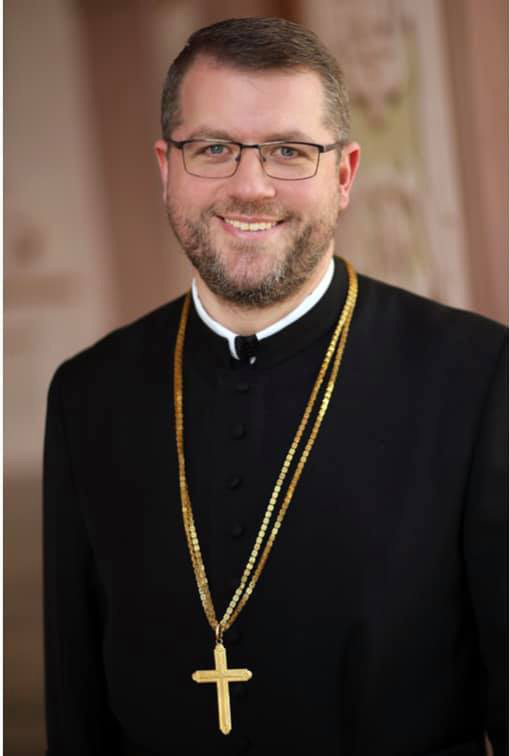
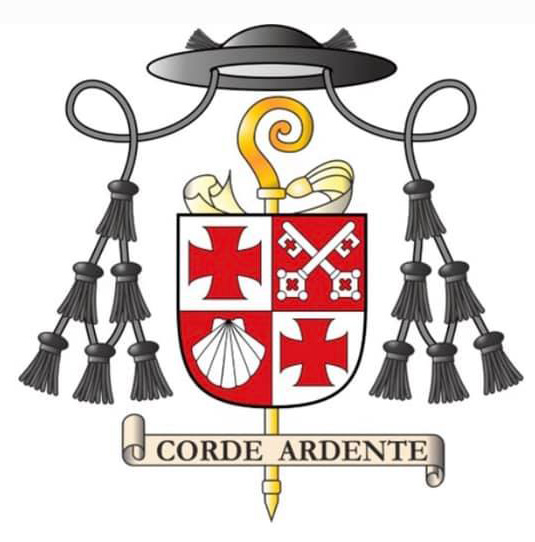
On April 9, 2019 the Augustinian Canons of Stift Herzogenburg in lower Austria elected Fr. Petrus Stockinger (37) to be their new Provost. In the world of Canons Regular some communities of canons are governed by Abbots. Others, like some Collegiate or Cathedral chapters, are governed by a Provost.
What is interesting for the purposes of this blog is that a Provost, who also enjoys the privilege of using pontificals, like an Abbot, also has the same heraldic privileges as an Abbot. These are, the black galero with black cords and twelve black tassels as well as the crozier with the sudarium attached. The armorial bearings of the newly-elected Provost are below.
Ad Multos Annos!
On April 29 Pope Francis appointed Archbishop Paul Etienne (59) to be the Coadjutor Archbishop of Seattle. The archbishop was a priest of Indianapolis and also served from 2009-2016 as the Bishop of Cheyenne, Wyoming before becoming Archbishop of Anchorage, Alaska where he has served for just three years.
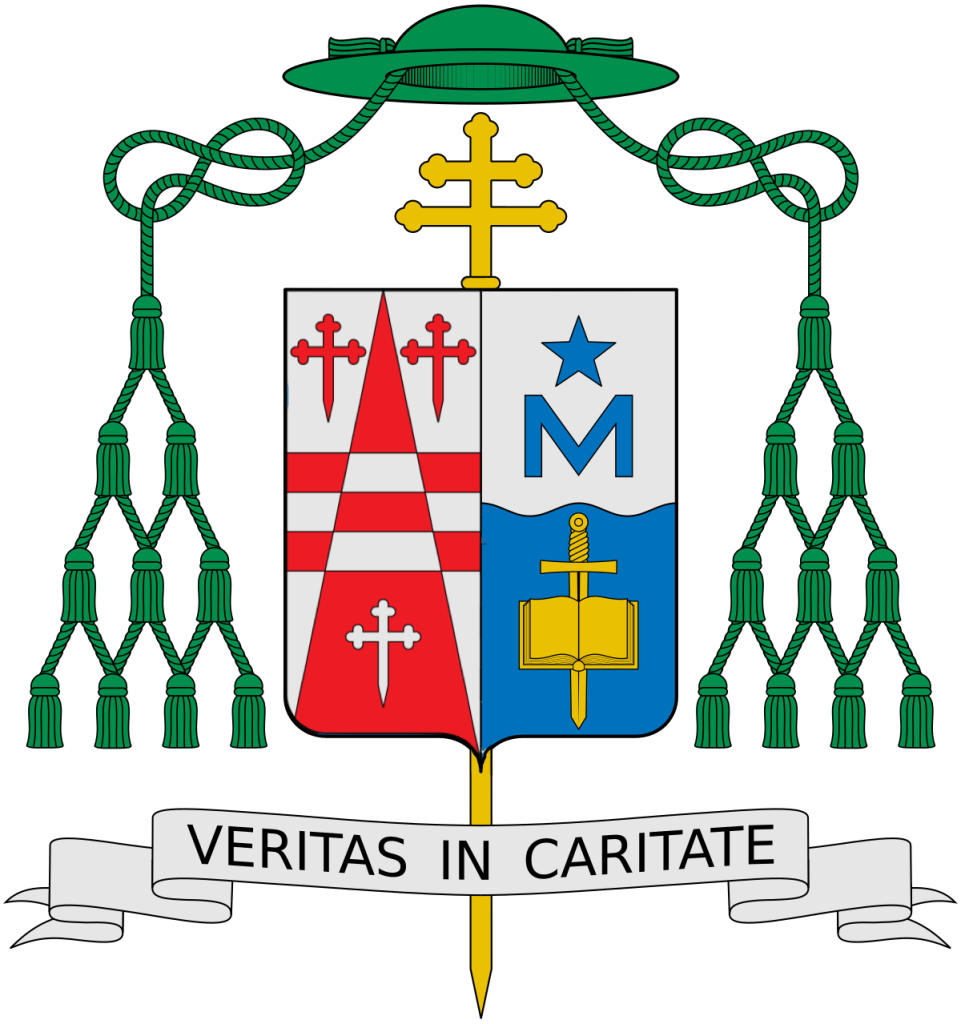
He will take up his new duties in Seattle in early June and then he and Archbishop Peter Sartain, who requested the coadjutor due to ill health, will determine when Archbishop Etienne (pronounced AY-chin) will succeed to the See as the ninth archbishop.
The archbishop famously redesigned his personal coat of arms when he moved from Cheyenne to Anchorage, a move that was highly criticized by me. Let’s hope he leaves well enough alone this time. Ironically, his original coat of arms would have ended up looking better marshaled to those of Seattle than his current design. This, then, is why one shouldn’t redesign personal arms to harmonize better with (arch)diocesan arms. It is impossible to know if you might be moving on.
The Most Rev. Donald Hying (55), formerly a priest and auxiliary bishop of Milwaukee, Wisconsin and since 2014 the bishop of Gary, Indiana has been appointed the fifth Bishop of Madison, Wisconsin succeeding the late Robert Morlino. Bishop Hying will be installed in Madison on June 25, 2019.
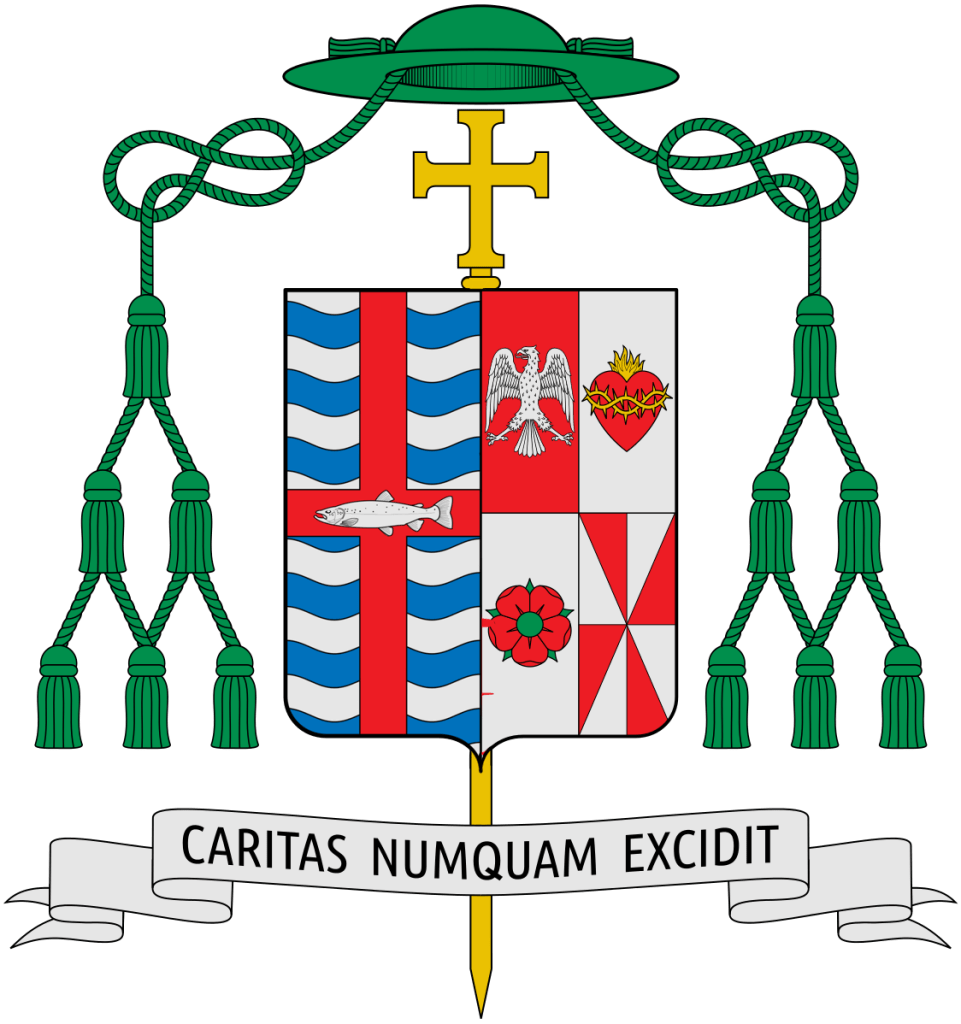
It was announced this morning that Pope Francis has appointed the Most Rev. Wilton Gregory, Archbishop of Atlanta to be the next Archbishop of Washington, DC. Archbishop Gregory was ordained a priest for the Archdiocese of Chicago originally and served as Auxiliary Bishop there before becoming the Bishop of Belleville, Illinois and eventually promoted to Archbishop of Atlanta. He also served at one time as President of the United States Conference of Catholic Bishops. He will be installed in Washington, DC on May 21.
The coat of arms he has used since becoming a bishop 36 years ago will now be marshaled to those of the Archdiocese of Washington, DC.
On a silver (white) field a cross composed of three colors; black on green on red. These colors are referred to as the African-American colors and by their use Archbishop Gregory honors the religious and racial heritage that has come to him from his parents, Wilton and Ethel ( Duncan ) Gregory. Within the quarters that are formed by the cross are a raven, to honor the Archbishop’s Benedictine education at Sant’ Anselmo (in Rome), and a black bear taken from the arms of His Eminence, Joseph Cardinal Bernardin, His Excellency’s principal Episcopal consecrator. Also within the quarters are a red fleur-de-lis taken from the arms of the Mundelein Seminary in Chicago , where Archbishop Gregory was a student and faculty member, and a golden phoenix, coming forth from red flames, to honor Chicago , the city reborn after the famous Chicago fire.
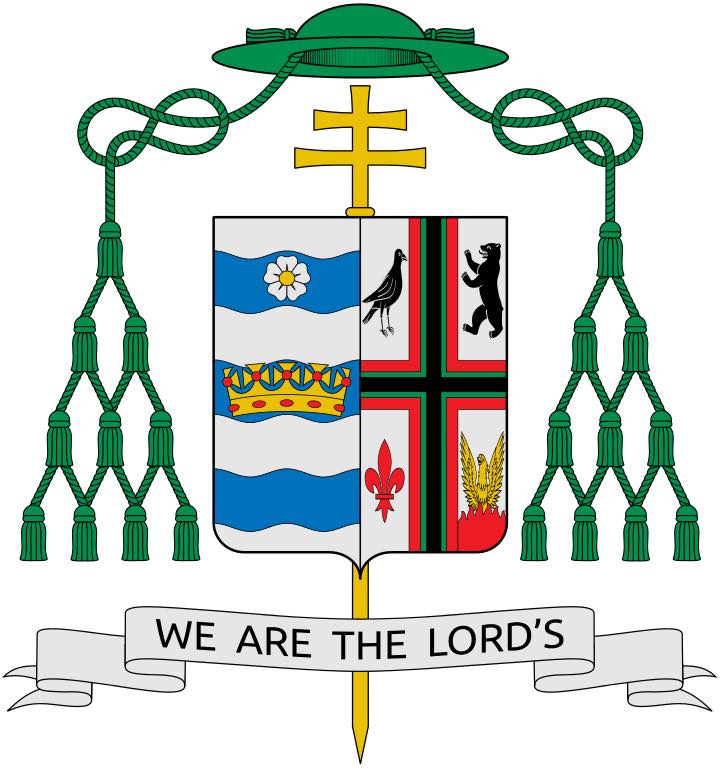
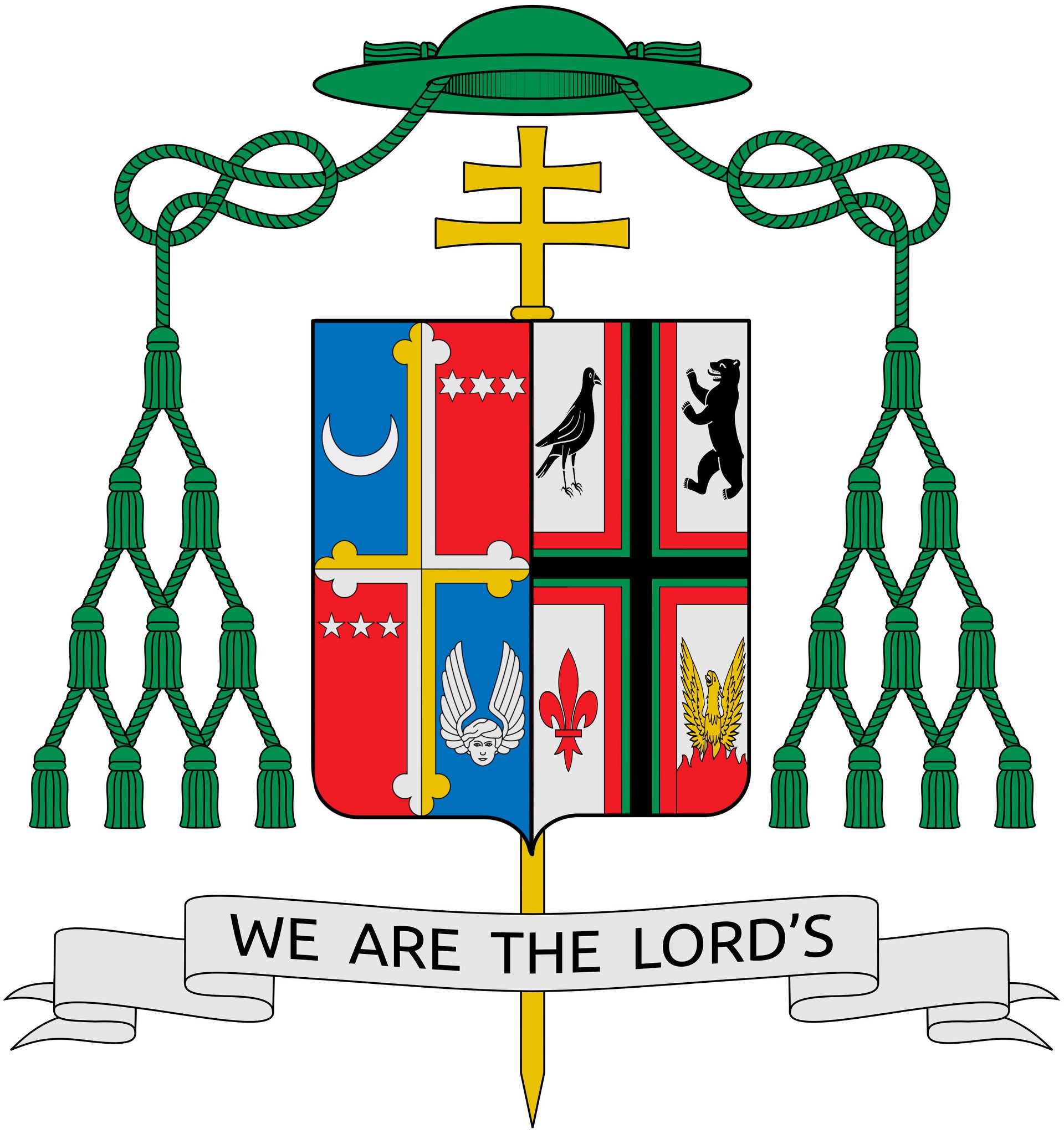
On Friday, March 29, 2019 the Most Rev. Robert Brennan, formerly Auxiliary Bishop of Rockville Centre, NY was installed as the twelfth Bishop of Columbus, Ohio. His personal arms now impaled with those of the See are described on the diocesan website.
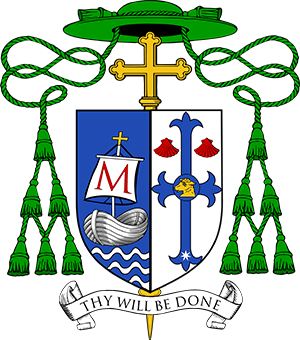
The Brennan coat of arms comprises a white shield with a blue heraldic lion, and two red hands in the top corners of the shield. Rather than use the original design Bishop Brennan has chosen to retain the overall coloration and layout of his family coat of arms, while employing charges more evocative of his own life of faith.
The main charge on the shield is the Cross, the foundation of the Christian faith. The arms of this particular Cross resemble a fleur-de-lis, a stylized lily often used as a symbol of the Virgin Mary.
At the bottom of the cross appears a small white star, a symbol of Our Lady. Its position recalls the moment of the Commendation, when, “standing by the cross of Jesus” (John 19:25), Mary became, at her Son’s command, the Mother of all of his disciples (cf. John 19:27). The star has seven points, recalling the seven Gifts of the Holy Spirit.
At the center of the cross appears a lamb’s head painted gold. The same charge figures prominently on the coat of arms of the Diocese of Rockville Centre, which Bishop Brennan served as a priest and bishop for nearly 30 years. Saint Agnes is the patroness of the Diocese of Rockville Centre, and of its Cathedral church, where Bishop Brennan resided for 16 years.
At the top of the shield are two scallop shells painted red. Although the charges are the same, they are used here to allude to two different saints: John the Baptist and James the Greater. Bishop Brennan attended Saint John the Baptist High School (West Islip) and Saint John’s University, and the patron of these schools is often depicted in sacred art using a shell to baptize the Lord Jesus. The date of Bishop Brennan’s ordination as a bishop — July 25, 2012 — is the feast of Saint James, the brother of Saint John the Evangelist and the first of the apostles to be martyred, during the persecution of the early Church (Acts 12:1-2). The red color of the shells recalls the fact that both of these saints gave their lives as martyrs for the faith.
While it is not entirely unknown it is somewhat rare to find artistic depictions (i.e. “emblazonments”) of the personal coat of arms of a herald in some way marshaled with the heraldic devices or coat of arms associated with the heraldic office he holds.
It’s very common to see the arms of one of the English Kings of Arms, for example, or that of the Lord Lyon King of Arms. In addition, most heralds and pursuivants (Kings-of-Arms, Heralds and Pursuivants are collectively referred to as “heralds”, using the name of the so called middle rank) employ a heraldic badge to indicate their office. But, it is the somewhat rare occasion when such coats of arms or badges are displayed along with the individual heralds’ personal armorial bearings.
I happened to come across a very handsome one the other day causing me to begin searching the internet to find images of the personal arms of Garter Principal King of Arms, the officer of arms who is the most senior of the heralds in the English College of Arms, ranking immediately below the Earl Marshal, the Duke of Norfolk marshaled to those of the arms of office for Garter. I have, so far, only been able to find a few. I’ll begin with the newly appointed current Garter King of Arms and work backwards. NOTE: all of the personal coat of arms of the men who served as Garter King of Arms are known. However, here I am referring to depictions where their personal arms are impaled with those of the office of Garter.
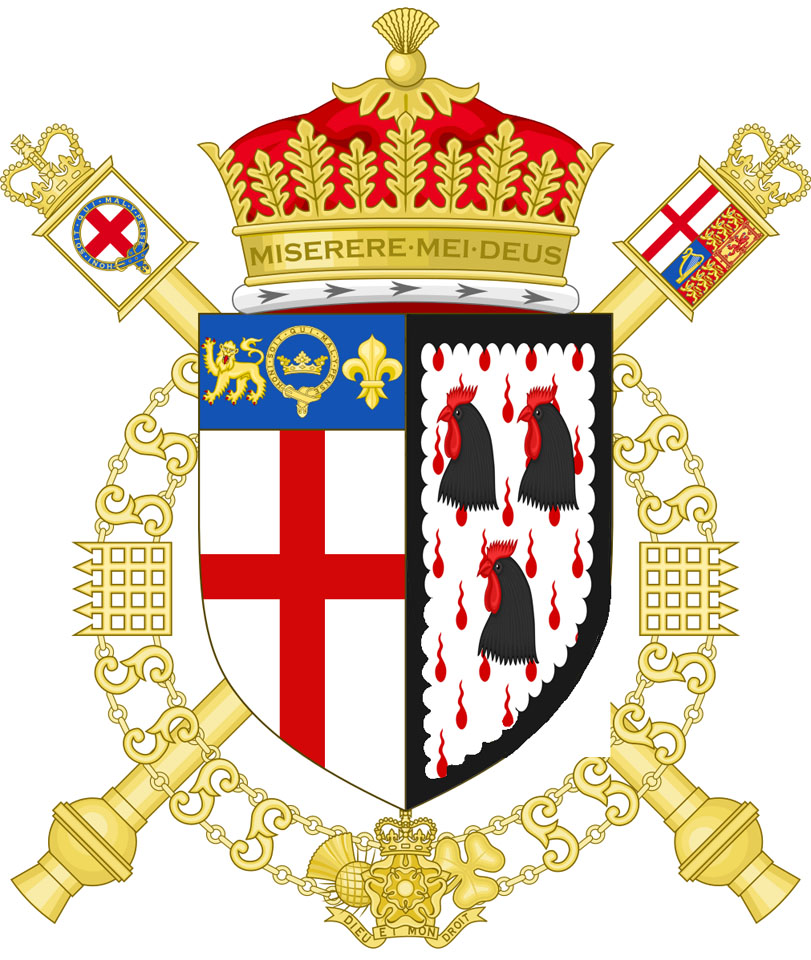
David Vines White, 2021 –
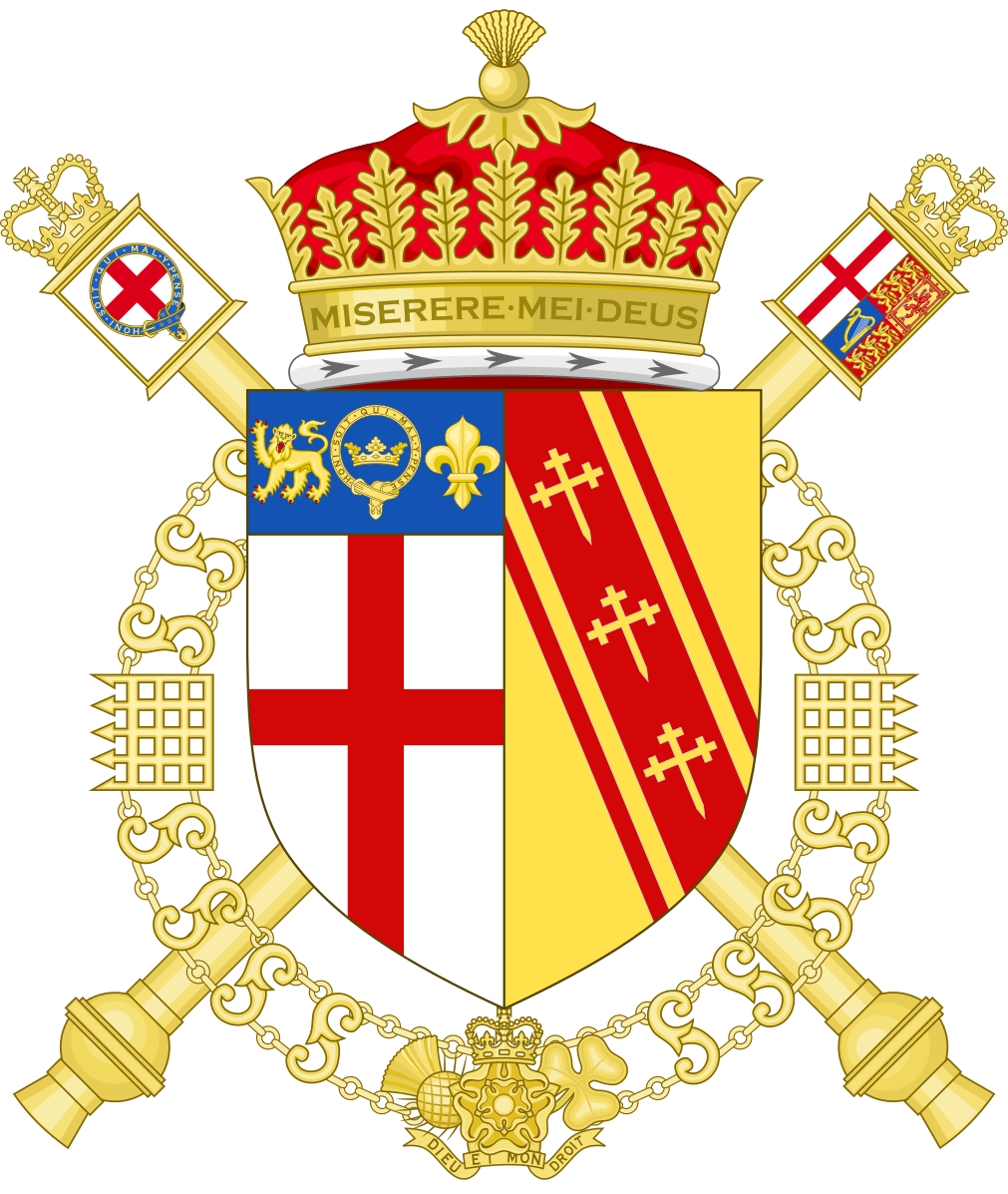
Thomas Woodcock, 2010 – 2021
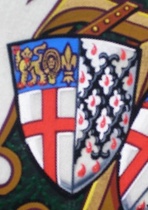
Sir Peter Gwynn-Jones, 1995 – 2010
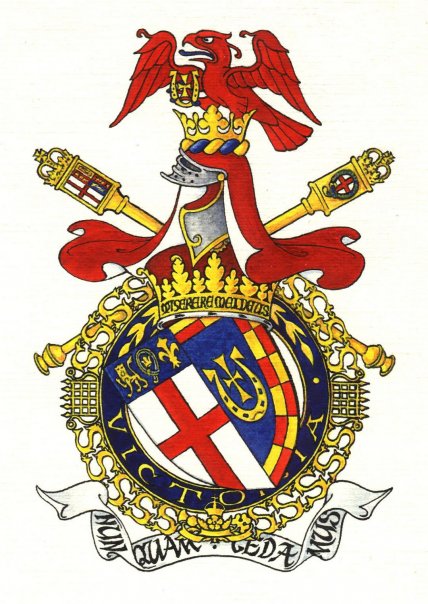
Sir Conrad Swan, 1992-1995
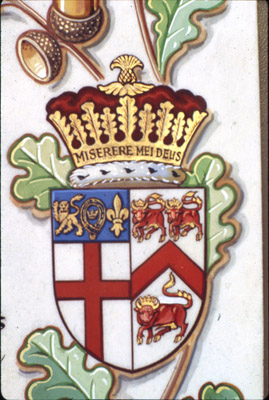
Sir Colin Cole, 1978 – 1992
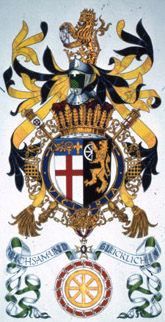
Sir Anthony Wagner, 1961 – 1978
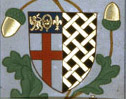
The Hon. Sir George Bellew, 1950 – 1961
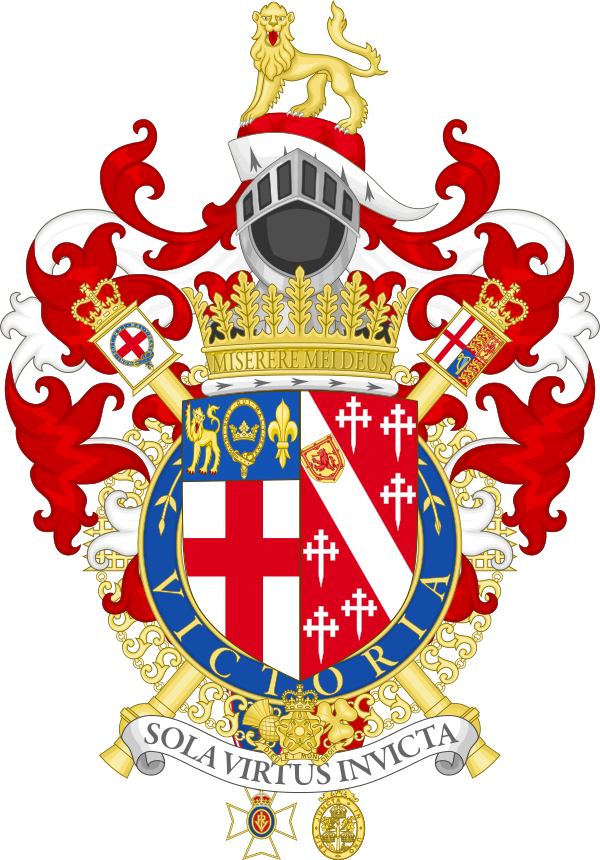
Sir Algar Howard, 1944 – 1950
(N.B.: according to the blazon of the arms there should be a crescent sable on the bend for difference.)
[Sir Gerald Wollaston, 1930 – 1944]
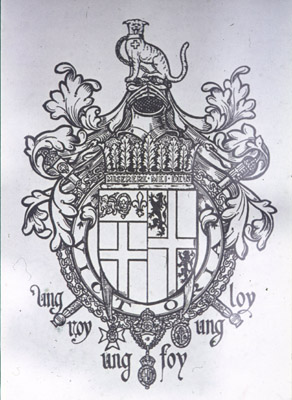
Sir Henry Farnham Burke, 1919 – 1930
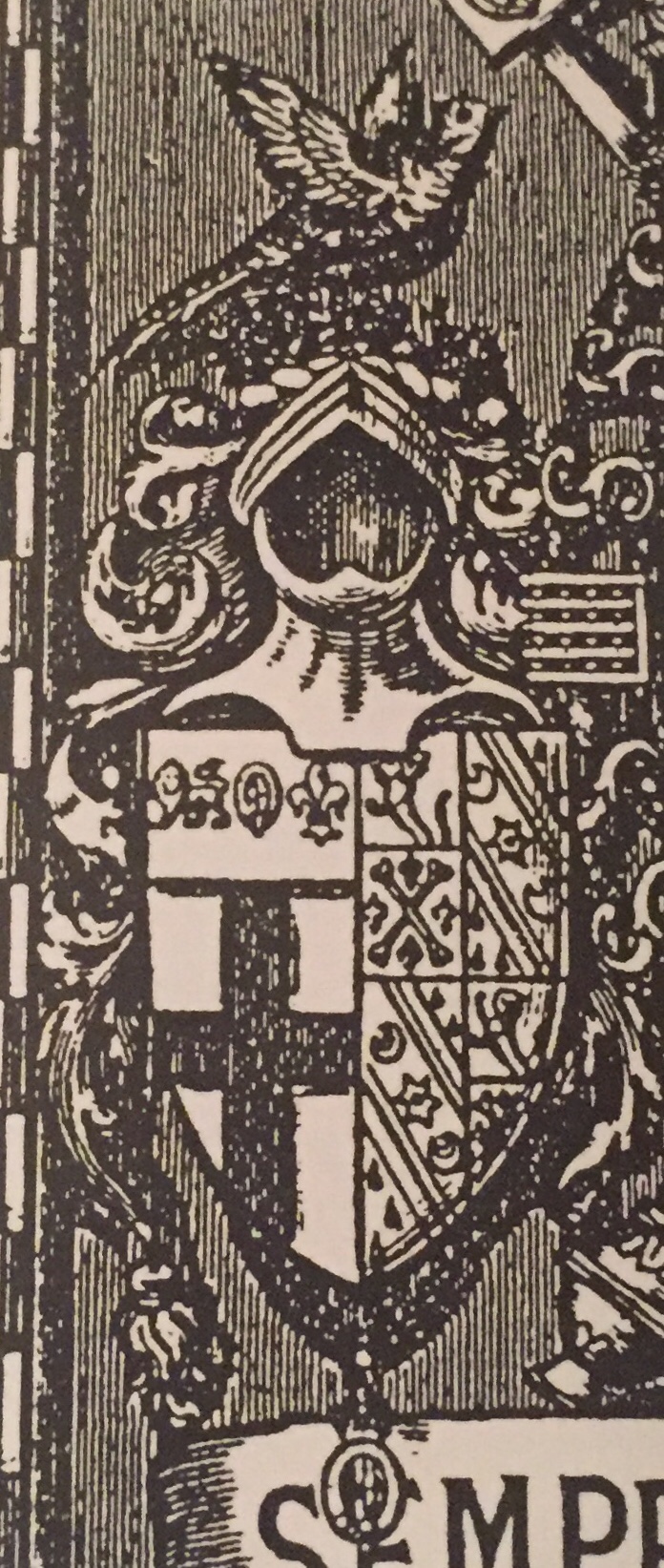
Sir Alfred Scott-Gatty, 1904 – 1918

Sir Albert Woods, 1869 – 1904
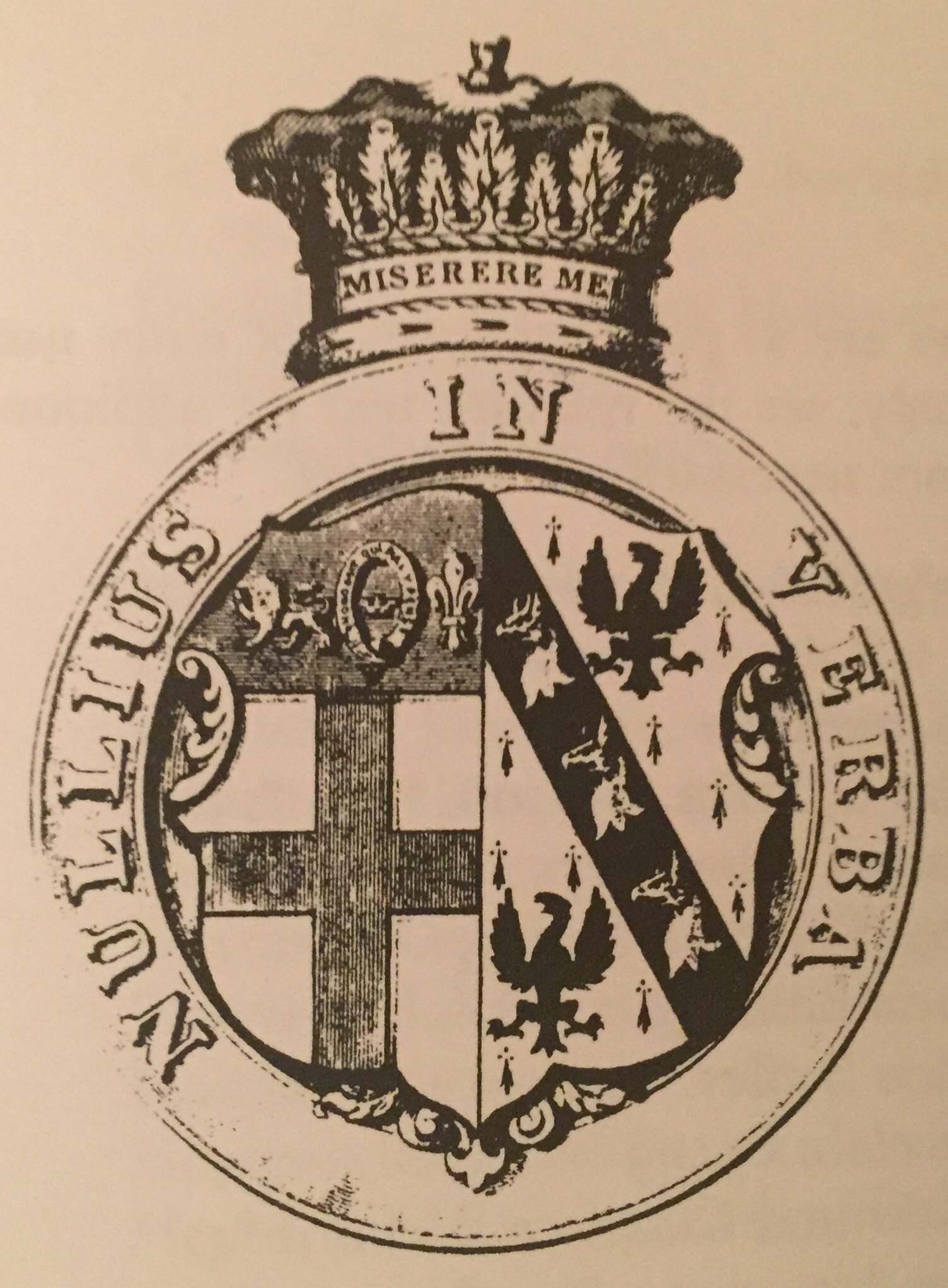
Sir Charles Young, 1842 – 1869
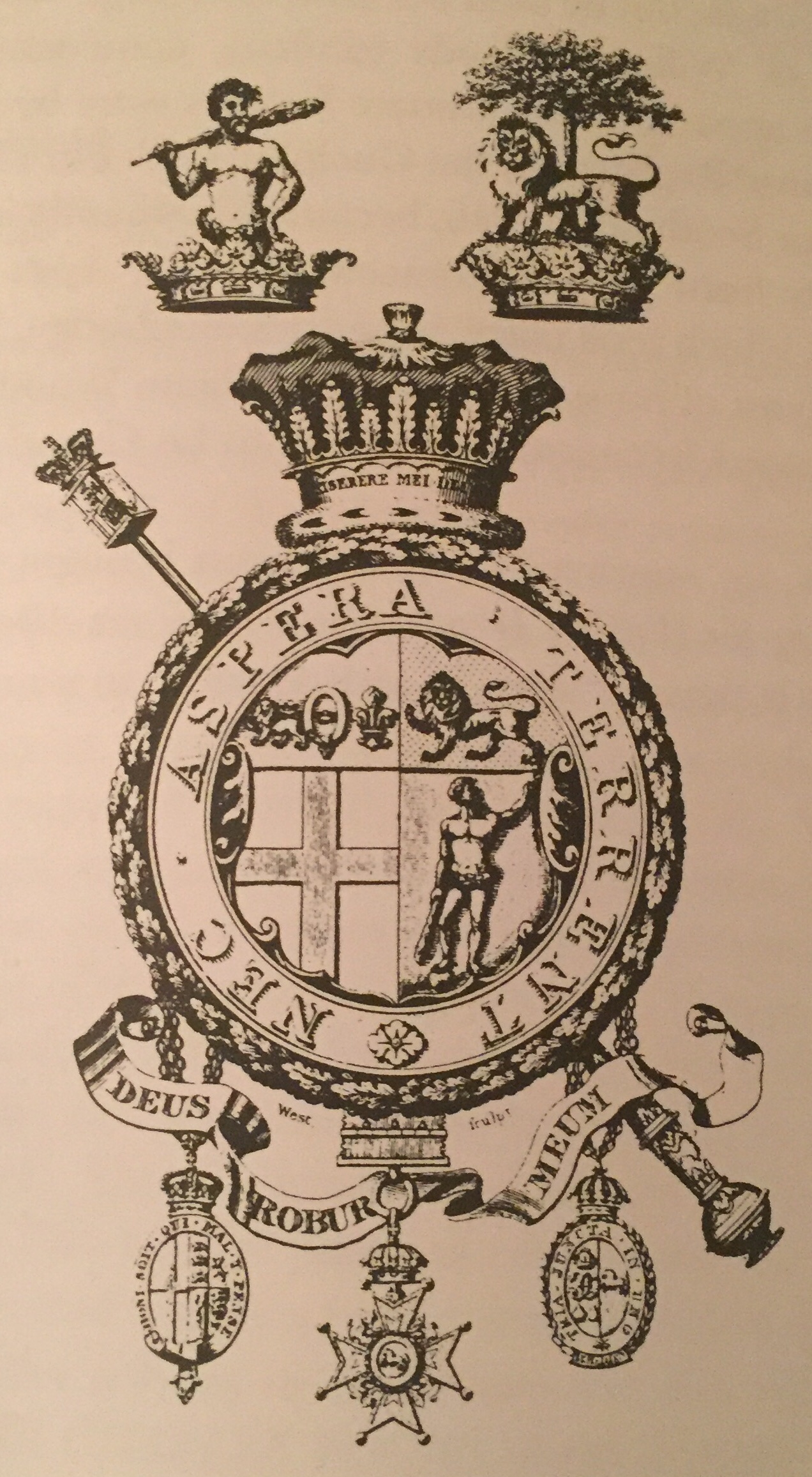
Sir William Woods, 1838 – 1842
[Sir Ralph Bigland, 1831 – 1838]
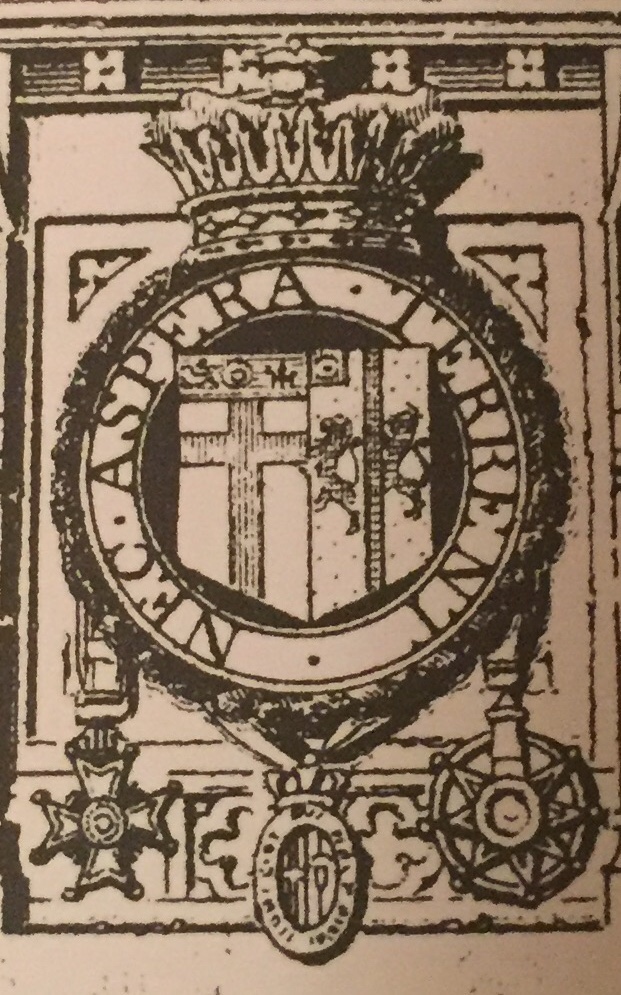
Sir George Nayler, 1822 – 1831
[Sir Isaac Heard, 1784 – 1822]
[Ralph Bigland, 1780 – 1784]
[Thomas Browne, 1744 – 1780]
[Sir Charles Townley, 1773 – 1774]
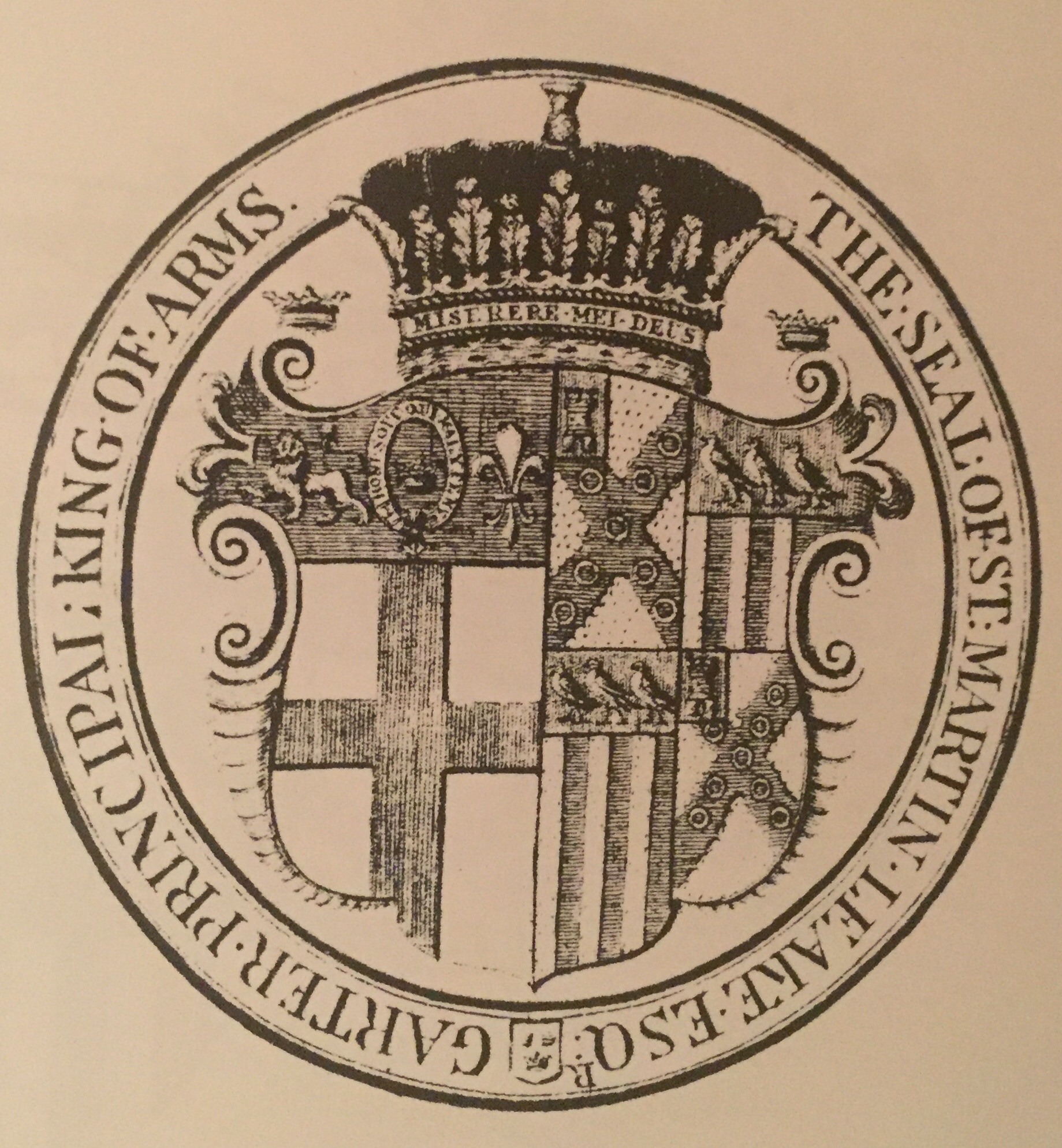
Stephen Martin Leake, 1754 – 1773
[John Anstis the younger, 1727 – 1754]
[John Anstis the elder, 1714 – 1744]
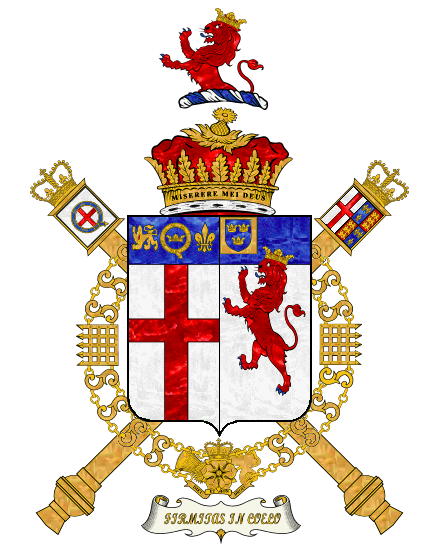
Sir Henry St. George the younger, 1703 – 1715
Sir Thomas St. George, 1686 – 1703
[Sir William Dugdale, 1677 – 1686]
[Sir Edward Bysshe, 1646 – 1660]
[Sir Edward Walker, 1645 – 1677]
Sir Henry St. George the elder, April – November, 1644
Thus far back was I able to discover depictions of the personal arms of the various Garter Kings of Arms impaled with the arms of office. Of course the office is much older than 1644. The first garter King of Arms, William Bruges, was appointed in 1417! I have only listed the bracketed names and dates of the Kings of Arms for whom I could not find examples of their impaled arms to fill in gaps between those that I did find. But, I’ll keep looking!
UPDATE: I added the newly-appointed present Garter principal King of Arms.
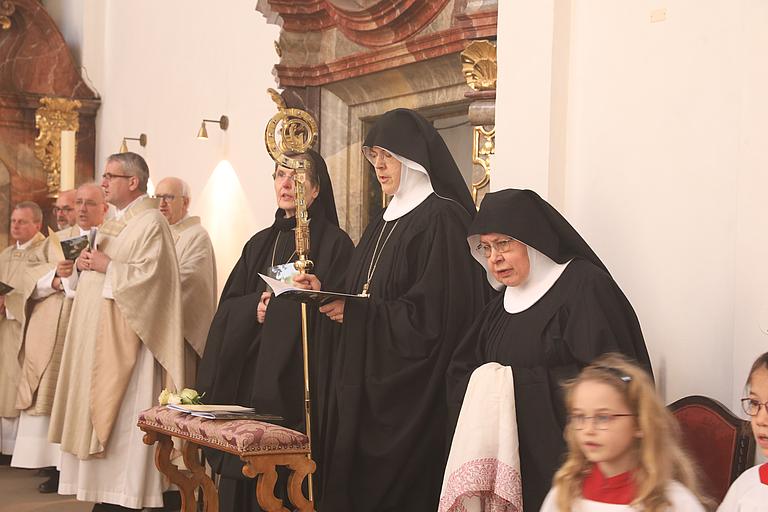
 On January 4, 2019 the nuns of St. Walburga Abbey in Eichstätt, Bavaria elected Mother Hildegard Dubnick, OSB, (57) an American and a nun at their daughter foundation, St. Walburga Abbey in Virginia Dale, Colorado, to succeed Mother Franziska Kloos, OSB who had served as Abbess of Eichstätt for 34 years and retired from office on December 27, 2018. Abbess Hildegard received the abbatial blessing from Bishop Gregor Maria Hanke, OSB of Eichstätt on February 23, 2019.
An abbess in the Catholic Church makes use of some of the same pontifical insignia as an abbot. Abbesses wear the pectoral cross and ring and also carry a crozier. In addition, they usually have a personal coat of arms. The coat of arms assumed by Mother Hildegard is described in an article from the Eichstätt Courier as:
“Mutter Hildegards Wahlspruch aus Psalm 47 (47,10 Vulgata) “Suscepimus Misericordiam Tuam” lautet übersetzt: “Wir haben dein Erbarmen empfangen.” Der Spruch umfließt ein Wappen mit drei Eichen im Mittelpunkt, deren Stamm sich aus Wasser speist. Es nimmt in den Eichen Bezug auf den tschechischen Nachnamen Mutter Hildegards, der übersetzt “kleine Eiche” bedeutet, ebenso auf ihren Geburtsort Oak Park in Illinois (USA) und stellt letztlich eine schöne Verbindung zu ihrem neuen Wirkungsort Eichstätt dar. Die drei Wellen versinnbildlichen den im Wahlspruch erwähnten Strom des Erbarmens und der Gnade Gottes, das Ölfläschchen weist hin auf das Geschenk des Walburgisöls, das am Grab der heiligen Walburga fließt.” Translated that is:

Mother Hildegard’s motto from Psalm 47 (47.10 Vulgata) “Suscepimus Misericordiam Tuam” translates: “We have received your mercy.” The saying is on a scroll around a coat of arms with three oaks in the center, whose trunk is fed from water. The oaks refer to the Czech surname of Mother Hildegard, which means “small oak tree”, as well as to her birthplace Oak Park in Illinois (USA) and ultimately represents a beautiful connection to her new place of Eichstätt. The three waves symbolize the the river of mercy and grace of God mentioned in the motto, the bottle of oil points to the gift of Walburgis oil that flows at the tomb of St. Walburga.
Ad Multos Annos, Mother Hildegard!

In August of 2018 the Teutonic Order (Deutscher Orden), a formerly medieval military order of chivalry which had, by the 20th Century, been transformed into a Religious Order, elected Fr. Frank Bayard, O.T. as its Grand Master. The Grand Master of the order has the rank of abbot. Fr. Bayard succeeds Fr. Bruno Platter who was elected as Grand Master of the Teutonic Order in 2000 and re-elected in 2006.
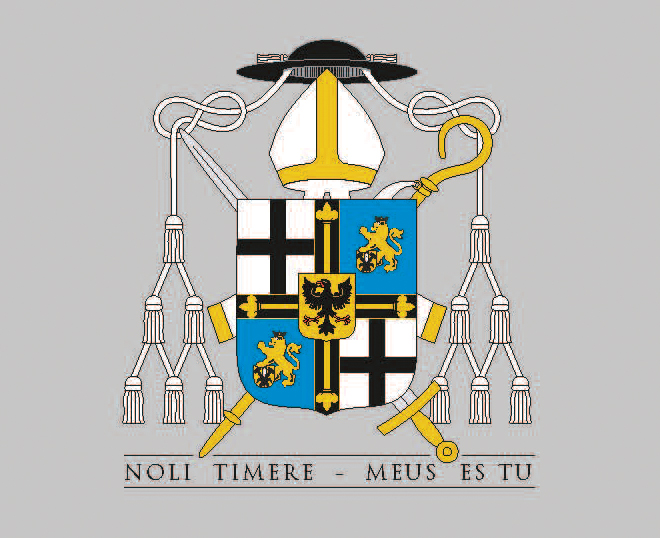
The coat of arms of the Grand Master is ensigned with the external ornaments of an abbot and the galero is black with cords and tassels that are white. 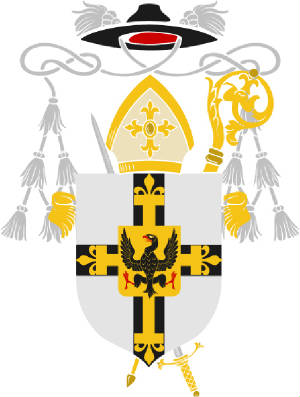 By custom the mitre is also included in the achievement despite the 1969 Instruction from the Holy See stating otherwise. In addition, the secular sword is included which is tolerated given the order’s history as an order of chivalry prior to becoming a Religious Order within the Church. The arms of the Grand master traditionally follow a pattern which makes use of a basic shield depicting the arms of the order as used by the Grand Master which divides the field into four quarters by a sable cross charged with a gold cross fleuretty and an inescutcheon overall depicting Or, an imperial eagle Proper. In the first and fourth quarters the usual arms of the Order (Argent a cross throughout Sable) are placed. The personal arms of the individual Grand Master then occupy the 2nd and 3rd quarters of the shield.
In November, 2018 The Rt. Rev. Frank Bayard received the abbatial blessing from Christoph Cardinal Schönborn, O.P. of Vienna, where the headquarters of the Order is located. The arms assumed by Grand Master Bayard are:
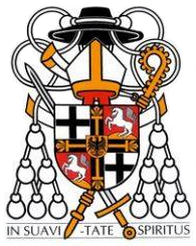
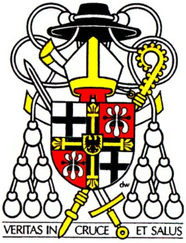
The coat of arms used by the previous two Grand Masters, Bruno Platter and Arnold Weiland followed the same pattern.
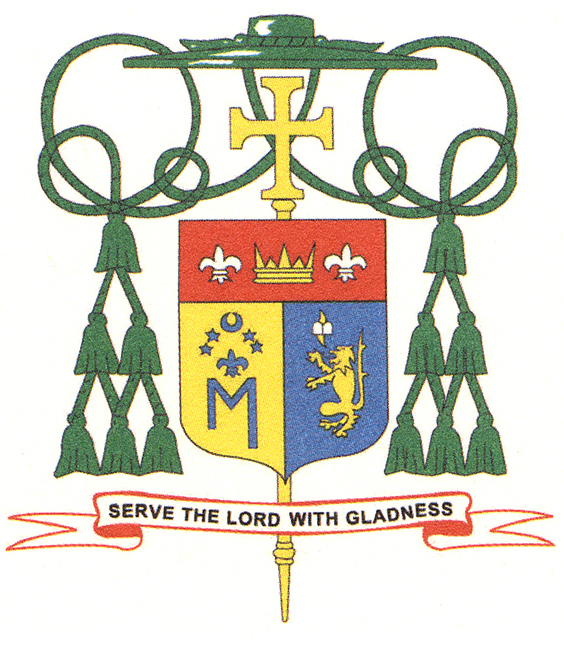
On Jan. 22, 2019 of the Most Rev. John Mortimer Smith, Bishop Emeritus (2010-2019) and Ninth Bishop of the Diocese of Trenton (1997-2010), former Coadjutor Bishop of Trenton (1995-1997), former Bishop of the Diocese of Pensacola-Tallahassee in Florida (1991-1995) and former Auxiliary Bishop of the Archdiocese of Newark (1988-1991) passed into eternal life. Bishop Smith died in Morris Hall Meadows, Lawrenceville, after a long illness. He was 83 years old.
His coat of arms (above) was assumed at the time he was ordained an Auxiliary Bishop in 1988. It is, in my opinion, a little too “busy” insofar as he tried to do too much. All those various charges represent different events/aspects of his priestly life and ministry, a kind of pictorial CV, which is precisely the type of thing I encourage new armigers to avoid all the time. It was particularly problematic and a little bit unattractive when it was marshaled to the arms of a See, such as Trenton, because all this was then squeezed into a narrow impalement (below). Perhaps, it would have been better to marshal the arms differently or to have simply borne his personal arms alone (something of which most American bishops cannot conceive because they think it isn’t permitted!)
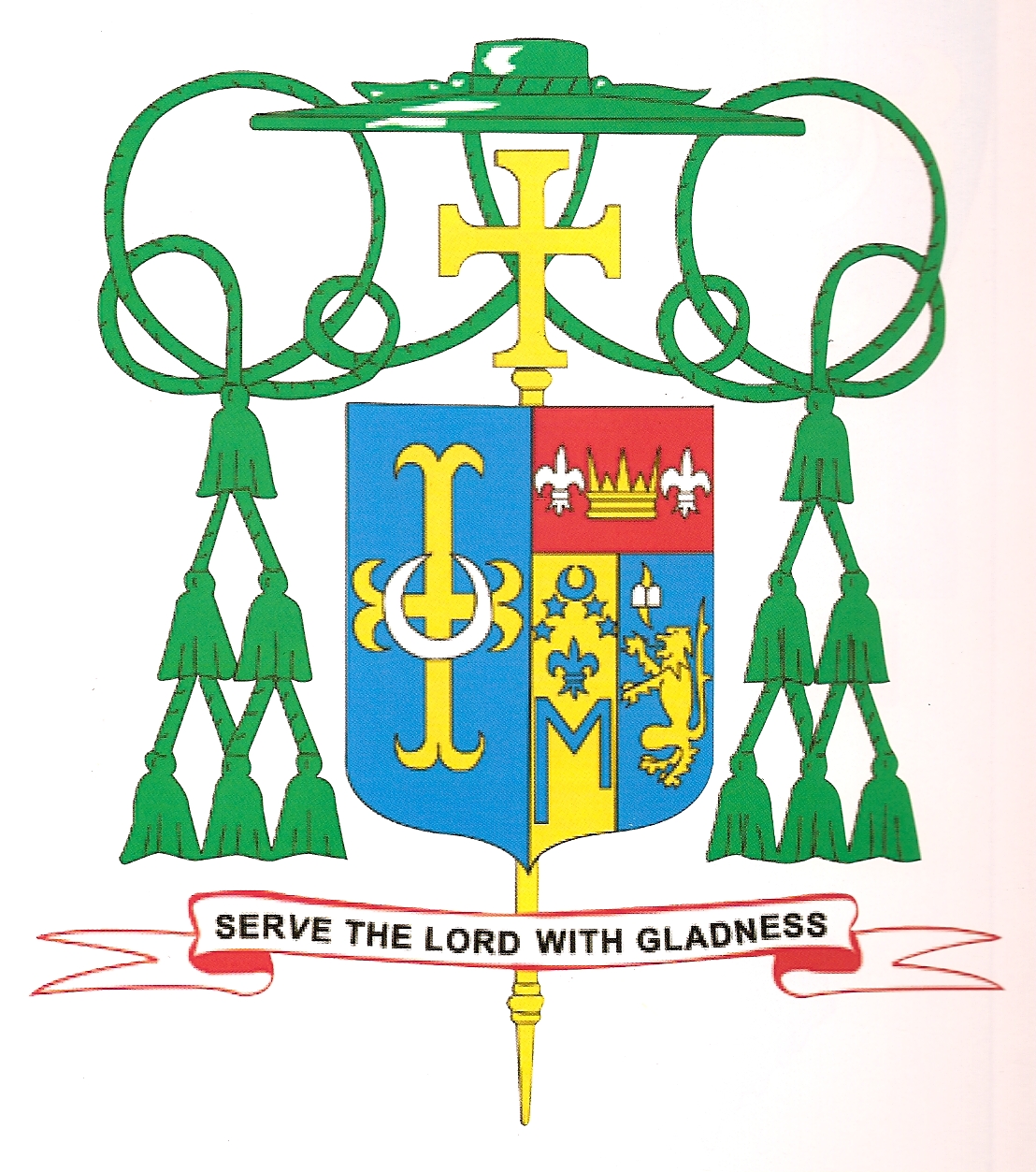
Aside from his less-than-wonderful coat of arms I met Bishop Smith on several occasions and found him to be a warm, outgoing and very kind man. He was very down-to-earth and easy to talk with. In the days when he was bishop of Trenton I hosted a 30-minute weekly radio program for my diocese and he told me on more than once occasion how he enjoyed listening to it in the car while driving to some event at which he was to preside. He was one of our biggest fans. May he rest in peace and receive the reward of his labors in the Lord’s vineyard.
 Sir Conrad Marshall John Fisher Swan KCVO FSA (born 13 May 1924) was a retired long-serving officer of arms at the College of Arms in London. Having been first appointed to work at the College in 1962, he rose to the office of Garter Principal King of Arms in 1992, a position he held until 1995. He was the first Canadian ever to be appointed to the College of Arms. He was first appointed Rouge Dragon Pursuivant of Arms in Ordinary in 1962 and six years later became York Herald of Arms in Ordinary. In these capacities, he was among the Earl Marshal’s staff for the State Funeral of Sir Winston Churchill in 1965, the Investiture of the Prince of Wales in 1969, and was Gentleman Usher-in-Waiting to Pope John Paul II during his visit to the United Kingdom in 1982.
Swan was appointed Garter Principal King of Arms in 1992 on the retirement of Sir Alexander Colin Cole. His own retirement came in 1995, after having been diagnosed with cancer.
Swan was knighted by Her Majesty The Queen in 1994 as a Knight Commander of the Royal Victorian Order (KCVO). He is also a Knight Grand Cross of the Order of the Nation of Antigua and Barbuda (KGCN), Knight of Honour and Devotion of the Order of Malta, Cross of Commander of the Order of Merit of the Republic of Poland, Knight’s Cross of the Order of the Grand Duke Gediminas (Lithuania), Knight Grand Cross of Justice of the Sacred Military Constantinian Order of Saint George, Knight Grand Cross of the Royal Order of Francis I (GCFO) and Knight Grand Cross of the Royal Order of the Lion of Rwanda.
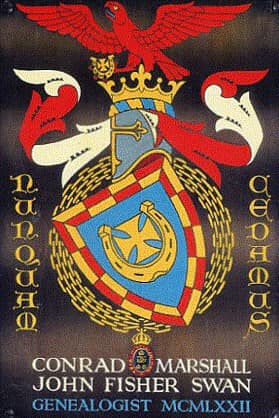
He was also a Knight of the Most Venerable Order of St. John of Jerusalem and Knight Principal of the Imperial Society of Knights Bachelor (1995–2000); Commander (with Star) of the Royal Norwegian Order of Merit; Grand Cross with Grand Collar of the Imperial Order of the Holy Trinity (Ethiopia); Coronation Medal of the King of Tonga. He received the Commemorative Medal for the Centennial of Saskatchewan in 2005.
May he rest in peace.
Recently a priest from the UK shared with me the recent (November, 2018) grant of arms he received from HM College of Arms. Of course there was a very fine example of Letters Patent illustrating the grant as well as laying out the blazon of arms. This is not an inexpensive or a quickly done process. Being a subject of HM, the Queen it was altogether correct, however, for Fr. Adam Gaunt to petition for and receive a grant of arms from the legitimate heraldic authority within the country in which he lives. It may take some time; it may cost a rather tidy sum but in the end it is well worth it.
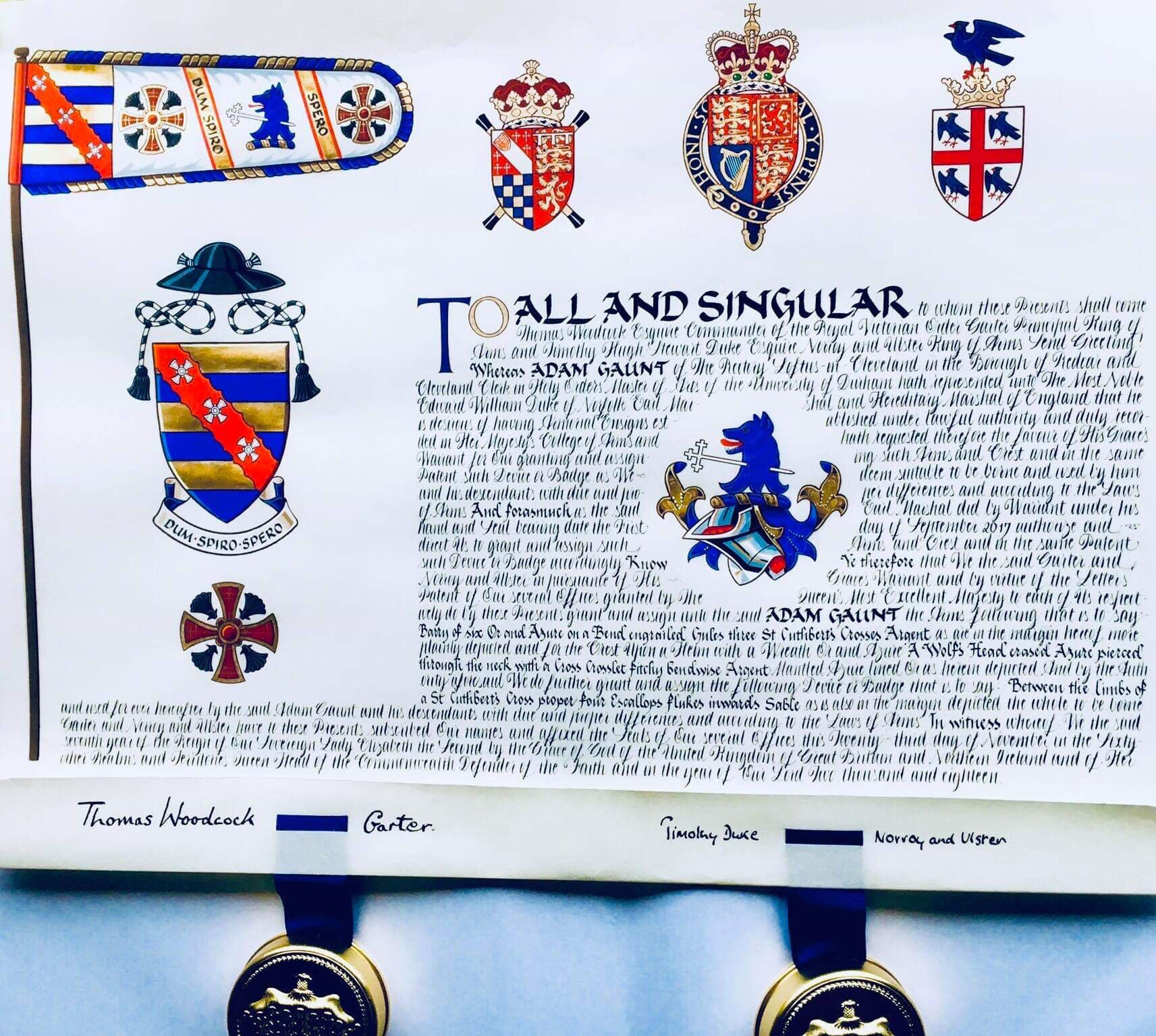
The coat of arms itself (below) is illustrated ensigned by the appropriate ecclesiastical hat for a priest of the Church of England. That is to say with two black tassels suspended from cords composed of black and white skeins twisted together.

The Letters Patent also depict an heraldic crest on a helm with a horse and mantling which is most often seen employed in the arms of a layman not in holy orders. (below)

In addition, there are illustrations included of a heraldic badge, as well as an heraldic standard which is composed of the arms, crest and badge. (below)

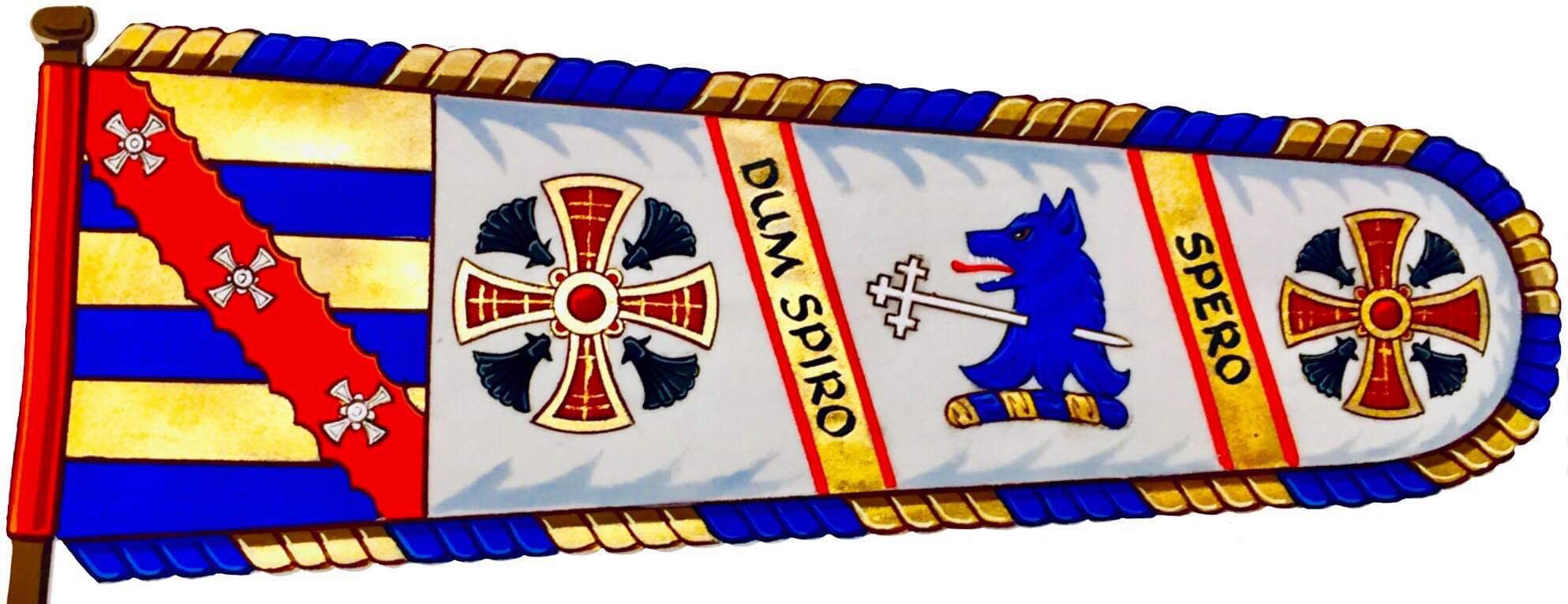
Father Gaunt was kind enough to explain that, “The arms are an adaptation of those attributed by “ancient and uniform tradition” to my ancestor Gilbert de Gaunt, Earl of Lincoln.”

“He, (Gilbert) was of Flemish origin and related to the Counts of Flanders, who used the same heraldic colors and metals.”

Here in the United States we do not have a heraldic authority. That is not to say that Americans cannot employ coats of arms. On the contrary, Americans are armigerous but we may legally and correctly, which are two different things, assume a coat of arms. That is to say we are able simply to design and adopt a coat of arms for our own use. In England there is a heraldic authority which is not a government office but a private corporation which operates as a part of the royal household. While it is technically illegal for a person to assume a coat of arms in England there isn’t a very great likelihood that there will be any legal repercussions to doing so as there might be in, say, Scotland or South Africa. However, it is quite incorrect simply to assume arms in England.
Instead, it is both right and, I would hazard a guess, quite delightful to do as Fr. Gaunt has done and receive a grant of arms from HM College of Arms. Well done Fr. Gaunt!
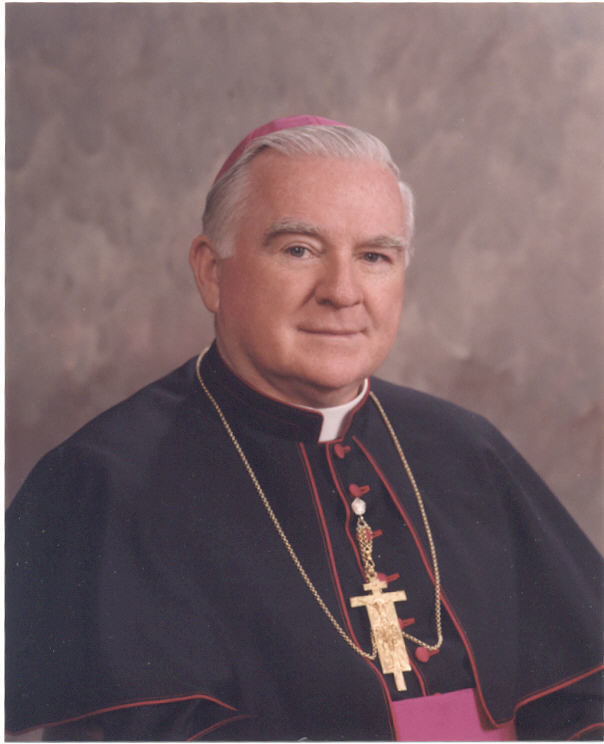
On December 28 the Most Rev. Robert Mulvee (88) retired VII Bishop of Providence, Rhode Island, formerly Bishop of Wilmington, Delaware and Auxiliary Bishop as well as a priest of Manchester, New Hampshire passed away. He will be buried on January 10th.
May he Rest in Peace.
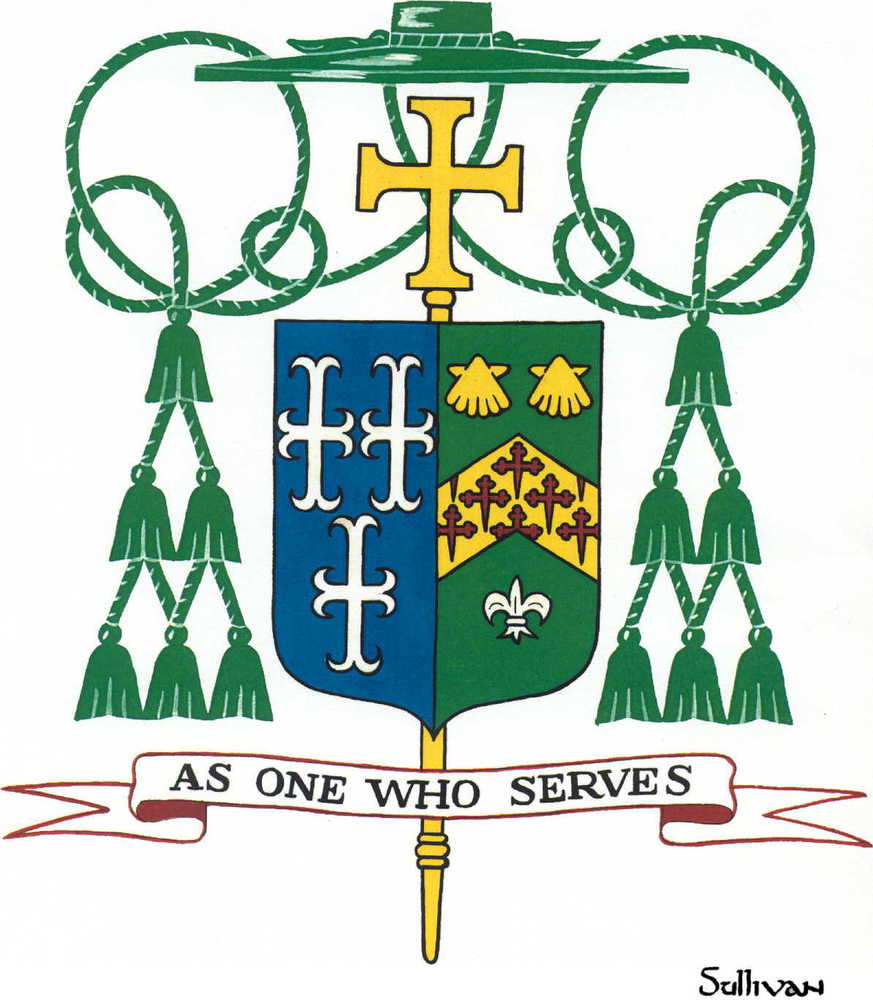
On November 24, 2018 the Most Rev. Robert Charles Morlino (71), Fourth Bishop of Madison, Wisconsin since 2003, died peacefully after a brief illness.
His coat of arms as described in information from the diocese:
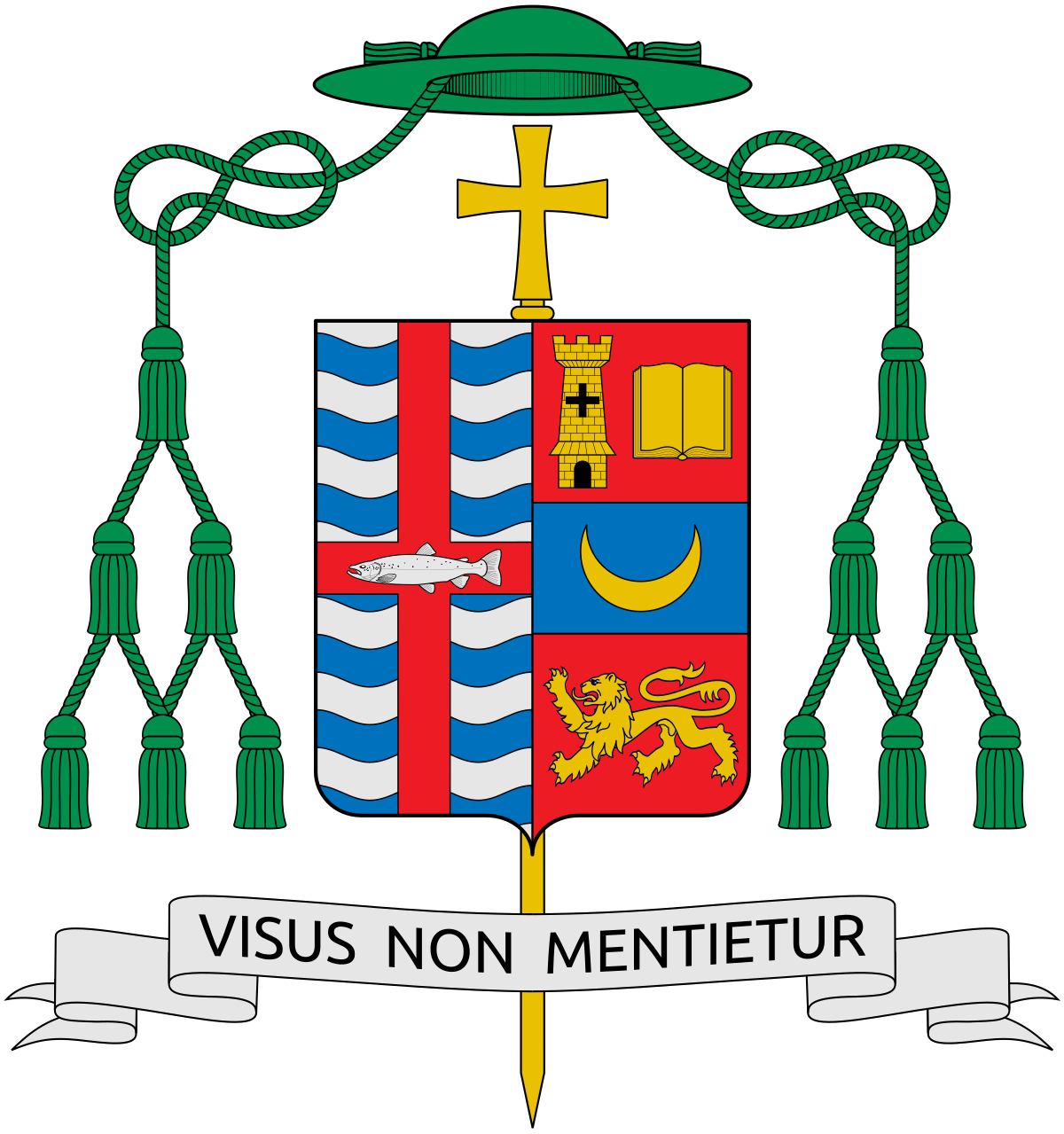
“The arms of the diocese are composed of a field that is wavy bars of silver (white) and blue. This is the traditional heraldic representation for water and the field of “water” is divided by a red cross into four sections to remind us of the lakes of the region around Madison. On the red cross is a fish and this conjunction of symbols is a classic symbolic representation for Saint Raphael, the titular of the Cathedral Church of Madison. Raphael means “healer of God” and his ministrations to men make interesting reading in the Book of Tobit in the Old Testament. The fish recalls the episode where Raphael ordered Tobias to cook a fish to eat but removed the heart, liver and gall for future medicinal use. Later the liver was used by Tobias to drive out the devil, who had slain seven of the previous husbands of Sara, his wife, while the gall was used to restore sight to his blind father.
The upper most part of the bishop’s arms contain a gold tower which symbolizes a place of refuge, strength and of safety. There is also a book which serves to reference the bishop’s thirst for knowledge of things that concern God and His Church.
There is also a gold crescent moon on a blue fess. The blue fess serves to recall not only the blue in which Our Lady is traditionally depicted, but also of water.
The “lion passant” of gold in the lowest part of the shield alludes to the strength and liveliness of His Excellency in all that he does, but most especially in defending the faith. This charge further seeks to reveal His Excellency’s strong devotion to Pope Saint Leo the Great that began to develop during the formation of his master’s thesis.
The red background, overall, calls to mind the blood of the martyrs.
The motto, “The Vision Will Not Disappoint” is from Habbakuk 2:3″
Requiescat in Pace.
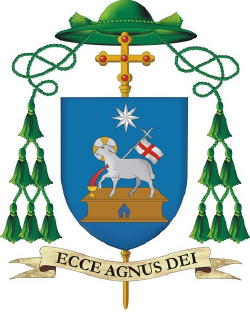
The Coat of Arms of Bishop Juan Miguel Betancourt, SEMV, depicts the Lamb of the Book of Revelation, slaughtered but victorious, the one who is the lamp for the Church (Rev 5:6; 21:23). The victory of Christ over sin and death through his sacrifice is reflected in the rays of power around his head (Rev 5:12; 17:14). The Lamb, giving his life for his Bride, the Church, through the shedding of his blood denotes the life of love and service of an ordained minister of the Church (Rev 14:1). The Lamb of God gives his life voluntarily so his Church can live and continue her mission of salvation in the world (John 10:17-18). The Lamb rests on a plain and unadorned wooden altar, evoking a life of simplicity, a life that wants to be spent in service signaling everyone to the Lamb, Christ the Savior. Finally, the Lamb also reminds us of Bishop Betancourt’s home, Puerto Rico, whose coat of arms is the oldest still in use in the New World.
The red and white banner, held by the Lamb, represents the local church of Hartford, which Bishop Betancourt has been called by the Lord to serve and give his life with joy and compassion, as well as his titular see of Curzola.
The Schoenstatt Shrine at the center of the altar represents the spirituality in which Bishop Betancourt has been formed through the charism of the Servants of the Holy Eucharist and of the Blessed Virgin Mary. The blue background is the presence of the Blessed Mother in the Church and the life of Bishop Betancourt. “Nothing without you, nothing without us” (Fr. Joseph Kentenich). “She is the great missionary, she will perform miracles” (St. Vincent Pallotti). The background also reminds Bishop Betancourt of the Church in the Archdiocese of Saint Paul and Minneapolis where he practiced his ministry of pastor, Scripture professor and formator of seminarians for more than a decade.
That strong presence of Mary is highlighted by the star. Mary, Stella Maris, reigns with her power of intercession and protection over every single member of the Body of Christ. In times of strife and distress in the Church, the Blessed Mother is the beacon of hope, promising strength, unity and security, inviting us to imitate the holiness and self-giving of her Son for the sake of his Bride. Traditionally, the eight-point star represents resurrection, salvation, super-abundance (of grace) and new beginnings.
He was ordained as the Auxiliary Bishop of Hartford on October 18, 2018.
While neither of these abbots was elected very recently, within the last year there were two new Premonstratensian (aka Norbertine) abbots elected and blessed in the USA, one in Wisconsin and the other in Pennsylvania.
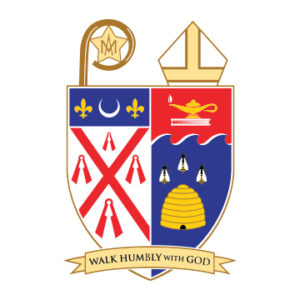
The Rt. Rev. Dane J. Radecki, O.Praem elected on April 4, 2018 as the VII Abbot of St. Norbert Abbey in DePere, WI. He was blessed on July 11, 2018.
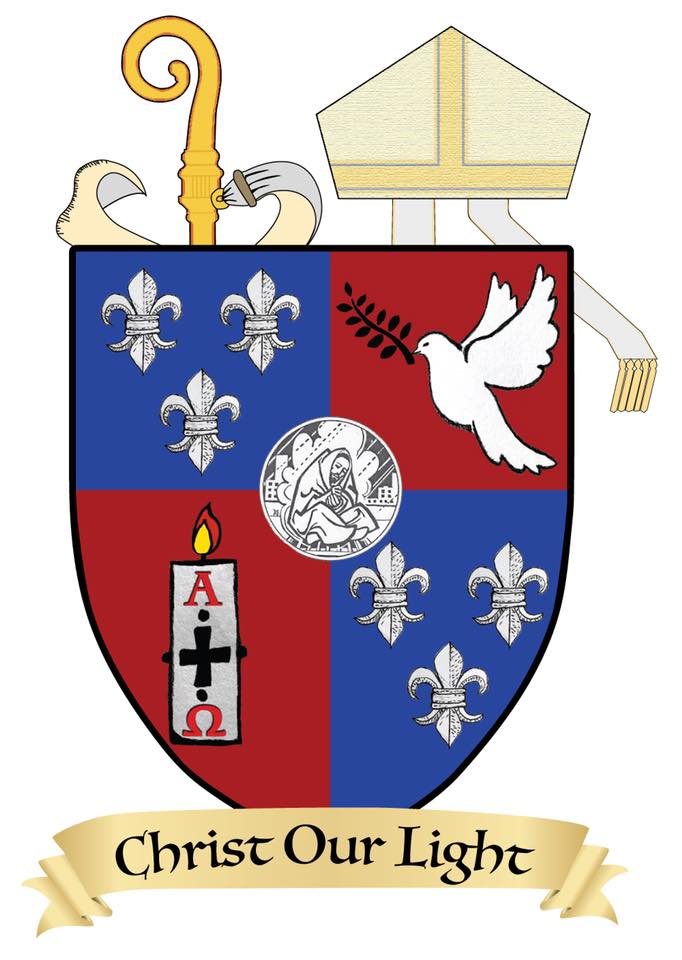
The Rt. Rev. Domenic Rossi, O.Praem, elected on January 23, 2018 as the IV Abbot of Daylesford Abbey in Paoli, PA. He was blessed on April 14, 2018.
Fr. Guy Selvester's blog of Ecclesiastical Heraldry
Fr. Guy Selvester's blog of Ecclesiastical Heraldry
Fr. Guy Selvester's blog of Ecclesiastical Heraldry
Fr. Guy Selvester's blog of Ecclesiastical Heraldry
Fr. Guy Selvester's blog of Ecclesiastical Heraldry
Fr. Guy Selvester's blog of Ecclesiastical Heraldry
Fr. Guy Selvester's blog of Ecclesiastical Heraldry
Fr. Guy Selvester's blog of Ecclesiastical Heraldry
Fr. Guy Selvester's blog of Ecclesiastical Heraldry
Fr. Guy Selvester's blog of Ecclesiastical Heraldry
Fr. Guy Selvester's blog of Ecclesiastical Heraldry
Fr. Guy Selvester's blog of Ecclesiastical Heraldry
 EXARANDORUM