Category Archives: Work of Other Artists

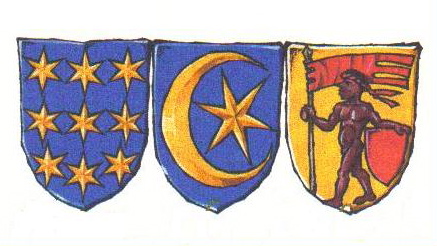
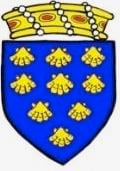
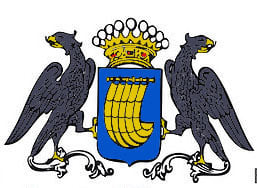
Epiphany: The Attributed Arms of the Magi

We see here the attributed coats of arms of the Three Magi, or Wise Men who are traditionally named Kaspar, Melchior and Balthazar. Of course, we don’t really know their names and they also existed before heraldry did. In fact, some Biblical scholars question whether or not they even existed at all or are merely symbolic. We also don’t know from the Scriptures that there were three of them, only that they brought three gifts of gold, frankincense and myrrh. It is assumed, safely I think, that they each bore one gift so that there must have been three of them.

This version of their arms is nicely rendered by Marco Foppoli.

Bishop dos Santos

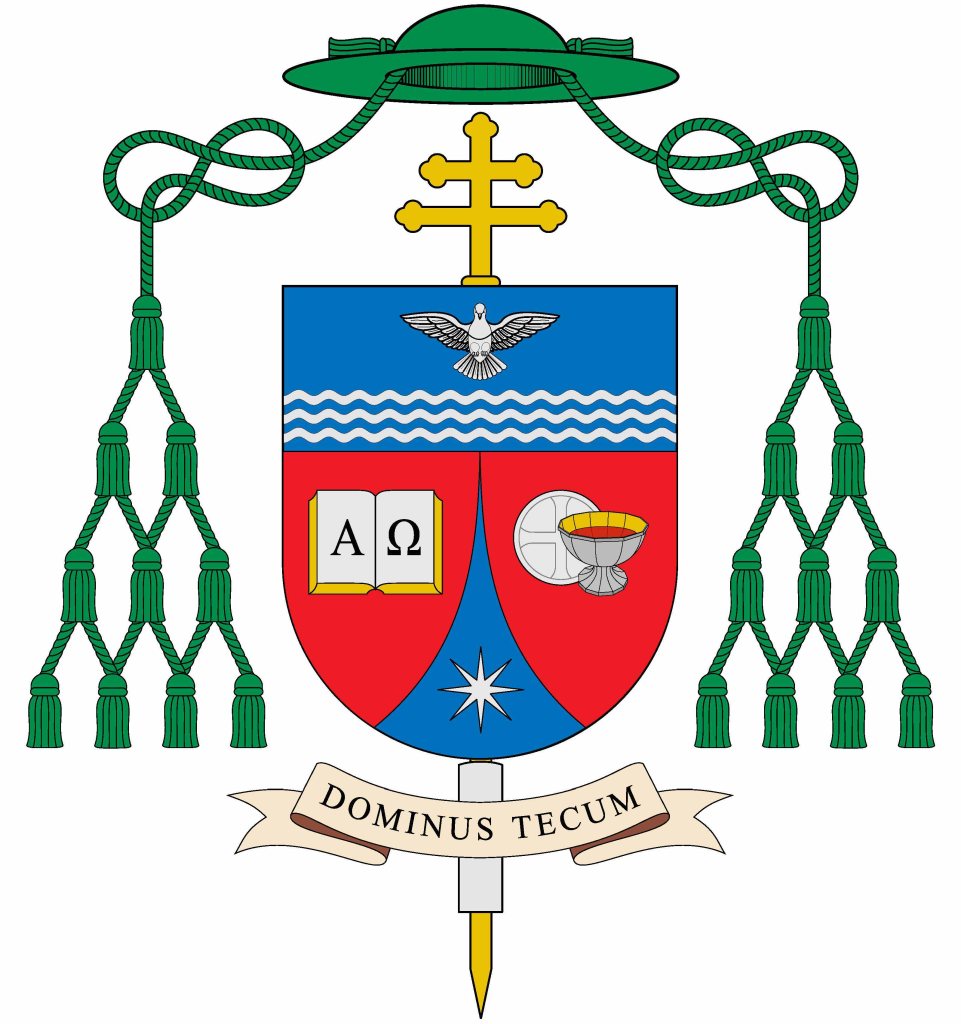
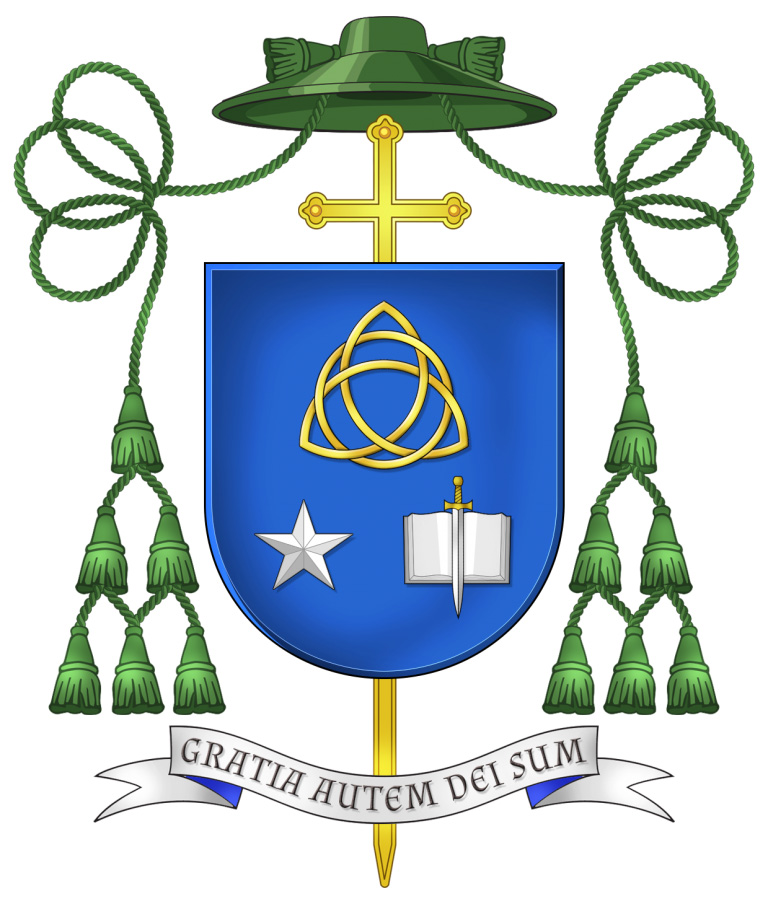
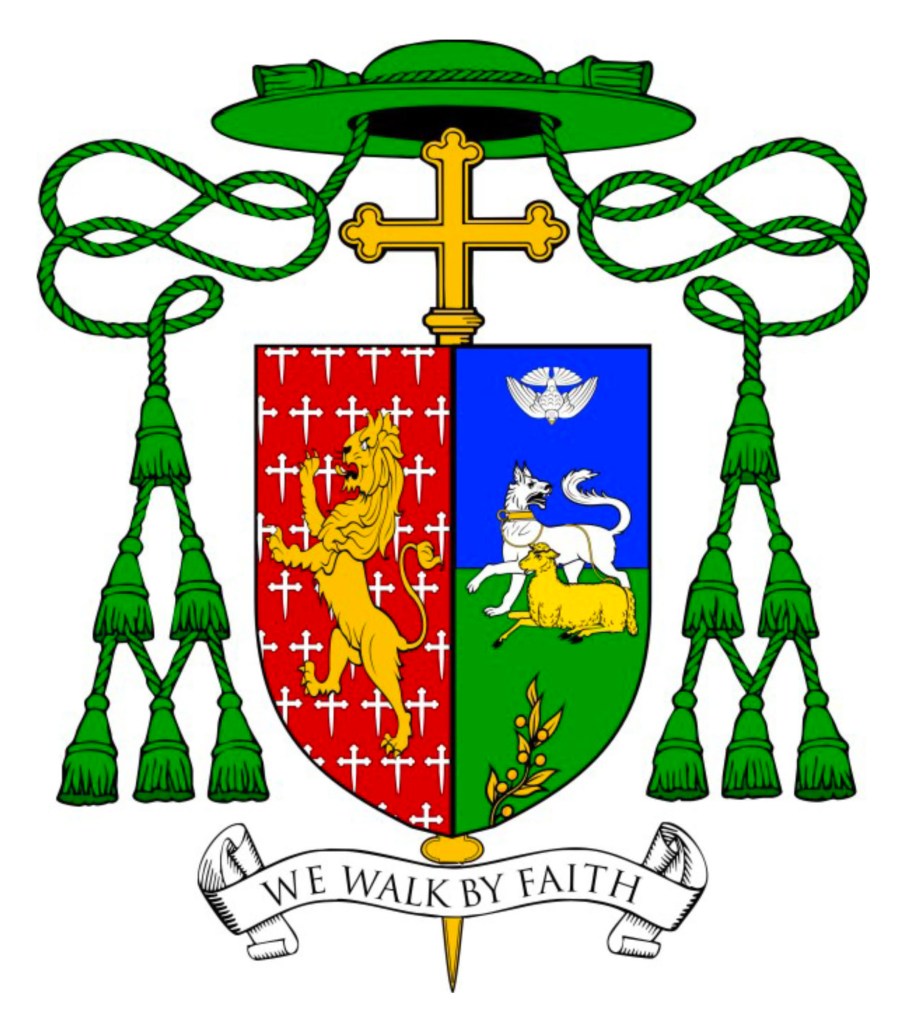
The Most Rev. Joel Maria dos Santos (55) a priest of the archdiocese of Belo Horizonte, Brazil, was ordained Titular Bishop of Thenae and Auxiliary Bishop of Belo Horizonte on December 18, 2021.

His coat of arms is rather nice. It’s clear with a simple, if not a bit haphazard arrangement of the charges. The principal symbol represents the Holy Trinity while the star is for Our Lady and the sword and book a reference to St. Paul. The color scheme is good and the tinctures and metals are a good combination while not going nuts with multiple tinctures.

A very nice coat of arms. Bravo!

Archbishop Boland’s Excellent Example

One of the better coats of arms borne by an American prelate in the 20th Century belonged to the Most Rev. Thomas Aloysius Boland, the 6th Bishop and 2nd Archbishop of Newark, New Jersey from 1952-1974. Boland had been a priest of Newark and served as Auxiliary Bishop there from 1940-1947 and then was translated to the Diocese of Paterson, New Jersey as its 2nd Bishop from 1947-1952. Archbishop Boland retired from office in 1974 and died in 1979.

His very nice, simple and stylish coat of arms impaled very well with the equally simple and well-designed armorial bearings of the See of Newark. The contrast in tinctures and the composition of the charges made for an excellent overall appearance. Of course, in the time when he became a bishop and assumed these arms it was still the custom to include the mitre and crozier in the achievement of a bishop.

Advent in Heraldry

It’s not all that easy to find heraldic references to Advent. Nevertheless, one which I came across many years ago and of which I always think at this time of the year is the very fine coat of arms of the Cathedral Church of the Advent in Birmingham, Alabama. This is the cathedral church for the Episcopalian Diocese. They had a devisal of arms produced for them by HM College of Arms in London. It is, overall, a most pleasing design and I particularly like how an Advent wreath was incorporated.

The Church enters into the final week Advent this week and I wanted to be sure to point out this excellently done coat of arms before the season had left us again.

Happy Advent (and a Merry Christmas) to you all.

Colin Powell 1937-2021

US Army General Colin Luther Powell, who served as U.S. Secretary of State from 2001-2005, as Chairman of the Joint Chiefs of Staff from 1989-1993 and as National Security Advisor from 1987-1989 died on October 18, 2021 at age 84 from blood cancer and Parkinson’s Disease both of which had been complicated by Covid-19.

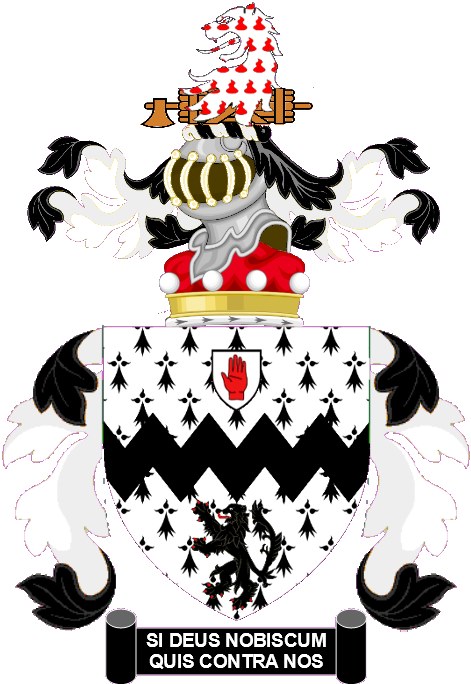
Some people knew, but many didn’t, that Powell had British ancestry and that his father, Luther Powell, had been granted a coat of arms by Her Majesty through Lord Lyon King of Arms in Scotland. In addition, Lord Lyon granted a unique crest to General Powell. The achievement is:

When Lord Lyon Robin Blair travelled to Washington, DC to deliver the Letters Patent of the grant to General Powell in 2004 he attended a cocktail party the night before in suburban Virginia given by American members of the Heraldry Society of Scotland. I was at that party. Lord Lyon was kind enough to bring the Letters Patent with him to the party for all of us heraldic enthusiasts to see. So, we were all privileged to see the grant even before Colin Powell did!

May he rest in peace.

The version above was rendered by Andrew Stewart Jamieson.

Bishop Guido Marini

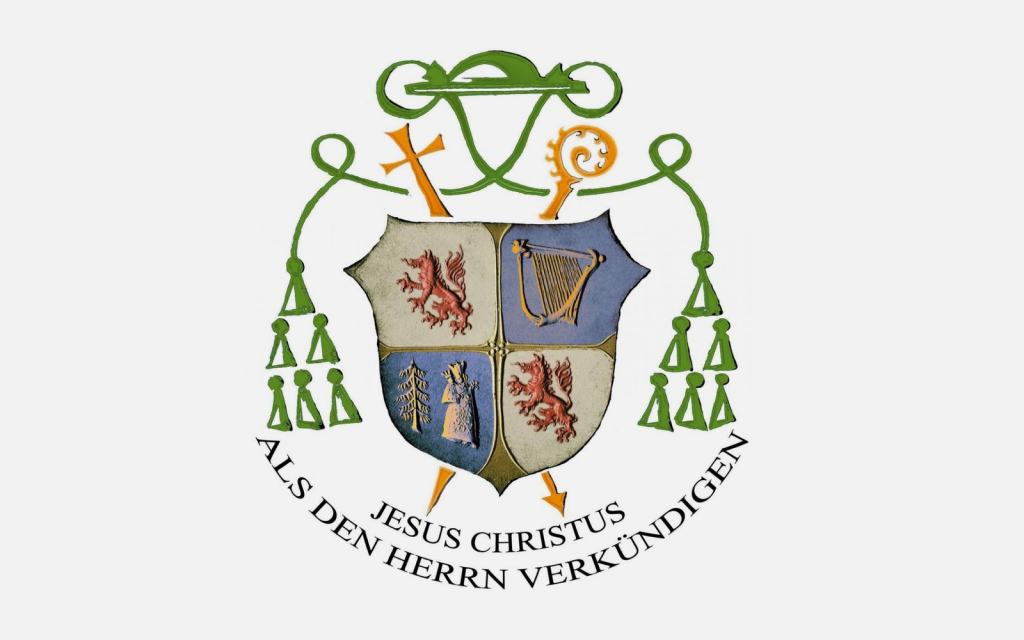
On October 17 Pope Francis ordained his long-serving Master of Pontifical Ceremonies, Guido Marini (56) as Bishop of Tortona at a liturgy in St. Peter’s Basilica. Bishop Marini, a priest of Genoa who served as Papal MC since 2007, will be installed in his cathedral church on November 7.

The armorial bearings he has assumed were prepared by Marco Foppoli.

Bishop Robert Brennan to Brooklyn

Today, September 29, Pope Francis appointed the Most Rev. Robert Brennan, 59, Bishop of Columbus, OH since 2019 to become the 8th Bishop of Brooklyn in its 168 year history. He succeeds Bishop Nicholas DiMarzio, 77, who served there since 2003.

Bishop Brennan is a NY native and was a priest, official and Auxiliary Bishop in the neighboring diocese to Brooklyn, Rockville Centre until he went to Ohio three years ago. He also studied in the Brooklyn Diocese when he attended St. John’s University in Jamaica, Queens.

The arms he assumed in 2012 when he became a bishop impale nicely with those of the See of Brooklyn:

Ad Multos Annos!

Grosseto

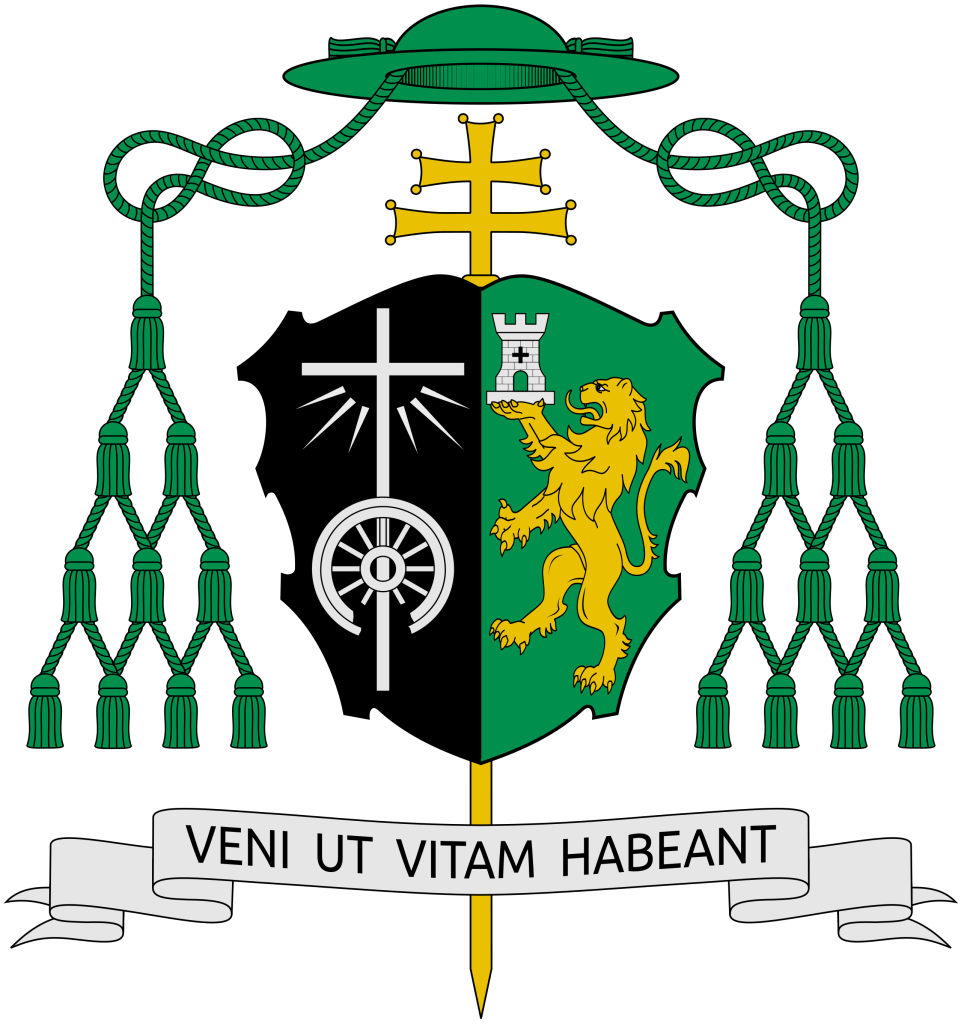
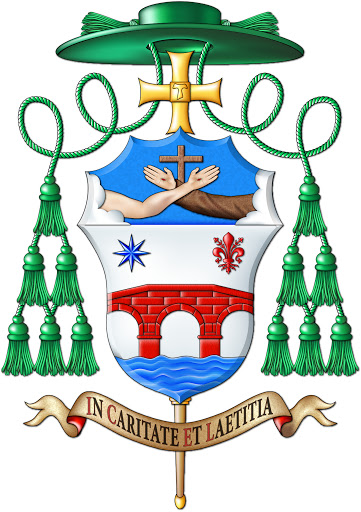
On August 9 the Most Rev. Giovanni Roncari, OFM. Cap. (71) Bishop of Pitigliano-Sovano-Obrbetello Italy was additionally installed as the Bishop of Grosetto, Italy. Henceforth, Grosseto is united to Pitigliano-Sovana-Orbetello in persona episcopi. His coat of arms, designed by Giuseppe Quattrociocchi is below:

The chief (upper third of the shield) contains the traditional symbol of all the various types of Franciscans, namely the crossed arms of Christ and Francis with a cross. The bridge recalls the place where the bishop hails from (San Piero a Ponti) and the star is for Our Lady. The inclusion of the Florentine fleur-de-lis is to recall the city of Florence where the bishop exercised a great deal of his priestly ministry.

The coat of arms is well done, despite the asymmetry of the star and fleur-de-lis. That bothers some people but can also work very well depending on the overall design and I think it does so here.

My only criticism is the inclusion of the small Tau Cross at the center of the episcopal cross standing behind the shield. As I have frequently written about on this blog I am of the opinion that the external ornaments in a heraldic achievement, which indicate rank, not identity, should not be seen as open to personalization. But, in the grand scheme of things that is a minor criticism at best. I particularly like the shape of the shield chosen as I think it works very well with what is depicted upon it.

Asidonia-Jerez

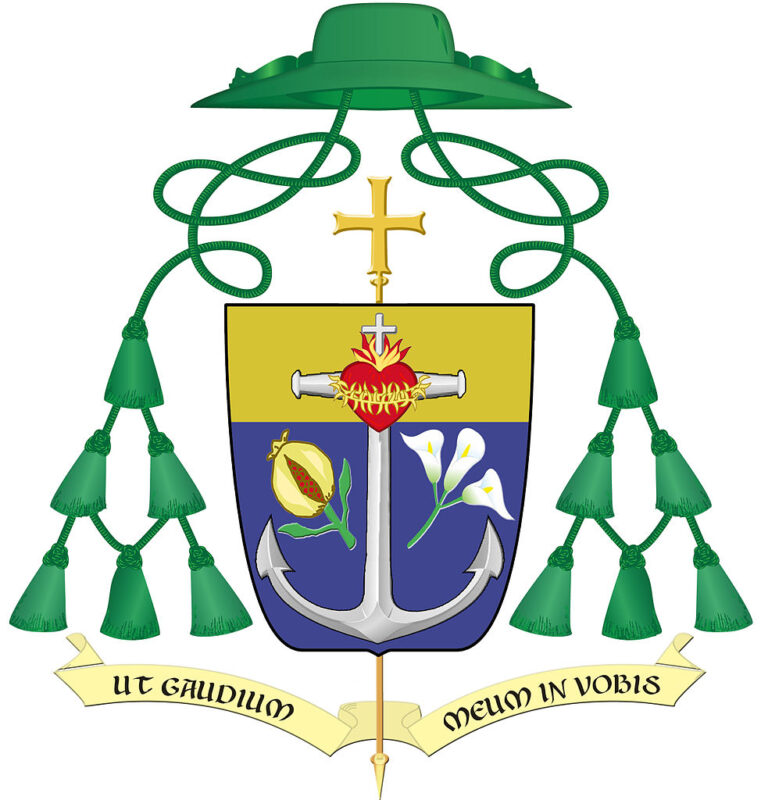
On July 31 Bishop José Rico Pavés, a bishop since 2012, was installed as the Bishop of Asidonia-Jerez (Jerez de la Frontera) Spain. His coat of arms is:

Generally speaking I think this is a nice coat of arms. The charges are clear and easy to discern and would be even if viewing the coat of arms greatly reduced, as on printed matter. The green portions of the lilies and the pomegranate don’t really break the tincture rule of no color on a color despite their being on a blue field because they are secondary additions to the primary charges (the blossoms of the lily and the fruit of the pomegranate themselves). Such little things can easily be tolerated.

The only real criticism I have is the notion of the anchor extending up onto the chief from the field. Charges, especially the principal charges like this one, aren’t supposed to overlap portions of the shield, especially in this instance where the shield is divided by having a chief. The chief itself is an ordinary and, as such, is considered to be placed over the upper portion of the blue field. Even if the anchor is blazoned as “overall” that doesn’t justify having it extend up to overlap the chief. In addition, it does actually violate the tincture rule of no metal on a metal since the whole body of the anchor is silver and it extends to a gold chief. Again, another good reason to have the anchor remain below the chief. Without counterchanging, it doesn’t really work so it comes off as a poor design decision.

I wonder why there is even a chief at all? Having the Sacred Heart on the anchor could have been enough justification to leave it red (on a silver anchor), or it could have been depicted all in gold and then the entire arms could have simply had a blue field.

Nevertheless, despite this one item, the rest of the coat of arms is, in my opinion, very nice.

Olympic Heraldry

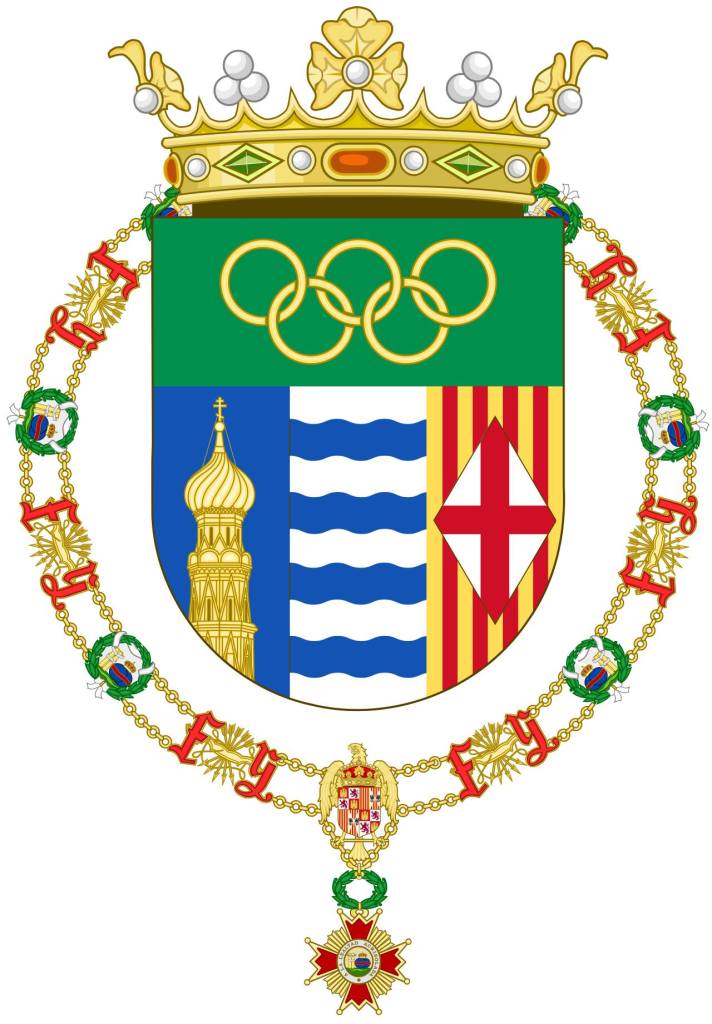
Since 1894 there have been nine Presidents of the International Olympic Committee (IOC). Five of them have also been armigerous in their own right. The first IOC President, Demetrius Vikelas, was not and neither were the fourth, Sigfrid Edström, the fifth, Avery Brundage, or the ninth and current IOC President, Thomas Bach.

Pierre, Baron de Coubertain, the “Father” of the modern Olympics. 2nd IOC President 1896-1925
Henri, Comte de Baillet-Latour 3rd IOC President 1925-1942
Michael Morris, Baron Killanin 6th IOC President 1972-1980
Juan Antonio, Marquess of Samaranch 7th IOC President 1980-2001
Jacques, Count Rogge 8th IOC President 2001-2013

Bishop Koenig of Wilmington

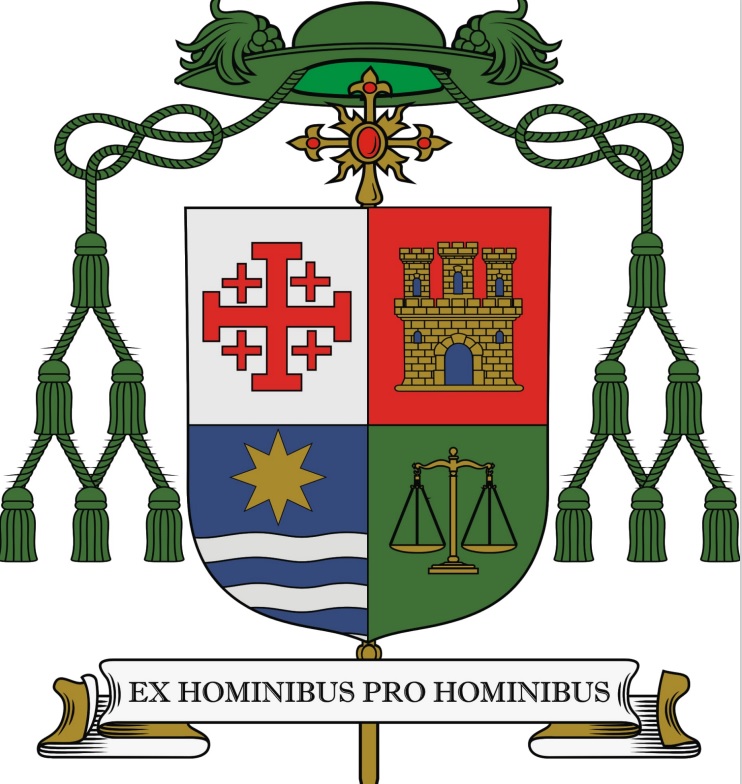
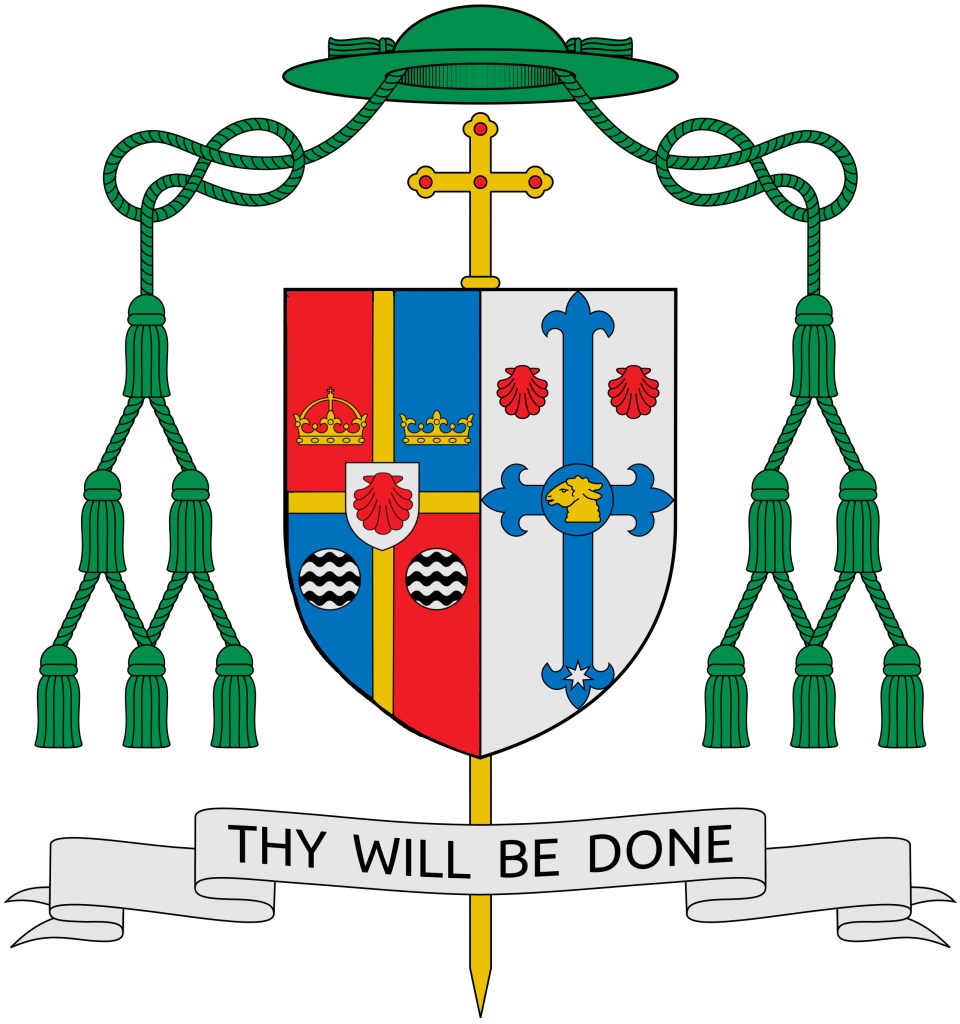
On July 13 the Most Rev. William Koenig (64) a priest of the Diocese of Rockville Centre, NY will be ordained a bishop and installed as the 10th Bishop of Wilmington, Delaware. The coat of arms he has chosen to assume is illustrated below impaled with those of the See of Wilmington.

The arms of the See are based on those of the Lords De La Warr one of whom, Thomas West, was Governor of Virginia and for whom the state and river are named. The crosses allude to the arms of the Lords Baltimore, proprietors of Maryland because the diocese covers all of Delaware and the eastern Shore portions of Maryland. The gold lion borrows from the arms of Bl. Pius IX who erected the See.

While the new bishop’s name would lend itself easily to symbols of St. William the Abbot and a royal crown (the name Koenig means “king”) he has, somewhat disappointingly, decided to use arms that allude to various aspects of his priestly career. These are the typical “CV arms” against which I am always warning. American bishops are fixated on their coats of arms “telling the story” of their lives rather than simply doing what coats of arms are supposed to do: identify.

These arms aren’t horrible. They are merely disappointing. They could have been SO much better.

New Garter

On July 2 David Vines White (59) was appointed Garter Principal King of Arms at HM College of Arms in London. This is the most senior of the three Kings of Arms. He had previously been Somerset Herald and before that Rouge Croix Pursuivant. He succeeds Sir Thomas Woodcock who has served as Garter since 2010. Congratulations to the new Garter King of Arms!

Bishop Dell’Oro

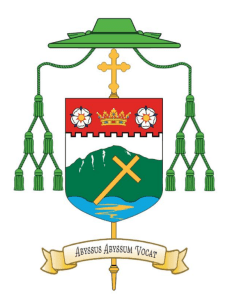
On July 2 the Most Rev. Italo Dell’Oro, CRS (68) will be ordained titular bishop of Sucarda and Auxiliary Bishop of Galveston-Houston, Texas. The armorial bearings he is assuming are:

This is not my favorite design but it is not terrible either. The division line embattled and everything in chief look fine. I’m not fond of the kind of “landscape heraldry” depicted in base. Nevertheless, that type of heraldic design appeals to many and there are no errors in this design. What I dislike about it is simply a matter of taste which is purely subjective.

Bishop Golka of Colorado Springs

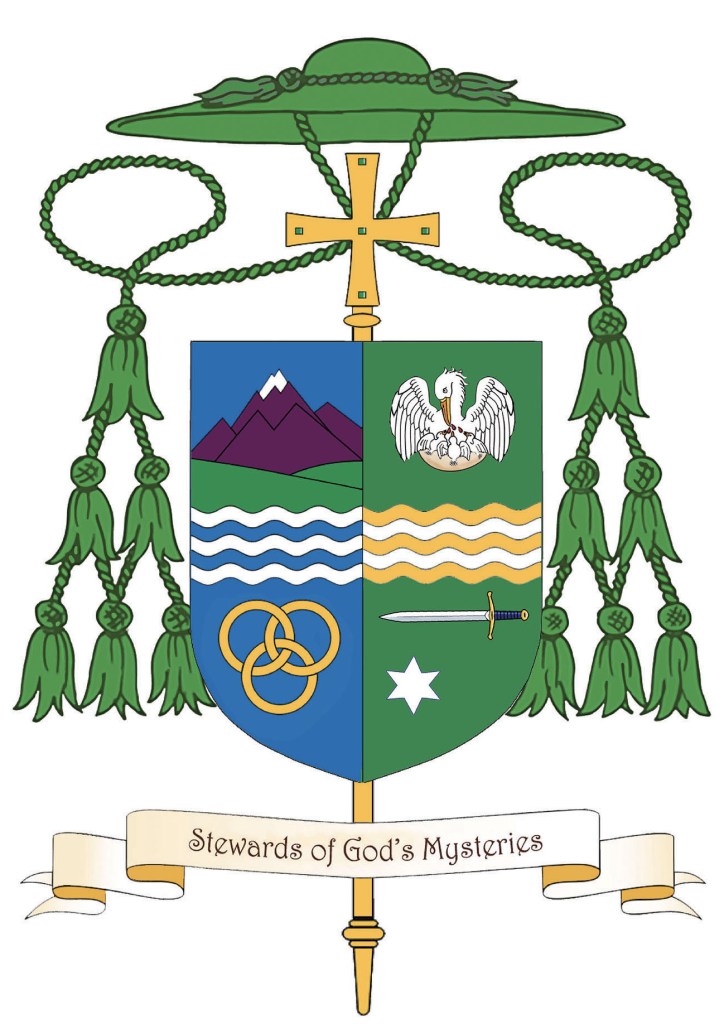
On June 29 the Most Rev. James Golka (54) a priest of the Diocese of Grand Island, Nebraska, will be ordained a bishop and installed as the third Bishop of Colorado Springs, Colorado. The coat of arms he is assuming is:

The green field with the gold and silver wavy barrulets represent the bishop’s home state of Nebraska and the Wood and Platte rivers. The pelican in its piety in chief is a symbol of the Eucharist and the sword, in base, a symbol of St. Michael, stands for the ministry of deliverance and healing. The star in base is a symbol of Our Lady. The cathedral in Grand Island is dedicated to the Nativity of mary. It is where the bishop received his Sacraments of Initation, was ordained a priest and served as Rector since 2016. The motto is taken from 1 Corinthians chapter 4 verse 1.

I have no desire to comment on the arms of the See of Colorado Springs. They are well established. The bishop’s personal arms have a good rationale for why the particular charges were chosen. It is a relatively simple design and clear and doesn’t violate any of the usual heraldic conventions. It’s not terribly exciting or impressive in my opinion but that is a very subjective assessment. Overall, I’d say, a nice coat of arms.