Category Archives: Papal

More Armigerous Saints!

Last May while I was vacationing in France I posted about saints who had been armigerous (i.e. who bore a coat of arms). On Sunday, April 27 there will be two more added to that number when Pope Francis canonizes his predecessors in the Chair of St. Peter, Pope John XXIII and Pope John Paul II.
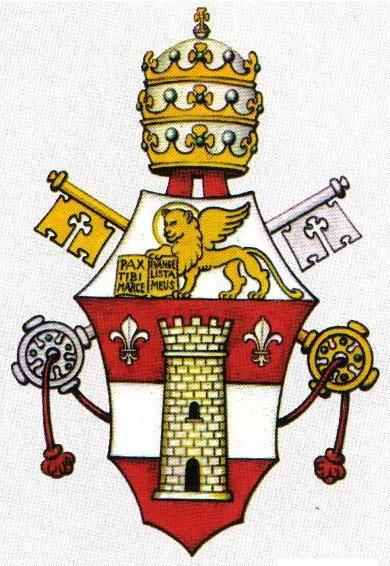
Image

The coat of arms of Pope John XXIII (above) was identical to the one he used as Patriarch of Venice with the addition of the external ornaments of a pope. The arms are: “Gules a fess Argent; in chief two fleur-de-lis Argent and overall a tower embattled Argent; on a chief Argent the lion of St. Mark Or”. The lower portion consists of the coat of arms that was adopted by Angelo Giuseppe Roncalli when he was named a bishop. Later, when he was promoted to Patriarch of Venice he added the chief (upper third of the shield) with the golden lion of St. Mark, the patron saint of the Venetian church, as is customary for all Patriarchs of Venice. This is one of the few examples in Italian Church heraldry where arms of the See are used. When he was stationed as Papal Nuncio to Paris, Roncalli had a young Bruno Heim serving as his secretary at the Paris Nunciature. The two shared an abiding interest in heraldry. At the time of his election to the papacy John XXIII was not in immediate touch with Heim who was serving elsewhere. John, himself an amateur heraldist approved his arms as they were with the Venetian lion included to be used as his papal coat of arms. A short time later he did employ his former secretary, Heim, to produce the artwork for the official version of the coat of arms. Heim tried to talk him out of retaining the chief of Venice in his papal arms but it was too late. So, it remained.
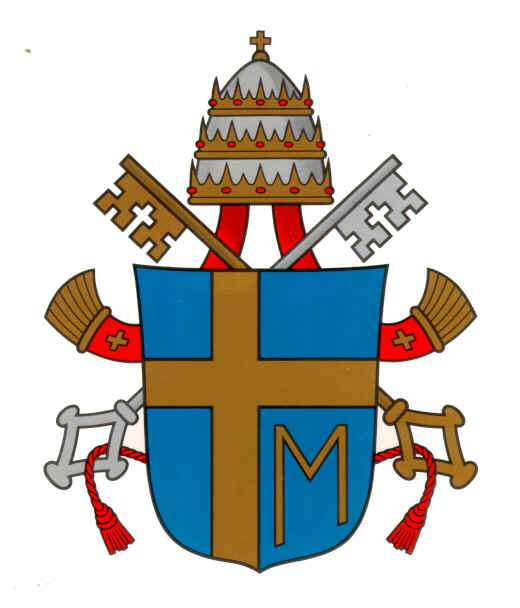
Image

The coat of arms of Pope John Paul II (above) are also connected to the late Archbishop Heim. The arms are: “Azure a Latin cross skewed to dexter throughout Or; in sinister base the letter “M” Or”. These arms are also the ones adopted by Karol Wojtyła at the time he was made a bishop. However, in the earlier version the cross and “M” were black. On his election to the papacy Heim tried in vain to persuade the new pope to drop the letter “M” and replace it with another Marian symbol. The use of letters in heraldry is considered poor design. The new pope was adamant that his arms had to remain the same as those he had borne under a repressive Communist regime in order to show that he would not modify or weaken the stance he held as a bishop and cardinal in Poland. As a concession to good taste and design, however, so as not to have a color on a color he agreed to change the cross and “M” to gold on blue. Heim, who was afraid that his reputation as a knowledgeable expert in heraldry would suffer did his homework and then added an entire chapter to a second edition of his book, “Heraldry in the Catholic Church” on the use of what are called house markings, which resemble letters, as being particular to both Polish and Swiss heraldry (Heim was Swiss).

So, the age of saints is not long ago and distant but is with us right now. In addition, both of these down-to-earth men (John was the son of peasant farmers from Northern Italy and John Paul the son of a Polish civil servant) had coats of arms. Heraldry is often misunderstood as elitist, exclusive, snobbish and pretentious. Yet, these two men who were holy to a heroic degree such that they are now being held up as worthy of emulation by the faithful and who were known for their genuine humility each had a coat of arms.

Artwork: Bruno B. Heim

Papal Throne Modified to Include Heraldry of Pope Francis

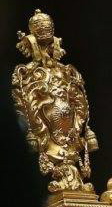
From the photos below which were taken on November 30th during a celebration of Vespers for the First Sunday of Advent we see that the throne chair used for papal liturgies (originally emblazoned with the arms of Pope St. Pius X and later modified to bear the arms of Pope Benedict XVI) have once again been slightly modified. The finials on the chair retain their original composition while the charges on the shield itself have been changed to bear the coat of arms of Pope Francis. It is nice to see some things are still being done. It is also odd to see the arms of Pope Francis topped by the tiara!

Image

Image

Image

Benedict XVI to Montezemolo: “No Thanks”

It has been uncovered in a recent article that the proposal from Andrea Cardinal di Montezemolo that Pope-Emeritus Benedict XVI should modify his coat of arms and place the crossed keys of St. Peter on the shield has been politely REJECTED. Benedict thanked His Eminence for the interesting study he made of the subject but declined to adopt any of the cardinal’s proposed changes. Good for him! The precedent set would have been a bad one…just like Montezemolo’s bright idea of dropping the tiara as a heraldic emblem in favor of a stylized tiara/mitre hybrid. It’s time that Montezemolo realized he’s no Bruno Heim!

An Extraordinary “Herald” (of sorts)

Image

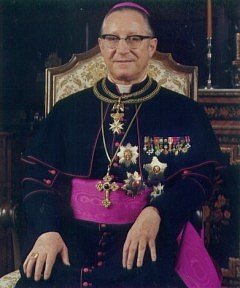
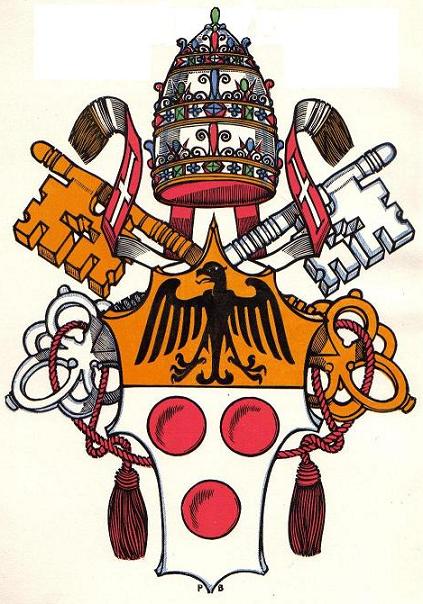
While certainly never holding the title of herald and not being appointed as an officer of arms in any way by anyone this man was, in his own way, the most extraordinary of contributors to the world, the science and the art of heraldry. It can be said that he was a kind of “herald of the Church” during his long career as a Churchman and Papal diplomat. A one-time assistant to the then Nuncio to France, Angelo Cardinal Roncalli (later Bl. Pope John XXIII), the first Pro-Nuncio to the United Kingdom and the first Papal diplomat above the rank of Apostolic Delegate in England in the modern era since the Reformation as well as the man who quite literally wrote the book on ecclesiastical heraldry in the Roman Catholic Church: Archbishop Bruno Bernard Heim. His original work, “Coutumes et Droits d’Heraldique de l’Eglise” was later expanded and republished with lavish illustrations as “Heraldry in the Catholic Church” (1978). This Swiss priest and diplomat designed the coats of arms for Popes John XXIII, Paul VI, John Paul I and John Paul II. One can only imagine what the outspoken Helvetian would have made of the arms of Pope Benedict XVI or, far worse, the arms of the present pope. He was, in my opinion, the most knowledgeable person in the XX Century on the subject of ecclesiastical heraldry. As far as I’m concerned one need only justify a particular point of heraldic design or art by saying, “Heim says so”. He was also tremendously knowledgeable about heraldry in general. His book is a must read for anyone interested in the topic in addition to the four other books on heraldry he authored. Sadly, his influence over the revival of good heraldic practices in the Church is beginning to wane since his death in 2003 at age 92.

Recent Acquisitions (part IV)

Four more today including one I missed out on purchasing from the now defunct Heraldry Today.

Image

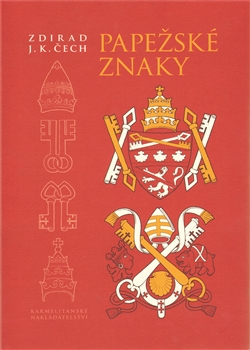
Papežské Znaky by Zdirad J.K. Čech published in 2009. The book is in Czech but is lavishly illustrated throughout and includes all the papal arms from the dawn of heraldry up to Pope Benedict XVI. (pictured above)

Also, Wappen und Flaggen des Deutschen Reichtes und seiner Bundesstaaten (1871-1918) published in 1979.

Wappen: Ein Spiegel von Geschicte und Politik by Harald Huber published in 1990.

Handbüchlein der Heraldik by D.L. Galbreath published in 1930.

My German is very rusty but these were very nice acquisitions for my little personal library.

Vexillological FAIL

Image

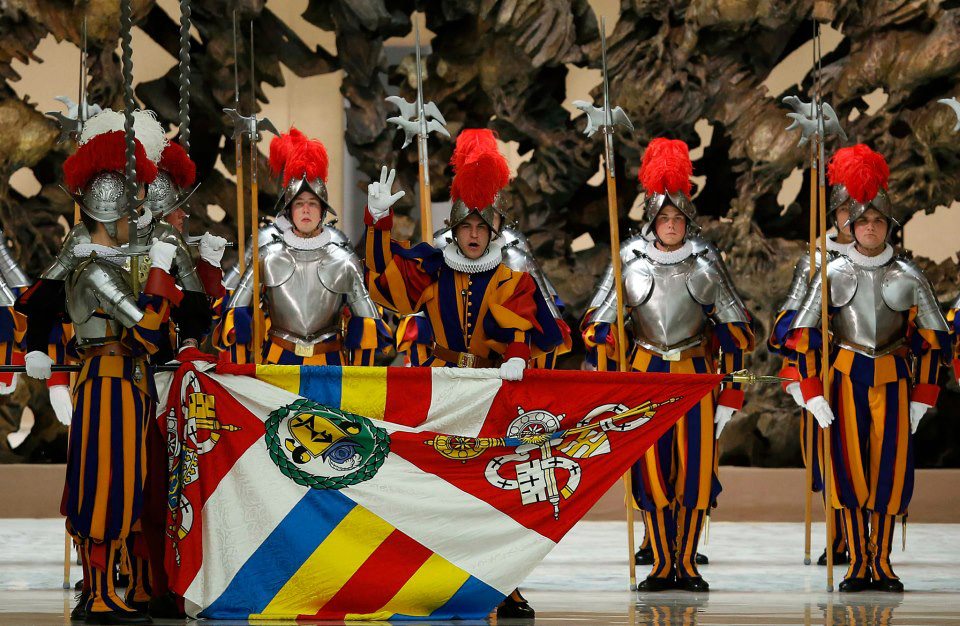
I was a little confused and somewhat saddened to see that on the updated flag of the Swiss Guard the arms of Pope Francis were depicted with the mitre/tiara hybrid as opposed to the tiara as has always been done (even with the arms of Benedict XVI). It’s surprising because the notoriously punctilious Swiss aren’t known for accommodating whim or fashion when it comes to “their stuff”. Another thing changed for the worse.

Papal Ferula (Pastoral Staff)

There is an interesting article on the Vatican’s website about the use of the Papal Ferula (or bacculus pastoralis, (i.e. pastoral staff or “crozier”) by popes in recent decades for solemn liturgies. All those who found the return of the ultra-modern staff commissioned by Pope Paul VI (including myself who refers to it as the dental pick crozier) will find this article interesting. Apparently Pope Francis intends to alternate use between this crucifix-staff of Paul VI and the one used by Benedict XVI.

You may read the article HERE.

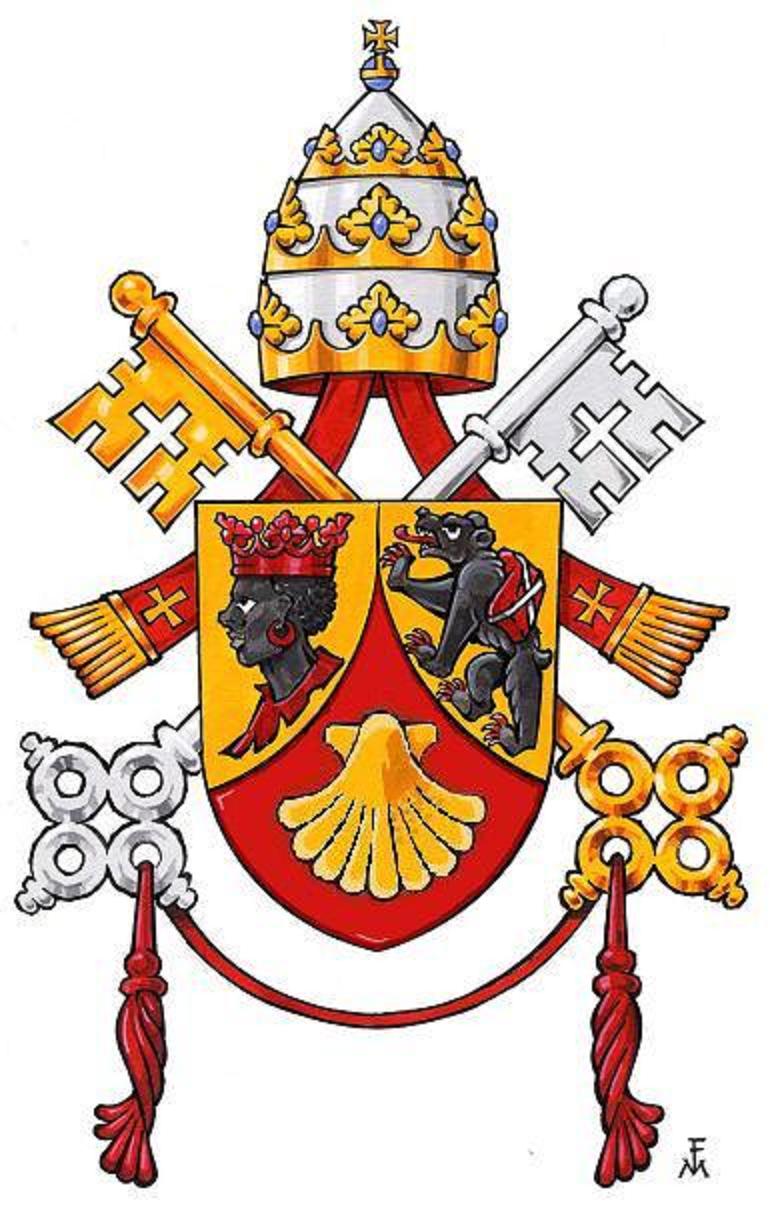
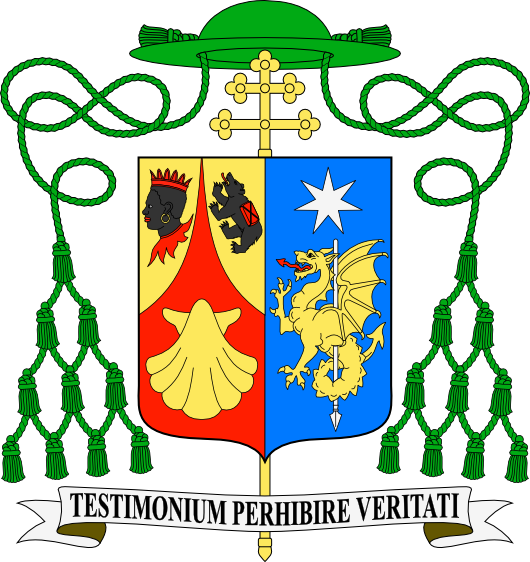
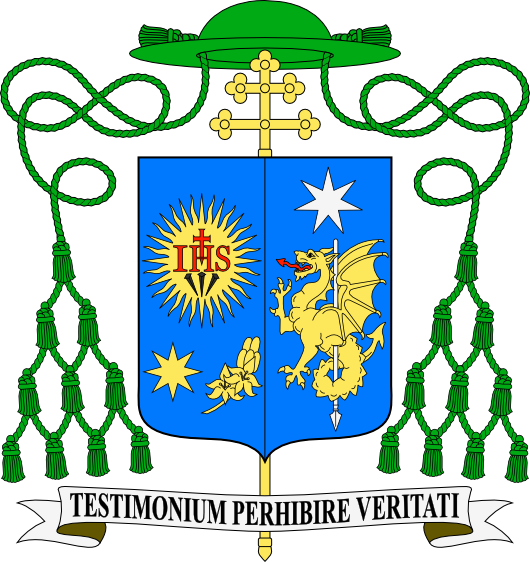
Coat of Arms of Archbishop Gänswein

Image Image

Having seen a Facebook post I wrote about this some time ago my friend and heraldic enthusiast and artist Xavi Garcia who writes the excellent blog Dibujo Heráldico posted recently about the coat of arms of the Prefect of the Pontifical Household (and former secretary to Pope Benedict XVI) Archbishop Georg Gänswein. It is the custom of the Prefect of the Pontifical Household to impale (combine on the same shield) his personal arms with those of the reigning pope. When Archbishop Gänswein was named an archbishop earlier this year he adopted personal arms that reflect St. George, his baptismal patron (the dragon being slain with a spear) and his devotion to Our Lady (the star). These were impaled with the arms of Pope Benedict (above). Now that Pope Francis has been elected and Archbishop Gänswein remains as Prefect of the Pontifical Household (at least for now) his arms are changed to be impaled with those of Pope Francis (below). Now there is a great deal of blue on one shield but that was not something that could have been forseen. Xavi has depicted the two coats of arms himself in his own style and I am happy to share them with you here. Check out his blog while you’re at it too!

(artwork: Xavi Garcia)

One of Bruno Heim’s Best

Image

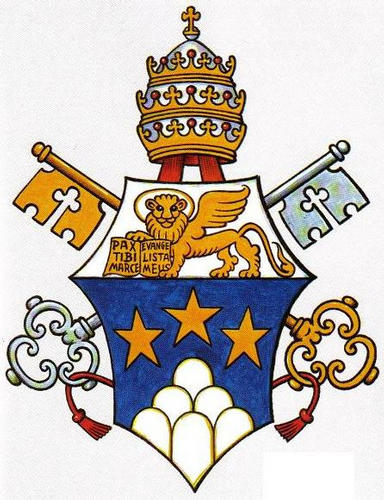
Arguably one of the best coats of arms designed and emblazoned by the late Archbishop Bruno Heim was that of Pope John Paul I who reigned as pope for just 33 days from August to September of 1978. The coat of arms was slightly modified from the one he had borne before becoming pope. Upon his election Albino Cardinal Luciani chose the unique double name of John Paul combining the papal names of his two immediate predecessors. The coat of arms was put together to reflect this double name. In chief we see the lion of St. Mark that makes up the arms of the See of Venice. Cardinal Luciani served as Patriarch of Venice before being elected to the papacy. In addition, two of his predecessors as pope, St. Pius X and Bl. John XXIII also were Patriarchs of Venice before their respective elections as pope and both retained the chief of St. Mark in their coats of arms as pope. In the arms of John Paul I the chief of St. Mark not only recalls his own time in Venice but evokes the memory of Pope John XXIII. The collee, or stylized mountains or hillocks in base are from the coat of arms of Pope Paul VI whose family name, Montini, means “little mountains”. In between the mountains and the chief there are three stars. Paul VI had three fleur-de-lis in the same position in his arms and Cardinal Luciani’s original arms had three stars but the stars had only four points each. Here they have been modified to five-pointed stars which are a heraldic symbol of Our Lady, specifically of the Assumption. Despite the fact that Pope John Paul I adamantly refused to be crowned as pope the papal tiara nevertheless appears in its usual spot ensigning the shield along with the keys of St. Peter. Truly, this is one of Heim’s best designs. Sadly, it was not seen by many because of the brevity of the pontificate of the “smiling pope”.

Arms of Pope Francis

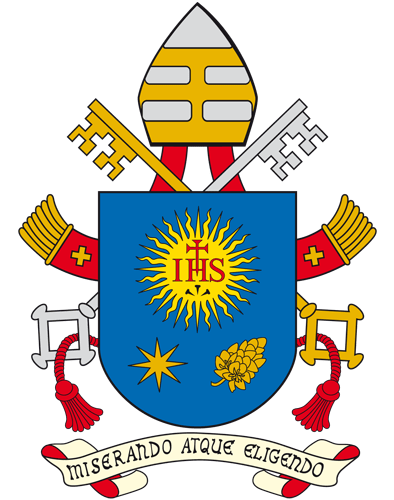
OK, let’s get this over with. A blog about heraldry and especially Catholic heraldry has to say something about the newly adopted arms of the newly elected pope. Let’s begin with the shield. It’s never a good idea for any prelate who is also a Religious to use the insignia of his Order because it implies he has jurisdiction over the entire Order or that he possesses the entire Order. I suppose in the case of a pope it could be argued that he has jurisdiction over it. Nevertheless, all the examples of popes who have used the arms of their Order in their own arms are examples of poor heraldry. Pope Francis’ arms are no exception. In this case, as it is also a symbol for Jesus within the Holy Family it is understandable why it is being used as a charge but no less excusable. The change of the star from 5-pointed to 8-pointed is nice as is the clarification of the “flower of nard” so that it no longer resembles a bunch of grapes!

While I understand placing the three charges together was an allusion to the Holy Family (Jesus, Mary and Joseph) it shows, nonetheless, poor composition simply to slap three charges onto the shield. Creating a greater unity by changing the star and nard-flower from their original silver to gold was, in my opinion, a good move. However, it would have been better to separate the Jesuit sun-burst from the other charges. Perhaps the shield could have been parted per fess Azure and Argent? The charges could have remained in their present positions but depicted as counter-changed. Thus a white sunburst on a blue field (sufficiently differencing the sunburst from the Jesuit arms) and the other two charges in blue on a white field. This would also have employed the colors of the flag of Argentina as a subtle reference to the homeland of the first South American pope.

The external ornaments seem fine. I was happy to see the ill-placed pallium included in the arms of the last pope was not repeated. The inclusion of the motto is a bit of an innovation. All popes have had mottoes but they are not usually depicted in the achievement. It must be noted that external ornaments CANNOT BE MANDATED by a blazon so the motto on the scroll is not essential when the arms are displayed and it may be left out. The keys and cord are complete copies of the ones first designed by the late (great) Archbishop Bruno B. Heim for the arms of Bl. John Paul II. The tiara-mitre hybrid first poorly conceived by Cardinal di Montezemolo for the arms of Benedict XVI is, predictably, repeated here. It’s still an allusion to the tiara (i.e. a stylized form of the tiara) and, as such, is not essential in its present form. See my comment above about external ornaments.

I’m glad to see the pope didn’t feel the need to completely overhaul the arms he had first assumed as a bishop when later he became pope. The artwork is decent although it could probably be depicted far better by a more experienced artist. The general shape of the achievement is good and, all things considered, this is not a horrible coat of arms.