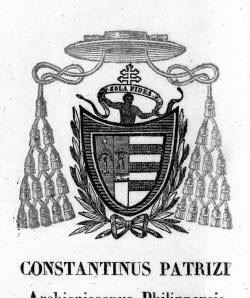
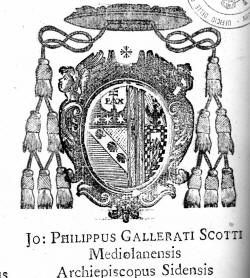
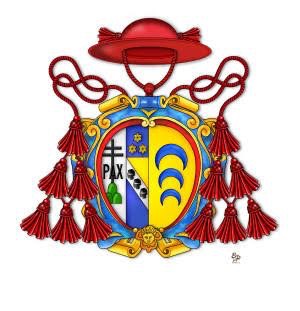
I was recently contacted by Maurizio Gorra, AIH who is preparing to publish a heraldic work that may be of some interest to you. So, I herein share the information about this publication with you for your consideration.
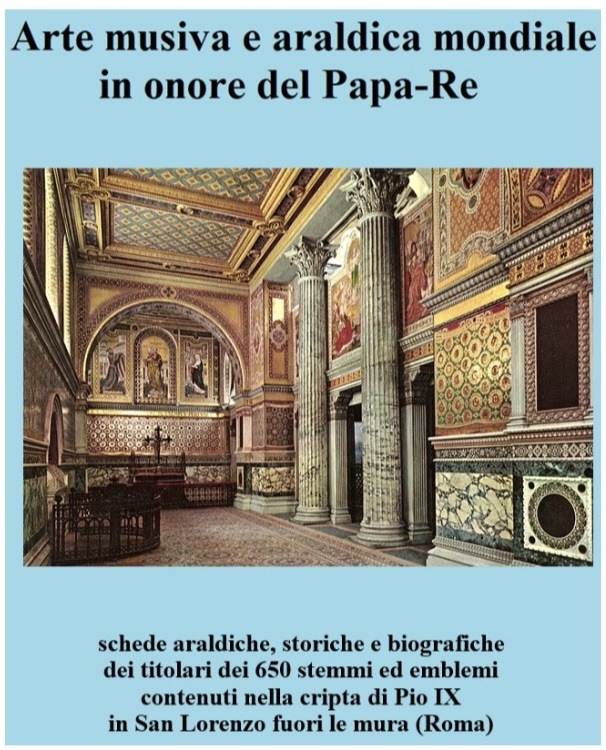
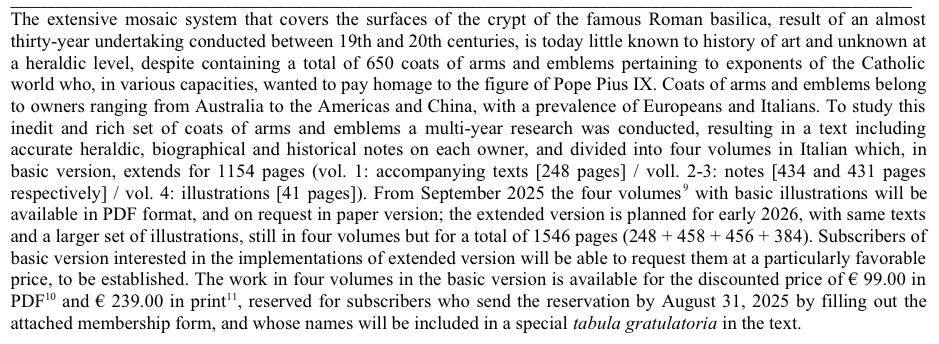
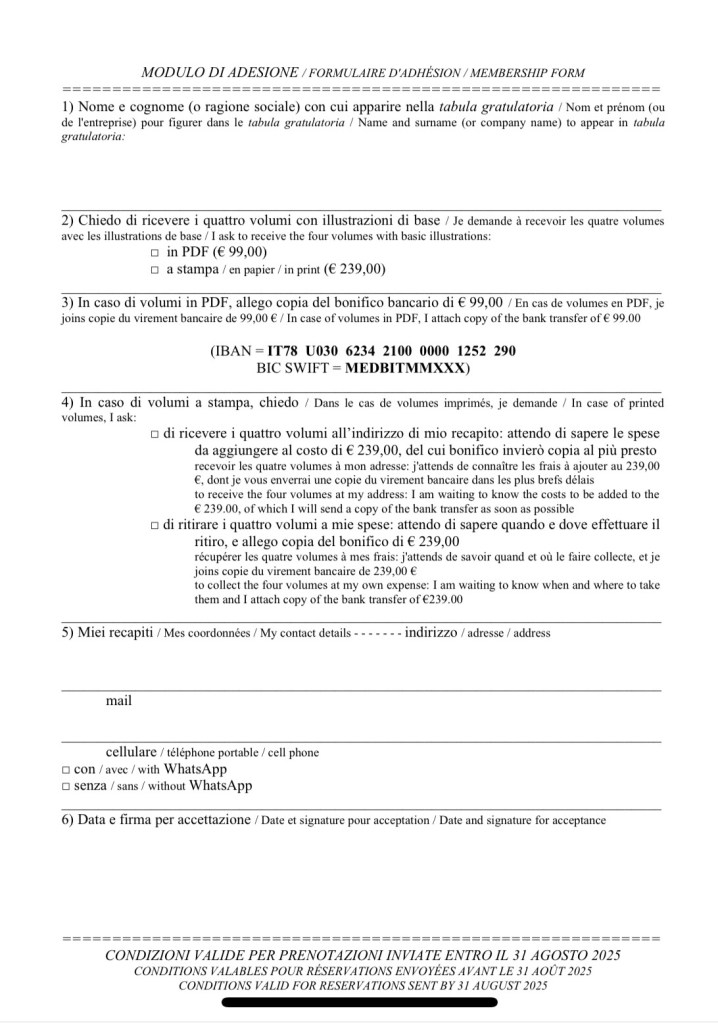
I was recently contacted by Maurizio Gorra, AIH who is preparing to publish a heraldic work that may be of some interest to you. So, I herein share the information about this publication with you for your consideration.
For reasons unknown, perhaps because of all the internet chatter (?) the Holy See has now corrected the armorial bearings of Pope Leo XIV to display a field of Azure & White as well as a fleur-de-lis of a more gray or metallic silver while both are blazoned Argent.
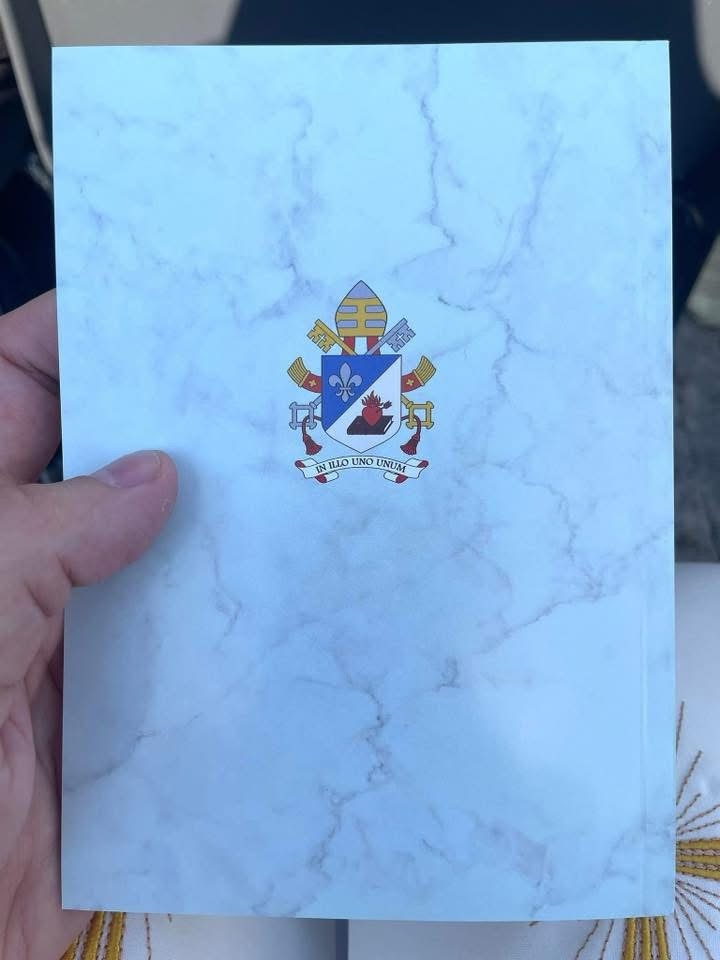
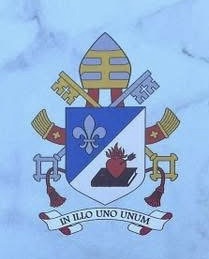
This question has been posed to me by numerous people since the Holy See released the image of the Pope’s coat of arms as pope. My answer is simply this: it looks pretty much like I expected.
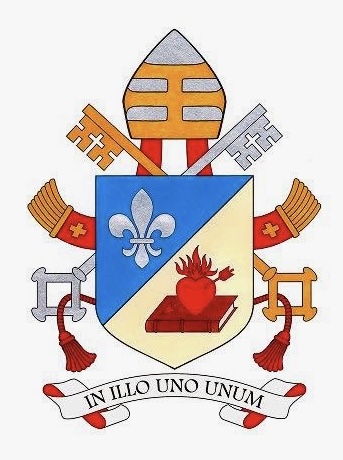
Pope Leo already had a very good coat of arms as a bishop. I’m glad to see he didn’t feel the need to entirely change the design as others have done in the past. A coat of arms is a means of identification. It identifies you. It becomes associated with you in such a way that it shouldn’t be changed cavalierly. A change of position should warrant the use of different external ornaments to signify the new rank, not a full scale change in what is on the shield itself. So, I’m happy to see that the Pope left alone the arms that he assumed as a bishop 11 years ago.
I was not surprised to see the papal tiara rendered in the form of a kind of mitre. This began with Pope Benedict XVI and continued with Pope Francis I. So, we have now seen this for twenty years and I assumed it would be continued. It is, perhaps, important to note that the tiara has not been replaced with a mitre. Rather, it is the papal tiara rendered as a kind of mitre/tiara hybrid. This occurred at all because of ignorance. The argument to Benedict XVI was that since the tiara is, practically speaking, no longer worn it should not be depicted in the coat of arms. Nothing could be farther from the truth. In fact, since it is no longer worn that’s all the more reason it should be used in the coat of arms. It remains a symbol of the papacy. Most of the world’s monarchs no longer actually wear a crown but the use of a crown heraldically remains. Cardinals and bishops no longer wear an actual galero but the galero remains a heraldic emblem. (It is worth noting here that the tiara with the keys remains the emblem of the Holy See.)
St. Paul VI, in his reforms of 1969, decreed that the mitre and crozier which used to be in the coats of arms of all bishops in addition to the galero and episcopal/archiepiscopal cross should no longer be used in the arms of such prelates. He reasoned that the crozier and mitre were still used liturgically as emblems of the episcopal office and their practical use made using them as heraldic symbols redundant and inappropriate. (NOTE: the same is also true for the pallium) Whereas, the episcopal cross and galero—used at one time—had fallen into practical disuse and so were very appropriate to be used purely as heraldic ornaments. By that logic the same is true of the papal tiara. Since recent popes have chosen not to be crowned the use of the tiara as a purely heraldic emblem makes all the more sense.
Yet, those advising Benedict XVI, principally among them Archbishop Piero Marini and the late Cardinal di Montezemolo, argued that the tiara should be modified in its appearance to show that it is no longer actually worn. This was bad advice then and it has now been codified into enduring, though still equally poor advice. Nevertheless, it was easy to anticipate that Pope Leo would simply follow suit. So…no real surprise there.
Similarly, the slight change in tincture of the division of the field in base from Argent (silver or white artistically) to a kind of beige or buff color shows an appalling lack of understanding of heraldry. This is also displayed in the description of this tincture as “light”. Just what, precisely, is THAT supposed to mean ?!?! There isn’t an actual blazon to help clarify this. The lack of a proper blazon could be because no one at the Vatican knows how to write one; they simply don’t find it important enough to care about; or they feel it would be too esoteric and unintelligible for the average person. One can only hope that the reason is one of the latter two rather than the former.
But there isn’t a lot of evidence to dissuade me. For example, the tiara and keys and motto banner are all clearly just a “cut & paste” job from the arms of Pope Francis I. Really? With all the many competent heraldic artists and heraldic experts available to them no one at the Vatican bothered to reach out to anyone and just figured this could all be handled “in house” by someone with a computer? Is that the most appropriate way to prepare a new pope’s coat of arms? it shouldn’t be a matter of who can get it done first but of who can do it best. What a shame that it has been deemed acceptable simply to cobble something together from existing images.
It’s also probably worth noting that—just like all bishops—all of the popes have had an episcopal motto. However, by longstanding tradition and custom a motto is not supposed to be included in the armorial achievement of the Pope. In his seminal work, Heraldry in the Catholic Church (1978) Archbishop Bruno Heim notes that, “It is widespread custom to put a motto under the shield. It is often held, wrongly, by those who know little about heraldry, that the motto is indispensable; yet it is an addition which does not properly belong to the armorial bearings themselves.” (page 80)
So we see that, all in all, the new Pope’s coat of arms is unsurprising in its composition, disappointing in its execution, and uninspiring in its depiction with numerous errors that could have been avoided with a little creativity and some consultation with people who know what they are doing.
For example, in the hands of an artist of some merit the same exact design can be rendered in a manner that looks considerably better just by the good use of composition and artistic style.
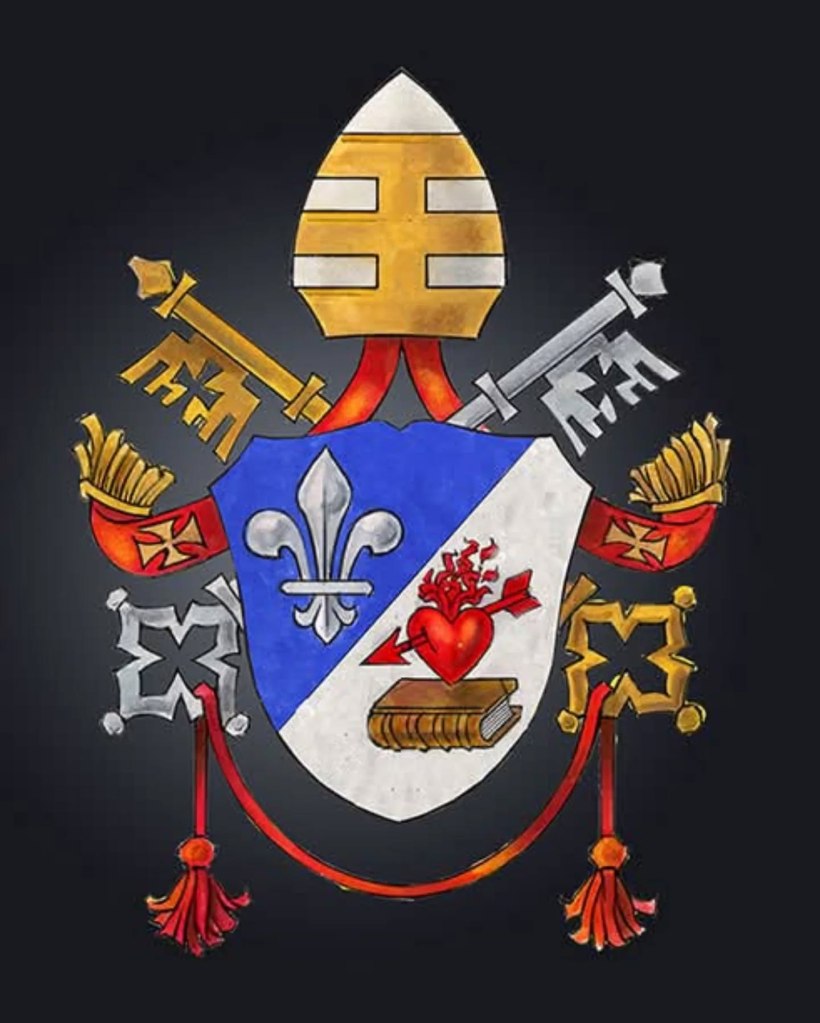
Take, for example, this sketch of the arms of Pope Leo XIV done on the evening of his election by the noted and competent heraldic artist, Marco Foppoli. We can see here that, in the hands of an expert with a great deal of experience, the original heraldic design can be rendered with the appropriate external ornaments in a way that maintains the simplicity that is desired while also creating a new and unique achievement for the armiger. Too bad that someone like Foppoli wasn’t consulted by officials at the Holy See.
Papal heraldry has been in a slow decline since the death of Archbishop Heim. It is sad but true. Unfortunately, at the outset of this new pontificate, there are no signs that this is going to change for the better anytime soon.
God Bless Pope Leo XIV!
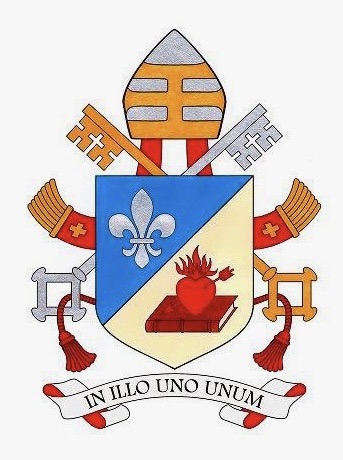
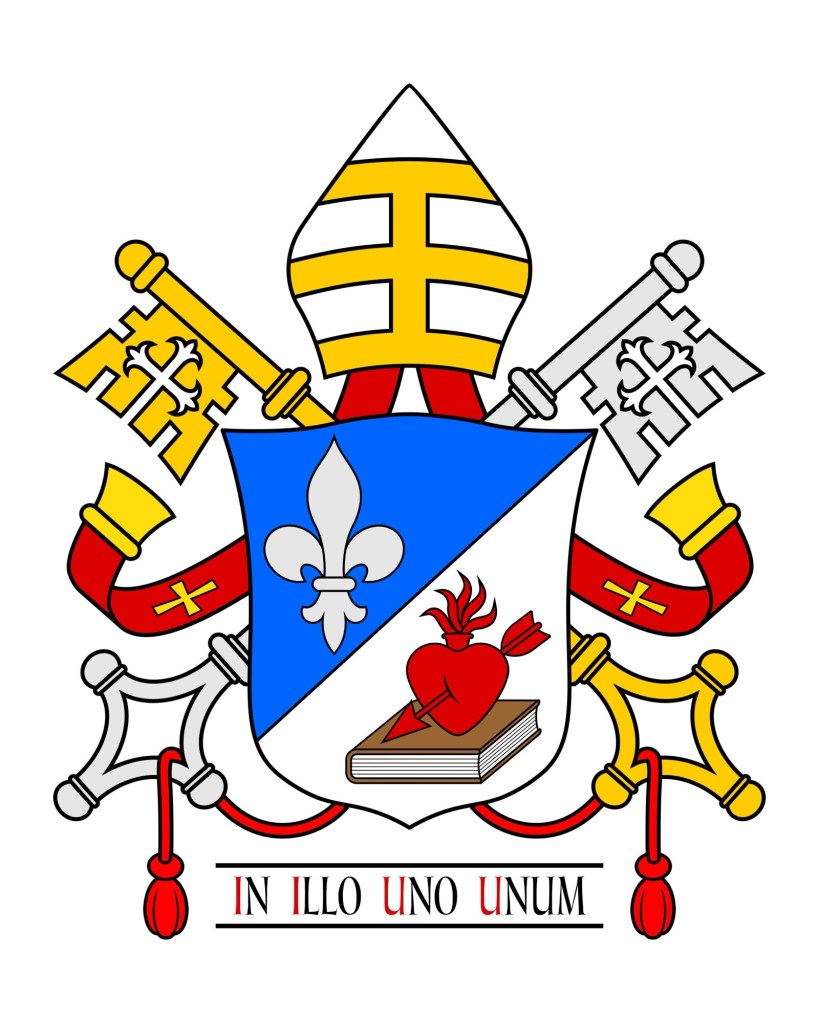
(artwork by Sandy Turnbull)
During the Sede Vacante the person in charge of the affairs of the Church is the Chamberlain (Camerlengo) of the Holy Roman Church. Since 2019 that man has been the (Irish-born) American, Kevin Cardinal Farrell, former Bishop of Dallas, Texas and also former Auxiliary Bishop of Washington, DC.
During the time of the Sede Vacante he functions as the caretaker of the Church and the Regent of the Vatican City-State. The symbol of the Church since the time of the existence of the Papal States, the crossed keys and ombrellino, are placed above his existing coat of arms in the achievement. These may always be used during his tenure in office but, practically speaking, most of those who are Camerlengo make use of these added ornaments only during the Sede Vacante. Special coins will be struck to mark this moment in the Church’s history bearing the arms of the Camerlengo.
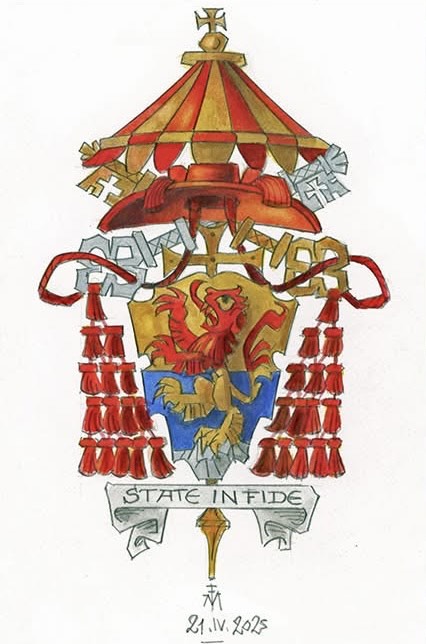
This version of Farrell’s arms is by Marco Foppoli.
In the midst of all the news out there about the death and burial of Pope Francis I didn’t bother to post anything. In addition, I was dealing with some personal matters during that time as well that prevented me from having the time for posting. We now find ourselves in the midst of the nine official days of mourning for a pope, the so-called Novemdiales. Now, the world waits the start of the Conclave which will commence on May 7.
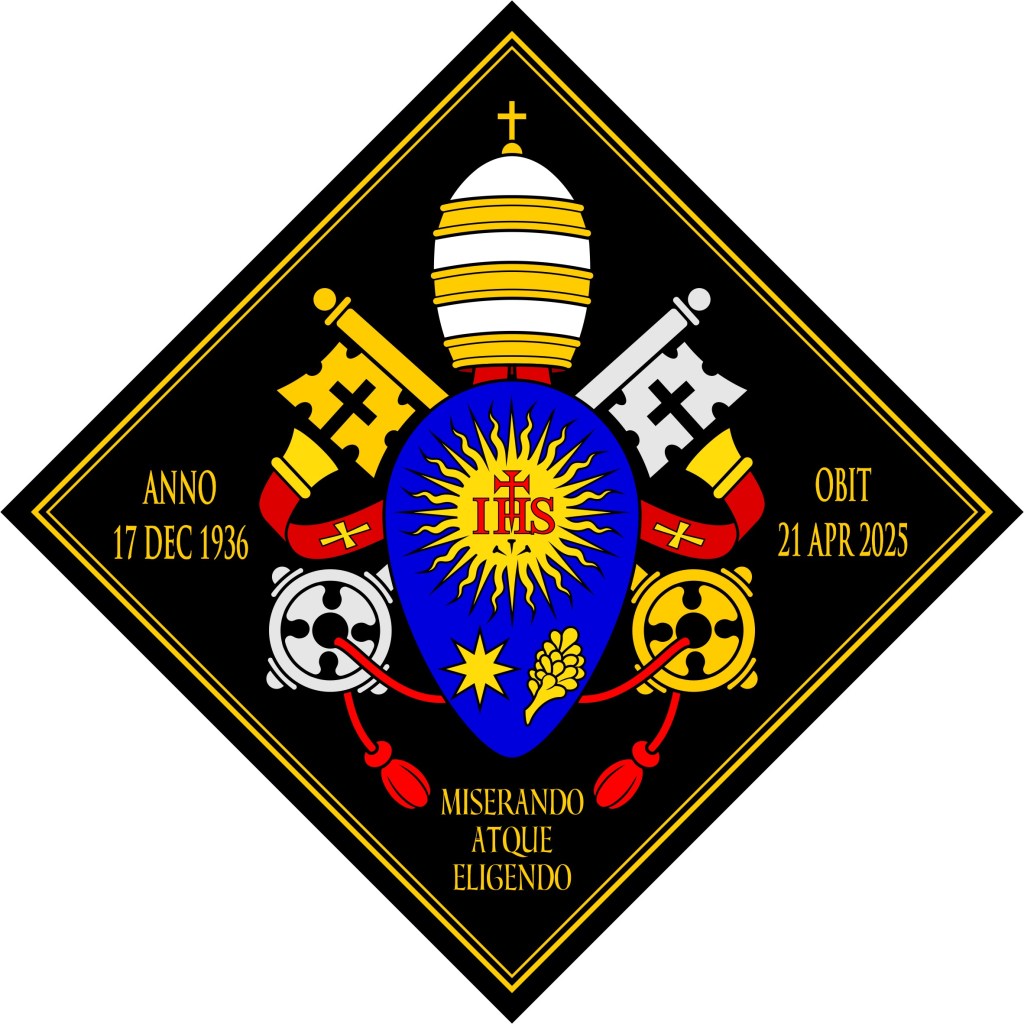
I post here a funerary hatchment made by the Australian Heraldic Artist, Mr. Sandy Turnbull. May Pope Francis Rest in Peace.
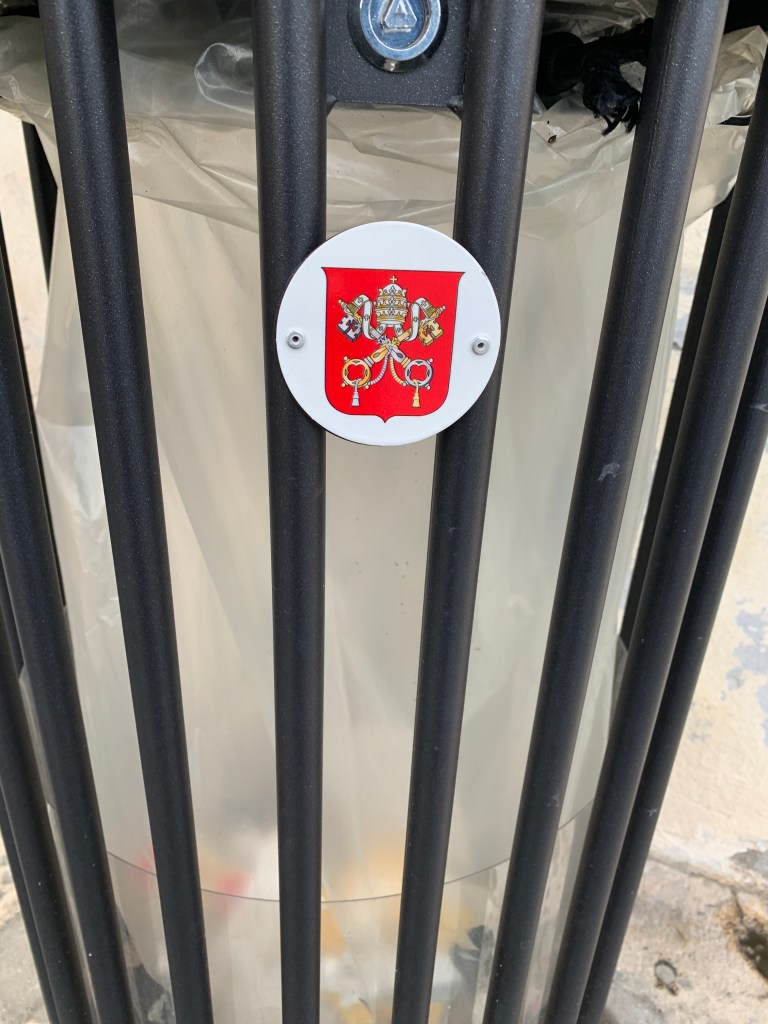
On a recent visit to the Vatican I was amused and delighted to see that even the trash cans in St. Peter’s Square were looking rather smart by being emblazoned with the armorial bearings of the Holy See. Indeed, heraldry can be used any and everywhere.

On Sunday, September 4 Pope Francis will beatify his esteemed predecessor, Pope John Paul I (Albino Luciani) who was pope from August to September, 1978 for just 33 days, one of the shortest pontificates in history.
The “Smiling Pope” as he was called chose a unique papal name using the names of his two immediate predecessors, John XXIII and Paul VI. He created a new double name, John Paul, which went on to be adopted by the man who succeeded him, St. John Paul II.
Bruno Heim designed a wonderful coat of arms for John Paul I that employed elements from the arms of John XXIII (the chief of Venice) and those of Paul VI (the mountains in base). The three stars (changed form 4-pointed to 5-pointed stars) were used in the coat of arms Luciani had assumed as a bishop. It is, in my opinion, one of Heim’s better designs.


Andrea Cardinal Cordero Lanza di Montezemolo has died. He was a great diplomat for the Holy See and contributed much to the field of heraldry. But, with respect, I disagreed entirely with his ideas about papal heraldry. His encouragement of Pope Benedict to discontinue the use of the triregno heraldically was a mistake. Still, the large part of his service to the Church was outside the field of heraldry and he served the Lord and the Church well. Requiescat in Pace.
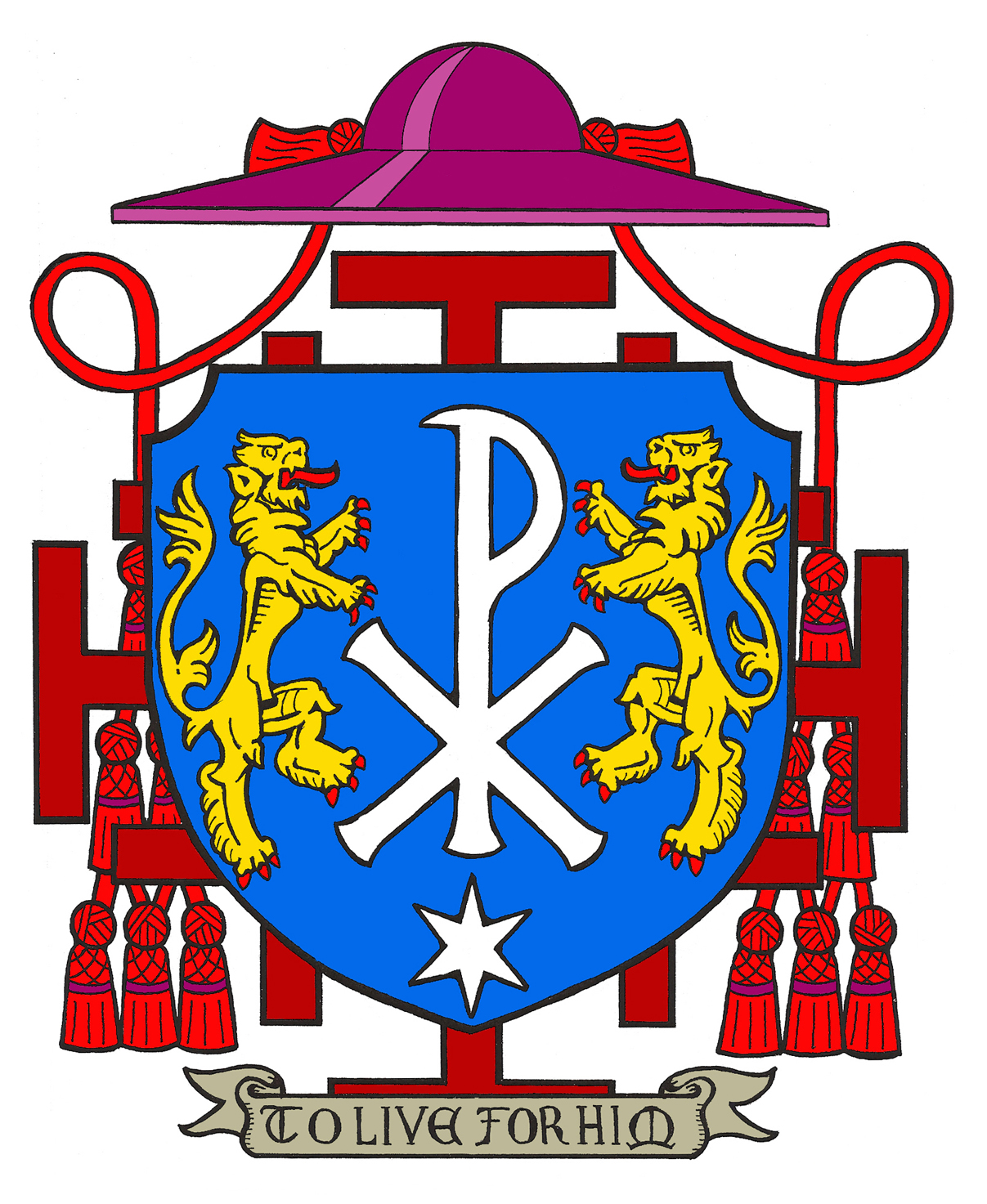
The arms (above) I recently completed for Monsignor Francis Kelly, PA a Canon of St. Peter’s Basilica in Rome. Msgr. Kelly is a priest of the Diocese of Worcester, Massachusetts who, prior to his current service worked for many years in Washington, DC for the NCEA and was also on the faculty and later became rector of Pope St. John XXIII National Seminary in Weston, Massachusetts. After his time there he spect eight years as the Superior at the Casa Santa Maria in Rome which is the graduate division of the Pontifical North American College. In 2013 he was named Prothonotary Apostolic and a Canon of St. Peter’s Basilica by Pope Benedict XVI. I met Msgr. Kelly in 1996 when I was sent for one year of studies at Pope John Seminary. We have been friends since then.
The blazon is:
Azure, between two lions rampant respectant Or, armed and langued Gules the Greek letters Chi and Rho Argent; in base a star of six points Argent. The shield is placed on the cross of the Equestrian Order of the Holy Sepulchre and is ensigned by the galero of a Prothonotary Apostolic Purpure with cords and twelve tassels disposed in three rows of one, two and three pendant on either side of the shield Gules. On a scroll below the shield is the motto: “To Live For Him”.
The blue field and gold lions are taken from the coat of arms traditionally associated with the name “Kelly”. In that coat of arms the lions are chained and they face a tower. For differencing the chains have been omitted and the tower has been replaced with the Greek letters that are a monogram for the name Christ and a star of six points. These indicate the armiger’s devotion to Christ and Our Lady.
The armiger is a Knight of the Order of the Holy Sepulcher and its cross is placed behind the shield. The purple galero with red cords and tassels indicates a Roman prelate with the rank of Prothonotary Apostolic, the highest of the three grades of prelates addressed as “Monsignor”. The members of the Chapter of the Papal Basilica of the Vatican hold this rank.
The motto expresses a sentiment the armiger has endeavored to embody throughout his entire priesthood.
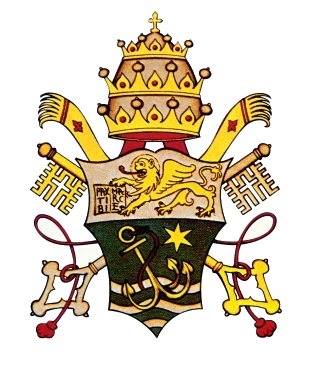
There were three popes in the 20th C. who had served as Patriarch of Venice prior to their election to the papacy. (and two were also later canonized!) They each decided to retain a chief “of Venice” (with the winged lion of St. Mark, a symbol of Venice) in their papal coats of arms. The three were St. Pius X, St. John XXIII and Pope John Paul I.


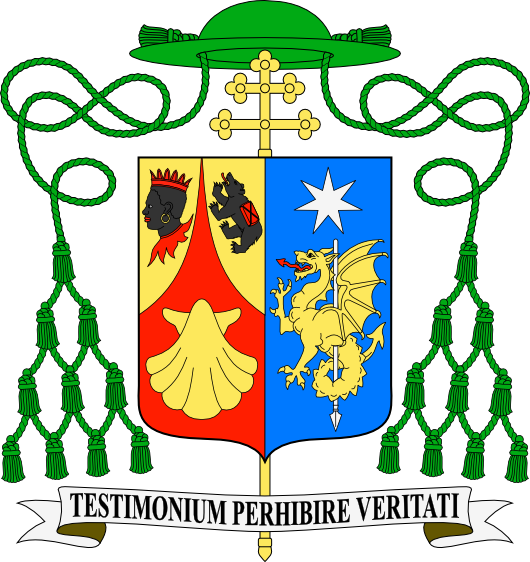
Gänsewein (former)
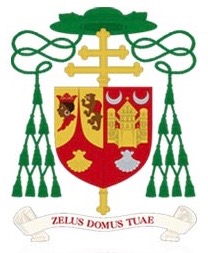
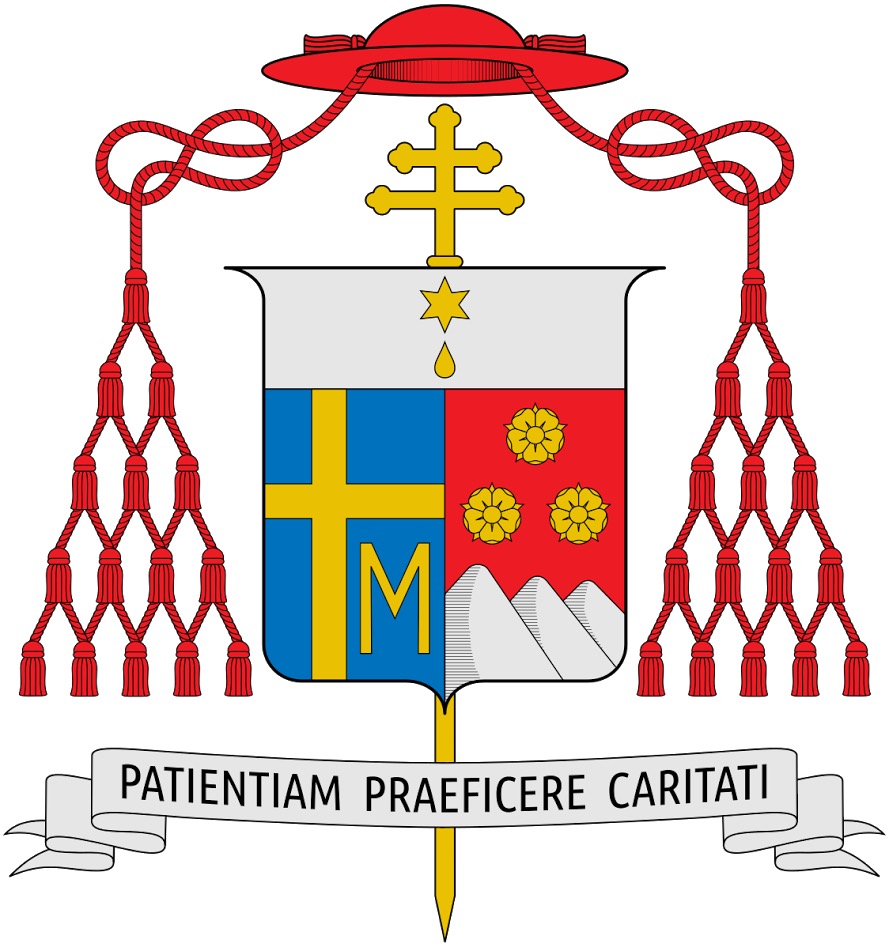
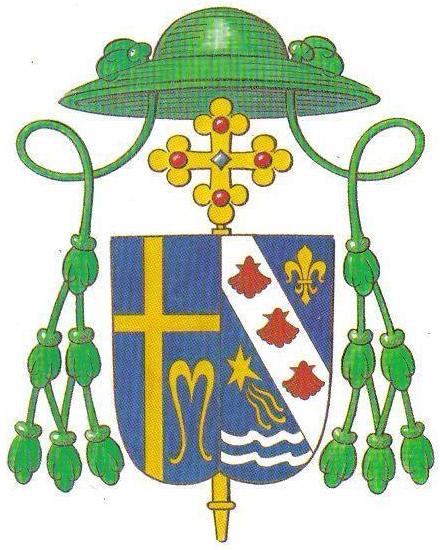
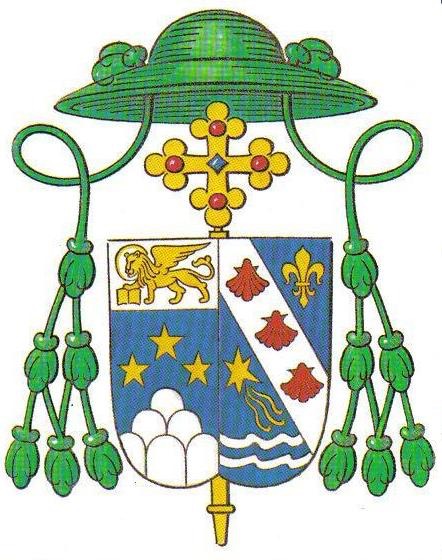
Since the pontificate of Pope Benedict XVI (2005-2013) the Prefect of the Pontifical Household (formerly called the Majordomo of His Holiness) has been the Most Rev. Georg Gänswein, who also served Pope Benedict as his personal secretary. At the time Gänswein was ordained to the episcopacy he assumed a coat of arms that impaled (that is, combined side by side on the same shield) his own personal emblems with the coat of arms of the pope he served, Benedict XVI. Upon the abdication of of Pope Benedict and the election of Pope Francis Gänswein’s coat of arms changed to reflect the new pope he continued to serve as Prefect of the Pontifical Household. This is an old custom. Below are the coats of arms of several of these Prefects with their arms impaled with the various popes under whom they served.
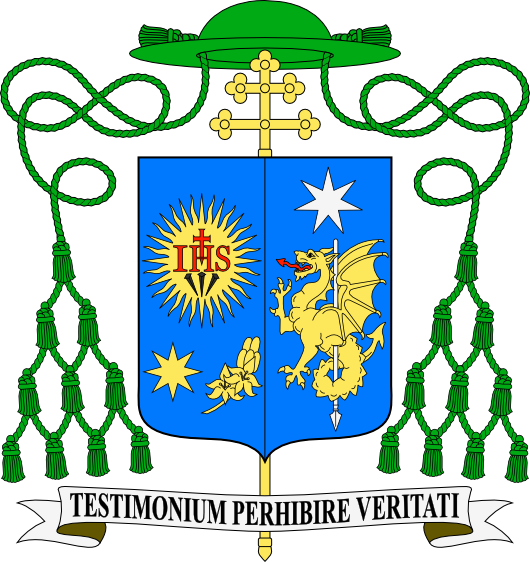
Gänswein (current)
Harvey
Monduzzi
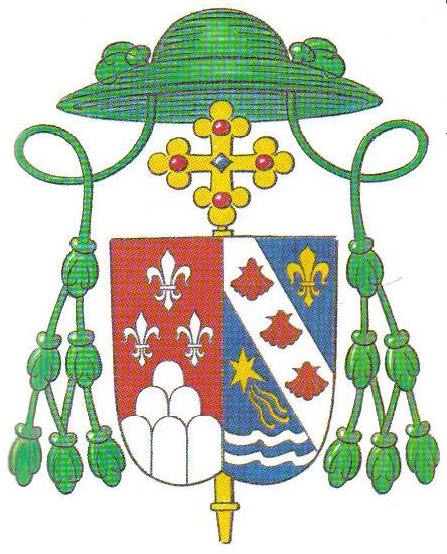
Martin
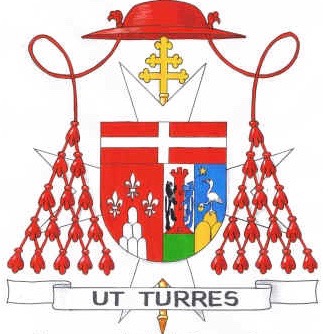
Nasalli Rocca di Corneliano
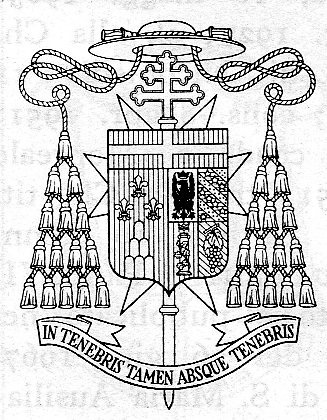
Callori di Vignale
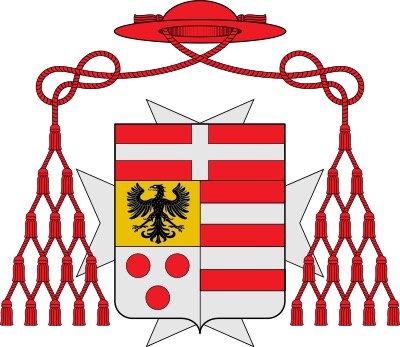
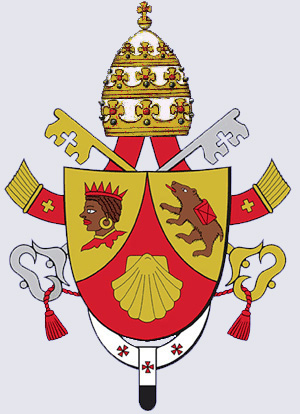
Our sincere best wishes and prayers to His Holiness, Benedict XVI, Pope-Emeritus on his 88th birthday. Ad Multos Annos Pater Sancte!
Much has been written in recent years about the practice of a prelate modifying the design of his coat of arms when he moves from one position to another in the Church. Generally speaking I am against the practice. A coat of arms, even an assumed one, becomes a unique personal symbol and is associated with the person who bears the arms. To change the original design simply because one is taking up a new position or ministry is ill advised.
I am, of course, not referring to marshaling the personal arms with those of a jurisdiction (see, abbey, or even a parish). When a cleric is translated from one jurisdiction to another of course he will then marshal his personal arms to those of the new jurisdiction because, after all, impaling or quartering the personal arms with those of a jurisdiction is a means of displaying two or more separate coats of arms together on one shield. The arms of a diocese do not “become” part of the bishops personal coat of arms. They are displayed along with the personal arms of the incumbent during the tenure of his office as part of the overall achievement but that is all.
Rather, I am speaking of a cleric slightly modifying or even changing entirely the design on the shield of his personal coat of arms. In some cases the change is a result of unhappiness with the design originally adopted. Sometimes it is the case that a cleric is appointed to be a bishop and wishes to make use of his new coat of arms at his episcopal ordination which may be as soon as only six weeks away. So, a design is hastily adopted. later, when being translated to a new see the bishop has had time to second guess his original arms and wishes to tweak the design or even change it altogether. While this is understandable it still should be frowned upon. His new position doesn’t mean he is becoming an entirely new person.
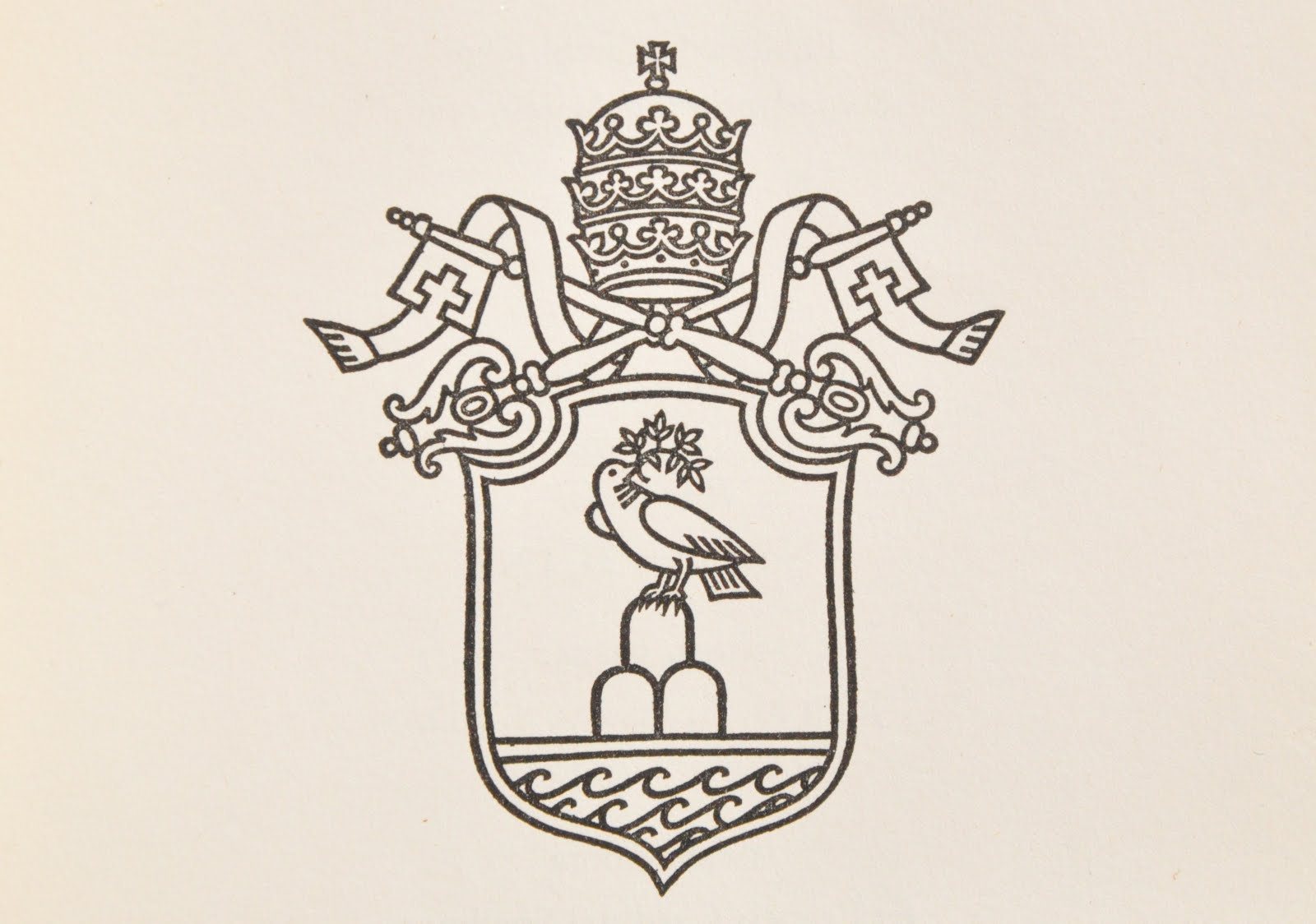
Yet we see that this has and continues to happen. Even no less than Pope Pius XII (Eugenio Pacelli 1939-1958) bore arms that were slightly different before and after he became pope. When a bishop and cardinal his arms depicted a dove displayed (i.e. with its wings spread) holding an olive branch in its beak. This is a reference to the name Pacelli which means “peace”. The dove was perched on a trimount and sitting below the arc of a rainbow, an allusion to the story of Noah from the Scriptures.

However, after his election to the papacy there are some differences. The dove now has folded wings and sits perched on the trimount which is depicted on field and above waves of water. In addition, the rainbow is now gone. Perhaps Pius XII felt the reference to the story of Noah was redundant or superfluous? Perhaps he wished to express a global desire for peace since he was elected at a time when the world was on the brink of World War II? Perhaps he simply liked this newer design more? We shall never know yet here is a good example of arms modified when going from one position in the Church to another.
It has been revealed that, due to personality clashes and the pope’s opinion of too much militarism, the Commandant of the Papal Swiss Guard, Daniel Anrig, has been asked by Pope Francis to step down at the end of January. Appointed by Benedict XVI Anrig has served in his position since 2008. I’m not exactly sure how the head of a military corps is supposed to act other than militarily but there is a lot happening in the Vatican these days that no one seems to be able to explain, at least not easily. Anrig’s coat of arms as Commandant of the Papal Swiss Guard is below. It employs the type of charge known as a house marking that is characteristic of Swiss heraldry. The arms of the Commandant is always depicted at the center point of the flag of the Swiss guard.

On October 19 Pope Francis will beatify Giovanni Battista Montini, also known as Pope Paul VI whose pontificate lasted from 1963-1978. He presided over three of the four session of Vatican II and is really the one responsible for most of the reform and simplification of the Church’s liturgy and ceremonial practices.
In his coat of arms the six hillocks in base are a play on his family name, Montini, which means “little mountains”.

August 20, 2014 marks the centenary of the death of Pope St. Pius X (Giuseppe Sarto) who was pope from 1903-1914.
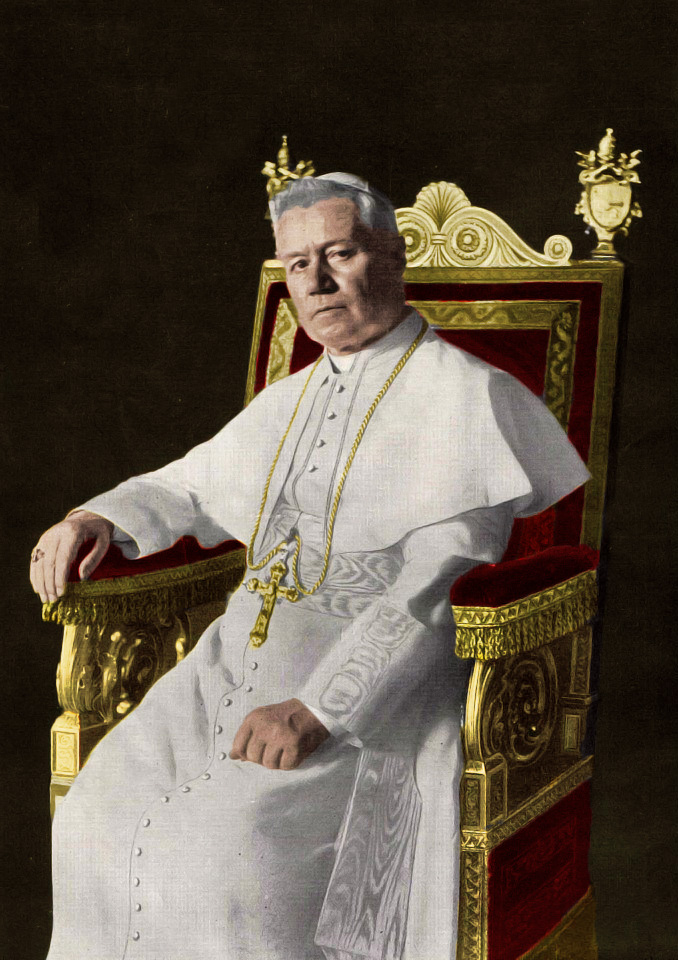
His coat of arms (below) depicts a chief with the lion of St. Mark, a symbol used by the Patriarchs of Venice. St. Pius served as Patriarch of Venice prior to becoming pope and retained this chief (added to the arms he assumed previously as Bishop of Mantua) upon his election. This started a trend for other Patriarchs who were later elected pope like St. John XXIII (1958-1963) and Pope John Paul I (August-September, 1978)
Fr. Guy Selvester's blog of Ecclesiastical Heraldry
Fr. Guy Selvester's blog of Ecclesiastical Heraldry
Fr. Guy Selvester's blog of Ecclesiastical Heraldry
Fr. Guy Selvester's blog of Ecclesiastical Heraldry
Fr. Guy Selvester's blog of Ecclesiastical Heraldry
Fr. Guy Selvester's blog of Ecclesiastical Heraldry
Fr. Guy Selvester's blog of Ecclesiastical Heraldry
Fr. Guy Selvester's blog of Ecclesiastical Heraldry
Fr. Guy Selvester's blog of Ecclesiastical Heraldry
Fr. Guy Selvester's blog of Ecclesiastical Heraldry
Fr. Guy Selvester's blog of Ecclesiastical Heraldry
Fr. Guy Selvester's blog of Ecclesiastical Heraldry
 EXARANDORUM