
On August 22, 1485 King Richard III was defeated and killed at the Battle of Bosworth.
On August 22, 1485 King Richard III was defeated and killed at the Battle of Bosworth.
Quite a few people have asked me what the newborn Prince George of Cambridge’s coat of arms will look like. The answer is: it won’t look like anything. At least not until he is 18. A coat of arms is devised for royal children when they come of age. Prince George won’t be 18 until the year 2031 by which time he may find himself in a very different position from being third in line to the throne. So, it’s a moot point until then.
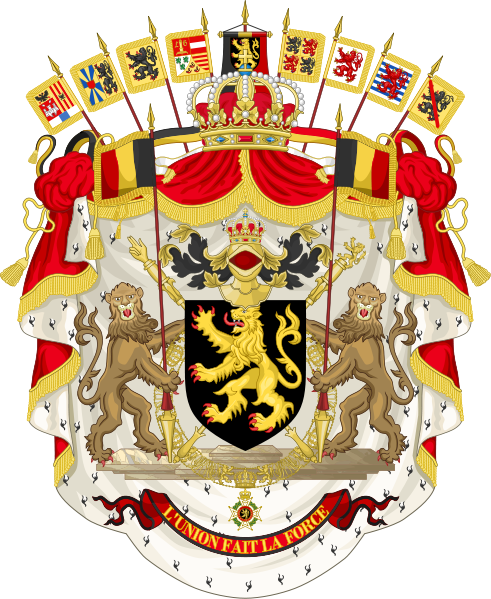
The shield is emblazoned: “Sable a lion rampant Or, armed and langued Gules surmounted by a helmet with raised visor, with mantling Or and Sable and the royal crown in lieu of a crest”. Behind the shield are placed a hand of justice and a sceptre with a lion. The grand collar of the Order of Leopold surrounds the shield. Two lions guardant proper support the shield as well as a lance with the national colors black, yellow and red. Underneath the compartment is placed the motto: “L’union fait la force” in French or “Eendracht maakt macht” in Dutch. The whole is placed on a red mantle with ermine lining and golden fringes and tassels, ensigned with the royal crown. Above the mantle rise banners with the arms of the nine provinces that constituted Belgium in 1837. They are (from left to right) Antwerp, West Flanders, East Flanders, Liége, Brabant, Hainaut, Limburg, Luxembourg and Namur.
This greater arms is used only rarely as on the great seal that is affixed to laws and international treaties.
Since the province of Brabant was split into Flemish Brabant, Walloon Brabant and Brussels in 1995, the greater arms no longer reflect the present territorial divisions of the state. The changes made to the arms of the Flemish provinces as a result of this decision, are not reflected in the great seal either.
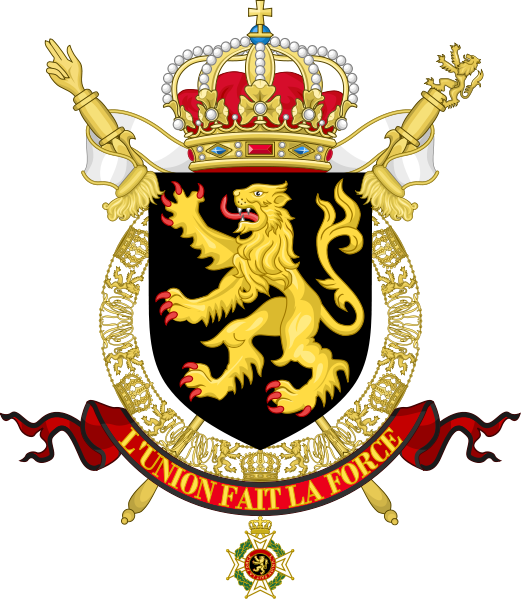
The lesser coat of arms (as used by the Belgian federal government, on passport covers and the official sites of the monarchy and of the government) consists of the shield, the royal crown, the crossed sceptres, the collar of the Order of Leopold and the motto.
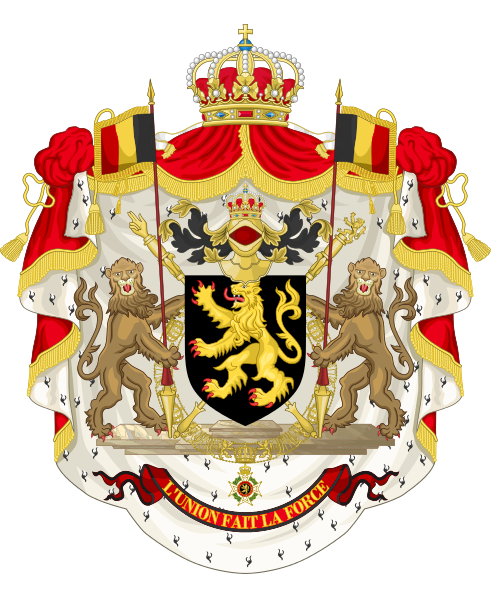
There is also a middle version used on occasion as well. All three are illustrated below.
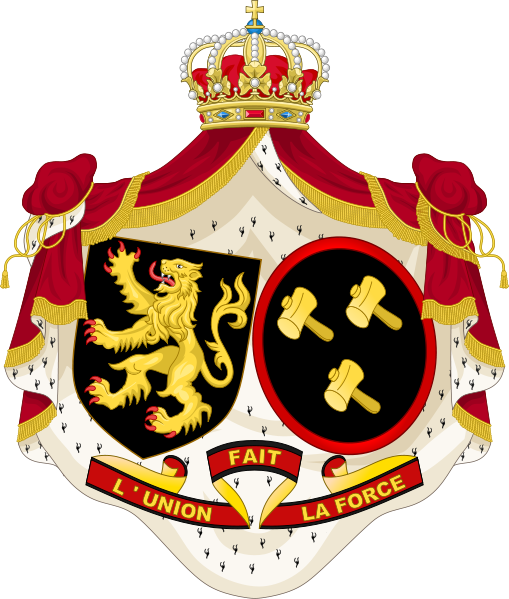
This weekend in Belgium King Albert II will officially abdicate and be succeeded by his son, the Duke of Brabant, who will become King Philippe I. There is no coronation ceremony in the Belgian monarchy. Instead, after a solemn Te Deum is sung at the cathedral there will be the formal abdication of the King. This is followed by the swearing in of the new King before the Belgian Parliament. The crown is used as a heraldic emblem by the King but an actual crown does not exist. The King rules by the consent of the people which is why there is no King “of Belgium” but instead a King “of the Belgians”. The arms above are of Philippe and his wife, Mathilde.
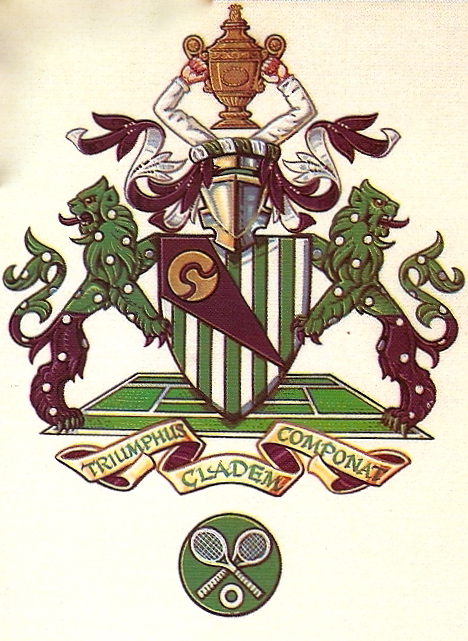
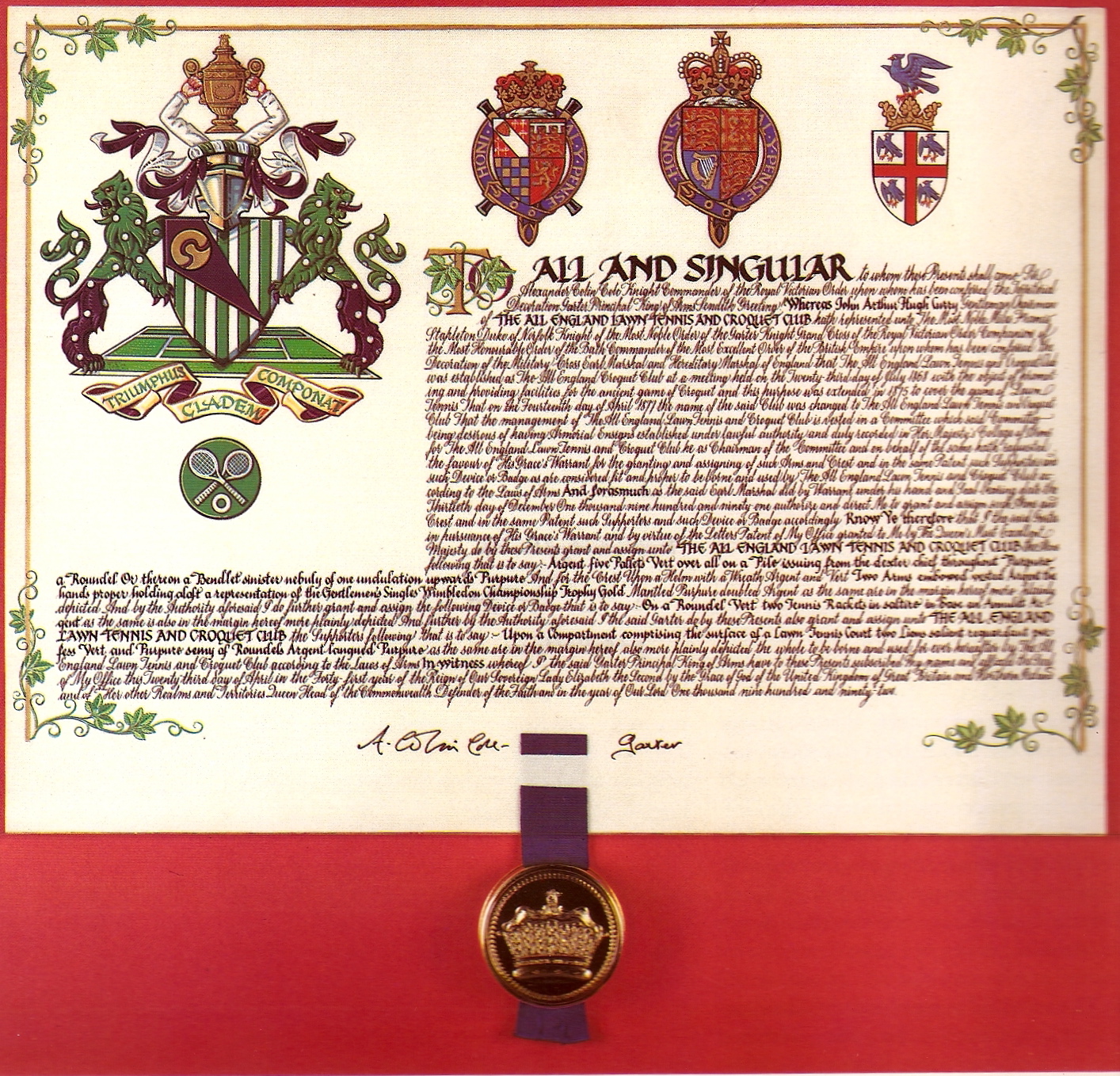
Congratulations to Andy Murray on his win of the championships at the All England Lawn Tennis and Croquet Club (more commonly known as Wimbledon). The first British man to win since 1936. Of course the AELTC has a coat of arms and a badge, which is more frequently used as a kind of “logo” granted under Garter Colin Cole in 1992. It is England, after all! The arms and badge are pictured above and the entire Letters Patent of the grant of arms is below.
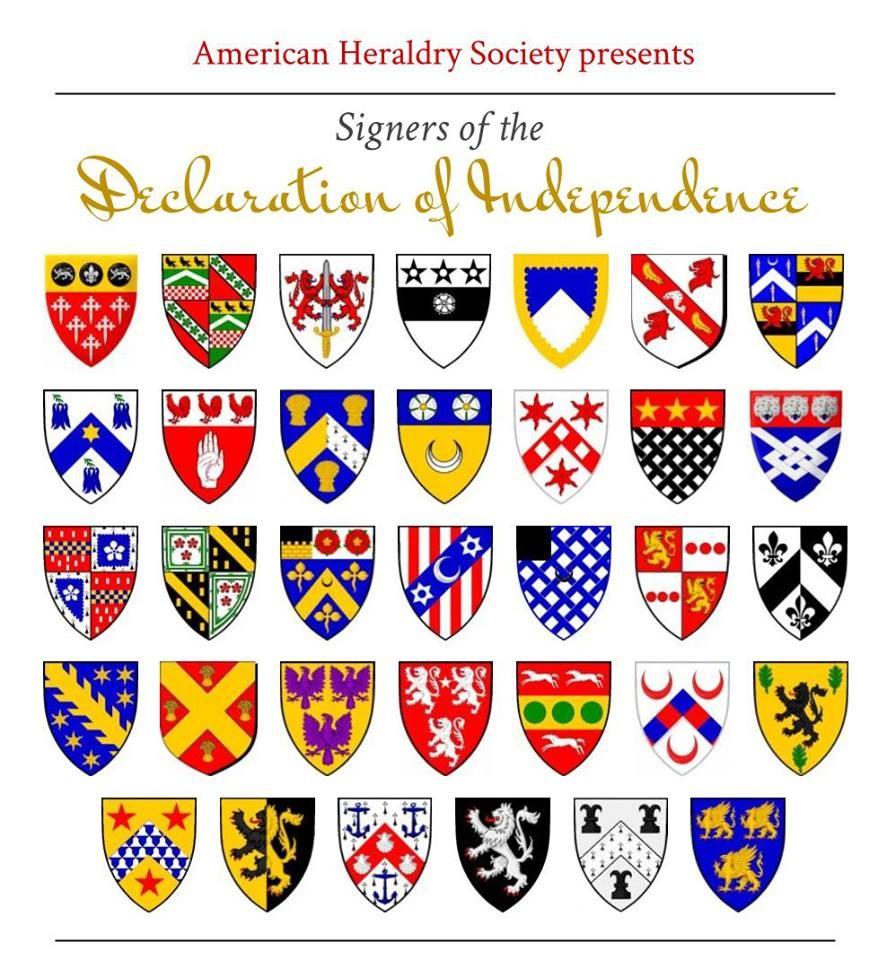
Thanks to the fine research and work of Mr. Joseph McMillan of the American Heraldry Society we know what the coats of arms of those armigerous (i.e. bearing a coat of arms) signers of the Declaration of Independence are. So much for the erroneous idea that heraldry is pointless and foreign in American culture. If you wish to see a key identifying them you can view it at the website of the American Heraldry Society.
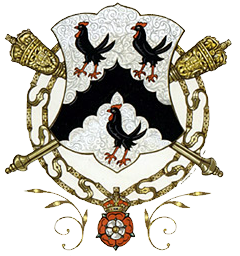
Saturday, June 22 is the Feast day of St. Thomas More (along with his fellow martyr to conscience, St. John Fisher) who was brutally murdered by the heretic-adulterer, Henry VIII for defending the Catholic faith. He served as Henry’s Chancellor and was one of the greatest intellects of his day. He is also regarded as one of the first great Christian Humanists.
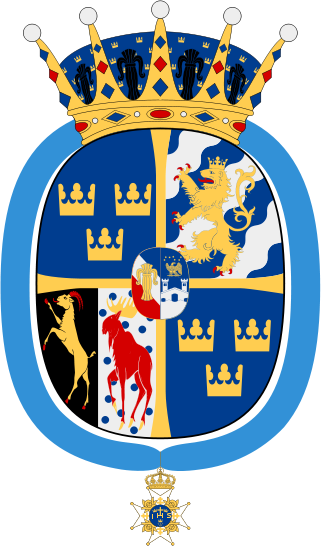
Congrats to Princess Madeleine of Sweden, Duchess of Hälsingland and Gästrikland on her marriage tomorrow to Mr. Chris O’Neill, an American who also has British citizenship, in the Royal Chapel in the palace at Stockholm. (her arms above; he has declined a title)
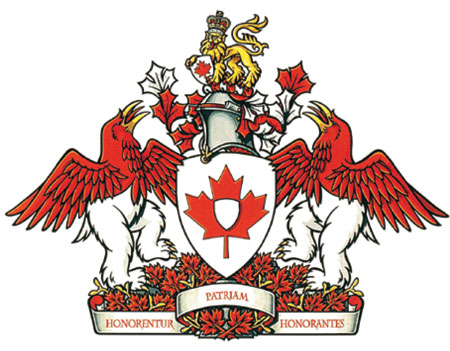
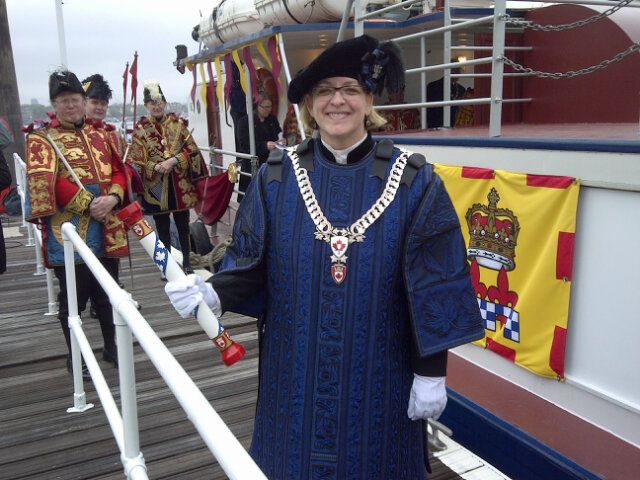
Pictured above is Claire Boudreau, the Chief Herald of Canada sporting the brand new tabard which depicts Canadian symbols on front and back and has the royal arms of the Queen of Canada on the sleeves. She also holds her ceremonial wand of office. This photo was taken during the river pageant for the Diamond Jubilee of Queen Elizabeth II.
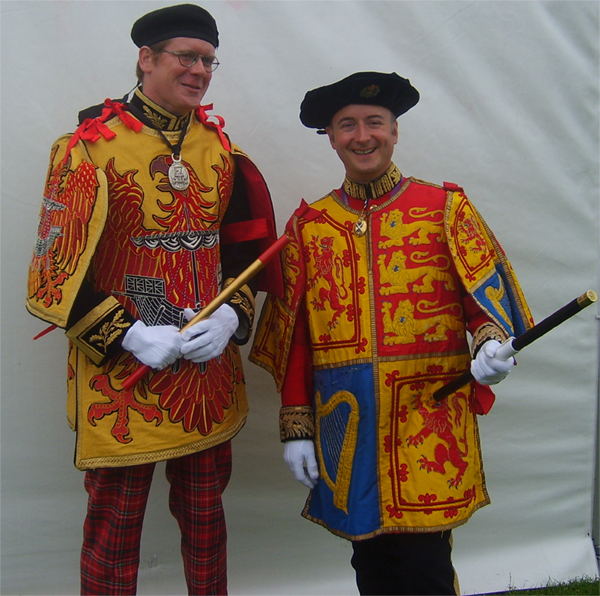
Here we see Finlaggen Pursuivant (one of the three private officers of arms maintained by the heads of different clans) Thomas Miers the officer of arms to the head of Clan Donald standing next to his predecessor, Adam Bruce, currently Unicorn Pursuivant to the Court of Lord Lyon wearing his tabard with the royal arms as used in Scotland where the quarter bearing the Scottish lion is repeated twice in the first and fourth quarters and the three lions of England take the secondary place.
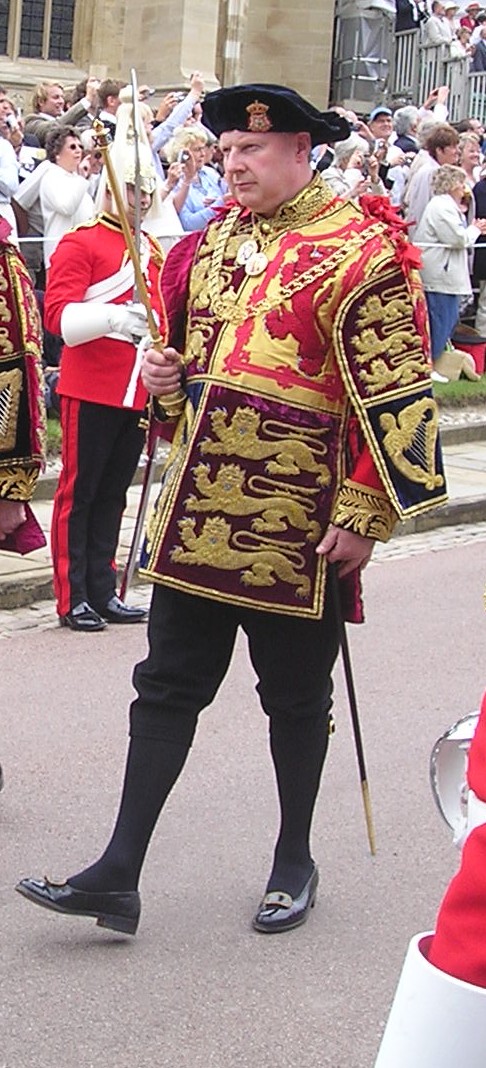
Here we see Thomas Woodcock, CVO, DL, FSA who is Garter Principal King-of-Arms of the English College of Arms in the traditional tabard bearing the royal arms as used in England and holding his wand of office.
Some more today: Heraldry For The Designer by William Metzig, published in 1970. (thanks to the recommendation of a fellow heraldist) It’s an interesting book. His style is unique but some of his ideas about heraldry border on the bizarre.
Also Royal Ceremonies of State by J.P. Brooke-Little (quondam Clarenceux King of Arms) published in 1980. As the title states its a book mostly about British royal ceremonies. However, the author being who he is there is a chapter on the Heralds and a good bit of heraldry throughout especially in the chapters on funerals and orders of chivalry. It’s also a book that illustrates well that the function of a herald isn’t limited to genealogy and the devisal of coats of arms. There are an extensive amount of ceremonial duties involved with being a herald.
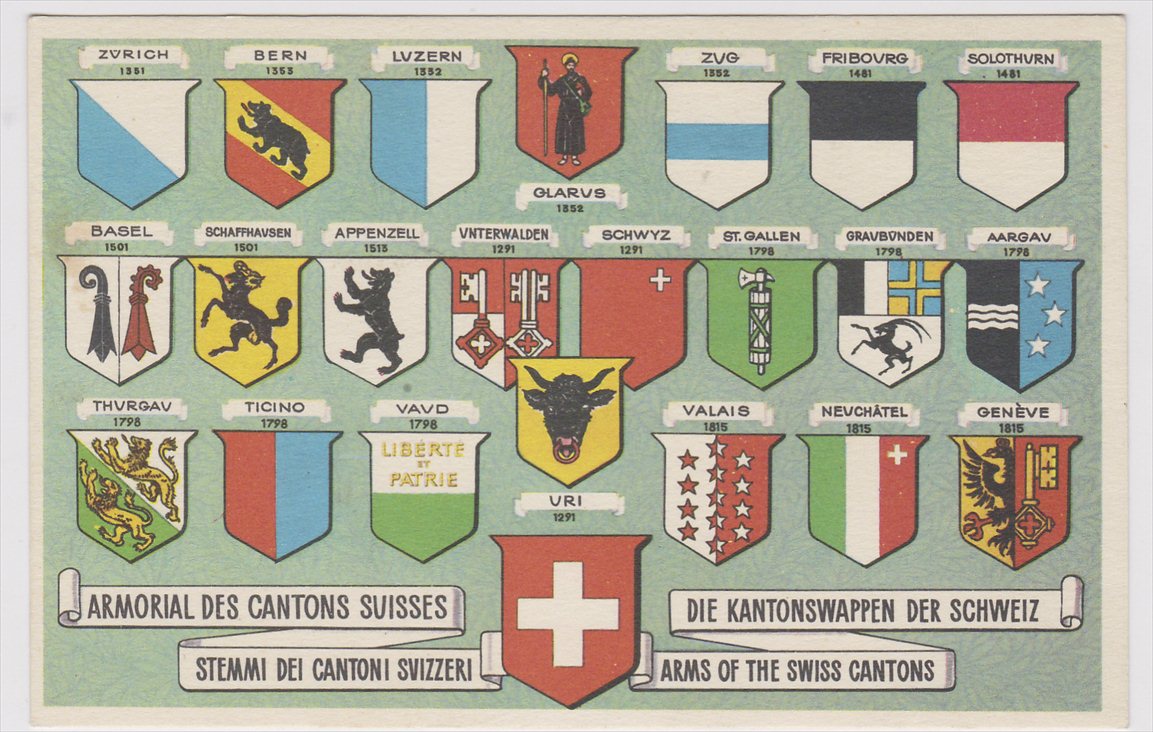
I recently came back from a vacation in France during which I also spent a little time in the Confœderatio Helvetica, more commonly known as Switzerland (derived from Schwyz, the leading of the three founding cantons at the time of the confederation in 1291). It is a country that does not have a monarchy and yet where heraldry runs rampant (pardon the pun) thus giving the lie to the notion that heraldry is an antiquated idea associated with outmoded forms of government, like elitist monarchies. Elitism and monarchy do not necessarily go hand in hand. The Swiss have survived for centuries without a monarch and yet have managed, nonetheless, to become quite elitist!

He will tour areas hit hardest by Hurricane Sandy with the Governor, The Hon. Chris Christie, and see the efforts and recovery and rebuilding. I’ve never liked the custom of the British royals of having everyone use the royal arms differenced only by various forms of a label. In addition, the royal arms really should have had an escutcheon in pretense of the Duchy of Saxony added but the heralds decided against that.
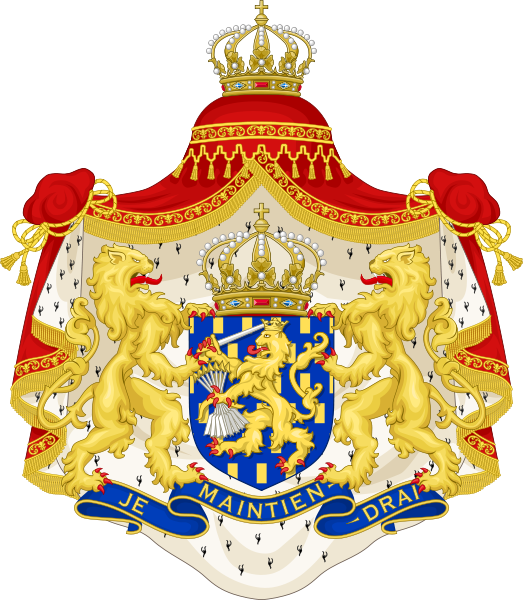
From his April 30th investiture onwards, His Majesty King Willem-Alexander will fly the royal standard. His coat of arms will be identical to that used by Queen Beatrix. Contrary to the announcement in the press release of 29 January therefore, there will be no change in the design.
The blazon is: Azure, billity or, a lion rampant of the same, armed and langued gules, crowned with a coronet of two pearls between three leaves, a sword argent with hilt or, thrusted upwards, in its right hand claw seven arrows argent with heads or, tied in a garb with ribbon or, in its left hand claw. The Royal Netherlands crown resting on the ledge of the shield, supported by two lions rampant or, armed and langued gules, placed above a ribbon azure, with the motto JE MAINTIENDRAI in gold lettering. The whole placed above a royal mantling purple trimmed or, lined ermine, tied back at the corners with gold tassled cords and issuing from a domed canopy of the same, surmounted by the Royal Netherlands crown.
The royal coat of arms, which is the same as the coat of arms of the Kingdom, has only been altered once since the foundation of the Kingdom of the Netherlands. In 1907, at the instigation of Queen Wilhelmina, the number of crowns was reduced to one, surmounting the shield. At the same time, it became possible to add the royal mantle, also surmounted by a crown. The addition of other decorative elements to the coat of arms is optional.
After her abdication Queen Beatrix will adopt the coat of arms created for her (and for her sisters) in 1938 as Princess of the Netherlands, Princess of Orange-Nassau and Princess of Lippe-Biesterfeld.
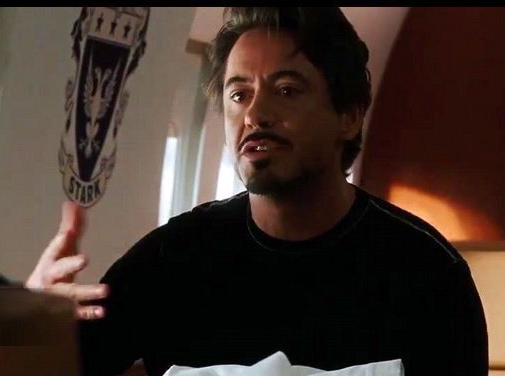
With the new Iron Man movie coming out soon hoards of geeks will reignite discussions of the coolest thing about Iron Man/Tony Stark. Well, the first movie already revealed the. coolest. thing. ever. In the scene showing Tony in his private jet we see on the wall behind him that TONY STARK HAS A COAT OF ARMS!!! Woo-hoo!
Fr. Guy Selvester's blog of Ecclesiastical Heraldry
Fr. Guy Selvester's blog of Ecclesiastical Heraldry
Fr. Guy Selvester's blog of Ecclesiastical Heraldry
Fr. Guy Selvester's blog of Ecclesiastical Heraldry
Fr. Guy Selvester's blog of Ecclesiastical Heraldry
Fr. Guy Selvester's blog of Ecclesiastical Heraldry
Fr. Guy Selvester's blog of Ecclesiastical Heraldry
Fr. Guy Selvester's blog of Ecclesiastical Heraldry
Fr. Guy Selvester's blog of Ecclesiastical Heraldry
Fr. Guy Selvester's blog of Ecclesiastical Heraldry
Fr. Guy Selvester's blog of Ecclesiastical Heraldry
Fr. Guy Selvester's blog of Ecclesiastical Heraldry
 EXARANDORUM