Category Archives: Heraldic Mistakes

Bishop Lewandowski, CSsR of Providence

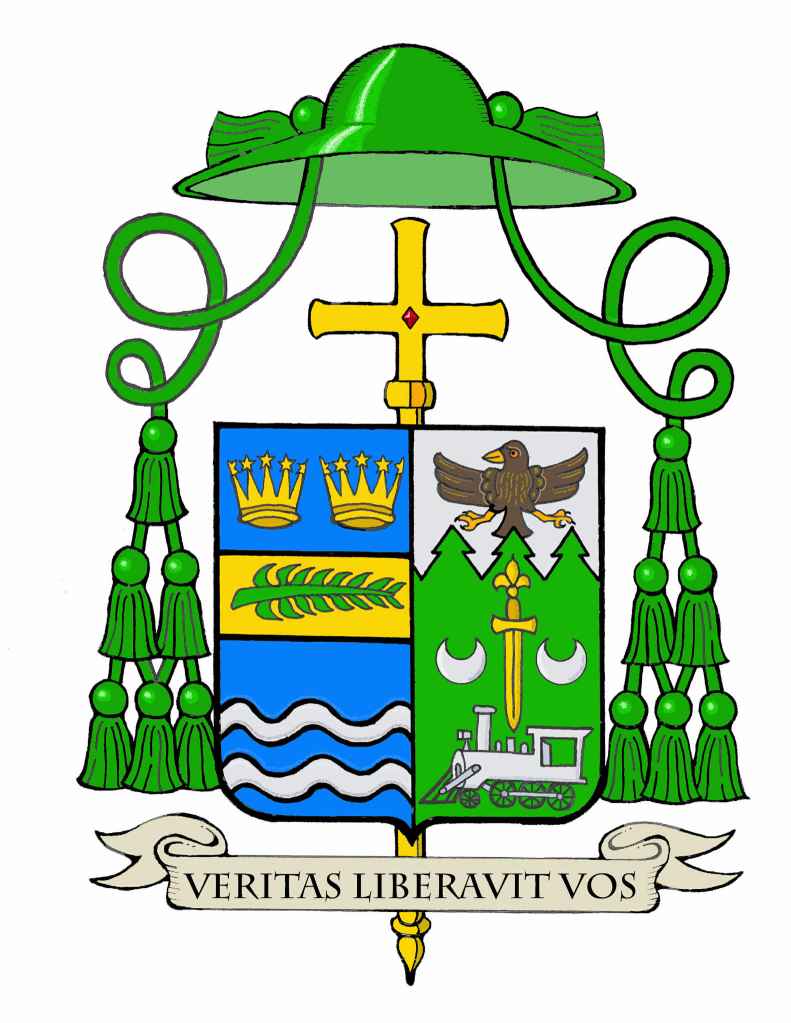
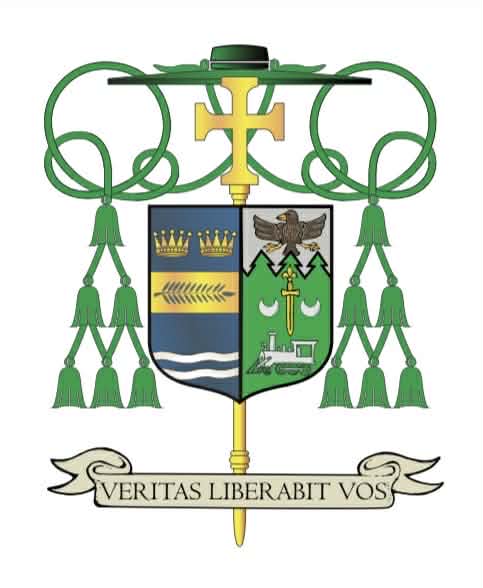
On May 20, the Most Rev. Bruce Lewandowski, CSsR (57), a Redemptorist and formerly Auxiliary Bishop of Baltimore, will be installed as the 10th Bishop of Providence, R.I. I had previously written about the bishop’s coat of arms when he was first made Auxiliary Bishop.

Now that he is moving to become a diocesan bishop his armorial bearings will now be marshaled to those of his diocese. The Bishop had employed his sister, a Felician Sister who “works in media” for her Province to design his coat of arms. As they were back then, so too, are they something of a dumpster fire, heraldically speaking.

In an interview for The Catholic Review, the Baltimore archdiocesan newspaper, in 2020 the Bishop said, “Why would I ask anyone else?” when asked why his sister was designing his coat of arms. I think I can answer that. How about: in order to turn to someone with knowledge of a specific topic that isn’t really a DIY project? How about that? In her own part of the same interview, Sr. Lewandowski remarked about some of the particular elements of her design:

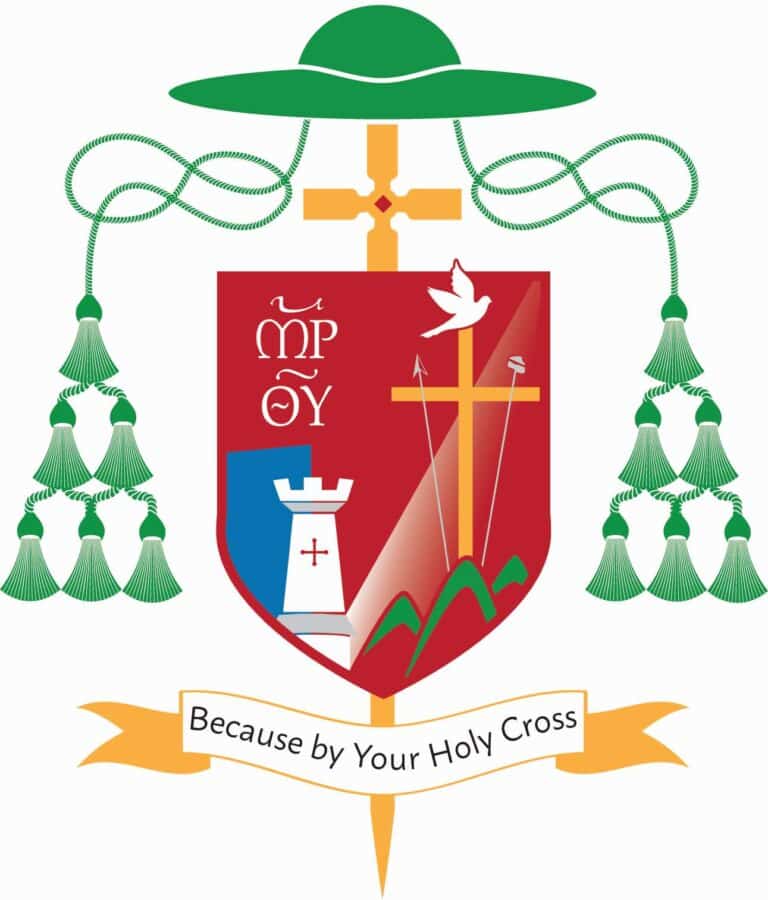
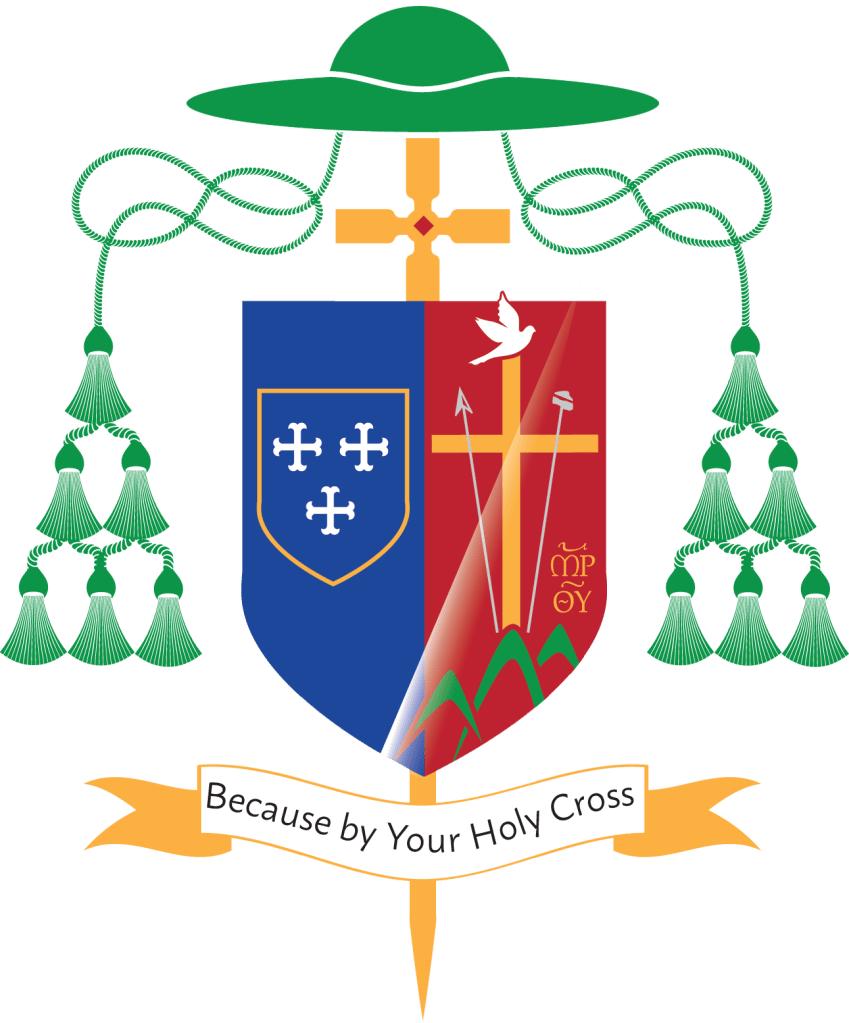
The Holy Spirit is depicted as breaking the upper edge of the shield ‘as it is the privilege of the Holy Spirit to inspire new life and envision endless possibilities for the Church, God’s people,’ the description says. The designer noted that she was not sure if that was “allowed” but in her research she did not find any parameters that said it couldn’t be done that way.” (emphasis added)

All I can say is that must have been one quick and not very diligent Google search. Even the most cursory bit of online research should have clued her in to the fact that charges emerging through the edges of the field was a puerile and amateurish mistake. Quite frankly, I don’t see how she could have done any research and reached the conclusion that she did! There are numerous resources out there for someone unfamiliar with good heraldic practices, to say nothing of the huge online presence of groups and organizations that could have happily offered her assistance in her project.

But, this, instead, is the worst kind of so-called heraldry: heraldry as logo. (It summons up the bile just by thinking about it!).

In the same aforementioned article she said:

…she believes a bishop’s coat of arms should tell people who he is and what he stands for. And I believe it should be a more spiritual piece, not just a historical piece,” she said. “And a lot of the coats of arms that I’ve seen and that I kind of read into, it’s a real historical document, but it doesn’t always tell you who the bishop is. She said she tried to tie in Bishop-designate Lewandowski’s spirituality into the symbols she used.”

Well, she got the first part right. A coat of arms should tell people who the armiger is. But, then she rode that right off the rails with the second part. A coat of arms does not tell people what the armiger stands for. It is for identification alone. I have often mentioned that a coat of arms is not one’s C.V. in pictures. Similarly, it isn’t an expression of personal ideology; a manifesto of one’s own spirituality or (for the clergy) a catechetical tool that expresses one’s personal beliefs as a kind of pictorial homily. Unfortunately, that’s precisely how the Lewandowski kids decided to view this project, with disastrous results.

In the latest rendering the overcrowded and poorly composed original coat of arms now falls victim to, perhaps, my second favorite pet peeve: they were changed in order to combine well with the diocesan arms. That’s not an option, full stop. (I suppose Sister didn’t find anything in her research that said she couldn’t do that either!) In addition, the charges form the personal arms are still going beyond the divisions and boundaries of the shield and/or spilling over from one impalement to the other. Clearly, this is also the classic mistake of thinking that the diocesan arms now somehow “become” part of the bishop’s coat of arms rather than being an example of two distinct and separate coats of arms marshaled together on one shield so as to express the relationship between the two!

The list of things wrong with this just goes on and on, and on…

Suffice it to say that he had a poorly designed coat of arms to begin with which would have and could have benefitted greatly from some expertise and advice from an organization, an individual, or even a decent book on the subject in order to take the elements and arrange and depict them according to good heraldic practices. Now, that poorly designed coat of arms has been badly modified and marshaled inexpertly to the point that the diocesan coat of arms of the See of Providence is depicted incorrectly!

EPIC FAIL!

But…what do you expect when a coat of arms is approached as an exercise in graphic design to tell us who the armiger really is? I’ll leave that question unanswered, thank you.

What Do YOU Think of Pope Leo’s Coat of Arms?

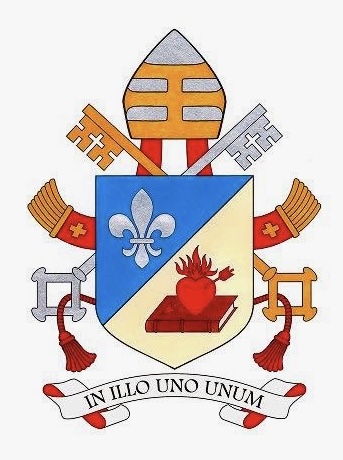
This question has been posed to me by numerous people since the Holy See released the image of the Pope’s coat of arms as pope. My answer is simply this: it looks pretty much like I expected.

Pope Leo already had a very good coat of arms as a bishop. I’m glad to see he didn’t feel the need to entirely change the design as others have done in the past. A coat of arms is a means of identification. It identifies you. It becomes associated with you in such a way that it shouldn’t be changed cavalierly. A change of position should warrant the use of different external ornaments to signify the new rank, not a full scale change in what is on the shield itself. So, I’m happy to see that the Pope left alone the arms that he assumed as a bishop 11 years ago.

I was not surprised to see the papal tiara rendered in the form of a kind of mitre. This began with Pope Benedict XVI and continued with Pope Francis I. So, we have now seen this for twenty years and I assumed it would be continued. It is, perhaps, important to note that the tiara has not been replaced with a mitre. Rather, it is the papal tiara rendered as a kind of mitre/tiara hybrid. This occurred at all because of ignorance. The argument to Benedict XVI was that since the tiara is, practically speaking, no longer worn it should not be depicted in the coat of arms. Nothing could be farther from the truth. In fact, since it is no longer worn that’s all the more reason it should be used in the coat of arms. It remains a symbol of the papacy. Most of the world’s monarchs no longer actually wear a crown but the use of a crown heraldically remains. Cardinals and bishops no longer wear an actual galero but the galero remains a heraldic emblem. (It is worth noting here that the tiara with the keys remains the emblem of the Holy See.)

St. Paul VI, in his reforms of 1969, decreed that the mitre and crozier which used to be in the coats of arms of all bishops in addition to the galero and episcopal/archiepiscopal cross should no longer be used in the arms of such prelates. He reasoned that the crozier and mitre were still used liturgically as emblems of the episcopal office and their practical use made using them as heraldic symbols redundant and inappropriate. (NOTE: the same is also true for the pallium) Whereas, the episcopal cross and galero—used at one time—had fallen into practical disuse and so were very appropriate to be used purely as heraldic ornaments. By that logic the same is true of the papal tiara. Since recent popes have chosen not to be crowned the use of the tiara as a purely heraldic emblem makes all the more sense.

Yet, those advising Benedict XVI, principally among them Archbishop Piero Marini and the late Cardinal di Montezemolo, argued that the tiara should be modified in its appearance to show that it is no longer actually worn. This was bad advice then and it has now been codified into enduring, though still equally poor advice. Nevertheless, it was easy to anticipate that Pope Leo would simply follow suit. So…no real surprise there.

Similarly, the slight change in tincture of the division of the field in base from Argent (silver or white artistically) to a kind of beige or buff color shows an appalling lack of understanding of heraldry. This is also displayed in the description of this tincture as “light”. Just what, precisely, is THAT supposed to mean ?!?! There isn’t an actual blazon to help clarify this. The lack of a proper blazon could be because no one at the Vatican knows how to write one; they simply don’t find it important enough to care about; or they feel it would be too esoteric and unintelligible for the average person. One can only hope that the reason is one of the latter two rather than the former.

But there isn’t a lot of evidence to dissuade me. For example, the tiara and keys and motto banner are all clearly just a “cut & paste” job from the arms of Pope Francis I. Really? With all the many competent heraldic artists and heraldic experts available to them no one at the Vatican bothered to reach out to anyone and just figured this could all be handled “in house” by someone with a computer? Is that the most appropriate way to prepare a new pope’s coat of arms? it shouldn’t be a matter of who can get it done first but of who can do it best. What a shame that it has been deemed acceptable simply to cobble something together from existing images.

It’s also probably worth noting that—just like all bishops—all of the popes have had an episcopal motto. However, by longstanding tradition and custom a motto is not supposed to be included in the armorial achievement of the Pope. In his seminal work, Heraldry in the Catholic Church (1978) Archbishop Bruno Heim notes that, “It is widespread custom to put a motto under the shield. It is often held, wrongly, by those who know little about heraldry, that the motto is indispensable; yet it is an addition which does not properly belong to the armorial bearings themselves.” (page 80)

So we see that, all in all, the new Pope’s coat of arms is unsurprising in its composition, disappointing in its execution, and uninspiring in its depiction with numerous errors that could have been avoided with a little creativity and some consultation with people who know what they are doing.

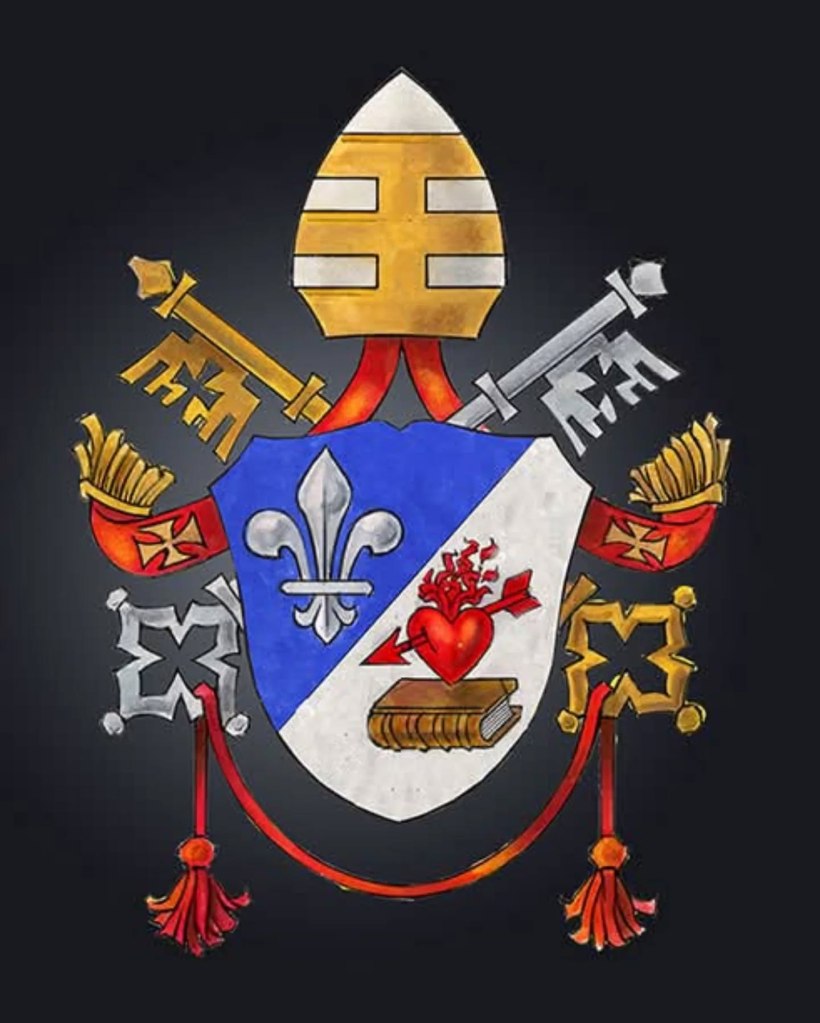
For example, in the hands of an artist of some merit the same exact design can be rendered in a manner that looks considerably better just by the good use of composition and artistic style.

Take, for example, this sketch of the arms of Pope Leo XIV done on the evening of his election by the noted and competent heraldic artist, Marco Foppoli. We can see here that, in the hands of an expert with a great deal of experience, the original heraldic design can be rendered with the appropriate external ornaments in a way that maintains the simplicity that is desired while also creating a new and unique achievement for the armiger. Too bad that someone like Foppoli wasn’t consulted by officials at the Holy See.

Papal heraldry has been in a slow decline since the death of Archbishop Heim. It is sad but true. Unfortunately, at the outset of this new pontificate, there are no signs that this is going to change for the better anytime soon.

God Bless Pope Leo XIV!

Marshaling is Everything! (Bp. Martin UPDATED)

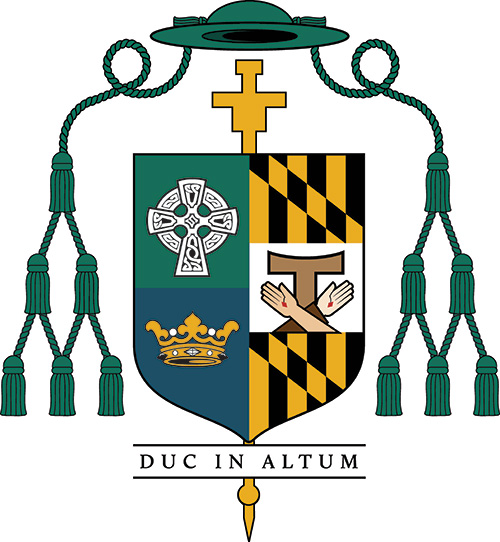
You may recall that in a post about several new bishops’ installations I wrote the following about the coat of arms of Bp. Martin of Charlotte, N.C.:

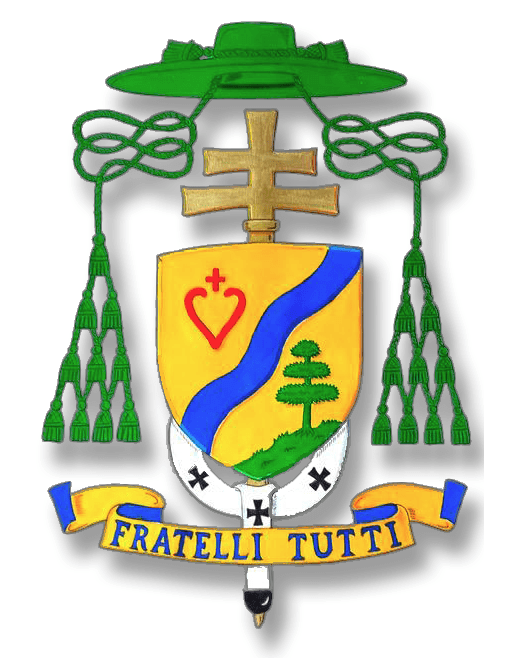
May 29 saw the ordination and installation of the Most Rev. Michael Martin, OFMConv (62) as the fifth Bishop of Charlotte, North Carolina.

The diocesan website describes his personal arms, “To the viewer’s right is the Franciscan coat of arms. Featuring the traditional Franciscan Tau cross with two arms crossing one another, it is rich in symbolism. The two arms, one Christ’s and the other St. Francis of Assisi’s, both bear the stigmata. They symbolize God’s love and Francis’s loving response to the Word made incarnate, Taberski explained. It is an image found throughout the ministries, friaries, missions and sites served by the Franciscan order.

On the right side of the shield, the top (known as the “chief”) and the bottom (the “base”) feature references to George Calvert and his son Cecil Calvert – the first and second barons of Baltimore. The Calverts were among the first Catholics to arrive in colonial America. They established the then Province of Maryland as a safe place for English Catholics to emigrate to since they were no longer able to freely practice their faith at home. In the coat of arms, the use of six vertical stripes – alternately gold and black, with the diagonal stripe in color – recalls Bishop Martin’s hometown of Baltimore.”

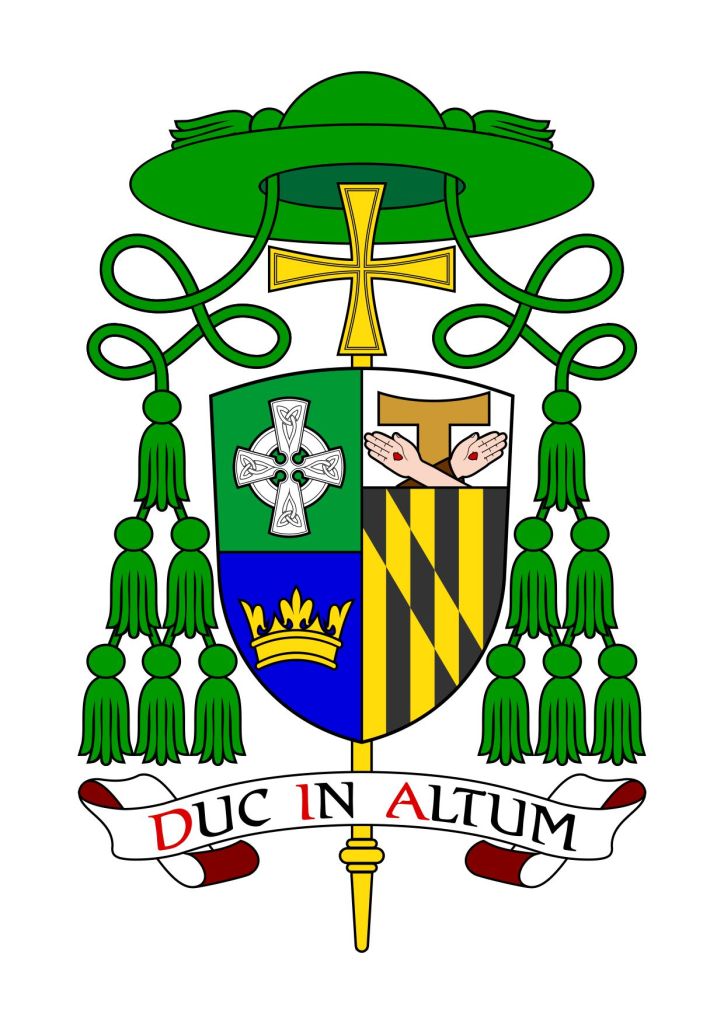
A nice simple design but perhaps the arms of Calvert would have looked better depicted once in the main part of the field with the Franciscan symbols occupying a chief?

Well, my friend and frequent collaborator, Mr. Sandy Turnbull of the Australian Heraldry Society, read that post and decided to have a bit of fun and create a new emblazonment of Bp. martin’s coat of arms that followed my advice. I’d say the result (below) speaks for itself. I was right! The whole achievement does look better as I suggested. See? One can’t just throw things onto a shield and call it heraldry. How the design is arranged—to be aesthetically pleasing as well as heraldically correct—is a large part of good heraldic design.

Archabbot Douglas Nowicki, OSB

Retired Archabbot of Saint Vincent Archabbey, Latrobe, Pennsylvania, Douglas R. Nowicki, O.S.B., (79), died Tuesday, July 23, in Allegheny General Hospital, Pittsburgh, following a brief illness. The eleventh Archabbot of Saint Vincent, he served from 1991 until he reached the retirement age of 75 in May of 2020, when he retired. He was the second longest-serving Archabbot in the 178-year history of Saint Vincent. With more than 150 monks, St. Vincent was the first Benedictine monastery in the United States, and is one of the largest monasteries in the world. He will be buried on July 29, 2024.

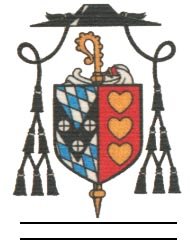
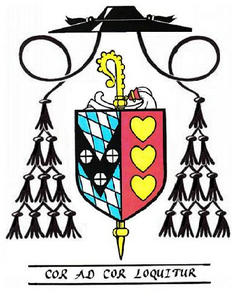
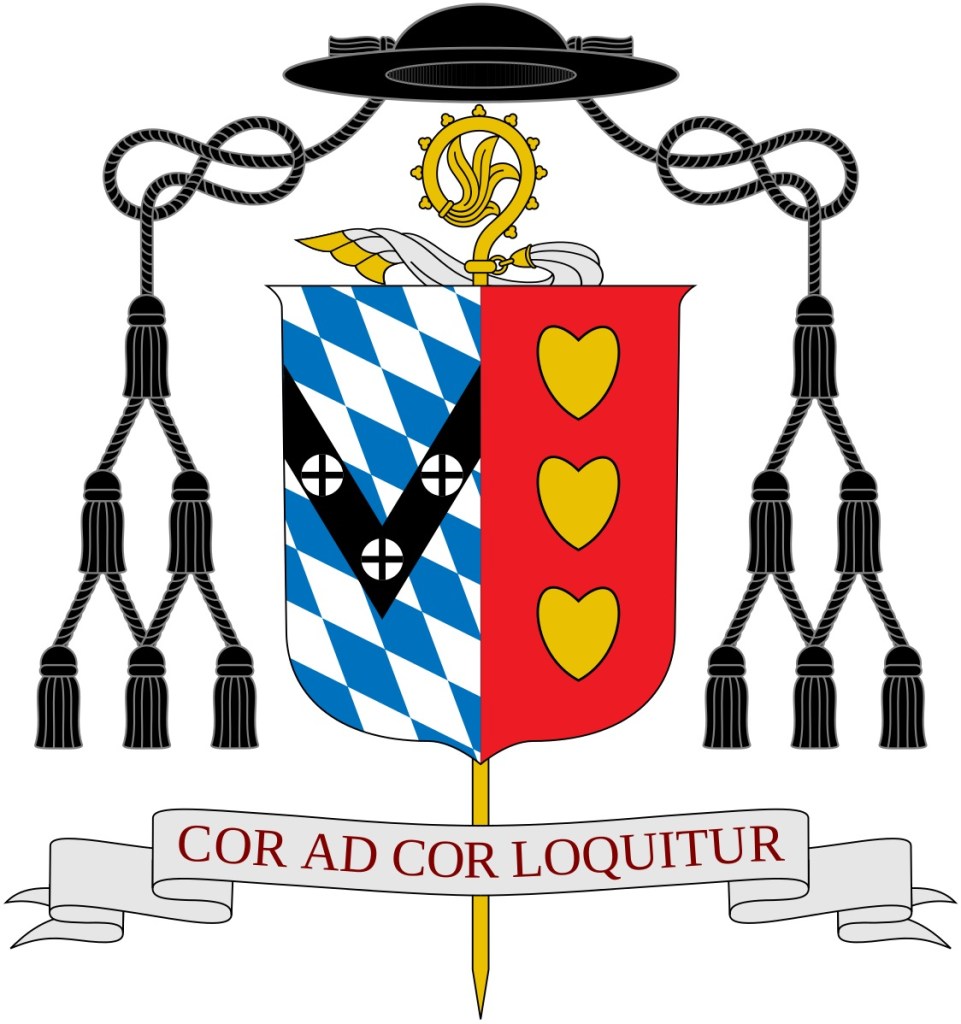
When he was elected in 1991 I was still a member of the monastic Community in Latrobe. My mentor—the late Géza Grosschmid, Ph.D.—and I were given the job of devising a coat of arms for the new Archabbot. Ultimately, Archabbot Douglas rejected the design Dr. Grosschmid suggested and went with a modified version of it devised by me. Essentially, it illustrated the motto, taken from St. John Henry Newman, “Cor Ad Cor Loquitur” which means “Heart Speaks To Heart”.

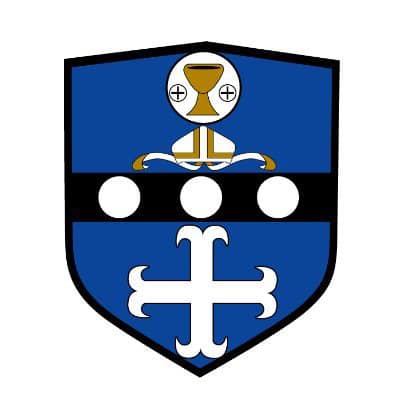
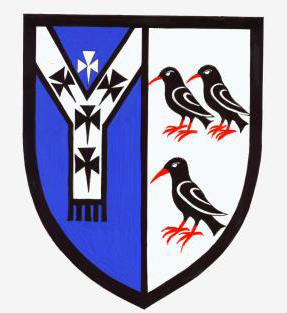
Above we see my original drawing of the coat of arms without the motto added. The dexter impalement depicts the coat of arms adopted by St. Vincent Archabbey in the early 20th Century under the abbatial term of the Rt. Rev. Alfred Koch, OSB, the 5th Archabbot of St. Vincent. It depicts the blue and silver elongated diamond-shaped fusils taken from the arms of the Royal House of Wittelsbach, the Kings of Bavaria. This alluded to the origin of the founding monk and first Archabbot of St. Vincent, Boniface Wimmer, OSB who was from St. Michael’s Abbey in Bavaria, as well as to the patronage and financial assistance given to the fledgling community through the Ludwigs-Missionverein, an organization established by King Ludwig I of Bavaria to support missionary efforts in the new world.

The black horizontal fess with three plates (white roundels) seen on the arms of William Penn is reshaped as an inverted chevron to form the letter “V” for Vincent and the three plates are charged with three crosses. The arms of the Archabbey are impaled—joined on the same shield—with the Archabbot’s personal arms. This marshaling of two separate coats of arms on the same shield employs the same method used for the coat of arms of two armigerous people who are married. It indicates the “marriage” of the armiger with the place of his jurisdiction with the arms of the jurisdiction occupying the place of the groom and the personal arms occupying the place of the bride.

The Archabbot’s personal arms, as I said, illustrate the motto.

I had also presented Archabbot Douglas with the option of displaying his arms ensigned by a galero with twenty tassels rather than merely twelve. In a manner similar to that of an archbishop using twenty tassels to a bishop’s twelve tassels, I proposed that as an Archabbot he also make use of this distinctive galero indicating his rank. Archabbots don’t actually have any greater jurisdiction or privileges over other Abbots (the one exception being that he may occupy a senior place in the procession whenever attending a gathering of several Abbots). In addition, none of the other previous ten Archabbots of St. Vincent made use of such a galero so, ultimately, he decided to honor that precedent and rejected the idea.

Although his two immediate predecessors had armorial achievements that did not display the usual veiled abbatial crozier Archabbot Douglas agreed with my suggestion he do so. When St. Paul VI reformed many things concerning the dress and externals of the hierarchy in 1969 one of his decisions included removing the mitre and crozier from the coats of arms of Cardinals, Archbishops and Bishops. They were seen as superfluous since episcopal coats of arms make use of the episcopal cross as the sign of the armiger holding the rank of (arch)bishop. However, it was not the intention to remove the use of the veiled crozier—a peculiarly abbatial heraldic symbol—from the coats of arms of Abbots. The veil became a symbol of abbatial croziers in a time before Abbots would have worn pontifical gloves when pontificating. The veil served the useful function of protecting the shaft of the crozier from dirt and oils from the hand. Later, even after pontifical gloves were used by Abbots, the veil, or sudarium, remained attached to the crozier to distinguish such a heraldic emblem from that of a bishop. Despite the reforms of St. Paul VI which referred to the coats of arms specifically of Cardinals, Archbishops and Bishops, the veiled crozier remains to this day as the heraldic emblem of Abbots and Abbesses.

As I said, Archabbot Douglas was happy to follow my advice in this regard. I noted on one of my subsequent visits to the Archabbey that the display of archabbatial coats of arms in the Archabbot’s outer office included a new rendering of Archabbot Douglas’ coat of arms with the veiled crozier omitted. It could be that there was simply an effort to have his coat of arms artistically conform to the pattern followed by his two immediate predecessors. One also is moved to wonder, however, if the person responsible was simply acting in ignorance? It would be hoped that the move was not a deliberate one. If it were, it would constitute an action displaying the most blatant ignorance of commonly accepted heraldic practices in the Church as laid out in the excellent and scholarly work of the late Bruno B. Heim, Heraldry in the Catholic Church, as well as in several other similar publications. In other words, don’t take my word for it! It’s verifiable independently of my opinion. In fact, my collaborator on this project for Archabbot Douglas, Dr. Grosschmid, was a close friend and collaborator of Archbishop Heim who was widely accepted as the foremost expert in Catholic ecclesiastical heraldry of his day. Dr. Grosschmid concurred with my assertion that the Archabbot’s coat of arms should employ the veiled crozier which is why I felt so comfortable advising the Archabbot in that way.

Nevertheless, in this later rendering it was omitted. I note, too, that Archabbot Douglas’ successor, Archabbot Martin de Porres Bartel, OSB, the twelfth Archabbot, similarly omits the veiled crozier from his armorial achievement, no doubt advised in the same manner that was (accidentally or deliberately) ignorant of the appropriate practices. I note, too, with some satisfaction that the Wikipedia article about Archabbot Douglas correctly displays his coat of arms according to the manner in which I designed it. (below)

May he Rest in Peace.

Cardinal Gibbons

The varied armorial bearings of James Cardinal Gibbons. I often speak about the incorrect practice of a prelate deciding to change or modify his existing coat of arms. Even when arms are assumed (as opposed to granted by a heraldic authority) the bearer should not feel free to completely change them. Sometimes arms are augmented to reflect a new honor received or a change in status. However, completely changing a coat of arms, once assumed, should be avoided.

Gibbons was made Vicar Apostolic of North Carolina which did not yet have its own diocese, in 1868 and served there until he was made Bishop of Richmond, Virginia from 1872-1877. He bore the first coat of arms in both of those places. When he was made archbishop of Baltimore in 1877 he simply modified the external ornaments to reflect his promotion but still used the same shield depicting the seated Virgin Mary. Over the course of the next 44 years of his tenure in Baltimore he then changed his coat of arms no less than three times!

He adopted the arms showing the Holy Spirit descending from a cloud over the globe and also made use of an impalement depicting a pall (pallium). This would have been before the archdiocese had a coat of arms for itself and Gibbons was simply doing with this variant what many an archbishop had done. Namely, using an impalement with a pallium to indicate the status of a metropolitan archbishop.

In 1911, however, he changed his arms entirely again and adopted the coat of arms he bore until his death in 1921. These were done for him by Pierre Chaignon La Rose and I would think that what brought about the last change was the adoption of an archdiocesan coat of arms with which Gibbons’ personal arms were impaled. No doubt La Rose, who was fond of “correcting” coats of arms he didn’t like, convinced Gibbons to adopt the last design which was based on the arms of Gibbons used in Ireland (by a family the cardinal may or may not have had any connection to) differenced by the escallop shell, a symbol of St. James.

I have to admit his original coat of arms wasn’t very good and the final one he ended up with was rather good. But, the process of making many and varied changes throughout his life is not good at all.

A Philly Trifecta

On Friday, March 7 the Most Revs. Keith J. Chylinski (52), Christopher R. Cooke (50) and Efren V. Esmilla (61), all three priests of the Archdiocese of Philadelphia, were ordained bishops in the Church and appointed as Titular Bishop of Gunela, Titular Bishop of Malliana, and Titular Bishop of Ottana respectively, as well as Auxiliary Bishops of Philadelphia. Bishop Chylinski was fortunate to receive the Titular See of Gunela which had belonged most recently to Christophe Cardinal Pierre, the Apostolic Nuncio to the United States who was present at the liturgy of ordination. That’s rather unusual. He, of course, relinquished his episcopal titular see when he was created a Cardinal-Deacon.

The coats of arms of the three new Auxiliaries are:

There are two curious things about Bishop Chylinski’s coat of arms. The blazon and explanation say that the crosses are, “…crosses pattée, sometimes referred to as Maltese crosses…”

Indeed those depicted are Maltese crosses but that is definitely not the same thing as crosses pattée. Those are two different charges. The blazon should called them crosses of Malta. Pattée crosses have straight edges on them. In addition, it depicts and explains that the episcopal cross (which is incorrectly described as a “processional” cross, which it is not) has a blue gem at the center to honor Our Lady and also an escallop shell on the node to allude to St. James. Those two additions are heraldically unsupportable. The external ornaments indicate the rank of a bearer and are not subject to personalization in this manner. They are depicted generally in a conventionally accepted form and individual artists are free to depict them in their own style.

The blazon, which is not only an official description of a coat of arms but, truly, where the design of the coat of arms “lives” (as opposed to any one artistic rendering), may not stipulate the appearance and depiction of any of the external ornaments. It may indicate that they are part of the achievement but not how they are to be depicted. In ecclesiastical heraldry the Church regulates the use of the external ornaments. The blazon of the arms must be limited to the charges on the shield.

Mechelen-Brussel

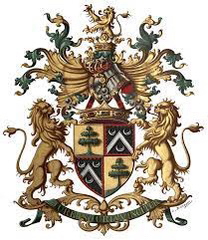
On September 3 the new Archbishop of Mechelen-Brussel (Malines-Bruxelles) was ordained a bishop and was installed as the 23rd Archbishop. The Most Reverend Luc Terlinden (54) is of the noble family of the viscounts and barons Terlinden. This makes him the first archbishop who is from the nobility since Mgr. de Méan (who was the last Prince-Bishop of Liège and died as Archbishop in 1830). There have been other nobles named as bishops in Belgium, however. It is disappointing that the archbishop chose to create and assume new arms (below) that only slightly refer to his noble family’s coat of arms (above, left). I’m sure many fine heraldist and genealogists are disappointed at that. The arms he has assumed aren’t bad, per se. Rather, it is that his ancestral arms are far better.

Justin Trudeau Meddles in Heraldry

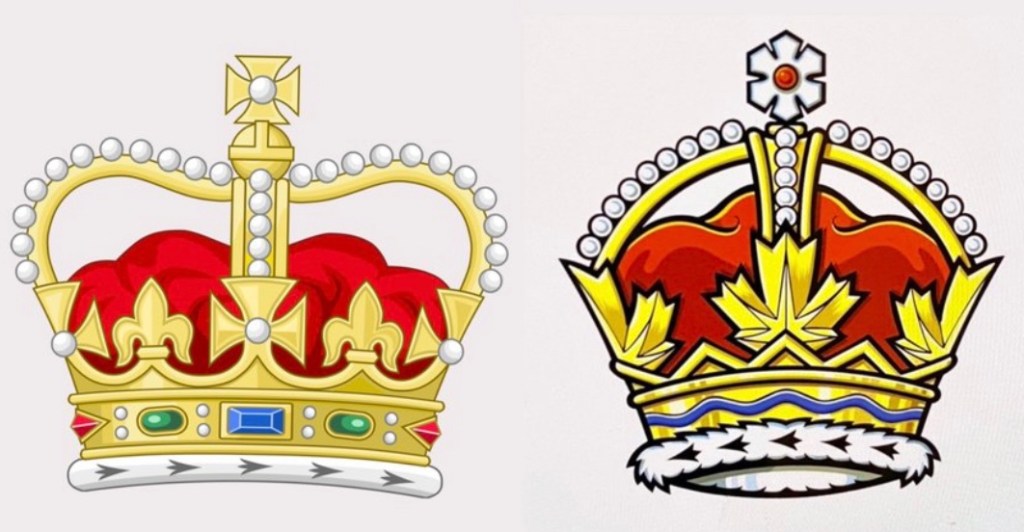
Today, the Canadian Government of Justin Trudeau unveiled a new heraldic Canadian Crown replacing the traditional St. Edward’s Crown used on Canada’s coat of arms, police & military badges. The design replaces what the government termed “religious symbols” (crosses & fleur-de-lis) with maple leaves & a snowflake.

The Canadian Heraldic Authority was apparently consulted in this process. Reactions so far have been mixed but mostly disapproving.

Bishop Woost of Cleveland

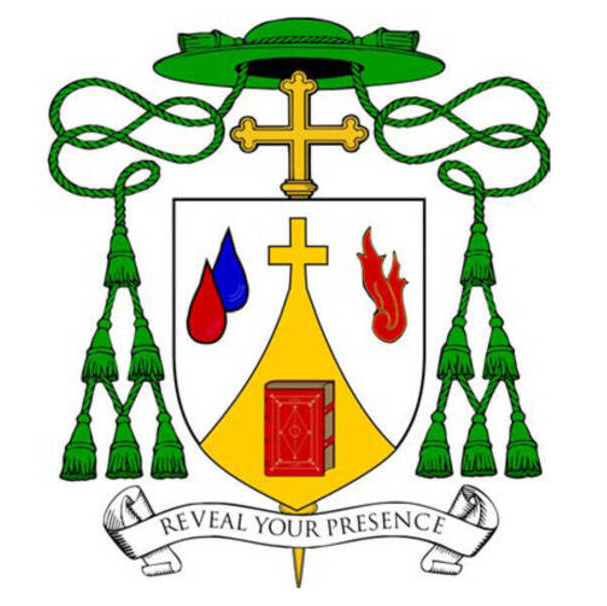
On August 4 the Most Rev. Michael G. Woost (63) was ordained as the Titular Bishop of Sertei and Auxiliary Bishop of the Diocese of Cleveland, OH where the had previously served as a priest.

His arms are blazoned: “Argent, a cross emerging from a pile embowed reversed Or, charged in base with a closed book Gules, in dexter chief a gutté d’eau surmounted in bend sinister by a gutté de sang, and in sinister chief a tongue of flame Proper.”

I don’t concern myself with the artwork here. In addition, the charges chosen are all clear and the overall design is simple. I do know that many, myself included, might take issue with the two droplets, one of water and the other of blood, slightly overlapping each other. As a general rule charges should not do that but it is done in a very minor way that I don’t think really detracts from the overall design or the ability to discern what they are. That, after all, is what is most important for a coat of arms.

No, my only issue –and it is admittedly a very minor one– is with the blazon. Now, it must be said at the outset that the art of blazon is not as precise as some might assert. That is to say there is often more than one way to blazon the same coat of arms. There can be slight differences in the way a phrase is turned, etc. While the essence of a coat of arms “lives” in the blazon rather than in the emblazonment that does not mean there can only be one single way to blazon a particular coat of arms.

My issue is with the use of the word “gutté” to refer to a single drop or droplet. Generally speaking a single drop is a “goutte” and the word “gutté” indicates a field or a charge that is covered with numerous drops of whatever liquid is being depicted. So, my minor criticism is that the blazon should read, “…in dexter chief a goutte d’eau surmounted in bend sinister by a goutte de sang…”

Nit picky? Perhaps. But, the blazon should try to be as precise as it can be assuming that someone who is familiar with the language of blazon could depict the coat of arms without ever having seen it just by following the blazon. Since gutté means covered with several drops and these arms contain a single drop each of water and of blood the blazon is confusing.

Archbishop of Paris

On May 23 the Most Rev. Laurent Ulrich (70) a priest of Dijon, former Archbishop of Chambéry, former Archbishop (ad personam) of Lille was installed as Archbishop of Paris.

His coat of arms, with a very simple design, is remarkable for the mere fact that these days very few French bishops even bear a coat of arms, let alone a good one!

I am also one of those purists who agrees with the assessment of the late Archbishop Bruno Heim that the pallium as an external ornament is unnecessary and is far too often ill-placed in the achievement, as is the case here.

New Seattle Auxiliary

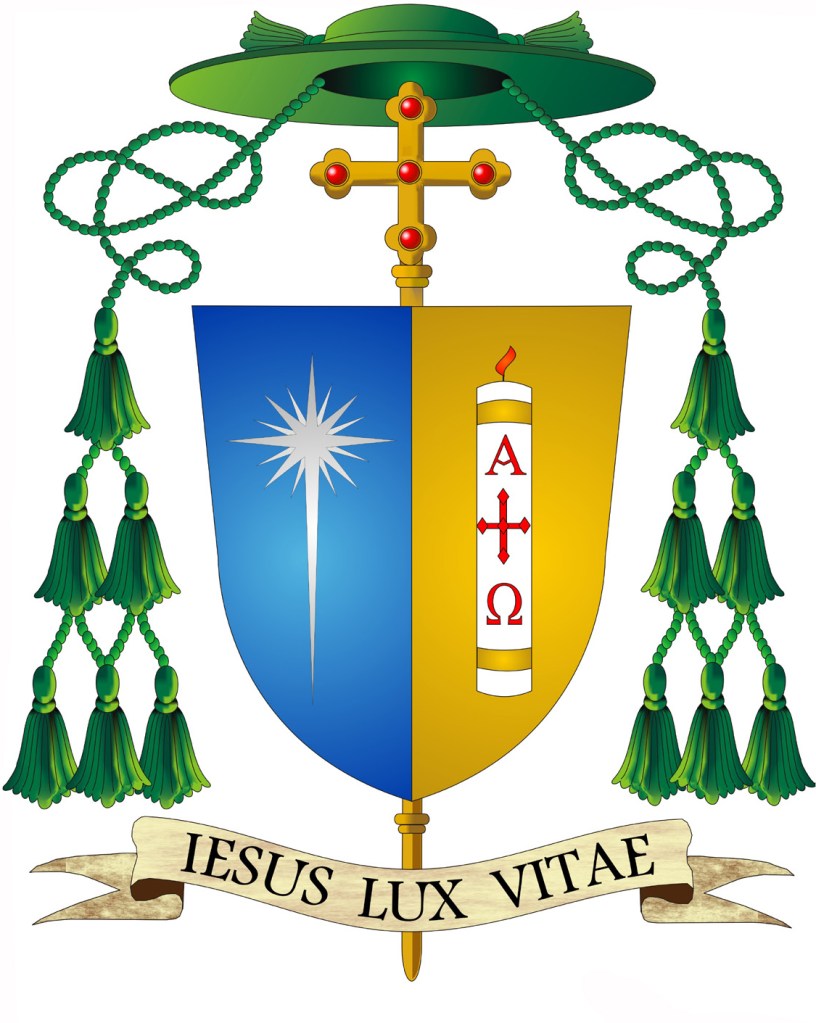
On May 3 the Most Rev. Franklin Schuster (50) was ordained Titular Bishop of Hirina and Auxiliary to the Archbishop of Seattle. The coat of arms he assumed, designed and executed by Renato Poletti, is:

As is my usual custom I will not undertake to critique the artwork.

While there is certainly nothing wrong with dividing a shield per pale with two different tinctures when it is done in this manner with a single charge on each side of the field it has the overall, albeit unintended, effect of making the shield look like impaled arms. Two coats of arms marshaled together on the same shield is the custom for married armigerous persons or, especially in the case of ecclesiastical heraldry, an indication of personal arms and arms of jurisdiction. These are frequently marshaled together to indicate the “marriage” of the armiger with the body over which he presides.

A field of two colors divided per pale would be seen as a single coat of arms if the charges on it were imposed overall and “crossed” the line of impalement illustrating that the two colors are making a single field.

In addition, a silver (white) candle on a gold (yellow) field violates the tincture rule unnecessarily. This rule has many exceptions to it but it may be ignored when there is a good reason. I don’t really see such a reason here. While individual armigers often assign a particular meaning to the use of a specific tincture there is no set and established symbolism behind any color in heraldry. Therefore, their use isn’t a necessity. In the case of this design a blue field could have been used alone with both the silver (white) candle upon it and silver or gold star simply placed in chief without losing the idea behind the design, namely, that it represents both Christmas (the star) and Easter (the candle).

That would have made for a simpler design that was quite effective while, at the same time, avoiding the tincture issues as well as the appearance of impaled arms.

An opportunity missed. The overall coat of arms is pleasant looking and it isn’t really “bad”. It’s just, like so very many other coats of arms we see among bishops today, not as good as it could have, or should have been.

A Very Poor Example

At the recent installation of the Most Rev. Siegfried Jwara, CMM as Archbishop of Durban it was possible to see his personal symbol on a banner in the sanctuary. I don’t call it a coat of arms because it is composed entirely of reproductions of paintings: one of the Good Shepherd, one of Dom Francis Pfanner, OCSO, the founder of Marianhill and a portrait of another cleric.

This. Isn’t. Heraldry.

Below is a poor quality image taken from a screenshot of the video of the installation. Apologies for the poor quality. Although, perhaps it’s better not to see it more clearly. I’ll say again that you may not simply put whatever you’d like on a shield and call it a coat of arms.

Asidonia-Jerez

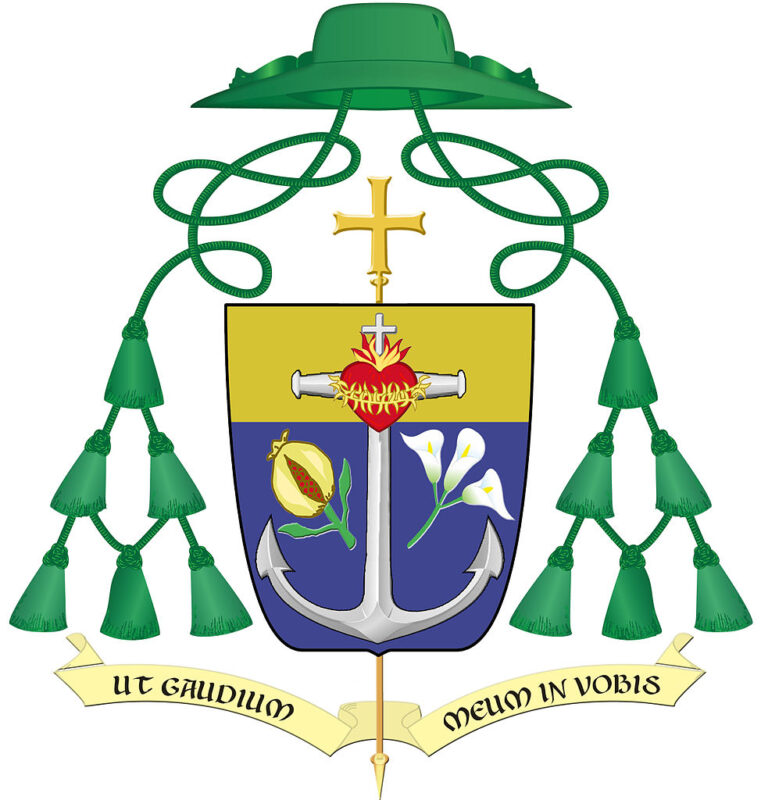
On July 31 Bishop José Rico Pavés, a bishop since 2012, was installed as the Bishop of Asidonia-Jerez (Jerez de la Frontera) Spain. His coat of arms is:

Generally speaking I think this is a nice coat of arms. The charges are clear and easy to discern and would be even if viewing the coat of arms greatly reduced, as on printed matter. The green portions of the lilies and the pomegranate don’t really break the tincture rule of no color on a color despite their being on a blue field because they are secondary additions to the primary charges (the blossoms of the lily and the fruit of the pomegranate themselves). Such little things can easily be tolerated.

The only real criticism I have is the notion of the anchor extending up onto the chief from the field. Charges, especially the principal charges like this one, aren’t supposed to overlap portions of the shield, especially in this instance where the shield is divided by having a chief. The chief itself is an ordinary and, as such, is considered to be placed over the upper portion of the blue field. Even if the anchor is blazoned as “overall” that doesn’t justify having it extend up to overlap the chief. In addition, it does actually violate the tincture rule of no metal on a metal since the whole body of the anchor is silver and it extends to a gold chief. Again, another good reason to have the anchor remain below the chief. Without counterchanging, it doesn’t really work so it comes off as a poor design decision.

I wonder why there is even a chief at all? Having the Sacred Heart on the anchor could have been enough justification to leave it red (on a silver anchor), or it could have been depicted all in gold and then the entire arms could have simply had a blue field.

Nevertheless, despite this one item, the rest of the coat of arms is, in my opinion, very nice.

Bishop Koenig of Wilmington

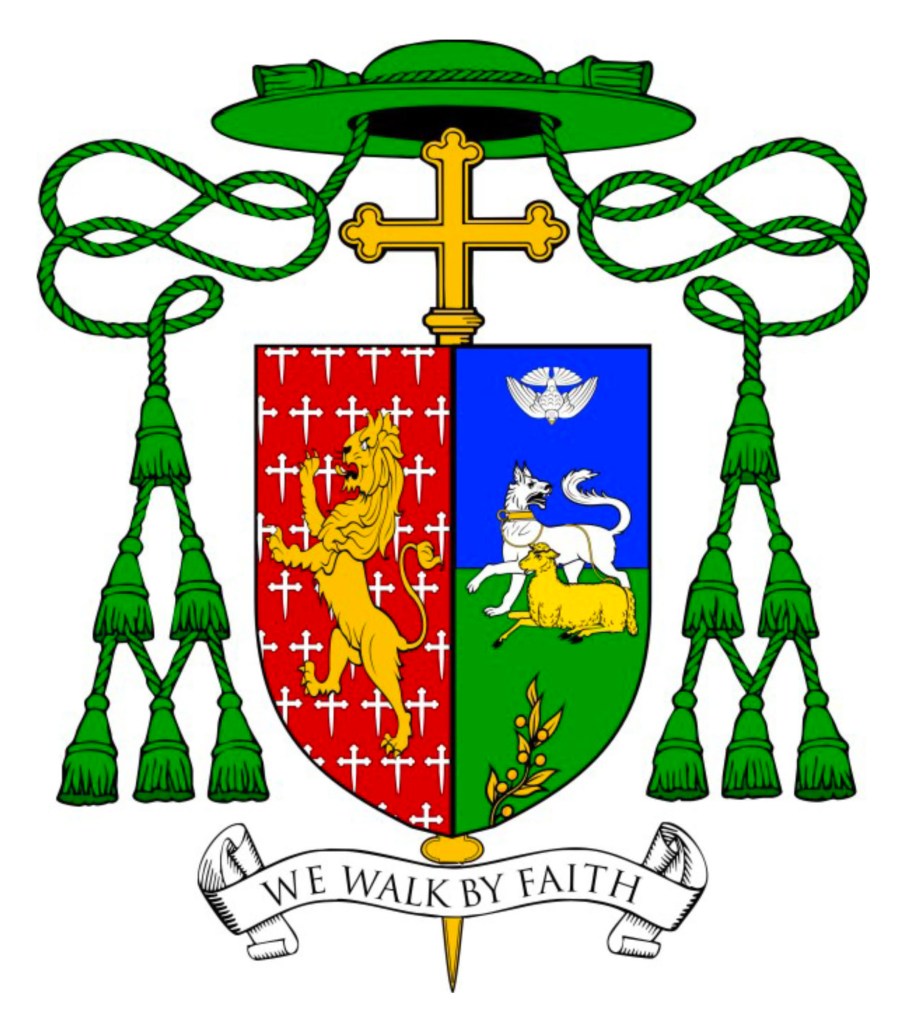
On July 13 the Most Rev. William Koenig (64) a priest of the Diocese of Rockville Centre, NY will be ordained a bishop and installed as the 10th Bishop of Wilmington, Delaware. The coat of arms he has chosen to assume is illustrated below impaled with those of the See of Wilmington.

The arms of the See are based on those of the Lords De La Warr one of whom, Thomas West, was Governor of Virginia and for whom the state and river are named. The crosses allude to the arms of the Lords Baltimore, proprietors of Maryland because the diocese covers all of Delaware and the eastern Shore portions of Maryland. The gold lion borrows from the arms of Bl. Pius IX who erected the See.

While the new bishop’s name would lend itself easily to symbols of St. William the Abbot and a royal crown (the name Koenig means “king”) he has, somewhat disappointingly, decided to use arms that allude to various aspects of his priestly career. These are the typical “CV arms” against which I am always warning. American bishops are fixated on their coats of arms “telling the story” of their lives rather than simply doing what coats of arms are supposed to do: identify.

These arms aren’t horrible. They are merely disappointing. They could have been SO much better.

DO NOT FOLLOW THIS EXAMPLE!

Recently, while taking a short trip for some post-Easter R&R I went to visit friends in western Pennsylvania. I found myself in the town of Loretto, PA where I had attended college at St. Francis University (but in my day it was still just St. Francis College). In that town is the fine parish church of St. Michael, built entirely at the expense of Charles M. Schwab, the US Steel president whose summer residence was located in Loretto. His former mansion is now the motherhouse of the TOR Franciscans who run the university. Schwab generously built the fine romanesque revival structure and donated it to the parish. Andrew Carnegie donated the church’s pipe organ. Some time ago the church was designated a minor basilica. It’s churchyard is the resting place of its founder, Father (Prince) Demetrius Gallitzin.

While looking around the lovely structure which has been spruced up since the the days when I occasionally saw it as a student some 37 years ago I noted in a side chapel a large display of the basilica’s coat of arms…and almost vomited.

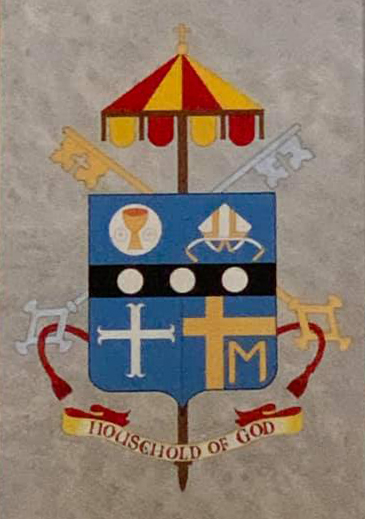
What a poor coat of arms for the purpose intended. In fact, it is simply the Altoona-Johnstown diocesan coat of arms with the base changed to have the arms of St. John Paul II (who bestowed the dignity of basilica on the church) shoved in as well. The motto is the one used by the bishop at the time the church was raised to basilican rank.

The fess with three plates is borrowed from the arms of William Penn. The two charges in chief represent the cathedral of the Blessed Sacrament in Altoona and the co-cathedral of St. John Gualbert in Johnstown. The cross in base is borrowed from the coat of arms of the aforementioned Demetrius Gallitzin. Of course the ombrellino and crossed keys are typical external ornaments of a minor basilica.

But what a complete lack of creativity this design displays. Instead of alluding to the diocese or to the pope who bestowed the honor it is the arms of the diocese and the arms of that pope shoved together. There is absolutely nothing in there to identify the basilica as being dedicated to St. Michael the Archangel, or being located in Loretto, or to the Franciscan heritage of that place. The slender line dividing the silver Gallitzin cross from the arms of John Paul II is also heraldically unsupportable. From beginning to end this thing is junk.

It was so horribly disappointing to see this is what was used. The raising of the church to the rank of a basilica occurred only in 1996. By that time the internet was an easy place to find the right person or the right guidance on the design and creation of a fitting coat of arms. There is no excuse for the horrible result they ended up with, except the laziness or arrogance of those in charge of that decision.

This basilica coat of arms is useful for one thing and one thing only: to serve as an example of what not to do!

Bishop Kulick of Greensburg, PA

On February 11, 2021 the Most Rev. Larry James Kulick (55) a priest of the Greensburg, Pennsylvania diocese will be ordained a bishop and installed as the 6th Bishop of Greensburg.

The arms he is assuming are:

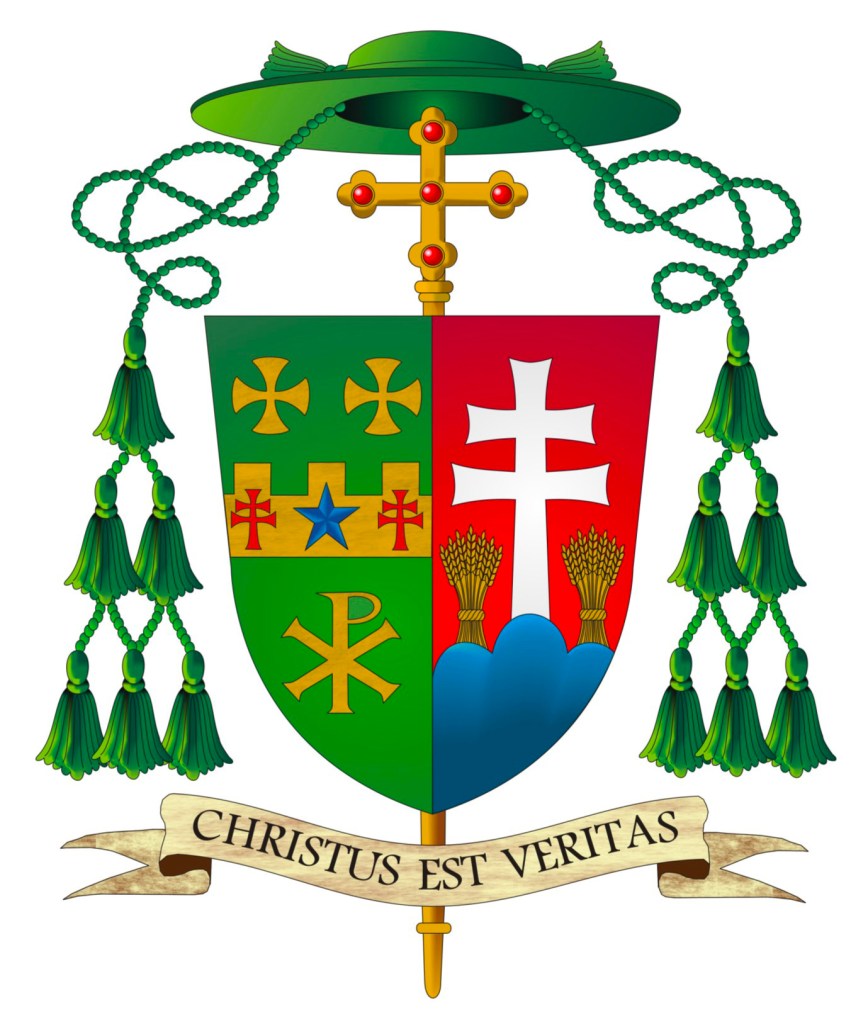
The Bishop’s family is of Slovak origin hence the clear resemblance of his personal arms to those of Slovakia with the addition of two garbs of wheat, traditionally used in Catholic heraldry as an allusion to the Eucharist. Really, he has simply taken the arms of Slovakia in their entirety to use as his own coat of arms. It can be argued that the inclusion of the two garbs differences his personal arms from those of Slovakia. That would not be entirely untrue. However, it isn’t, in my opinion, a sufficient enough difference. Some thought could have been given to a change of tincture as well.

It is noteworthy that the double-barred cross which is the principal charge in the Slovak arms is also repeated in the arms of the See. In the arms of the Diocese of Greensburg the double-barred, or patriarchal, cross is taken from the arms traditionally associated with the Order of St. Benedict and are included as an allusion to the Benedictine monks of St. Vincent Archabbey who have been present in that part of Pennsylvania since 1846 and have ministered to Catholics there since before the foundation of the diocese in 1951. In fact, the Benedictines founded the cathedral parish before it even was a cathedral and graciously gave it back once it had been designated as the cathedral church. In addition, the monks run a major seminary which is the seminary the new bishop attended. So that particular charge can have multiple significance for the armiger.

The explanation included in the worship program for the event says among other things that the colors have significance for the armiger. One sentence says, “The darker red at the top of the shield represents the blood of martyrs, and the lighter red below it represents fire; together they symbolize the martyrdom of St. Lawrence, Bishop Kulick’s patron saint.” To that I can only add that there are no shades of difference in heraldic colors and no set meanings to the what a particular color means. Another section of the explanation says this (somewhat unbelievably), “The blue shadow on top of the hills symbolizes how Christ illuminates the world, and blue is the color of the Blessed Virgin Mary, the diocesan patroness as Our Lady of the Assumption. The shadows and highlights at the top of the mountains where the red and blue come together also represent St. Joseph.”

Really? Shadows and highlights represent St. Joseph? How? And how, specifically, is a highlight blazoned? So, while I don’t doubt that all these meanings are significant to the armiger, or that at least he thinks they are, but this isn’t heraldry. Such subtleties may be present in the mind of a graphic artist but not in the science of heraldry. This is all a bit too “over the top” and focuses on the wrong things.

The coat of arms was done by Sig. Poletti of Italy who also did the coat of arms of Bishop Kulick’s predecessor, Bishop Malesic, now of Cleveland.

Thomas Becket

St. Thomas Becket, Archbishop of Canterbury, was assassinated by nobles who served King Henry II of England in 1170. They entered the cathedral and killed him. His conflict with the king centered around the Constitutions of Clarendon, a series of laws Henry wished to impose to check the increase in power the Church gained under the rather chaotic reign of his predecessor King Stephan. Becket opposed these laws as the state over reaching into the internal affairs of the Church. Their conflict became more heated until Henry supposedly (though not definitely) was to have said to his barons, “Will no one rid me of this meddling clerk?”. It’s doubtful he actually said that and if he did it certainly would have been in French since Henry II didn’t speak English. This was taken to mean he desired to see Becket gone, so they went to the cathedral on December 29th and killed him.

This all happened before the advent of systematized heraldry as we know it. becket certainly did not have a coat of arms. But, according to the long-standing traditional custom of attributing coats of arms to great persons after the fact a coat of arms was devised for him. It appears in many places erroneously as the coat of arms of St. Thomas Becket of Canterbury. While it certainly was not his actual armorial bearings it is, nevertheless, a very handsome achievement especially impaled with those of the See of Canterbury.

Archbishops of Washington, DC

Here are the armorial bearings of the Archbishops of Washington, DC almost all of whom have been elevated to Cardinal with the notable exception of the first one, Archbishop Michael Curley who was also the Archbishop of Baltimore. At first the Archdiocese of Washington was part of the Archdiocese of Baltimore. Later, a dual archdiocese of Baltimore-Washington was created with Curley leading it. Eventually, Washington became a separate archdiocese but Curley was still appointed its archbishop making him, simultaneously, the archbishop of the oldest American diocese (Baltimore) and the newest at that time (Washington). A short time later Washington, DC received its own residential archbishop with the appointment of Patrick O’Boyle.

There is no coat of arms for Theodore McCarrick who is no longer a cardinal or even a cleric. A blank shield is used in place of his armorial bearings but his time in Washington in still noted because under Mr. McCarrick’s tenure the armorial bearings of the archdiocese were changed and that change, despite McCarrick’s disgrace, has been employed by his two successors as well. One can only hope that at some point in the future the original coat of arms of the archdiocese will be adopted again.

Archbishop Michael Curley (the archdiocesan arms hadn’t been adopted yet and Curley impaled his arms with those of Baltimore)
Patrick Cardinal O’Boyle
William Cardinal Baum
James Cardinal Hickey
Archdiocesan arms changed by Mr. Theodore McCarrick
Donald Cardinal Wuerl
Cardinal-Designate Wilton Gregory