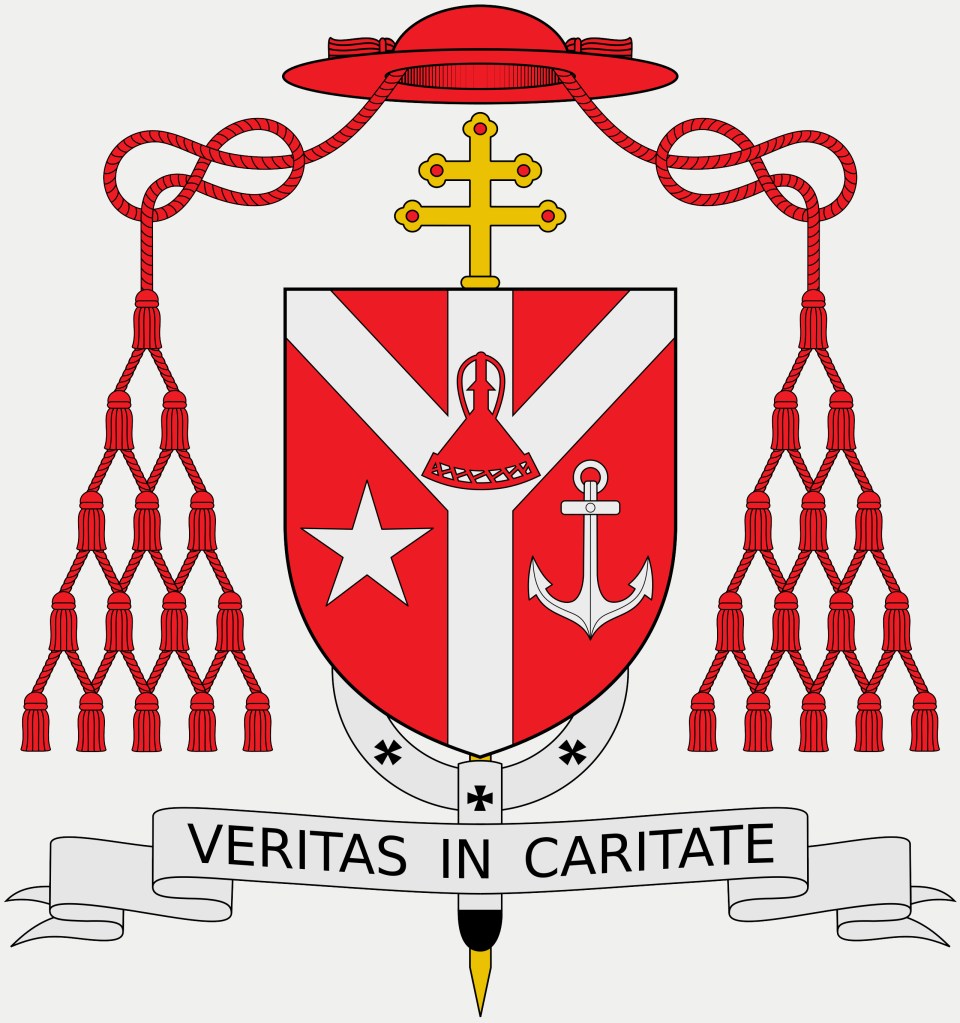
On February 14th, the Feast of Ss. Cyril & Methodius, Co-Patrons of Europe but also the day many more see as St. Valentines Day the Most Rev. Charles Philip Richard Moth (67), since 2015 the Bishop of Arundel & Brighton, who served before that as the Bishop of the Armed Forces since 2009 and who is originally a priest of the Archdiocese of Southwark will be installed as the 12th Metropolitan Archbishop of Westminster but also the 24th Ordinary of a jurisdiction which has existed since 1622 as the Vicariate Apostolic of England and Wales, later changed to the Vicariate Apostolic of the London District in 1688. (Incidentally, the Ordinary of the Vicariate Apostolic of the London District was responsible for any Catholic clergy serving in N. America in what later became the USA until the erection of the See of Baltimore in 1789.
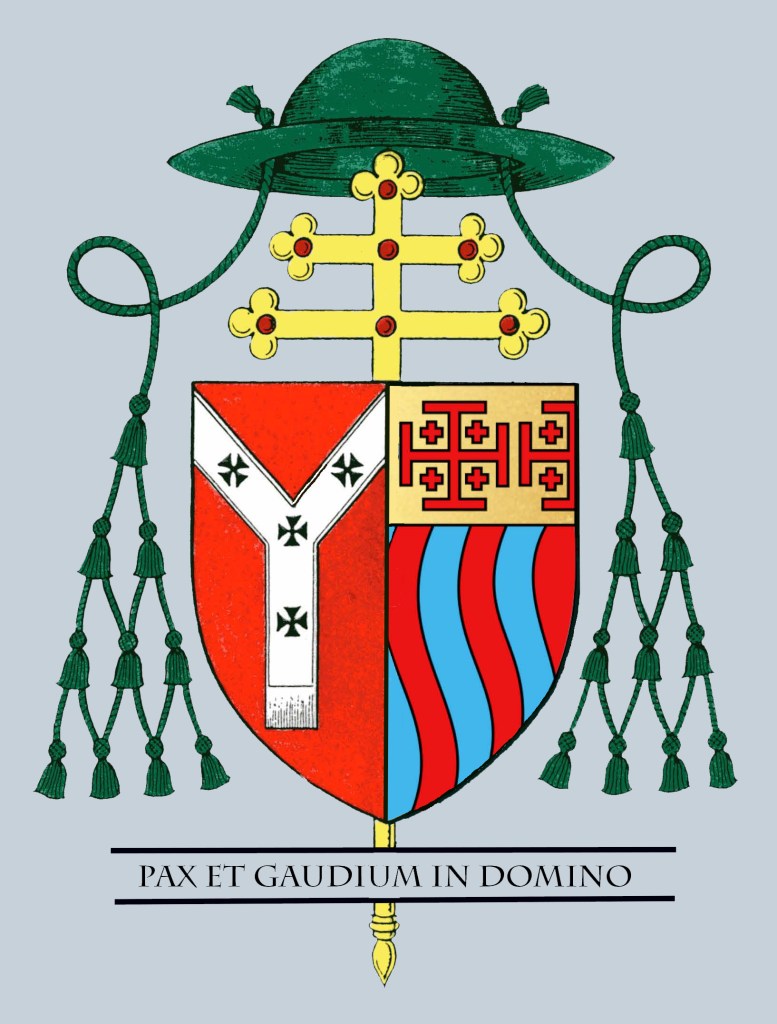
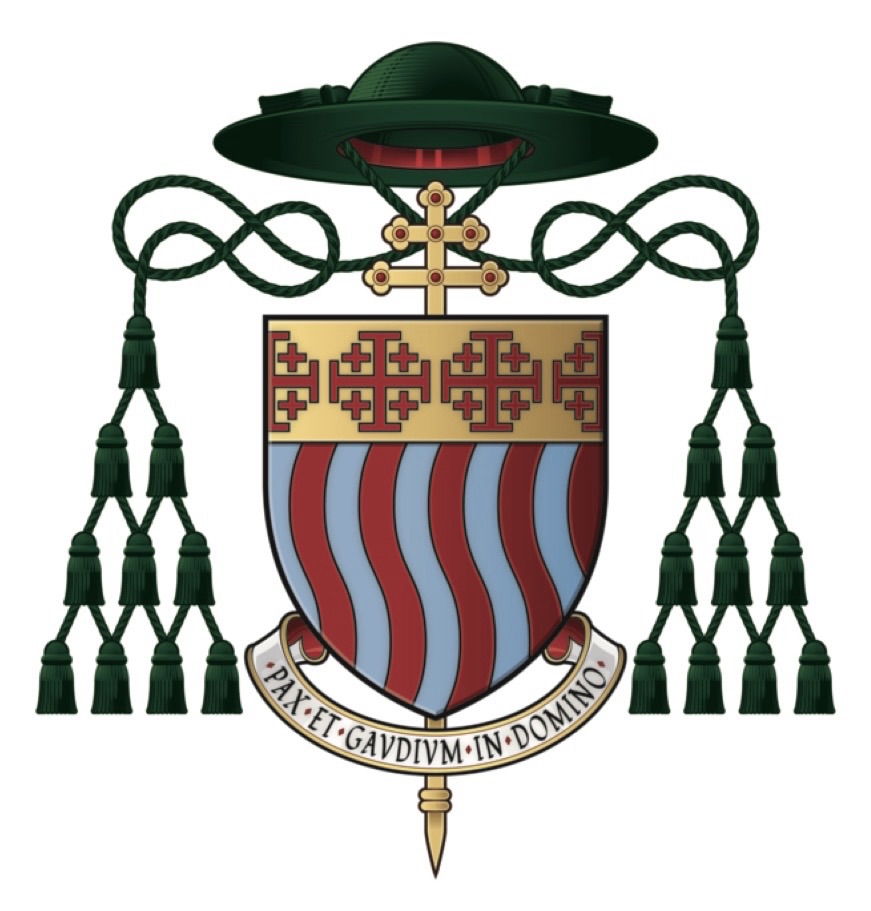
His episcopal coat of arms which he has used since his episcopal ordination in 2009 will be impaled with the arms used by the See of Westminster which itself has undergone several minor changes over the years but which has consistently appeared in its present form since the tenure of Cormac Cardinal Murphy-O’Connor. The College of Arms will create a divisal of arms for a Catholic bishop but the Catholic dioceses in England and Wales are not considered bodies corporate of law and so they do not receive grants of Arms from HM College of Arms. (Lord Lyon has granted arms to all the Catholic dioceses in Scotland and will grant arms to a Catholic bishop.)
Ad Multos Annos!
NOTE: The artwork shown is not official. rather, it was cobbled together from various sources
UPDATE: the Archbishop chose to bear his personal arms alone as he has done in the past.
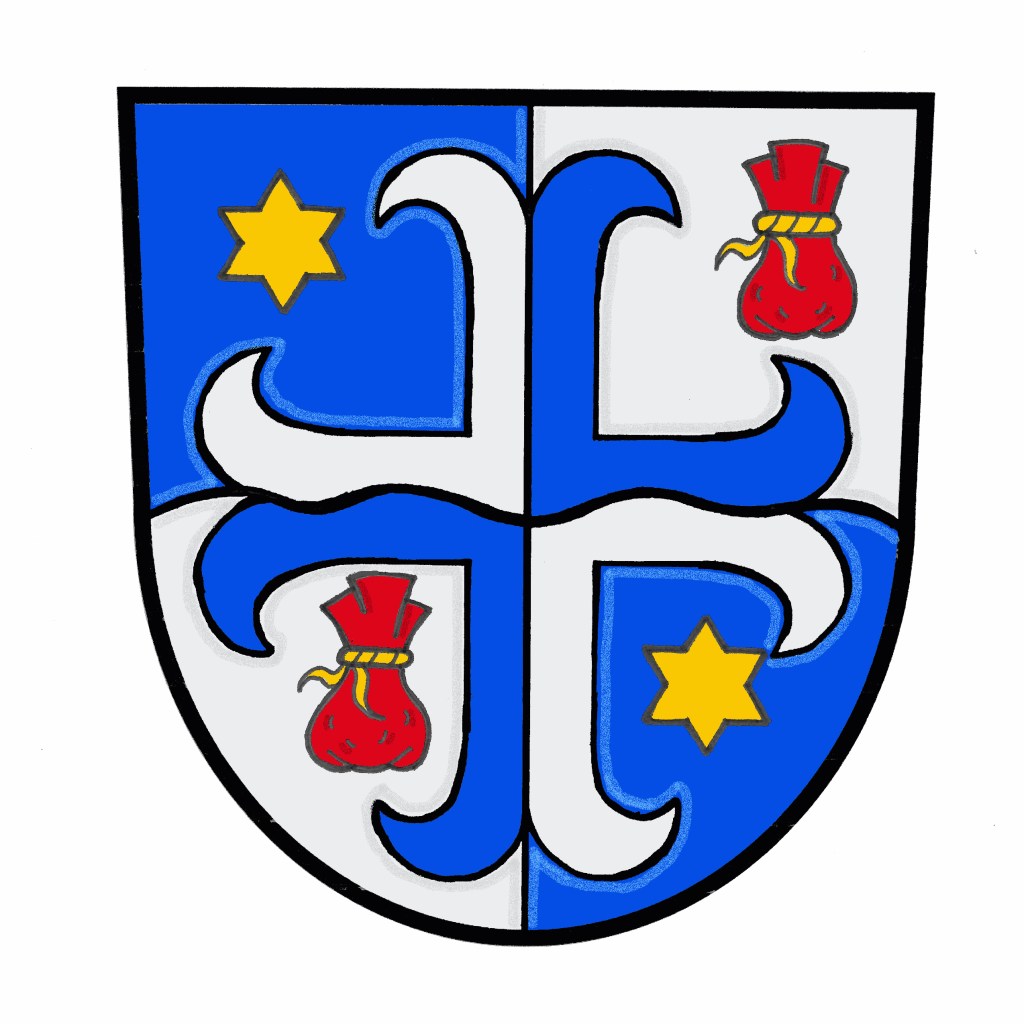
I recently was commissioned to design a coat of arms for the Parish of St. Matthew in Flint, Michigan.
BLAZON:Quarterly, the horizontal line wavy, Azure and Argent overall a cross moline quartered and Counterchanged; in the first and fourth quarter a mullet of six points Or; in the second and third quarter a money bag Gules bound Or.
EXPLANATION: The armorial bearings of the Parish of Saint Matthew, Flint, Michigan in the Diocese of Lansing reflect its location and it titular patron saint. The cross is not only the symbol of our faith and of the center of activity in any parish but in this form is borrowed from the diocesan coat of arms to indicate the parish is located in that diocese. The horizontal division line has been made wavy as a reference to the Flint River, and so as a reference to the city in which the parish is located. The money bags are a symbol of the parish’s patron, St. Matthew who was a tax collector before he became a disciple. The six-pointed star is from the arms of St. Pius X who was pope at the time the parish was erected. In addition, part of the former parish of St. Pius X has been incorporated into the parish of St. Matthew, so it alludes to that as well.
The blue and white motif from the diocesan coat of arms predominates throughout. The money bags are red to recall St. Matthew’s martyrdom. By means of these symbols the coat of arms of the parish alludes to both its patron and the local church in which it is located.
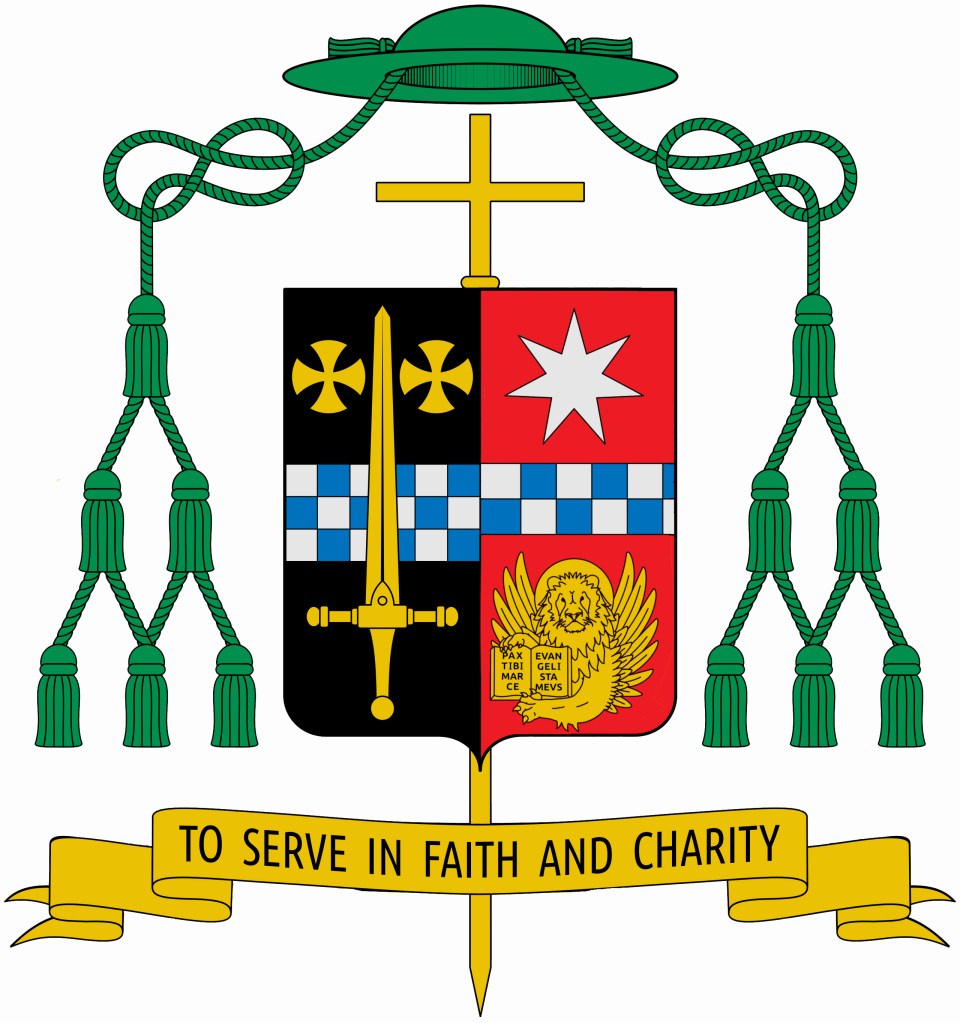
Today, His Holiness, Pope Leo XIV appointed the Most Rev. Mark Anthony Eckman (66), a priest of Pittsburgh and since 2021 the Auxiliary Bishop of Pittsburgh, as the 13th Bishop of the Diocese of Pittsburgh.
His armorial bearings, which not only allude to St. Mark but also, by use of the checkerboard taken from the arms of the See of Pittsburgh (and which, in turn, are borrowed from the arms of William Pitt, where they allude to his tenure as Chancellor of the Exchequer) now line up with the same checkerboard when his arms are impaled with those of the See.
It looks a bit odd, however, that the fess in his personal arms is more narrow than that in the arms of the See. It would probably work better artistically, if the two were of the same width. That would give the appearance of a single fess that crosses the two impaled arms but that’s simply the way it will appear. That’s one of the pitfalls of choosing charges and ordinaries directly from another coat of arms. Of course, it must be said that at the time Bishop Eckman assumed his own arms he could have no idea that one day he’d be named Bishop of Pittsburgh and impale his arms with those of the diocese. His personal arms, in my opinion, harmonizes nicely with the diocesan coat of arms making for a pleasing achievement.
NOTE: I have now been reliably informed that the bishop has, in fact, decided to slightly modify the fess in his personal arms so that it is identical to the one in the diocesan arms. So, problem solved!
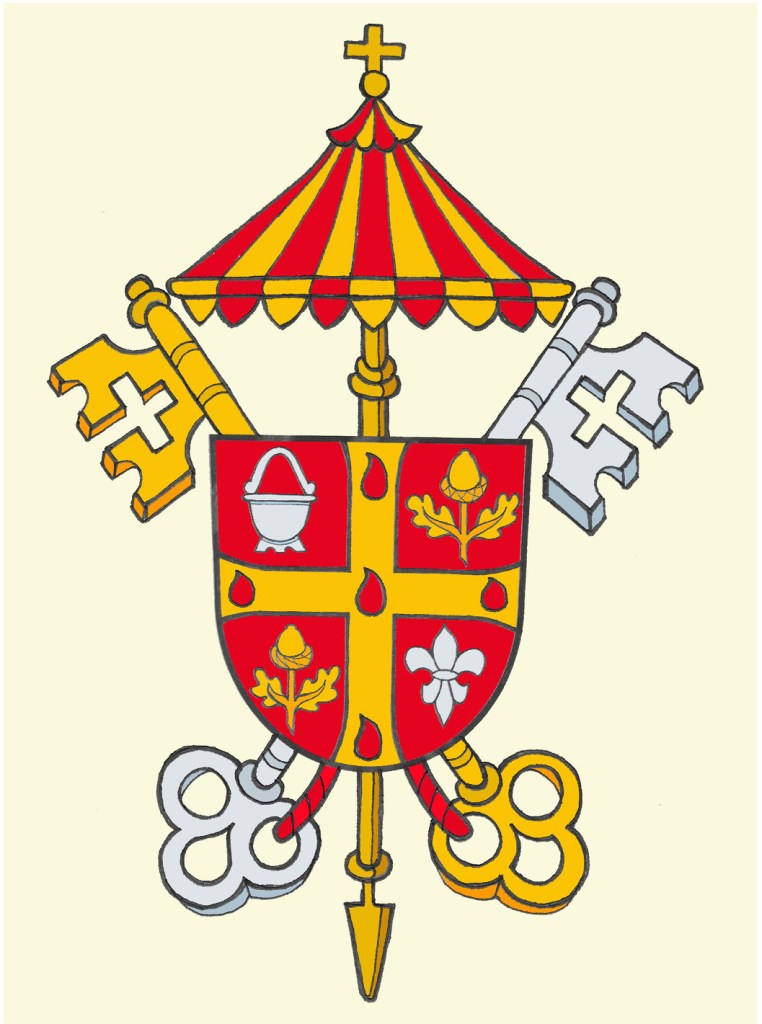
The Mission Church of San Diego (St. Didacus) de Alcalá was the second Spanish Mission church founded in 1769 by St. Junípero Serra. The present (5th) church building was designated a Minor Basilica by St. Paul VI in 1976. Going without any armorial bearings of its own for several decades I was approached some time ago by one of the priests of the Mission basilica to design a coat of arms for the church. This was done with the approval of the (then) Bishop of San Diego, Robert Cardinal McElroy, now the Metropolitan Archbishop of Washington, DC.
The blazon of the coat of arms is: Gules, a cross formy throughout Or charged with five gouttes de sang at the center point and extremities; between in the dexter chief quarter a Spanish stew pot Argent; in the sinister base quarter a fleur-de-lis Argent and in the other quarters an acorn slipped Or. The shield is ensigned with the ornaments of a Minor Basilica which are, two keys crossed in saltire behind the shield to dexter Argent and to sinister Or, and an ombrellino Proper standing behind the shield.
The basic design borrows, and reverses the colors from the coat of arms of the Diocese of San Diego. Instead of a gold (yellow) field with a red cross there is now a red field with a gold cross. The cross, which has slightly flared ends, is charged with five drops of blood. These represent the founder of the Mission, Junípero Serra, who was a Franciscan friar. So, the five drops recall the five wounds of the stigmata received by St. Francis of Assisi. Serra, the founder of the Mission, is symbolized by making a reference to the Order to which he (and San Diego) belonged. That also honors all the other Franciscan missionaries who carried on the work at the Mission throughout the centuries. In addition, the present Mission church–the one designated a basilica–is the fifth church building used by the Mission. So, the five drops of blood also allude to the basilica itself being the fifth building in use as a church.
In the upper left corner is the pot that is a symbol of San Diego (St. Didacus), the patron of the Mission Basilica (as well as the diocese). As a Franciscan brother he was a selfless servant of the poor and was known to heal the sick with the Sign of the Cross, the central charge, and the Spanish stew pot in the upper left also symbolizes him. It indicates Diego’s boundless charity and tireless efforts to feed the hungry. In the lower right corner we see a fleur-de-lis which is borrowed from the coat of arms of St. Paul VI, the pope who raised the Mission church to the rank of Minor Basilica in 1976. Both of these are silver (off-white).
The other two quadrants are charged with a gold (yellow) acorn. This is to give the Native Americans, who received the Gospel from the Franciscans and became their collaborators throughout the Mission era, representation on the coat-of-arms. It is a symbol of the agrarian traditions of the Native Americans, and also represents the potential for spiritual growth and transformation. Just as an acorn can grow into a mighty oak tree, it represents the idea that even small acts of faith and virtue can lead to great spiritual maturity and strength. This aligns with the Catholic teaching on the importance of nurturing one’s faith and virtues over time and refers to the Mission’s humble beginnings and growth. In addition, the acorn’s humble beginnings remind Catholics of the virtues of humility and simplicity. These qualities are highly valued in Catholic teachings, as exemplified by the lives of saints, such as St. Francis, St. Didacus, St. Junipero Serra, and the Franciscan Padres who often started with humble beginnings and grew in holiness and influence through their faith and actions. The acorn also symbolizes God’s provision and sustenance as a reminder of His care and providence, ensuring that His creation is provided for.
The external ornaments are the two crossed keys (one gold and one silver) bound together by a red cord and the ombrellino. The keys are an ornament granted to basilica churches to show their connection to the Holy See. They are the same as the keys seen in the coat of arms of the Holy See and of the Pope, recalling the “keys to the kingdom” given by Christ to St. Peter; one to bind and one to loosen. The ombrellino, a large red and gold canopy, is also a symbol of the Holy See and used as a symbol of such whenever the See is vacant. It also used to be employed as a symbol of papal administration in the time of the Papal States. Originally, it was a ceremonial canopy carried in procession to cover a dignitary such as the pope while walking or riding in a cavalcade. It is primarily symbolic now but all basilica churches are expected to have one which is to be carried in procession in the event of a papal visit.
This was a fun and interesting project which I completed, coincidentally, on the same day that the Pope appointed a new Bishop of San Diego to succeed Cardinal McElroy.
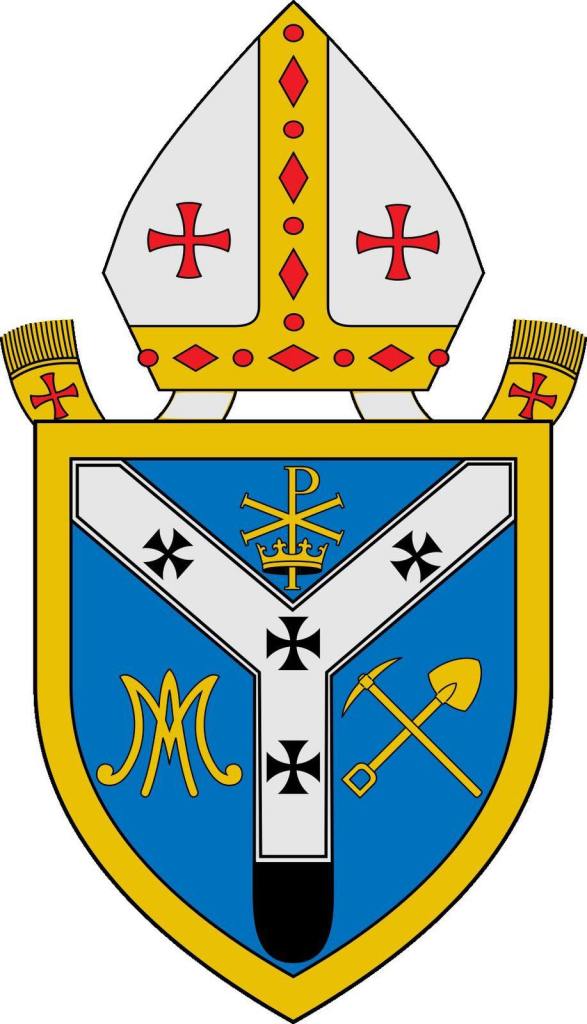
I received an interesting piece of correspondence today from a reader concerning the coat of arms of the See of Johannesburg, South Africa. The archbishop there, Stephen Cardinal Brislin, who has served there since 2024 (arms below) issued a recent decree determining the appearance and uses of the coat of arms of the archdiocese of Johannesburg and authorizing its use.
His decree specifies that this coat of arms is to be used by all Chancery Staff and Departments of the Archdiocese for all official correspondence. He goes on to say that any department wishing to use it in letterhead must first obtain his permission and that it may not be used for personal use.
It is to be published in the archdiocesan paper which will then constitute its promulgation. This decree will be in effect unless specifically repealed by either him, or one of his successors as archbishop.
The blazon of the arms is: “Azure, within a bordure Or, a pall Proper between, in chief, the letters Chi and Rho enfiling an open crown, to dexter, the monogram of Our Lady and to sinister a pick-axe and shovel in saltire, all Or; all within a bordure Or.”
I think it’s great that in a country where it is not the custom for the Ordinary to impale his own arms with those of the See, a prelate has taken enough interest to devise an archdiocesan coat of arms as distinct from his own coat of arms and then also to regulate its use by his own authority. Far too little attention is paid to heraldry by so many bishops and when they do it is often to “modernize” it or to try to make it more “relevant” and by so doing they ruin it. Here, the archdiocese has a suitable coat of arms—perhaps a bit busy for some, but really not a poor design at all—and is establishing by archiepiscopal decree that its use must be authorized. I applaud this effort on the part of the Archdiocese of Johannesburg.
On March 18 the Most Reverend Edward J. Weisenburger (64), originally a priest of Oklahoma City, former Bishop of Salina, Kansas, and most recently Bishop of Tucson, Arizona, will be installed as the 10th Bishop and 6th Archbishop of Detroit, Michigan.
Thankfully, Archbishop Weisenburger has chosen to impale his personal arms with the traditional version of the archdiocesan coat of arms adopted in 1937 to indicate a sense of continuity with his predecessors. Excellent choice!
A few months ago I was approached about providing assistance to the Episcopal Diocese of Wisconsin on a redesign of their coat of arms. The diocese encompasses the entire state of Wisconsin and is composed of a reunification of three dioceses in the state—Milwaukee, Eau Claire, and Fond Du Lac— into one jurisdiction. Each of the former dioceses had its own armorial bearings and the task at hand was to come up with an entirely new design that could please everyone and borrow some design elements from all three. Not an easy task.
A commission was put together of people from within the state who had some background in various fields like art, communications, web design, or Episcopal Church history, and the bishop (the former bishop of Fond Du Lac). I was asked to be the heraldic consultant and we gathered via zoom for several meetings and exchanged numerous pieces of correspondence with quite a few sketches going back and forth. After identifying themes, common characteristics and ideas for what the new arms should express we began to hone it down to just a few, which quickly became two and then we made final tweaks until we got to the result. I didn’t provide the artwork this time but simply guided the process of designing the coat of arms.
The end result is:
The use of blue was common in all three existing arms, as was images of water. So, the blue field contains two wavy lines as symbolic of the lakes and rivers of Wisconsin as well as a reference to the waters of Baptism. The two crosses fleury in chief are for the Christian faith that undergirds every effort of the people in the diocese and has a subtle nod to the French influence on the region. The fret of three fish is an obvious Trinitarian symbol and also alludes to the three former jurisdictions being united into one. The fish is, of course, an early Christian symbol and is, therefore, a fitting element to use to symbolize three Christian communities now united as one.
I would blazon this: Azure, two barrulets wavy Argent; in chief between two crosses fleury Argent a fret of three fishes Or. The shield is ensigned with a bishop’s miter and a crozier and key in saltire behind the shield all Or.
My favorite little “cheeky” thing that was snuck in are the two crosses on the ends of the fanons that hang from the bishop’s mitre. They are composed of four triangles conjoined at the center…looking slightly like four wedges of cheese since Wisconsin is known as a very large dairy-producing state. The nickname of someone from Wisconsin is the affectionate term: “Cheese-Head”.
This was a long process but one that undertaken seriously by people dedicated to their task. My gratitude to Fr. Chris Corbin for shepherding the commission along as its chair and for providing the final artwork as well! The arms is also used by the diocese on its diocesan seal.
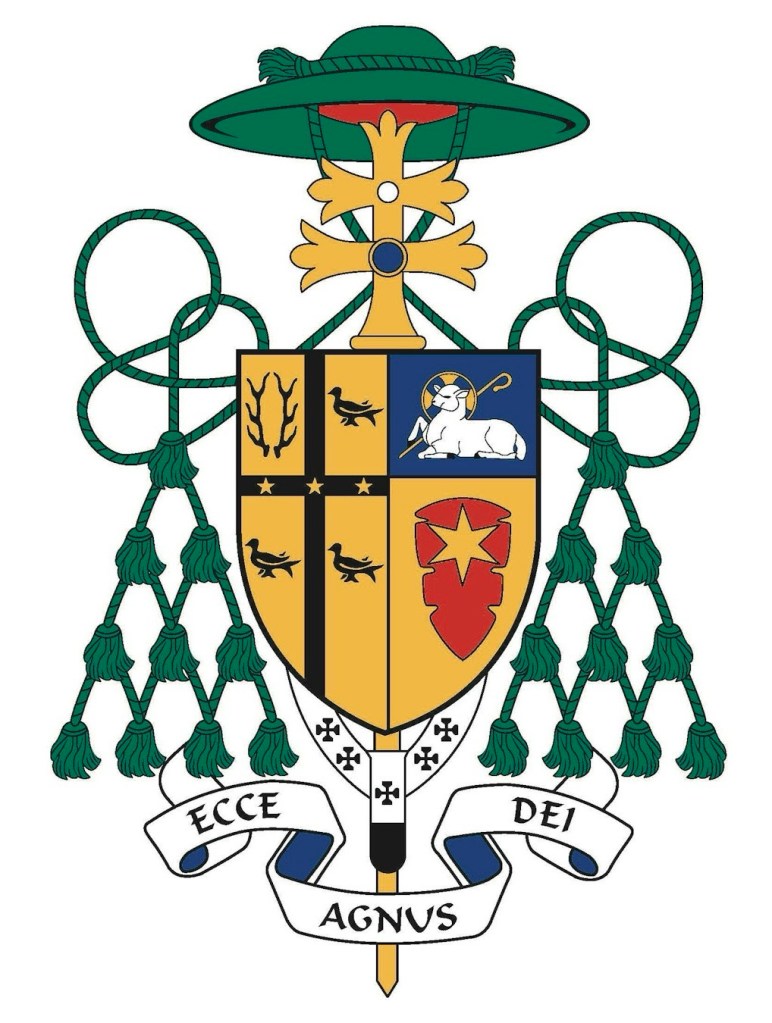
On May 21 Pope Francis appointed the Most Rev. Joseph Williams (50) a priest and bishop from the Archdiocese of St. Paul-Minneapolis to be the Coadjutor Bishop of Camden, NJ. Bishop Williams has been serving as Titular Bishop of Idassa and Auxiliary of St. Paul-Minneapolis since 2022. He will assist the current Bishop of Camden, Dennis Sullivan (74) whose resignation from the See of Camden, submitted in 2020 when he turned 75, will be accepted on his 80th birthday, March 17, 2025. At that time, as Coadjutor, Bishop Williams will automatically succeed to the See. There are no longer Coadjutor Bishops without the right of succession appointed in the Church as there had been at one time.
The Bishop’s coat of arms (below) will make for an interesting achievement when eventually impaled with those of the Diocese of Camden.
The arms of the See of Camden are composed of a black field on which are placed three silver elephants’ heads, which are arms derived from the arms of Charles Pratt, First Earl of Camden and Lord Chancellor of England, and for whom the See City is named. Three gold crosses accompany the elephants’ heads, in honor of the Blessed Trinity and for difference in order to make the shield peculiar to the Diocese of Camden. Above the elephant heads and crosses is a silver crescent to honor the Blessed Virgin Mary in her title of the Immaculate Conception, titular of the Cathedral Church in Camden.
The varied armorial bearings of James Cardinal Gibbons. I often speak about the incorrect practice of a prelate deciding to change or modify his existing coat of arms. Even when arms are assumed (as opposed to granted by a heraldic authority) the bearer should not feel free to completely change them. Sometimes arms are augmented to reflect a new honor received or a change in status. However, completely changing a coat of arms, once assumed, should be avoided.
Gibbons was made Vicar Apostolic of North Carolina which did not yet have its own diocese, in 1868 and served there until he was made Bishop of Richmond, Virginia from 1872-1877. He bore the first coat of arms in both of those places. When he was made archbishop of Baltimore in 1877 he simply modified the external ornaments to reflect his promotion but still used the same shield depicting the seated Virgin Mary. Over the course of the next 44 years of his tenure in Baltimore he then changed his coat of arms no less than three times!
He adopted the arms showing the Holy Spirit descending from a cloud over the globe and also made use of an impalement depicting a pall (pallium). This would have been before the archdiocese had a coat of arms for itself and Gibbons was simply doing with this variant what many an archbishop had done. Namely, using an impalement with a pallium to indicate the status of a metropolitan archbishop.
In 1911, however, he changed his arms entirely again and adopted the coat of arms he bore until his death in 1921. These were done for him by Pierre Chaignon La Rose and I would think that what brought about the last change was the adoption of an archdiocesan coat of arms with which Gibbons’ personal arms were impaled. No doubt La Rose, who was fond of “correcting” coats of arms he didn’t like, convinced Gibbons to adopt the last design which was based on the arms of Gibbons used in Ireland (by a family the cardinal may or may not have had any connection to) differenced by the escallop shell, a symbol of St. James.
I have to admit his original coat of arms wasn’t very good and the final one he ended up with was rather good. But, the process of making many and varied changes throughout his life is not good at all.
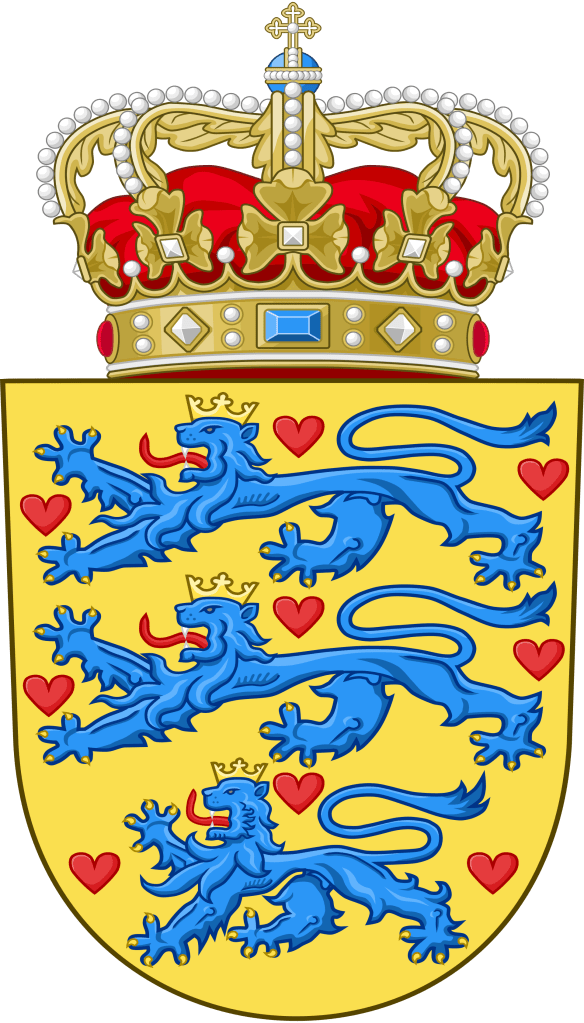
With the approaching abdication of Queen Margrethe II and the accession of King Frederik X of Denmark I’ve been reading up on the heraldry used by the country and the royal house. The state coat of arms consists of three pale blue lions passant wearing crowns accompanied by nine red lilypads (normally represented as heraldic hearts), all in a golden shield with the royal crown on top. The national coat of arms of Denmark is similar to the state coat of arms, but without the royal crown above the shield.
It is historically the coat of arms of the House of Estridsen, the dynasty which provided the kings of Denmark between 1047 and 1412. The current design was introduced in 1819, under Frederik VI. Previously, there had been no distinction between the “national” and the “royal” coat of arms. Since 1819, there has been a more complex royal coat of arms of Denmark separate from the national coat of arms. I’ll take a look at that in another post.
Historically, the lions faced the viewer rather than forward and the number of hearts was not regulated and could be much higher. The “heart” shapes originally represented waterlily pads; a royal decree of 1972 still specifies these figures as søblade (“lake leaves”). Frederik VI also fixed the number of hearts to nine and decreed that the heraldic beasts were lions, as opposed to leopards, and consequently facing forward in 1819. The blazon is: Or, three lions passant in pale azure crowned and armed Or langued gules, nine hearts Gules.
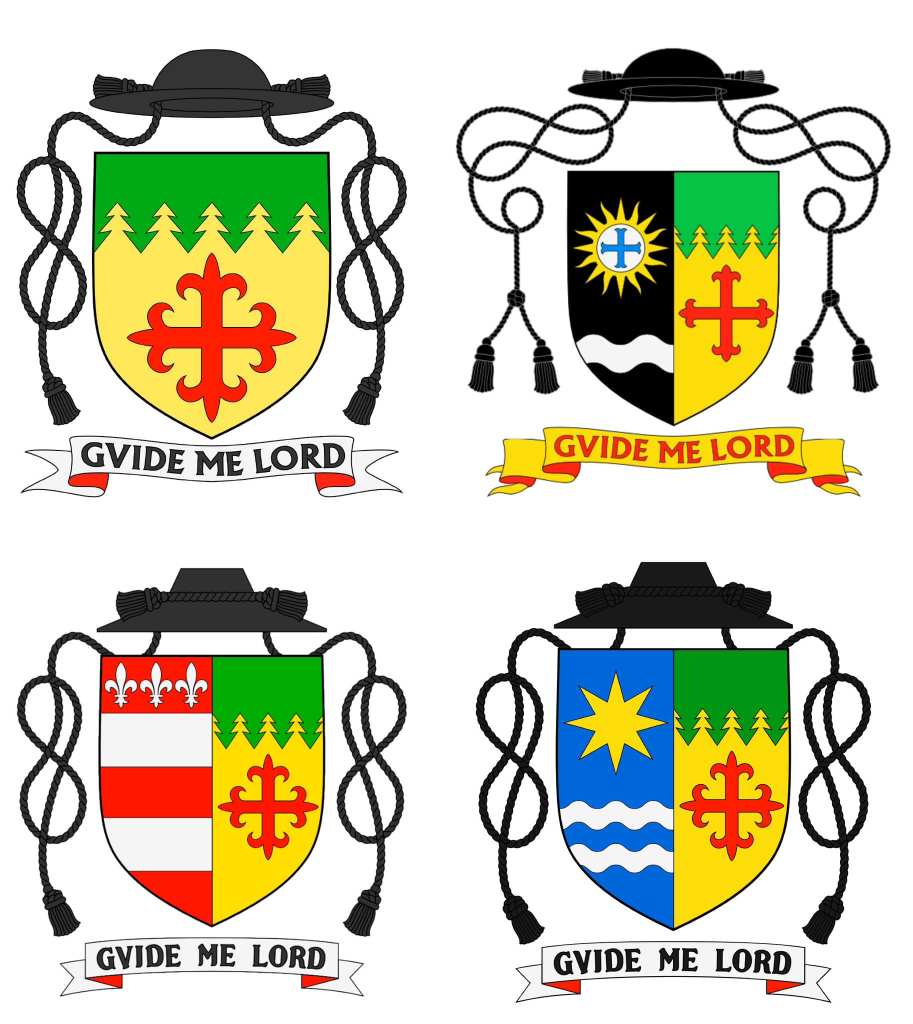
Throughout the course of my priesthood, after my time as a Parochial Vicar concluded and I began to be placed in charge of my assignments I also began the practice of 1) devising armorial bearings for the different places in which I have served and 2) marshaling those newly-devised coats of arms with my own. Having jurisdiction over the church or parish was then illustrated heraldically.
In the image above the first coat of arms (upper left) is my personal coat of arms assumed at ordination in 1997. The next image (upper right) shows my arms impaled with those of the Shrine of the Blessed Sacrament in Raritan, NJ where I served as the Sixth Rector (hence the four tassels instead of only two) from 2009-2015. The image at lower left shows my arms impaled with those of St. Joseph Church in Washington, NJ where I served as Administrator and then as the Twenty-Second Pastor from 2015-2023. During the last part of that time I was also Dean of the Morris Canal Deanery. The final image (lower right) shows my coat of arms impaled to the newly-devised parish coat of arms of St. Mary, Star of the Sea in South Amboy, NJ where I will serve as the Ninth Pastor from 2023 onwards.
Next week I’m moving to a new assignment as Pastor of St. Mary Church in South Amboy, NJ. The parish was established in 1851 dedicated to St. Mary, Star of the Sea. In 1853 property for the present church was purchased and in 1854 the appointment of its first resident pastor occurred.
While the parish still is, and always has been, dedicated to Our Lady under the title of “Star of the Sea” it has always been known simply as St. Mary’s. That’s actually rather common. People like short hand and nicknames and many churches dedicated to various titles of Mary are known by their parishioners simply as St. Mary’s.
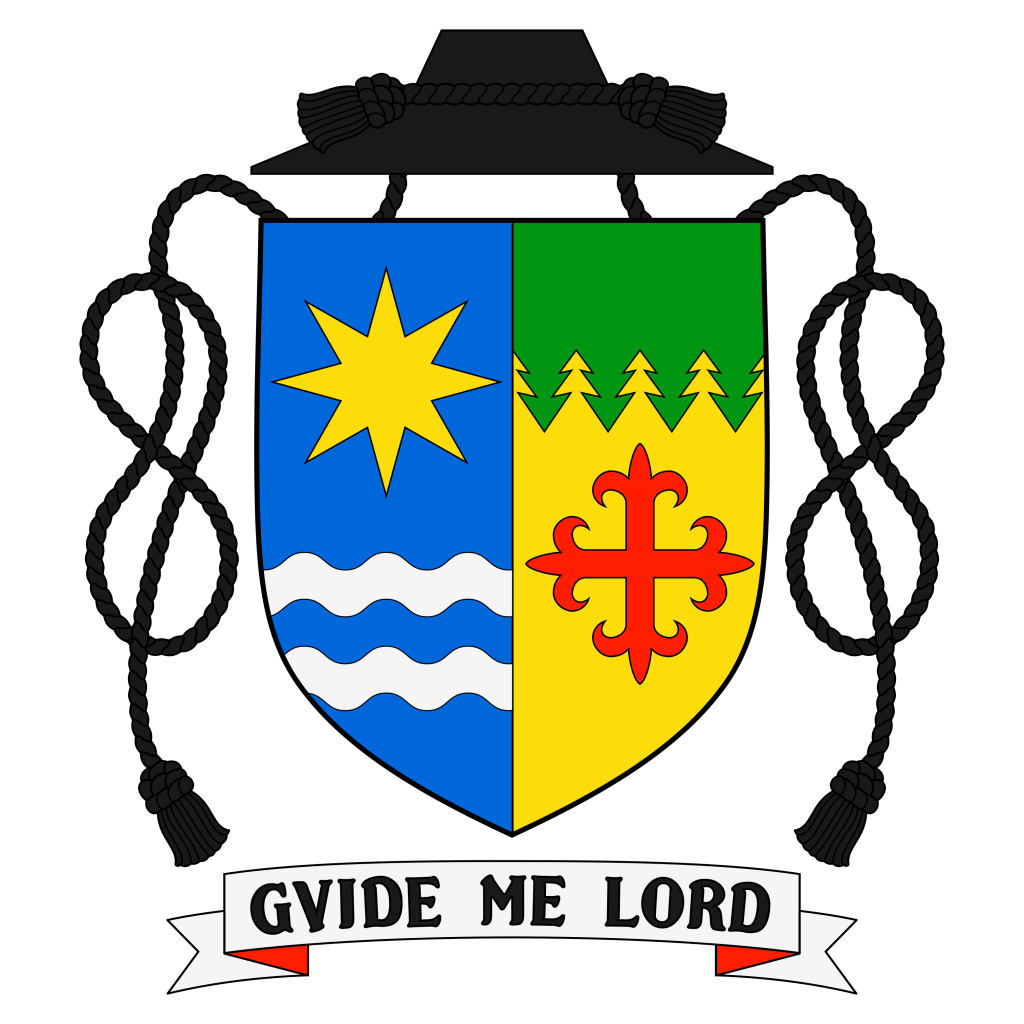
As I prepare to begin my tenure as Pastor I looked to designing armorial bearings as a symbol for the parish. This has been my custom for years. So, naturally I took as a starting point the canonical patronal title of the parish—St. Mary, Star of the Sea—to devise the coat of arms. That title lends itself very well to a clear and simple design evoking the parish’s patroness.
I know the parish will always be known with great affection as St. Mary’s. I hope we can also foster the occasional use of the beautiful name of its patroness, Star of the Sea (in Latin: Stella Maris).
As Pastor of the parish I will impale my own armorial bearings with those of the parish.
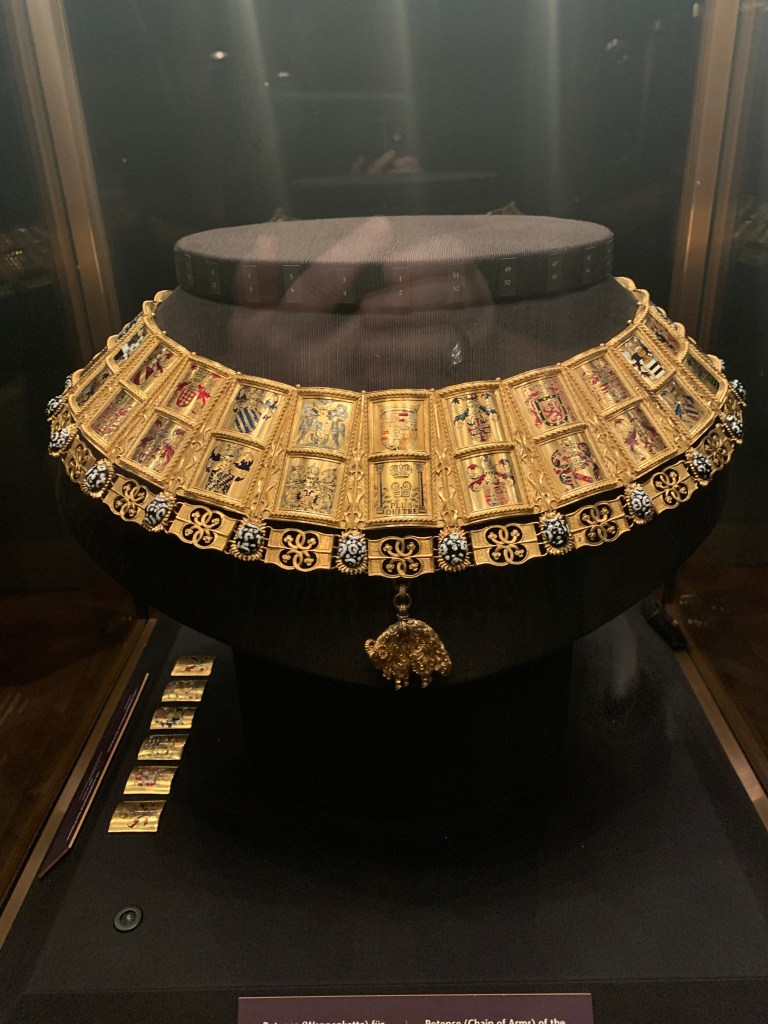
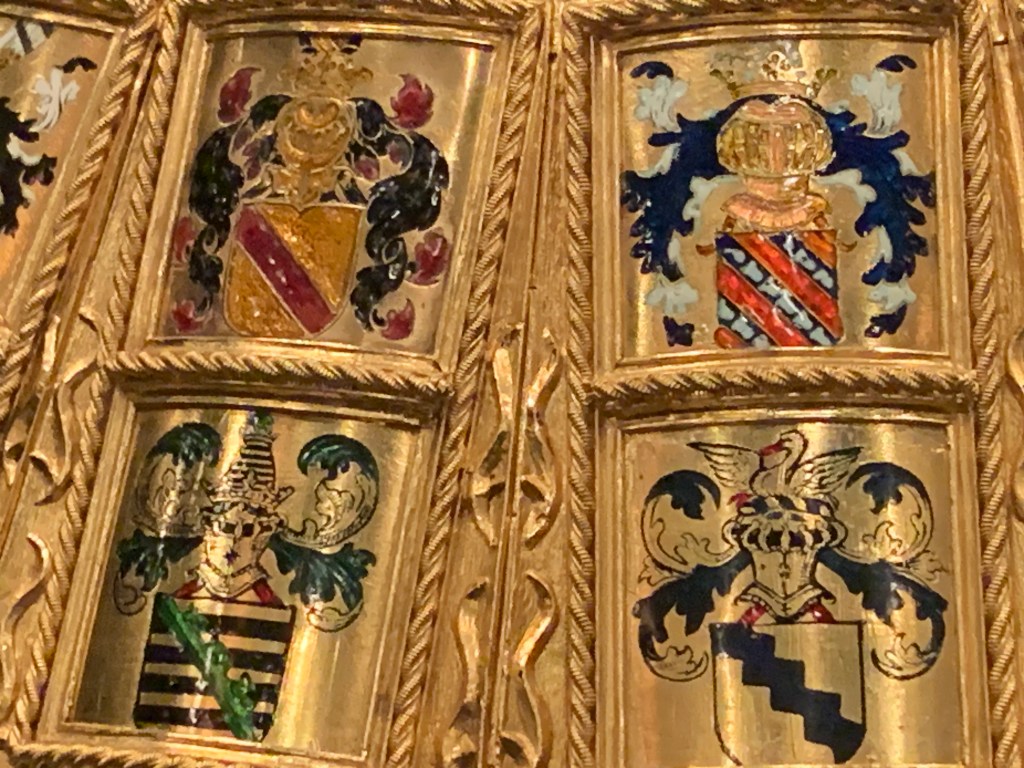
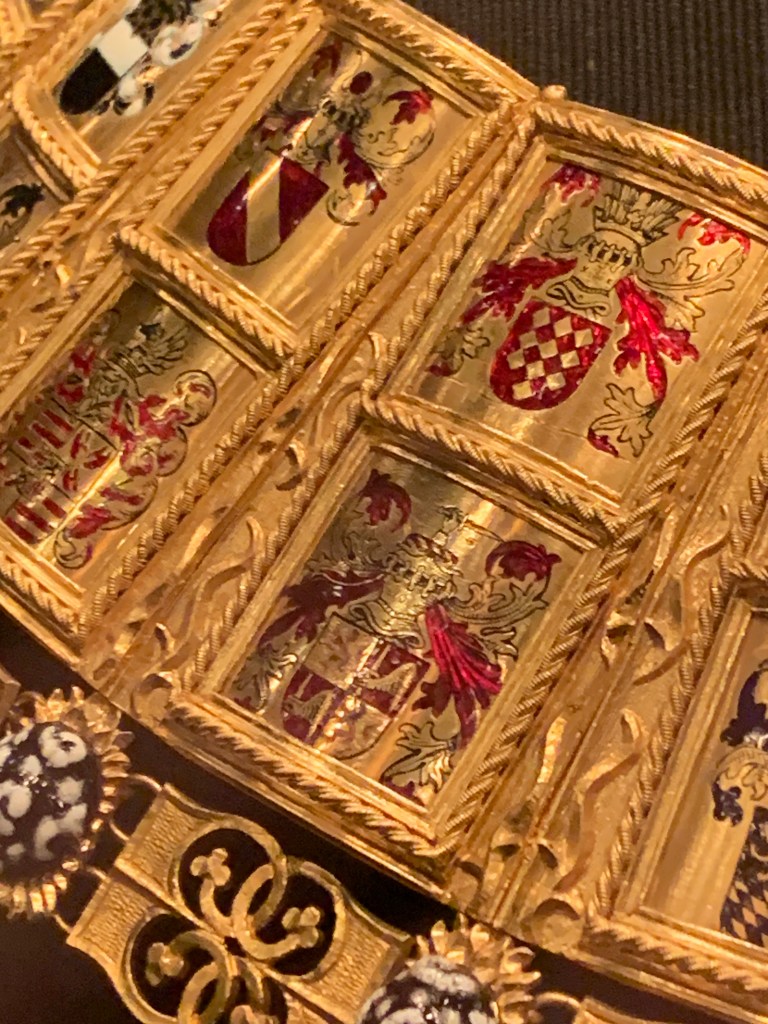
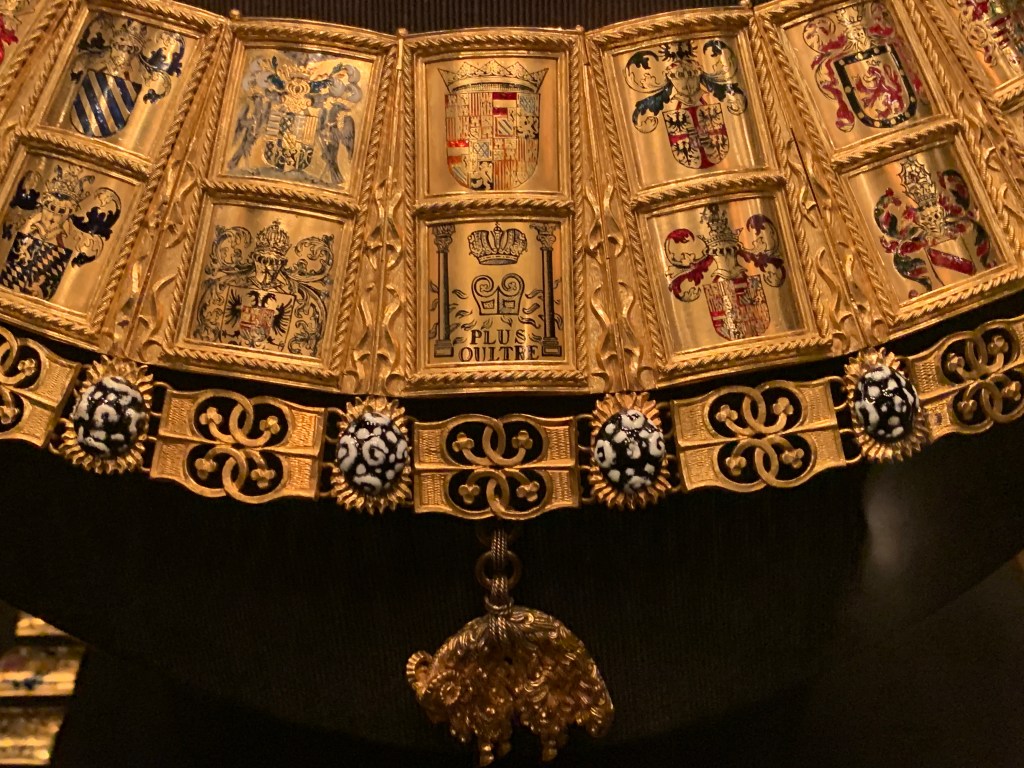
On a recent visit to the Schatzkammer (treasury) of the Hofburg Palace in Vienna I had the chance to reacquaint myself with a real treasure: the heraldic collar, called a potence, of the King-of-Arms of the Distinguished Order of the Golden Fleece. It’s truly amazing and covered in the armorial bearings of the knights of the Order. A feast for the eyes…but it must have been awfully hard on the collar bone and shoulders!
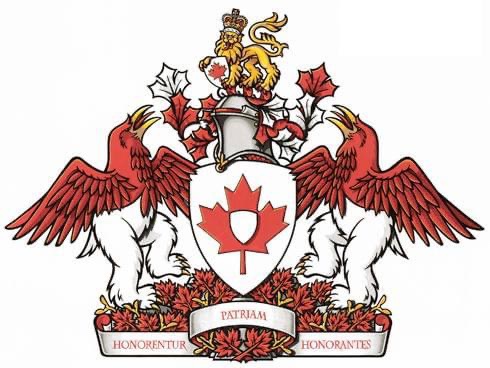
Sincere good wishes to the Canadian Heraldic Authority (Autorité Héraldique du Canada) as they celebrate their 35th anniversary!
In 1988 the Queen of Canada issued letters patent granting permission for the Governor General “to exercise or provide for the exercise of all powers and authorities lawfully belonging to Us as Queen of Canada in respect of the granting of armorial bearings in Canada”. On June 4, 1988 Governor General Jeanne Sauvé authorized the creation of the CHA.
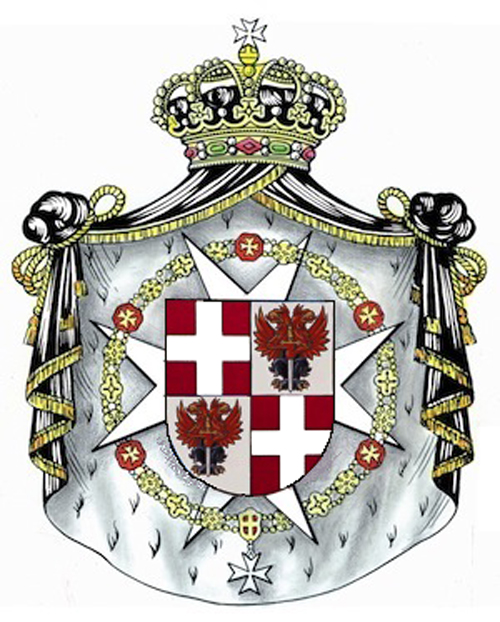
On May 3, 2023 Fra’ John Dunlap the Lieutenant of the Order of Malta since 2022, was elected as Prince and 81st Grand Master of the Sovereign Military Hospitaller Order of St. John of Jerusalem, Rhodes and Malta. He is a 66-year-old Canadian and the first Professed Knight from the Americas to be elected as head of the Order. In accordance with the current Constitutions of the Order he will serve for a term of 10 years. Ad Multos Annos!
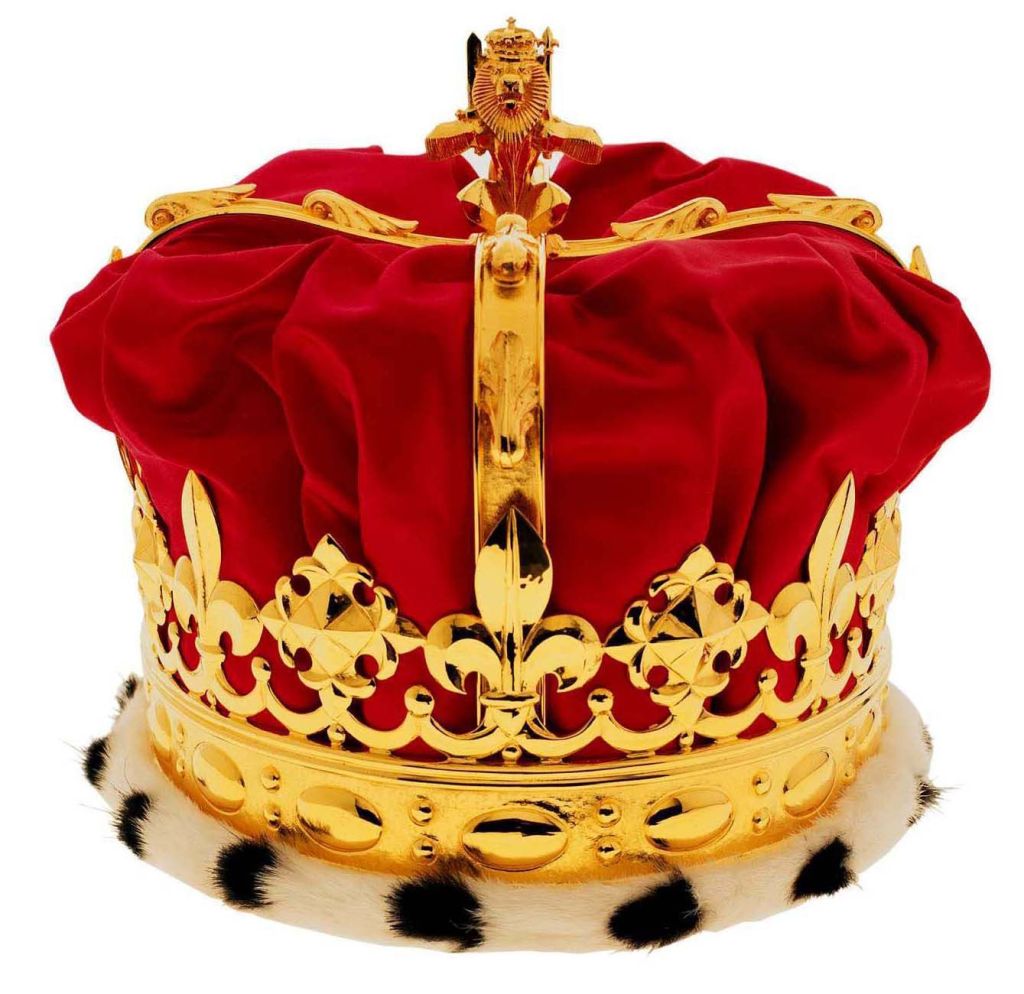
It was very interesting to read in the Times that Lord Lyon King-of-Arms, the senior heraldic officer in Scotland will not only take part in King Charles’ coronation on May 6 but will do so wearing the crown that had been commissioned and obtained by the Heraldry Society of Scotland back in the early 2000s. The arches on the crown, which are removable, will be removed for the coronation so it won’t too closely resemble the crown with which the King shall be crowned.
The expensive item and the trouble that went into commissioning and fabricating it was one of the reasons that, despite the Peers not being allowed to wear their coronets at the upcoming, more modernized, ceremony Lord Lyon–and indeed the other three English Kings-of-Arms–will be wearing their crowns. The coronation of the Sovereign is one of the only occasions on which these crowns are traditionally worn.
This month marks the 80th anniversary of the office of Norroy and Ulster King of Arms. The office of Ulster King of Arms was created by King Edward VI on February 2, 1552, and for its first 36 years, appears to have been regarded as attached to the College of Arms; the two Ulsters in this period, Bartholomew Butler and Nicholas Narboon, had both been English Heralds before their appointment as Ulster. After the resignation of Narboon in 1588, subsequent Ulsters acted independently from the English College. On January 30, 1908, King Edward VII appointed Captain Nevile Rodwell Wilkinson King of Arms and Principal Herald of all that part of the United Kingdom of Great Britain and Ireland called Ireland, with the title of Ulster. Wilkinson exercised this office, based in Dublin Castle, through a period of great political turmoil in Ireland until his death on December 22, 1940. The political circumstances in Ireland at this time led to the decision to return the office of Ulster to the College of Arms in London, with responsibility for Northern Ireland alone, and united with the office of Norroy.
On January 29, 1931, King George V had appointed Algar Henry Stafford Howard, M.C., as King of Arms and Principal Herald of the North Part of England, with the title of Norroy. Howard still held this office on April 1, 1943, when King George VI additionally appointed him King of Arms and Principal Herald of that part of the United Kingdom of Great Britain and Northern Ireland called Northern Ireland, without prejudice to his existing appointment as Norroy and with the title of Ulster to be borne after that of Norroy. Howard held these joint offices until his promotion to Garter the next year, and on June 2, 1944, King George VI appointed Sir Gerald Woods Wollaston, K.C.B, K.C.V.O., King of Arms and Principal Herald of the North Part of England and of Northern Ireland, with the title of Norroy and Ulster, which has remained the form of the office to this day. The present Norroy and Ulster, Robert John Baptist Noel, was appointed by Queen Elizabeth II on April 6, 2021. He proclaimed the accession of His Majesty The King at Hillsborough Castle in Northern Ireland on September 10, 2022, the first time Ulster had performed such a duty in Ireland since the proclamation of King George V in Dublin on May 9, 1910.
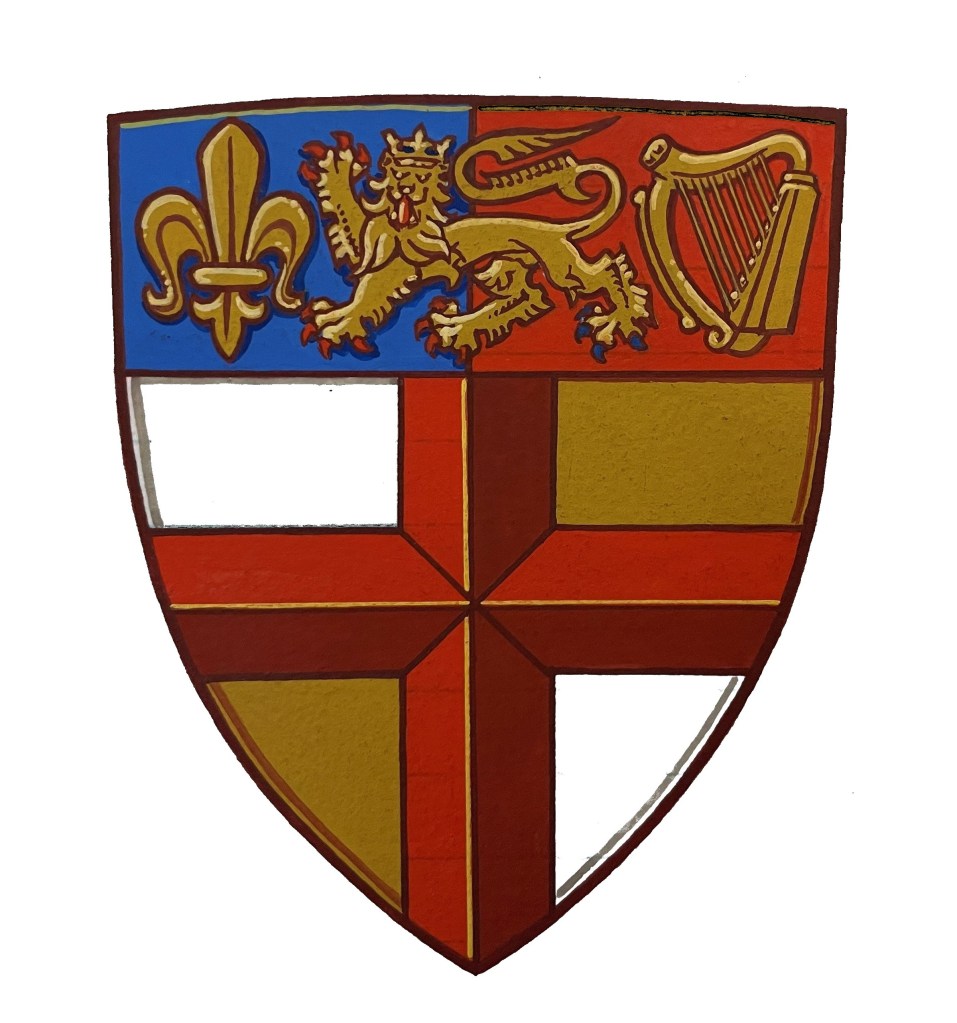
Between 1943 and 1980, holders of the office of Norroy and Ulster used the arms of office of one of the two offices, or both arms impaled on one shield. In 1980, Queen Elizabeth II approved new arms for the joint office. These are: Quarterly Argent and Or a Cross Gules on a Chief per pale Azure and Gules a Lion passant guardant crowned between a Fleur-de-lis and a Harp Or. Norroy and Ulster King of Arms is also ex officio King of Arms, Knight Attendant, Registrar, and Keeper of the Records of the Most Illustrious Order of Saint Patrick, offices which are purely nominal since the death of the last Knight of the order.
Text taken from the College of Arms Newsletter, No. 71 April, 2023
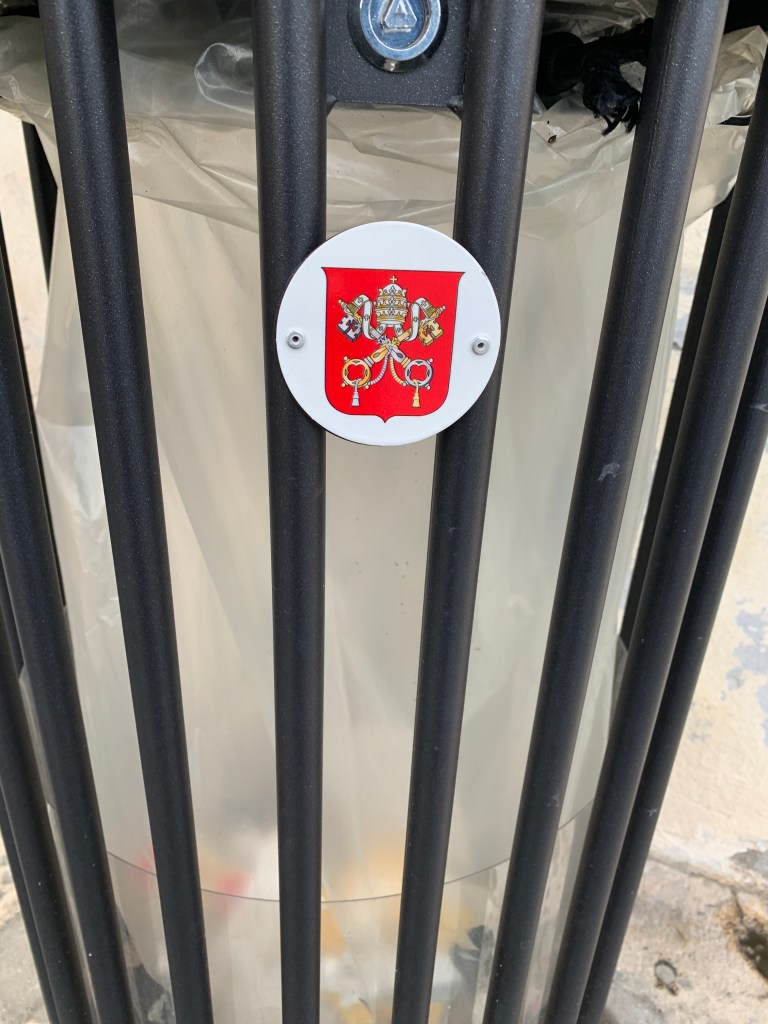
On a recent visit to the Vatican I was amused and delighted to see that even the trash cans in St. Peter’s Square were looking rather smart by being emblazoned with the armorial bearings of the Holy See. Indeed, heraldry can be used any and everywhere.




 EXARANDORUM