Category Archives: Archbishops

Some Recent Installations/Ordinations in the U.S.

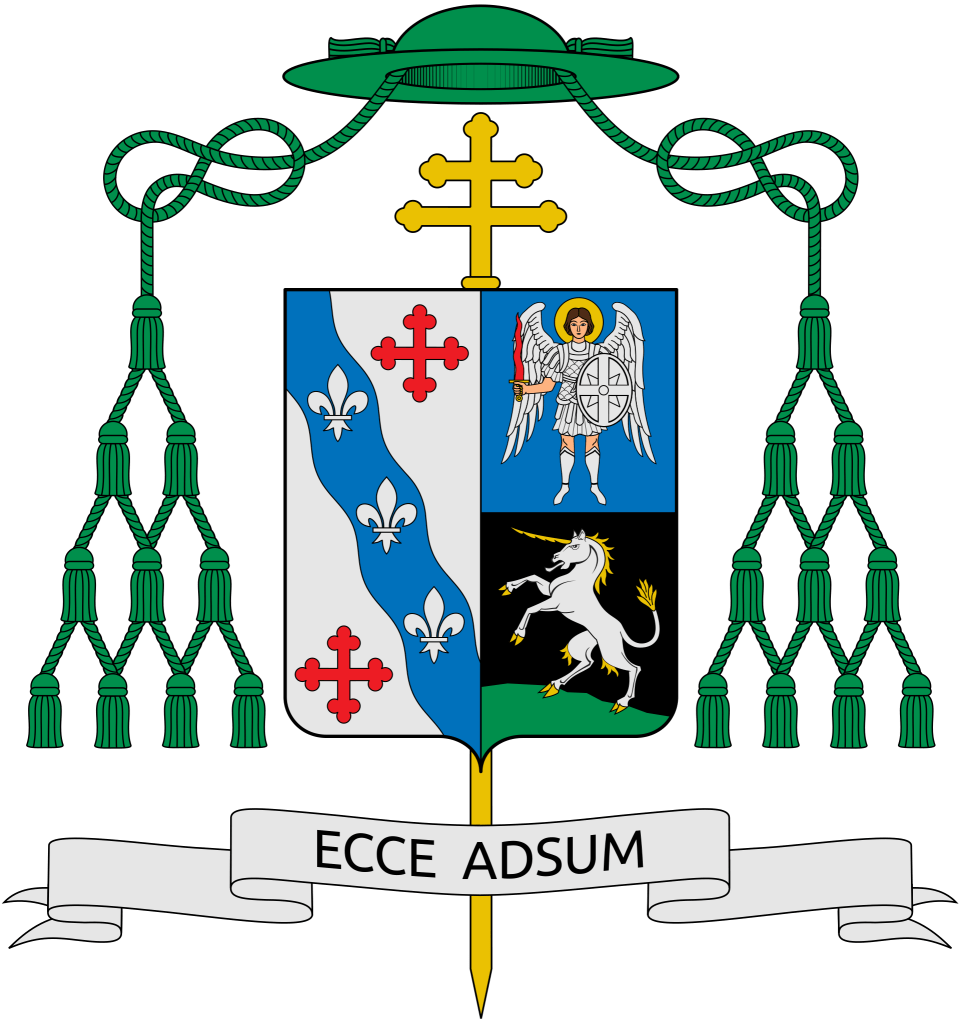
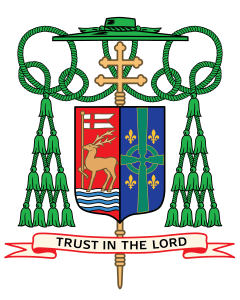
During the last month there have been some vacant Sees filled in the United States. The Most Reverend Christopher Coyne (65) succeeded to the See of Hartford on May 1 becoming its fourteenth bishop (and sixth archbishop). A very fine achievement depicted in the style of the late Deacon Paul Sullivan…except I think it is ill-conceived to place a green cross on a blue field. Yes, there is the slightest fimbriation on the cross to protect against violation of the so-called tincture “rule”. Nevertheless, the overall appearance is odd…and the fimbriation, such as it is, is entirely too narrow to the point of being almost invisible!

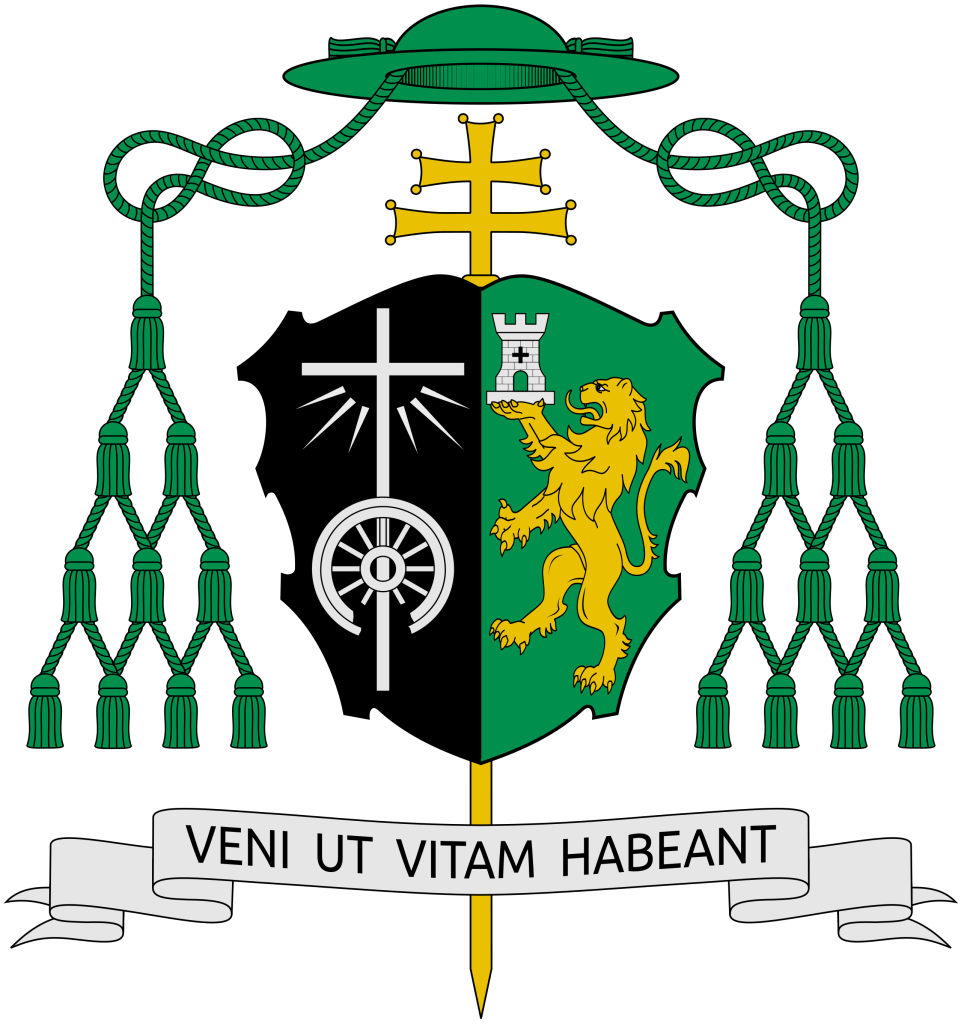
The Most Rev. James Ruggieri (56) was ordained a bishop and installed as the fourteenth Bishop of Portland Maine on May 7.

According to the diocesan website, “The personal arms of Bishop Ruggieri are divided horizontally (per fess). The upper half is painted white (argent) and bears an anchor painted blue (azure). It recalls the birthplace and home of the Bishop in the Diocese of Providence, Rhode Island. That state’s flag and seal comprise a gold anchor and a scroll with the motto “Hope.”

The anchor is an ancient symbol of the theological virtue of hope, deriving from the words of the Letter to the Hebrews: “We have this hope as a sure and steadfast anchor of the soul …” (Hebrews 6:19). In this depiction, the stock of the anchor is positioned on the shank to resemble a Passion Cross, an equally ancient symbol of the theological virtue of faith. As Pope Benedict XVI pointed out, “Hope, in fact, is a key word in Biblical faith—so much so that in several passages the words faith and hope seem interchangeable. Thus, the Letter to the Hebrews closely links the “fullness of faith” (10:22) to “the confession of our hope without wavering” (10:23).

In the lower half of the shield is a depiction of the five loaves and two fish that the Lord Jesus multiplied to feed five thousand men and their families. The only pre-resurrection miracle that is recounted in all four Gospels (Mt 14:13-21; Mk 6:32-44; Lk 9:10b-17; Jn 6:1-15), it holds a special place in the story of the public ministry of Jesus and points to the institution of the Eucharist at the Last Supper. The Feeding of the Five Thousand also highlights the cooperation of the apostles – whose successor the bishop is – with the Lord, both in the ministry of charity, and as celebrants and guardians of the Holy Eucharist and the other sacraments.”

The episcopal cross is depicted incorrectly, but more about that to follow.
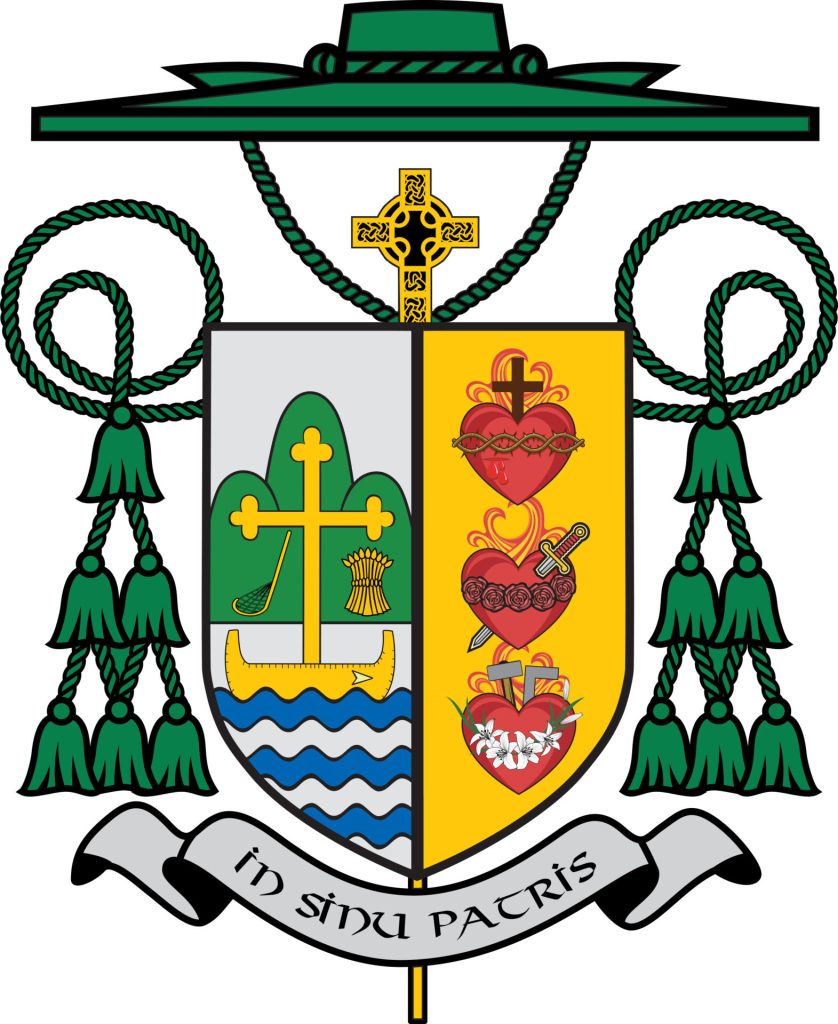
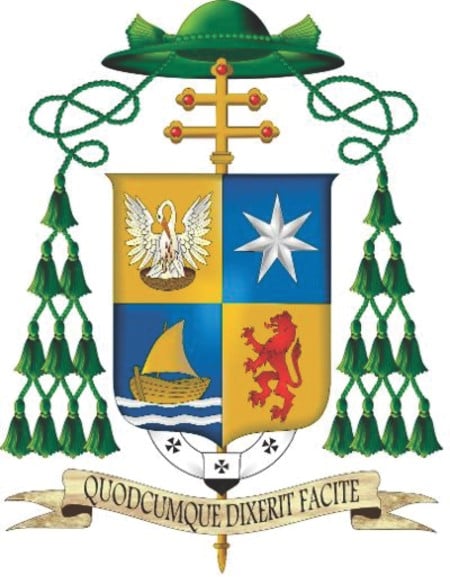
The Most Rev. William Battersby (64), Auxiliary Bishop of Detroit, was installed on May 20 as the eleventh Bishop of La Crosse, Wisconsin.

His coat of arms, while very simple, seems a bit overly given to the devotional. The explanation from the diocesan website says, “For the personal coat of arms of Bishop Battersby…at the top of the shield is a Celtic processional cross meant to honor Bishop Battersby’s Irish heritage. It is shaped like a traditional cross but with a ring, representing the sun, around the intersection of the stem and arms. The whole cross is decorated with ornate Gaelic patterns.

Bishop Battersby’s Coat of Arms includes the three Sacred Hearts. The hearts represent the Holy Family and symbolize the unending and boundless love for us. The wounded heart signifies his devotion to the Sacred Heart of Jesus. It also pays tribute to Sacred Heart Major Seminary where he prepared for the priesthood and at which he served as vice-rector and dean of seminarian formation at the time he was called to the episcopacy.

The second heart, the Immaculate Heart of Mary, signifies the trust and confidence that Bishop Battersby has in the Blessed Mother’s intercession and protection. The sword symbolizes the sorrows of Mary, the flames represent her burning love for Jesus and us, her children and the roses represent her purity. 

Bishop Battersby’s devotion to St. Joseph is represented in the third of the Sacred Hearts, the Chaste Heart of Joseph, inflamed with love and adorned with the white lily of purity, a symbol of his faith and steadiness.”

Again, I’ll say something about the episcopal cross below.
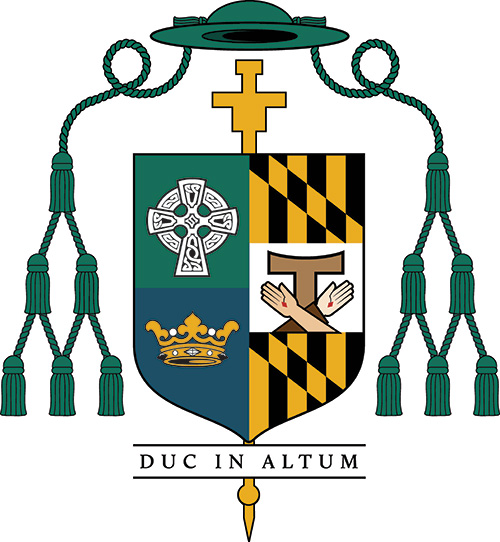
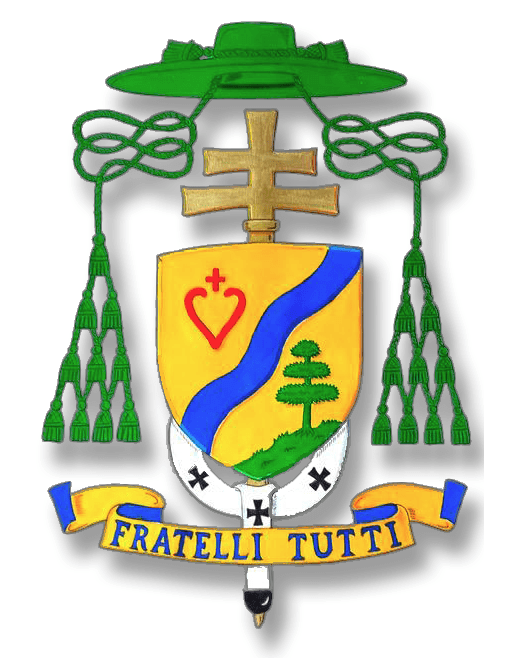
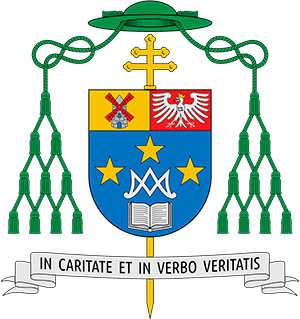
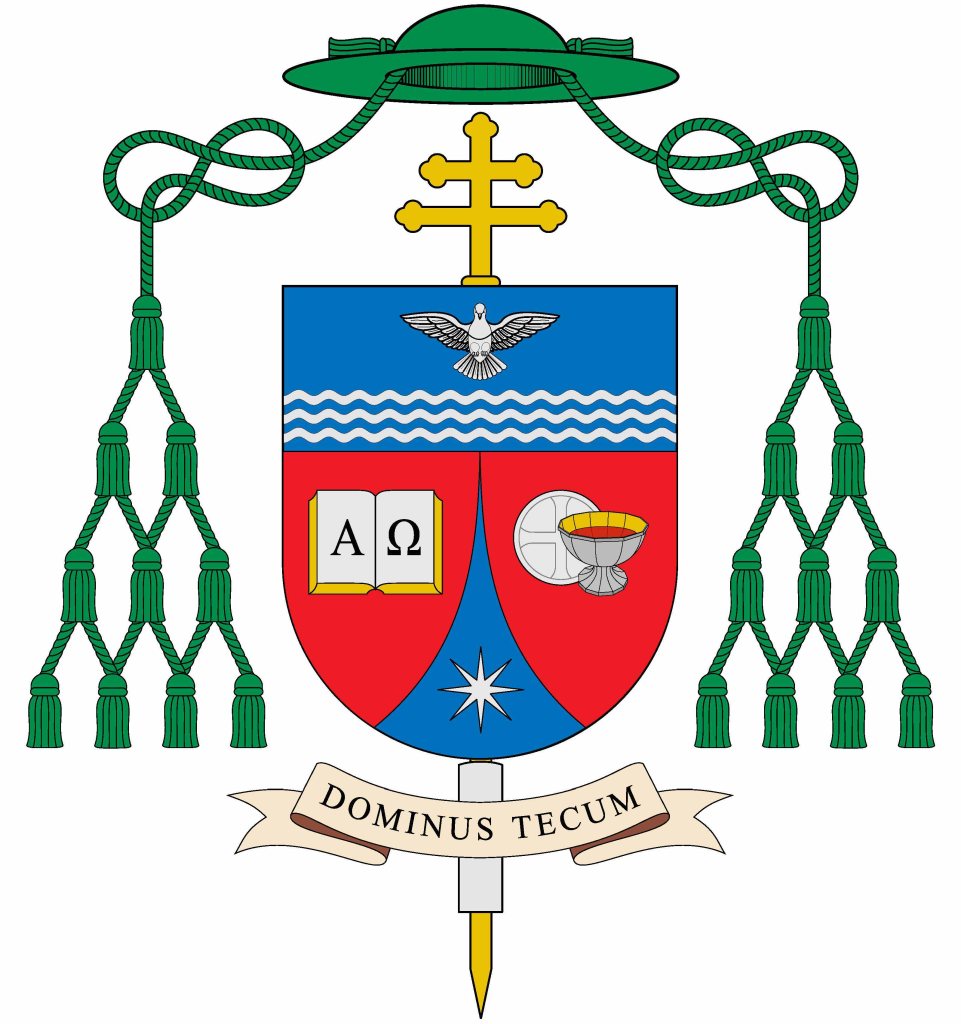
May 29 saw the ordination and installation of the Most Rev. Michael Martin, OFMConv (62) as the fifth Bishop of Charlotte, North Carolina.

The diocesan website describes his personal arms, “To the viewer’s right is the Franciscan coat of arms. Featuring the traditional Franciscan Tau cross with two arms crossing one another, it is rich in symbolism. The two arms, one Christ’s and the other St. Francis of Assisi’s, both bear the stigmata. They symbolize God’s love and Francis’s loving response to the Word made incarnate, Taberski explained. It is an image found throughout the ministries, friaries, missions and sites served by the Franciscan order.

On the right side of the shield, the top (known as the “chief”) and the bottom (the “base”) feature references to George Calvert and his son Cecil Calvert – the first and second barons of Baltimore. The Calverts were among the first Catholics to arrive in colonial America. They established the then Province of Maryland as a safe place for English Catholics to emigrate to since they were no longer able to freely practice their faith at home. In the coat of arms, the use of six vertical stripes – alternately gold and black, with the diagonal stripe in color – recalls Bishop Martin’s hometown of Baltimore.”

A nice simple design but perhaps the arms of Calvert would have looked better depicted once in the main part of the field with the Franciscan symbols occupying a chief? And again there is an incorrect episcopal cross!

So, my criticism of that, which I have often written about in this blog, is that, firstly, it is NOT a “processional” cross!! It is an episcopal cross—a heraldic symbol—which indicates the coat of arms belongs to a bishop. It is, in fact THE heraldic symbol indicating episcopal arms. The galero, while traditional, is not necessary, nor is a green galero with 12 tassels exclusive to the arms of bishops. But the inclusion of the episcopal cross is truly the sign—and the only essential one—to indicate that the achievement depicts the coat of arms of a bishop.

As an external ornament it is NOT subject to personalization. An armiger has a great deal of choice regarding what is depicted on the shield. However, the external ornaments are not subject to his whim, nor may they be used to convey further personal significance or symbolism. Rather, their purpose is to indicate rank in the overall achievement. The blazon may not specifiy a certain type, shape, color, ornamentation, or embellishment to the galero, or the episcopal cross. Each and every artist is free to depict the episcopal cross as he pleases.

This idea of extending the personal symbolism to the external ornaments is occurring more and more of late…as more and more people with very little background in, or knowledge of heraldry are being asked to design episcopal coats of arms. It is amateurish and a grossly mistaken thing to do.

Priest—Cardinal—THEN Bishop

Ángel Cardinal Fernández Artime, S.D.B. (born August 21, 1960) is a priest of the Salesians of St. John Bosco, who has been their Rector Major since 2014, the first Spaniard to hold that office. 

On July 9, 2023, Pope Francis announced his plans to create him a cardinal at a consistory scheduled for 30 September. He is the first superior of a religious congregation be made a cardinal.  At that consistory he was assigned the rank of cardinal deacon with the title of Santa Maria Ausiliatrice in Via Tusculana.

Pope Francis told Fernandez he could continue to serve as rector until July 31,2024, when he will be given a new assignment. He was made a member of the Dicastery for Institutes of Consecrated Life and Societies of Apostolic Life on October 4, 2013. The Salesians plan to hold an election to replace him as rector in the spring of 2025.

His episcopal consecration is scheduled for April 20, 2024. Pope Francis has assigned him the titular see of Ursona with the title of archbishop.

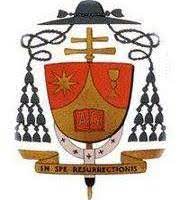
The coat of arms he assumed upon becoming a Cardinal (left) correctly omits any sort of episcopal cross behind the shield. Cardinals are not entitled to use this cross unless they possess the episcopal character. His coat of arms will have the addition of an archiepiscopal cross (right) after his ordination as an archbishop. Until then he uses the armorial bearings of a priest who is a cardinal and his coat of arms will be modified to indicate his rank as an archbishop after April 20.

Mechelen-Brussel

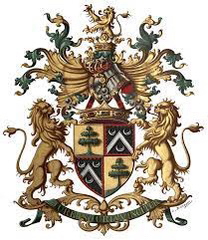
On September 3 the new Archbishop of Mechelen-Brussel (Malines-Bruxelles) was ordained a bishop and was installed as the 23rd Archbishop. The Most Reverend Luc Terlinden (54) is of the noble family of the viscounts and barons Terlinden. This makes him the first archbishop who is from the nobility since Mgr. de Méan (who was the last Prince-Bishop of Liège and died as Archbishop in 1830). There have been other nobles named as bishops in Belgium, however. It is disappointing that the archbishop chose to create and assume new arms (below) that only slightly refer to his noble family’s coat of arms (above, left). I’m sure many fine heraldist and genealogists are disappointed at that. The arms he has assumed aren’t bad, per se. Rather, it is that his ancestral arms are far better.

Archbishop Sheehan of Santa Fe

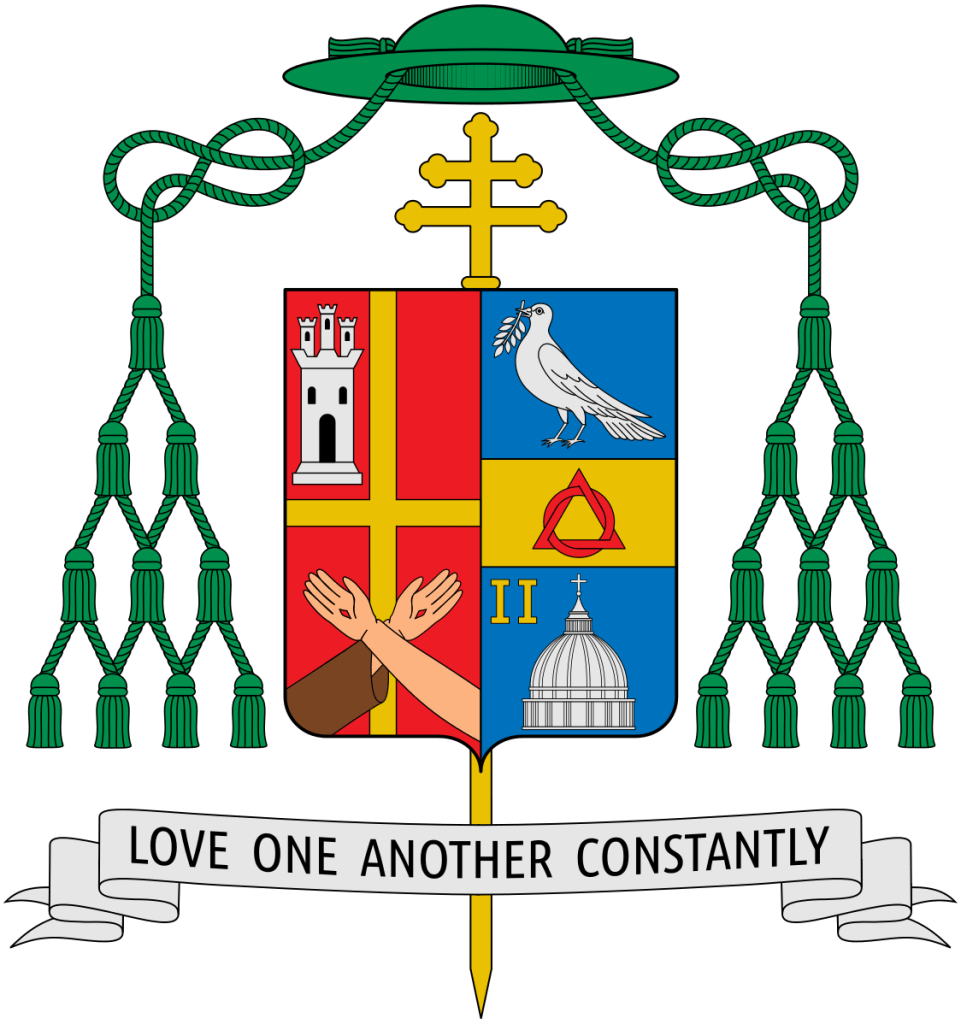
On June 3 the Most Rev. Michael Sheehan, Archbishop Emeritus of Santa Fe where he served from 1993-2015, passed away. He was 84.

His armorial bearings had a rather unusual charge. “Issuing from the bottom of the Archbishop’s arms is the silver (white) dome of St. Peter’s Basilica, in Rome, which is placed below a gold (yellow) Roman Numeral two (II) to signify that Archbishop Sheehan was in St. Peter’s on the day that Vatican Council II opened.”

Uh-huh.

All I can say, while meaning no personal disrespect to the deceased archbishop, is: nice try.

Archbishop Ravelli

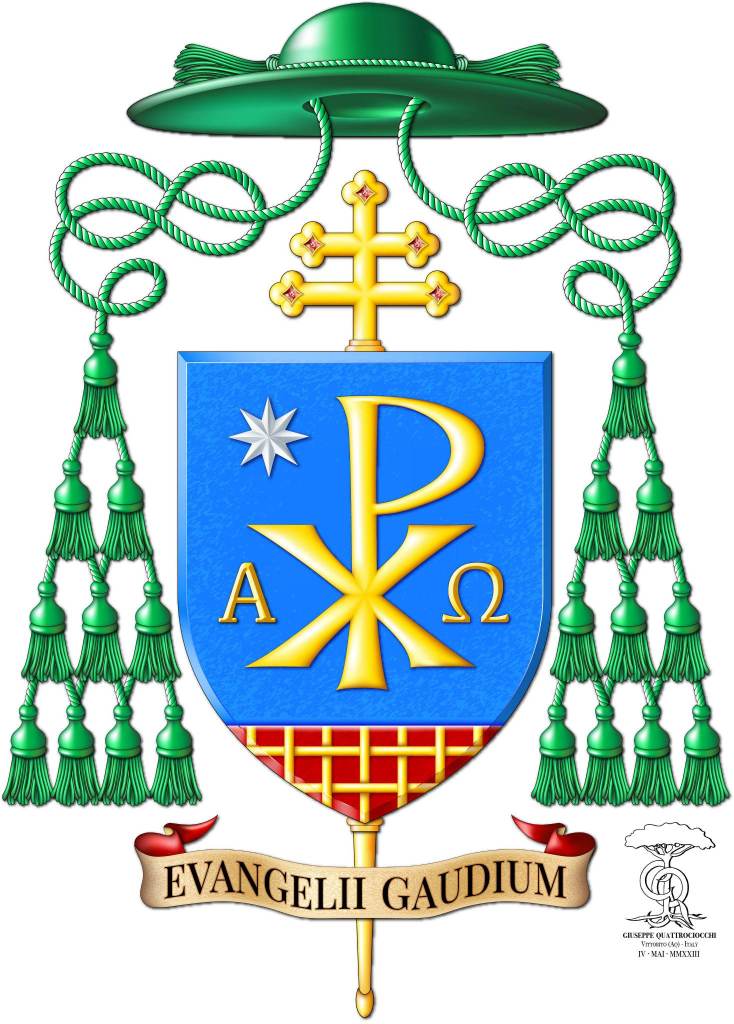
Father Diego Giovanni Ravelli (57) a priest of the Suburbican Diocese of Velletri-Segni who currently serves as the Master of Pontifical Liturgical Celebrations of the Office of Liturgical Celebrations of the Supreme Pontiff, in other words, the Pope’s Master of Ceremonies, will be ordained as the Titular Archbishop of Recanati, a new Titular See established in 2022 on June 3 at St. Peter’s basilica in the Vatican by Pietro Cardinal Parolin, papal Secretary of State.

The armorial bearings he is assuming were prepared by Giuseppe Quattrociocchi. The make use of simple and bold symbolism. The grid in base is a reference to St. Lawrence the Martyr.

Archbishop Jackels of Dubuque Retires

On April 4, the Holy Father accepted the resignation due to health reasons of the Most Rev. Michael Jackels, (68) Archbishop of Dubuque Iowa. His personal arms reflect his baptismal patron, St. Michael the archangel, combined with the unicorn from his paternal family’s coat of arms. When he first became a bishop his assumed arms impaled these two elements which was an odd choice. When he was translated to Dubuque he impaled his arms with those of the archdiocese and marshaled the other two elements in a manner that worked out to be aesthetically pleasing.

New Archbishop of Toronto

On March 25 the Most Rev. Frank Leo (51) a priest of Montreal, Canada who has served there as an Auxiliary Bishop only since September of 2022, was installed as the 14th Metropolitan Archbishop of Toronto. His coat of arms is:

Quoting the website of the Archdiocese the achievement is explained as follows:

Bishop Leo’s coat of arms is drawn from four principal aspects and devotions of his life and ministry, and is depicted on the shield in four quarters.

In the upper left (dexter chief) is found one of the most widespread Christological and Eucharistic symbols in Christian iconography: the pelican depicted opening its own flesh with its beak to feed its young with the blood that flows from it. This symbol refers to Christ himself as being the “Pie pellicane”, words found in the Adoro Te Devote, an ancient Eucharistic hymn attributed to Saint Thomas Aquinas: “Pie pellicane, Jesu Domine, me immundum munda tuo sanguine, cuius una stilla salvum facere totum mundum quit ab omni scelere” — “O loving Pelican, Jesus Lord, Unclean though I am, but cleanse me in your blood. One drop of which can free the entire world of all its sins.” It speaks of Christ shedding his own blood for all of humanity and how he continues to nourish us with his own flesh and blood in the Holy Mass. In the Gospel passage reported in. John 6:30, there is depicted a dialogue that took place in the synagogue at Capernaum. The Jews asked Jesus what sign he could perform so they might believe in him. They noted: “our ancestors ate manna in the desert.” Jesus replied that the real bread from heaven comes from the Father and it is himself, Jesus: “Truly, truly, I say to you, unless you eat the flesh of the Son of man and drink his blood, you have no life in you; he who eats my flesh and drinks my blood has eternal life, and I will raise him up at the last day. For my flesh is food indeed, and my blood is drink indeed. He who eats my flesh and drinks my blood abides in me, and I in him” (John 6:53-56). The Real Presence of Christ in the Eucharist as the One who nourishes us with his Sacred Body and Precious Blood is a fundamental doctrine of the Catholic faith.

A seven-point star is found on the upper right (sinister chief) and is the traditional and well-known Marian symbol par excellence. It refers to the invocation of the Virgin Mary as the Morning Star or “Stella matutina” found in the Litany of Loreto. The Morning Star is a sign of the coming day, preceding the rising sun. It is a promise of light, announcing the coming of the “sun of justice” (Malachi 4:1-3), the “daybreak from on high visiting us” (Luke 1:78). We know that the Blessed Mother is the Morning Star not for and through herself; she is indeed the reflection of God, her Creator and Redeemer. She exalts his glory and points to his light and salvation. According to Saint Bernard of Clairvaux, the great Troubadour of Mary, a star is a fitting comparison since it radiates light without losing its brightness, just as Our Lady, in giving birth to Christ did not lose her virginity. The symbolism of the star also refers to Our Lady as the Star of the Sea or “Stella Maris”, a title found in the medieval hymn Ave Maris Stella and whose praises are sung by the same Saint Bernard, famous for the invocation: Respice stellam, voca Mariam – Look upon the Star, call upon Mary. “If the winds of temptation arise; if you are driven upon the rocks of tribulation look to the star, call on Mary. If you are tossed upon the waves of pride, of ambition, of envy, of rivalry, look to the star, call on Mary. Should anger, or avarice, or fleshly desire violently assail the frail vessel of your soul, look at the star, call upon Mary.” Moreover, she is referred to as the Polar Star, or North Star, which navigators in antiquity looked to in seeking the right course so as to arrive safely to their destination. She is therefore our guiding light, our heavenly Mother, who is accompanies us as a loving companion on the journey of holiness in reaching Heaven, interceding for us. Finally, the Blessed Mother is also called the Star of the New Evangelization, which means she inspires and guides the Church’s apostolic efforts in bringing the Gospel to all peoples. The star is in silver (“argent”), a colour which depicts an array of heavenly attributes, personified in Our Lady’s purity, mercy and love. Bishop Leo entrusts his life, vocation and new pastoral ministry to her maternal mediation and intercession.

On the lower right (dexter base) is a boat floating on the waves and navigating amid the tempests. This is a well-known and clear reference to the Catholic Church established by Jesus Christ, the barque of Saint Peter. It is an ancient Christian symbol and reminds one of the struggles the Church endures, tossed about by raging winds, amid storms on the many rough seas of darkness and persecution but remaining set on its course and mission to bring to the harbour of salvation all of the travellers. Biblically, the imagery finds its origins in Noah’s ark in the deluge (Genesis and 1 Peter 3:20-21), and more clearly in the Gospel scene of Jesus protecting the boat of Saint Peter with him and the other apostles amid the stormy sea of Galilee (cf. Mark 4:35-41). 

The depiction of a lion is found on the lower right (sinister base) and is meant to recall the Bishop’s surname, Leo, which is Latin for lion. The lion is depicted as rampant, meaning “on its hind legs”, with the head in profile. Biblically, the lion is a symbol of courage, power and strength, the victory of God (cf. Genesis 49:9-10; Revelation 4:7). The lion is the emblem of dignity, of a powerful and fearless ruler, of majesty and strong leadership. It is likewise an image of Christ, the King of Kings. The Messianic title, the Lion of Judah, is applied to Christ himself as we read in the Book of Revelation (5:5): “Do not weep. The lion of the tribe of Judah, the root of David, has triumphed.” Finally, there is an ancient belief that lion cubs were born dead and after three days were brought to life by their father’s roar. The lion is in red, the colour of blood and also of charity, a reminder of the ardent and infinite love of the Father who sent to us his Only Begotten Son and who shed his blood for our redemption and for the forgiveness of sins. It signifies also that the virtue of charity is key and an integral part for the pastoral zeal of the new Bishop, as a successor to the Twelve Apostles of Jesus Christ.

Blue is the colour symbolizing the incorruptibility of the heavenly vault, of the ideals that rise upward, and represents detachment from the earthly and passing, and the soul’s ascent toward God. The colour gold, the first among the “noble” metals (those resistant to corrosion), is symbolic of the first virtue: faith. For it is through faith that we can fully understand the love and salvation that the eternal and loving Father offers to all of us, his beloved children in Christ Jesus.”

(Designed and emblazoned by Renato Poletti)

New Archbishop of Valencia

The Most Reverend Enrique Benavent Vidal (63) will be installed as the 62nd Metropolitan Archbishop of Valencia, Spain on December 10. Originally ordained as a priest of Valencia, the Archbishop-Elect has been serving as the Bishop of Tortosa since 2013. In 2004 he had been appointed Auxiliary Bishop of Valencia. So, it is a nice homecoming as he is promoted to Archbishop.

His armorial bearings were assumed at the time he became a bishop and will now reflect his higher rank:

Rembert Weakland, OSB 1927-2022

On August 22 the Most Rev. Rembert (George) Weakland, OSB (95) passed away in Milwaukee. He had been a monk and Archabbot at St. Vincent Archabbey in Latrobe, Pennsylvania serving as Coadjutor Archabbot cum plena jure from 1963-1967, Abbot-Primate of the Benedictine Confederation, 1967-1977 and Archbishop of Milwaukee from 1977 until 2002. His final years were marred by scandals and revelations of misconduct.

His armorial bearings were the same as an Archabbot and Abbot-Primate as well as during his tenure as Archbishop. A very simple design using a red field and stylized tongues of fire represents the Descent of the Holy Spirit.

Two for One

On June 20 the Most Rev. Mark A, O’Toole (59) a priest of the Archdiocese of Westminster and formerly the Bishop of Plymouth was installed as the 10th Metropolitan Archbishop of Cardiff in Wales. On June 23 this same prelate was also installed as the Bishop of Menevia in Wales. The two dioceses remain separate for the present but are joined in a personal union through having a single bishop.

The arms he has now assumed since his move to Wales, which are different from those he bore as Bishop of Plymouth incorporate the pall (pallium) as a charge on the shield rather than the less-than-ideal attempt to include it in the achievement as an external ornament. The latter has become popular in recent years but is really a poor design decision that never quite works.

For reasons I do not know the Archbishop has chosen not to impale his personal arms with those of the Sees. Perhaps it is because there are two different Sees. Quartering would have solved that issue, however.

Archbishop of Paris

On May 23 the Most Rev. Laurent Ulrich (70) a priest of Dijon, former Archbishop of Chambéry, former Archbishop (ad personam) of Lille was installed as Archbishop of Paris.

His coat of arms, with a very simple design, is remarkable for the mere fact that these days very few French bishops even bear a coat of arms, let alone a good one!

I am also one of those purists who agrees with the assessment of the late Archbishop Bruno Heim that the pallium as an external ornament is unnecessary and is far too often ill-placed in the achievement, as is the case here.

Archbishop Fabre of Louisville

On March 30 the Most Rev. Shelton Fabre (58), a priest of Baton Rouge, Louisiana and formerly Bishop of Houma-Thibodaux, Louisiana was installed as the 12th Archbishop of Louisville, Kentucky.

His armorial bearings (below) depict the arms of the See impaled with his personal coat of arms assumed at the time that he became Auxiliary Bishop of New Orleans in 2006. I don’t much care for the arms of the See of Louisville but that’s just tough luck for me. There is nothing wrong with them. Rather it’s a matter of personal taste. The same is true for the Archbishop’s personal arms: I don’t happen to care for them but that’s just my tough luck. Again, no egregious heraldic errors. I do think it is a shame that both fields are azure as there is little contrast between the two impalements but that’s life.

Benvenuto, Archbishop Renna!

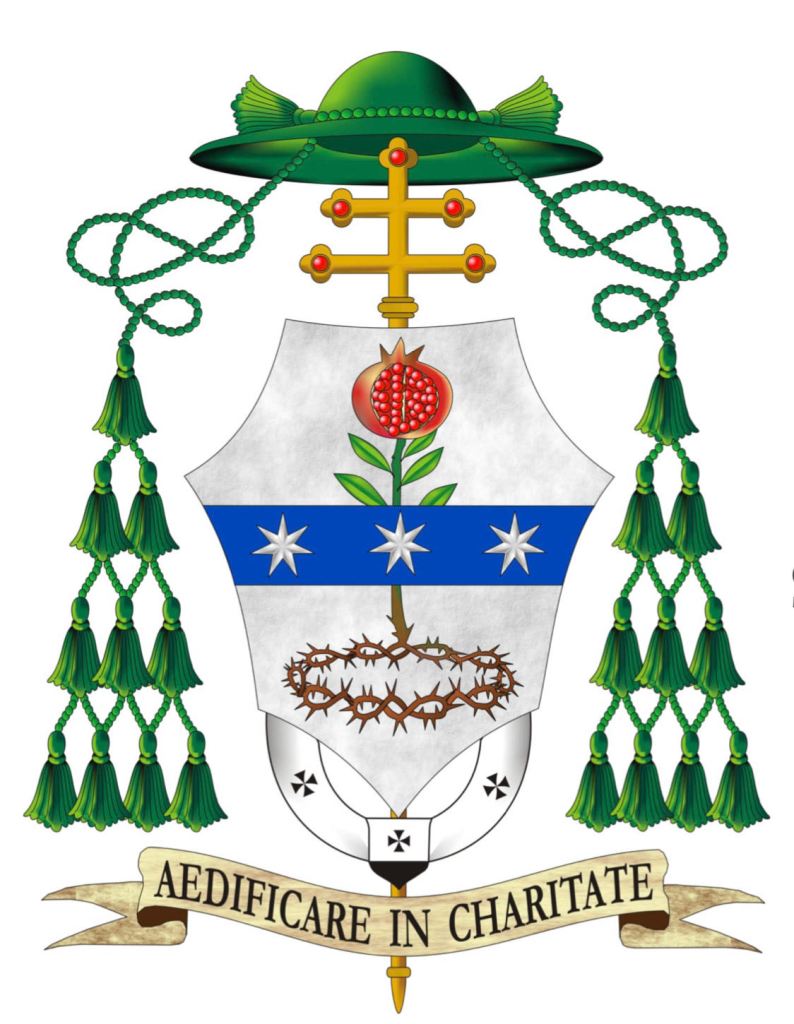
The Most Rev. Luigi Renna (56) originally a priest of Andria, Italy and from 2016 until now Bishop of Cerignola-Ascoli Satriano, Italy will be translated and promoted to Metropolitan Archbishop of Catania and installed in that see on February 19, 2022.

The archbishop’s coat of arms is:

The field of silver stands for transparency of action. The crown of thorns recalls the relic of the holy Thorn kept in the cathedral at Andria. Rising from the crown is a branch terminating in a pomegranate symbolizing charity and, because of the tightly packed seeds inside the fruit, symbolizes the ecclesial communion of the Church. The blue fess is charged with three silver seven-pointed stars alludes to Our Lady and her virginity, before, during and after the Birth of Christ.

The motto, “Building In Charity”, is from Ephesians 4:16. It was a passage of Scripture used in the Office of Readings on the day he received word he was to be named a bishop in 2015.

The arms were designed by Sig. Renato Poletti.

Farewell, Good and Faithful Servant

Today, February 15, 2022 the Archdiocese of Catania in Sicily bade farewell to the Archbishop since 2002, the Most Rev. Salvatore Gristina (75). He will be succeeded on February 19 by Archbishop-Designate Luigi Renna. Gristina was born June 23, 1946 in Sciara and ordained a priest by St. paul VI in 1970. Named an auxiliary bishop of Palermo in 1992 by St. John Paul II he was consecrated by Salvatore Cardinal Pappalardo. In 1999 he became Bishop of Acireale until 2002 when he was elevated to Metropolitan Archbishop of Catania.

His armorial bearings were designed by the late Andrea Cardinal Lanza di Montezemolo.

Archbishop Boland’s Excellent Example

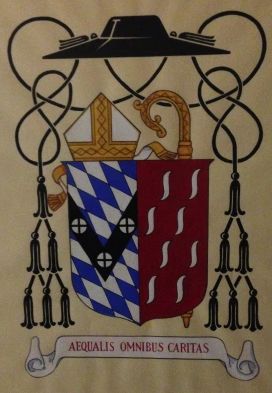
One of the better coats of arms borne by an American prelate in the 20th Century belonged to the Most Rev. Thomas Aloysius Boland, the 6th Bishop and 2nd Archbishop of Newark, New Jersey from 1952-1974. Boland had been a priest of Newark and served as Auxiliary Bishop there from 1940-1947 and then was translated to the Diocese of Paterson, New Jersey as its 2nd Bishop from 1947-1952. Archbishop Boland retired from office in 1974 and died in 1979.

His very nice, simple and stylish coat of arms impaled very well with the equally simple and well-designed armorial bearings of the See of Newark. The contrast in tinctures and the composition of the charges made for an excellent overall appearance. Of course, in the time when he became a bishop and assumed these arms it was still the custom to include the mitre and crozier in the achievement of a bishop.

A Very Poor Example

At the recent installation of the Most Rev. Siegfried Jwara, CMM as Archbishop of Durban it was possible to see his personal symbol on a banner in the sanctuary. I don’t call it a coat of arms because it is composed entirely of reproductions of paintings: one of the Good Shepherd, one of Dom Francis Pfanner, OCSO, the founder of Marianhill and a portrait of another cleric.

This. Isn’t. Heraldry.

Below is a poor quality image taken from a screenshot of the video of the installation. Apologies for the poor quality. Although, perhaps it’s better not to see it more clearly. I’ll say again that you may not simply put whatever you’d like on a shield and call it a coat of arms.