Author Archives: guyselvester

Bishop Neary of St. Cloud

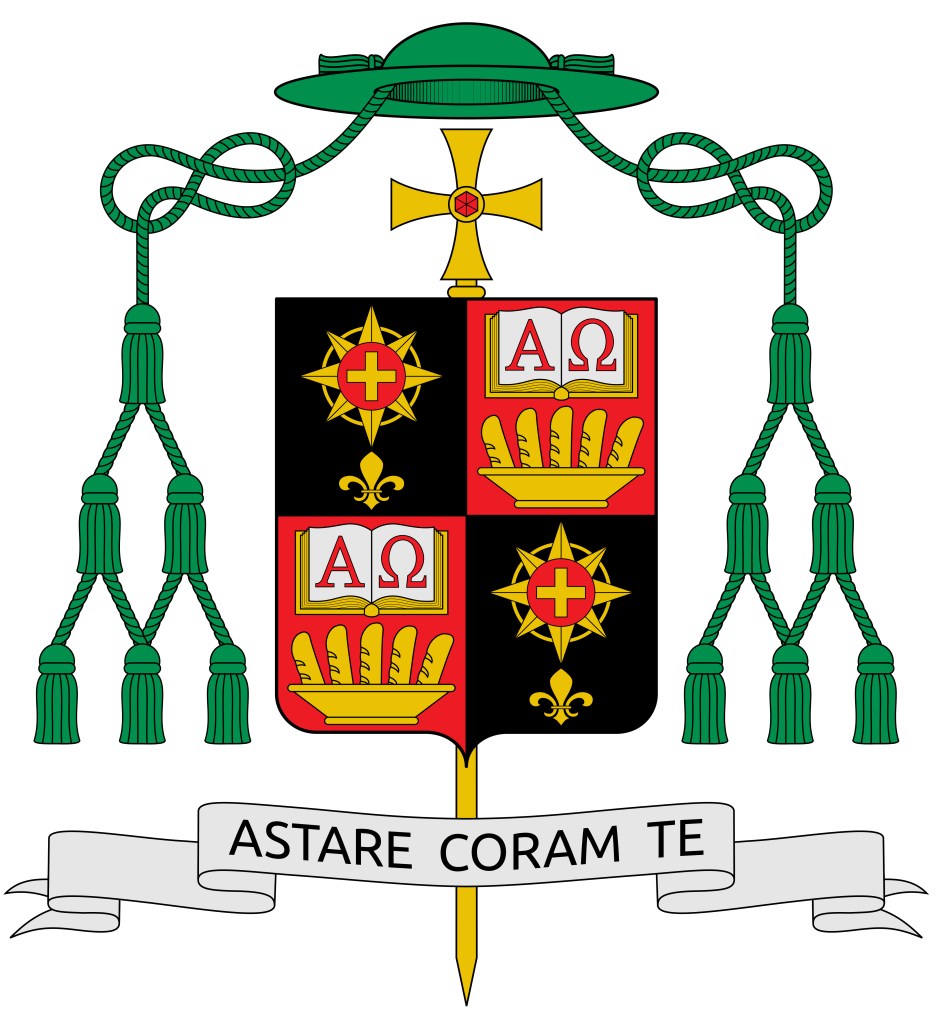
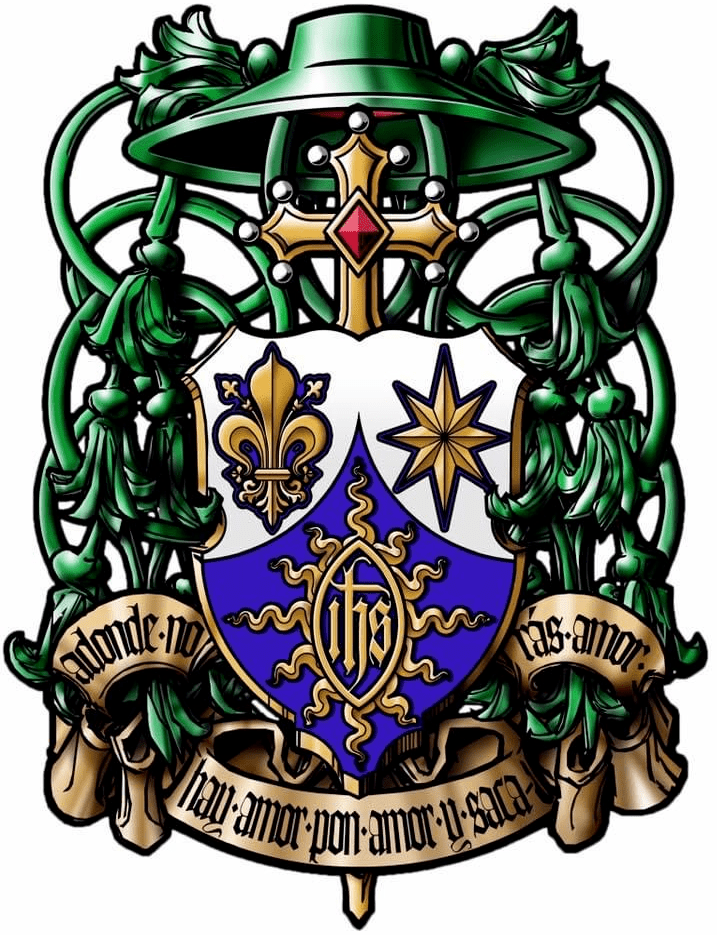
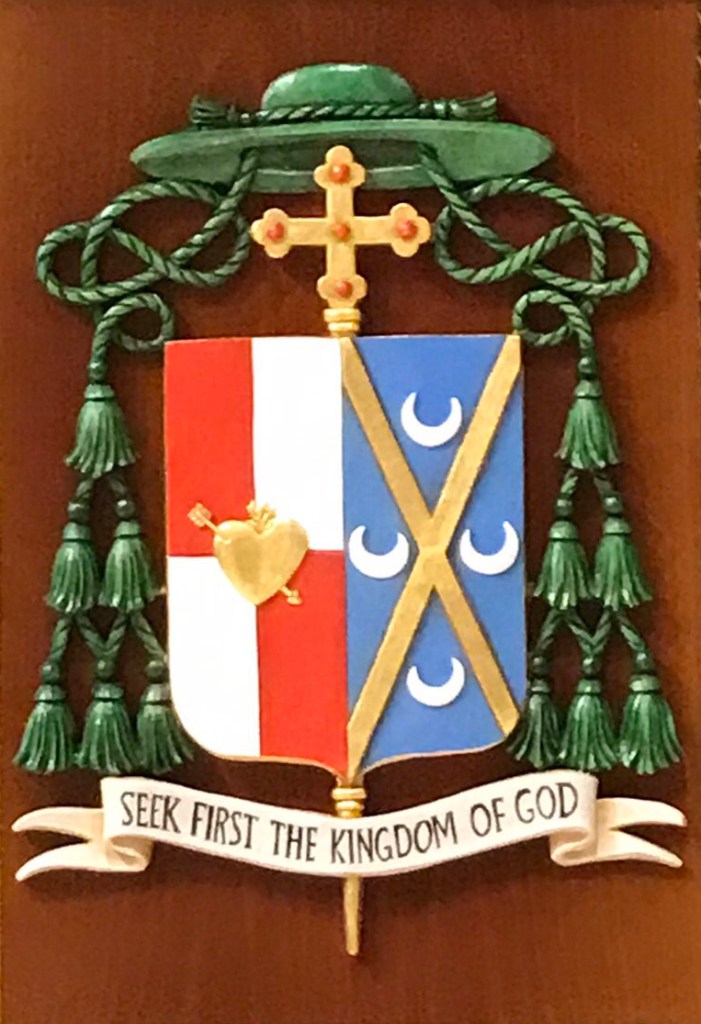
On February 21, the Most Reverend Patrick Michael Neary, C.S.C. (age 59) a priest of the Congregation of the Holy Cross (the gang that runs Notre Dame) originally from Indiana was ordained a bishop and installed as the 11th Bishop of St. Cloud, Minnesota.

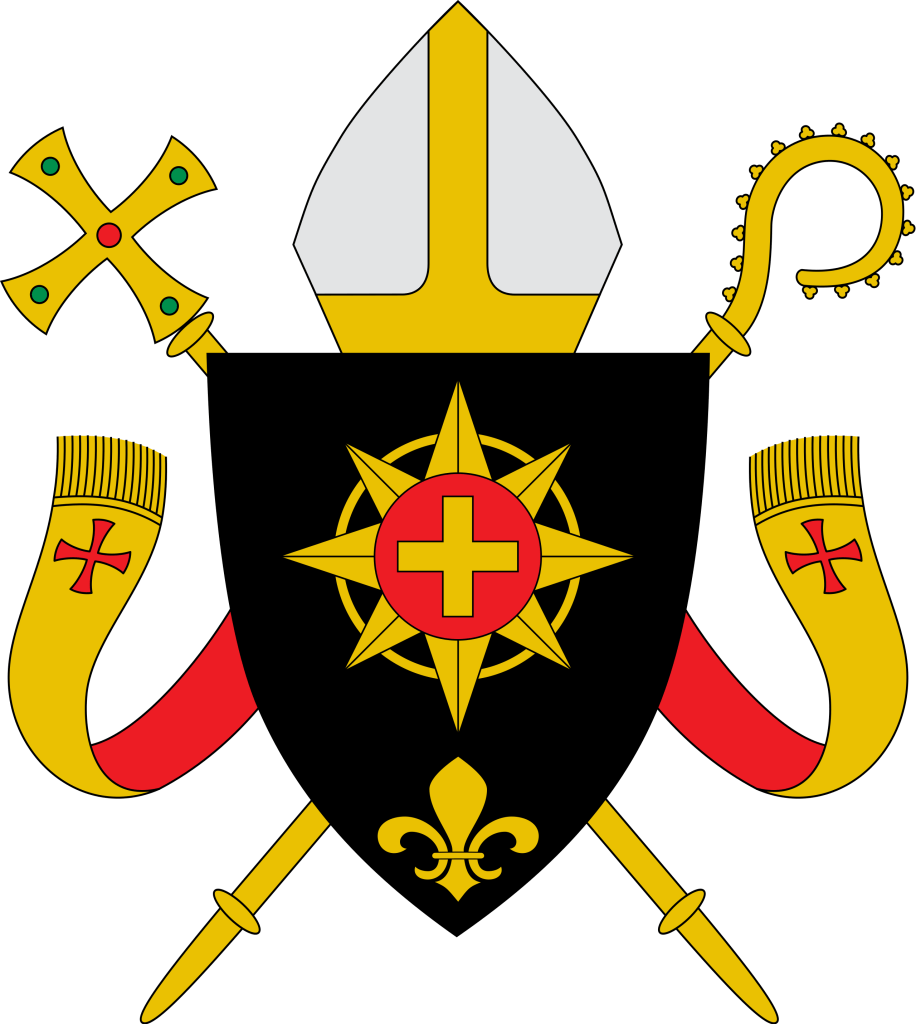
The armorial bearings he has assumed were designed and marshaled to those of his diocese by Fr. Pachomius Meade, OSB, a monk of Conception Abbey.

I had nothing to do with this coat of arms but Fr. Pachomius, a friend of mine, was kind enough to show me the sketches while he was working on them. I think he has done excellent work on this achievement.

New Auxiliaries for D.C.

On February 21 His Eminence, Wilton Cardinal Gregory, Archbishop of Washington, D.C. will ordain two new Auxiliary Bishops for the Archdiocese.

The Most Rev. Juan Esposito-Garcia

The Most Rev. Evelio Menjivar-Ayala

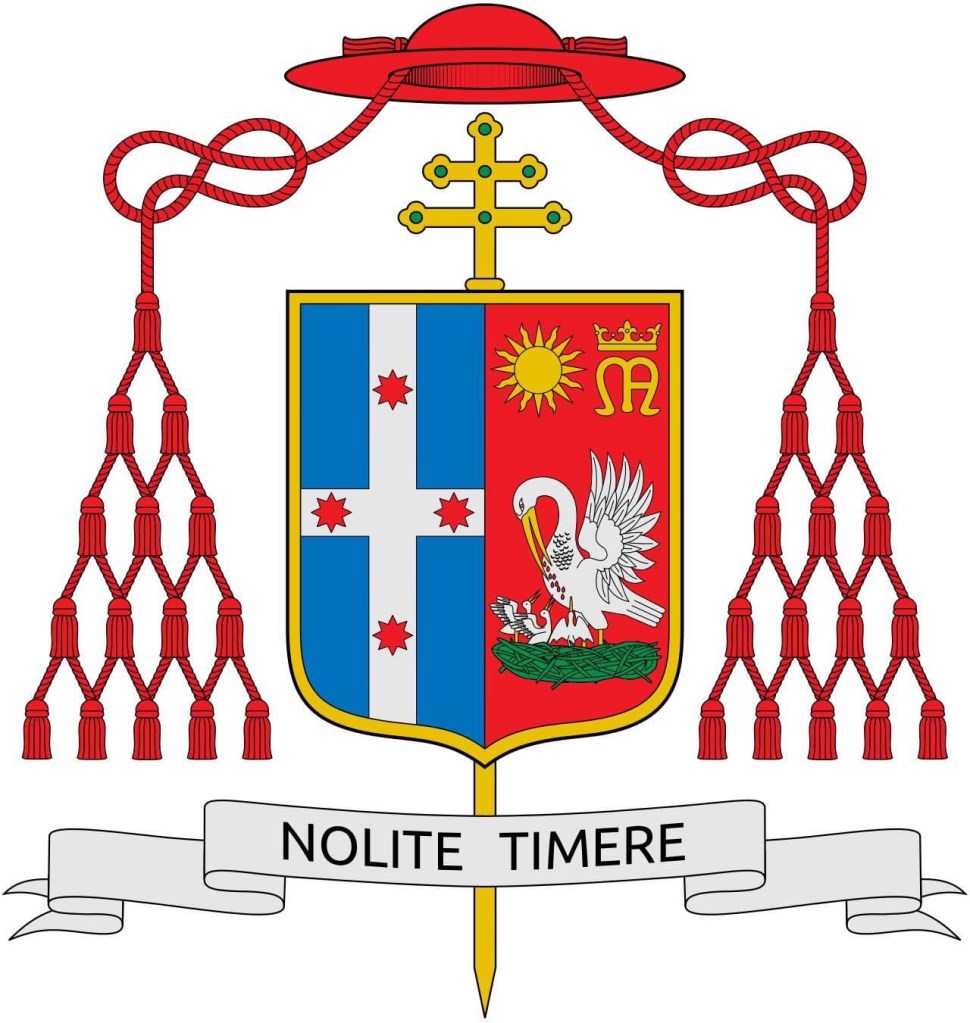
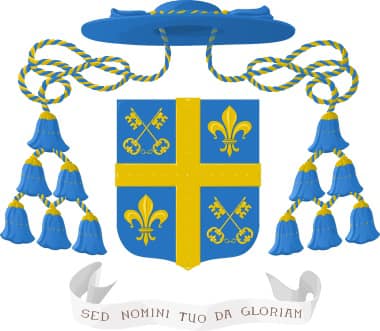
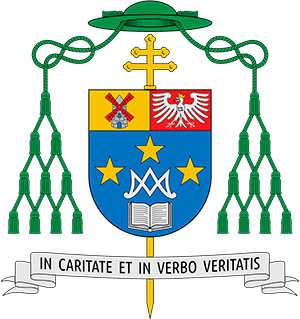
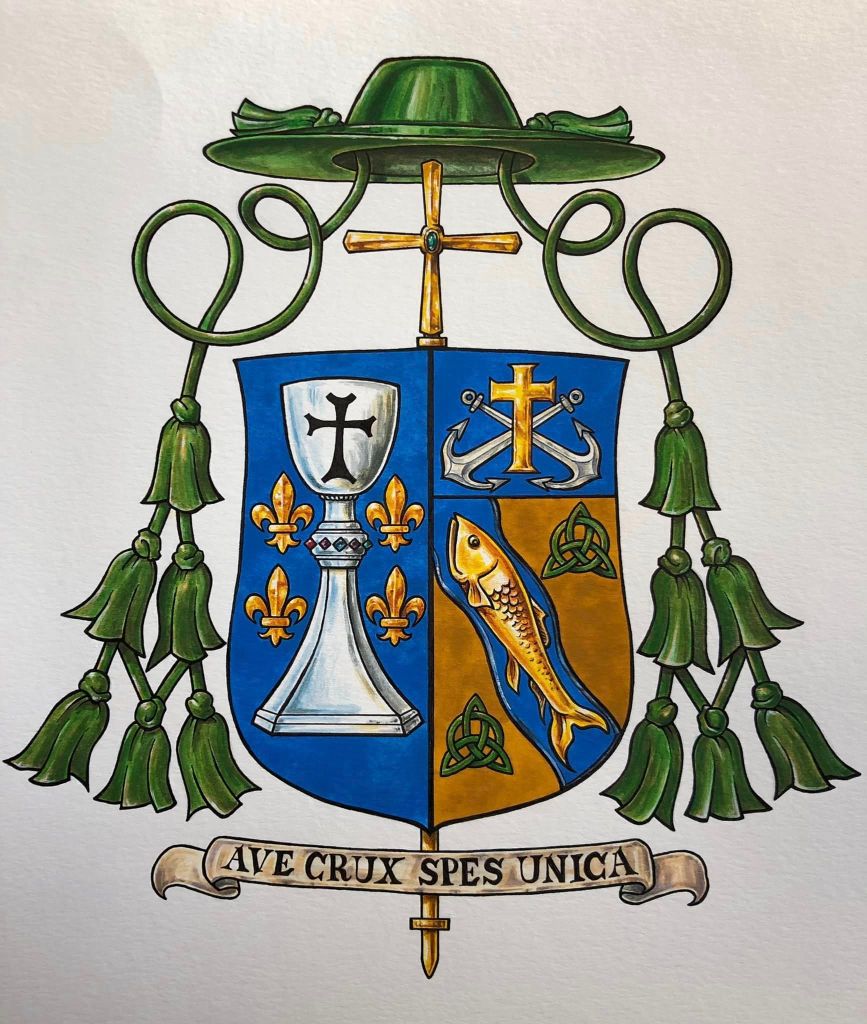
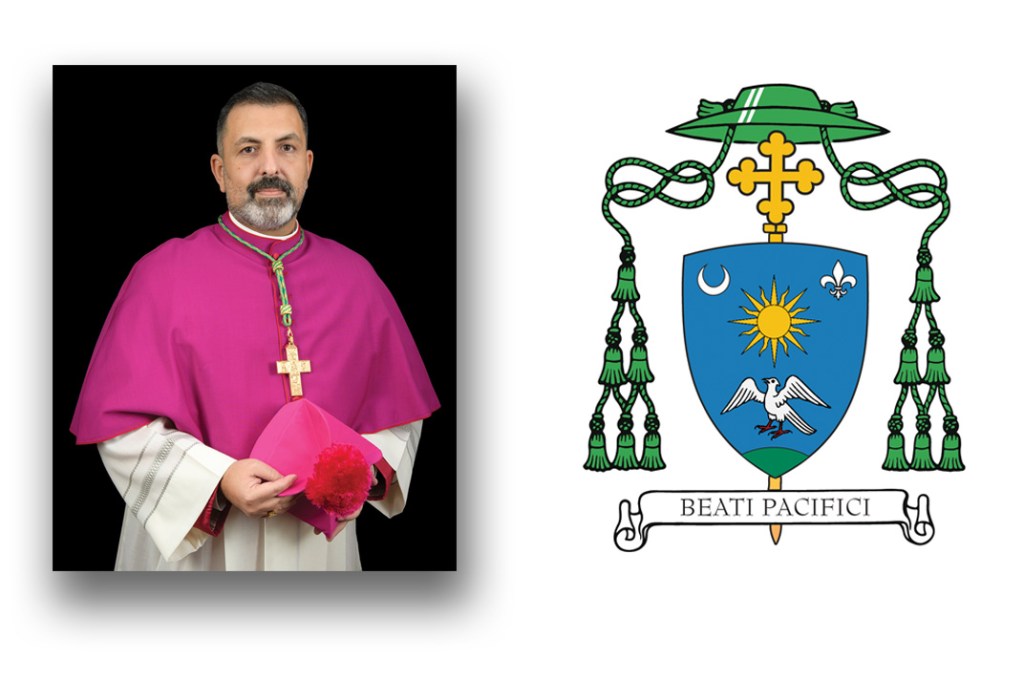
When one considers how awful most of the coats of arms assumed in recent years by American bishops are these two are refreshingly well done. The arms of Bishop Esposito-Garcia run the risk of becoming a bit like what is known as the “lucky charms’ type of coat of arms. It is often a mistake made by the amateur designer or the first-time armiger to use many different charges in the desire to include as much symbolism as possible. What is often forgotten is the importance of symmetry in heraldic design as well as the desire to use as few charges as possible rather than as many. In addition, the small hill in the base of the arms really shouldn’t be green on a blue field. In heraldry, things do not have to be depicted as they are in nature. The hill should have been either Argent or Or.

Having said that, I reiterate that these two designs are relatively simple and clear. They are, for the most part, uncomplicated and they are certainly far better than many of the coats of arms being assumed by bishops in the USA today.

King Constantine II RIP

King Constantine II, the last King of the Hellenes from March, 1964-June, 1973 and Head of the House of Glücksburg-Greece passed away today. May he rest in peace.

His sister is Sofia, the former Queen of Spain and King Charles III of the UK is his second cousin. Constantine was also the Prince of Wales’ godfather.

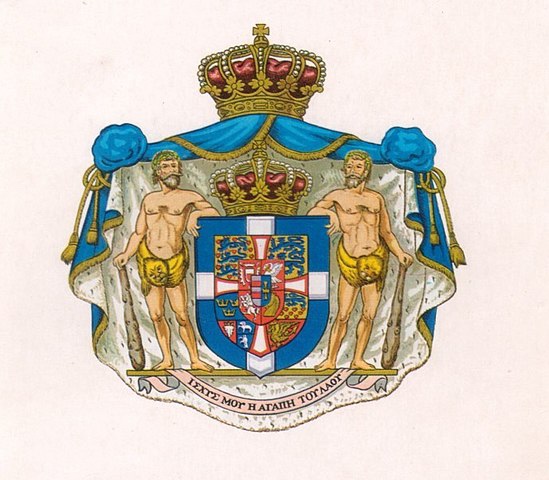
The royal arms of the Kingdom of Greece consists of the royal arms of Denmark on an escutcheon over the arms of Greece (Azure, a Greek cross throughout Argent). The Greek royal house is a scion of the House of Glucksburg (Schleswig-Holstein-Sonderburg-Glucksburg) which is the ruling house of Denmark.

Bishop of the North Pole?

At this festive time of year it is a bit of fun to wonder if there is a bishop in the Church who can claim to have jurisdiction over the North Pole and, thus, be Santa Claus’ pastor. I think such a claim might be made by the Territorial Prelature of Tromsø which is in the northernmost part of Norway. A portion of the territory of the prelature is above the arctic circle.

The Prelature is currently served by Bishop Berislav Grgić who is a native of Croatia. He can make a credible claim to be “Santa’s Bishop”.

Unique Arms for a Unique Office

This is the armorial bearings of Monseigneur Gilles Wach who is the Founder (one of two) and Prior-General of the Institute of Christ the King, Sovereign Priest. This is a community of Pontifical Right founded specifically to keep alive the traditional liturgy that was in use prior to the reforms of 1963-1970. The habit that the clerics in the community wear is composed of a mozzetta and mantellone over the cassock and surplice. In addition, there are accents on the garb (such as buttons, piping and the pom on the biretta) in a distinctive shade of blue.

The Superiors of the Community wear a mozzetta that is entirely made of this blue color. As the Prior-General–the Major Superior of the Community–Mons. Wach wears an entirely blue cassock and also uses and entirely blue biretta.

The arms above are clear and simple. As the major Superior General of an Institute of Clerics it is perfectly in keeping with the heraldic traditions and customs of the Church for him to employ a galero with 12 tassels pendant from the hat. In addition, there is a long-standing tradition in the Church (one which I have never particularly liked and have said so publicly) that the color of the galero and the tassels is sometimes determined by the color of the garb worn by the armiger. Fore example, Abbots in the Praemonstratensian Order and those in the Cistercian Order often use a galero that is white and had white tassels pendant from it. This is because the habit they wear is white.

I have argued against this because the color of the galero (and the tassels) is not a mirror of what one wears. The galero used by bishops and archbishops is green but they do not wear that color. The color and the number and color of the tassels is supposed to indicate a rank, not membership in a particular order or community. So, I continue to argue that for Abbots the hat should be black and the tassels black regardless of the color of the habit. But, that’s not up to me. I don’t get to make that determination and the custom is a long-standing one that would be difficult to overturn except by Papal Decree (which I would neither hope for or desire).

Consequently, this coat of arms is perfectly in keeping with the accepted heraldic practices of our time. A Superior General is entitled to use 12 tassels and since the use of different colors depending on the habit has become the norm it makes perfect sense to use a galero and tassels in the distinctive blue worn by the Community. I might be inclined to question why the tassels are topped in gold and also why there is a skein of gold intertwined in the cords but, not having any definitive answer at my fingertips, I must admit that this may simply have been artistic license. It is, perhaps, worth noting as well, that different Communities within the Church (i.e. Order of Chivalry, Religious Orders, Institutes and Lay Communities) can and do make determinations for themselves about heraldic emblems used by their members. That, too, is well in keeping with the established customs, traditions and practices in ecclesiastical heraldry.

Another Tassel on the Hat

At the conclusion of the Mass celebrating my Parish’s 150th Anniversary on Sunday, November 6, the Bishop of Metuchen announced that he has appointed me as the Dean of the Morris Canal Deanery. This covers all of Warren County, NJ and consists of 10 churches in 9 parishes: St. Jude, Blairstown; Ss. Peter & Paul, Great Meadows; St. Theodore, Port Murray; Assumption of the Blessed Virgin Mary, Hackettstown; St. Patricks, Belvidere which is combined with St. Rose, Oxford; St. Philip & St. James, Phillipsburg; St. Mary, Alpha and St. Joseph, Washington.
 
I will continue on in my current assignment as Pastor of St. Joseph and also continue as the Diocesan Director of Ecumenical & Interfaith Affairs. There is no salary increase but I do get a title bump from “Reverend” to “Very Reverend Guy Selvester, V.F.” (which stands for Vicar Forane).
 
Of perhaps even more interest to me is the fact that I get to add another tassel to the galero in my coat of arms.
 
(artwork by Xavier Garcia)

New Archbishop of Valencia

The Most Reverend Enrique Benavent Vidal (63) will be installed as the 62nd Metropolitan Archbishop of Valencia, Spain on December 10. Originally ordained as a priest of Valencia, the Archbishop-Elect has been serving as the Bishop of Tortosa since 2013. In 2004 he had been appointed Auxiliary Bishop of Valencia. So, it is a nice homecoming as he is promoted to Archbishop.

His armorial bearings were assumed at the time he became a bishop and will now reflect his higher rank:

Governor-General of Canada’s Armorial Bearings

On October 28 the Canadian Heraldic Authority published the coat of arms that has been devised for the current Governor-General of Canada, Mary J. Simon, CC, CMM, COM, OQ, CD, FRCGS. Simon has been serving as Canada’s 30th Governor-General and representative of the King as Head of State since July 26, 2021. She is the first indigenous person to hold the office, being of Inuk origin.

For more information about the devisal of the coat of arms and the symbolism contained therein you can visit the website of the Governor-General’s Office HERE.

Father Smith

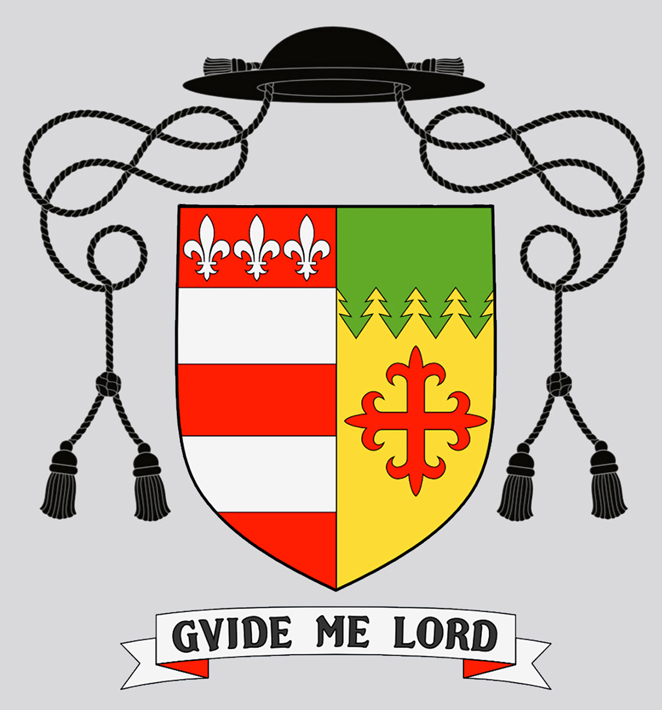
The armorial bearings of the Reverend Father James R. Smith of the Diocese of Trenton, New Jersey were designed by me and recently assumed by the priest.

The shield is divided by a vertical line with the left side colored blue and the right side colored gold (yellow). These colors are borrowed from the armorial bearings of the Diocese of Trenton where he serves as a priest. Upon this is an escallop shell, a symbol of St. James the Greater which is also divided by the same colors alternating in a manner known as “counterchanging”. The counterchanging is evocative of the conversion inherent in metanoia. The shell is charged with a heart that is a symbol of St. Vincent de Paul, the “apostle of charity”. The heart is similarly counterchanged as a further allusion to metanoia.

The upper third of the shield, called a “chief” is separated from the rest by a jagged division line suggesting the teeth of a saw because St. James the Less was martyred by being sawed in half. Then the two sides of the chief are also “counterchanged” from the field below. 

On the chief to the right is a silver (white) crescent moon which is a symbol of Our Lady so it alludes to the diocese of Trenton, St. Mary’s Seminary, Baltimore and the USA of whom Our Lady of the Immaculate Conception is the patroness. To the left, the violet (depicted in a stylized way) is the State flower of New Jersey. The armiger is a proud New Jerseyan.

The motto, “Go Teach All nations” is taken from the Sacred Scriptures from Matthew 28:19.

The whole achievement, instead of using the secular helm, mantle and crest is ensigned with the traditional galero, an ecclesiastical hat. It is black with one tassel pendant on either side of the shield as befits the priestly dignity.

Charles III Royal Cypher

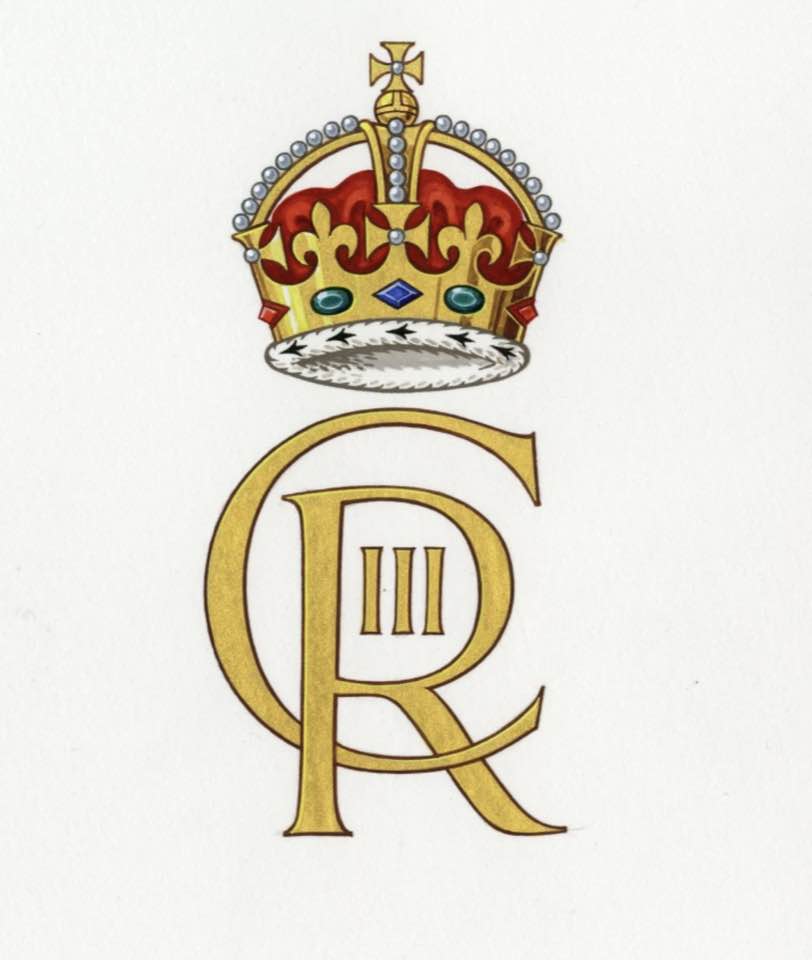
Buckingham Palace released the royal cypher to be used by King Charles III. It employs the “Tudor” crown rather than the stylized version of the St. Edward’s Crown favored by his late mother, Elizabeth II. Her four predecessors used this Tudor style crown in their cyphers as well as on their coats of arms. This has led to the erroneous belief that there is a “Queen’s crown” and a “King’s crown” used heraldically in British royal heraldry. That is not the case. It is simply a matter of each sovereign’s personal preference.

Death of Elizabeth II; Accession of Charles III

Today, HM Queen Elizabeth II died peacefully at Balmoral. Her eldest son immediately succeeded her becoming King Charles III. His son inherits his titles as heir to the throne and will now be Duke of Cornwall and Cambridge (among several other titles). King Charles will now relinquish the coat of arms he has borne since 1958 and the royal arms which had been used by his late mother since 1952, immediately becomes his coat of arms.

May she Rest in Peace. God Save the King!

Abbot President of the American Cassinese Congregation of Benedictine Monasteries

The Right Reverend Jonathan Licari, OSB who was ordained a priest of the Diocese of Duluth in 1976 and has been a monk of St. John’s Abbey in Collegeville, Minnesota since 1982 was elected as the 18th Præses or Abbot-President of the American-Cassinese Congregation on June 23, 2022 during a meeting of the General Chapter of the Congregation taking place at St. Benedict’s Abbey in Kansas. At the time of his election Abbot Jonathan did not yet possess the abbatial dignity. He received the solemn abbatial blessing the same evening as his election from the Most Rev. Elias Lorenzo, OSB who had himself served as the 17th Abbot-President of the Congregation prior to being appointed Auxiliary Bishop of Newark, NJ.

Abbot Jonathan had recently completed a term as Administrator of Mary, Mother of the Church Abbey in Richmond, Virginia and had also just been appointed by his predecessor as Abbot-President, Abbot John Klassen, OSB of St. John’s Abbey as the Administrator of St. Mary’s Abbey in Morristown, NJ (which also happens to be the monastery to which Bishop Elias belongs as a monk. Are you keeping up?)

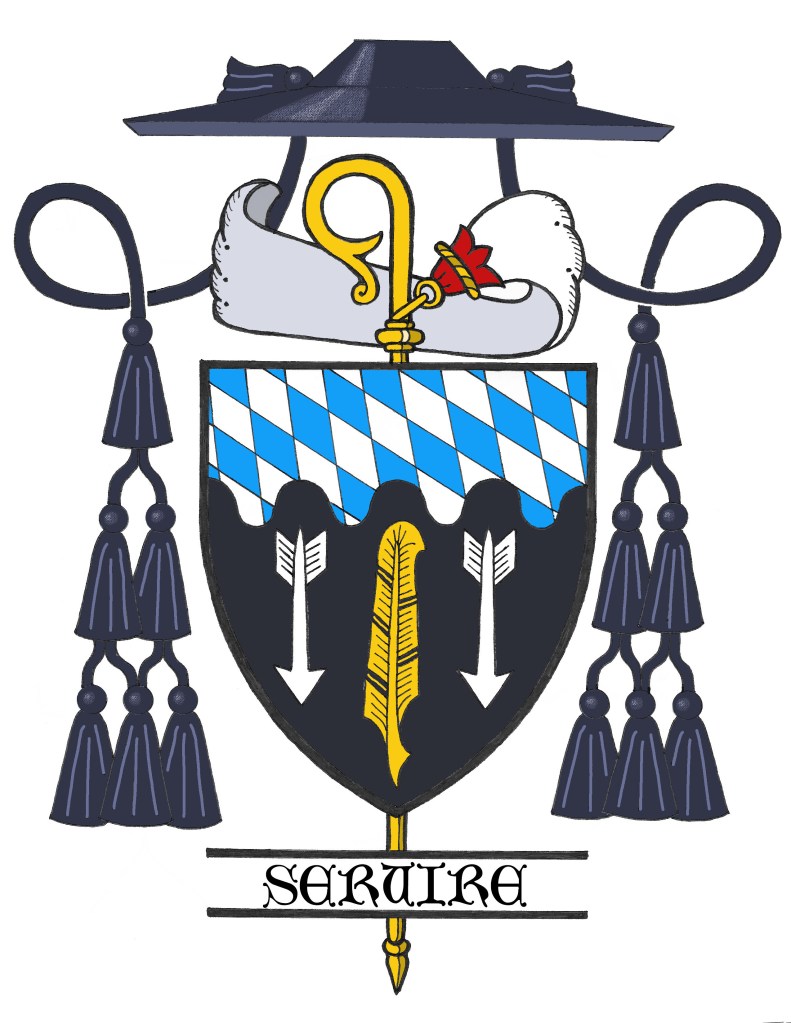
Abbot Jonathan decided to assume a coat of arms and I was very pleased and honored to assist him in the design and execution of his armorial bearings.

The blazon is: “Sable, a quill pen, point downward Or between two arrows, points downward Argent; a chief wavy, fusily in bend Azure and Argent. Shield ensigned with an abbot’s crozier Or behind the shield with the sudarium attached and an abbot’s galero Sable cords and twelve tassels disposed in three rows of one, two and three all Sable. On a scroll below the shield the motto: “Servire”.”

The field is colored black to allude to the black Benedictine habit. In addition, the area of Minnesota where he was born and raised is known as an area for mining iron ore. The black also alludes to the iron. The gold (yellow) pen in the center is a symbol of administration which is the kind of work the Abbot has been assigned to do during most of his monastic life. The two arrows are a symbol of the Biblical figure, Jonathan, his monastic patron. They allude to the story of Jonathan shooting arrows as a signal to David about whether or not he was safe in the First Book of Samuel, chapter 20.

The shield is divided by a wavy line of division. This is symbolic, once again, of the part of Minnesota where the Abbot grew up known for its many lakes. The upper third of the shield, called a “chief” depicts the familiar blue and silver (white) pattern of fusils (elongated diamond shapes) placed in a repeating pattern along diagonal lines. This is the background of the coat of arms of the Bavarian Royal House (Wittelsbach) and of the State of Bavaria in Germany today. The motherhouse of the Congregation was founded by Boniface Wimmer who was a monk of St. Michael’s Abbey in Metten and the Ludwigsmissionverein was heavily subsidized by the Bavarian Royal Family. So, the coat of arms of St. Vincent Archabbey uses this background in its own arms. In addition, the coat of arms of the Abbot’s own Community at St. John in Collegeville makes use of this background in two of the four quarters on its coat of arms. In fact, of the 18 existing independent houses of the American Cassinese Congregation there are 8 which were directly founded from St. Vincent as daughter-houses and 2 which were founded as granddaughter-houses from St. Vincent. Of those houses 5 of them make use of this Bavarian pattern and/or of its color scheme as an allusion to the Bavarian origins of the Congregation. So, the chief is used to symbolize St. Vincent and Bavaria as the origins of the American-Cassinese Congregation as well as St. John’s Abbey, the Abbot’s own community of origin. It is also an allusion to St. Mary’s Abbey where the Abbot is serving as Administrator for several years.

The motto below the shield is the single Latin word, “Servire” which means to serve.

The shield is also ensigned with those external ornaments that indicate the bearer is an abbot. The gold (yellow) crozier, no longer used in the coats of arms of bishops but retained in the arms of abbots is placed vertically behind and extending above and below the shield. Attached to the crozier is a veil or sudarium. Widely used in the Middle Ages it is rarely seen in actual use today. It dates from a time when abbots were already making use of the crozier as a sign of their authority but had not been granted the privilege of full pontificals which, prior to the reforms of the 1970s, would have included liturgical gloves. The purpose of the sudarium was originally practical; it shielded the metal of the crozier from dirt and perspiration from the hands. Later, it became merely symbolic and has been retained in heraldry to distinguish the crozier of an abbot.

Above the shield is the ecclesiastical hat, called a galero which, in heraldry, replaces the martial helmet, mantling and crest. The galero is black with black cords pendant from it and twelve black tassels arranged in a pyramid shape on either side of the shield. This is the hat assigned to a prelate with the rank of abbot according to the Instruction of the Secretariat of State of the Holy See, “Ut Sive” of 31 March, 1969 (Acta Apostolicae Sedis 61 (1969) 334-40).
Beatification of Pope John Paul I

On Sunday, September 4 Pope Francis will beatify his esteemed predecessor, Pope John Paul I (Albino Luciani) who was pope from August to September, 1978 for just 33 days, one of the shortest pontificates in history.

The “Smiling Pope” as he was called chose a unique papal name using the names of his two immediate predecessors, John XXIII and Paul VI. He created a new double name, John Paul, which went on to be adopted by the man who succeeded him, St. John Paul II.

Bruno Heim designed a wonderful coat of arms for John Paul I that employed elements from the arms of John XXIII (the chief of Venice) and those of Paul VI (the mountains in base). The three stars (changed form 4-pointed to 5-pointed stars) were used in the coat of arms Luciani had assumed as a bishop. It is, in my opinion, one of Heim’s better designs.

Two Recent Installations

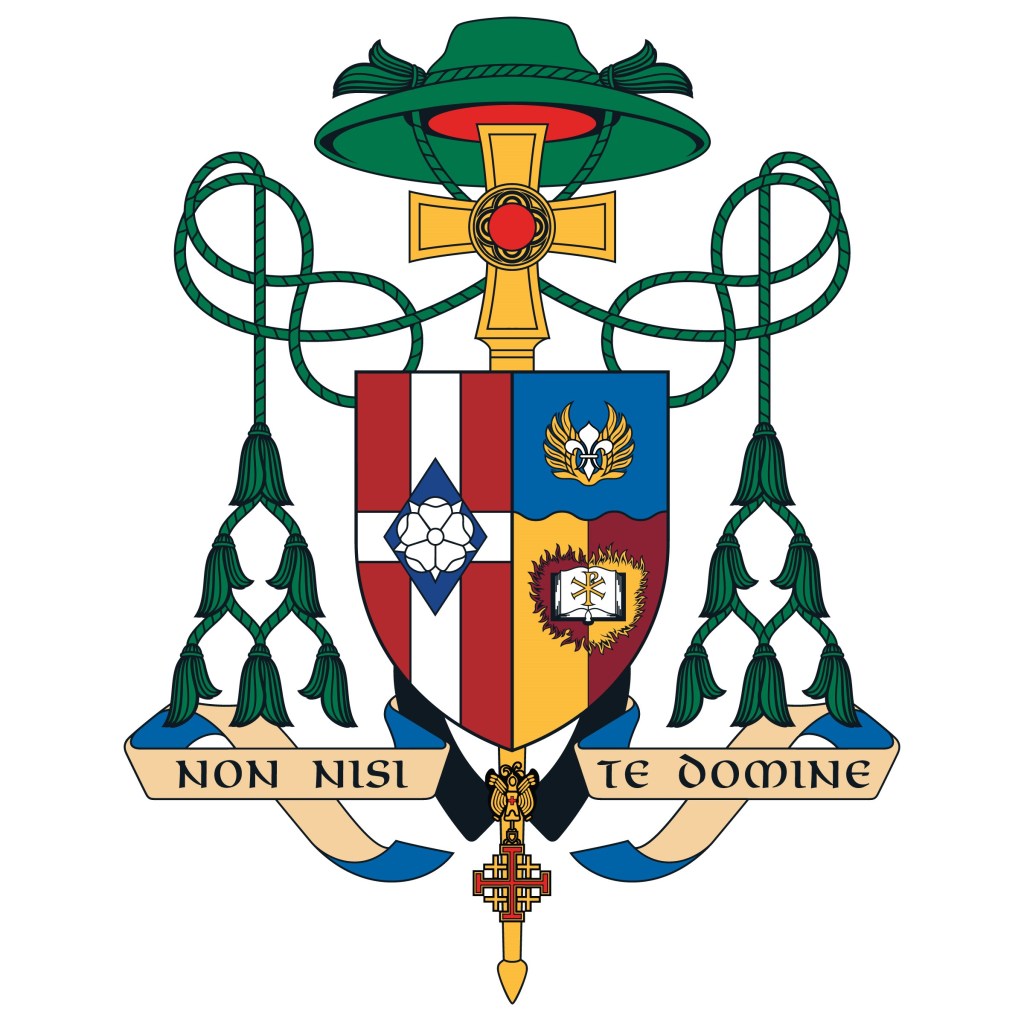
The Most Rev. Robert Barron (62), a priest of Chicago and, since 2015, Auxiliary Bishop of Los Angeles was installed as the 9th Bishop of Winona-Rochester, Minnesota on July 29. His arms impaled with those of the diocese:

On July 22, the Most Rev. Erik Pohlmeier (51), a priest of Little Rock, Arkansas was ordained a bishop and installed as the 12th Bishop of Florida’s venerable Diocese of St. Augustine. The arms he has assumed impaled with the diocesan arms:

Both bishops are fortunate to have diocesan coats of arms that are clear and simple and don’t clutter up the shield by impalement. (That’s a rarity in the US!) and they both have clear and uncomplicated personal coats of arms.

Full Disclosure: while I did not do the design or the artwork for Bishop Pohlmeier, because of this blog, he did consult with me in order to ask numerous questions and seek my advice on what he was hoping to use in his personal coat of arms.

The coat of arms of Bishop Barron was designed by James Noonan and emblazoned by his long-time collaborator, Linda Nicholson. The arms of Bishop Pohlmeier were designed by Renato Poletti.