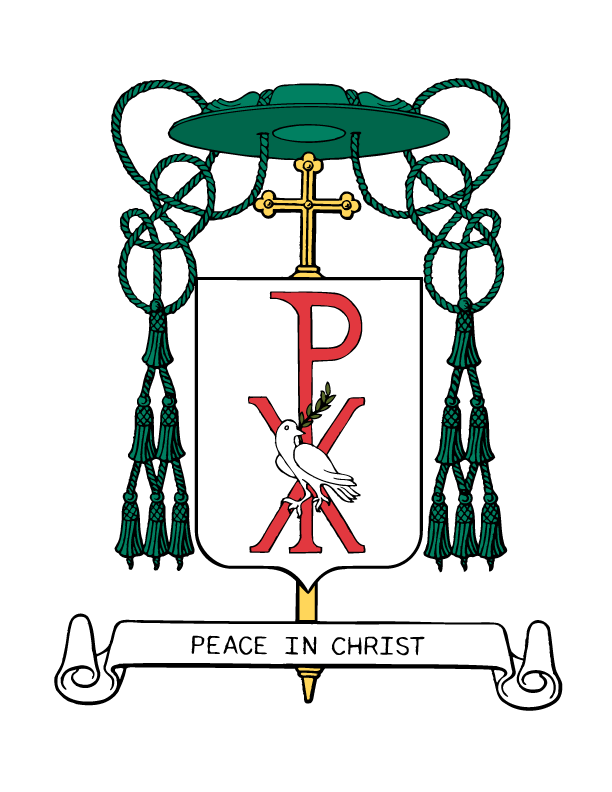
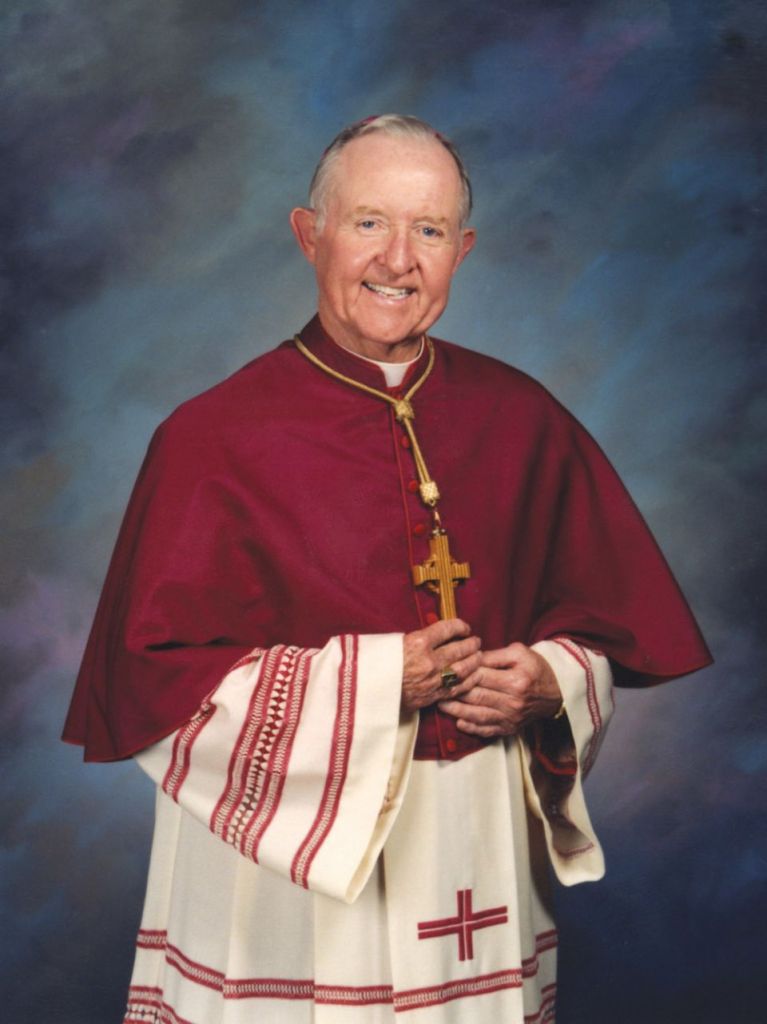
On September 27, 2019 the Most Rev. John J. Snyder (93) a priest of Brooklyn and for 21 years the IX Bishop of St. Augustine, Florida passed away. He was buried on October 1.
The coat of arms (below) which he assumed in 1972 at the time he was ordained Titular Bishop of Forum Popilii and Auxiliary Bishop of Brooklyn and which, after 2000, he once again used very simply illustrates the motto he chose for himself, “Peace in Christ”.
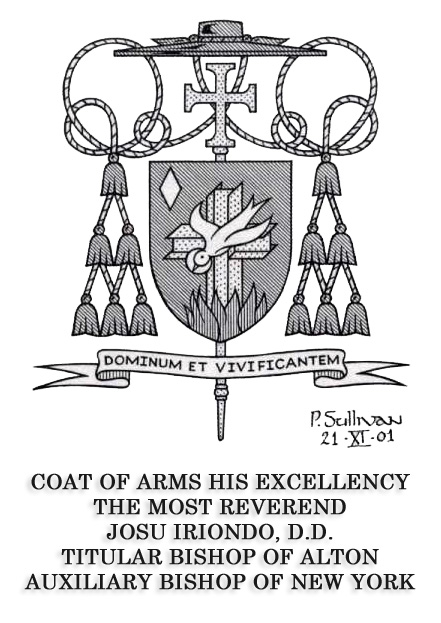
The Most Reverend Josu Iriondo, (80) formerly a Canon Regular of the Most Holy Savior of the Lateran, later incarnated as a priest of the Archdiocese of New York and retired Auxiliary Bishop of New York was appointed to be a bishop on October 30, 2001 and ordained the Titular Bishop of Alton and Auxiliary of NY on December 12, 2001 while the city was still reeling from the horrible terrorist attacks of 9/11. In his assumed coat of arms Bishop Iriondo decided to commemorate those horrible events and the faith that helped many cope with them by incorporating an image from Ground Zero into his coat of arms. There was a cross made of the remnant I-beams of one of the fallen towers that rescue workers erected over the site. That cross of steel I-beams was used as the image of the cross making up the principal charge of the bishop’s coat of arms.
On August 27 Monsignor Carl Reid, PA, (68) a Canadian who converted to Catholicism in 2012, was installed as the second Ordinary of the Personal Ordinariate of Our Lady of the Southern Cross in Australia. His personal arms were granted by the Canadian Heraldic Authority and are impaled with the arms of the Ordinariate. Richard d’Apice (in consultation with myself) assisted the Canadian heralds with the design of the personal arms. Mr. d’Apice and I designed the arms of the Ordinariate as well.
The unusual use of the crozier has been a precedent set among the Personal Ordinariates after their establishment by Pope Benedict XVI. It derives from the use of the crozier to denote Ordinary Jurisdiction while at the same time leaves off the sudarium (veil) attached to the crozier in abbatial arms which has become a symbol proper to abbots. Msgr. Reid exercises full Ordinary Jurisdiction and makes use of the pontificalia while celebrating the Sacraments like a bishop but does not possess the episcopal office. NOTE: The Personal Ordinary for the UK does not make use of a coat of arms and the Personal Ordinary for N. America is a bishop.
The artwork is by the talented Australian, Sandy Turnbull.
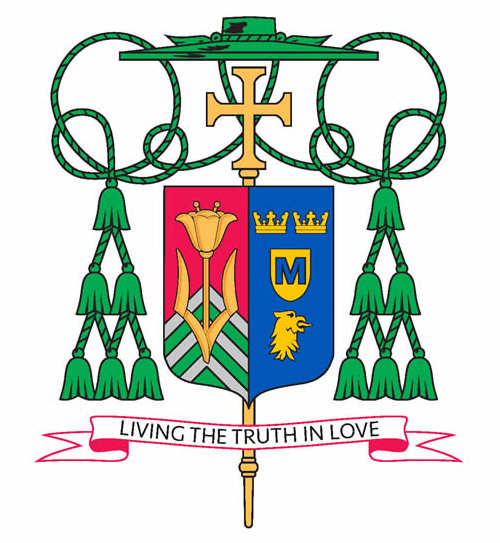
The Most Reverend Paul D. Etienne (60) who had been translated from Archbishop of Anchorage to Coadjutor of Seattle last April has now succeeded to the See of Seattle as of September 3, 2019. On that date Pope Francis accepted the resignation of Archbishop Peter Sartain for health reasons and Etienne becomes the 10th Metropolitan Archbishop of Seattle.
His coat of arms (above) combines the arms of the See of Seattle with his personal arms. It’s nice to see he didn’t once again change them as he did when going from Cheyenne (where he originally served as a bishop) to Anchorage. At that time I was very outspoken in my criticism of that decision. There is no such criticism this time around.
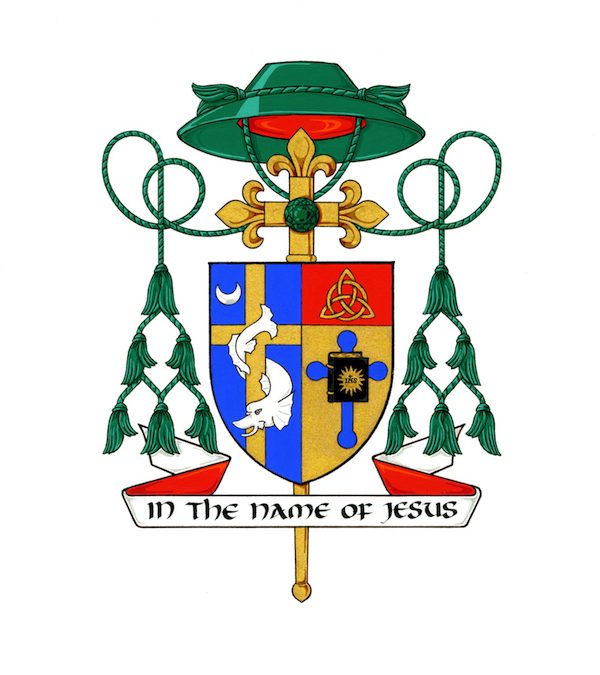
On August 8, Rev. Douglas Lucia (56) a priest of Ogdensburg, NY was ordained a bishop and installed as the 11th Bishop of Syracuse, NY. His coat of arms:
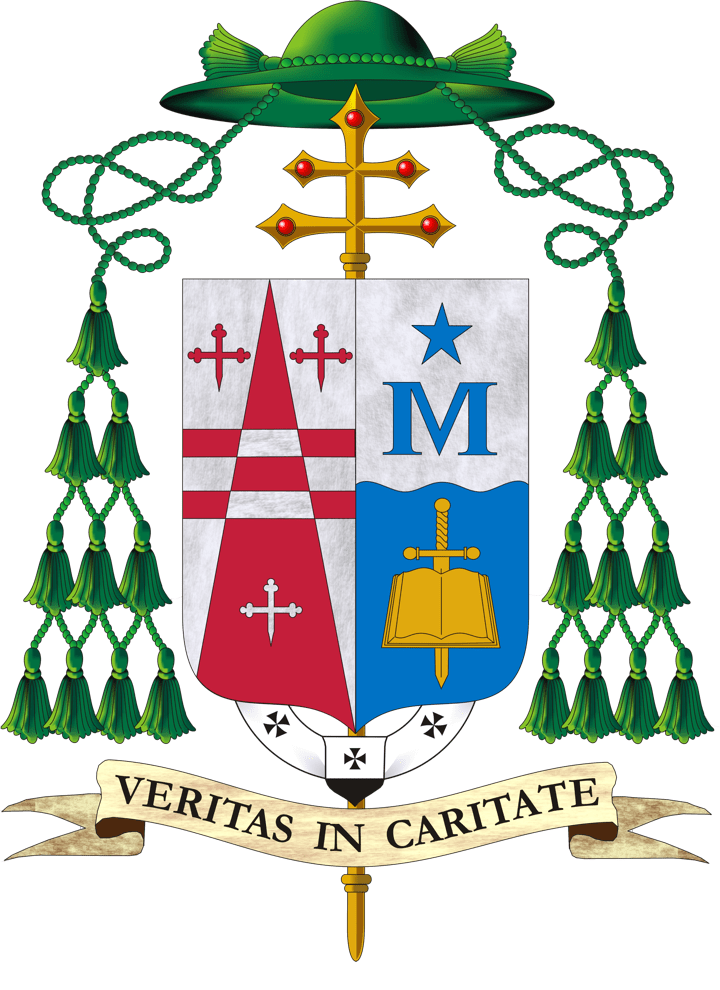
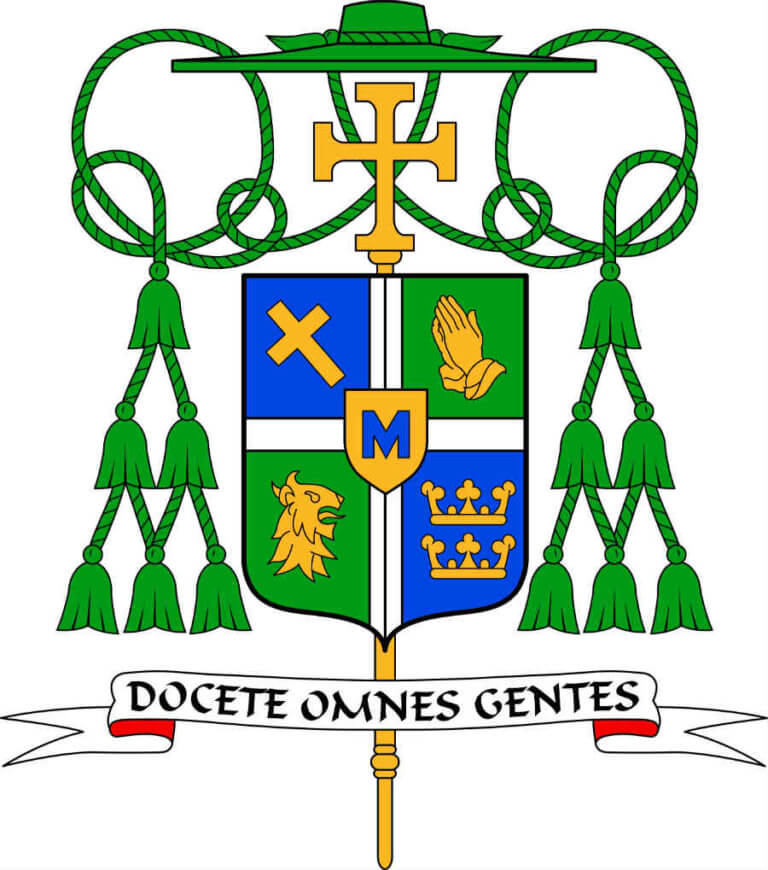
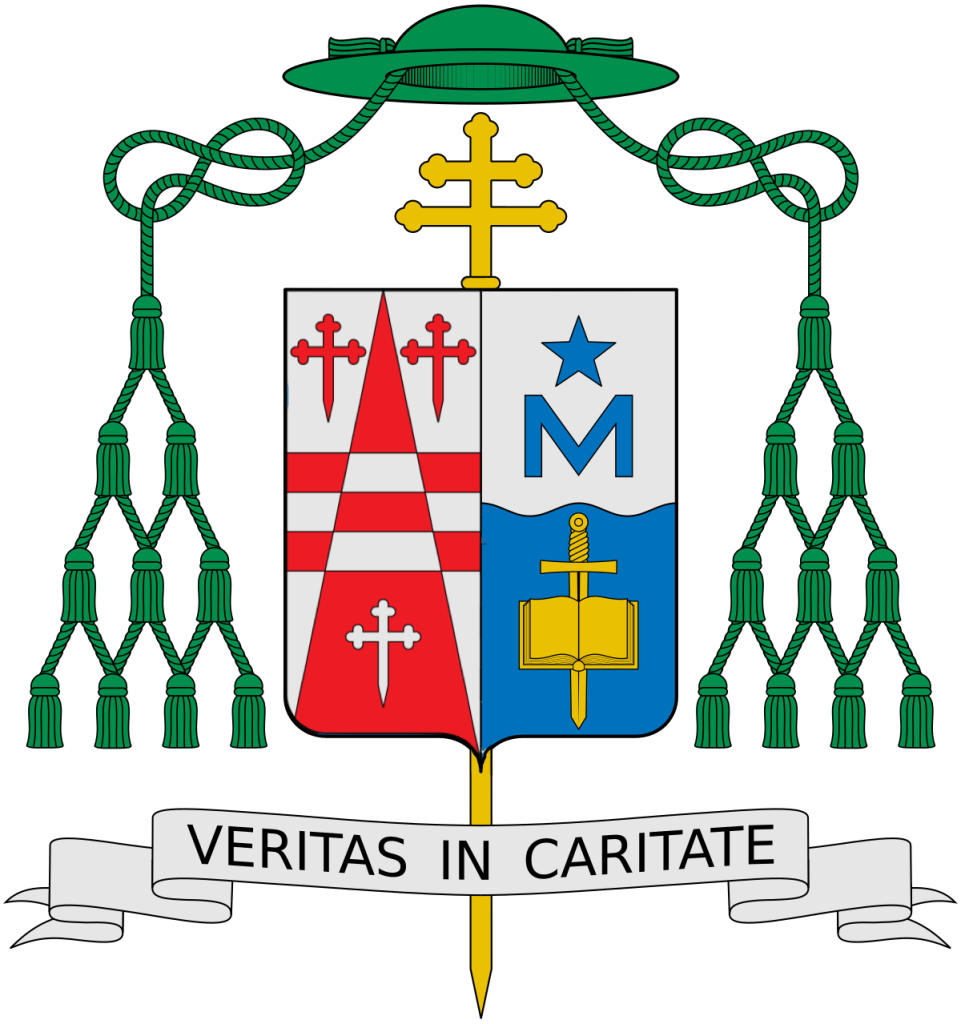
On Wednesday, August 21, the feast of St. Pius X, the Most Rev. Mark E. Brennan (72) until recently Auxiliary Bishop of Baltimore and Titular Bishop of Rusibisir, was installed as the 9th Bishop of Wheeling-Charleston, West Virginia. He succeeds the scandal ridden Bishop Michael Bransfield.
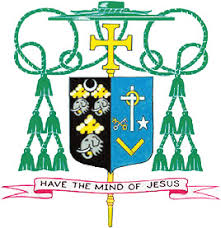
His coat of arms (above) is clearly a redesign of the coat of arms he assumed at the time he became a bishop. Normally, I am very critical of the practice of a bishop changing his coat of arms when transferring to a different assignment. A coat of arms is not “changeable” as it is a mark of personal identification.
However, Bishop Brennan’s originally assumed arms (below) were rather busy and it would have been difficult to impale them well with the diocesan coat of arms. Of course, it is well worth pointing out that while impalement, symbolizing that the bishop is “married” to his diocese, is the norm for diocesan bishops in the United States but it is not mandatory by any means. I would hazard a guess that when Bishop Brennan assumed his coat of arms he did not think that he would ever be called upon to serve as a diocesan bishop and thought his episcopal ministry would be lived out as an Auxiliary of Baltimore. That’s not an unusual assumption when you consider he was already 69 years old when he was appointed a bishop and the mandatory age at which bishops must submit a resignation is 75!
Nevertheless, his personal coat of arms has been redesigned to better harmonize and more easily be impaled with the coat of arms of the See of Wheeling-Charleston. In my opinion, my misgivings about redesigning arms aside, I think it is an improvement over the original coat of arms. The change of the motto, also not an absolutely necessary part of a coat of arms although erroneously thought to be so by many, is less problematic.
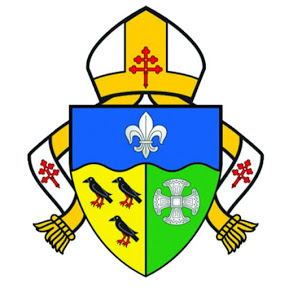
On July 25, 2019 the Most Rev. John Wilson (51), a priest and auxiliary bishop of Westminster was installed as the 11th Metropolitan Archbishop of Southwark. London is a unique city in that it contains two different ARCHdioceses, as well as also containing part of the territory of two dioceses. Everything south of the river Thames is in the Archdiocese of Southwark.
The archbishop employs the archdiocesan arms pictured below. They follow the more ancient custom in Britain of ensigning the shield with a bishop’s mitre rather than the more continental galero.
On July 26, 2019 the Most Rev. Robert Gruss (64), formerly Bishop of Rapid City, SD and prior to that a priest of Davenport, IA was installed as the seventh Bishop of Saginaw, MI. His coat of arms (below) is described on the diocesan website.
The Most Rev. Robert Christian, a Dominican friar, who has been the Auxiliary Bishop of the Archdiocese of San Francisco passed away on July 11, 2019 at age 70.
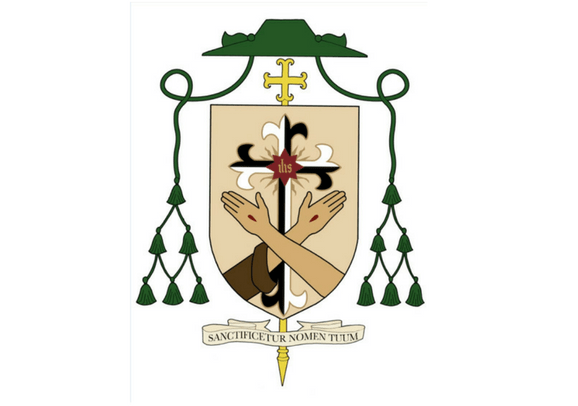
His coat of arms was assumed by him at the time of his episcopal ordination.
Umm…no. Sorry, but “beige” isn’t a heraldic color and, no, you may not just simply make up new rules and use whatever color you wish in heraldry. The science of heraldry limits the tinctures to be used and beige isn’t one of them. The Dominican cross and the usual Franciscan conformities (the arms of Christ and St. Francis crossed with each other) made for a nice combination of symbols for his Religious Community and the Archdiocese.
On July 1, 1969 Prince Charles was formally invested as Prince of Wales and Earl of Chester. He had been given these titles in 1958 and had, from the time of his mother’s accession to the throne been the Duke of Cornwall, the title traditionally held by the heir apparent to the British throne. This year marks the 50th anniversary of the event.
In 2017 Prince Charles surpassed the record set by his illustrious ancestor, King Edward VII, by becoming the longest-serving Prince of Wales in history.
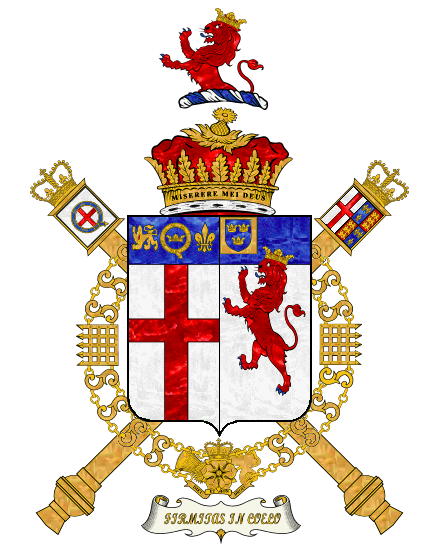
His arms (above) appear very much like those of his mother except that his are differenced by a white label (repeated on both supporters and the badge for Wales as well); in place of the compartment there is a device intertwining his motto and his badges as well as a small shield with the arms of Cornwall; there is an inescutcheon for Wales; and the crowns on the helm, the two small shields and the lion supporter all have a single arch as befits a Princely crown rather than a royal one which has two arches.
Bishop Joseph A. Galante, D.D., J.C.D. was born in Philadelphia and was ordained in 1964. He attended Lateran University in Rome, where he received his doctorate in canon law, and later the University of St. Thomas (Angelicum) in Rome, where he received his Master’s Degree in Spiritual Theology.
He served in the Archdiocese of Philadelphia until he was named by Pope John Paul II in December 1986 to be Undersecretary of the Congregation for Religious in Rome. He was a member of the Pontifical Council for Social Communications and chair of the United States Conference of Catholic Bishops’ Committee on Communications.
In October 1992 he was named Auxiliary Bishop of San Antonio, Texas. A year and a half later he was installed as Bishop of Beaumont, Texas. He became Coadjutor Bishop of Dallas in January 2000.
On April 30, 2004, Bishop Galante was installed as seventh bishop of the Diocese of Camden.
Bishop Galante retired on January 8, 2013. He entered into eternal life on May 25, 2019.
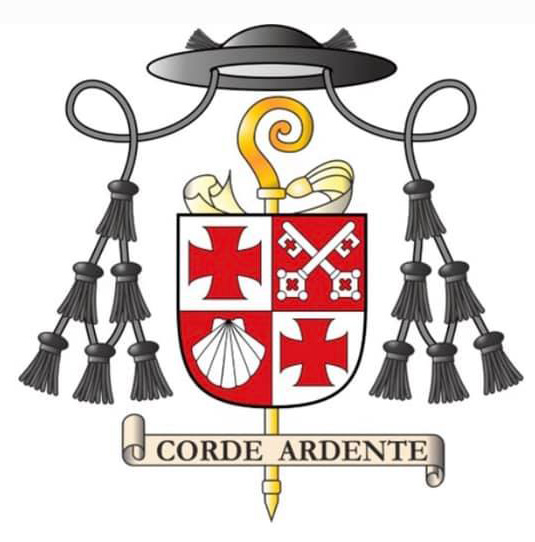
On April 9, 2019 the Augustinian Canons of Stift Herzogenburg in lower Austria elected Fr. Petrus Stockinger (37) to be their new Provost. In the world of Canons Regular some communities of canons are governed by Abbots. Others, like some Collegiate or Cathedral chapters, are governed by a Provost.
What is interesting for the purposes of this blog is that a Provost, who also enjoys the privilege of using pontificals, like an Abbot, also has the same heraldic privileges as an Abbot. These are, the black galero with black cords and twelve black tassels as well as the crozier with the sudarium attached. The armorial bearings of the newly-elected Provost are below.
On April 29 Pope Francis appointed Archbishop Paul Etienne (59) to be the Coadjutor Archbishop of Seattle. The archbishop was a priest of Indianapolis and also served from 2009-2016 as the Bishop of Cheyenne, Wyoming before becoming Archbishop of Anchorage, Alaska where he has served for just three years.
He will take up his new duties in Seattle in early June and then he and Archbishop Peter Sartain, who requested the coadjutor due to ill health, will determine when Archbishop Etienne (pronounced AY-chin) will succeed to the See as the ninth archbishop.
The archbishop famously redesigned his personal coat of arms when he moved from Cheyenne to Anchorage, a move that was highly criticized by me. Let’s hope he leaves well enough alone this time. Ironically, his original coat of arms would have ended up looking better marshaled to those of Seattle than his current design. This, then, is why one shouldn’t redesign personal arms to harmonize better with (arch)diocesan arms. It is impossible to know if you might be moving on.
The Most Rev. Donald Hying (55), formerly a priest and auxiliary bishop of Milwaukee, Wisconsin and since 2014 the bishop of Gary, Indiana has been appointed the fifth Bishop of Madison, Wisconsin succeeding the late Robert Morlino. Bishop Hying will be installed in Madison on June 25, 2019.
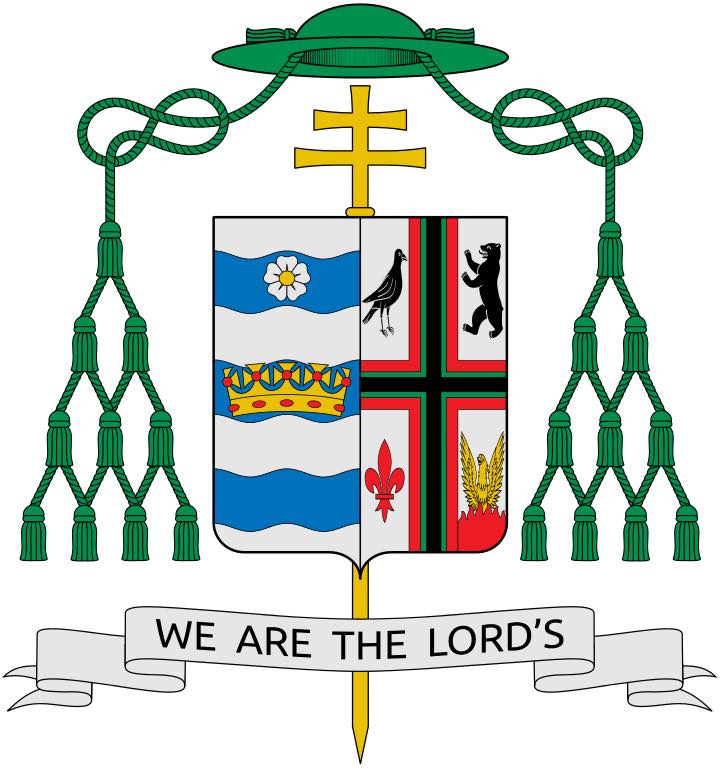
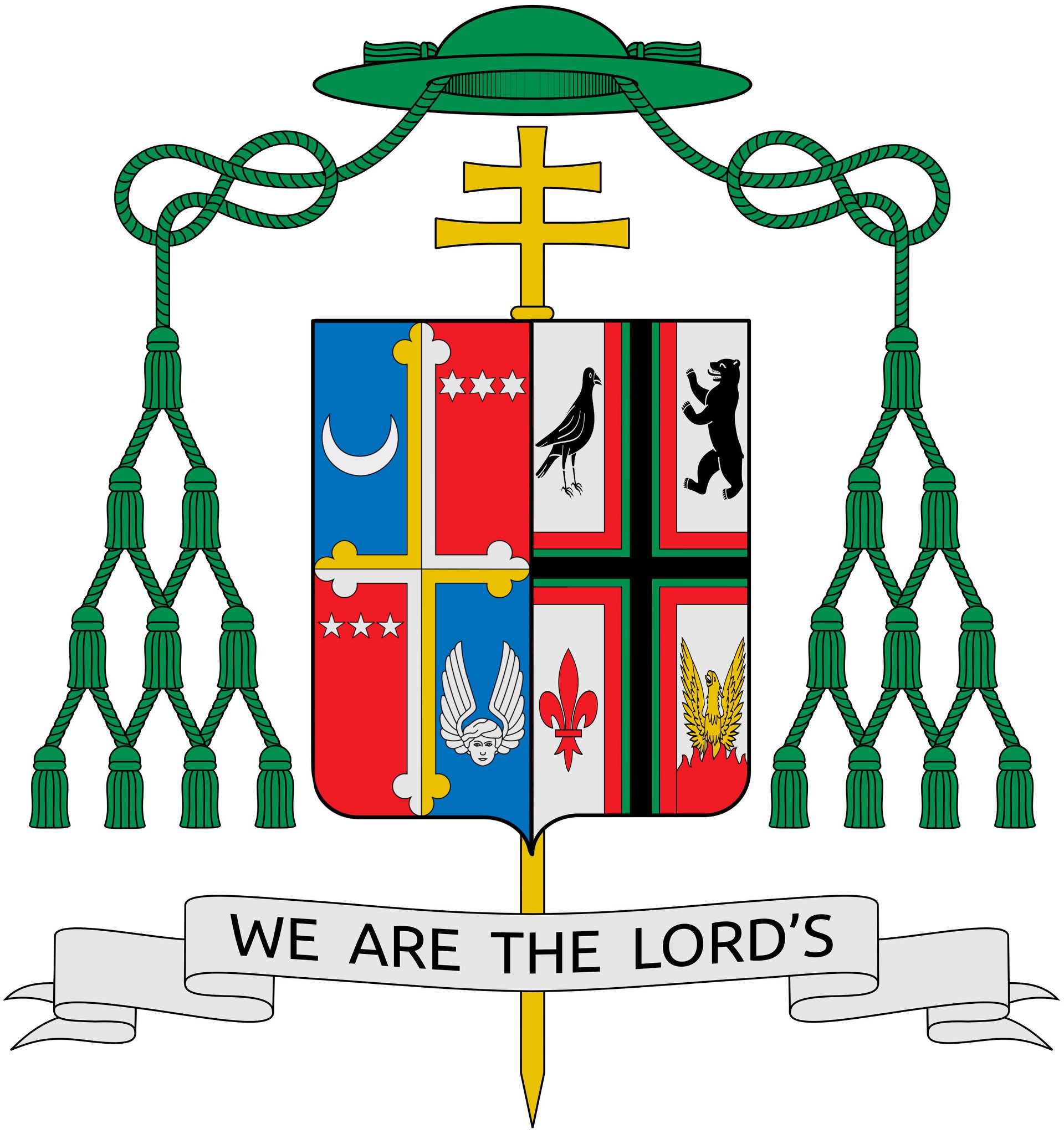
It was announced this morning that Pope Francis has appointed the Most Rev. Wilton Gregory, Archbishop of Atlanta to be the next Archbishop of Washington, DC. Archbishop Gregory was ordained a priest for the Archdiocese of Chicago originally and served as Auxiliary Bishop there before becoming the Bishop of Belleville, Illinois and eventually promoted to Archbishop of Atlanta. He also served at one time as President of the United States Conference of Catholic Bishops. He will be installed in Washington, DC on May 21.
The coat of arms he has used since becoming a bishop 36 years ago will now be marshaled to those of the Archdiocese of Washington, DC.
On a silver (white) field a cross composed of three colors; black on green on red. These colors are referred to as the African-American colors and by their use Archbishop Gregory honors the religious and racial heritage that has come to him from his parents, Wilton and Ethel ( Duncan ) Gregory. Within the quarters that are formed by the cross are a raven, to honor the Archbishop’s Benedictine education at Sant’ Anselmo (in Rome), and a black bear taken from the arms of His Eminence, Joseph Cardinal Bernardin, His Excellency’s principal Episcopal consecrator. Also within the quarters are a red fleur-de-lis taken from the arms of the Mundelein Seminary in Chicago , where Archbishop Gregory was a student and faculty member, and a golden phoenix, coming forth from red flames, to honor Chicago , the city reborn after the famous Chicago fire.
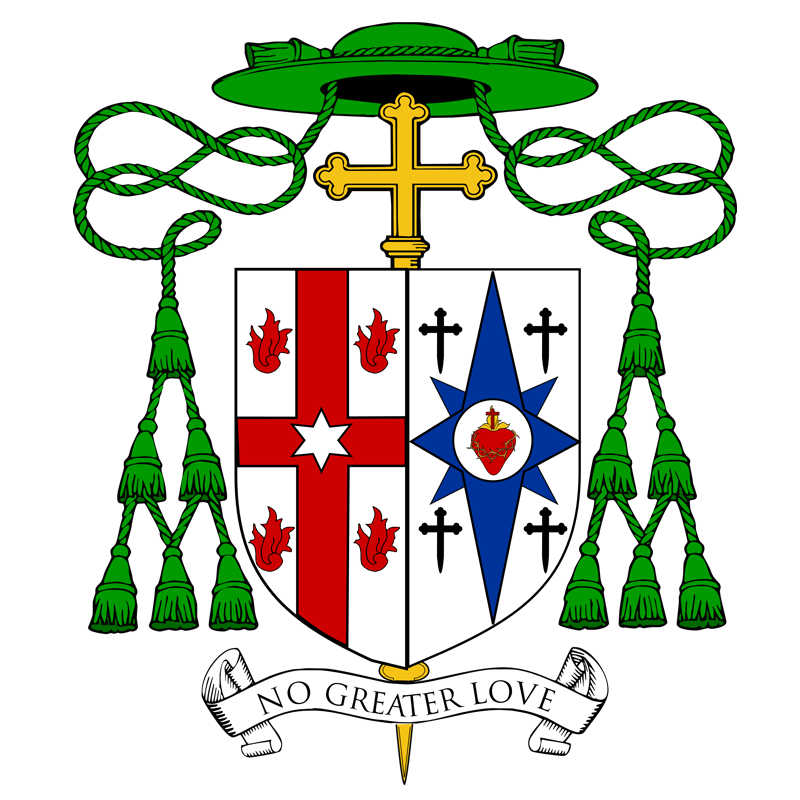
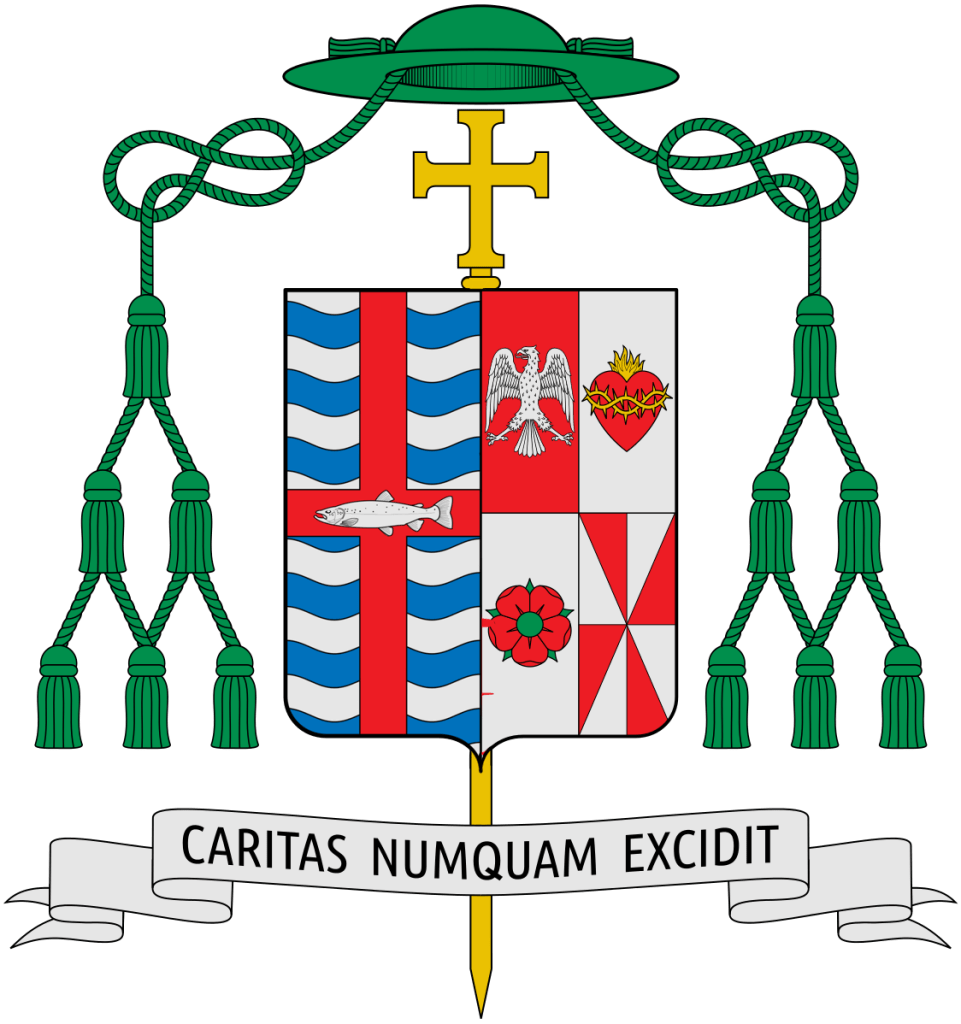
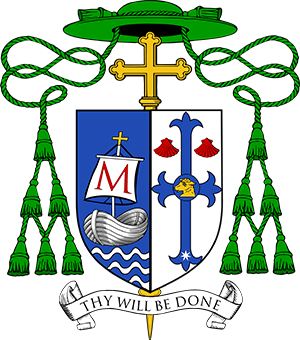
On Friday, March 29, 2019 the Most Rev. Robert Brennan, formerly Auxiliary Bishop of Rockville Centre, NY was installed as the twelfth Bishop of Columbus, Ohio. His personal arms now impaled with those of the See are described on the diocesan website.
The Brennan coat of arms comprises a white shield with a blue heraldic lion, and two red hands in the top corners of the shield. Rather than use the original design Bishop Brennan has chosen to retain the overall coloration and layout of his family coat of arms, while employing charges more evocative of his own life of faith.
The main charge on the shield is the Cross, the foundation of the Christian faith. The arms of this particular Cross resemble a fleur-de-lis, a stylized lily often used as a symbol of the Virgin Mary.
At the bottom of the cross appears a small white star, a symbol of Our Lady. Its position recalls the moment of the Commendation, when, “standing by the cross of Jesus” (John 19:25), Mary became, at her Son’s command, the Mother of all of his disciples (cf. John 19:27). The star has seven points, recalling the seven Gifts of the Holy Spirit.
At the center of the cross appears a lamb’s head painted gold. The same charge figures prominently on the coat of arms of the Diocese of Rockville Centre, which Bishop Brennan served as a priest and bishop for nearly 30 years. Saint Agnes is the patroness of the Diocese of Rockville Centre, and of its Cathedral church, where Bishop Brennan resided for 16 years.
At the top of the shield are two scallop shells painted red. Although the charges are the same, they are used here to allude to two different saints: John the Baptist and James the Greater. Bishop Brennan attended Saint John the Baptist High School (West Islip) and Saint John’s University, and the patron of these schools is often depicted in sacred art using a shell to baptize the Lord Jesus. The date of Bishop Brennan’s ordination as a bishop — July 25, 2012 — is the feast of Saint James, the brother of Saint John the Evangelist and the first of the apostles to be martyred, during the persecution of the early Church (Acts 12:1-2). The red color of the shells recalls the fact that both of these saints gave their lives as martyrs for the faith.
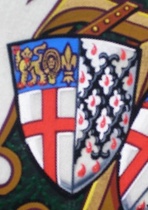
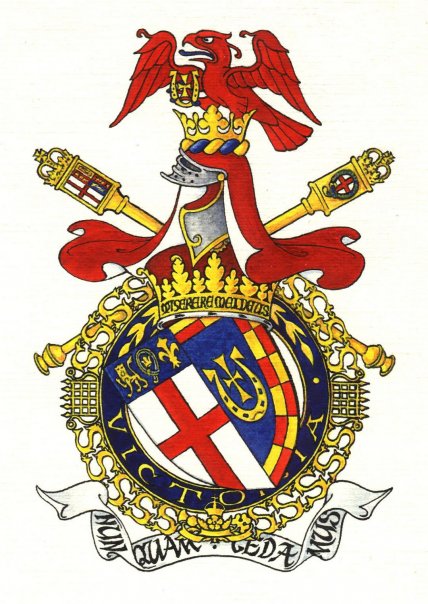
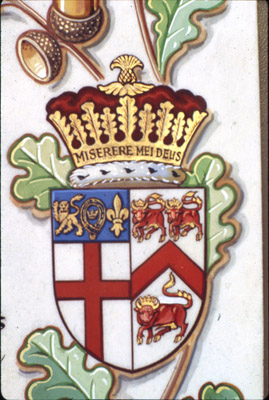
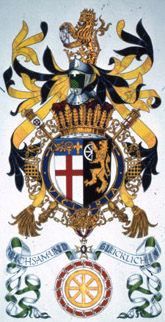
While it is not entirely unknown it is somewhat rare to find artistic depictions (i.e. “emblazonments”) of the personal coat of arms of a herald in some way marshaled with the heraldic devices or coat of arms associated with the heraldic office he holds.
It’s very common to see the arms of one of the English Kings of Arms, for example, or that of the Lord Lyon King of Arms. In addition, most heralds and pursuivants (Kings-of-Arms, Heralds and Pursuivants are collectively referred to as “heralds”, using the name of the so called middle rank) employ a heraldic badge to indicate their office. But, it is the somewhat rare occasion when such coats of arms or badges are displayed along with the individual heralds’ personal armorial bearings.
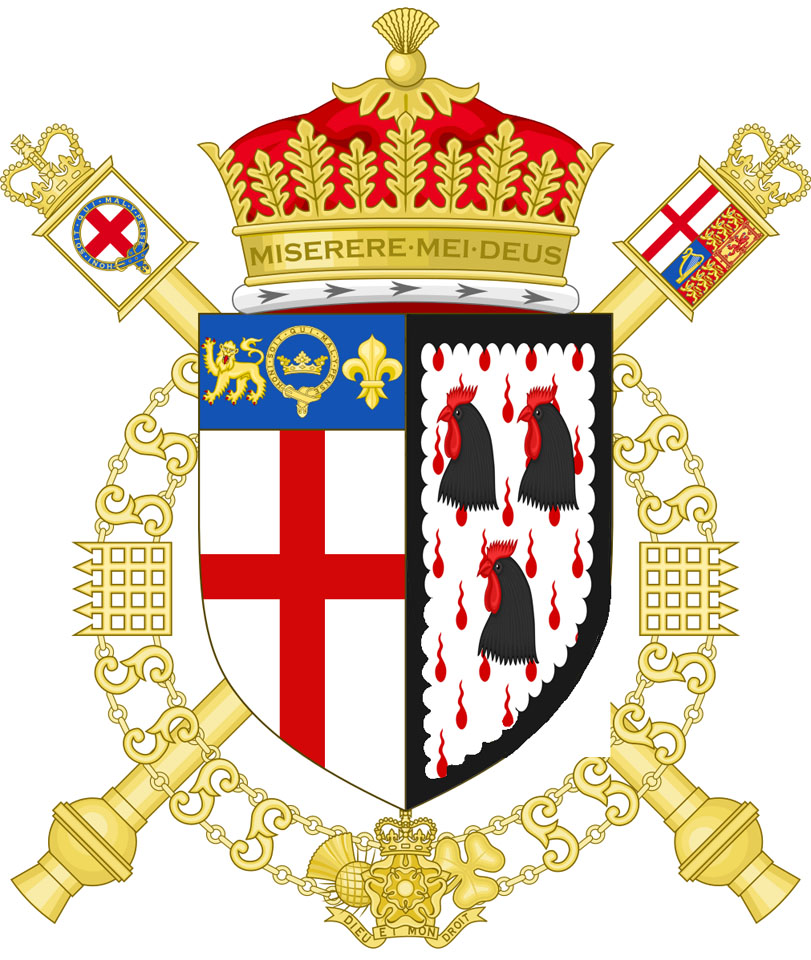
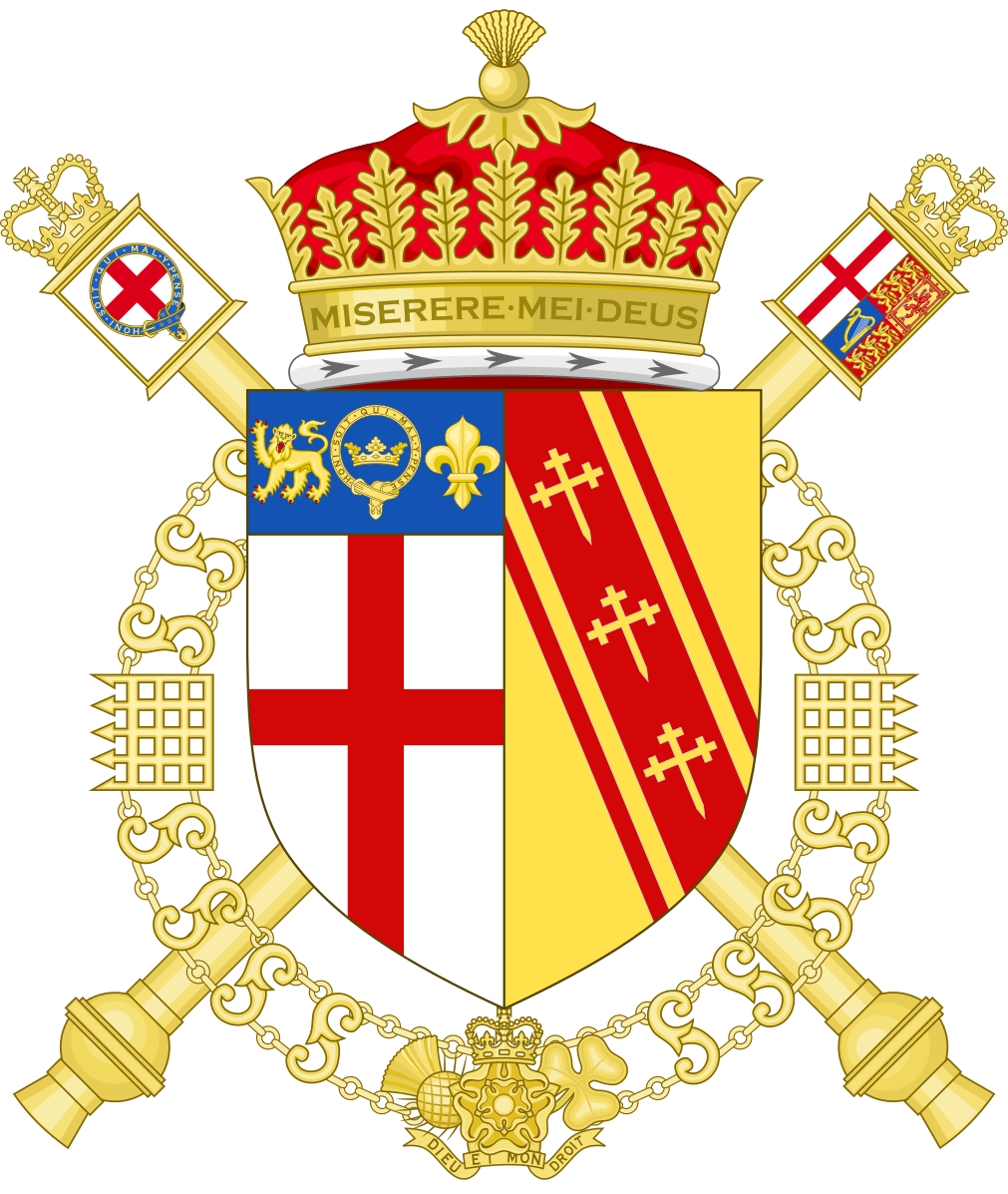
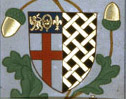
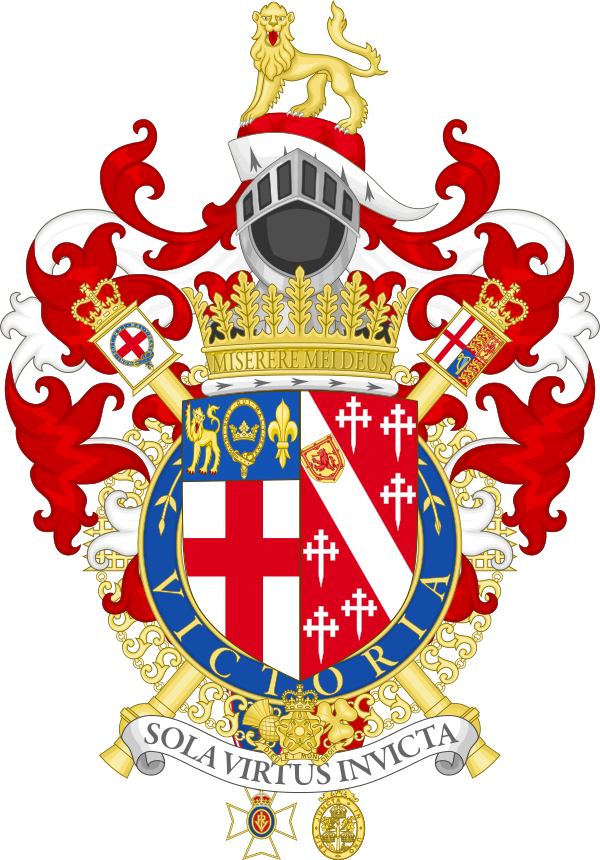
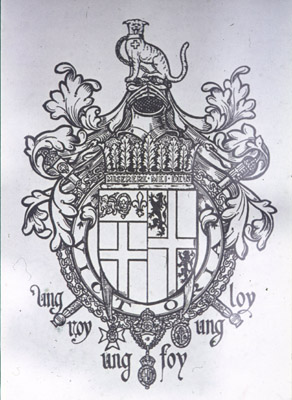
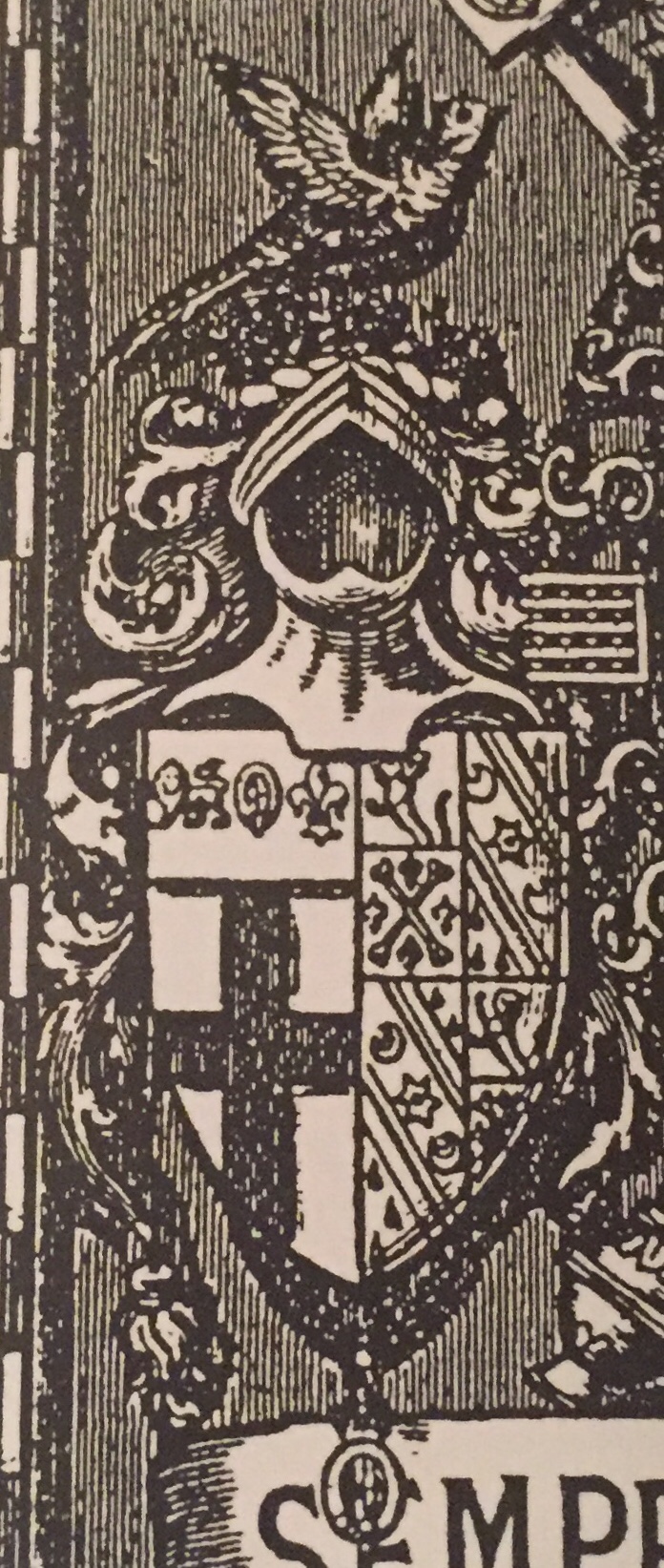
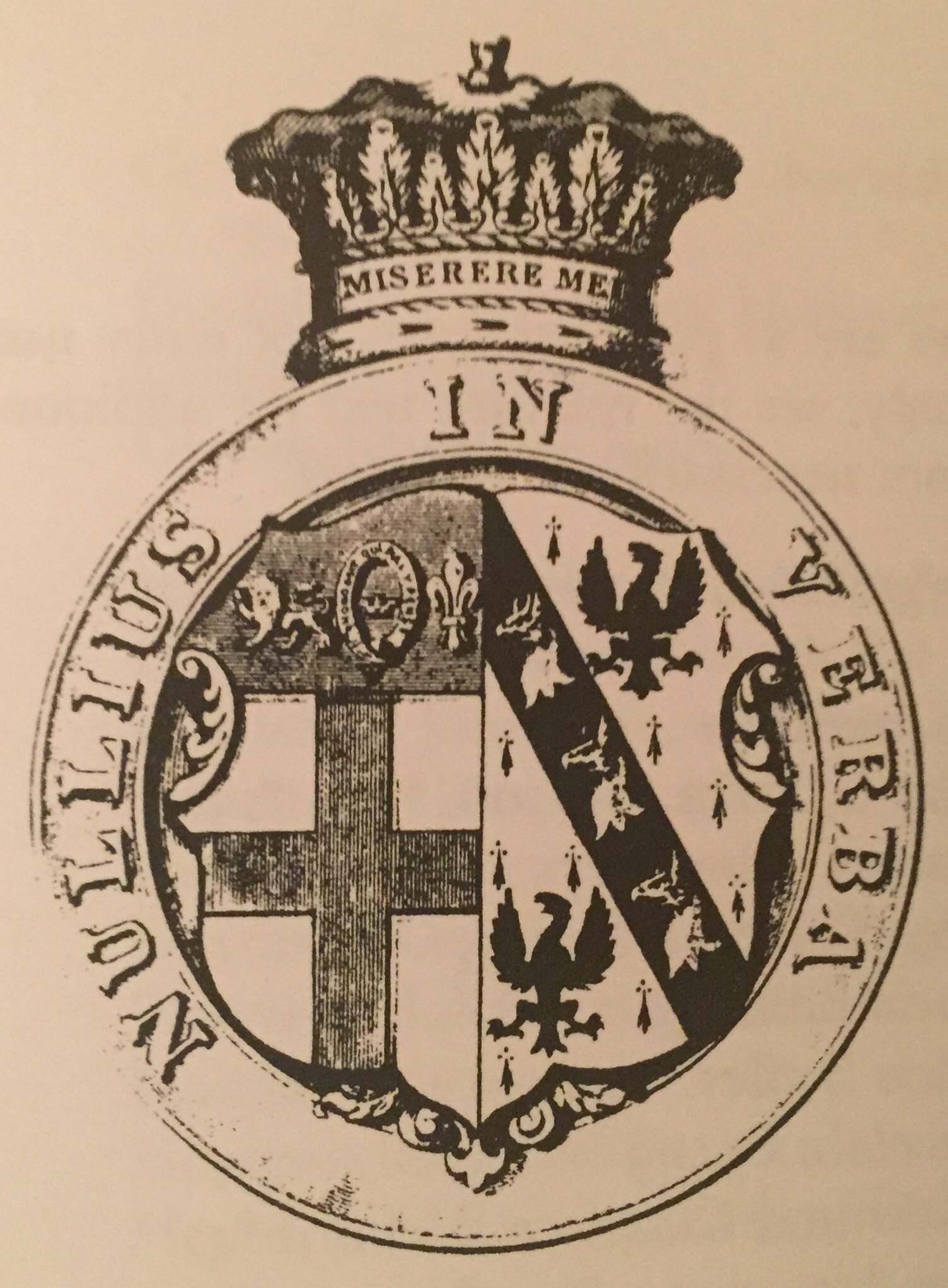
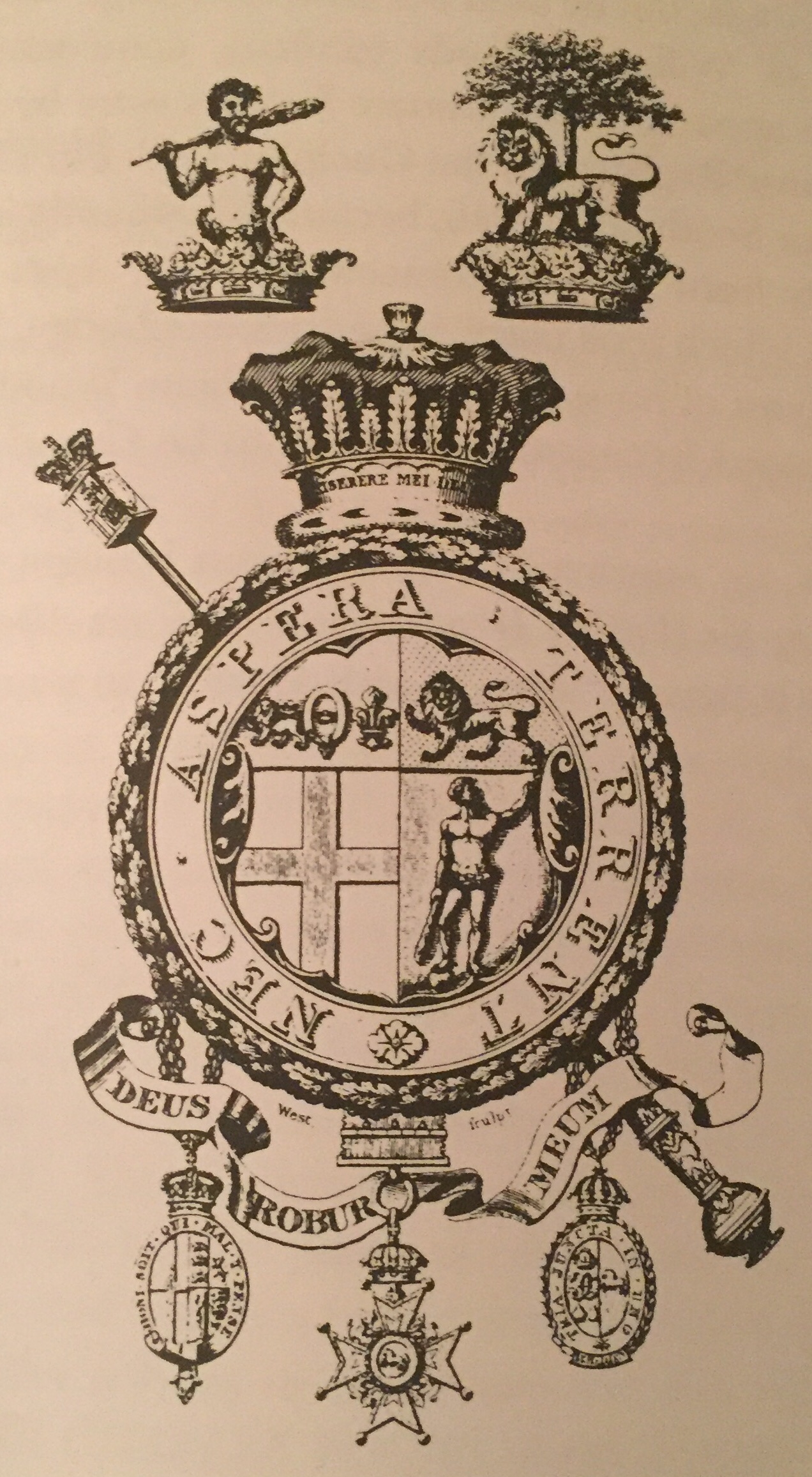
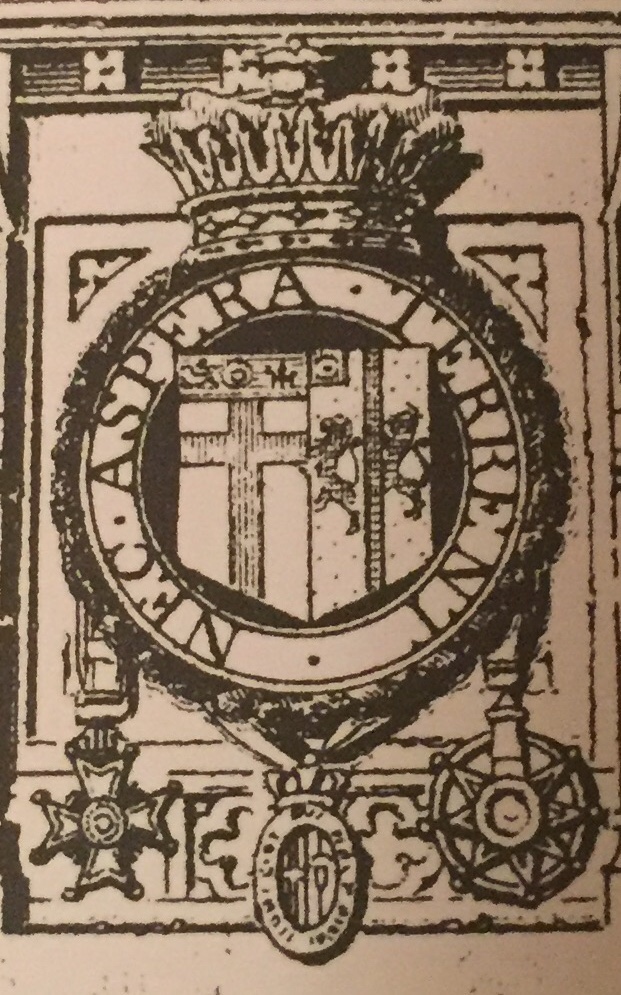
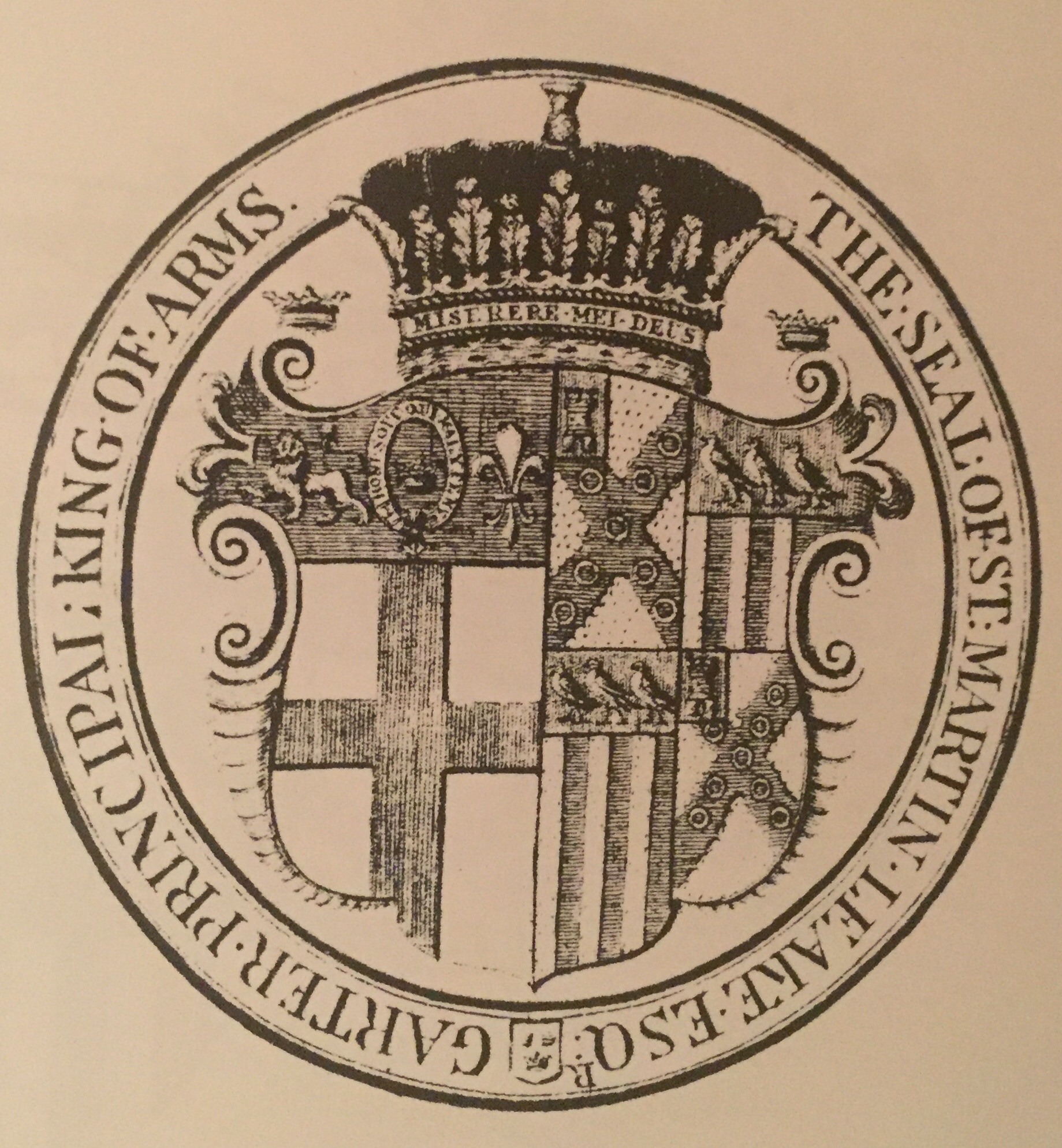
I happened to come across a very handsome one the other day causing me to begin searching the internet to find images of the personal arms of Garter Principal King of Arms, the officer of arms who is the most senior of the heralds in the English College of Arms, ranking immediately below the Earl Marshal, the Duke of Norfolk marshaled to those of the arms of office for Garter. I have, so far, only been able to find a few. I’ll begin with the newly appointed current Garter King of Arms and work backwards. NOTE: all of the personal coat of arms of the men who served as Garter King of Arms are known. However, here I am referring to depictions where their personal arms are impaled with those of the office of Garter.
David Vines White, 2021 –
Thomas Woodcock, 2010 – 2021
Sir Peter Gwynn-Jones, 1995 – 2010
Sir Conrad Swan, 1992-1995
Sir Colin Cole, 1978 – 1992
Sir Anthony Wagner, 1961 – 1978
The Hon. Sir George Bellew, 1950 – 1961
Sir Algar Howard, 1944 – 1950
(N.B.: according to the blazon of the arms there should be a crescent sable on the bend for difference.)
[Sir Gerald Wollaston, 1930 – 1944]
Sir Henry Farnham Burke, 1919 – 1930
Sir Alfred Scott-Gatty, 1904 – 1918
Sir Albert Woods, 1869 – 1904
Sir Charles Young, 1842 – 1869
Sir William Woods, 1838 – 1842
[Sir Ralph Bigland, 1831 – 1838]
Sir George Nayler, 1822 – 1831
[Sir Isaac Heard, 1784 – 1822]
[Ralph Bigland, 1780 – 1784]
[Thomas Browne, 1744 – 1780]
[Sir Charles Townley, 1773 – 1774]
Stephen Martin Leake, 1754 – 1773
[John Anstis the younger, 1727 – 1754]
[John Anstis the elder, 1714 – 1744]
Sir Henry St. George the younger, 1703 – 1715
Sir Thomas St. George, 1686 – 1703
[Sir William Dugdale, 1677 – 1686]
[Sir Edward Bysshe, 1646 – 1660]
[Sir Edward Walker, 1645 – 1677]
Sir Henry St. George the elder, April – November, 1644
Thus far back was I able to discover depictions of the personal arms of the various Garter Kings of Arms impaled with the arms of office. Of course the office is much older than 1644. The first garter King of Arms, William Bruges, was appointed in 1417! I have only listed the bracketed names and dates of the Kings of Arms for whom I could not find examples of their impaled arms to fill in gaps between those that I did find. But, I’ll keep looking!
UPDATE: I added the newly-appointed present Garter principal King of Arms.




 EXARANDORUM