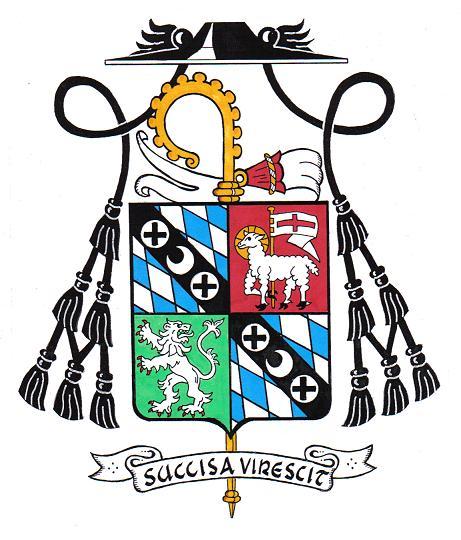
Chicago’s Three New Auxiliaries

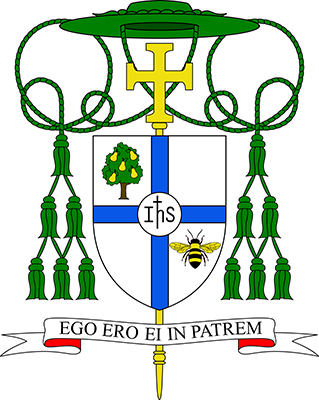
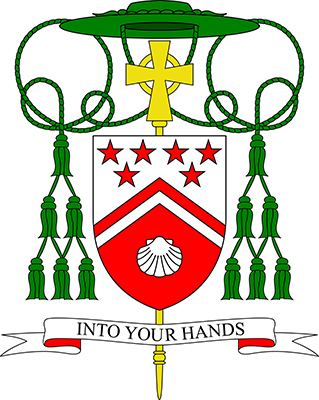
On September 17 Blase Cardinal Cupich, Archbishop of Chicago will ordain three new Auxiliary Bishops. They and their newly assumed coats of arms are:

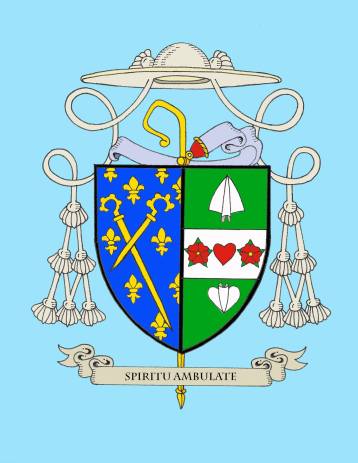
Mark Bartosic (57) Titular Bishop of Novatcata

wbartosic coat of arms new

BLAZON: Argent, at center, upon a cross throughout azure, a plate charged with the monogram of the Holy Name, sable; to chief dexter a pear tree and to base sinister a bumble bee, both proper.

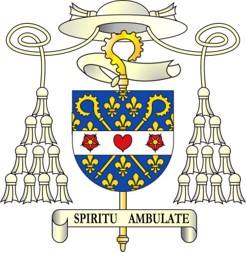
Robert Casey (50) Titular Bishop of Thuburbo Maius

wcasey_revised coat of arms

BLAZON: Argent and gules; a chevron party per chevron between in chief six stars, in two groups each two and one and in base an escallop all counterchanged.

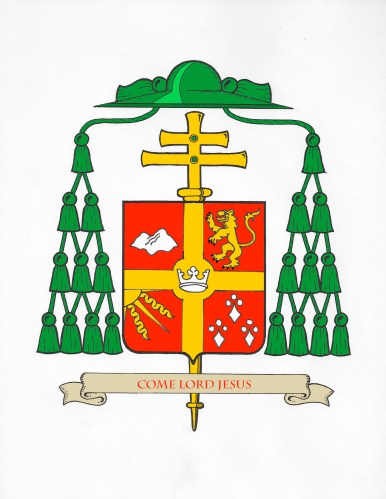
Ronald Hicks (51) Titular Bishop of Munatiana

wHicks revised coat of arms

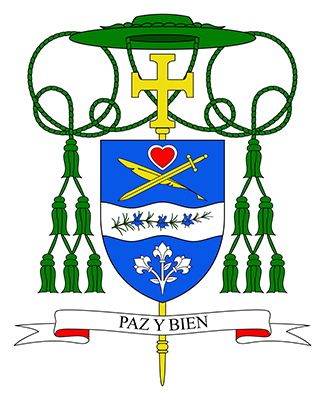
BLAZON: Azure, upon a fess wavy argent a sprig of rosemary proper; to chief per saltire a sword upon a quill below a heart gules fimbriated of the second, in base a spring of lily of three blossoms, also of the second.

All three (the work of Deacon Paul Sullivan) show a happy composition, good limited use of colors and make for nice clear designs. The arms of Bishop-elect Hicks is the most “crowded” and the fimbriation around the heart is probably there so that the heart could be depicted as red on a blue field. That’s unfortunate. It’s a “trick” to get around the tincture “rule” (of no color on color) but its a weak design element. It would have been better simply to have the heart be of gold or silver.


Norbertine Cardinals

There have been fewer cardinals in the Church from the Order of Canons Regular of Prémontré (aka Norbertines) than there have been of other orders and, as far as I can tell, two of those known to be associated with that Order were Abbots in Commendam only. The Premonstratensian Cardinals are:

riche

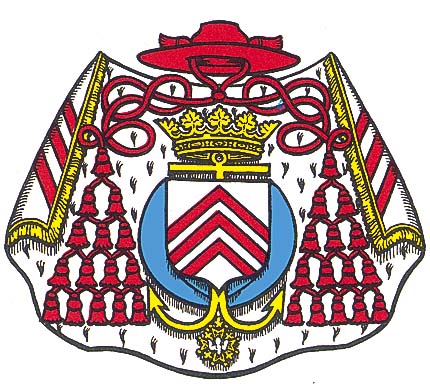
Armand Jean du Plessis, Duke de Richelieu, Bishop of Luçon, Commendatory Abbot of Prémontré, (also Territorial Abbot of Cluny and Abbot in Commendam of Citeaux)

mc BUCCA GIOVANNI 437

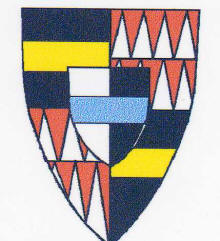
Johannes von Bucka, O.Praem. Archbishop of Olomouc

este2

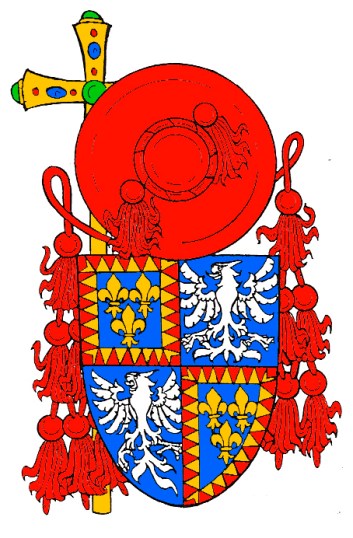
Ippolito II d’Este, Archbishop of Auch, Archbishop of Arles, Commendatory Abbot of Prémontré

Benedictine Cardinals

Throughout the Church’s history there have been many members of the hierarchy who were members of Religious Communities. The present pope is a member of the Society of Jesus (Jesuits) and the first from that Order elected to the papacy. One of the oldest Orders in the Western Church is the Order of St. Benedict. Many monks have been made bishops and quite a few have been raised to the Sacred Purple as Cardinals. The following is by no means exhaustive but gives a sampling of some of the Benedictine Cardinals in recent history. (My gratitude to the fine website called Araldica Vaticana for many of these examples.

Enjoy!

Chiaramonti CORRECTION Chiaramonti Pius VII0001

Gregory Cardinal Chiaramonte, OSB (later Pope Pius VII)

pitra_stemma2a

Jean Cardinal Pitra, OSB

Maria Nova card Schiaffino stemma

Placido Cardinal Schiaffino, OSB Oliv

Ganglbauer manteled0001

Celestine Cardinal Ganglbauer, OSB (Archbishop of Vienna)

SEP28 Gasquet

Aidan Cardinal Gasquet, OSB (Vatican Archivist)

DUSMET GIUSEPPE BENEDETTO

Bl. Giuseppe Cardinal Dusmet, OSB (Archbishop of Catania)

COA_cardinal_HU_Vaszary_Ferenc_Kolos2

Kolos Cardinal Vaszary, OSB (Primate of Hungary)

2015 Saraiva 07051845

Francisco de S. Luiz Cardinal Soraiva, OSB (Patriarch of Lisbon)

NOTE: Cardinal Soraiva also had a version of his arms with a galero but also used the triple tiara as was customary for the Patriarchs of Lisbon until very recently.

SERAFINI DOMENICO 05031918

Domenico Cardinal Serafini, OSB

Schuster design0001CCC

Ildephonse Cardinal Schuster, OSB (Abbot of St. Paul Outside-the-Walls and later Archbishop of Milan)

BB-05 SEREDI0001

Justinian Cardinal Seredi, OSB (Primate of Hungary)

Coat_of_arms_of_Joaquín_Anselmo_María_Albareda_y_Ramoneda.svg

Joachim Cardinal Albareda y Ramoneda, OSB (Vatican Librarian)

51CS) Stemma Card. Gut Benno Walter (1897-1970)

Benno Cardinal Gut, OSB

Image 3

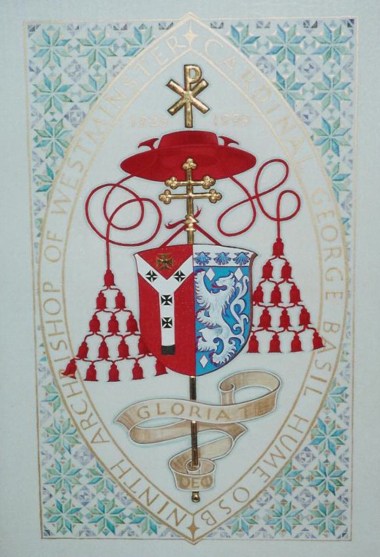
Basil Cardinal Hume, OSB (Archbishop of Westminster)

archbishop-hans-hermann-cardinal-groer-of-vienna-1986-1995

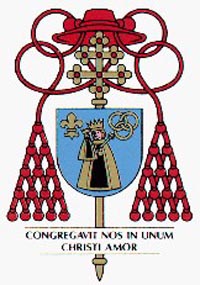
Hans Herman Cardinal Groer, OSB (Archbishop of Vienna)

88155b

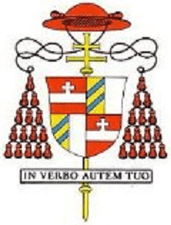
Paul Augustine Cardinal Mayer, OSB

Archbishop Comensoli of Melbourne

On August 1, the Most Rev. Peter Comensoli (54) was installed as the Archbishop of Melbourne, Australia.

IMG_8322


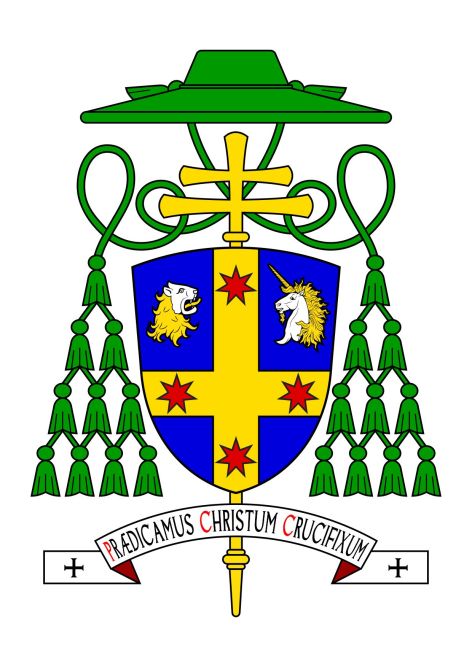
The personal Arms of Archbishop Peter Comensoli were assumed in 2011 on his ordination as titular Bishop of Tigisi in Numidia and borne by him as Auxiliary of the Archdiocese of Sydney (2011-2014). He bore them impaled with the Arms of the Diocese of Broken Bay as its third Bishop (2014-2018). According to the usual custom in Melbourne he has chosen to use his personal arms alone.
The arms and motto are blazoned as follows: Azure, on a Latin cross inverted Or four seven-pointed mullets (or Commonwealth stars) Gules, in the first quarter a lion’s head erased Argent crined and langued Or and in the second a unicorn’s head erased Argent crined and armed Or respectant.
The motto ‘Praedicamus Christum Crucifixum’ is a quotation from the Apostle Paul’s first epistle to the Corinthians (1Cor1.23), and can be translated as ‘We preach Christ crucified.’
The inverted Latin Cross symbolises the Bishop’s nominal patron, the Apostle Peter and the stars reflect the Southern Cross, which shines out over the Great South Land of the Holy Spirit. The lion and the unicorn respectively symbolise the mind and the heart of love.
I was privileged to help design these arms back in 2011 along with Richard d’Apice. They are emblazoned by Sandy Turnbull.

Abbot-General of the Norbertines

abgen

The armorial bearings of the newly elected Abbot-General of the Order of Canons Regular of Prèmontrè (aka the Norbertines) the Most Rev. Josef Wouters, O.Praem., former abbot of Averbode. This coat of arms was originally designed by Luc Duerloo and contains charges on a fess normally associated with the Community at Averbode with the addition of personal symbols (the lance head and plow blade). The impalement here is with the arms of the Order. I understand that, as Abbot-General, he has decided to use some other arrangement which, oddly, combines the symbols for Averbode with the arms of the Order and omits any personal symbols whatsoever.

abgen2

Archbishop McCarrick

Here is a heraldic oddity. It involves the reduction in rank or demotion of a prelate. Now that Theodore McCarrick has resigned from the College of Cardinals he will no longer enjoy the privileges associated with it. For the time being he retains a coat of arms, although, I suppose that remains to be seen as well, and it bears the personal arms he assumed when he first became a bishop as Auxiliary Bishop of NY. He retains the double-barred cross and galero with 20 tassels of an archbishop because he is the Archbishop-emeritus of Washington, DC. The arms of theSee of Washington are not impaled with his personal arms because he is no longer the incumbent of that See. Having laid aside the dignity of a Cardinal he reverts to being Archbishop McCarrick.


TMAC3

Bishop Richard Henning

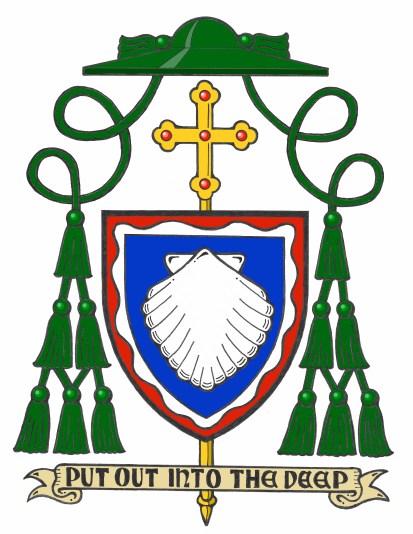
On Tuesday, July 24, the Most Rev. Richard G. Henning (53), a priest of Long Island’s Diocese of Rockville Centre and currently Rector of the Seminary of the Immaculate Conception, will be ordained a bishop and become Titular Bishop of Tabla and Auxiliary Bishop of Rockville Centre. Shortly after his appointment he asked me to assist in the design of his arms. The Bishop and I are classmates from our days attending Chaminade High School in Mineola, NY. His coat of arms is:
HenningFinal1c


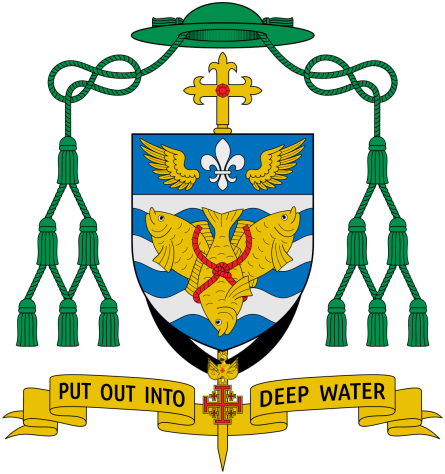
The blazon of the arms is: Azure, within a bordure parted wavy Argent and Gules an escallop shell Argent. The shield is ensigned with an episcopal cross Or charged with five jewels Gules and a bishop’s galero with cords and twelve tassels flanking the shield disposed in three rows of one, two and three all Vert. On a scroll below the shield is the motto, “Put Out Into The Deep”.

The shield is composed of a design depicted in red (Gules), white (Argent) and blue (Azure) which are the national colors of the United States.

Both the blue background and the single escallop shell allude to the sea as evoking the Bishop’s own background and the shell is also borrowed from the coat of arms of the See of Rockville Centre, the diocese in which he was born and raised and which he serves as a priest and bishop. The shell image also recalls the Bishop’s heritage in the Diocese of Brooklyn, dedicated to its patron, St. James. The ordination of the bishop takes place on the eve of the Feast of St. James. In concert with the Bishop’s motto, the shell is a traditional symbol of baptism and pilgrimage. It is in the depths of these waters that Christians find their salvation in Jesus Christ.

The white wavy line surrounding the blue field is similarly taken from the arms of Rockville Centre and it alludes to the diocese’s location on Long Island, NY. Furthermore, it indicates the sea as the place where the barque of St. Peter, an image used to evoke the Church, is located.

The blue background also evokes the Bishop’s devotion to the Blessed Virgin Mary and his years of service as a Professor and Rector at the Seminary of the Immaculate Conception. The red wavy portion of the border evokes the Bishop’s devotion to the Most Sacred Heart of Jesus and his service as the Director of the Sacred Heart Institute for the Ongoing Formation of the Catholic Clergy.

The external ornaments include a gold episcopal cross placed vertically behind the shield decorated with five red jewels symbolic of the wounds of Christ. This is often mistaken for a processional cross like the one used in liturgical processions. However, like other heraldic ornaments the episcopal cross has its origins in something which is no longer actually used. At one time all bishops had, in addition to the processional cross at the head of the procession, another cross carried directly in front of them by a cleric. This other cross was a sign of the office of bishop. While no longer actually used it has remained a symbol of the episcopal office in heraldry.

Similarly, the broad-brimmed green galero was, at one time, worn by bishops in outdoor processions and cavalcades. No longer used it remains a heraldic symbol of the office of bishop and takes the place of the helmet, mantling and crest that would appear in the coat of arms of a layman. In Catholic heraldry the color and number of tassels on the galero indicates the rank of the bearer. The single barred episcopal cross and the green galero with twelve tassels signifies the coat of arms of a bishop according to the Instruction of the Holy See, “Ut Sive” issued in 1969.

The motto chosen by Bishop Henning appears on a scroll below the shield. “Put Out Into The Deep” which is taken from Luke 5:4.
More Clergy With Multiple Versions of Their Arms

A couple of years ago I wrote about clergy who make use of more than one version of their coats of arms depending on offices held or circumstances of use. Once again I’ve come across a fine example.

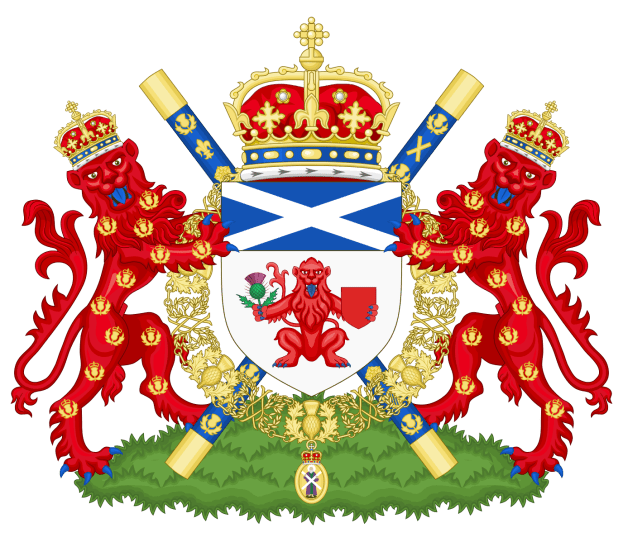
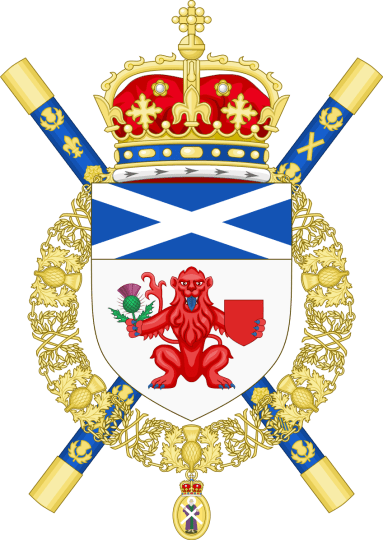
The current Lord Lyon King of Arms, the principal heraldic authority for Her Majesty in Scotland is not only a heraldic expert and a jurist but he is also an ordained clergyman in the Scottish Episcopal Church (a.k.a. the Anglican Church north of the border). The Rev. Canon Dr. Joseph John Morrow, CBE, KStJ, QC, DL, LLD possesses a very nice coat of arms of his own.

IMG_7668

This coat of arms can be displayed all alone or, as Lord Lyon sometimes has chosen to do, with the helm, mantling and crest of the typical armorial achievement.

IMG_7667

However, sometimes this coat of arms is also displayed with the external ornaments proper to the Office of Lord Lyon King of Arms.

IMG_6788

Additionally, the Office of Lord Lyon has its own armorial bearings which may be used by the incumbent of the office of Lord Lyon in a “greater” form:

IMG_7671

as well as a “lesser” or smaller version.

IMG_7669

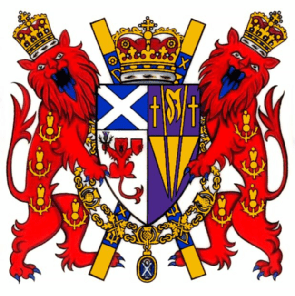
Finally, the current Lord Lyon may choose to impale his personal arms with those of Lord Lyon and display them with the external ornaments of the office, including the red lion supporters:

IMG_6789

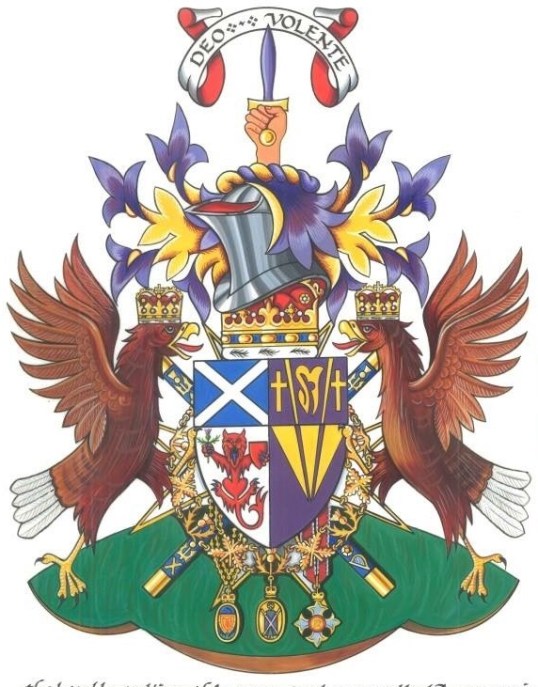
or he may impale his personal arms with the arms of office and display them with some of the external ornaments of Lord Lyon as well as his own crest and supporters.

IMG_7658


Same man; same arms; many versions.

Duchess of Sussex Coat of Arms

Despite my speculation in a previous post the newly-created coat of arms for the Duchess of Sussex was released today!

33340391_10101362446434169_8122416638642356224_o

According to the website of the Royal Family:

A Coat of Arms has been created for The Duchess of Sussex. The design of the Arms was agreed and approved by Her Majesty The Queen and Mr. Thomas Woodcock (Garter King of Arms and Senior Herald in England), who is based at the College of Arms in London.

Her Royal Highness worked closely with the College of Arms throughout the design process to create a Coat of Arms that was both personal and representative.

The blue background of the shield represents the Pacific Ocean off the California coast, while the two golden rays across the shield are symbolic of the sunshine of The Duchess’s home state. The three quills represent communication and the power of words.

Beneath the shield on the grass sits a collection of golden poppies, California’s state flower, and wintersweet, which grows at Kensington Palace.
It is customary for Supporters of the shield to be assigned to Members of the Royal Family, and for wives of Members of the Royal Family to have one of their husband’s Supporters and one relating to themselves. The Supporter relating to The Duchess of Sussex is a songbird with wings elevated as if flying and an open beak, which with the quill represents the power of communication.

A Coronet has also been assigned to The Duchess of Sussex. It is the Coronet laid down by a Royal Warrant of 1917 for the sons and daughters of the Heir Apparent. It is composed of two crosses patée, four fleurs-de-lys and two strawberry leaves.

The arms of a married woman are shown with those of her husband and the technical term is that they are impaled, meaning placed side by side in the same shield.

Mr. Thomas Woodcock, Garter King of Arms said: “The Duchess of Sussex took a great interest in the design. Good heraldic design is nearly always simple and the Arms of The Duchess of Sussex stand well beside the historic beauty of the quartered British Royal Arms. Heraldry as a means of identification has flourished in Europe for almost nine hundred years and is associated with both individual people and great corporate bodies such as Cities, Universities and for instance the Livery Companies in the City of London. ”

The Duchess of Sussex

The coat of arms which will eventually be used by the new Duchess of Sussex may very well use a similar arrangement as the arms of the current Duchess of Gloucester (pictured). That is to say that rather than her father’s arms impaled on the same shield with her husband’s arms a coat of arms granted to her in her own right will be placed on a smaller escutcheon placed over her husband’s coat of arms.
32978817_10213956089309100_3390081192119238656_n
 
It was reported in “The Daily Mail” that the reason a coat of arms devised for her father to be used by her as well did not appear in the days before the royal wedding is that the Queen decided the process for justifying such a grant was “too complicated” and that it would be better to do what had been done in the case of the Danish-born Duchess of Gloucester. At the time of her marriage in 1972 her husband, Richard, was the previous Duke’s second son. His older brother, William, was killed 6 weeks after their July, 1972 wedding making Richard the heir to the Dukedom (which he inherited on the death of his father in 1974).
 
Birgitte, the current Duchess, with no ancestors of British origin, was granted a coat of arms of her own by Royal Warrant in July, 1973, about a year after she married Richard.
 
So, it is not hard to imagine that Meghan, the Duchess of Sussex will, similarly, be given a coat of arms of her own in due course and that it might very well be displayed on a smaller shield placed over her husband’s coat of arms. The precedent has been set for such action.
 
The story in “The Daily Mail” said, “Mr Markle will not have his own coat of arms,’ confirms a senior source at the College of Arms, which acts on behalf of the Crown in all matters of heraldry.
 
‘We were told it would be too ‘complicated’.
 
‘The Palace has instructed us to use the example of the Duchess of Gloucester and give Meghan Markle her own coat of arms instead.”
 
It will be interesting to see how this eventually works out but I’ll bet they do something similar for the Duchess of Sussex as was done for the Duchess of Gloucester who was also a non-armigerous foreigner who married into the Royal Family.

New Prince & Grand Master of the Order of Malta

prince-and-grand-master-matthew-festing_orig

His Most Eminent Highness Fra’ Giacomo Dalla Torre del Tempio di Sanguinetto (73) a native Roman and former Grand Prior of Rome who, in the past, served as Lieutenant of the Order ad interim after the death of the 78th Grand Master, Fra’ Andrew Bertie, and who, last year, was elected to serve for one year as Lieutenant of the Grand Master during a year of reform and reflection was, on May 2, 2018, elected as the 80th Prince and Grand Master of the Sovereign Military Order of the Hospital of St. John of Jerusalem, Rhodes and Malta. He succeeds Fra’ Matthew Festing, the 79th Grand Master who resigned in 2017 after an internal struggle within the Order and the intervention of the Holy See.

April-30-2017-01

Almost Identical

Sometimes, especially in the world of ecclesiastical heraldry, prelates aren’t always so creative and frequently they adopt arms that are very similar to each other’s. On occasion this may indicate a kind of patronage of one prelate over another. For example, St. John XXIII’s longtime secretary, Loris Capovilla, was later made an Archbishop and eventually a Cardinal. At the time of his episcopal ordination he adopted John XXIII’s coat of arms entirely with one tiny exception; he removed one of the fleur-de-lis in order to “difference” his arms from his patron.

Differencing is an old custom in heraldry and often misunderstood. Two different coats of arms might seem identical at first glance. Yet, as long as one element is changed, or “differenced” it makes for a sufficient differentiation between the two in order to avoid two armigers bearing identical coats of arms. Sometimes this could be the changing of a particular charge, the addition of a label or a mark of cadence or even simply changing the tinctures.

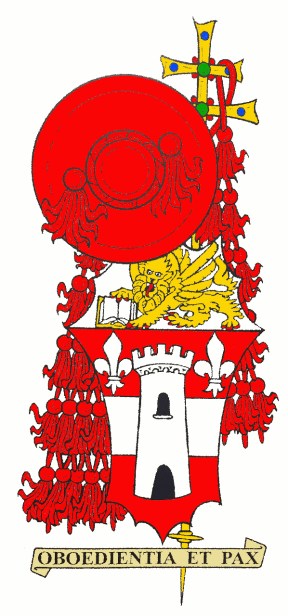
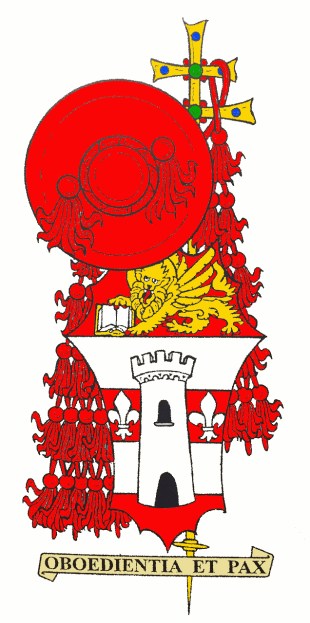
Here we see an interesting pair. Both Angelo Giuseppe Roncalli, Patriarch of Venice (later Pope St. John XXIII) and Carlos Maria Della Torre, Archbishop of Quito & Primate of Ecuador were created Cardinals by Pope Pius XII in 1953. The arms they each bore were almost identical showing a tower flanked by two fleur-de-lis on a red and white field.

J23  Torre

However, Roncalli’s arms showed a field “Gules, a fess Argent” and Della Torre’s showed a field, “Barry of four Argent and Gules”. These arms allude to his name, “Of the Tower”. In addition, Roncalli added the chief of Venice (depicting the gold lion of St. Mark on a silver (white) field) at the time he was promoted to Patriarch there as is usually the custom for the incumbents in that position. That provided a great visual difference between their arms. However, after Roncalli’s election as Pope in 1958 Della Torre once again made their arms very similar by adopting a chief with the gold lion of St. Mark on a red field; differenced from the Pope’s but only slightly. I suppose given the relative similarity of their coats of arms in the first place he wished to honor his “classmate” as a Cardinal who was also now his Pope.

What is more it is interesting to note that both men bore the same motto despite there being no particular relationship between the two.

These arms seem almost identical, but note quite.

Artwork: The late Michael McCarthy

Bishop Konzen

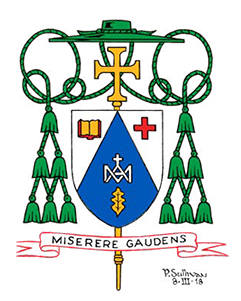
The Most Rev. Joel Matthias Konzen, S.M. (67) a priest of the Society of Mary (Marists) was ordained as the Titular Bishop of Leavenworth and Auxiliary to the Archbishop of Atlanta on April 3, 2018. His coat of arms is explained by its designer and artist, Deacon Paul Sullivan.

bjk_coat-of-arms

The episcopal heraldic achievement, or bishop’s coat of arms, is composed of a shield, that is the central and most important part of the design and tells to whom the design belongs, the external ornamentation, that tells the owner’s position or rank, and a motto, placed upon a scroll.

For Bishop Konzen the shield is silver (white) with a blue pile (an “A” shaped device) upon which is displayed the conjoined “A” and “M,” known an “the monogram of Mary,” in silver (white) that is the emblem of the Society of Mary, known as the Marists, that is the Bishop’s religious community. The pile resembles an inlet of water, such as a bay or harbor, and this pile is charged with a gold (yellow) oak leaf to signify Oak Harbor, Ohio, where Bishop Konzen was born and raised.

Above the pile are an open book (gold [yellow] with red edges) and a red cross of The Faith to signify that Bishop Konzen has spent most of his life in education, in a Catholic environment, including his last position, before coming to the fullness of Christ’s Most Holy Priesthood, as a Bishop, as President of the Marist School in Atlanta.

For his motto, His Excellency, Bishop Konzen has adopted the Latin phrase “MISERERE GAUDENS,” that is taken from the 8th verse of the 12th chapter of Saint Paul’s Letter to the Romans. This passage can be paraphrased as “Be merciful, and with a cheerful heart.”

The achievement is completed with the external ornaments that are a gold (yellow) episcopal cross, that extends above and below the shield and a pontifical hat, called a galero, with its six tassels, in three rows, on either side of the shield, all in green. These are the heraldic insignia of a prelate of the rank of bishop by instruction of the Holy See, of March 1969.

+Rt. Rev. Giles Hayes, OSB R.I.P.

GILES5

The Right Reverend Giles Hayes, OSB (79) the Tenth Abbot of St. Mary’s Abbey in Morristown, New Jersey (founded in 1884 as St. Mary’s Abbey in Newark, a daughter house of St. Vincent Archabbey in Pennsylvania and later moved to Morristown) passed away on March 7, 2018.

He was elected Abbot in 2006 at which time he commissioned me to design and execute his abbatial coat of arms. He led the community until 2014.

The arms of the Abbey (in the first and fourth quarters above) are clearly based on those of the community’s motherhouse.

May he Rest in Peace.