Category Archives: External Ornaments

Bishop Romero, Auxiliary of Rockville Centre, NY

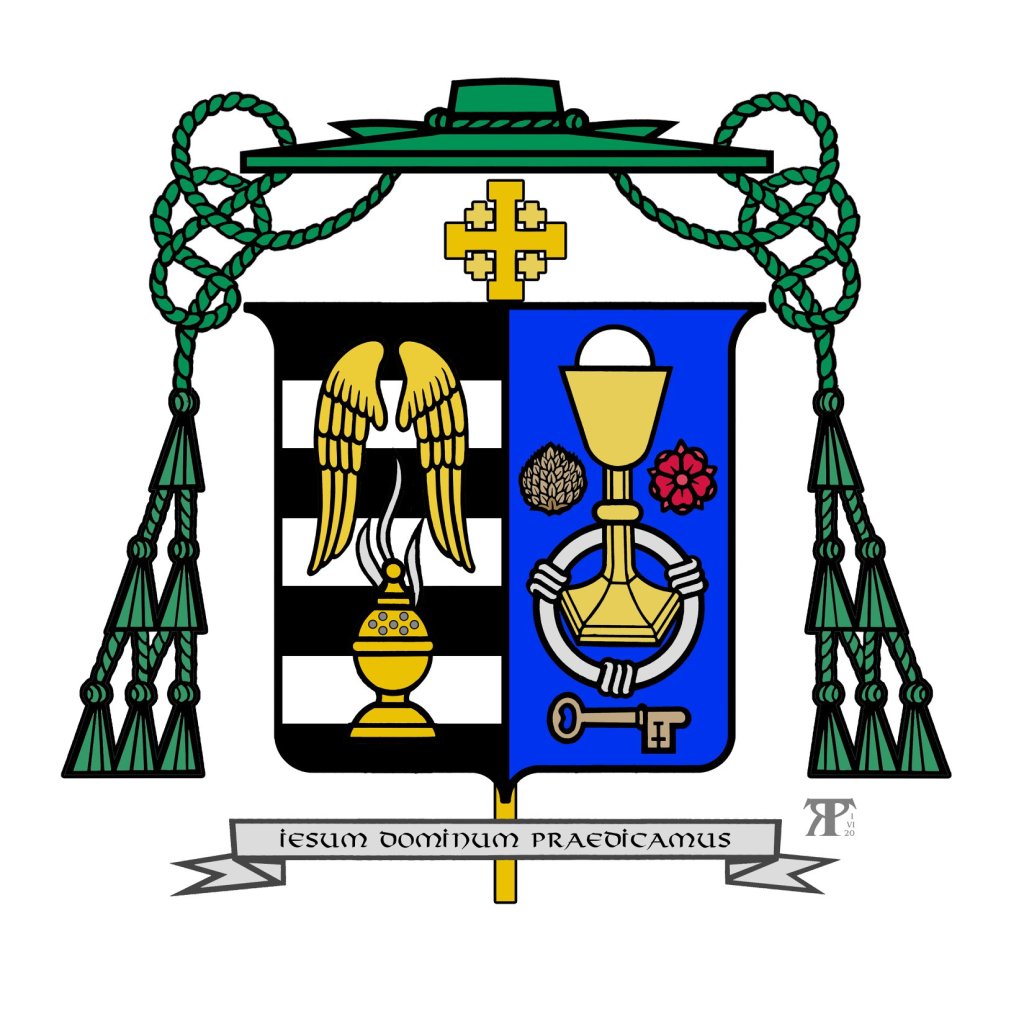
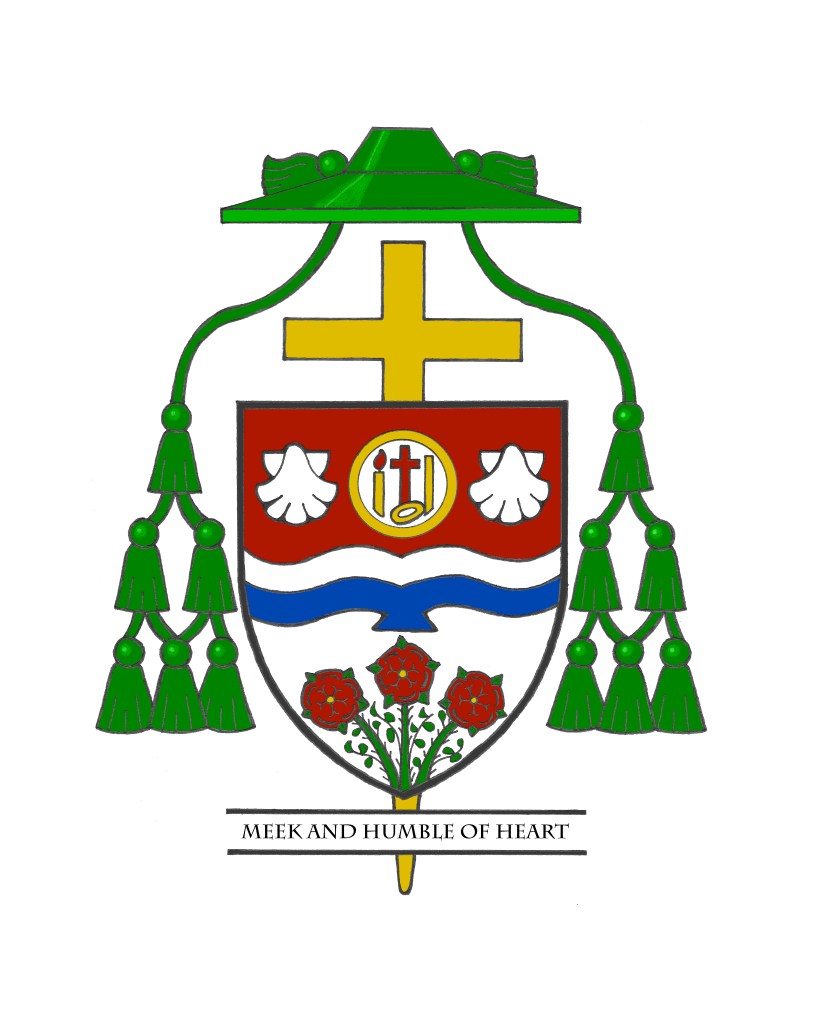
On June 29, the Solemnity of Ss. Peter & Paul, the Most Rev. Luis Miguel Romero Fernández, M.Id. (66) a native of Palencia, Spain and a member of the Idente Missionaries currently serving as a pastor in the Diocese of Rockville Centre which covers two thirds of New York’s Long Island, will be ordained the Titular Bishop of Egara and Auxiliary Bishop of Rockville Centre. The coat of arms I assisted him in designing which he will assume as a bishop are as follows:

The coat of arms assumed by Bishop Romero reflects his Religious Community, the diocese in which he serves, his previous ministry and his heritage. The colors used in this coat of arms are primarily red, white and blue, the national colors of the United States because the bishop wishes to honor the country in which he now lives and serves as both a priest and bishop. The main charge, or feature, across the middle of the shield is a bar specifically shaped to suggest an open book with the blue lower portion representing the binding and spine of the book and the white upper portion suggesting the pages. This is used to symbolize the many years the bishop spent working in a university setting as a teacher and administrator.

The lower portion of the shield depicts three red roses on their green stems. This is an allusion to the miracle of the roses in December that accompanied the apparition of Our Lady of Guadalupe to Juan Diego. As such they serve as a symbol of Our Lady, especially Our Lady of Guadalupe, patroness of the Americas and a particular devotion to the Hispanic peoples. This is for all the many years the bishop has spent in priestly ministry outside his native Spain serving Spanish-speaking people in other countries, especially in the Americas.

The upper part of the shield contains the symbol of the Community to which the bishop belongs, the Idente Missionaries. He is the first member of this community to be appointed a bishop so it was of great importance for him to include the community emblem in his own coat of arms. This is flanked by two escallop shells taken from the coat of arms of the Diocese of Rockville Centre in which he has served as a priest and pastor and which he is now called to serve in a greater capacity as a bishop.

The motto below the shield is, “Meek And Humble Of Heart” (Matthew 11:29)

The bishop specifically asked that the episcopal cross behind the shield and the galero be depicted in as simple a style as possible so they are depicted without any ornamentation. This, of course, is not reflected in the blazon because the blazon does not specify the manner of the depiction of the external ornaments. Rather, this was merely the simple manner in which the bishop requested this depiction be rendered.

Three New Ones That Don’t Quite Hit the Mark

Recently, there have been several new bishops ordained and/or installed in the U.S. and in each case their new coats of arms are very disappointing. One of the most valuable sections of the famous book on ecclesiastical heraldry by the late (great) Bruno B. Heim entitled, Heraldry in the Catholic Church concerns the design and adoption of new coats of arms by clergy. In that section, among other pieces of advice, Heim cautions that the new armiger should seek out the advice of someone competent in heraldry and, in particular, ecclesiastical heraldry if they can. That person to be consulted may not be the one who actually does the artwork but they can advise on what is and, more importantly, isn’t appropriate in a coat of arms.

Sadly, none of these new bishops seems to have done that.

I would also add a piece of advice which I have found myself repeating so often over the years to clergy who wish to adopt a coat of arms that it has become, perhaps, the most important piece of advice I can offer. Your coat of arms is not your CV in pictures! A coat of arms is a unique mark of identification. It isn’t a pictorial mission statement, a review of every aspect of your life, a personal history in symbols, a catalogue of all your likes and dislikes or a statement on your ideas of ecclesiology and ministry.

Too many clergy, especially new bishops, don’t seem to understand this. As a result they do too much or they include things that are inappropriate. Let’s take a look.

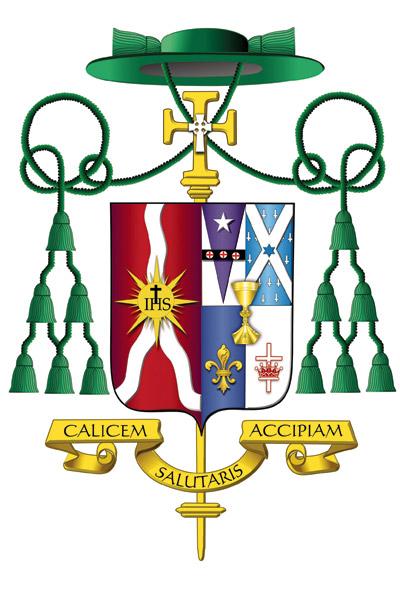
First, is the armorial bearings of Bishop Francis I. Malone (69) who was ordained and installed as the Third Bishop of Shreveport, Louisiana on January 28. The arms of the See of Shreveport are in the dexter impalement and they are not of any interest. However, the personal arms…oh boy! The chalice overall at the center is inappropriately placed and is also an almost photographic depiction of the bishop’s own personal chalice. Heraldry makes use of symbols, not portraits or photographs. An appropriate charge would be “a chalice” not a particular chalice.

The bishop has also quartered the field in such a way that he has marshaled arms that do not belong to him and appropriated them as his own. In the upper left and right of his arms he has, whole and entire, depicted the arms of the See of Philadelphia and the arms of the See of Little Rock; one because he was born there and the other because he served there as a priest. However, by including them entirely in his own arms it appears he is claiming jurisdiction over both! The better way to handle this would have been to borrow a single charge from each and incorporate them into the design of his own coat of arms rather than illicitly stealing the arms of two dioceses.

The charge on the lower left, the fleur-de-lis is fine and on the lower right the cross and crown is a logo used by his former parish which in and of itself is fine and even makes a nice heraldic charge but the overall arrangement is sloppy, and an attempt at a heraldic CV against which I warn people all the time.

Finally, the smaller Celtic cross superimposed over the episcopal cross which is an external ornament behind the shield is heraldically unsupportable. Whoever designed this coat of arms had the clear (and quite good intention) of including as many things from the bishop’s life and ministry as possible but arranged them in a way that suggests he really wasn’t that well versed in heraldic design to pull it off. Everything included in the coat of arms could have been correctly included in a more aesthetically pleasing manner if only someone who knew about heraldic design had been involved.

Second, is Bishop John McClory (56) a Detroit priest who was ordained and installed as the Fifth Bishop of Gary, Indiana on February 11. Again, the arms of the See are of no concern and, actually, are one of the better diocesan coat of arms in use in the USA with a nice reference to the Guardian Angels (titular patrons of the cathedral church).

This coat of arms is really rather nice. There is a good choice of the symbols to be used as charges. There are no tincture violations or indiscretions and, I would say the overall appearance of the coat of arms is aesthetically pleasing and harmonizes well with the arms of the See.

My criticism concerns the arrangement of the charges on the field which is rather like what has come to be known as the “lucky charms” style of heraldry. Namely, a bunch of charges scattered on the field and slapped onto a shield and called heraldry. In addition, trying to “personalize” the episcopal cross which is an external ornament which indicates the rank of the bearer and not a charge on the field which communicate the identity of the bearer is a mistake. It is in the form of a Jerusalem cross to indicate membership in the Equestrian Order of the Holy Sepulchre. This is not the way to depict such membership. Either a charge on the field would have been appropriate, or placing the Jerusalem cross near but outside the shield is also acceptable. In addition, the actual insignia of the Order can be depicted suspended below the shield by a black ribbon or, as a bishop, he could have placed the shield on the Jerusalem cross. But, shaping the episcopal cross to a personal preference is not an option.

Nevertheless, this is the best of the three.

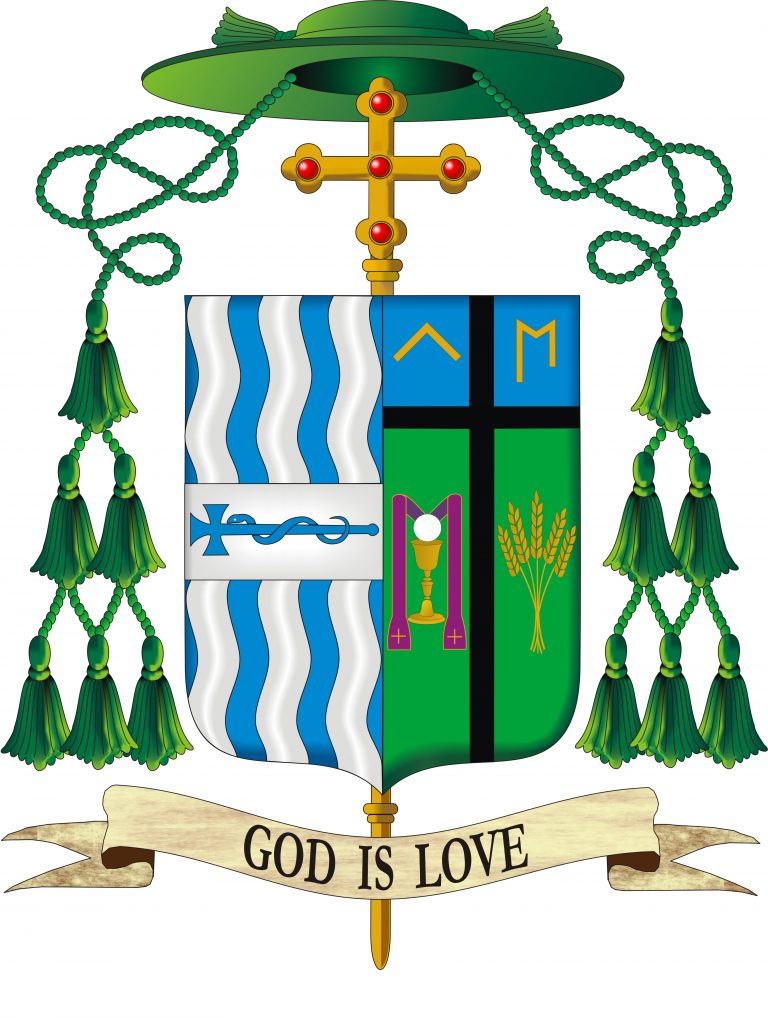
Finally, we have the armorial bearings of Bishop Donald DeGrood (54) a priest of St. Paul-Minneapolis who is being ordained a bishop and installed as the Ninth Bishop of Sioux Falls, South Dakota today, in fact, even as I write this post.

Ugh!

For the third time I take no issue with the arms of the See and also think it is one of the better designed diocesan coats of arms in the USA.

As for the personal arms he has, once again, tried to do too much. The tincture combinations are unfortunate and, actually, rather sad looking. The purple priest’s stole on a green field violates the so-called tincture “rule” which dictates that a metal on a metal and a color on another color should be avoided. The sheaf of wheat looks rather anemic (but, in fairness, that may simply be an issue involving this particular depiction of the arms). The charge of the gold letter “M” in the upper right is borrowed from the arms of St. John Paul II. There’s nothing wrong with that, per se. Many warn against using letters as charges but it is well known that John Paul II argued with Bruno Heim for maintaining the “M” in his arms which he has used as a bishop and cardinal. Certainly, that charge became widely known as John Paul’s coat of arms was used extensively during his historic 27-year-long pontificate.

However, in the official version of John Paul’s arms, painted by Bruno Heim himself, the letter “M” was depicted, correctly, as filling the whole space of the field on which it was depicted. So, the charge followed the contours of the shield shape upon which it appeared. This explains why one side of the “M” is longer than the other. However, depicting it this way, floating in the middle of the field, it is completely unnecessary, and also quite ridiculous to depict the “M” with one side shorter than the other. The “M” was not blazoned to be depicted that way, Rather, that was merely an artistic convention. There seems to be the erroneous and utterly stupid notion floating around out there that the “M” must be unevenly drawn to make it the “John Paul II M“. WRONG!

The black cross on a field that is blue and green is a bad choice of tinctures. Once again, it appears as though the new bishop consulted someone who was not very well acquainted with proper heraldic design.

These three represent a situation that is all too common in the Church in general and in the United States in particular. With all the competent assistance available, especially since the advent of the internet, it’s really rather sad that such amateurish and, in some cases, frankly ugly coats of arms continue to be created.
Duke of Sussex Coat of Arms

In light of the recent announcement that the Duke and Duchess of Sussex (aka Prince Harry & Meghan) will be stepping back from duties as senior royals and, consequently no longer styling themselves as “royal highness” not a few people have contacted me to ask out of curiosity if this in any way will have an impact on the coats of arms they both use.

The simple answer is, “No”.

As the grandson of the sovereign Prince Harry employs a coat of arms that indicates he was born a grandson of the sovereign. British royal heraldry is different than many other countries in that the sovereigns children and grandchildren generally bear the royal arms differenced by a variety of labels of either three or five points and the points are charged with marks of difference. That’s really rather boring if you asked me but that’s what they do and they haven’t asked me!

So, when he turned 18 Harry was granted his own arms depicting the royal arms difference by a label of five points the first, third and fifth of which are charged with a red escallop shell. The shell is a charge borrowed from the coat of arms of his late mother, Diana (neé Spencer).

His supporters were also charged with the label for difference and the arms are surmounted by a special coronet used by the children of the heir to the throne. In addition, the royal crest is also charged with the label for difference.

Upon marrying his wife Harry was created Duke of Sussex. Nothing in his coat of arms was modified to reflect this title. Consequently, there is nothing to change in his coat of arms to reflect his new status of stepping down from a senior position in the royal family. He is still a grandson of the sovereign and son of the heir to the throne; he is still the Duke of Sussex; he is still actually an “HRH” but will choose not to style himself as such.

In fact, even after his grandmother passes away and he is the son of the sovereign and, indeed, even after his father passes away and he is the brother of the sovereign the crown used on his arms will remain unchanged as the crown for the child of the heir is identical to the crown used by children of the sovereign and siblings of the sovereign.

So…no changes.

Archbishop of Tours

On January 5 Msgr. Vincent Jordy (58) from Perpignan, France, a priest and Auxiliary Bishop of Strasbourg and from 2011-2019 Bishop of Saint Claude will be installed as the 66th Archbishop of Tours.

Unlike so many of his confreres in the French episcopate he actually bears a coat of arms:

Of course as an archbishop, the cross will now be a patriarchal cross with two horizontal bars. The fact that he doesn’t use a galero is his personal choice. As has been mentioned on this blog before, the galero is not an essential part of a bishop’s coat of arms and may be omitted if desired. The one and only distinguishing external ornament essential for a bishop’s coat of arms is the episcopal or archiepiscopal cross placed behind the shield.

Another Ordinary Australian

On August 27 Monsignor Carl Reid, PA, (68) a Canadian who converted to Catholicism in 2012, was installed as the second Ordinary of the Personal Ordinariate of Our Lady of the Southern Cross in Australia. His personal arms were granted by the Canadian Heraldic Authority and are impaled with the arms of the Ordinariate. Richard d’Apice (in consultation with myself) assisted the Canadian heralds with the design of the personal arms. Mr. d’Apice and I designed the arms of the Ordinariate as well.

The unusual use of the crozier has been a precedent set among the Personal Ordinariates after their establishment by Pope Benedict XVI. It derives from the use of the crozier to denote Ordinary Jurisdiction while at the same time leaves off the sudarium (veil) attached to the crozier in abbatial arms which has become a symbol proper to abbots. Msgr. Reid exercises full Ordinary Jurisdiction and makes use of the pontificalia while celebrating the Sacraments like a bishop but does not possess the episcopal office. NOTE: The Personal Ordinary for the UK does not make use of a coat of arms and the Personal Ordinary for N. America is a bishop.

The artwork is by the talented Australian, Sandy Turnbull.

Grand Master of the Teutonic Order

1200px-insignia_germany_order_teutonic.svg

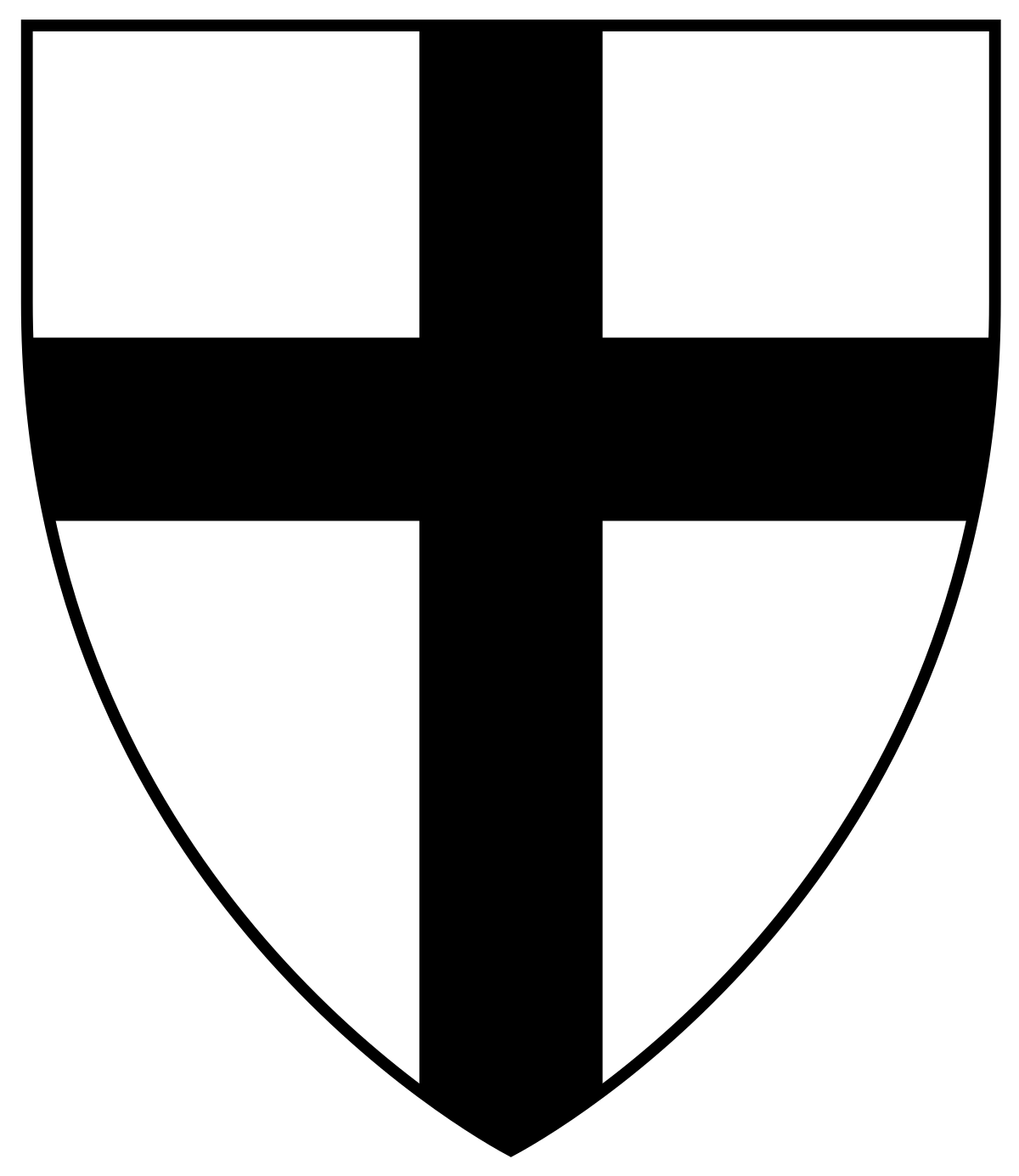
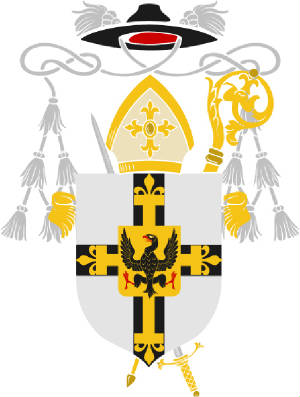
In August of 2018 the Teutonic Order (Deutscher Orden), a formerly medieval military order of chivalry which had, by the 20th Century, been transformed into a Religious Order, elected Fr. Frank Bayard, O.T. as its Grand Master. The Grand Master of the order has the rank of abbot. Fr. Bayard succeeds Fr. Bruno Platter who was elected as Grand Master of the Teutonic Order in 2000 and re-elected in 2006.

The coat of arms of the Grand Master is ensigned with the external ornaments of an abbot and the galero is black with cords and tassels that are white. deutscherordengm.jpg.w300h397By custom the mitre is also included in the achievement despite the 1969 Instruction from the Holy See stating otherwise. In addition, the secular sword is included which is tolerated given the order’s history as an order of chivalry prior to becoming a Religious Order within the Church. The arms of the Grand master traditionally follow a pattern which makes use of a basic shield depicting the arms of the order as used by the Grand Master which divides the field into four quarters by a sable cross charged with a gold cross fleuretty and an inescutcheon overall depicting Or, an imperial eagle Proper. In the first and fourth quarters the usual arms of the Order (Argent a cross throughout Sable) are placed. The personal arms of the individual Grand Master then occupy the 2nd and 3rd quarters of the shield.
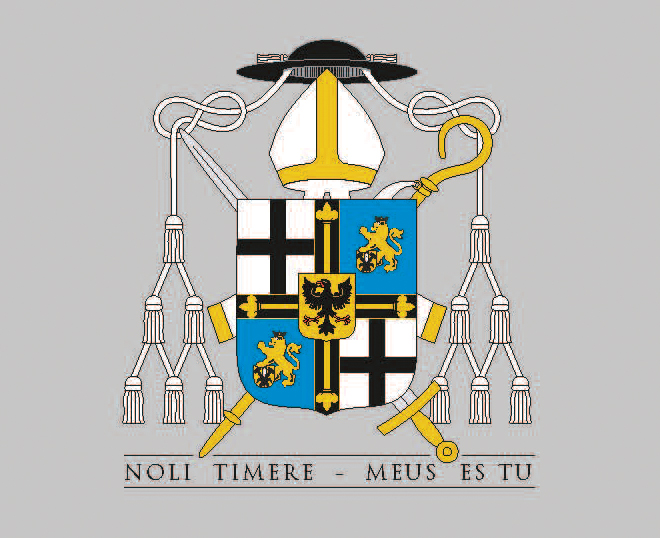
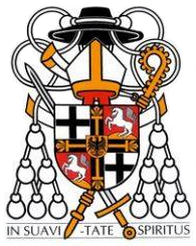
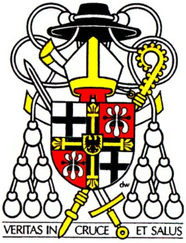
In November, 2018 The Rt. Rev. Frank Bayard received the abbatial blessing from Christoph Cardinal Schönborn, O.P. of Vienna, where the headquarters of the Order is located. The arms assumed by Grand Master Bayard are:

abtsbenediktion2

The coat of arms used by the previous two Grand Masters, Bruno Platter and Arnold Weiland followed the same pattern.

general-abbot-bruno-platter-grand-master-of-the-teutonic-order coat-of-arms-of-the-abbot-arnold-othmar-wieland-grand-master-of-the-teutonic-order-1988-2000

Sacerdotal Arms of Gaunt

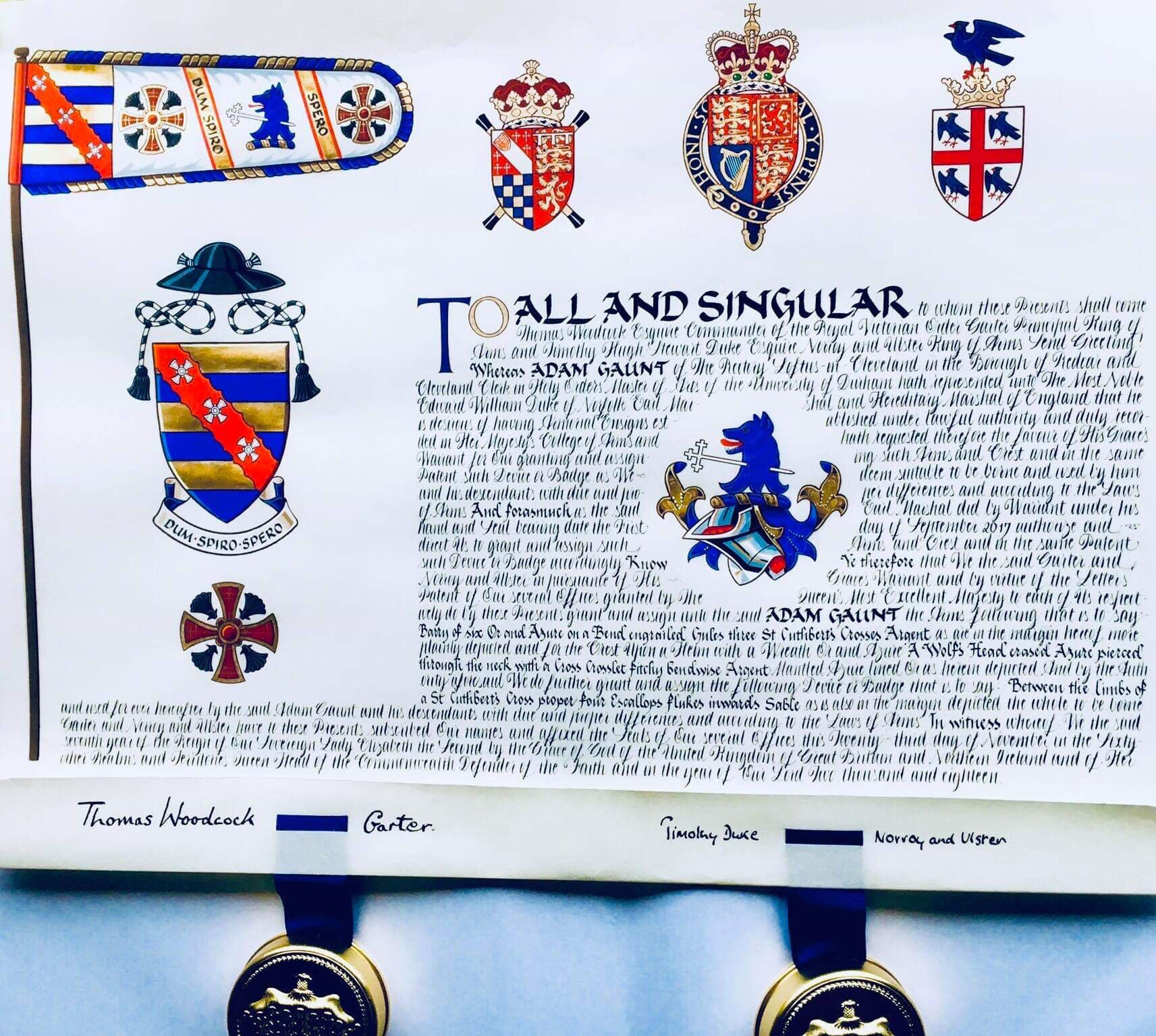
Recently a priest from the UK shared with me the recent (November, 2018) grant of arms he received from HM College of Arms. Of course there was a very fine example of Letters Patent illustrating the grant as well as laying out the blazon of arms. This is not an inexpensive or a quickly done process. Being a subject of HM, the Queen it was altogether correct, however, for Fr. Adam Gaunt to petition for and receive a grant of arms from the legitimate heraldic authority within the country in which he lives. It may take some time; it may cost a rather tidy sum but in the end it is well worth it.

img_1035

The coat of arms itself (below) is illustrated ensigned by the appropriate ecclesiastical hat for a priest of the Church of England. That is to say with two black tassels suspended from cords composed of black and white skeins twisted together.

img_1036

The Letters Patent also depict an heraldic crest on a helm with a horse and mantling which is most often seen employed in the arms of a layman not in holy orders. (below)

img_1037

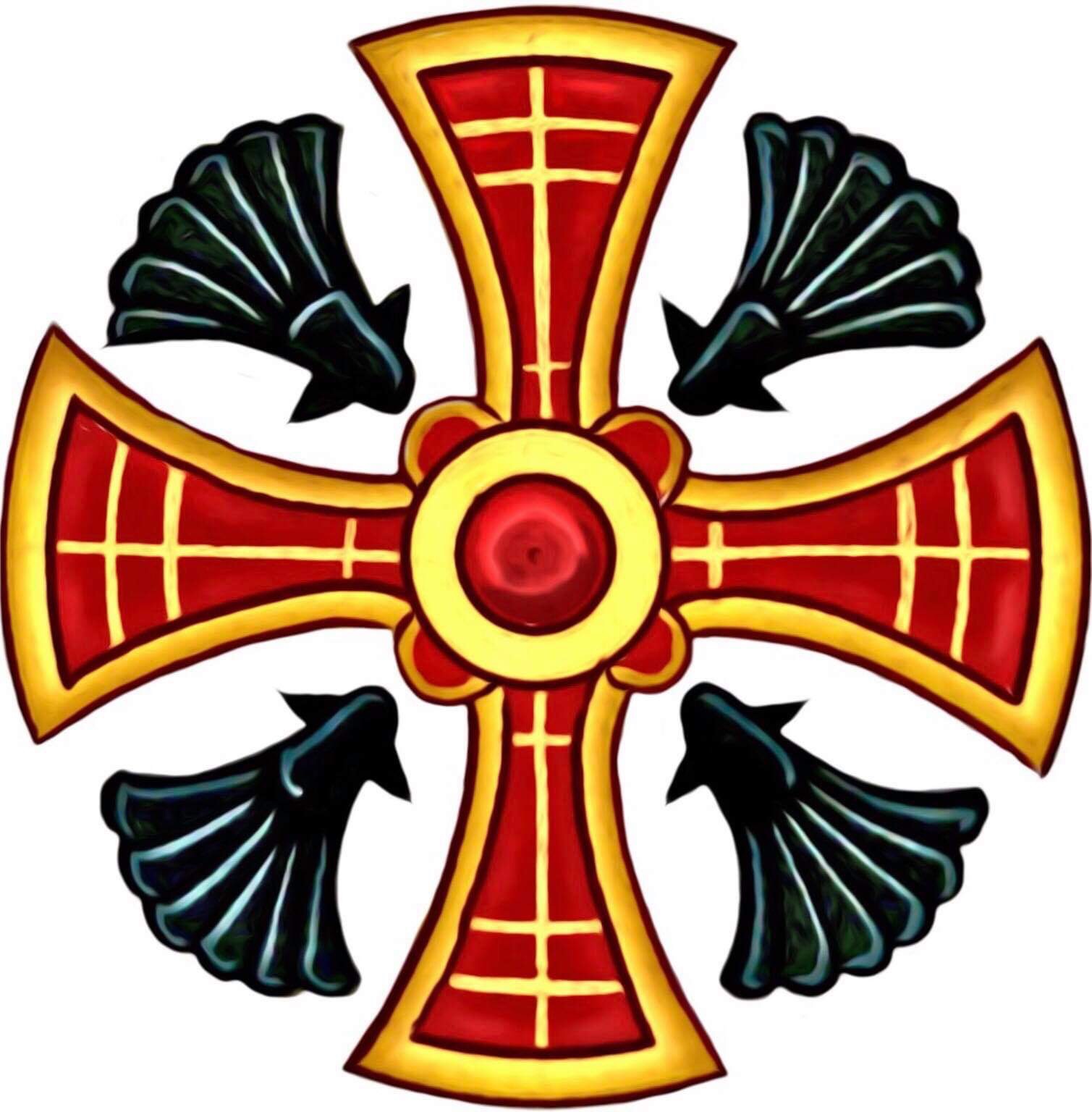
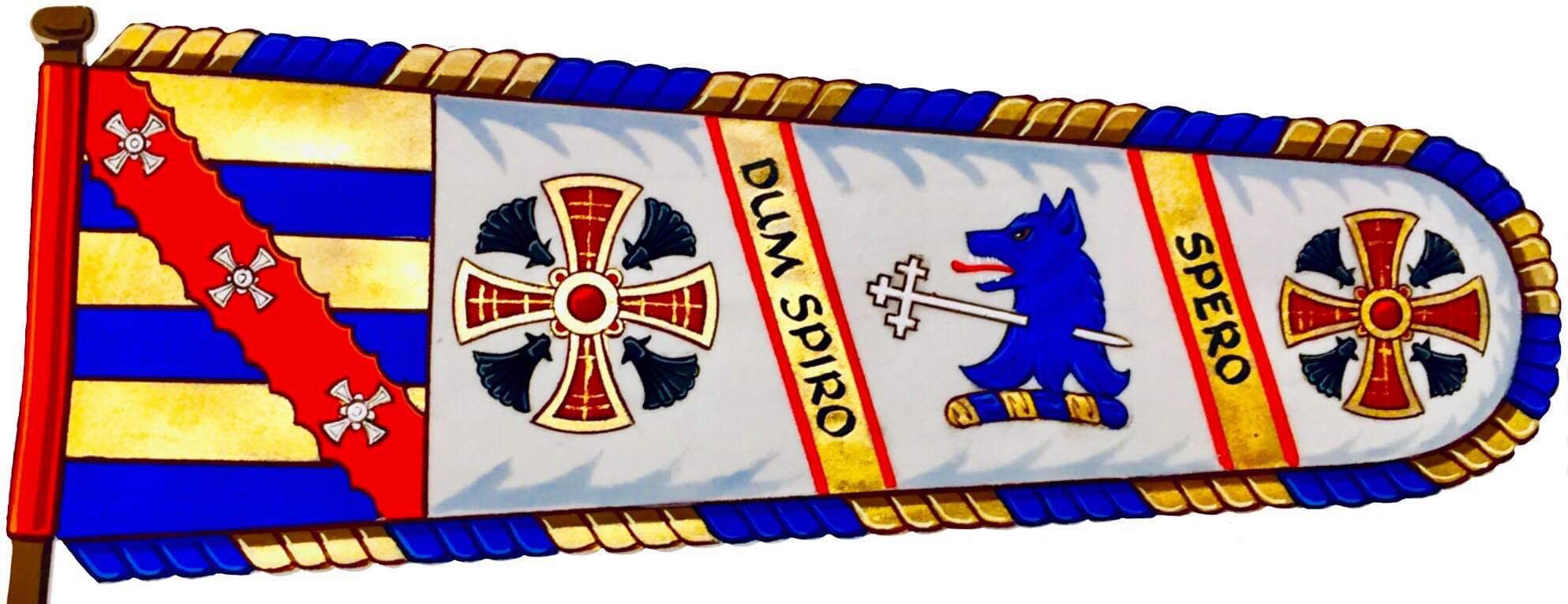
In addition, there are illustrations included of a heraldic badge, as well as an heraldic standard which is composed of the arms, crest and badge. (below)

img_1038

img_1039

Father Gaunt was kind enough to explain that, “The arms are an adaptation of those attributed by “ancient and uniform tradition” to my ancestor Gilbert de Gaunt, Earl of Lincoln.”

img_1042

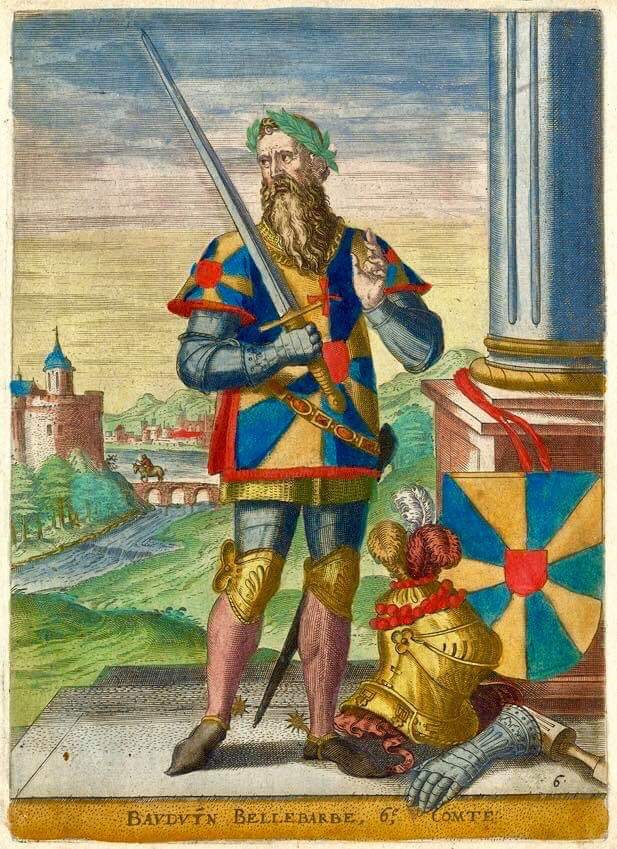
“He, (Gilbert) was of Flemish origin and related to the Counts of Flanders, who used the same heraldic colors and metals.”

img_1041

Here in the United States we do not have a heraldic authority. That is not to say that Americans cannot employ coats of arms. On the contrary, Americans are armigerous but we may legally and correctly, which are two different things, assume a coat of arms. That is to say we are able simply to design and adopt a coat of arms for our own use. In England there is a heraldic authority which is not a government office but a private corporation which operates as a part of the royal household. While it is technically illegal for a person to assume a coat of arms in England there isn’t a very great likelihood that there will be any legal repercussions to doing so as there might be in, say, Scotland or South Africa. However, it is quite incorrect simply to assume arms in England.

Instead, it is both right and, I would hazard a guess, quite delightful to do as Fr. Gaunt has done and receive a grant of arms from HM College of Arms. Well done Fr. Gaunt!

Archbishop McCarrick

Here is a heraldic oddity. It involves the reduction in rank or demotion of a prelate. Now that Theodore McCarrick has resigned from the College of Cardinals he will no longer enjoy the privileges associated with it. For the time being he retains a coat of arms, although, I suppose that remains to be seen as well, and it bears the personal arms he assumed when he first became a bishop as Auxiliary Bishop of NY. He retains the double-barred cross and galero with 20 tassels of an archbishop because he is the Archbishop-emeritus of Washington, DC. The arms of theSee of Washington are not impaled with his personal arms because he is no longer the incumbent of that See. Having laid aside the dignity of a Cardinal he reverts to being Archbishop McCarrick.


TMAC3

More Clergy With Multiple Versions of Their Arms

A couple of years ago I wrote about clergy who make use of more than one version of their coats of arms depending on offices held or circumstances of use. Once again I’ve come across a fine example.

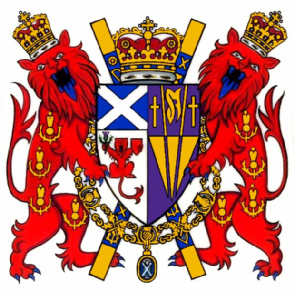
The current Lord Lyon King of Arms, the principal heraldic authority for Her Majesty in Scotland is not only a heraldic expert and a jurist but he is also an ordained clergyman in the Scottish Episcopal Church (a.k.a. the Anglican Church north of the border). The Rev. Canon Dr. Joseph John Morrow, CBE, KStJ, QC, DL, LLD possesses a very nice coat of arms of his own.

IMG_7668

This coat of arms can be displayed all alone or, as Lord Lyon sometimes has chosen to do, with the helm, mantling and crest of the typical armorial achievement.

IMG_7667

However, sometimes this coat of arms is also displayed with the external ornaments proper to the Office of Lord Lyon King of Arms.

IMG_6788

Additionally, the Office of Lord Lyon has its own armorial bearings which may be used by the incumbent of the office of Lord Lyon in a “greater” form:

IMG_7671

as well as a “lesser” or smaller version.

IMG_7669

Finally, the current Lord Lyon may choose to impale his personal arms with those of Lord Lyon and display them with the external ornaments of the office, including the red lion supporters:

IMG_6789

or he may impale his personal arms with the arms of office and display them with some of the external ornaments of Lord Lyon as well as his own crest and supporters.

IMG_7658


Same man; same arms; many versions.

Archabbots of St. Vincent

St. Vincent Archabbey in Latrobe, Pennsylvania, the oldest monastery in the United States, was founded in 1846 by monks from St. Michael’s Abbey in Metten, Bavaria under the leadership of Fr. Boniface Wimmer. They came to Pennsylvania funded by the Ludwigs-Missionverein, an organization started by the King Ludwig I of Bavaria to minister to German immigrants throughout the world.

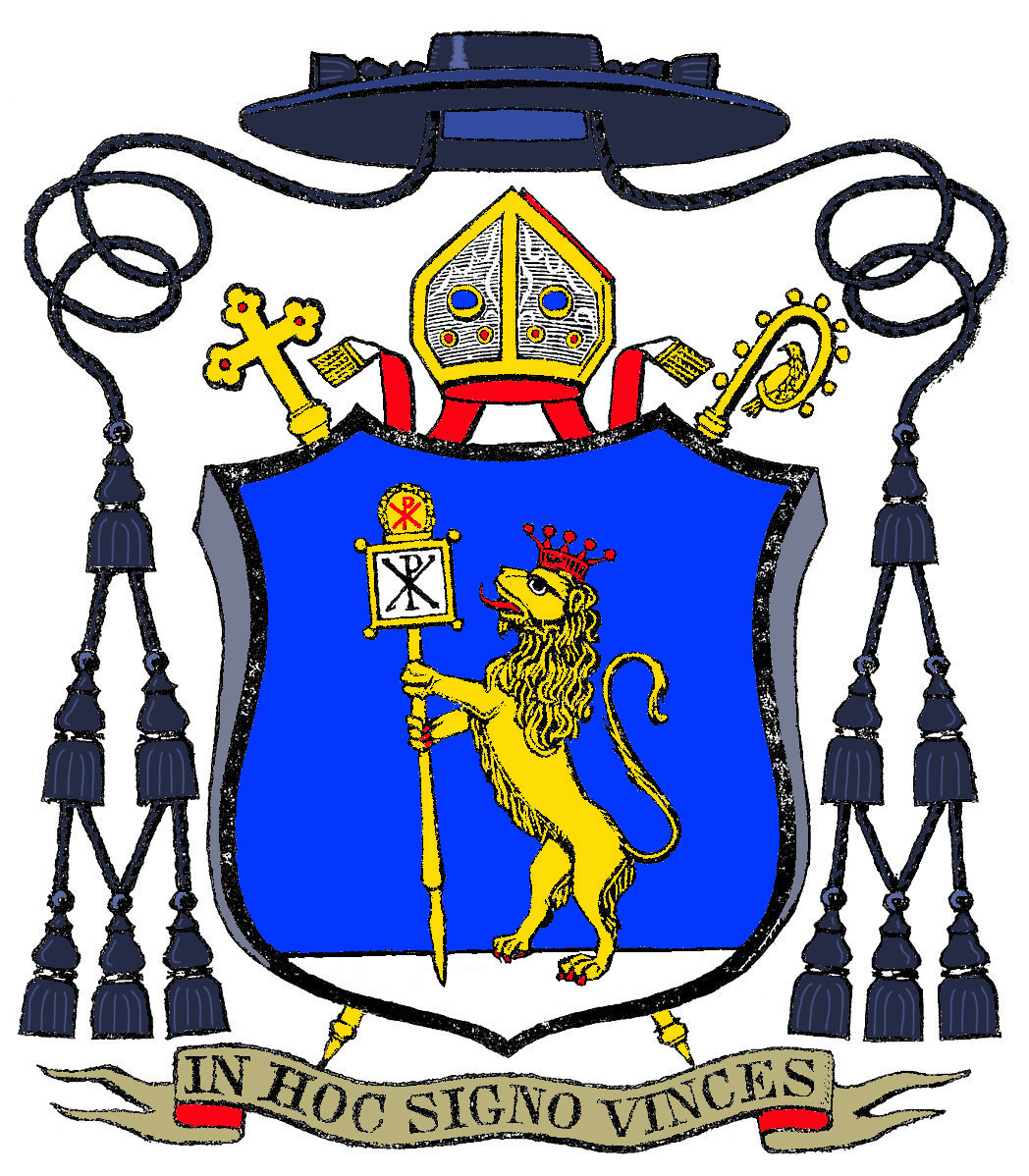
When the community had grown large enough to be elevated to the status of an independent abbey in 1855 it was decided to designate it an archabbey and Father Boniface was named Archabbot for life by Bl. Pius IX. His coat of arms (below) looks to be based in a quartering of the arms of the royal family of Bavaria, the House of Wittelsbach. The lion holding the banner of Christ was used not only by Archabbot Boniface as his coat of arms but also by the community as the heraldic symbol of the archabbey. It seems as though Wimmer’s first three successors, Archabbot Andrew Hintenach (1888-1892), Archabbot Leander Schnerr (1892-1918) and Archabbot Aurelius Stehle (1918-1930) also used this coat of arms. I have not been able to locate any other coats of arms for them.

Coat_of_Arms_of_Archabbot_Boniface_Wimmer2a

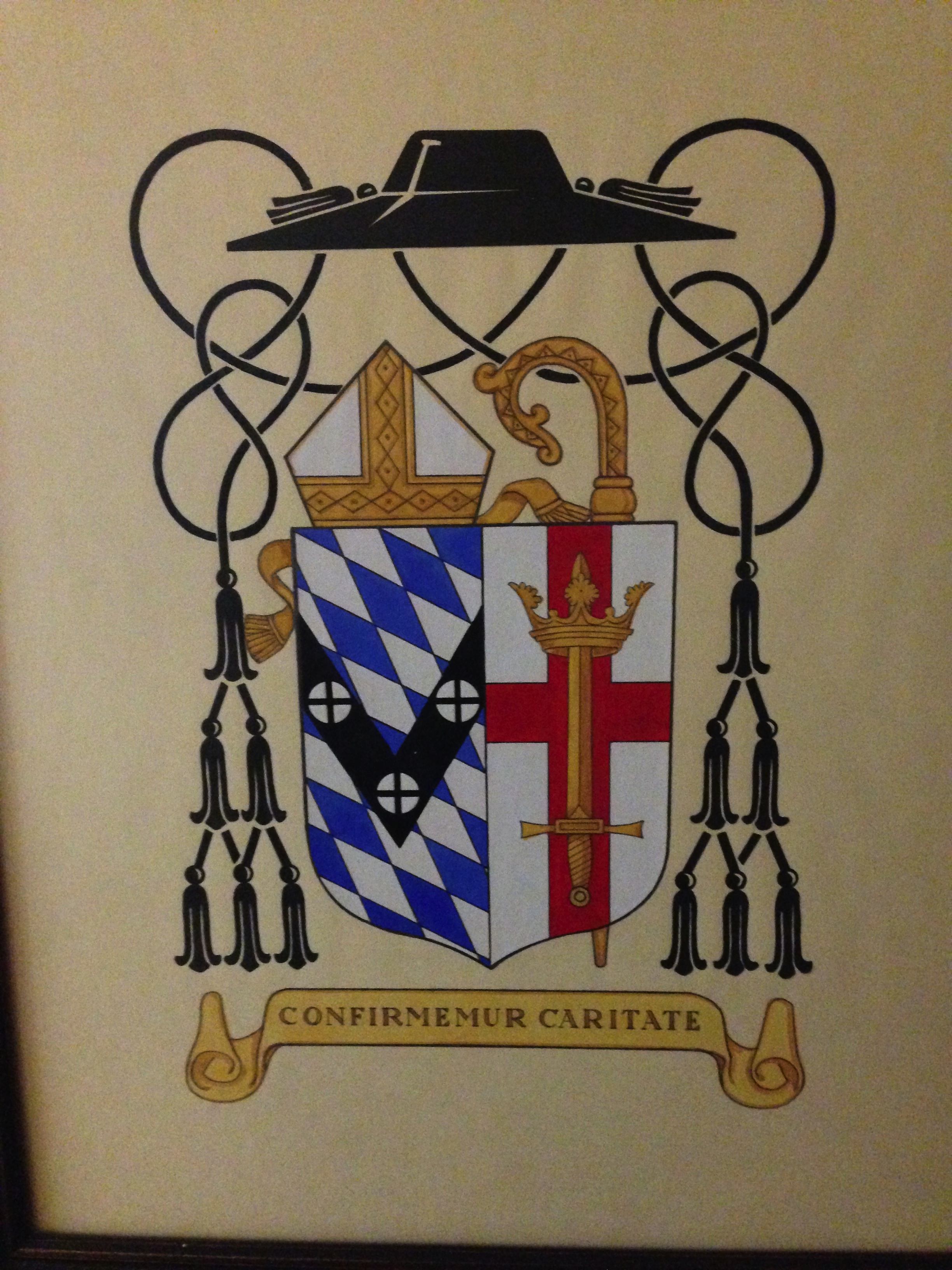
In 1930 with the election of St. Vincent’s fifth Archabbot, Alfred Koch (1930-1949), things changed. At that time the community decided to adopt a corporate coat of arms, which borrowed the blue and white fusils in bend from another Wittelsbach quartering and took the three plates on a black fess from the arms of William Penn, turned the fess into an inverted chevron (to create the letter “V” for “Vincent”) and charged the three plates with Benedictine crosses. Archabbot Alfred impaled this with a personal coat of arms. Thereafter, his successors did likewise.

Image 26

Archabbot Dennis Strittmatter (1949-1963)

Image 33

Coadjutor Archabbot Rembert Weakland (1963-1967) later Abbot-Primate and Archbishop of Milwaukee

Image 31

Archabbot Egbert Donavan (1967-1979)

Image 29

Archabbot Leopold Krul (1979-1983)

Image 37

Archabbot Paul Maher (1983-1990)

Image 35

Archabbot Douglas Nowicki (1991-present)

Image 5

During the tenure of Archabbot Egbert Bl. Paul VI changed the customary rules governing the external ornaments of prelates indicating that the mitre was no longer to be used in coats of arms. In addition, he called for the discontinuation of the crozier in arms of bishops. The crozier used to be included in the achievements of bishops in addition to the episcopal cross. Paul VI indicated in was the cross alone that would continue to be used in the arms of bishops and that the crozier should be excluded. This was interpreted by some, wrongly, to mean the crozier should no longer be used in the arms of abbots as well. However, it is the veiled crozier, not the galero, which indicates the rank of abbot in heraldry. Archabbots Leopold and Paul were advised incorrectly to leave the crozier out of their achievements. It was, however, restored to use in the coat of arms of Archabbot Douglas which was designed by me.

Coat of Arms of a Priest

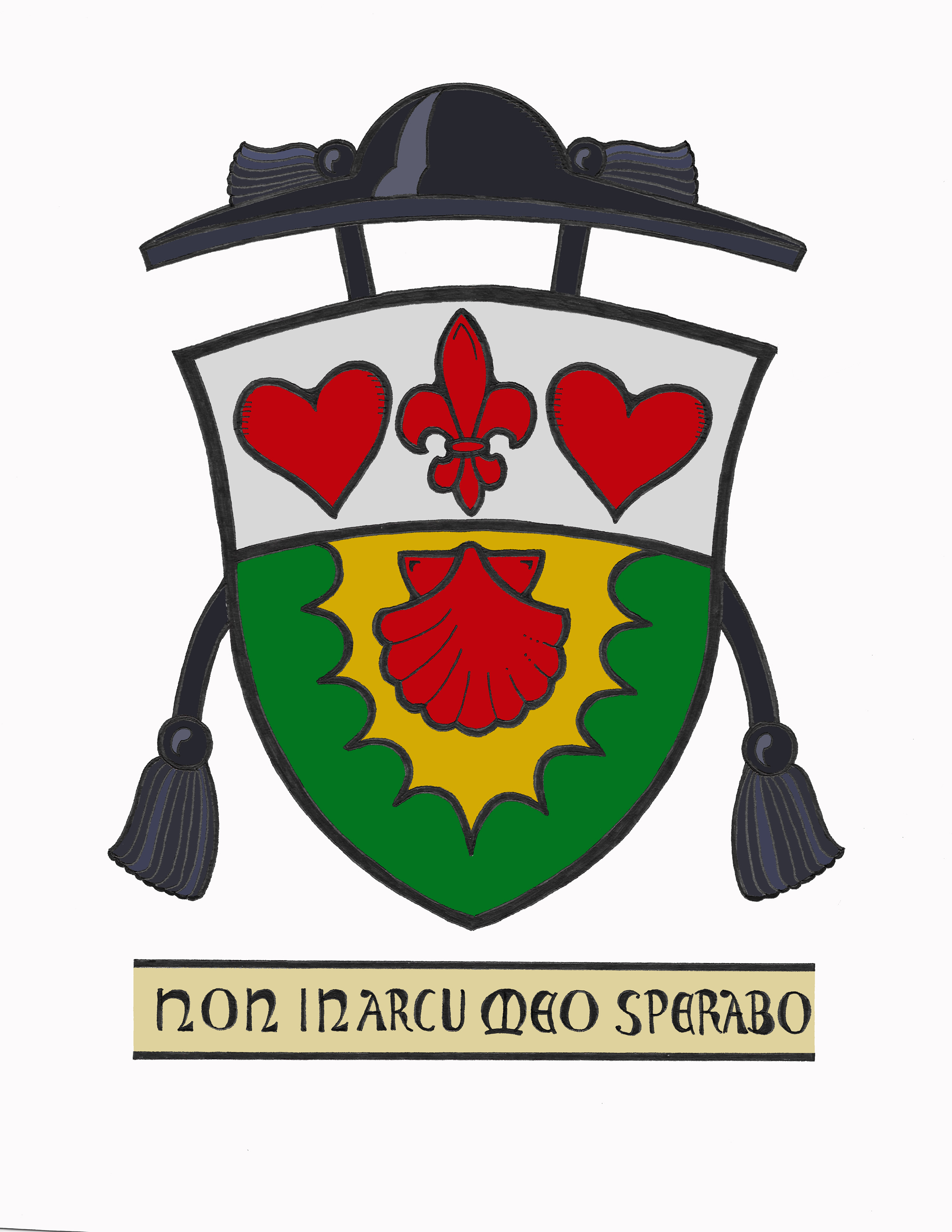
Tveit2

The newly-assumed armorial bearings of the Rev. Jon Tveit of the Archdiocese of New York (above).

The main portion of the shield depicts a gold (yellow) field surrounded by a green border the edge of which is scalloped with convex semicircles. This is done to suggest a clearing in a forested area, the trees represented by the green border and the clearing by the gold field. The armiger’s surname, Tveit, is from the Old Norse that translates to, “a field cleared from a forest” or a person who dwells in such a place. (A similar name in English would be Thwaite). In the middle of this “clearing” is a red scallop shell. This is primarily a symbol of the armiger’s principal baptismal patron, St. John the Baptist. In addition, the shell is a charge in the coat of arms of Benedict XVI, the Pope-Emeritus, whom the armiger greatly admires. It was during the pontificate of Benedict XVI that Fr. Jon came to a deeper understanding of his faith, discerned his priestly vocation and entered the seminary to begin his preparation for priesthood.

The upper third of the shield, called a “chief” is silver (white) and on it are two red hearts with a red fleur-de-lis between them. The colors red and white are taken from the coat of arms of the Archdiocese of New York for which the armiger was ordained and in which he engages in his priestly ministry. In addition, the white background is a color often associated with the virtue of Purity to which the armiger always aspires and tries to cultivate in his own life. He has a great devotion to the Sacred Heart of Jesus and the Immaculate Heart of Mary in his personal devotional life so the hearts symbolize that. The fleur-de-lis has long been used heraldically as a symbol of both Our Lady and her spouse, St. Joseph. Fr. Tveit attended St. Joseph seminary in Dunwoodie, NY.

The only external ornament is the black, broad-brimmed pilgrim hat called a “galero”. In heraldry this is used in place of the traditional helmet, mantling and crest to indicate that the bearer of the coat of arms is a cleric. The color of the hat, the cords and the tassels as well as the number of tassels developed over the centuries to differ depending on the rank of the bearer. A black hat with black cords and one black tassel suspended on either side of the shield indicate the armiger is a priest.

The motto, “Non in Arcu Meo Sperabo” below the shield is taken from Psalm 43:7 and translates to, “For I will not trust in my bow”.

+Rt. Rev. Paul Maher, OSB: RIP

SVAA006

Archabbot Paul R. Maher, O.S.B., the tenth Archabbot of Saint Vincent Archabbey, Latrobe, Pennsylvania died Thursday, June 29, 2017, the Solemnity of Ss. Peter & Paul. He was 91 years old. A native of Latrobe, Pennsylvania, he served as Archabbot from 1983 until 1990.

Archabbot Paul received his early schooling in Latrobe, where he attended Holy Family School and was an altar server in Holy Family Parish. Having completed elementary school, he went to Saint Vincent Preparatory School for his secondary education. He graduated from Saint Vincent Prep in 1943, in the middle of the Second World War. Just turned 18 years old, he joined the U.S. Army Air Corps. For the next two years he served in the European Theater as tail gunner on a B-24 bomber. He flew 21 combat missions over southern Germany and Austria and was honorably discharged at the end of the war.

The influence of his older brother William, who had become a diocesan priest, and his older sister Rita, who became a Religious Sister of Mercy nun, helped him reach the decision to study for the Benedictine priesthood. In 1945 he returned to Saint Vincent and began his studies at Saint Vincent College as a candidate for the Benedictine Order. In 1947 he was admitted to the Order as a novice and made his simple profession of monastic vows on July 2, 1948. He professed solemn vows three years later, on July 11, 1951.

Archabbot Paul received his A.B. Degree from Saint Vincent College in 1950 and immediately began his studies of theology in Saint Vincent Seminary. In 1951 Archabbot Denis Strittmatter, O.S.B. sent the young Benedictine brother to Rome to complete his theological studies at the Pontifical Atheneum of Sant’ Anselmo. Two years later, he was ordained to the priesthood by Bishop Placido Nicolini, O.S.B., at the Basilica of Saint Francis in Assisi on June 21, 1953. After ordination, he continued graduate studies at Sant’ Anselmo for another four years, earning a Ph.D. in philosophy in 1957.

Upon completion of his doctorate, Father Paul returned to Saint Vincent, where he taught philosophy in the College and Seminary from 1957 to 1966, serving as chairman of the College’s Department of Philosophy from 1961 to 1966. During his years of teaching at Saint Vincent, he also served as moderator of one of the College’s residence halls (1958 to 1960), socius (superior) of the monastery’s junior monks (1960 to 1963), and vice rector of Saint Vincent Seminary (1963 to 1966).

In 1966, Archabbot Paul was named prior (superior) of Saint Vincent’s mission to China and a member of the faculty of Fu Jen Catholic University, Taiwan. He remained in Taiwan as monastic superior and university professor for seventeen years.

He was elected Archabbot on June 7, 1983, and on June 30, 1983, received the abbatial blessing in the Archabbey Basilica from Bishop William G. Connare of Greensburg, Pennsylvania. Among those present at his blessing were Archbishop Rembert Weakland of Milwaukee; Bishop Norbert Gaughan, auxiliary bishop of Greensburg; Bishop Rene Gracida of Corpus Christi, Texas; and the two retired Archabbots of Saint Vincent, Archabbot Egbert Donovan and Archabbot Leopold Krul.

Mark W. McGinnis, author of the book The Wisdom of the Benedictine Elders, described Archabbot Paul as a “very intelligent, highly experienced abbot who has the demeanor, gentleness, and openness of an ideal priest.” His brother monks would agree with this and add that he was an ideal monk: humble, generous, thoughtful of others, and devoted to the Benedictine life of prayer and work.

Following his retirement in 1990, Archabbot Paul became a parish assistant at Saint Benedict Church, Carrolltown, Pennsylvania, where he resided until 1996. He returned to the Archabbey that year to serve as guestmaster and archivist until 2009. Archabbot Paul was the son of the late William A. Maher and Edna G. (Hunt) Maher. He was one of twelve children, two of whom are currently residing in Latrobe.

He was a very humble man eschewing the use of pontificalia as he was entitled by his office. He only grudgingly agreed to have a coat of arms at the behest of the archivist of the community, the late Fr. Omer U. Kline, OSB. His coat of arms was designed in consultation with the late Br. Nathan Cochran, OSB of St. Vincent and alludes to the traditional Irish arms associated with the name Maher; his baptismal and monastic patron, St. Paul (the sword) and his missionary work via the double-barred Scheyern cross being used at St. Vincent as the “mission cross” given to those monks sent out into the mission fields. From a lack of correct heraldic custom the crozier (veiled or otherwise) was omitted from the achievement and the extra knots and loop of cords below the galero was a bit of license by the artist who wished to fill the space left by the lack of a crozier. The motto, “Resonare Christum” (Echo Christ) was also used by the late John Cardinal Wright of Pittsburgh.

May he rest in peace.


Benedictine Abbot Primate

Polan copy

Last September the Benedictine Confederation, more commonly referred to as the Order of St. Benedict, elected its 10th Abbot Primate since the institution of that office by Pope Leo XIII in 1893. They elected the fourth American monk to hold that office by choosing the Abbot of Conception Abbey in Missouri, Rt. Rev. Gregory J. Polan, OSB (67). He succeeded Notker Wolf and became Abbot of Sant’Anselmo and the Most Rev. Abbot Primate on September 10, 2016.

Seven of his eight predecessors bore a coat of arms as abbots and as Abbots Primate. Two of the Americans, Jerome Theisen, OSB a monk of St. John’s in Collegeville and Marcel Rooney, OSB also a monk of Conception chose not to be armigerous either as abbot or as Abbot Primate. (the fourth American was Rembert Weakland, OSB a monk of St. Vincent Archabbey in Pennsylvania and the Archbishop-Emeritus of Milwaukee)

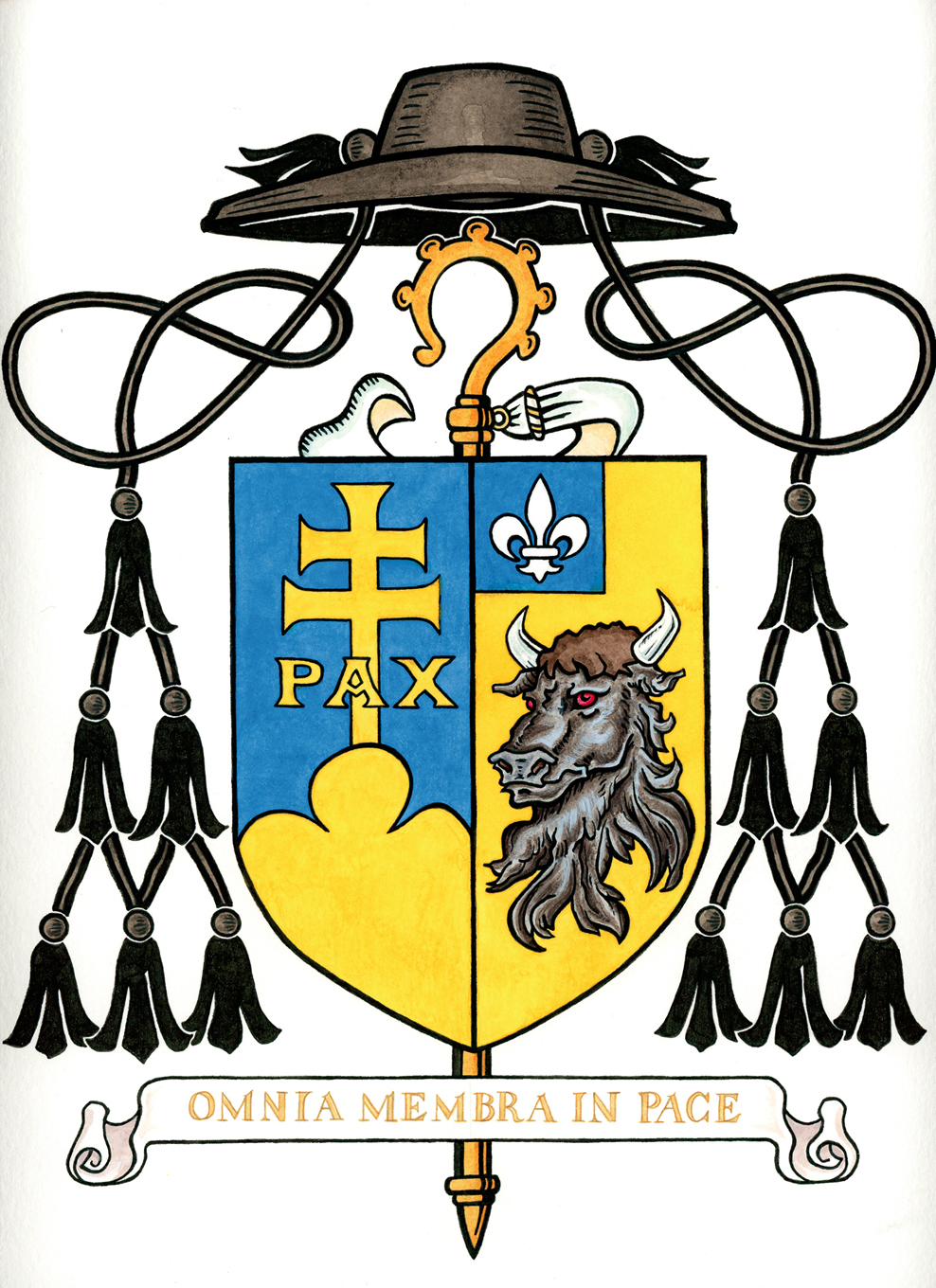
At the time he became Abbot of Conception in 1996 Abbot Gregory wasn’t particularly interested in a coat of arms. But the community had a heraldic tradition and one of the monks there devised arms for him to assume keeping it very simple. The plain gold field with the single charge of a black bull’s head is a symbol associated with the abbot’s family. This was then quartered with the arms of the abbey.

Upon his election as Abbot Primate the same monk who originally designed the arms decided to prepare something the abbot could use as Abbot Primate. The personal arms are “Or, a bull’s head erased Sable; on a canton Azure a fleur-de-lis Argent”. The addition of the small augmentation of the blue canton charged with a silver fleur-de-lis, borrowed from the arms of Conception Abbey, are employed as a way of paying homage to the abbot’s Motherhouse by augmenting his personal arms rather than changing the design entirely. These personal arms are then impaled with the arms used by the Order of St. Benedict, “Azure, issuing from a trimount a patriarchal cross, overall the word “PAX” all Or“. Note that sometimes the trimount is depicted as Vert (green) rather than Or (gold).

The shield is ensigned with the usual ornaments of an abbot: black galero with twelve black tassels and a veiled crozier. The previous Abbot Primate, Notker Wolf, commissioned an artist who depicted his arms with twenty black tassels. The thinking was that, as the head of the Order the Abbot Primate should have an ornament that indicated a higher rank like an archbishop’s hat having twenty tassels instead of the twelve used by other bishops. The problem with that line of reasoning is that the Abbot Primate is not the Abbot General of the Order of St. Benedict. He is merely a figurehead; a nominal “head” but really just a visible figure to promote communication within the Order and to act as a liaison between the Order as a whole and the Holy See. Leo XIII didn’t like the decentralized nature of the Benedictines. In reality each house under its own abbot is autonomous. What binds Benedictines together is that they follow the Holy Rule of St. Benedict. Eventually, houses began to band together into federations, now called Congregations, and each of those Congregations, some of which are international but many of which are structured along national lines, adopts Constitutions and a customary observed by all the houses within the Congregation. In addition, they elect a Praeses, or Abbot President, who acts as their canonical superior with jurisdiction. The Abbot Primate, however, does not have jurisdiction over the whole Order the way a Superior General does in other Religious Orders. So, he is merely a figurehead elected by the Abbots gathered in Congress.

Not possessing a higher rank, or greater authority, or jurisdiction over all Benedictines it makes no sense for the Abbot Primate’s galero to suggest so. The Abbot Primate remains an abbot like any other, indeed during his tenure (which is a four year term renewable by re-election) he is the abbot of the Abbey of Sant’Anselmo on the Aventine Hill housing the Anselmianum where students study about the sacred liturgy. Outside of heraldry the Abbot Primate is accorded certain honors to mark his position as the Primate, namely, he is permitted to wear the purple zucchetto instead of a black one and he is addressed as “Most Reverend” instead of the usual “Right Reverend” used by other abbots.

Bruno Heim mentions in his book, Heraldry In The Catholic Church that the Church never made provisions for Archabbots, Abbots General or Abbots Primate to use a galero different from other abbots. However, some authors argue that it is Archabbots (a title of honor that confers no greater jurisdiction or powers) should use a galero with twenty tassels like archbishops. The point is open to debate. I have always believed archabbots should use the galero with twenty tassels but I know of no instances where one actually does so. Therefore, despite the compliment paid to him by the artist who depicted Abbot Primate Notker’s coat of arms Abbot Primate Gregory’s arms use the traditional galero of an abbot with twelve tassels.

Both the design and the very nice artwork were done by Dom Pachomius Meade, OSB of Conception Abbey in Missouri.

Cathedral Dean

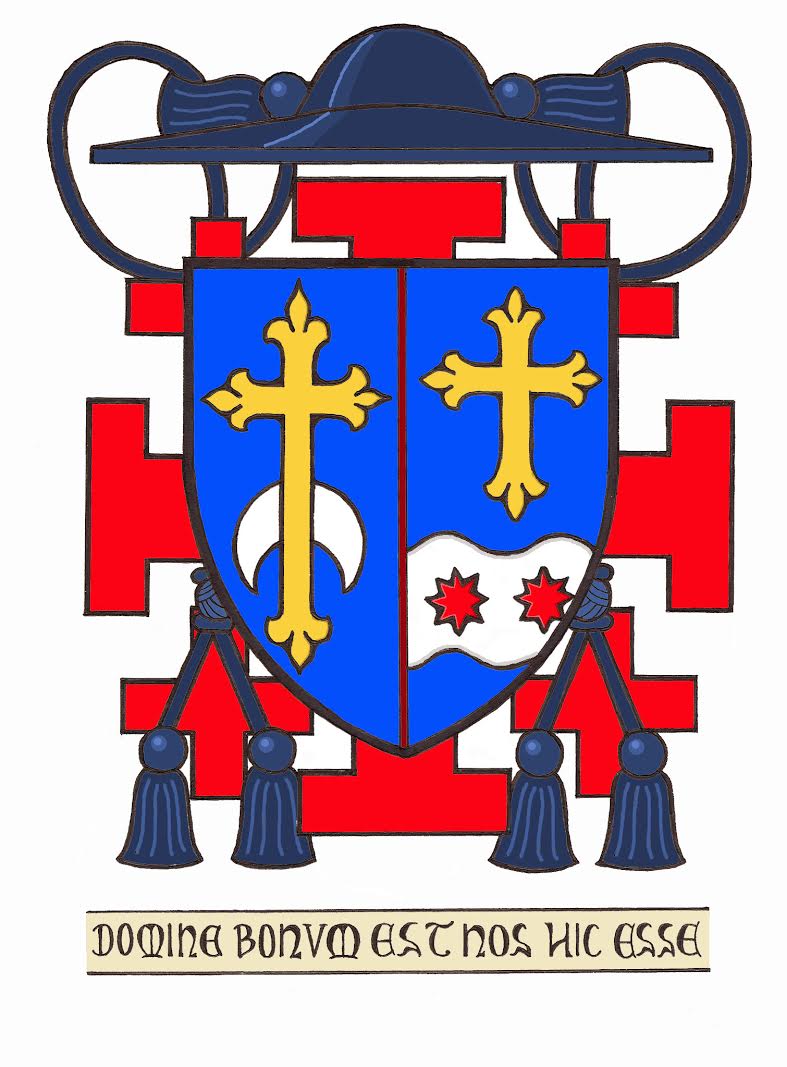
Here is the coat of arms of the Very Rev. Fr. Donald Richardson, BTh, STB, MA, KCHS who is presently the Dean of the Cathedral and Basilican Church of the Immaculate Mother of God, Help of Christians  more commonly known as St. Mary’s Cathedral in Sydney, Australia. He has long been armigerous being a heraldry enthusiast himself and the cathedral church has made use of a corporate coat of arms different from that of the Archdiocese for a long time. When he was appointed Dean I told him I would prepare a nice emblazonment with his own arms impaled with the cathedral arms.

dr

Because his personal arms are so similar to the arms of the cathedral I chose to use a line of separation in a color other than black since black wouldn’t provide a clear enough separation. There’s nothing wrong with this. many other artists and authors have advocated it as well. (See: Carl Alexander Vov Volborth’s works, Heraldry: Customs, Rules and Styles and The Art of Heraldry)

In addition, while Fr. Richardson does not possess a Roman Honor his arms are ensigned with the galero used for what is collectively known as “Minor Officials” which would include cathedral deans and/or rectors, rectors of shrine churches or seminaries, basilica rectors, Vicars Forane, Religious Superiors, etc. This galero has two tassels pendant on either side of the shield and they may be shown hanging one below the other or, as here, side by side from a median knot. Father will bear these arms “pro hac vice”, that is to say, during his tenure as Dean of the Cathedral only.

The cross of Jerusalem is included in the achievement to note that he is a Knight Commander in the Equestrian Order of the Holy Sepulchre. The motto means, “Lord, It Is Good For Us to Be Here” (Matt. 17:4)

An American in Poland

lynam3

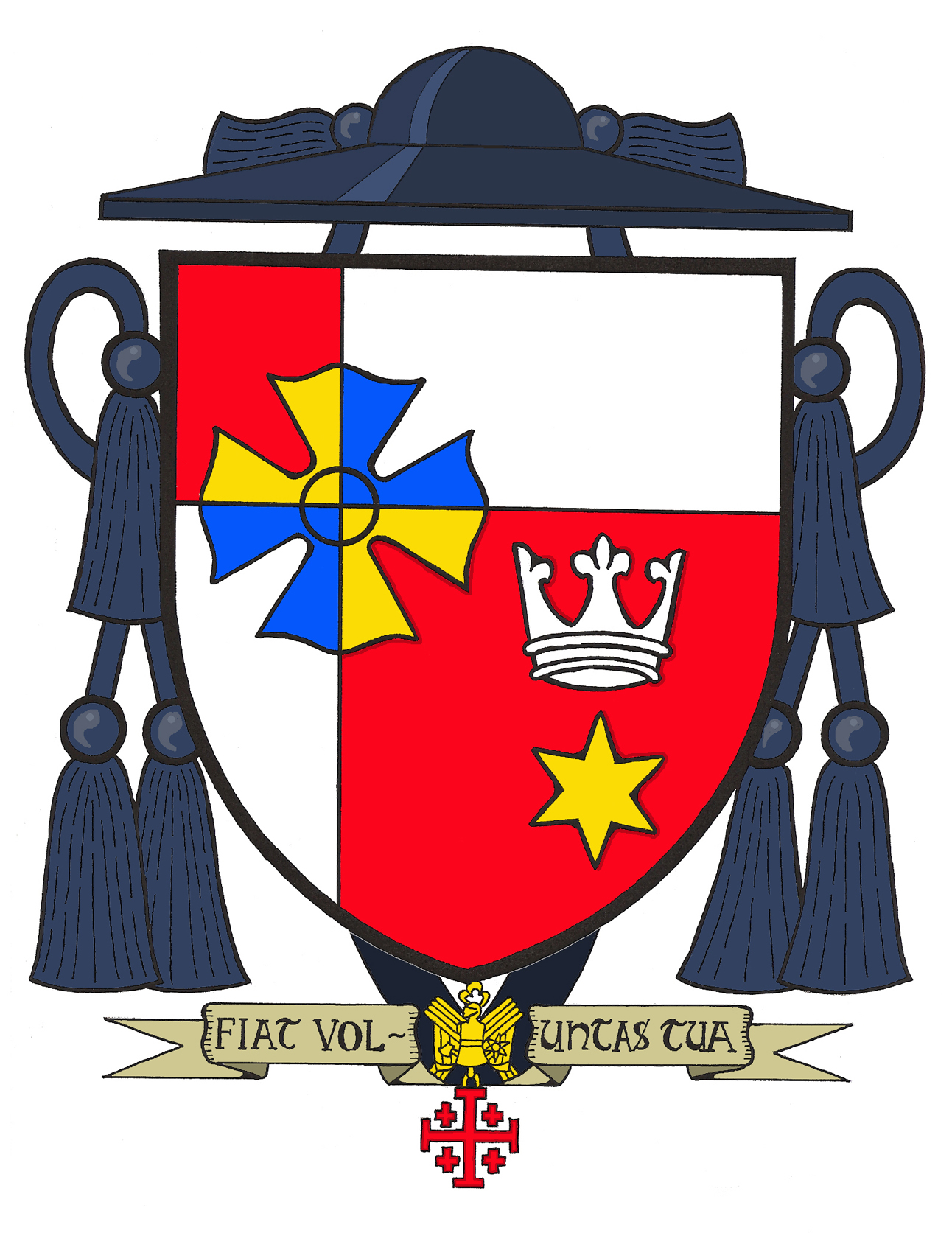
The arms (above) I recently devised for an American priest who lives and works in the USA but who, in addition to his pastoral responsibilities at home, was honored by being named an Honorary Canon of the Collegiate Chapter of the Basilica of St. Florian in Krakow.

The arms are:

Quarterly skewed to the dexter Gules and Argent; at the cross point a cross of St. Florian counterchanged Or and Azure; in sinister base above a mullet of six points Or an open crown Argent. Suspended below the shield is the badge of the Equestrian Order of the Holy Sepulcher. The shield is ensigned by the galero of a Canon Sable with cords and six tassels in two rows of one and two respectively Sable. On a scroll below the shield is the motto, “Fiat Voluntas Tua” (Let it Be Done According to Your Will).

The principal colors of the field are the Polish national colors and the division of the field alludes to the off-center cross found in the arms of St. John Paul II (who raised St. Florian Church, his own first priestly assignment, to the rank of a basilica). the cross associated with St. Florian himself is superimposed over the cross point and is colored in blue and gold counterchanged to avoid the tincture violations. These colors are also found in the arms of St. John Paul II.

In the lower right there is a six pointed star to symbolize Our Lady and it is crowned with an open crown alluding to Mary’s Queenship, the patroness of the armiger’s home diocese.

The black galero  with black cords and six black tassels indicates the bearer is a cleric with the rank of Canon, in this case, a Collegiate Canon. Being a Knight of the Holy Sepulcher he also chose to display the badge of that Order pendant below the shield from a black ribbon.

Monsignor Francis Kelly, P.A., K.H.S.

kelly3

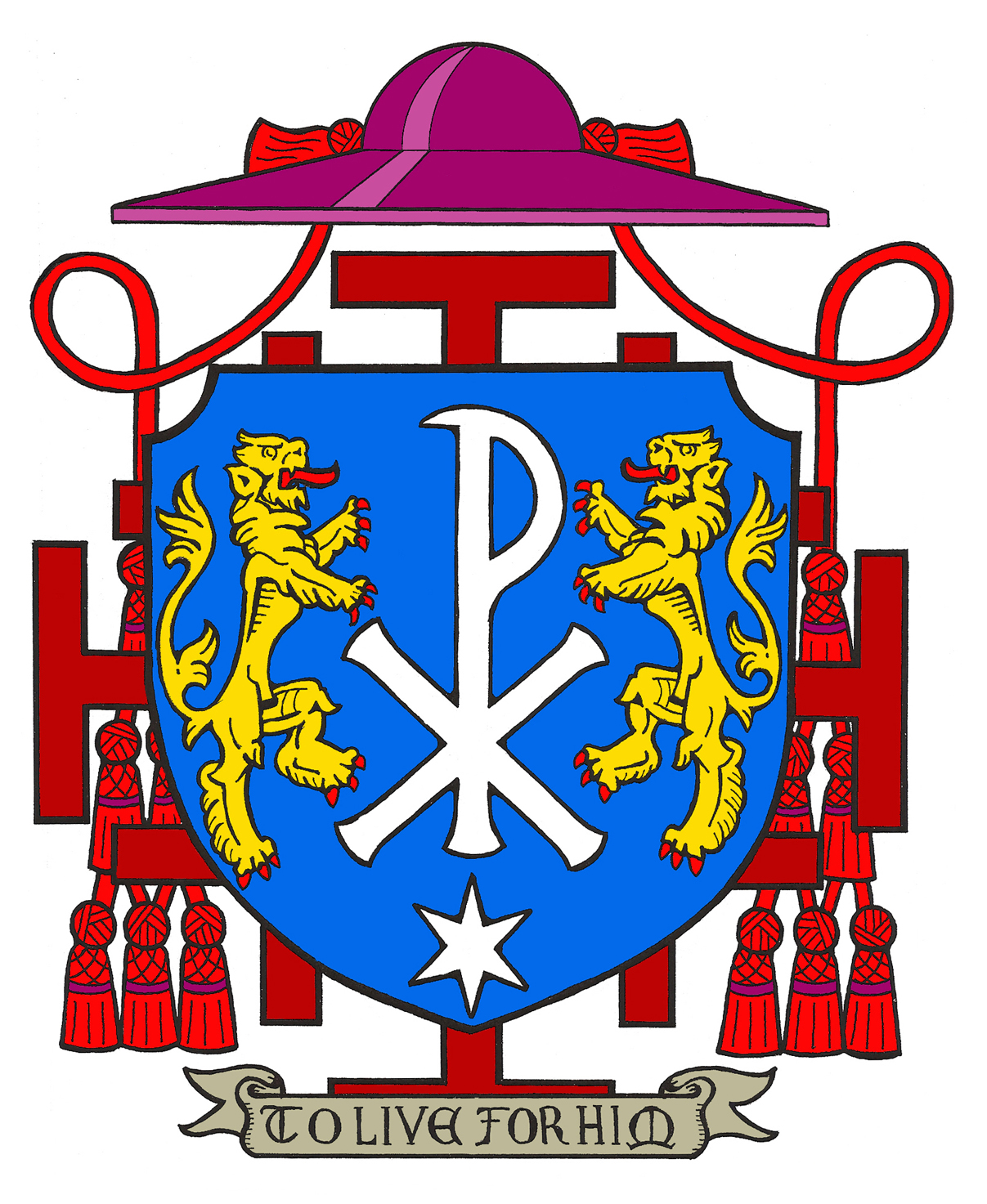
The arms (above) I recently completed for Monsignor Francis Kelly, PA a Canon of St. Peter’s Basilica in Rome. Msgr. Kelly is a priest of the Diocese of Worcester, Massachusetts who, prior to his current service worked for many years in Washington, DC for the NCEA and was also on the faculty and later became rector of Pope St. John XXIII National Seminary in Weston, Massachusetts. After his time there he spect eight years as the Superior at the Casa Santa Maria in Rome which is the graduate division of the Pontifical North American College. In 2013 he was named Prothonotary Apostolic and a Canon of St. Peter’s Basilica by Pope Benedict XVI. I met Msgr. Kelly in 1996 when I was sent for one year of studies at Pope John Seminary. We have been friends since then.

The blazon is:

Azure, between two lions rampant respectant Or, armed and langued Gules the Greek letters Chi and Rho Argent; in base a star of six points Argent. The shield is placed on the cross of the Equestrian Order of the Holy Sepulchre and is ensigned by the galero of a Prothonotary Apostolic Purpure with cords and twelve tassels disposed in three rows of one, two and three pendant on either side of the shield Gules. On a scroll below the shield is the motto: “To Live For Him”.

The blue field and gold lions are taken from the coat of arms traditionally associated with the name “Kelly”. In that coat of arms the lions are chained and they face a tower. For differencing the chains have been omitted and the tower has been replaced with the Greek letters that are a monogram for the name Christ and a star of six points. These indicate the armiger’s devotion to Christ and Our Lady.

The armiger is a Knight of the Order of the Holy Sepulcher and its cross is placed behind the shield. The purple galero with red cords and tassels indicates a Roman prelate with the rank of Prothonotary Apostolic, the highest of the three grades of prelates addressed as “Monsignor”. The members of the Chapter of the Papal Basilica of the Vatican hold this rank.
The motto expresses a sentiment the armiger has endeavored to embody throughout his entire priesthood.

Sacerdotal Coat of Arms

skoblow3

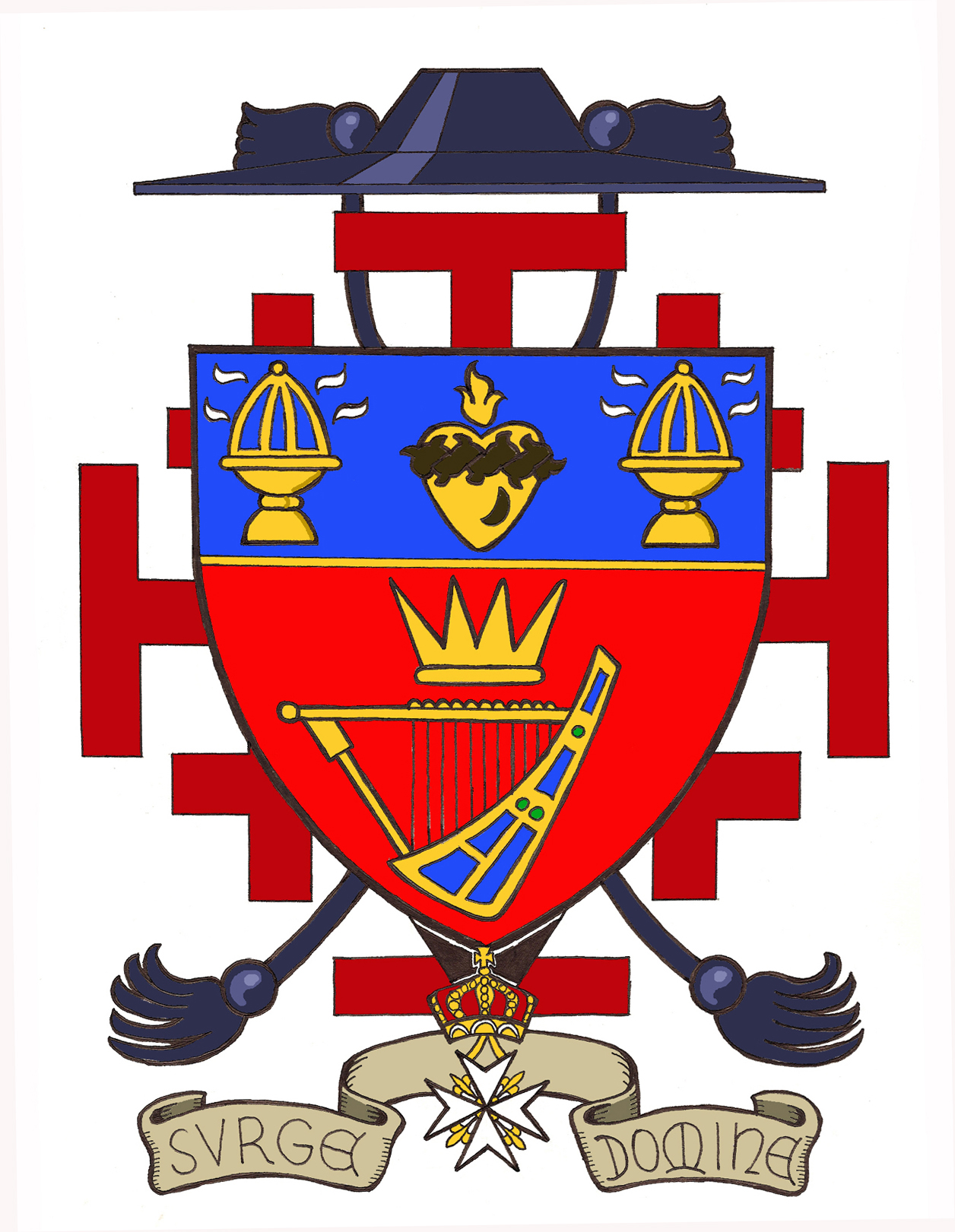
The coat of arms recently completed for a very patient priest in the USA who was ordained in May of 2015. The blazon is:

Gules, an ancient harp below an ancient crown all Or; on a chief Azure fimbriated Or between two thuribles Or with two wisps of smoke rising on either side Argent, the Sacred Heart of Jesus Or, enflamed Or wounded and enfiled by a crown of thorns Sable. The shield is displayed on the cross of the EOHS and suspended below the shield is a badge of a Chaplain of Magistral Grace of the SMOM. Ensigning the shield is a priest’s galero with cords and two tassels pendant on either side all Sable. On a scroll below the shield is the motto, “Surge Domine“.

The field is composed of two colors: a red field with a blue chief so the chief is separated from the field by a gold (yellow) fimbriation to avoid violating the tincture “rule” (which, as Heim proved in his book, Or and Argent isn’t so much a rule as a custom).

The principal charge, a crowned ancient harp, alludes to the patron of the bearer, David, the King who by tradition is considered the composer of many of the Psalms. The charges on the chief allude to the bearer’s devotion to the Most Sacred Heart of Jesus and the sacred liturgy. The two thuribles with smoke rising from them represent the liturgy itself. There are references in both Scripture and Tradition of the rising incense being like our prayers in worship ascending to the Lord. In addition, incense represents a sacrificial offering such as one finds in the Holy Sacrifice of the Mass.

The shield is ensigned with a black priest’s galero. In addition, the shield is placed on the cross of the Equestrian Order of the Holy Sepulcher in which the bearer received the rank of Knight Grand Cross prior to his ordination. The badge of the Sovereign Military and Hospitaller Order of St. John of Jerusalem, Rhodes and Malta is suspended below the shield as the bearer was a Knight in that order prior to ordination as well. Upon being ordained a priest the armiger was “translated” from being a lay knight to being a Chaplain of Magistral Grace.

On a scroll below the shield is the motto, “Surge Domine”.

Coat of Arms for a Priest

strouse4

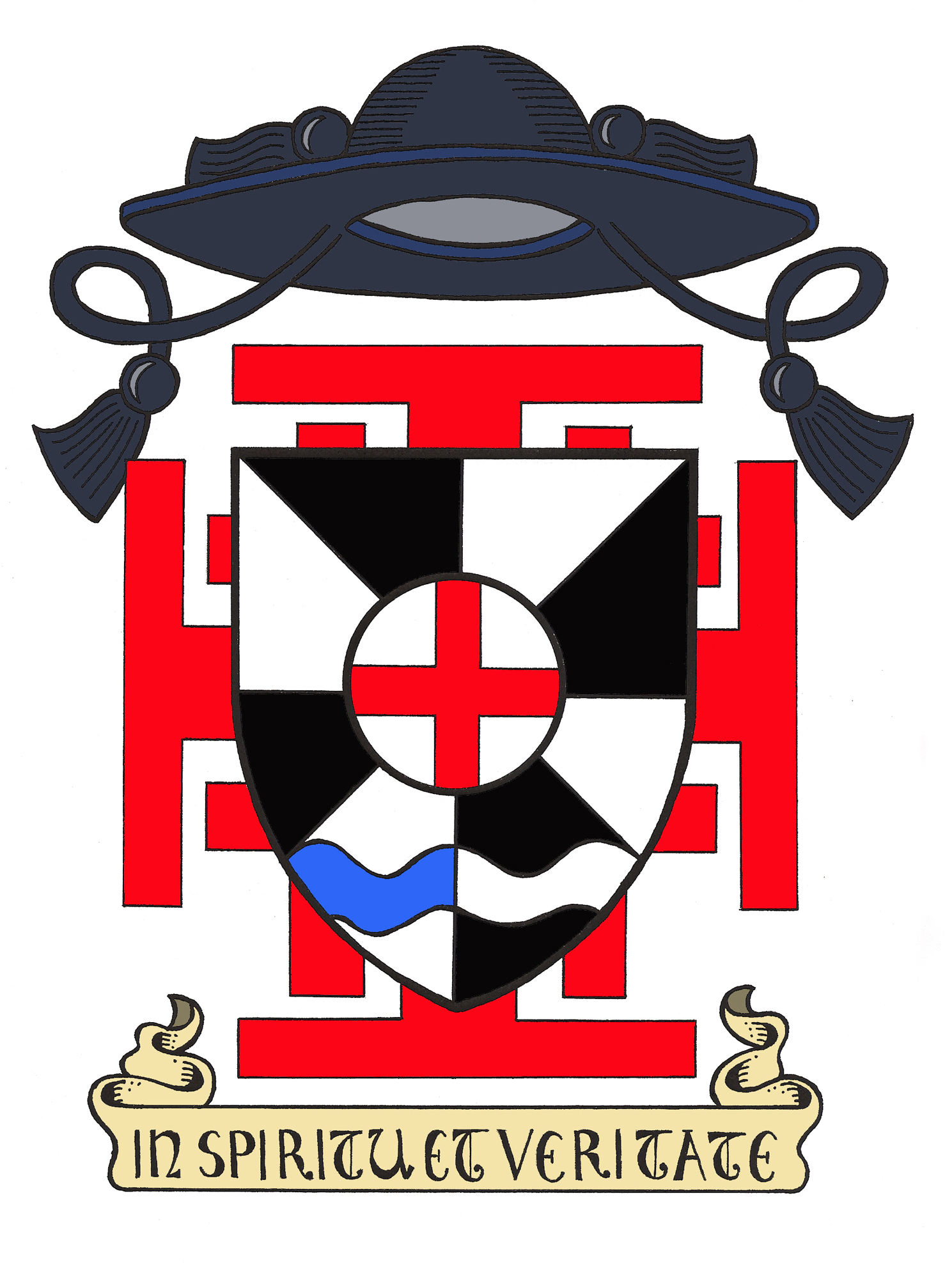
The arms (above) were recently designed and emblazoned by me for an American priest who is also a member of the Equestrian Order of the Holy Sepulchre.

The priest has a devotion to St. Anthony, his baptismal patron, and is a Third Order Dominican. The gyronny of eight that makes up the field is taken from the arms of the Order of Preachers. In addition, the black and white recalls the arms of the city of Lisbon where St. Anthony was born. The plate charged with a red cross at the center alludes to the arms of the city of Padua, where St. Anthony died and is buried. In addition, this charge represents the sacred Host used at Mass because the armiger has advanced studies in the sacred liturgy. Finally, the counterchanged wavy bar in base alludes to three things: the lake at Mundelein where the liturgical studies were undertaken at the Liturgical Institute there; his home state, Michigan, which is situated in the Great Lakes; a charge in the arms of the diocese in which he serves.

The shield is ensigned with the motto meaning “In Spirit and in Truth”, the priest’s galero and the cross of the Equestrian Order of the Holy Sepulchre.