Category Archives: Cardinals

Chamberlain of the Holy Roman Church

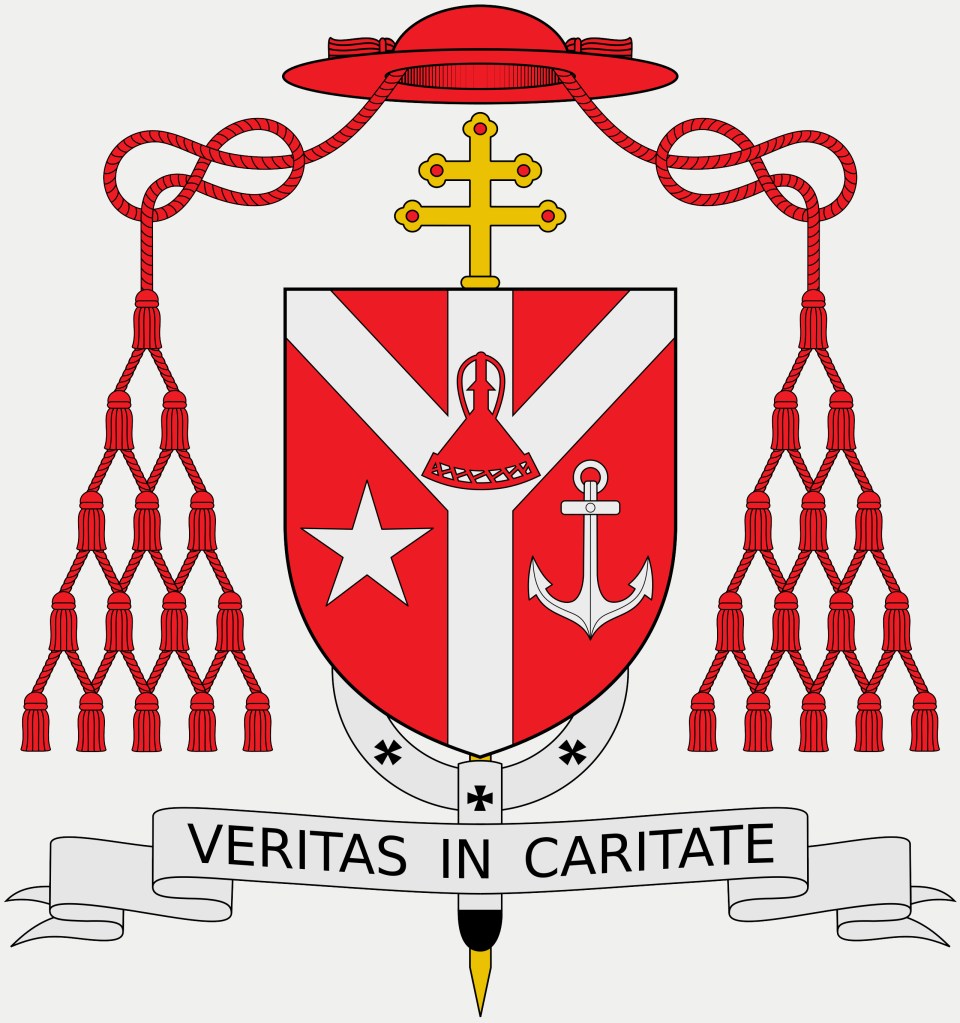
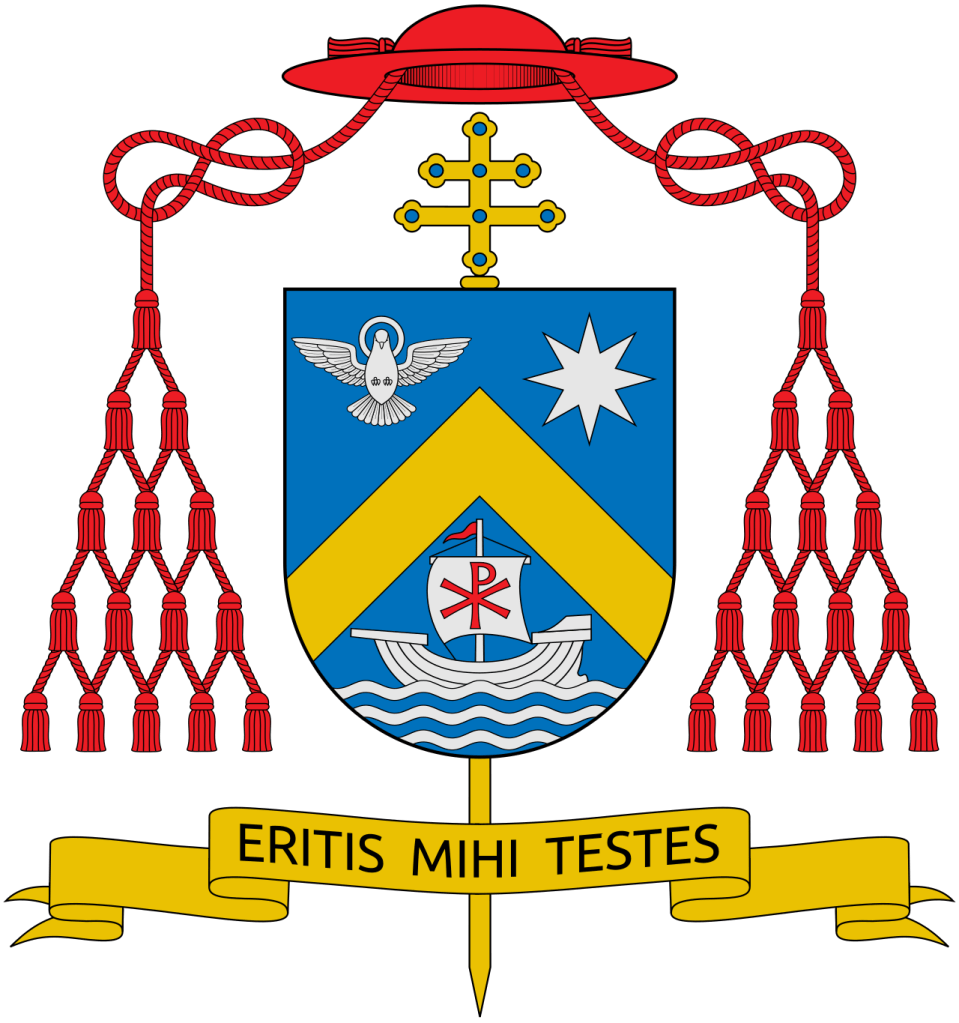
During the Sede Vacante the person in charge of the affairs of the Church is the Chamberlain (Camerlengo) of the Holy Roman Church. Since 2019 that man has been the (Irish-born) American, Kevin Cardinal Farrell, former Bishop of Dallas, Texas and also former Auxiliary Bishop of Washington, DC.

During the time of the Sede Vacante he functions as the caretaker of the Church and the Regent of the Vatican City-State. The symbol of the Church since the time of the existence of the Papal States, the crossed keys and ombrellino, are placed above his existing coat of arms in the achievement. These may always be used during his tenure in office but, practically speaking, most of those who are Camerlengo make use of these added ornaments only during the Sede Vacante. Special coins will be struck to mark this moment in the Church’s history bearing the arms of the Camerlengo.

This version of Farrell’s arms is by Marco Foppoli.

Timothy Cardinal Radcliffe, OP

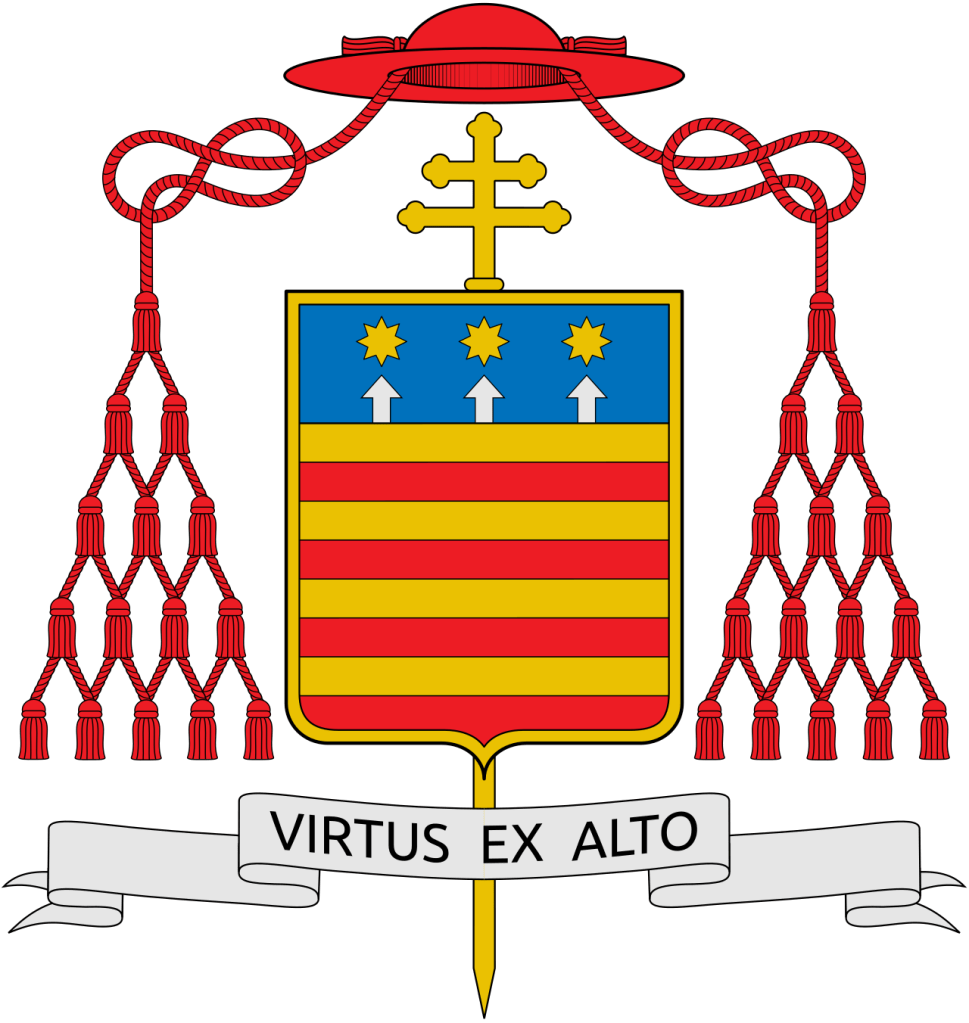
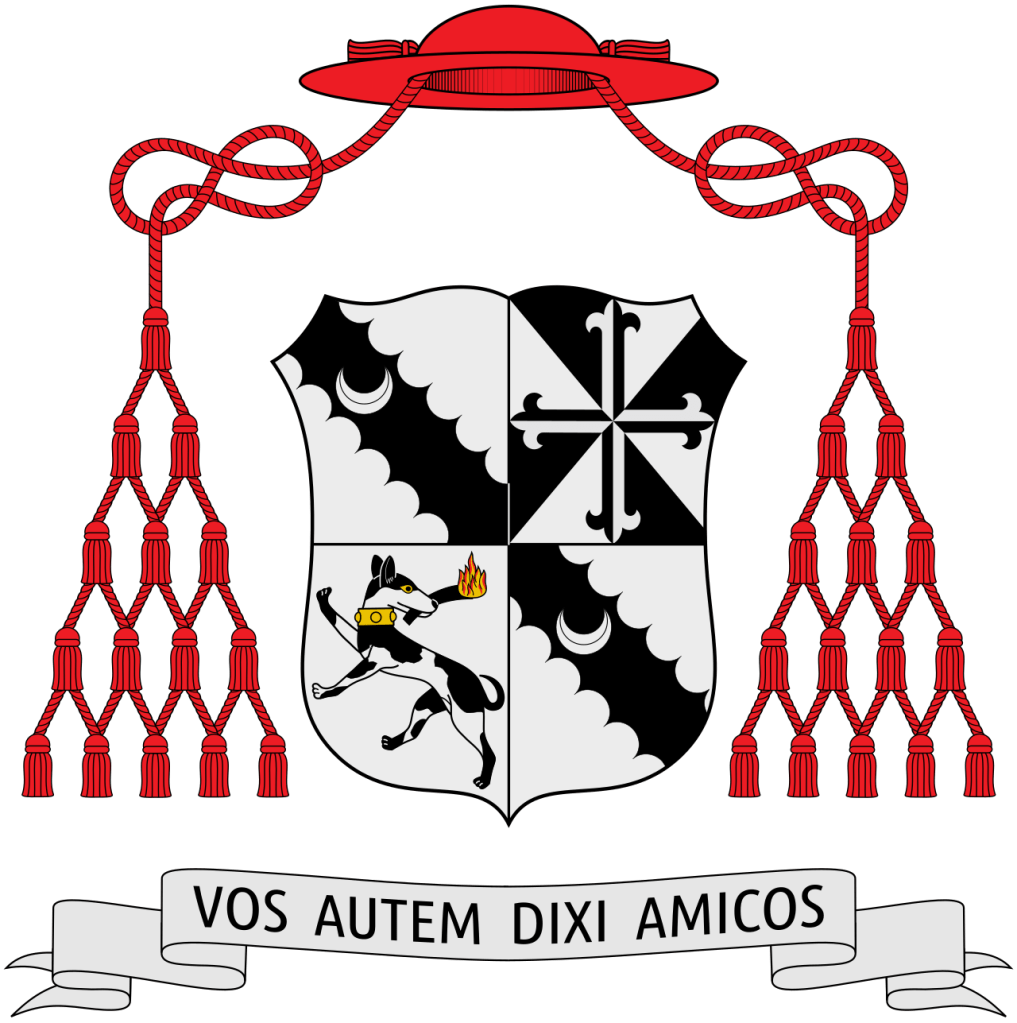
It took a bit of time but the arms used by Timothy Cardinal Radcliffe, OP the Dominican friar who was created cardinal just last autumn by the late pope and who will now be an elector in the upcoming Conclave, has now been published.

He has not been ordained a bishop so there is no episcopal cross behind the shield in the achievement. Overall, he has chosen very Dominican looking symbols and a differenced version of the arms of Radcliffe. A very handsome coat of arms.

His Eminence Decrees…

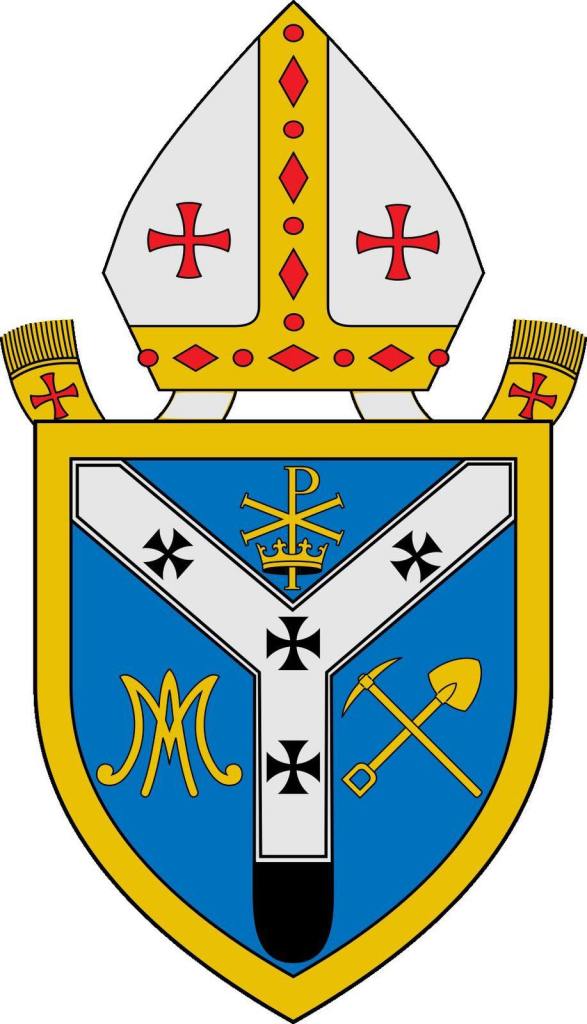
I received an interesting piece of correspondence today from a reader concerning the coat of arms of the See of Johannesburg, South Africa. The archbishop there, Stephen Cardinal Brislin, who has served there since 2024 (arms below) issued a recent decree determining the appearance and uses of the coat of arms of the archdiocese of Johannesburg and authorizing its use.

His decree specifies that this coat of arms is to be used by all Chancery Staff and Departments of the Archdiocese for all official correspondence. He goes on to say that any department wishing to use it in letterhead must first obtain his permission and that it may not be used for personal use.

It is to be published in the archdiocesan paper which will then constitute its promulgation. This decree will be in effect unless specifically repealed by either him, or one of his successors as archbishop.

The blazon of the arms is: “Azure, within a bordure Or, a pall Proper between, in chief, the letters Chi and Rho enfiling an open crown, to dexter, the monogram of Our Lady and to sinister a pick-axe and shovel in saltire, all Or; all within a bordure Or.”

I think it’s great that in a country where it is not the custom for the Ordinary to impale his own arms with those of the See, a prelate has taken enough interest to devise an archdiocesan coat of arms as distinct from his own coat of arms and then also to regulate its use by his own authority. Far too little attention is paid to heraldry by so many bishops and when they do it is often to “modernize” it or to try to make it more “relevant” and by so doing they ruin it. Here, the archdiocese has a suitable coat of arms—perhaps a bit busy for some, but really not a poor design at all—and is establishing by archiepiscopal decree that its use must be authorized. I applaud this effort on the part of the Archdiocese of Johannesburg.

Cardinal McElroy Installed in the Capital

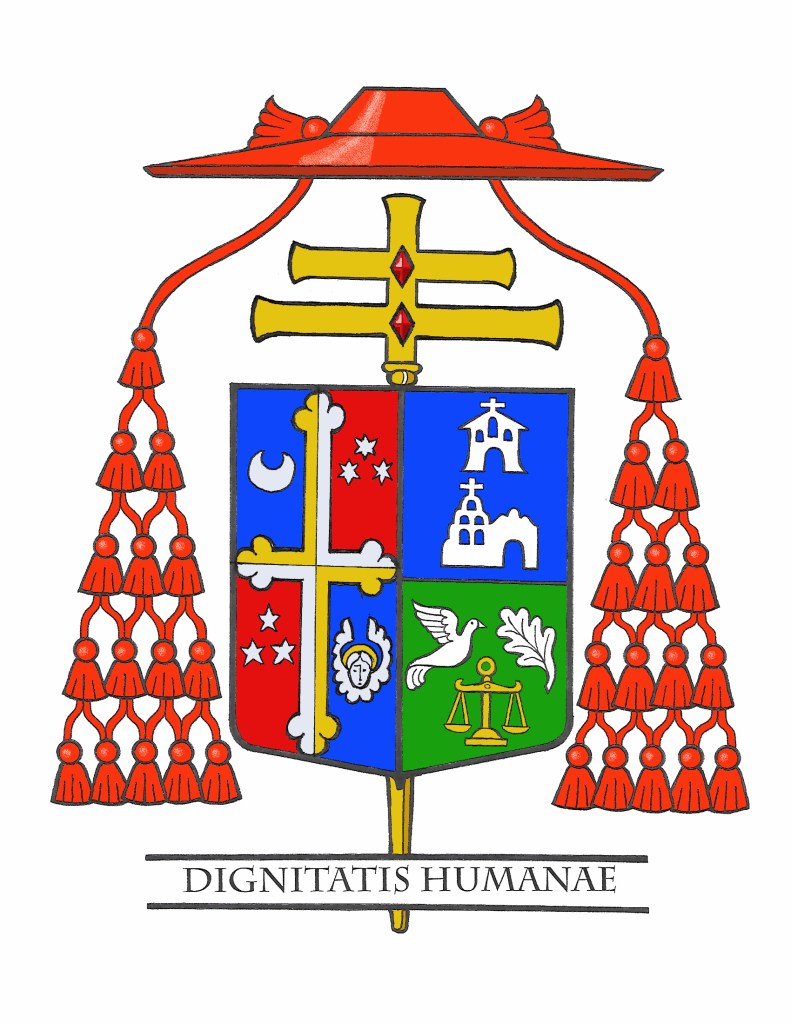
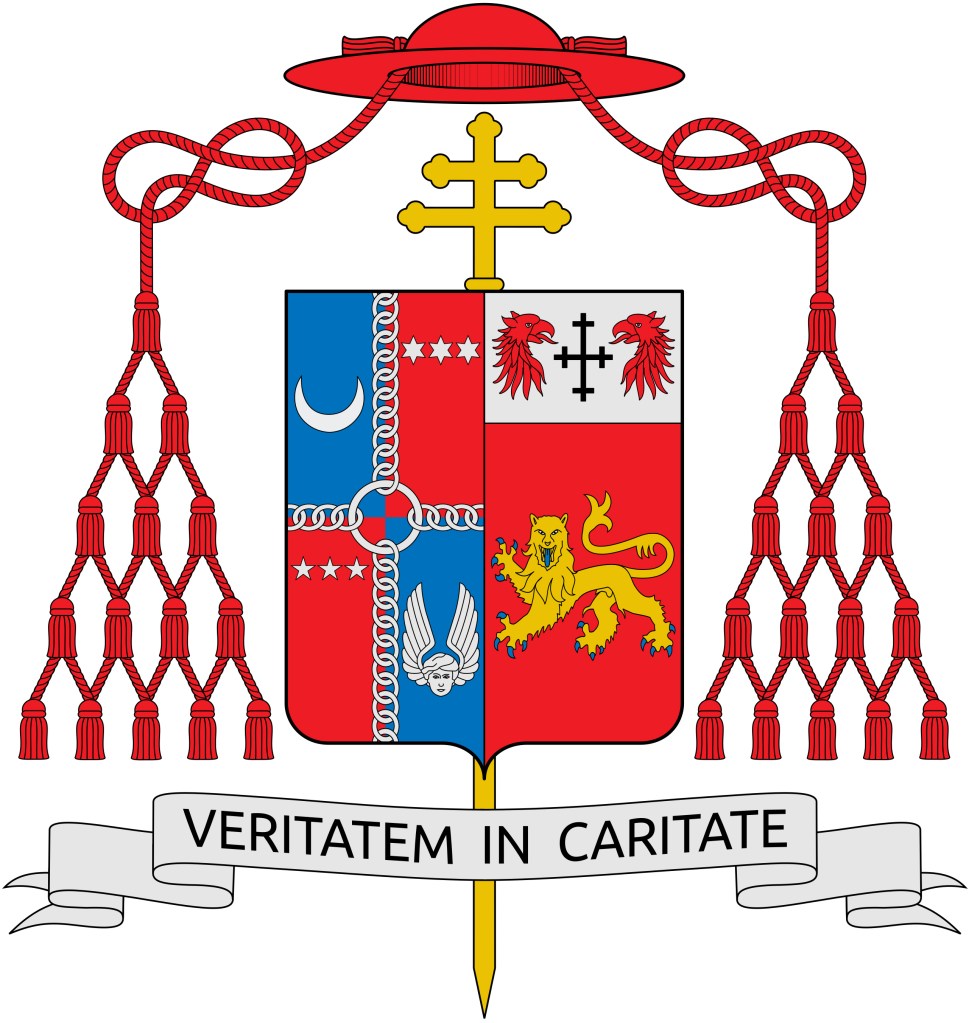
On March 11, His Eminence Robert Cardinal McElroy (71), Cardinal Priest of San Frumenzino ai Prati Fiscali, previously Bishop of San Diego (2015-2025) and originally a priest and Auxiliary Bishop (2010-2015) of San Francisco, was installed as the 8th Archbishop of Washington, DC.

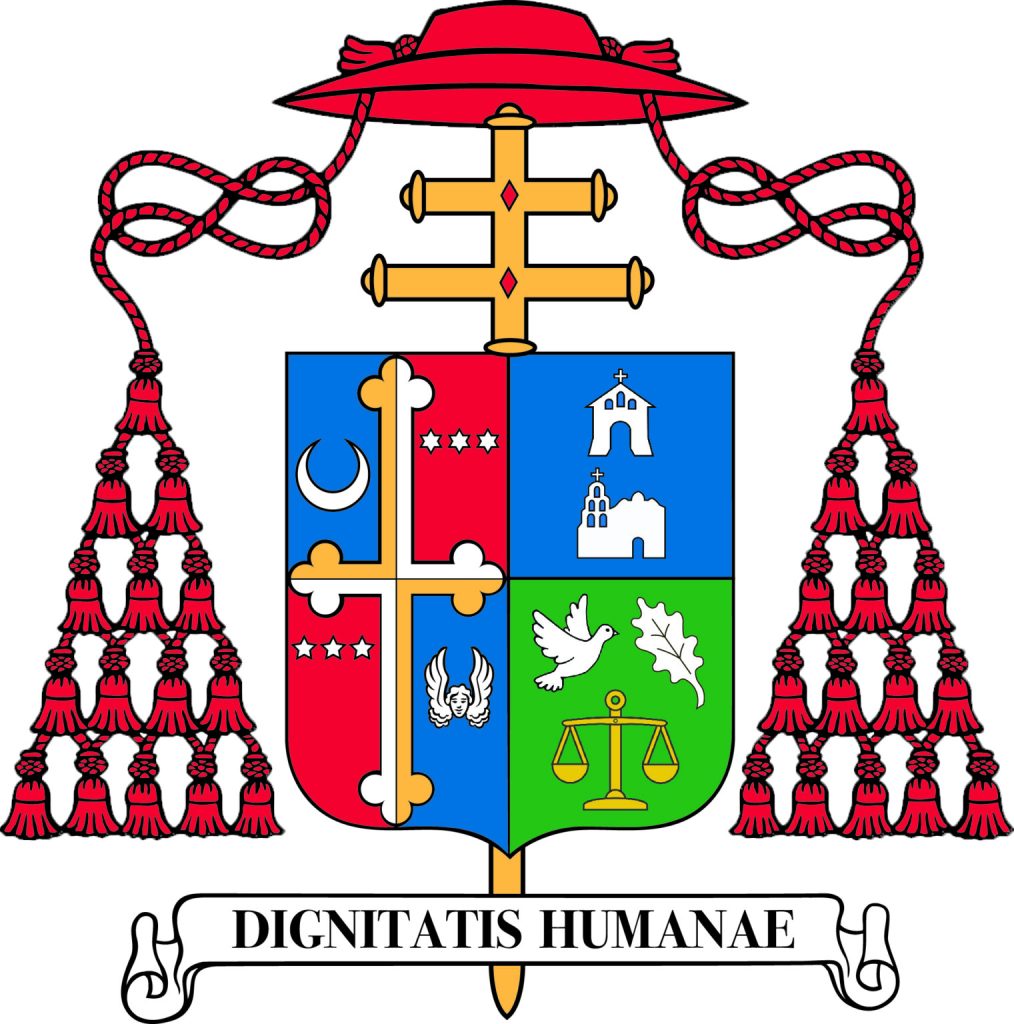
At his appointment as Auxiliary Bishop he assumed a coat of arms which he then substantially changed when he moved to San Diego. In 2022 when he was created Cardinal I was privileged to assist him in preparing his coat of arms and at that time some further revisions and improvements to the design were made. At this most recent move, his personal arms, unchanged any further, were marshaled to those of the archdiocese and the episcopal cross was changed to an archiepiscopal cross.

From the website of the archdiocese we find the following:

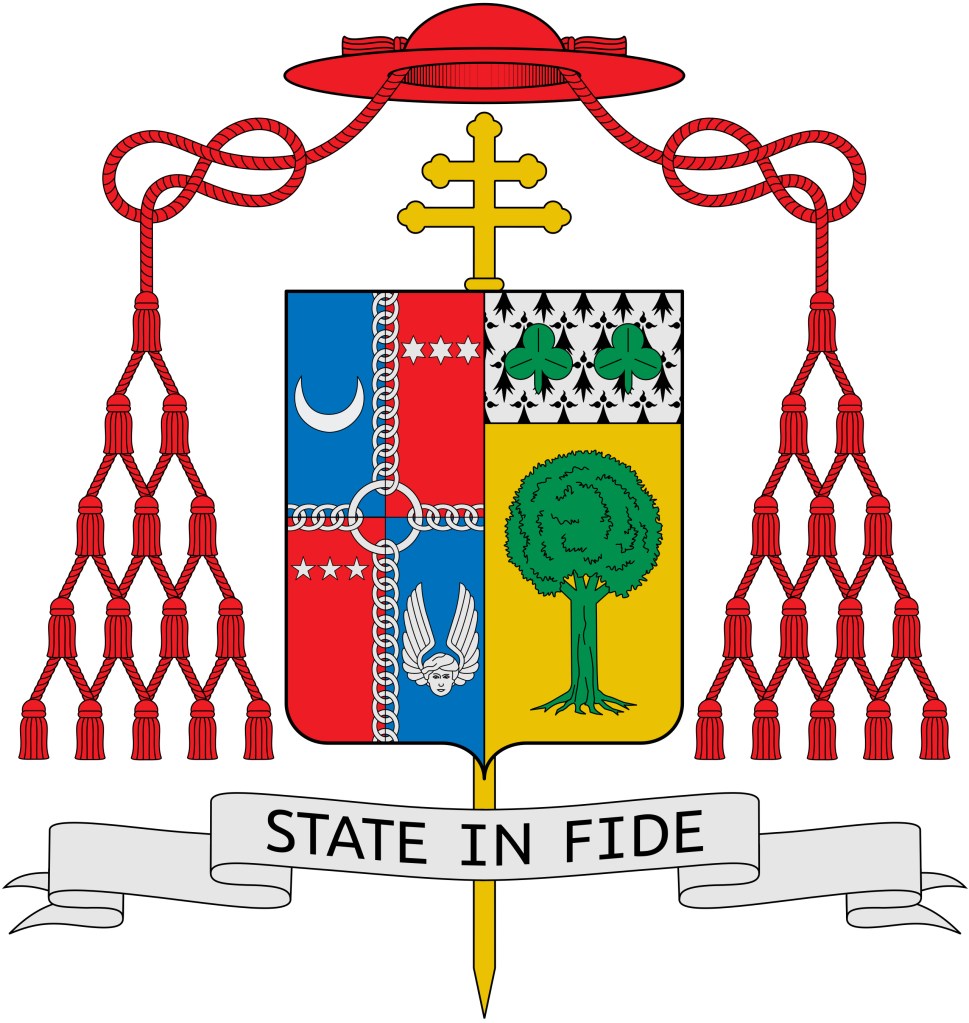
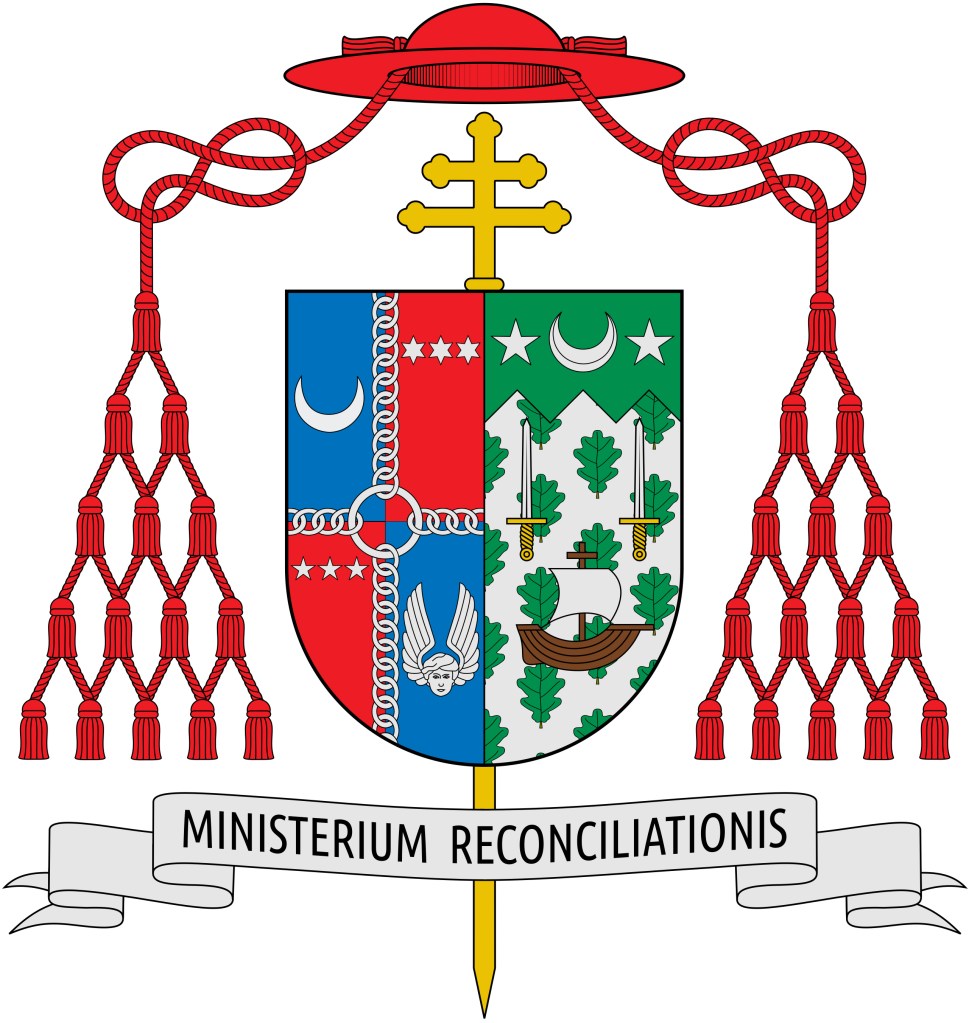
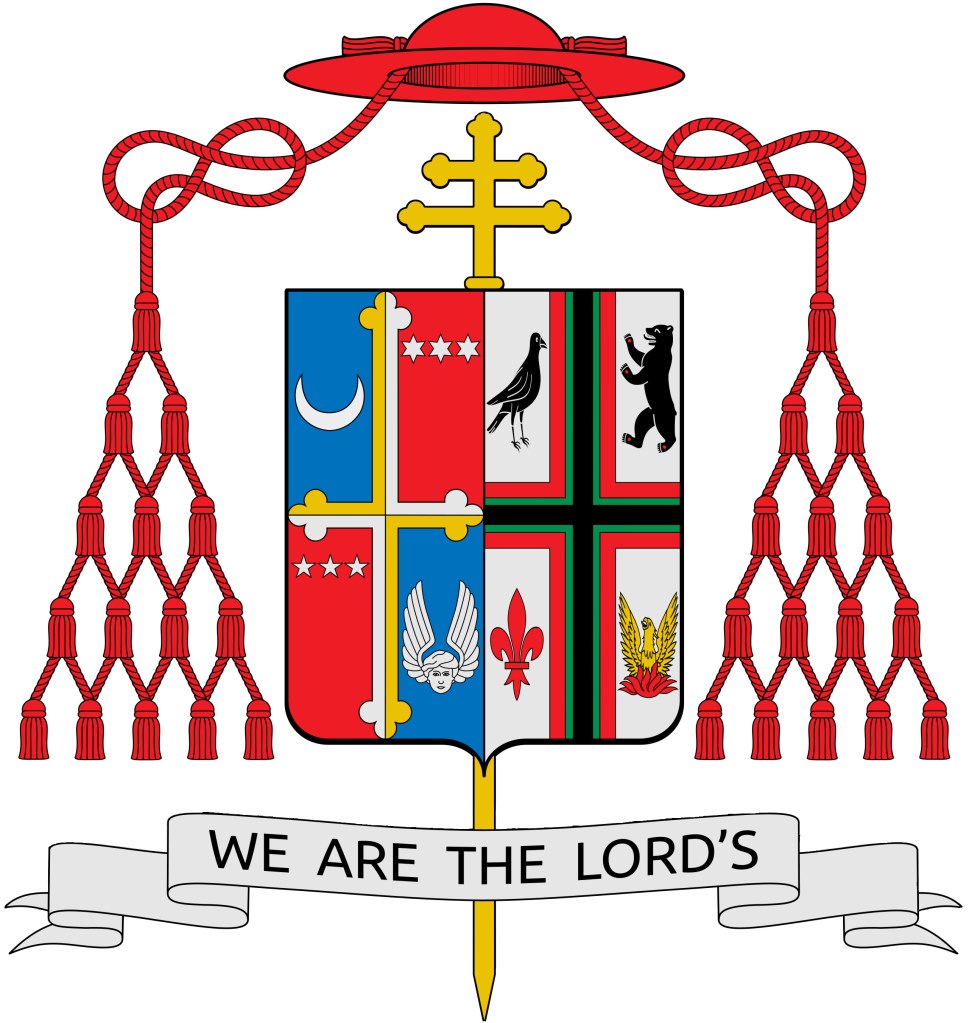
Arms impaled. In the dexter: Quarterly Azure and Gules, a cross bottony over all quarterly Or and Argent; 1, a crescent Argent; 2, three mullets of six points fesswise in chief Argent; 3, as many mullets of five points fesswise in chief Argent; 4, a head erased affronté and winged all Argent. In the sinister: Per fess Azure and Vert, in chief the stylized silhouette of Mission San Francisco de Assis above, in base, that of Mission San Diego both Argent; in base below to dexter a dove turned to sinister volant wings addorsed and to sinister, an oak leaf both Argent scales Or.

The shield is ensigned with an archiepiscopal cross Or in pale behind the shield and surmounted by a cardinal’s galero with cords and fifteen tassels on either side in five rows of one, two, three, four and five all Gules.

On a scroll below the shield is the motto: “Dignitatis Humanae.”

The arms of the Archdiocese of Washington were devised in 1947 by William F. J. Ryan and modified in 2001 by Anthony W. C. Phelps, when the cross bottony was substituted for the original cross of chain links in silver. Cardinal McElroy’s arms were devised originally by Rev. Timothy Pelc. The present blazon of his arms was done by Rev. Guy Selvester. The rendering of the impaled arms was done by Georgina Wilkinson.”

Cardinal McElroy Translated to Washington, DC

Today, the Holy Father announced to transfer of Robert Cardinal McElroy (70), the Bishop of San Diego, to succeed Wilton Cardinal Gregory (77) as Metropolitan Archbishop of Washington, DC.

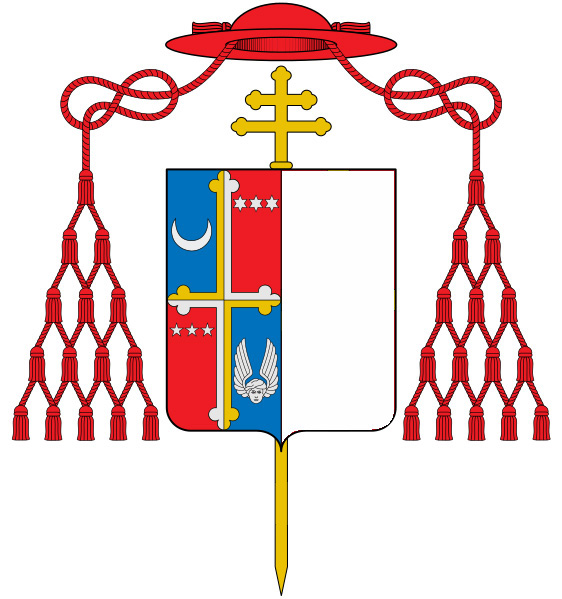
I did not design the Cardinal’s coat of arms but I did prepare the current emblazoning on his elevation to the College of Cardinals.

In addition to a new impalement and the addition of an archiepiscopal cross it will be interesting to see if the Cardinal modifies his personal arms at all. The two charges in chief represent two California historic Mission Churches in San Francisco (where he served as a priest) and in San Diego (where he has been serving as diocesan bishop).

Of course I’m no fan of bishops modifying their arms when they move but I could see how he might wish to eliminate these two very Californian references. On the other hand, they both also serve to honor the places of his origin and previous ministry. So, retaining them could also be a good thing. Time will tell.

Below is how his coat of arms may appear after he is installed in Washington:

Cardinal Bychok

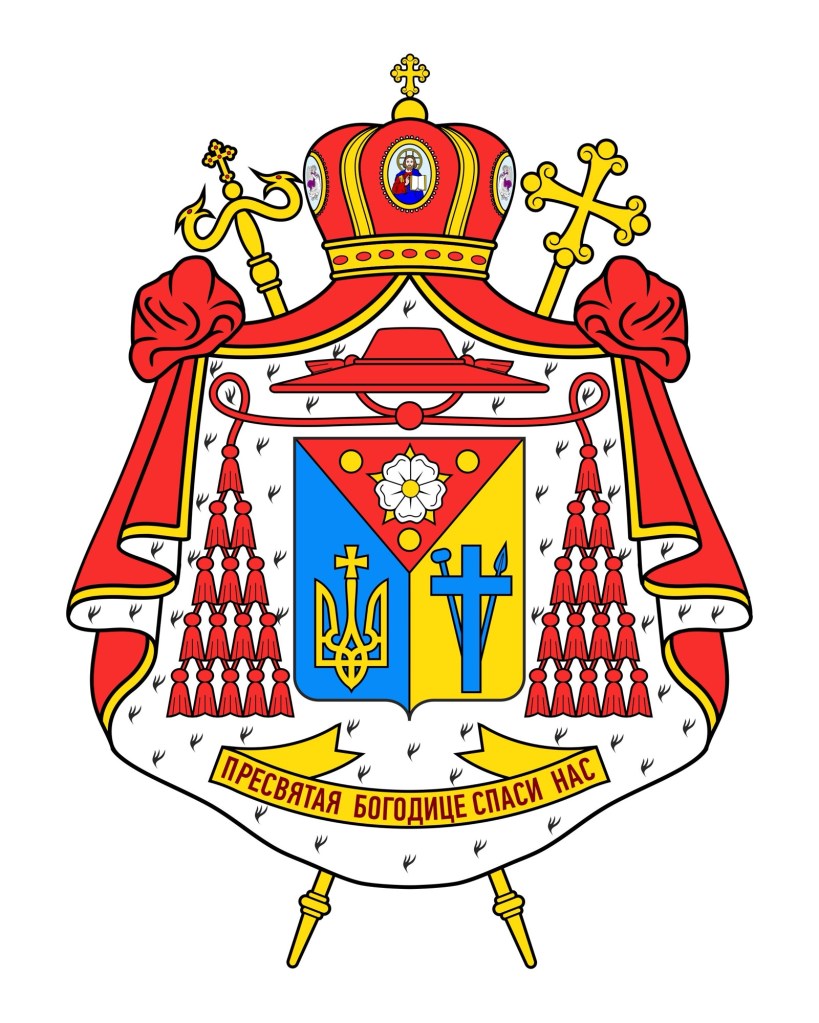
His Eminence, Mykola Bychok, CSsR (44) is a Ukrainian Catholic who serves as Eparch of Ss. Peter & Paul of Melbourne since 2020. On December 7 he will become the Church’s youngest cardinal.

The arms he assumed upon becoming a bishop were designed by others for him and he was not entirely satisfied with them. With his upcoming creation as a cardinal he saw this as an opportunity to tweak the design of his coat of arms.

The redesigned coat of arms does not depart that much from what he originally had but cleans it up a bit and adds the external ornament unique to Cardinals.

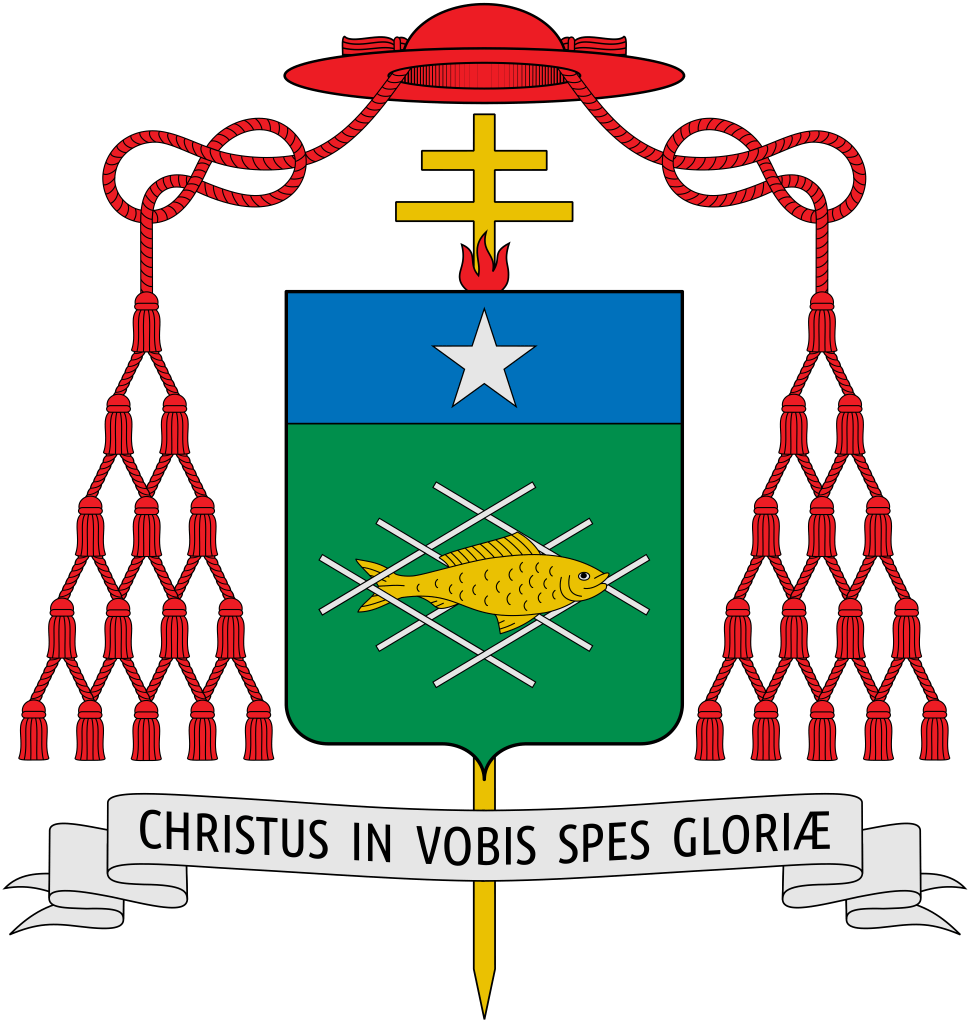
The blazon is: Tierced in pall; in chief, Gules a rose Argent, barbed and seeded Or between three bezants; in dexter base Azure a trident (tryzub) topped with a Greek cross, all Or; in sinister base Or a Latin cross on a perch of a staff topped by a sponge in bend and a spear in sinister bend all Azure. The shield is ensigned with the galero of a cardinal of the holy Roman Church with cords and 30 tassels disposed in five rows of one, two, three, four and five all Gules; the whole within a mantle Gules lined ermine surmounted by the Eastern mitra Gules; in saltire behind the mantle a crozier and a cross both Or.

The charges in chief symbolize the place he is from; the trident (differenced by the addition of a cross) is a symbol of Ukraine; the cross, sponge and spear are borrowed from the arms of the Redemptorist Order of which he is a member.

I was very happy to consult on this redesign and work to put it together with Mr. Richard d’Apice of the Australian Heraldry Society. As with all our collaborations the artwork has been deftly provided by Mr. Sandy Turnbull, also of the Australian Heraldry Society.

Cardinal Gibbons

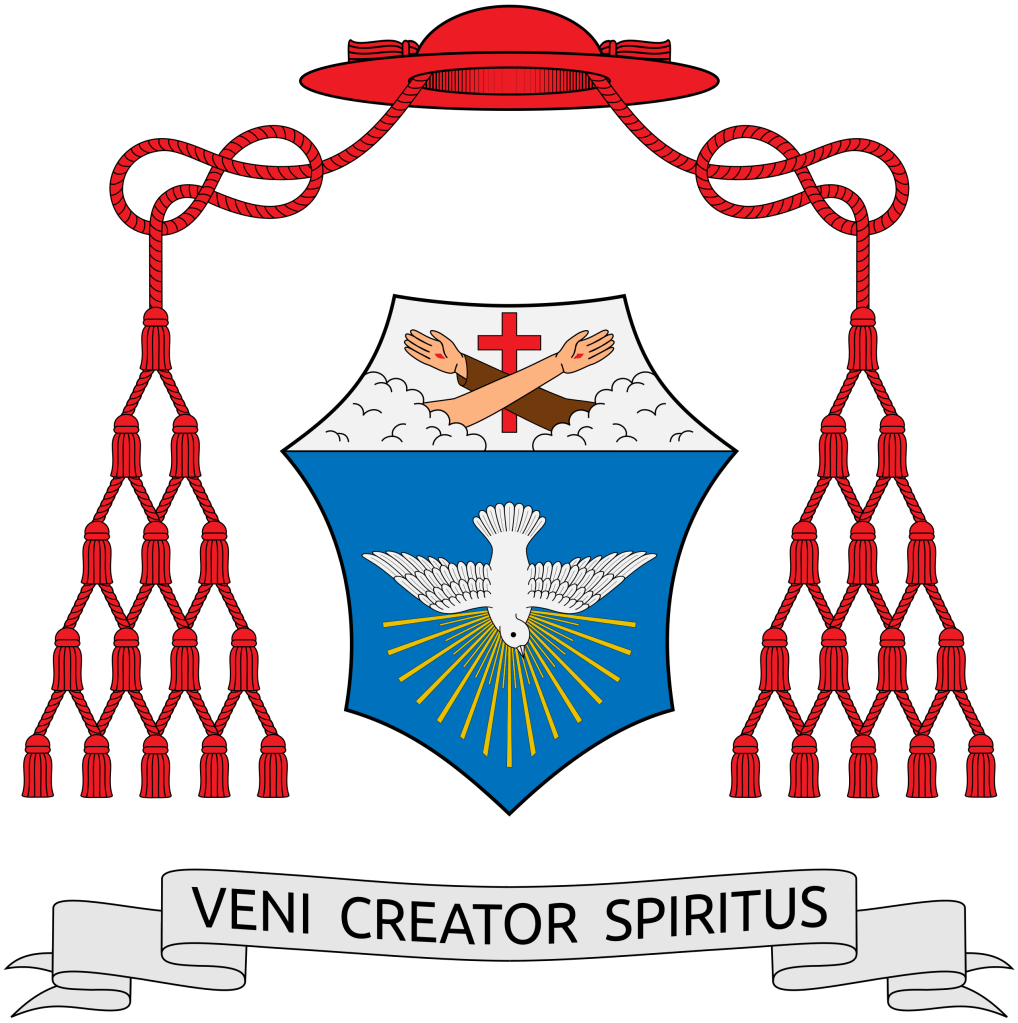
The varied armorial bearings of James Cardinal Gibbons. I often speak about the incorrect practice of a prelate deciding to change or modify his existing coat of arms. Even when arms are assumed (as opposed to granted by a heraldic authority) the bearer should not feel free to completely change them. Sometimes arms are augmented to reflect a new honor received or a change in status. However, completely changing a coat of arms, once assumed, should be avoided.

Gibbons was made Vicar Apostolic of North Carolina which did not yet have its own diocese, in 1868 and served there until he was made Bishop of Richmond, Virginia from 1872-1877. He bore the first coat of arms in both of those places. When he was made archbishop of Baltimore in 1877 he simply modified the external ornaments to reflect his promotion but still used the same shield depicting the seated Virgin Mary. Over the course of the next 44 years of his tenure in Baltimore he then changed his coat of arms no less than three times!

He adopted the arms showing the Holy Spirit descending from a cloud over the globe and also made use of an impalement depicting a pall (pallium). This would have been before the archdiocese had a coat of arms for itself and Gibbons was simply doing with this variant what many an archbishop had done. Namely, using an impalement with a pallium to indicate the status of a metropolitan archbishop.

In 1911, however, he changed his arms entirely again and adopted the coat of arms he bore until his death in 1921. These were done for him by Pierre Chaignon La Rose and I would think that what brought about the last change was the adoption of an archdiocesan coat of arms with which Gibbons’ personal arms were impaled. No doubt La Rose, who was fond of “correcting” coats of arms he didn’t like, convinced Gibbons to adopt the last design which was based on the arms of Gibbons used in Ireland (by a family the cardinal may or may not have had any connection to) differenced by the escallop shell, a symbol of St. James.

I have to admit his original coat of arms wasn’t very good and the final one he ended up with was rather good. But, the process of making many and varied changes throughout his life is not good at all.

Priest—Cardinal—THEN Bishop

Ángel Cardinal Fernández Artime, S.D.B. (born August 21, 1960) is a priest of the Salesians of St. John Bosco, who has been their Rector Major since 2014, the first Spaniard to hold that office. 

On July 9, 2023, Pope Francis announced his plans to create him a cardinal at a consistory scheduled for 30 September. He is the first superior of a religious congregation be made a cardinal.  At that consistory he was assigned the rank of cardinal deacon with the title of Santa Maria Ausiliatrice in Via Tusculana.

Pope Francis told Fernandez he could continue to serve as rector until July 31,2024, when he will be given a new assignment. He was made a member of the Dicastery for Institutes of Consecrated Life and Societies of Apostolic Life on October 4, 2013. The Salesians plan to hold an election to replace him as rector in the spring of 2025.

His episcopal consecration is scheduled for April 20, 2024. Pope Francis has assigned him the titular see of Ursona with the title of archbishop.

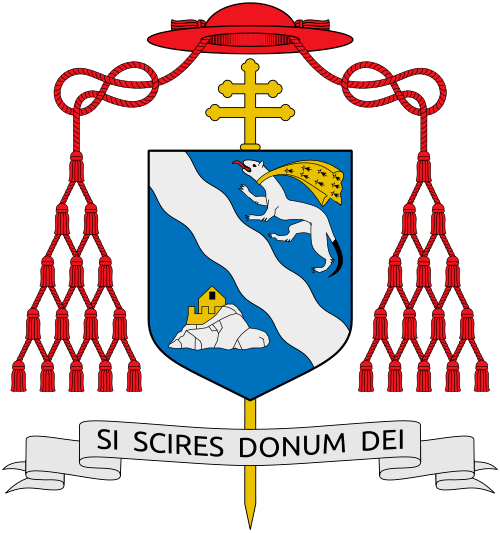
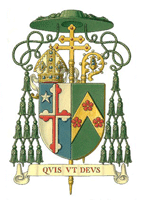
The coat of arms he assumed upon becoming a Cardinal (left) correctly omits any sort of episcopal cross behind the shield. Cardinals are not entitled to use this cross unless they possess the episcopal character. His coat of arms will have the addition of an archiepiscopal cross (right) after his ordination as an archbishop. Until then he uses the armorial bearings of a priest who is a cardinal and his coat of arms will be modified to indicate his rank as an archbishop after April 20.

The Scarlet Nuncio

On September 30 Pope Francis held a Consistory in order to create new cardinals of the Holy Roman Church. Among those was the Frenchman from the Archdiocese of Rennes, Christophe Cardinal Pierre (77), who since 2016 has served as Apostolic Nuncio to the United States of America. He was named Cardinal Deacon of San Benedetto fuori Porta San Paolo. The arms he assumed on becoming a bishop in 1995 are now ensigned with the scarlet galero of a cardinal.

Cardinal McElroy

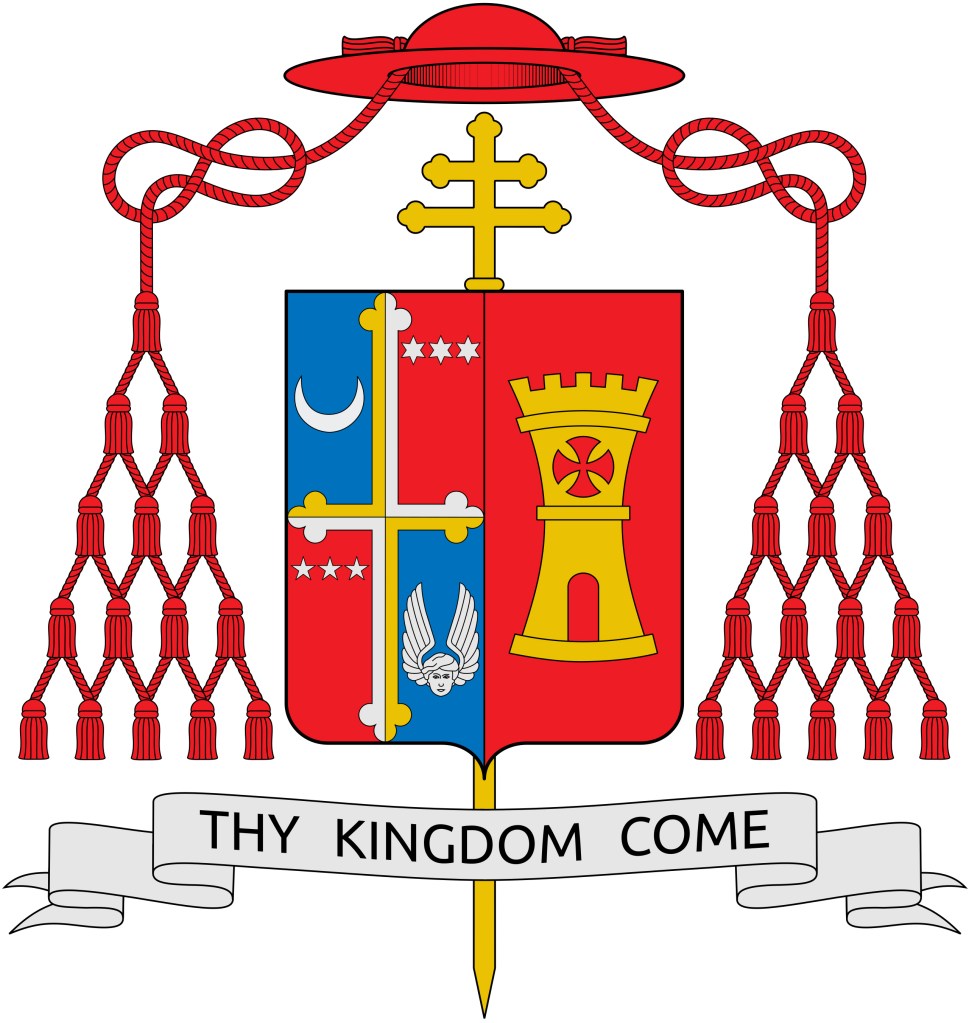
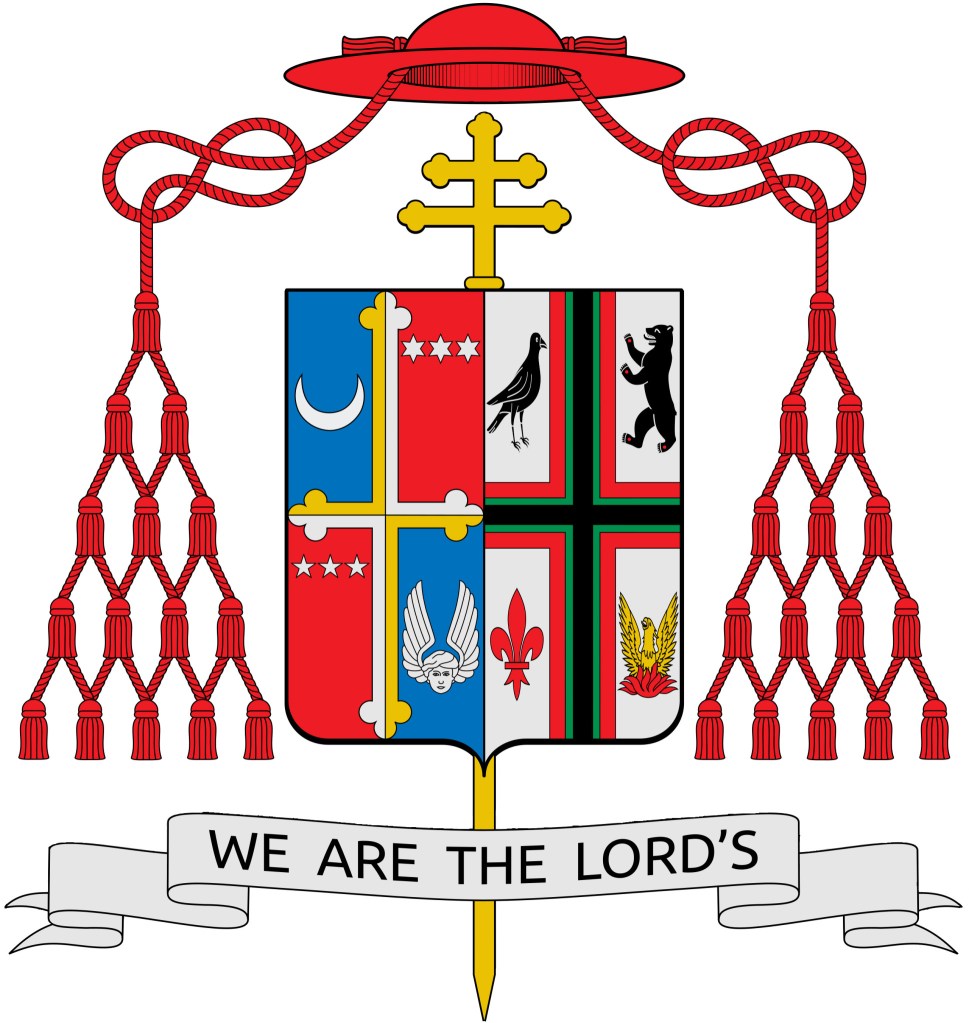
On August 27, in Rome, Pope Francis will create twenty-one new Cardinals of the Holy Roman Church. Among these, the Most Rev. Robert W. McElroy (68) a priest and Auxiliary Bishop in San Francisco who has, since 2015, served as the 6th Bishop of San Diego, California will receive the red hat. He assumed arms when he was made Auxiliary of San Francisco in 2010 and he later modified his coat of arms after he was translated to San Diego. He has decided to make two minor adjustments to his existing coat of arms by changing the episcopal cross which had previously been of a specific shape to a more general form and to change the oak leaf in the base of his shield from green on green to a contrasting color to make it easier to see.

His coat of arms as a Cardinal Priest are:

By heraldic custom observed in North America, the arms of a diocesan bishop are “impaled” side by side on the same shield to the arms of his jurisdiction, in this case, the Diocese of San Diego. This signifies that the diocesan bishop, in this case, the cardinal, is “married” to the See. The same method of impalement is employed in the coat of arms of two married people who are armigerous.

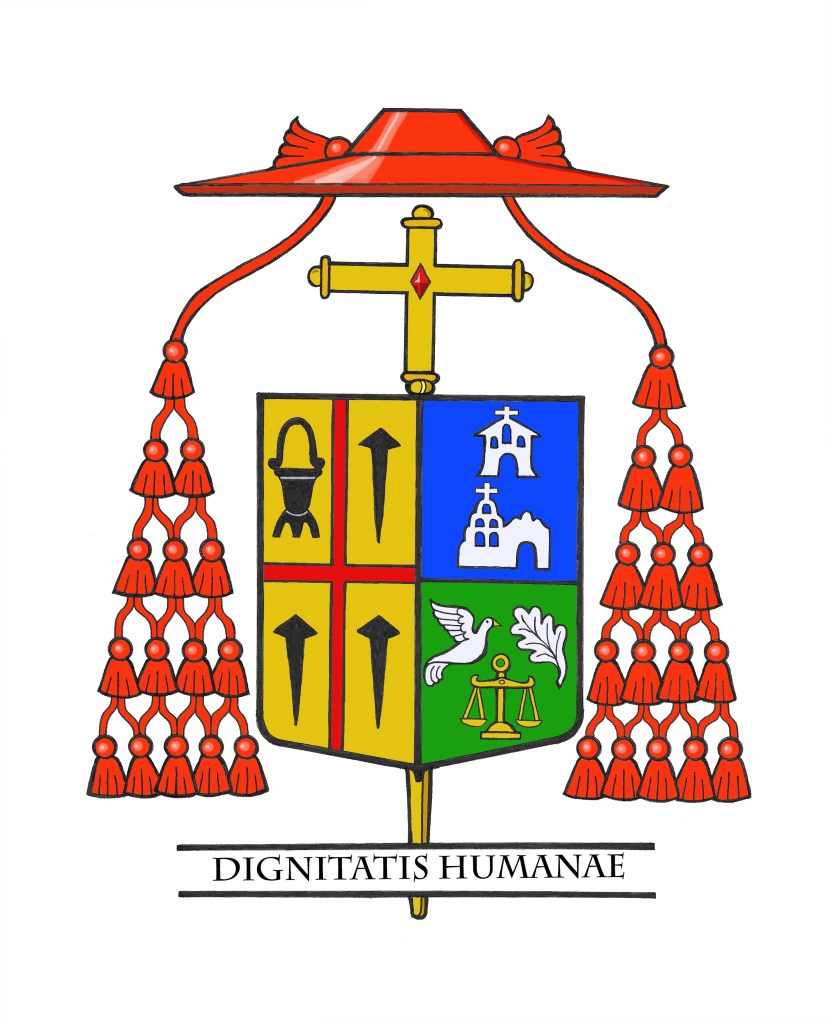
The coat of arms of the See of San Diego is composed of a gold (yellow) field and symbols of San Diego (St. Didacus in Latin), the diocesan patron saint. Diego was born to poor Spanish parents shortly before the year 1400. His love of poverty never left him. As a Franciscan brother he was a selfless servant of the poor and was known to heal the sick with the Sign of the Cross, the central charge of the diocesan coat of arms. The Spanish stew pot in the upper left quadrant indicates Diego’s boundless charity and tireless efforts to feed the hungry. San Diego had a special devotion to the Lord in his Passion, symbolized by the three nails in the other three quadrants. Diego died on Nov. 12, 1463, at the Franciscan monastery in Alcalá, Spain, pressing a crucifix to his heart and repeating the words of the Good Friday chant: “Dulce lignum, dulce ferrum, dulce pondus sustinet” (Precious the wood, precious the nails, precious the weight they bear.)

For his personal arms Cardinal McElroy uses the design he assumed in 2015 upon becoming Bishop of San Diego reflecting his priestly ministry and interests. The arms are composed of two sections of the field. In the upper portion, on a blue background, are stylized depictions of two California Missions. The upper is Mission San Francisco and the lower is Mission San Diego. Prior to becoming Bishop of San Diego the cardinal served as Auxiliary Bishop of San Francisco. The lower part of the field shows a green background. On this field we see a silver (white) dove in flight which symbolizes peace; a silver (white) oak leaf used as a symbol of life and the gold (yellow) scales symbolizing justice. These three virtues are important to the life, work and ministry of the cardinal.

For his motto, Cardinal McElroy has selected the phrase “DIGNITATIS HUMANAE”  (Of the Dignity of the Human Person) which is also the title of the Second Vatican Council’s “Declaration on Religious Freedom”. 

The shield is ensigned with a gold (yellow) episcopal cross. Such crosses resemble  contemporary processional crosses but they are, in fact, different. In the Middle Ages such a cross, without a corpus, was carried directly in front of all metropolitan archbishops and Papal Legates as a symbol of their authority. Eventually all bishops began using this emblem and adopted it in their coats of arms as well. The episcopal cross ceased to be used in the late XIX Century but the cross behind the shield continues to be used by bishops in ecclesiastical heraldry. The cardinal retains the use of an episcopal cross, with a single horizontal bar, because while the Holy Father has promoted him to the dignity of the Sacred College of Cardinals he retains his office as Bishop of San Diego. In the armorial bearings of a Cardinal of the Holy Roman Church the external ornaments around the shield reflect the office exercised by the individual cardinal. Those cardinals who are also archbishops use a cross with two horizontal bars; those who are bishops use one with a single horizontal bar. In the rare case of a cardinal who does not possess the episcopal office no cross at all appears in his coat of arms.

In addition, above the shield is the red ecclesiastical hat called a “galero” with fifteen tassels pendant on either side. This is the singular heraldic emblem that distinguishes the coat of arms of a cardinal. This broad brimmed hat, once worn in cavalcades, is no longer used but remains as a heraldic emblem. The galero was first bestowed on the Cardinals of the Roman Church by Pope Innocent IV at the First Council of Lyon in 1245. It was the first hat to be distinguished by the use of a specific color (scarlet) and it was also to be adorned with tassels. However, originally the number of tassels was not fixed. There are various examples of cardinals’ coats of arms that show as few as two tassels suspended from the galero and as many as seventy-two! What marked these coats of arms as those belonging to cardinals was that the galero, cords and tassels were red and nothing else. No one else could use such a red hat except a cardinal regardless of how many tassels were suspended from it. The number eventually was fixed at thirty (usually depicted as fifteen suspended on either side of the shield in a pyramidal pattern) only in 1832. A system for distinguishing the ranks of other clergy based on the color of the hat, of the cords and the number of the tassels did not come into existence until the Instruction of Pope St. Pius X “Inter Multiplices” in 1905. 

These external ornaments are those used for a prelate with the rank of cardinal who is a diocesan bishop while not being a metropolitan archbishop according to the Instruction of the Holy See, “Ut Sive“, of March, 1969.

It was my great pleasure to advise the Cardinal on his armorial achievement and to assist him in preparing this version upon his elevation to the Sacred Purple.
Blessed Stefan Wyszynski

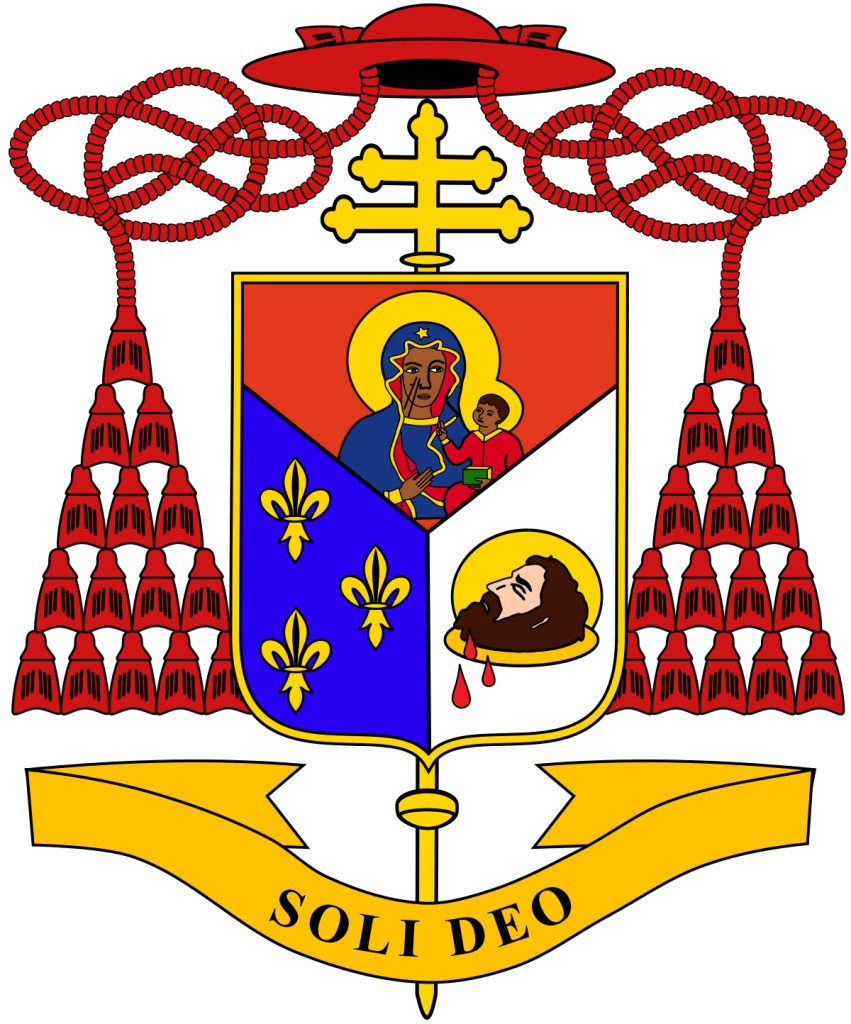
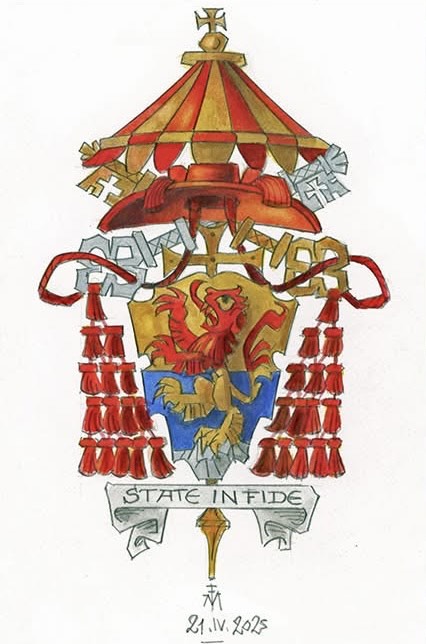
On September 12 the Pope will beatify the late Stefan Cardinal Wyszynski (1901-1981) who was the Archbishop of Gniezno, making him also the Primate of Poland and also of Archbishop of Warsaw from 1948-1981. In 1953 he was created a Cardinal and in 1957 made Cardinal-Priest of Santa Maria in Trastevere. After his death the two archdioceses have been under the care of separate archbishops.

His somewhat unconventional coat of arms speaks loudly of the love he had for his homeland.

Great Use of a Wonderful Coat of Arms

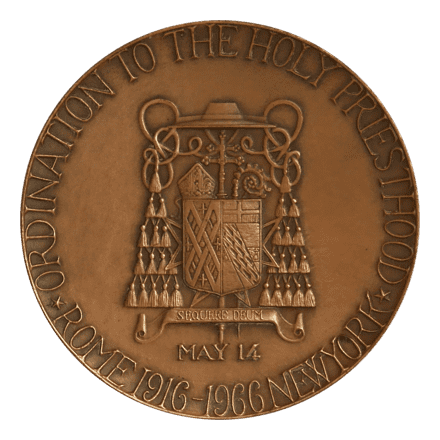
In 1966 Francis Cardinal Spellman, Archbishop of New York celebrated the golden jubilee of his ordination to the priesthood. A special commemorative medal was struck to mark the occasion. The obverse depicted a portrait in profile of the cardinal. The reverse (pictured) depicted his very nicely designed coat of arms. These arms are actually not those he assumed upon becoming a bishop. When he moved to New York he adopted an entirely different coat of arms which he used for the rest of his life. Those are on the medal.

The personal coat of arms containing a chief “of Religion” is shown, as is tradition, impaled with he arms of the See of New York. In addition, as was the older usual custom in addition to the cardinal’s galero and archiepiscopal cross there are both a mitre and a crozier (turned “outward”) depicted as well as the cross of the Order of Malta placed behind the shield.

A Priest Among the Cardinals

On November 28, 2020 Pope Francis created new cardinals. Among them was Fr. Raniero Cantalamessa, OFM Cap (86) who, for the past forty years, has served as the Preacher of the Pontifical Household. Given his advanced age Cardinal Cantalamessa requested to be dispensed from the requirement of receiving episcopal ordination prior to receiving his red hat. While it is not unprecedented it is still rather rare for a Cardinal of the Roman Church not to be a bishop as well. (Contrary to an erroneous idea that never seems to die there were no “lay cardinals” in the Church. All the cardinals who were members of the College of Cardinals previously but had not received ordination were, nevertheless, tonsured clerics and, therefore, NOT members of the laity).

Following the correct customs which are sometimes ignored by the foolish or the ignorant (see: the coat of arms of the late Avery Cardinal Dulles, SJ), Cardinal Cantalamessa ensigns his coat of arms with the scarlet cardinal’s galero but does not make use of the episcopal cross behind the shield because he lacks the episcopal character. As a cardinal, he may make use of pontifical insignia when celebrating Mass solemnly (the mitre, the ring and the crozier) and he may wear a pectoral cross. He also has the option of wearing scarlet cardinal’s robes or his own Religious Habit. It was interesting to note that at the Public Consistory at which he was created a cardinal he wore his habit with a surplice and did not wear the scarlet choir dress of a cardinal.

Ad Multos Annos!

Archbishops of Washington, DC

Here are the armorial bearings of the Archbishops of Washington, DC almost all of whom have been elevated to Cardinal with the notable exception of the first one, Archbishop Michael Curley who was also the Archbishop of Baltimore. At first the Archdiocese of Washington was part of the Archdiocese of Baltimore. Later, a dual archdiocese of Baltimore-Washington was created with Curley leading it. Eventually, Washington became a separate archdiocese but Curley was still appointed its archbishop making him, simultaneously, the archbishop of the oldest American diocese (Baltimore) and the newest at that time (Washington). A short time later Washington, DC received its own residential archbishop with the appointment of Patrick O’Boyle.

There is no coat of arms for Theodore McCarrick who is no longer a cardinal or even a cleric. A blank shield is used in place of his armorial bearings but his time in Washington in still noted because under Mr. McCarrick’s tenure the armorial bearings of the archdiocese were changed and that change, despite McCarrick’s disgrace, has been employed by his two successors as well. One can only hope that at some point in the future the original coat of arms of the archdiocese will be adopted again.

Archbishop Michael Curley (the archdiocesan arms hadn’t been adopted yet and Curley impaled his arms with those of Baltimore)
Patrick Cardinal O’Boyle
William Cardinal Baum
James Cardinal Hickey
Archdiocesan arms changed by Mr. Theodore McCarrick
Donald Cardinal Wuerl
Cardinal-Designate Wilton Gregory