Category Archives: Archbishops

Checchio to be Coadjutor of New Orleans

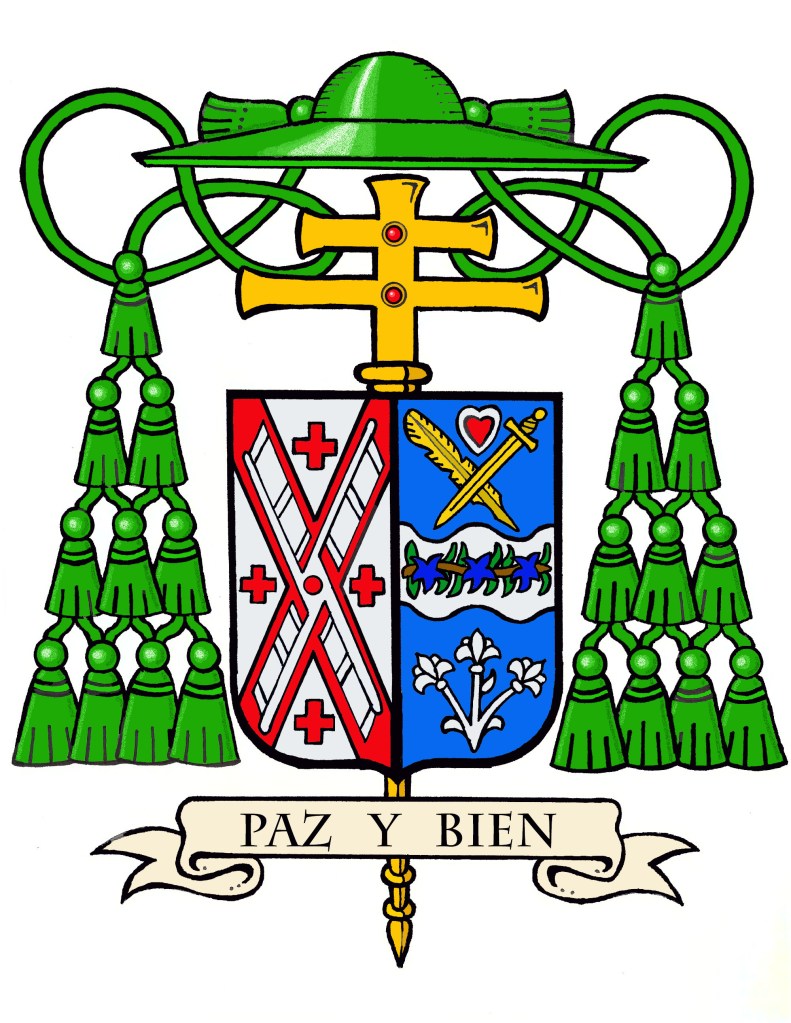
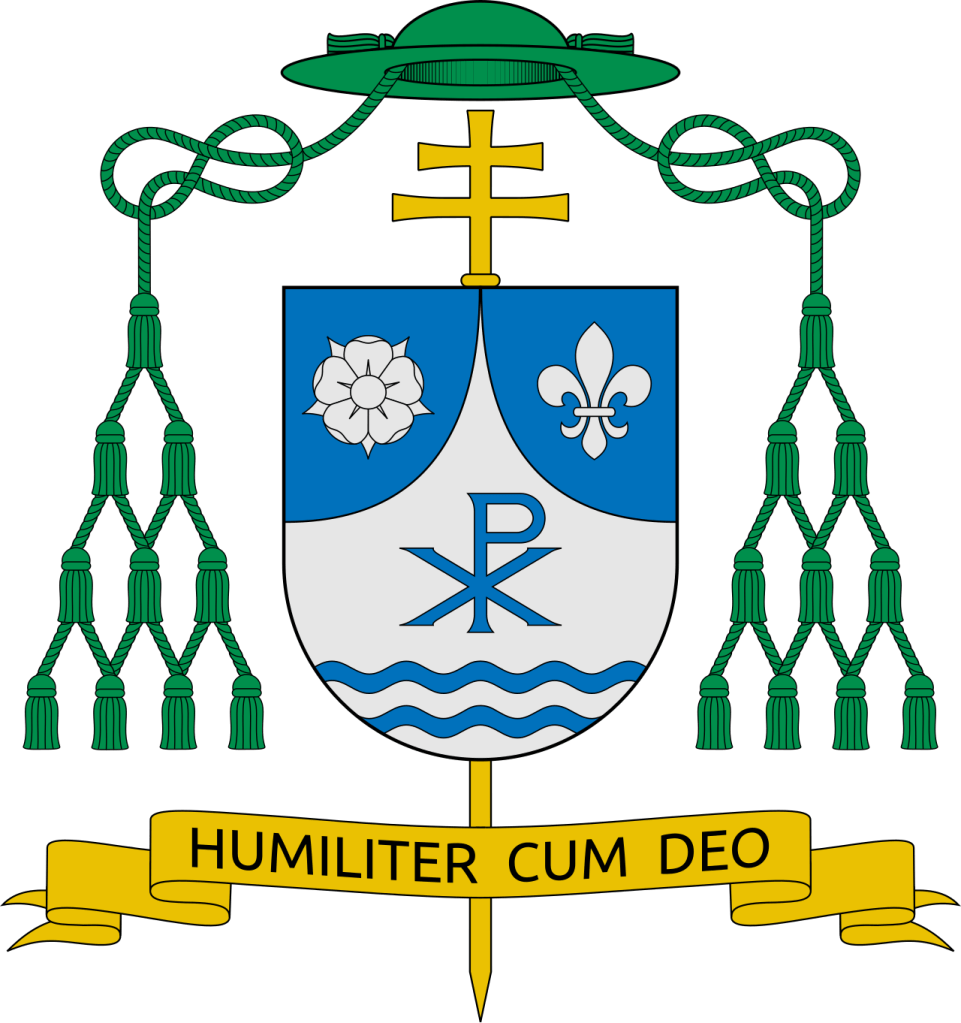
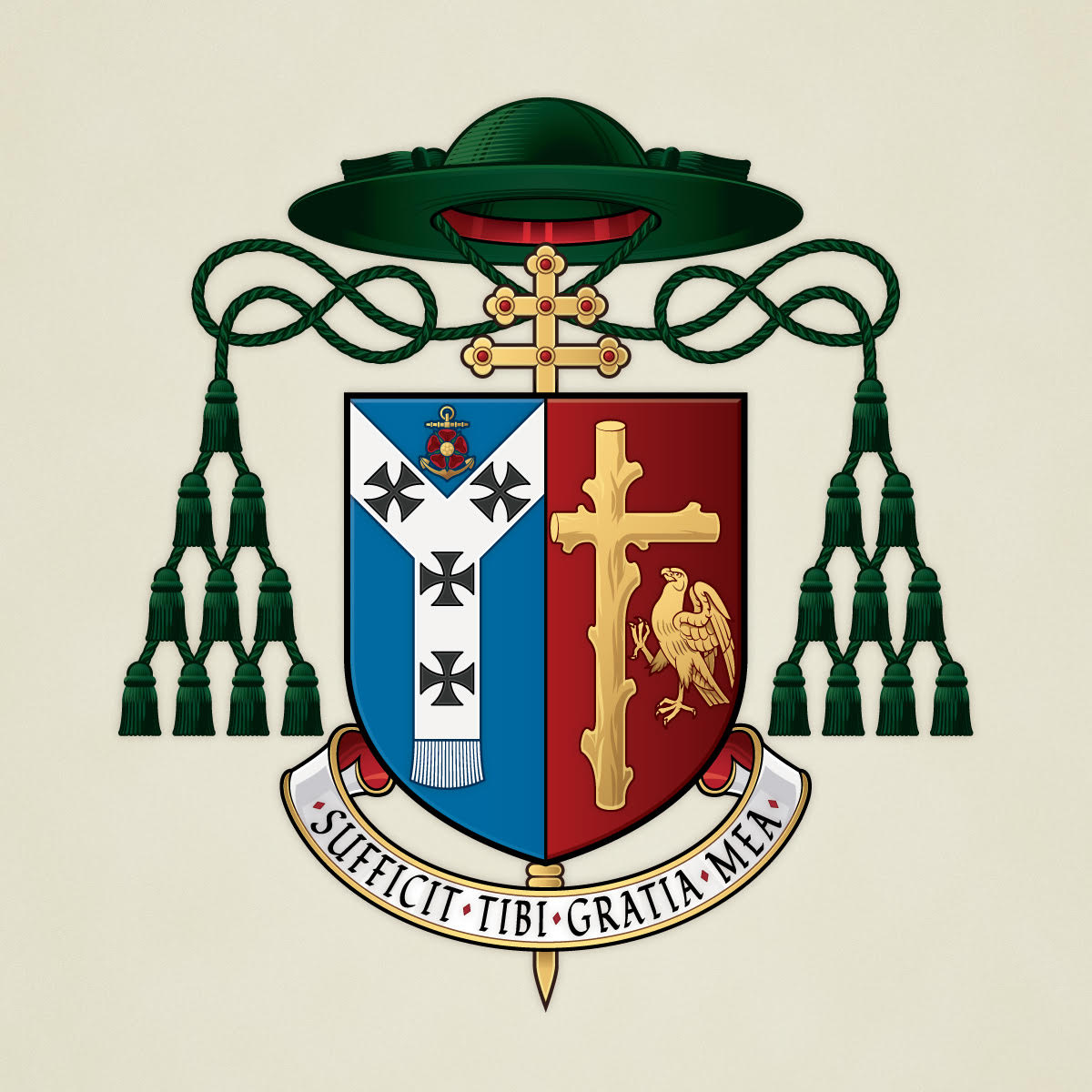
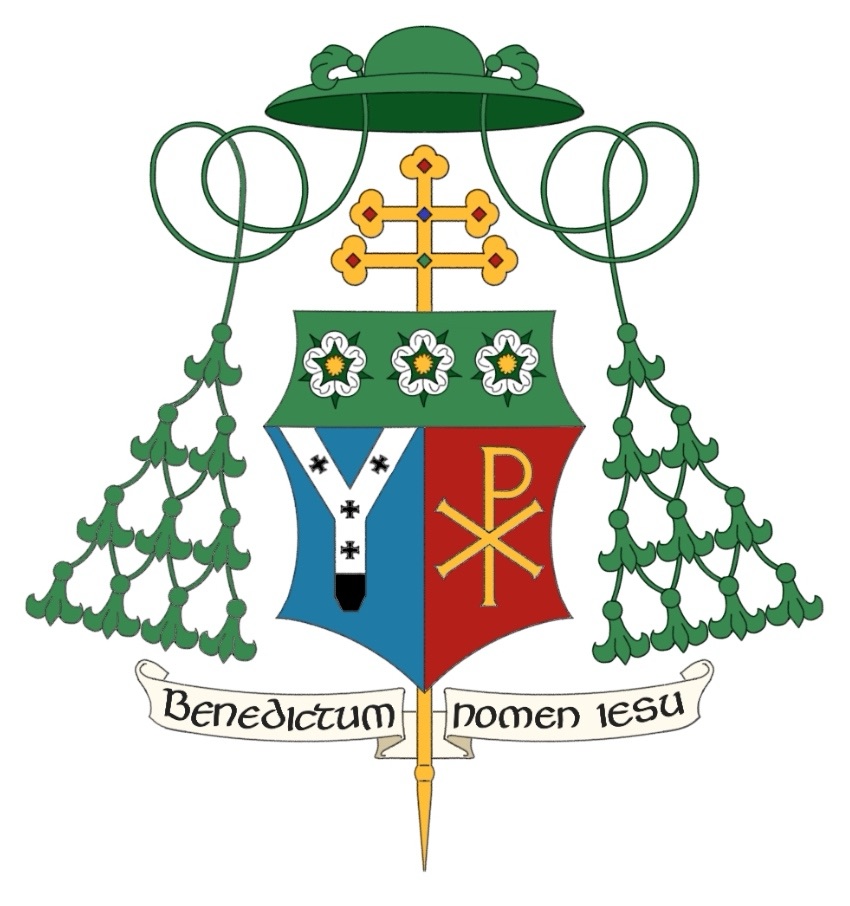
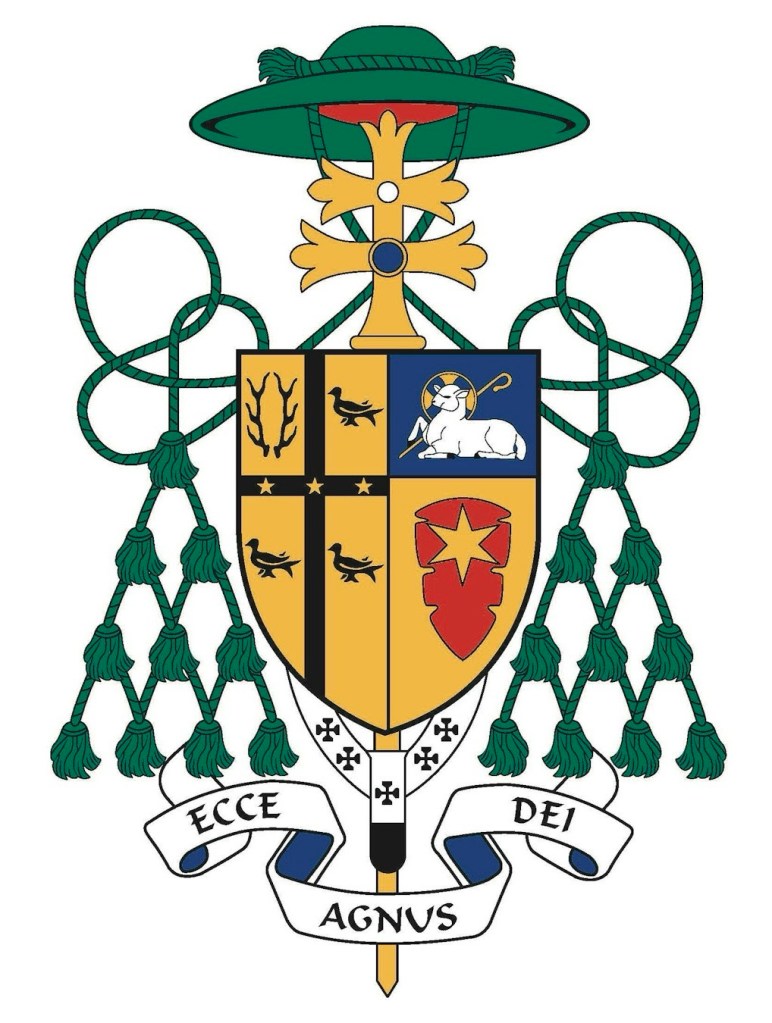
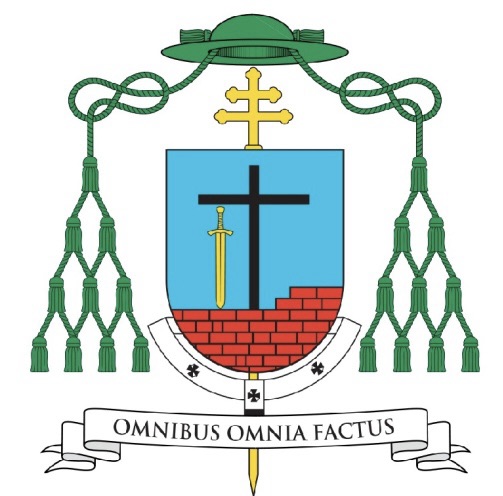
Today it was announced that the Most Rev. James Checchio (59), the 5th Bishop of Metuchen, New Jersey has been appointed by Pope Leo XIV to become the Coadjutor Archbishop of New Orleans, Louisiana. He expects to take up his new responsibilities in late November. His current coat of arms will need slight modification to add another row of tassels to the galero and a second horizontal bar to the cross. However, it is customary for a Coadjutor Archbishop or Bishop to use his personal arms alone on the shield until such time as he succeeds to the See and then he may marshal his personal arms with those of the See on the same shield.

Bishop Checchio has served as Bishop of Metuchen since 2016. He will assist the Most Rev. Gregory Aymond (75) in the duties of shepherding the Archdiocese of New Orleans until the conclusion of their current bankruptcy proceedings which are expected to last until the end of this year. As Coadjutor Archbishop, Checchio will then automatically have the right immediately to succeed to the See.

It just so happens that it was my great privilege and pleasure to prepare the armorial bearings for Archbishop Aymond when he became Archbishop of New Orleans in 2009.

Another UK Archbishop

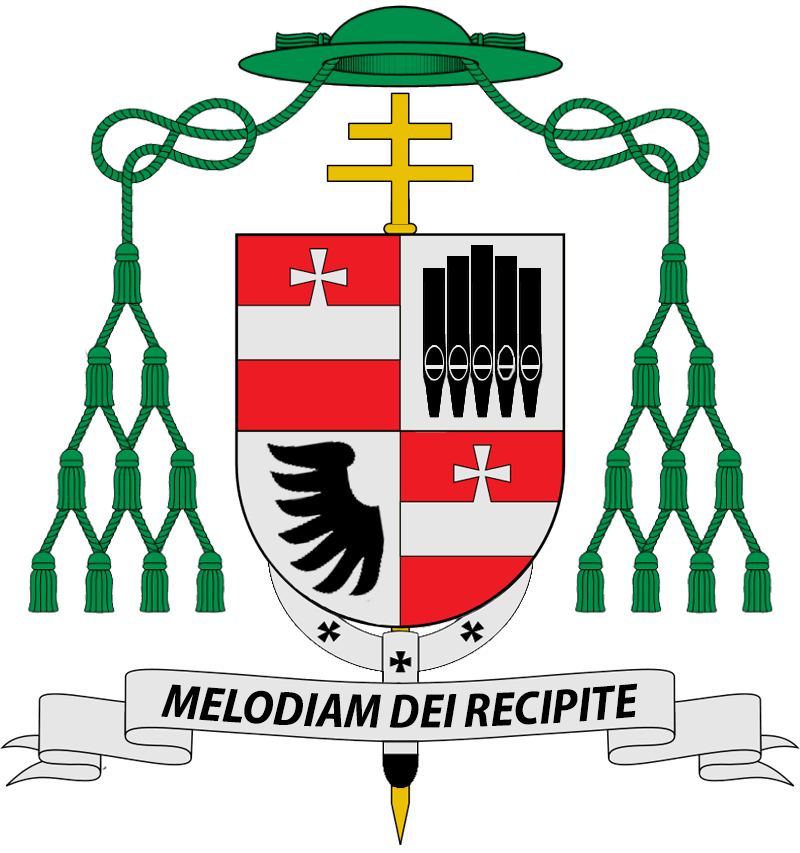
After seeing my recent post about the coat of arms of the Archbishop of Southwark another readers reader of this blog pointed out to me the coat of arms of another prelate from the UK. Archbishop Paul Gallagher (71) is the Secretary for Relations with States & International Organisations, in the Secretariat of State of the Holy See.

Ordained for Liverpool in 1977 he entered the diplomatic corps of the Holy See in 1984. Gallagher previously served as Nuncio to Burundi, to Guatemala and to Australia. He had also served as an official in Tanzania, Uruguay and the Philippines and became an archbishop in 2004.

Archbishop of Liverpool (updated)

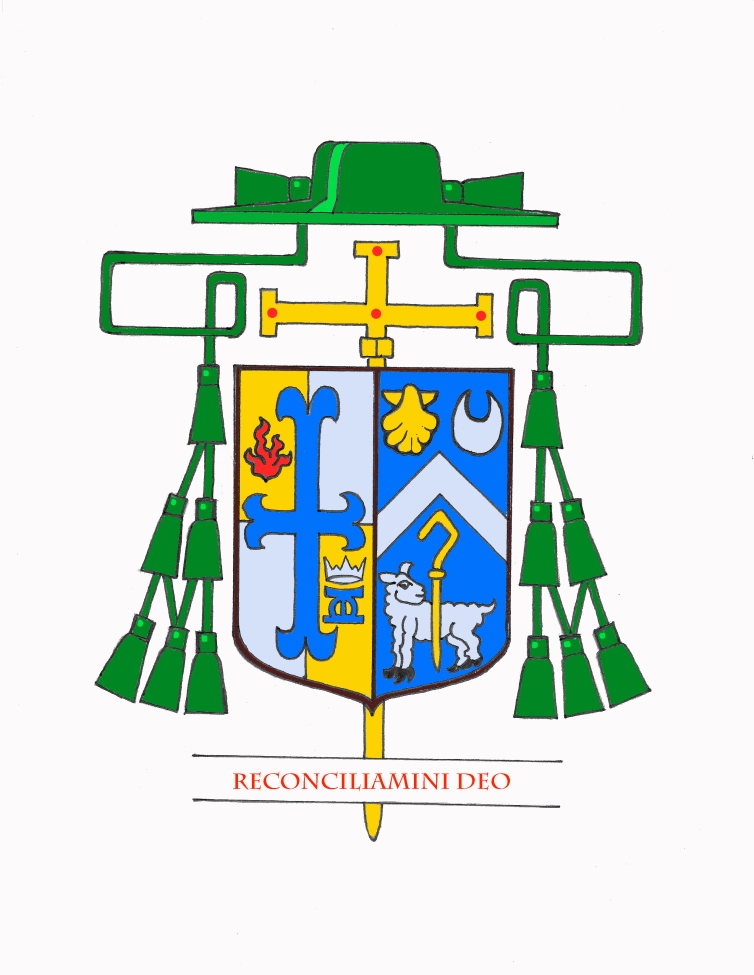
After recently posting the armorial achievement of the Archbishop of Southwark another reader of this blog was kind enough to send me the armorial bearings of the Most Rev. John Sherrington (67), the current Metropolitan Archbishop of Liverpool. Archbishop Sherrington, installed last May was previously an Auxiliary Bishop of Westminster and, prior to that, was a priest of the Diocese of Nottingham.

(artwork: Quentin Peacock)

Archbishop of Southwark, UK

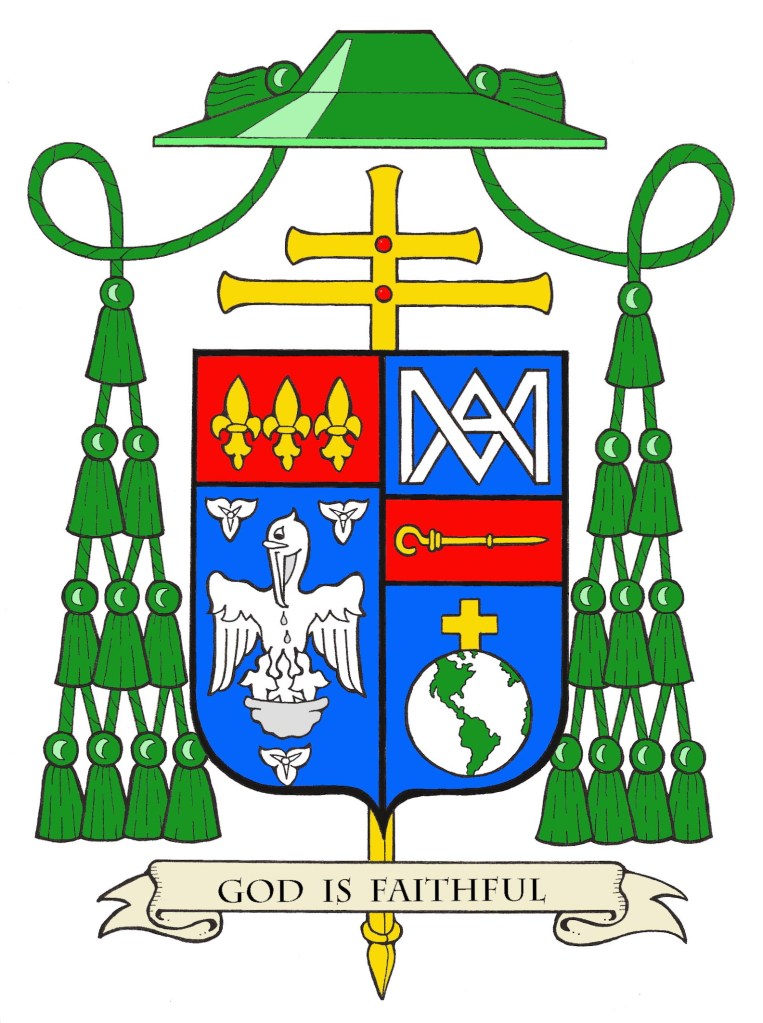
One of my regular readers recently sent me this rendering of the armorial bearings of the Most Rev. John Wilson (57), the current Metropolitan Archbishop of Southwark. The archdiocese takes in everything in London south of the River Thames and the County of Kent. (London north of the Thames is the Archdiocese of Westminster, making London one of the only cities to contain not only more than one diocese but actually to contain two ARCHdioceses).

It is interesting to note the quartering with the pall (pallium). This mirrors the original use of the pall. In the days before diocesan coats of arms the pall was employed by any Metropolitan Archbishop as a heraldic charge indicating his status as a Metropolitan.

Archbishop Rivituso of Mobile, Alabama

September 3 will see the Installation of the tenth Bishop and third Metropolitan Archbishop of Mobile, Alabama. The Most Rev. Mark Steven Rivituso (63), a priest and, since 2017, an Auxiliary Bishop of St. Louis, MO will be installed at the Cathedral-Basilica of the Immaculate Conception.

I had marshaled and emblazoned the coat of arms of his immediate predecessor, Archbishop Thomas Rodi, and so the archdiocese contacted me about doing the same thing for the new archbishop.

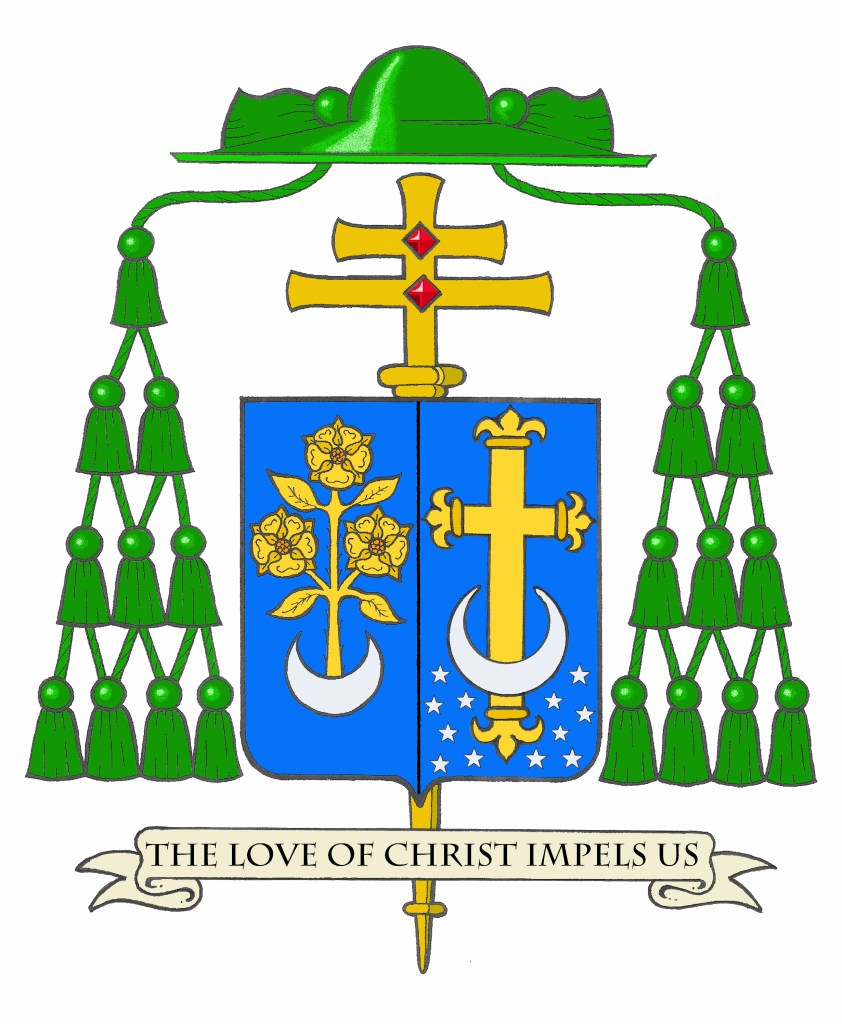
BLAZON: Arms impaled. In the dexter: Azure issuant from a crescent in base Argent a rosebush with three blossoms all Or. In the sinister: Azure, a cross fleuretty Or, charged near its base with a crescent Argent and in base twelve mullets of five points, six to dexter and six to sinister Argent. The shield is ensigned with an archiepiscopal cross Or and an archbishop’s galero with cords and twenty tassels flanking the shield disposed in four rows of one, two, three and four all Vert. On a scroll below the shield is the motto, “The Love of Christ Impels Us”.

EXPLANATION: The armorial bearings of Archbishop Rivituso impale the coat of arms of his archiepiscopal See with his personal coat of arms. The coat of arms is composed of a shield with its charges (symbols), a motto and the external ornamentation. The shield is described (blazoned) in terms that are archaic to our modern language, and this description is presented as if viewed by the bearer with the shield being worn on the arm. Thus, where it applies, the terms dexter (right)  and sinister (left) are reversed as the device is viewed from the front.

It is customary in heraldry that the arms of a Diocesan Bishop, or Ordinary, are joined side by side on the same shield with the arms of his See. In this case, these are the arms of the Archdiocese of Mobile. Such marshaling is called impalement and employs the same method used when joining the coats of arms of two people who are married. In this way, the coat of arms, like the episcopal ring, is symbolic of the archbishop being “married” to his archdiocese.

The arms of the Archdiocese of Mobile depict a blue background on which is a silver (white) crescent moon toward the bottom. This is a symbol of Our Lady’s Immaculate Conception which is the titular of the cathedral-basilica. From this crescent springs a rosebush that has three roses . The blossoms, leaves and stem are all gold (yellow).

The personal coat of arms of Archbishop Rivituso symbolize his origins, his personal devotion and the place in which he has spent his ministry as a priest and auxiliary bishop.The shield is blue with a gold (yellow) cross with the ends of the arms terminating in fleurs-de-lis borrowed from the coat of arms of the Archdiocese of St. Louis where the Archbishop served as both a priest and Auxiliary Bishop.

At the bottom of the cross is a silver (white) crescent moon with a scattering of twelve silver (white) stars on either side. This alludes to Our Lady under her title of the Immaculate Conception, patroness of the United States. In the Book of Revelation she is described as having the moon under her feet and a crown of twelve stars on her head.

In addition, the crescent is placed near the bottom of the cross to signify Mary at the foot of the cross where Jesus asked St. John to care for her. In giving His mother to His Beloved Disciple, Christ also gave her to all of us as the Mother of the Church. In addition, the crescent and twelve stars symbolize the twelve apostles along with Mary, the Queen of the Apostles.

On a scroll below the shield is the Archbishop’s motto, “The Love of Christ Impels Us” taken from St. Paul’s Second Letter to the Corinthians (Chapter 5; verse 14). It means that as Christians and believers in Jesus as the Christ in all that we do and are the love of Christ impels us.

It was my great pleasure and privilege to prepare the Archbishop’s new coat of arms.

Archbishop McKnight

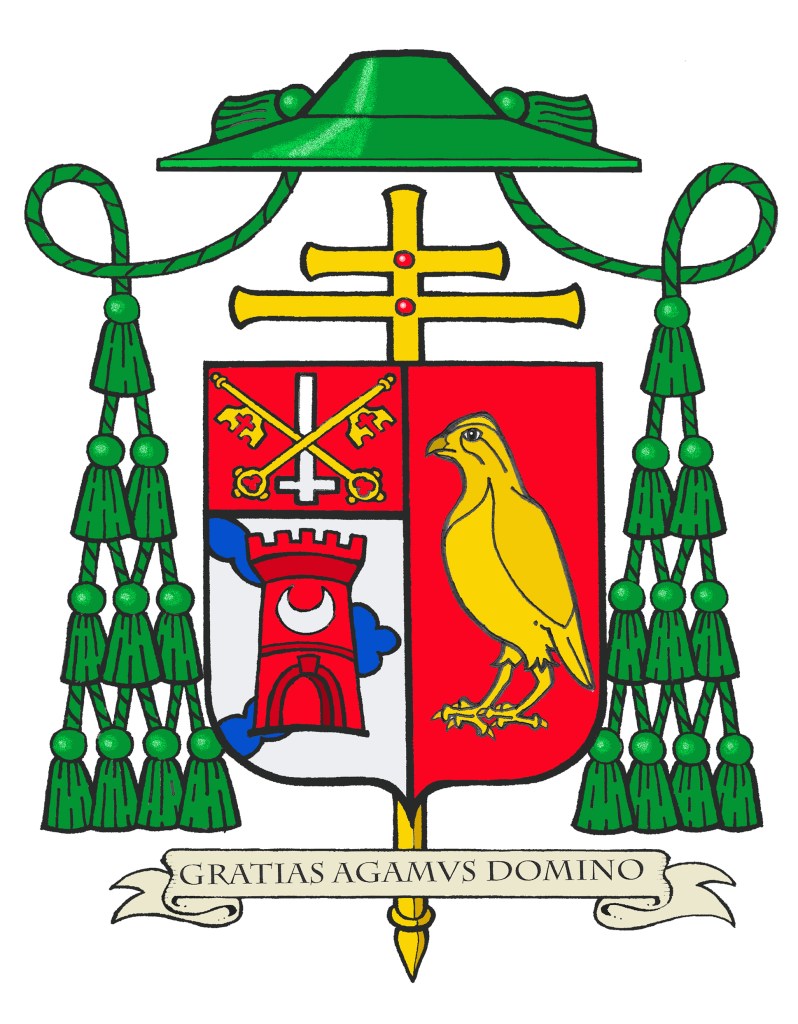
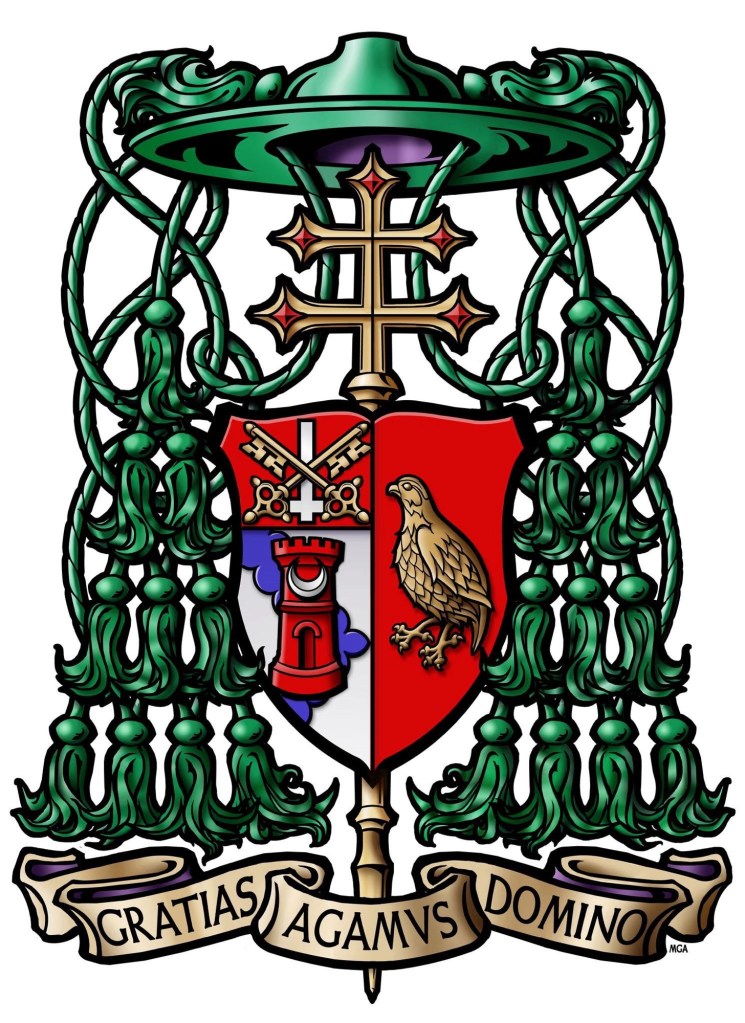
The Most Rev. Shawn McKnight (56) was installed as the fifth Archbishop of Kansas City in Kansas on May 26. I already talked about the very nice version of his coat of arms prepared for that occasion by Matthew Alderman. Immediately after his installation, the archbishop contacted me and asked for another rendering of his arms done by me. While that is somewhat unusual it is not unprecedented. It’s not uncommon for an armiger to have and use different renditions of his coat of arms done by different artists.

So, I undertook to do an emblazonment of the archbishop’s coat of arms for his use.

BLAZON: Arms impaled. In the dexter: Argent, a chevron invected issuant from the dexter, overall a tower embattled Gules charged with a crescent Argent; on a chief Gules a Latin cross reversed Argent surmounted by two keys in saltire Or. In the sinister: Gules a quail statant Or. The shield is ensigned with an archiepiscopal cross Or and an archbishop’s galero with cords and twenty tassels flanking the shield disposed in four rows of one, two, three and four all Vert. On a scroll below the shield is the motto, “Gratias Agamus Domino”.


EXPLANATION: The armorial bearings of Archbishop McKnight impale the coat of arms of his archiepiscopal See with his personal coat of arms. The coat of arms is composed of a shield with its charges (symbols), a motto and the external ornamentation. The shield is described (blazoned) in terms that are archaic to our modern language, and this description is presented as if given by the bearer with the shield being worn on the arm. Thus, where it applies, the terms dexter (right) and sinister (left) are reversed as the device is viewed from the front.


It is customary in heraldry that the arms of a Diocesan Bishop, or Ordinary, are joined side by side on the same shield with the arms of his See. In this case, these are the arms of the Archdiocese of Kansas City. Such marshaling is called impalement and employs the samemethod used when joining the coats of arms of two people who are married. In this way, the coat of arms, like the episcopal ring, is symbolic of the archbishop being “married” to his archdiocese. The arms of the Archdiocese of Kansas City are composed of a silver (white) field on which there is a blue chevron issuing from the side. The sides of the chevron are “invected” which means a line that consists of a series of circular arcs curving in the same direction, meeting at angles, forming points inward. This is to symbolize the Missouri River. Laid over this chevron is a red tower with an open archway and an embattled top. Imposed on the tower is a silver (white) crescent. The tower is a symbol of Fort Leavenworth. The original designation of the Archdiocese was the Diocese of Leavenworth (1877) and the church of the Immaculate Conception was the titular of the cathedral there. The crescent moon in heraldry is a symbol of Our Lady’s Immaculate Conception. The upper third of the shield, called a “chief” contains two crossed gold (yellow) keys superimposed over a silver (white) Latin cross upside down. These are symbols of St. Peter, the titular patron of the cathedral church. The keys are the “keys of the kingdom” bequeathed by Christ to St. Peter and the upside down cross recalls the manner of his crucifixion.


The personal coat of arms of Archbishop McKnight illustrates his personal devotion. The field is red and the one and only charge is a large gold (yellow) quail. The red color alludes to the devotion of Archbishop McKnight to the Sacred Heart of Jesus as well as the Immaculate Heart of the Blessed Virgin Mary. Quail are a symbol of God’s providential blessing and an Old Testament prefiguration of the Eucharist, as the Lord provided for his people in the desert with manna in the morning and quail in the evening (see Exodus 16:11-13; Numbers 11:31-32; Psalm 78:27 and Psalm 105:40). Quail-hunting is also a favorite sport of the Archbishop, an activity which requires the use of pointing, flushing and retrieving hunting dogs, and through which he experiences the beauty, harmony and providence of God in nature.

The external ornaments include a gold archiepiscopal cross with two horizontal bars (sometimes referred to as a patriarchal cross) placed vertically behind the shield decorated with red jewels. This is often mistaken for a processional cross like the one used in liturgical processions. However, like other heraldic ornaments the archiepiscopal cross has its origins in something which is no longer actually used. At one time all bishops had, in addition to the processional cross at the head of the procession, another cross carried directly in front of them by a cleric. This other cross was a sign of the office of bishop. It originated as a custom that such a cross was carried before archbishops only. Later, the cross was adopted for use by all bishops so archbishop’s added a second horizontal bar to their crosses to distinguish them from the episcopal cross of simple bishops. While no longer actually used it has remained a symbol of the archiepiscopal office in heraldry. Similarly, the broad-brimmed green galero was, at one time, worn by bishops in outdoor processions and cavalcades. No longer used it remains a heraldic symbol of the office of bishop and takes the place of the helmet, mantling and crest that would appear in the coat of arms of a layman. In Catholic heraldry the color and number of tassels on the galero indicates the rank of
the bearer. The double barred archiepiscopal cross and the green galero with twenty tassels signifies the coat of arms of an archbishop according to the Instruction of the Holy See, “Ut Sive” issued in 1969.


The motto chosen by Archbishop McKnight appears on a scroll below the shield, “Gratias Agamus Domino”. This is taken directly from the opening dialogue of the preface at the beginning of the Eucharistic Prayer at Mass (“Let us give thanks to the Lord”), and is derived from Psalm 107:1 and Psalm 118:1 (“Give thanks to the Lord Who is good, Whose love endures forever”).

Archbishop McKnight of Kansas City

The Most Reverend Shawn McKnight (56), a priest of Wichita and who from 2018-2025 served as Bishop of Jefferson City, Missouri, was installed today as the 12th Bishop and 5th Metropolitan Archbishop of Kansas City in Kansas.

His very simple and striking coat of arms arms was marshaled to those of Kansas City and very ably rendered by Matthew Alderman.

Archbishop Weisenburger of Detroit

On March 18 the Most Reverend Edward J. Weisenburger (64), originally a priest of Oklahoma City, former Bishop of Salina, Kansas, and most recently Bishop of Tucson, Arizona, will be installed as the 10th Bishop and 6th Archbishop of Detroit, Michigan.

His immediate predecessor, Archbishop Allen Vigneron, had the archdiocese’s coat of arms redesigned into a logo-like emblem in 2017.

Thankfully, Archbishop Weisenburger has chosen to impale his personal arms with the traditional version of the archdiocesan coat of arms adopted in 1937 to indicate a sense of continuity with his predecessors. Excellent choice!

Cardinal McElroy Installed in the Capital

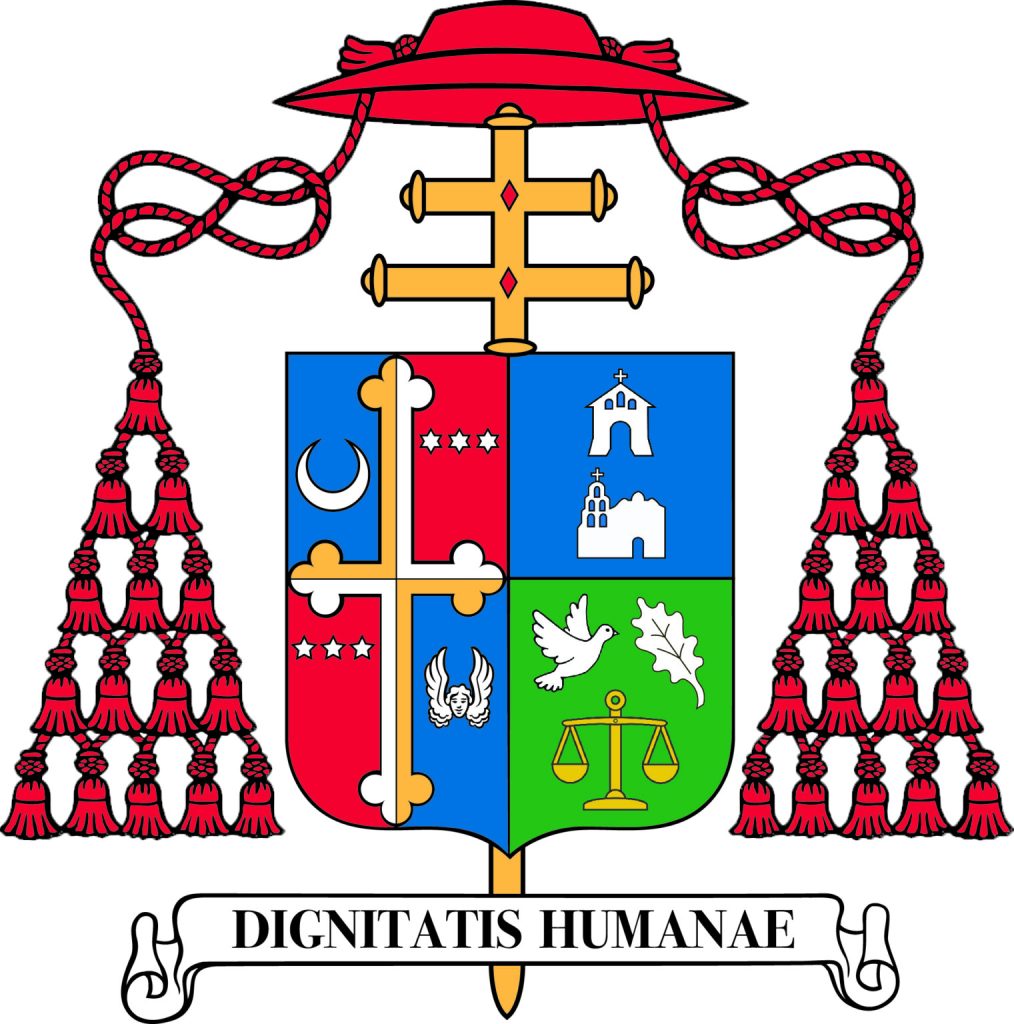
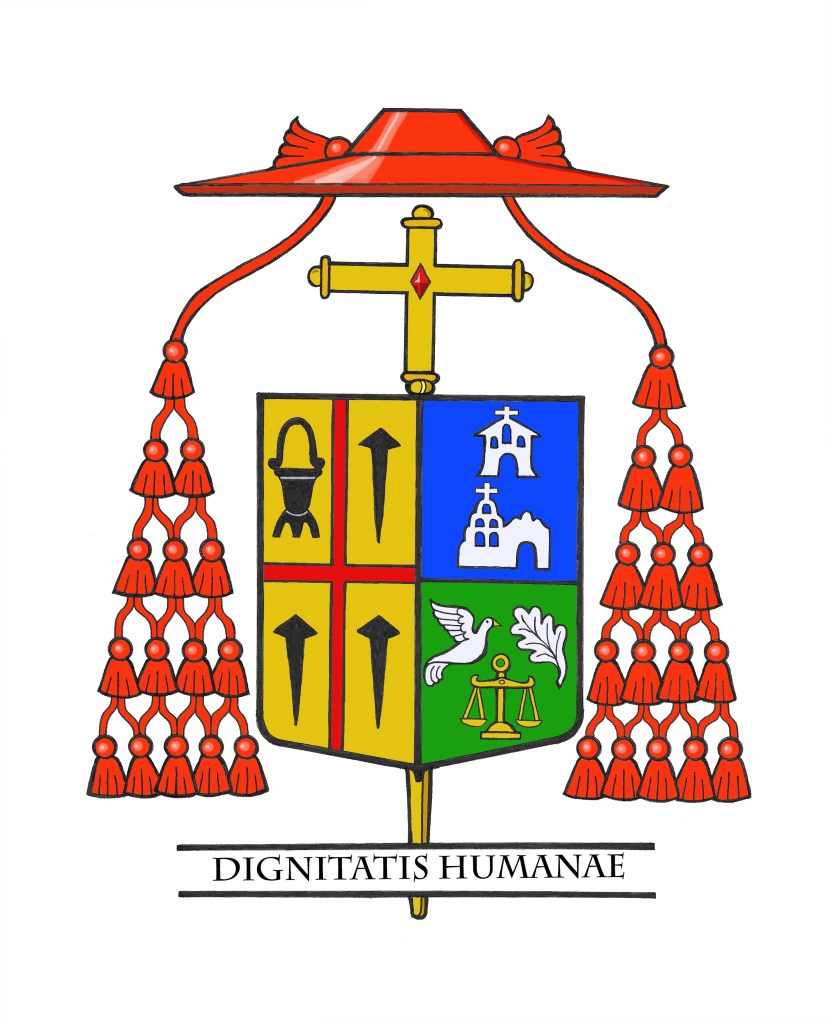
On March 11, His Eminence Robert Cardinal McElroy (71), Cardinal Priest of San Frumenzino ai Prati Fiscali, previously Bishop of San Diego (2015-2025) and originally a priest and Auxiliary Bishop (2010-2015) of San Francisco, was installed as the 8th Archbishop of Washington, DC.

At his appointment as Auxiliary Bishop he assumed a coat of arms which he then substantially changed when he moved to San Diego. In 2022 when he was created Cardinal I was privileged to assist him in preparing his coat of arms and at that time some further revisions and improvements to the design were made. At this most recent move, his personal arms, unchanged any further, were marshaled to those of the archdiocese and the episcopal cross was changed to an archiepiscopal cross.

From the website of the archdiocese we find the following:

Arms impaled. In the dexter: Quarterly Azure and Gules, a cross bottony over all quarterly Or and Argent; 1, a crescent Argent; 2, three mullets of six points fesswise in chief Argent; 3, as many mullets of five points fesswise in chief Argent; 4, a head erased affronté and winged all Argent. In the sinister: Per fess Azure and Vert, in chief the stylized silhouette of Mission San Francisco de Assis above, in base, that of Mission San Diego both Argent; in base below to dexter a dove turned to sinister volant wings addorsed and to sinister, an oak leaf both Argent scales Or.

The shield is ensigned with an archiepiscopal cross Or in pale behind the shield and surmounted by a cardinal’s galero with cords and fifteen tassels on either side in five rows of one, two, three, four and five all Gules.

On a scroll below the shield is the motto: “Dignitatis Humanae.”

The arms of the Archdiocese of Washington were devised in 1947 by William F. J. Ryan and modified in 2001 by Anthony W. C. Phelps, when the cross bottony was substituted for the original cross of chain links in silver. Cardinal McElroy’s arms were devised originally by Rev. Timothy Pelc. The present blazon of his arms was done by Rev. Guy Selvester. The rendering of the impaled arms was done by Georgina Wilkinson.”

Native Cheesehead Goes Back to Wisconsin

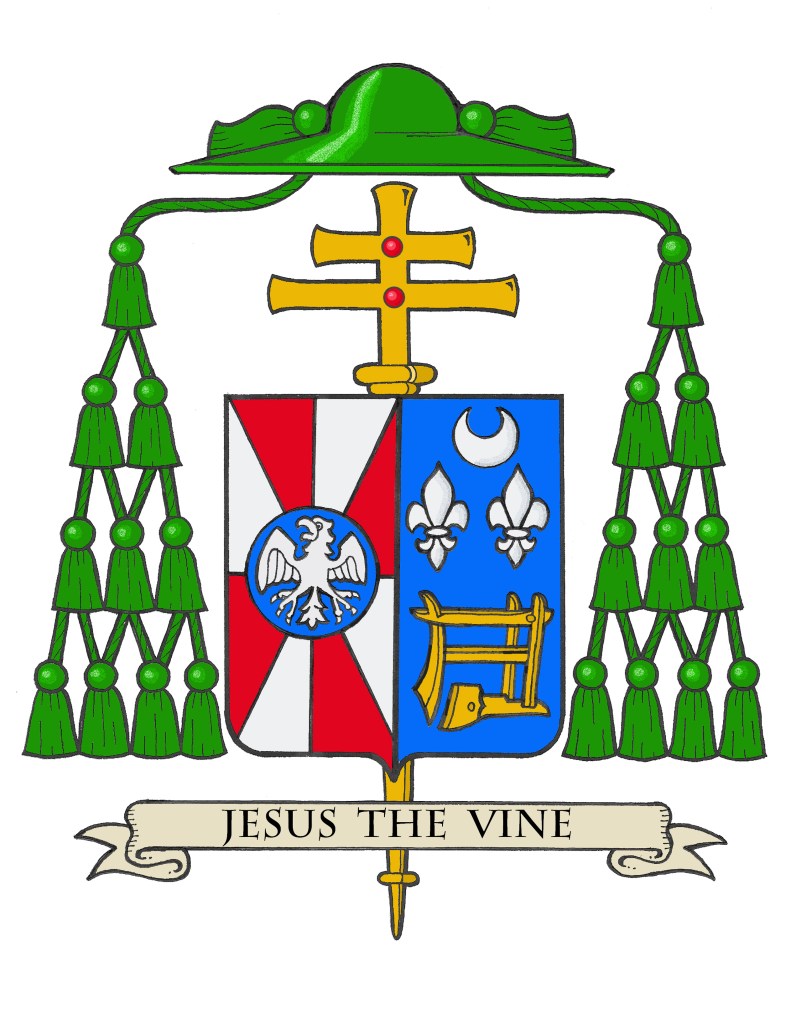
On January 14, 2025 the Most Rev. Jeffrey Grob (63), a priest and, since 2020 an Auxiliary Bishop of Chicago, will return to his native Wisconsin and be installed as the 12th Archbishop of Milwaukee, Wisconsin. The armorial bearings he assumed in 2020 were slightly modified and impaled with those of Milwaukee and are:

The blazon is: Arms impaled. In the dexter: Gyronny of eight Gules and Argent, at the counterpoint a hurt charged with an eagle displayed abaissé Argent. In the sinister: Azure in base an antique plow Or; in chief between two fleur-de-lis a crescent all Argent. The shield is ensigned with an archiepiscopal cross Or and an archbishop’s galero with cords and twenty tassels flanking the shield disposed in four rows of one, two, three and four all Vert. On a scroll below the shield is the motto, “Jesus The Vine”.

The armorial bearings of Archbishop Grob impale the coat of arms of his archiepiscopal See with his personal coat of arms. The coat of arms is composed of a shield with its charges (symbols), a motto and the external ornamentation. The shield is described (blazoned) in terms that are archaic to our modern language, and this description is presented as if given by the bearer with the shield being worn on the arm. Thus, where it applies, the terms dexter (right)  and sinister (left) are reversed as the device is viewed from the front.

It is customary in heraldry that the arms of a Diocesan Bishop, or Ordinary, are joined side by side on the same shield with the arms of his See. In this case, these are the arms of the Archdiocese of Milwaukee. Such marshaling is called impalement and employs the same method used when joining the coats of arms of two people who are married. In this way, the coat of arms, like the episcopal ring, is symbolic of the archbishop being “married” to his archdiocese.

The arms of the Archdiocese of Milwaukee are composed of a field composed of eight sections in alternating colors of red and silver (white). The colors are taken from the flag of Switzerland, the birthplace of Milwaukee’s first Archbishop, John Henni. The four red sections meet at the center in a symbolic reference to the meeting of waters, the Milwaukee and Menomonee rivers and Lake Michigan in Milwaukee. Over the center point is a blue roundel called a “hurt” in heraldry. This, in turn, is charged with a silver (white) eagle with its wings spread out. This is a symbol of St. John, the titular patron of the cathedral church.

The personal coat of arms of Archbishop Grob symbolize his origins, his personal devotion and the place in which he has spent his ministry as a priest and auxiliary bishop. The field is blue and the main charge is a large gold (yellow) antique plow. This not only alludes to the ministry of spreading the Gospel as symbolized by plowing a field to prepare for seed to be sown but is an allusion to the bishop’s early life growing up on a Wisconsin dairy farm.

Above the plow are a silver (white) crescent, a symbol of Our Lady under her title of the Immaculate Conception who is the patroness of the USA. The two silver (white) fleur-de-lis represent several things. First, they are a symbol of St. Joseph to whom the bishop has a special devotion as a kind of patron saint because he was born on the Solemnity of St. Joseph (March 19). The fleur-de-lis is a stylized version of the lily and St. Joseph is often depicted holding a staff from which lilies are blossoming. Second, they allude to St. John XXIII who used them in his own coat of arms. The bishop has a devotion to this great 20th Century saint. Finally, there are two fleur-de-lis in the coat of arms of the Archdiocese of Chicago where the bishop had served as a priest and bishop.

The external ornaments include a gold archiepiscopal cross with two horizontal bars (sometimes referred to as a patriarchal cross) placed vertically behind the shield decorated with red jewels. This is often mistaken for a processional cross like the one used in liturgical processions. However, like other heraldic ornaments the archiepiscopal cross has its origins in something which is no longer actually used. At one time all bishops had, in addition to the processional cross at the head of the procession, another cross carried directly in front of them by a cleric. This other cross was a sign of the office of bishop. It originated as a custom that such a cross was carried before archbishops only. Later, the cross was adopted for use by all bishops so archbishop’s added a second horizontal bar to their crosses to distinguish them from the episcopal cross of simple bishops. While no longer actually used it has remained a symbol of the archiepiscopal office in heraldry.

Similarly, the broad-brimmed green galero was, at one time, worn by bishops in outdoor processions and cavalcades. No longer used it remains a heraldic symbol of the office of bishop and takes the place of the helmet, mantling and crest that would appear in the coat of arms of a layman. In Catholic heraldry the color and number of tassels on the galero indicates the rank of the bearer. The double barred archiepiscopal cross and the green galero with twenty tassels signifies the coat of arms of an archbishop according to the Instruction of the Holy See, “Ut Sive” issued in 1969.

The motto chosen by Archbishop Grob appears on a scroll below the shield, “Jesus The Vine”.

It was my privilege and my pleasure to design the archbishop’s original coat of arms in 2020 as well as to modify them (the original plow-blade alone was replaced with an entire antique plow) and marshal them to the arms of his See.

Cardinal McElroy Translated to Washington, DC

Today, the Holy Father announced to transfer of Robert Cardinal McElroy (70), the Bishop of San Diego, to succeed Wilton Cardinal Gregory (77) as Metropolitan Archbishop of Washington, DC.

I did not design the Cardinal’s coat of arms but I did prepare the current emblazoning on his elevation to the College of Cardinals.

In addition to a new impalement and the addition of an archiepiscopal cross it will be interesting to see if the Cardinal modifies his personal arms at all. The two charges in chief represent two California historic Mission Churches in San Francisco (where he served as a priest) and in San Diego (where he has been serving as diocesan bishop).

Of course I’m no fan of bishops modifying their arms when they move but I could see how he might wish to eliminate these two very Californian references. On the other hand, they both also serve to honor the places of his origin and previous ministry. So, retaining them could also be a good thing. Time will tell.

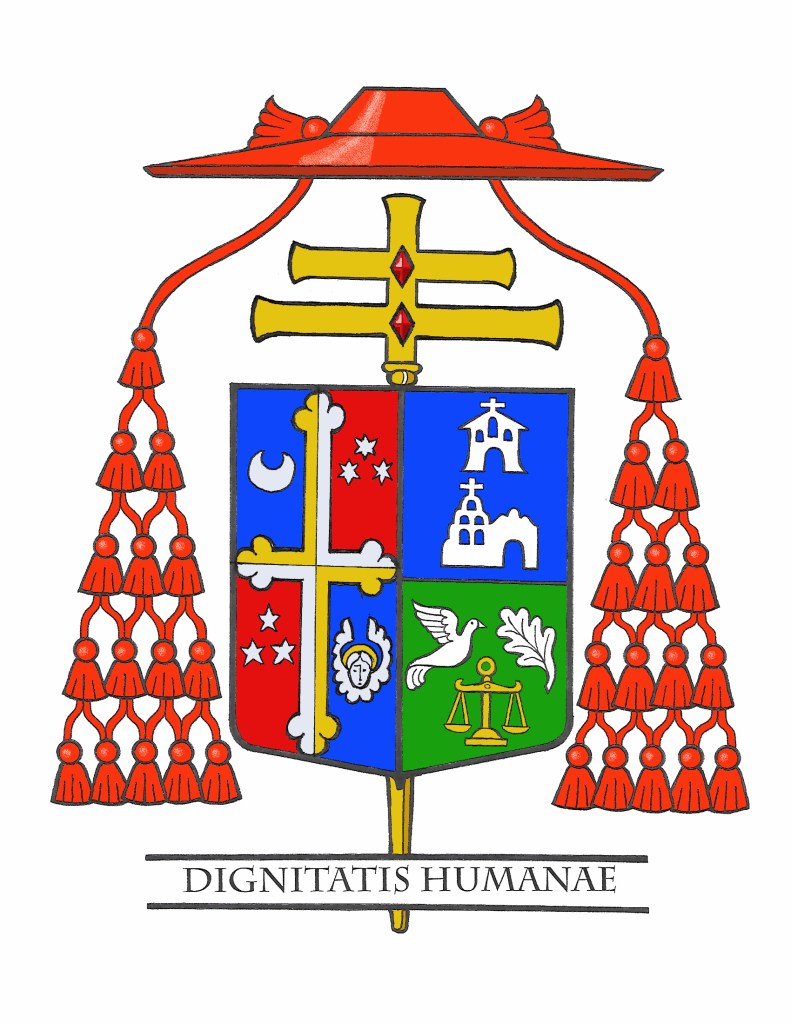
Below is how his coat of arms may appear after he is installed in Washington:

Archbishop Henning of Boston

It has been very gratifying as a heraldist to have one project that I have been able to stay with through all its permutations. On October 31, the Most Rev. Richard G. Henning (60) who has served for the last 17 months as Bishop of Providence, R.I. and who was also Coadjutor of Providence for a further four months before that, and who was previously Auxiliary Bishop of Rockville Centre, N.Y., his native diocese where he became a priest in 1992, will be installed as the 10th Bishop and 7th Metropolitan Archbishop of the See of Boston, Massachusetts.

Back in 2018, the then Bishop-elect Henning contacted me to design a coat of arms for him. That’s not an unusual thing for me (I have designed coats of arms for three other bishops from Rockville Centre) but this one was more personal. I’m also a Long Island native and Archbishop Henning and I attended the same high school, Chaminade in Mineola, and we graduated together in the class of 1982. While not close friends, we have been acquainted with one another since we were teenagers. I was very happy to design his coat of arms for him. He entered the task with great enthusiasm and I think the coat of arms that we ended up with was simple, bold and very clear, all marks of good heraldry. On a personal not: at his episcopal ordination which I attended, the new Bishop, in his post-Communion remarks, thanked me publicly for assisting him in preparing his coat of arms. As I told him afterwards, that was very gratifying because in 39 years of doing this kind of work no bishop had ever done that before. I think it speaks volumes about what kind of person he is.

In late 2022 after he received the news of his appointment as Coadjutor of Providence I actually reached out to him to let him know that, as a Coadjutor, his coat of arms wouldn’t need any changes but that at some point in the future when he succeeded to the See, he’d have to modify his arms by marshaling them to the arms of the Diocese of Providence. He then asked me to begin on that right away because it was not certain when his succession would occur and he wanted to be prepared for that eventuality. I also thought that was “done and dusted” as they say and he was now set for the rest of his life.

However, in August of this year I was surprised and delighted to hear that the Holy Father had appointed him Archbishop of Boston. For the third time he contacted me. He said that several people in Boston assisting him with the needs of his transition had proposed people to prepare his coat of arms. But, he politely declined all those and said that he already had someone in mind. Again, I was really very pleased and honored at that. I see my designs as sort of my intellectual property. True, the coat of arms, once designed, is given over to the armiger to whom it truly belongs, but I feel like I still have a stake in it. So, I was very glad that I’d be able to assist Archbishop Henning yet again.

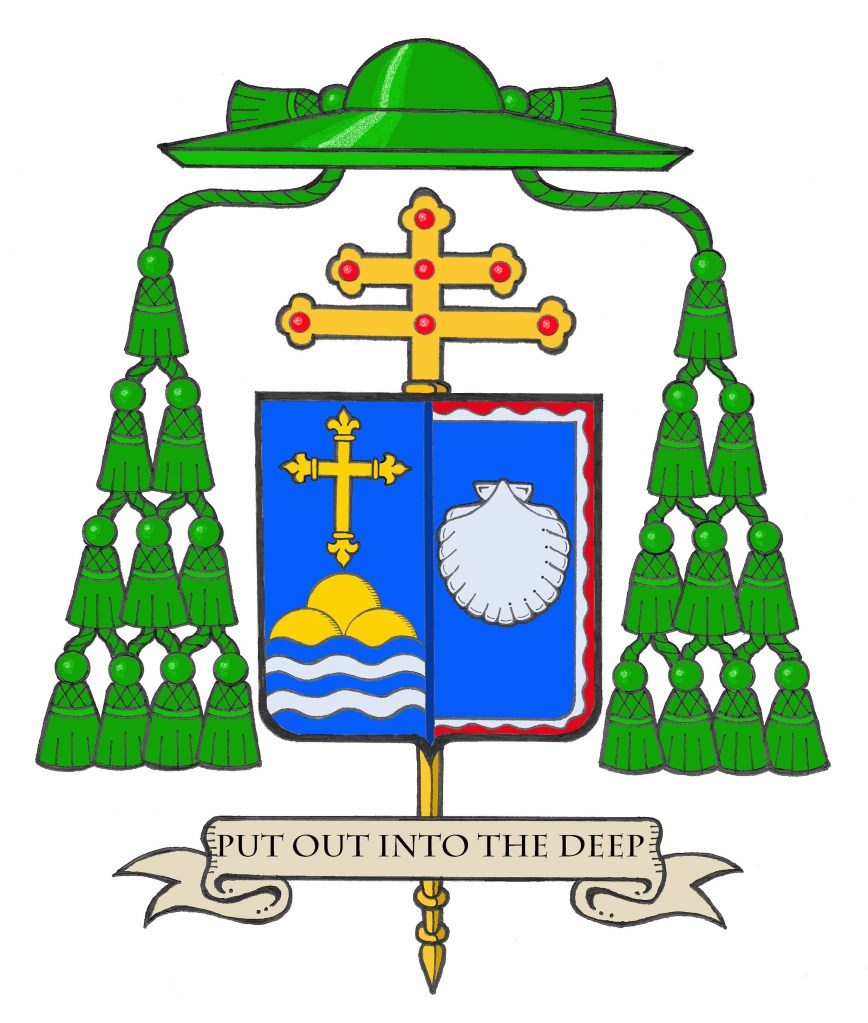
He retains the arms he first assumed in 2018. For this version, the escallop shell has been redrawn to a slightly more round shape and the bordure wavy has been slightly reduced in order to make more room for the shell which now occupies a much smaller field on one half of the shield. This is impaled with the arms of the See of Boston, designed by the great Dom Wilfrid Bayne, OSB of Portsmouth Abbey, R.I. in 1944. Because of the preponderance of blue in both coats of arms, the division line between the two is rendered in dark blue. It was decided that a black line looked a bit too jarring and the solution used for the same problem with the arms of the See of Providence which also has a blue field—a light, “bleu celeste” line—was seen as undesirable this time around. The blazon and explanation of the arms is as follows:

BLAZON: Arms impaled. In the dexter: Azure, a Latin cross fleurettée Or, in base barry wavy of five Azure and Argent, issuing therefrom a mound of three coupeaux Or; In the sinister: Azure, within a bordure wavy parted wavy Argent and Gules an escallop shell Argent. The shield is ensigned with an archiepiscopal cross Or and an archbishop’s galero with cords and twenty tassels flanking the shield disposed in four rows of one, two, three and four all Vert. On a scroll below the shield is the motto, “Put Out Into The Deep”.

EXPLANATION: The armorial bearings of Archbishop Richard Henning impale the coat of arms of his archiepiscopal See with his personal coat of arms. These evoke his birthplace, his ministry and his personal devotion. The coat of arms is composed of a shield with its charges (symbols), a motto and the external ornamentation. The shield is described (blazoned) in terms that are archaic to our modern language, and this description is presented as if given by the bearer with the shield being worn on the arm. Thus, where it applies, the terms dexter (right)  and sinister (left) are reversed as the device is viewed from the front.

It is customary in heraldry that the arms of a Diocesan Bishop, or Ordinary, are joined side by side on the same shield with the arms of his See. In this case, these are the arms of the Archdiocese of Boston. Such marshaling is called impalement and employs the same method used when joining the coats of arms of two people who are married. In this way, the coat of arms, like the episcopal ring, is symbolic of the archbishop being “married” to his archdiocese.

The arms of the Archdiocese of Boston are composed of a blue field on which are placed a gold (yellow) cross fleurettée, that is a Latin cross the arms of which are decorated on the ends with fleurs-de-lis. This is in honor of the titular of the cathedral, the Holy Cross as well as the  first Bishop of Boston being from France. The cross is above a gold (yellow) mound composed of three smaller hills as a reference to Boston’s original name: Trimountaine which is, itself, a reference to the three hills on which the city is said to have been built. At the bottom the five wavy lines of blue and silver (white) alludes to Boston being a port city and that it is populated by people who arrived here from across the sea.

Bishop Henning’s personal coat of arms is composed of a design depicted in red (Gules), white (Argent) and blue (Azure) which are the national colors of the United States.

Both the blue background and the single escallop shell allude to the sea as evoking the Bishop’s own background and the shell is also borrowed from the coat of arms of the See of Rockville Centre, the diocese in which he was born and raised and which he served as a priest and auxiliary bishop. In addition, this same field of blue also recalls the blue field of the coat of arms of the See of Providence where he served as Coadjutor Bishop and later Diocesan Bishop. The shell image also recalls the Bishop’s heritage in the Diocese of Brooklyn, dedicated to its patron, St. James. The episcopal ordination of Bishop Henning took place on the eve of the Feast of St. James. In concert with the Bishop’s motto, the shell is a traditional symbol of baptism and pilgrimage. It is in the depths of these waters that Christians find their salvation in Jesus Christ.

The white wavy line surrounding the blue field is also taken from the arms of Rockville Centre and it alludes to the diocese’s location on Long Island, NY. Furthermore, it indicates the sea as the place where the barque of St. Peter, an image used to evoke the Church, is located.

The blue background also evokes the Bishop’s devotion to the Blessed Virgin Mary and his years of service as a Professor and Rector at the Seminary of the Immaculate Conception in Huntington, NY. The red wavy portion of the border evokes the Bishop’s devotion to the Most Sacred Heart of Jesus and his former service as the Director of the Sacred Heart Institute for the Ongoing Formation of the Catholic Clergy.”

It was, indeed, my profound pleasure , and my honor, once again to assist my old classmate, Archbishop Henning, with the preparation of his coat of arms.

Some Recent Installations/Ordinations in the U.S.

During the last month there have been some vacant Sees filled in the United States. The Most Reverend Christopher Coyne (65) succeeded to the See of Hartford on May 1 becoming its fourteenth bishop (and sixth archbishop). A very fine achievement depicted in the style of the late Deacon Paul Sullivan…except I think it is ill-conceived to place a green cross on a blue field. Yes, there is the slightest fimbriation on the cross to protect against violation of the so-called tincture “rule”. Nevertheless, the overall appearance is odd…and the fimbriation, such as it is, is entirely too narrow to the point of being almost invisible!

The Most Rev. James Ruggieri (56) was ordained a bishop and installed as the fourteenth Bishop of Portland Maine on May 7.

According to the diocesan website, “The personal arms of Bishop Ruggieri are divided horizontally (per fess). The upper half is painted white (argent) and bears an anchor painted blue (azure). It recalls the birthplace and home of the Bishop in the Diocese of Providence, Rhode Island. That state’s flag and seal comprise a gold anchor and a scroll with the motto “Hope.”

The anchor is an ancient symbol of the theological virtue of hope, deriving from the words of the Letter to the Hebrews: “We have this hope as a sure and steadfast anchor of the soul …” (Hebrews 6:19). In this depiction, the stock of the anchor is positioned on the shank to resemble a Passion Cross, an equally ancient symbol of the theological virtue of faith. As Pope Benedict XVI pointed out, “Hope, in fact, is a key word in Biblical faith—so much so that in several passages the words faith and hope seem interchangeable. Thus, the Letter to the Hebrews closely links the “fullness of faith” (10:22) to “the confession of our hope without wavering” (10:23).

In the lower half of the shield is a depiction of the five loaves and two fish that the Lord Jesus multiplied to feed five thousand men and their families. The only pre-resurrection miracle that is recounted in all four Gospels (Mt 14:13-21; Mk 6:32-44; Lk 9:10b-17; Jn 6:1-15), it holds a special place in the story of the public ministry of Jesus and points to the institution of the Eucharist at the Last Supper. The Feeding of the Five Thousand also highlights the cooperation of the apostles – whose successor the bishop is – with the Lord, both in the ministry of charity, and as celebrants and guardians of the Holy Eucharist and the other sacraments.”

The episcopal cross is depicted incorrectly, but more about that to follow.

The Most Rev. William Battersby (64), Auxiliary Bishop of Detroit, was installed on May 20 as the eleventh Bishop of La Crosse, Wisconsin.

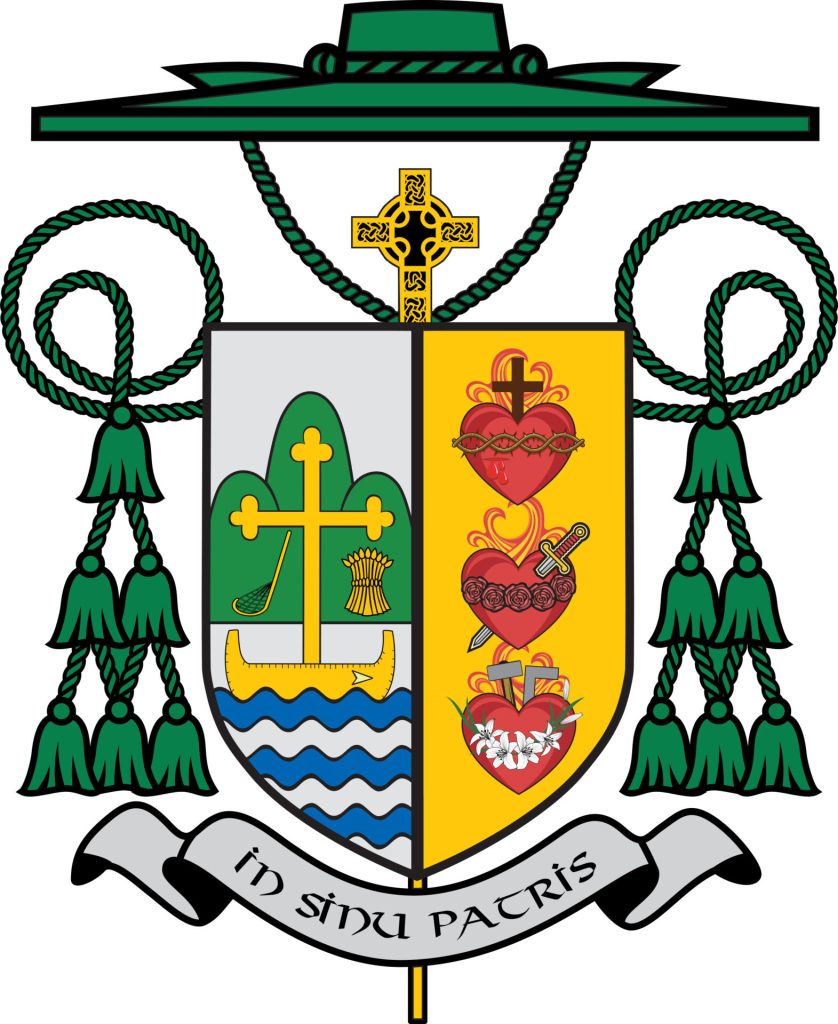
His coat of arms, while very simple, seems a bit overly given to the devotional. The explanation from the diocesan website says, “For the personal coat of arms of Bishop Battersby…at the top of the shield is a Celtic processional cross meant to honor Bishop Battersby’s Irish heritage. It is shaped like a traditional cross but with a ring, representing the sun, around the intersection of the stem and arms. The whole cross is decorated with ornate Gaelic patterns.

Bishop Battersby’s Coat of Arms includes the three Sacred Hearts. The hearts represent the Holy Family and symbolize the unending and boundless love for us. The wounded heart signifies his devotion to the Sacred Heart of Jesus. It also pays tribute to Sacred Heart Major Seminary where he prepared for the priesthood and at which he served as vice-rector and dean of seminarian formation at the time he was called to the episcopacy.

The second heart, the Immaculate Heart of Mary, signifies the trust and confidence that Bishop Battersby has in the Blessed Mother’s intercession and protection. The sword symbolizes the sorrows of Mary, the flames represent her burning love for Jesus and us, her children and the roses represent her purity. 

Bishop Battersby’s devotion to St. Joseph is represented in the third of the Sacred Hearts, the Chaste Heart of Joseph, inflamed with love and adorned with the white lily of purity, a symbol of his faith and steadiness.”

Again, I’ll say something about the episcopal cross below.

May 29 saw the ordination and installation of the Most Rev. Michael Martin, OFMConv (62) as the fifth Bishop of Charlotte, North Carolina.

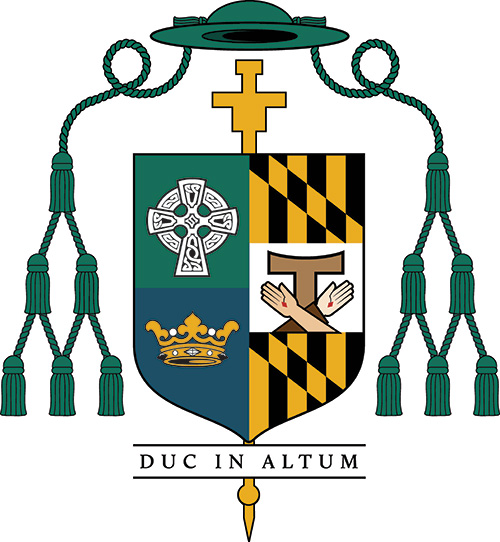
The diocesan website describes his personal arms, “To the viewer’s right is the Franciscan coat of arms. Featuring the traditional Franciscan Tau cross with two arms crossing one another, it is rich in symbolism. The two arms, one Christ’s and the other St. Francis of Assisi’s, both bear the stigmata. They symbolize God’s love and Francis’s loving response to the Word made incarnate, Taberski explained. It is an image found throughout the ministries, friaries, missions and sites served by the Franciscan order.

On the right side of the shield, the top (known as the “chief”) and the bottom (the “base”) feature references to George Calvert and his son Cecil Calvert – the first and second barons of Baltimore. The Calverts were among the first Catholics to arrive in colonial America. They established the then Province of Maryland as a safe place for English Catholics to emigrate to since they were no longer able to freely practice their faith at home. In the coat of arms, the use of six vertical stripes – alternately gold and black, with the diagonal stripe in color – recalls Bishop Martin’s hometown of Baltimore.”

A nice simple design but perhaps the arms of Calvert would have looked better depicted once in the main part of the field with the Franciscan symbols occupying a chief? And again there is an incorrect episcopal cross!

So, my criticism of that, which I have often written about in this blog, is that, firstly, it is NOT a “processional” cross!! It is an episcopal cross—a heraldic symbol—which indicates the coat of arms belongs to a bishop. It is, in fact THE heraldic symbol indicating episcopal arms. The galero, while traditional, is not necessary, nor is a green galero with 12 tassels exclusive to the arms of bishops. But the inclusion of the episcopal cross is truly the sign—and the only essential one—to indicate that the achievement depicts the coat of arms of a bishop.

As an external ornament it is NOT subject to personalization. An armiger has a great deal of choice regarding what is depicted on the shield. However, the external ornaments are not subject to his whim, nor may they be used to convey further personal significance or symbolism. Rather, their purpose is to indicate rank in the overall achievement. The blazon may not specifiy a certain type, shape, color, ornamentation, or embellishment to the galero, or the episcopal cross. Each and every artist is free to depict the episcopal cross as he pleases.

This idea of extending the personal symbolism to the external ornaments is occurring more and more of late…as more and more people with very little background in, or knowledge of heraldry are being asked to design episcopal coats of arms. It is amateurish and a grossly mistaken thing to do.
Priest—Cardinal—THEN Bishop

Ángel Cardinal Fernández Artime, S.D.B. (born August 21, 1960) is a priest of the Salesians of St. John Bosco, who has been their Rector Major since 2014, the first Spaniard to hold that office. 

On July 9, 2023, Pope Francis announced his plans to create him a cardinal at a consistory scheduled for 30 September. He is the first superior of a religious congregation be made a cardinal.  At that consistory he was assigned the rank of cardinal deacon with the title of Santa Maria Ausiliatrice in Via Tusculana.

Pope Francis told Fernandez he could continue to serve as rector until July 31,2024, when he will be given a new assignment. He was made a member of the Dicastery for Institutes of Consecrated Life and Societies of Apostolic Life on October 4, 2013. The Salesians plan to hold an election to replace him as rector in the spring of 2025.

His episcopal consecration is scheduled for April 20, 2024. Pope Francis has assigned him the titular see of Ursona with the title of archbishop.

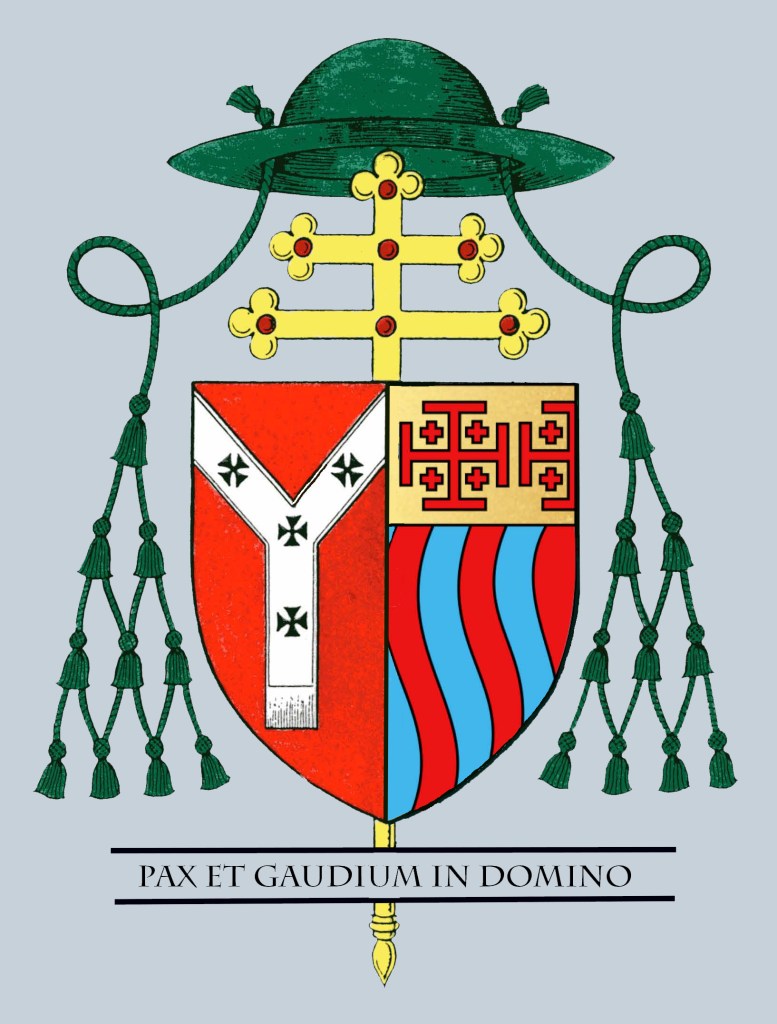
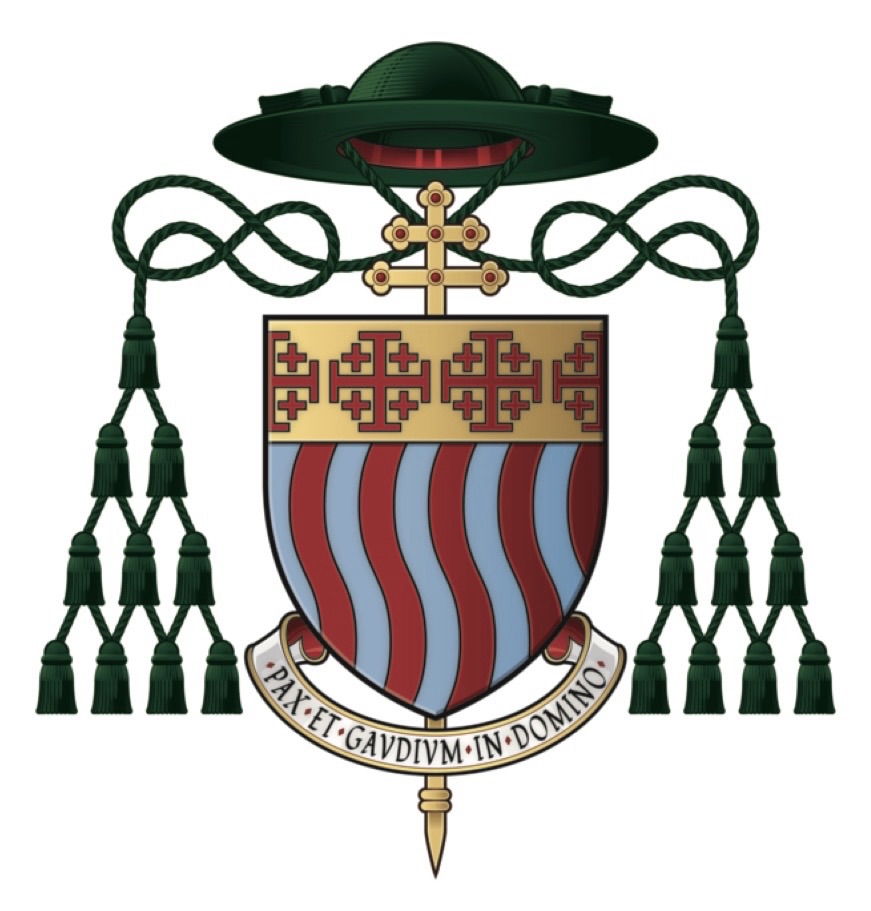
The coat of arms he assumed upon becoming a Cardinal (left) correctly omits any sort of episcopal cross behind the shield. Cardinals are not entitled to use this cross unless they possess the episcopal character. His coat of arms will have the addition of an archiepiscopal cross (right) after his ordination as an archbishop. Until then he uses the armorial bearings of a priest who is a cardinal and his coat of arms will be modified to indicate his rank as an archbishop after April 20.

Mechelen-Brussel

On September 3 the new Archbishop of Mechelen-Brussel (Malines-Bruxelles) was ordained a bishop and was installed as the 23rd Archbishop. The Most Reverend Luc Terlinden (54) is of the noble family of the viscounts and barons Terlinden. This makes him the first archbishop who is from the nobility since Mgr. de Méan (who was the last Prince-Bishop of Liège and died as Archbishop in 1830). There have been other nobles named as bishops in Belgium, however. It is disappointing that the archbishop chose to create and assume new arms (below) that only slightly refer to his noble family’s coat of arms (above, left). I’m sure many fine heraldist and genealogists are disappointed at that. The arms he has assumed aren’t bad, per se. Rather, it is that his ancestral arms are far better.

Archbishop Sheehan of Santa Fe

On June 3 the Most Rev. Michael Sheehan, Archbishop Emeritus of Santa Fe where he served from 1993-2015, passed away. He was 84.

His armorial bearings had a rather unusual charge. “Issuing from the bottom of the Archbishop’s arms is the silver (white) dome of St. Peter’s Basilica, in Rome, which is placed below a gold (yellow) Roman Numeral two (II) to signify that Archbishop Sheehan was in St. Peter’s on the day that Vatican Council II opened.”

Uh-huh.

All I can say, while meaning no personal disrespect to the deceased archbishop, is: nice try.

Archbishop Ravelli

Father Diego Giovanni Ravelli (57) a priest of the Suburbican Diocese of Velletri-Segni who currently serves as the Master of Pontifical Liturgical Celebrations of the Office of Liturgical Celebrations of the Supreme Pontiff, in other words, the Pope’s Master of Ceremonies, will be ordained as the Titular Archbishop of Recanati, a new Titular See established in 2022 on June 3 at St. Peter’s basilica in the Vatican by Pietro Cardinal Parolin, papal Secretary of State.

The armorial bearings he is assuming were prepared by Giuseppe Quattrociocchi. The make use of simple and bold symbolism. The grid in base is a reference to St. Lawrence the Martyr.