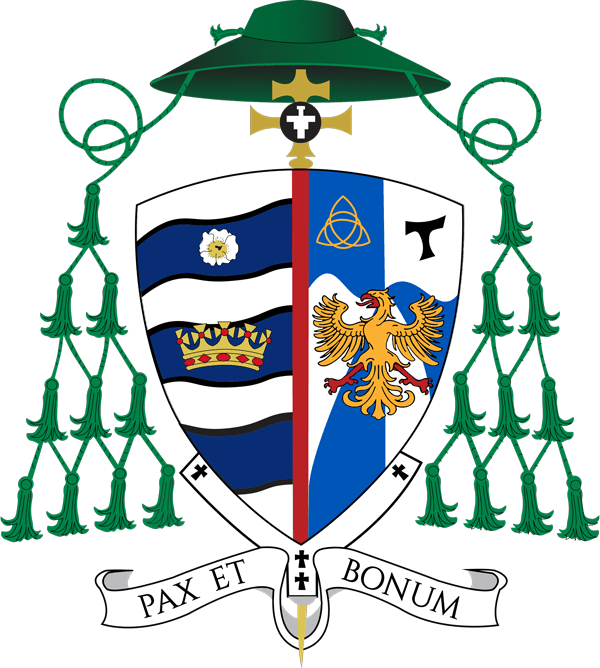
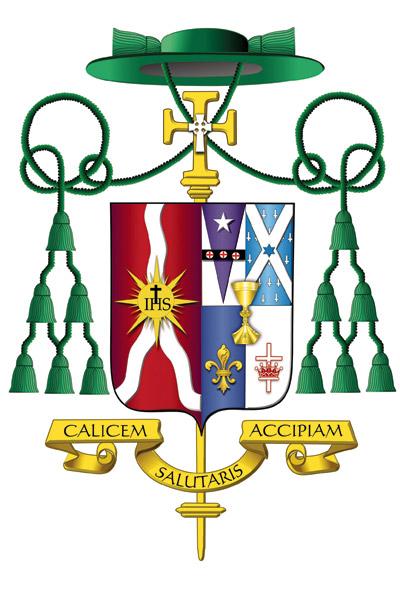
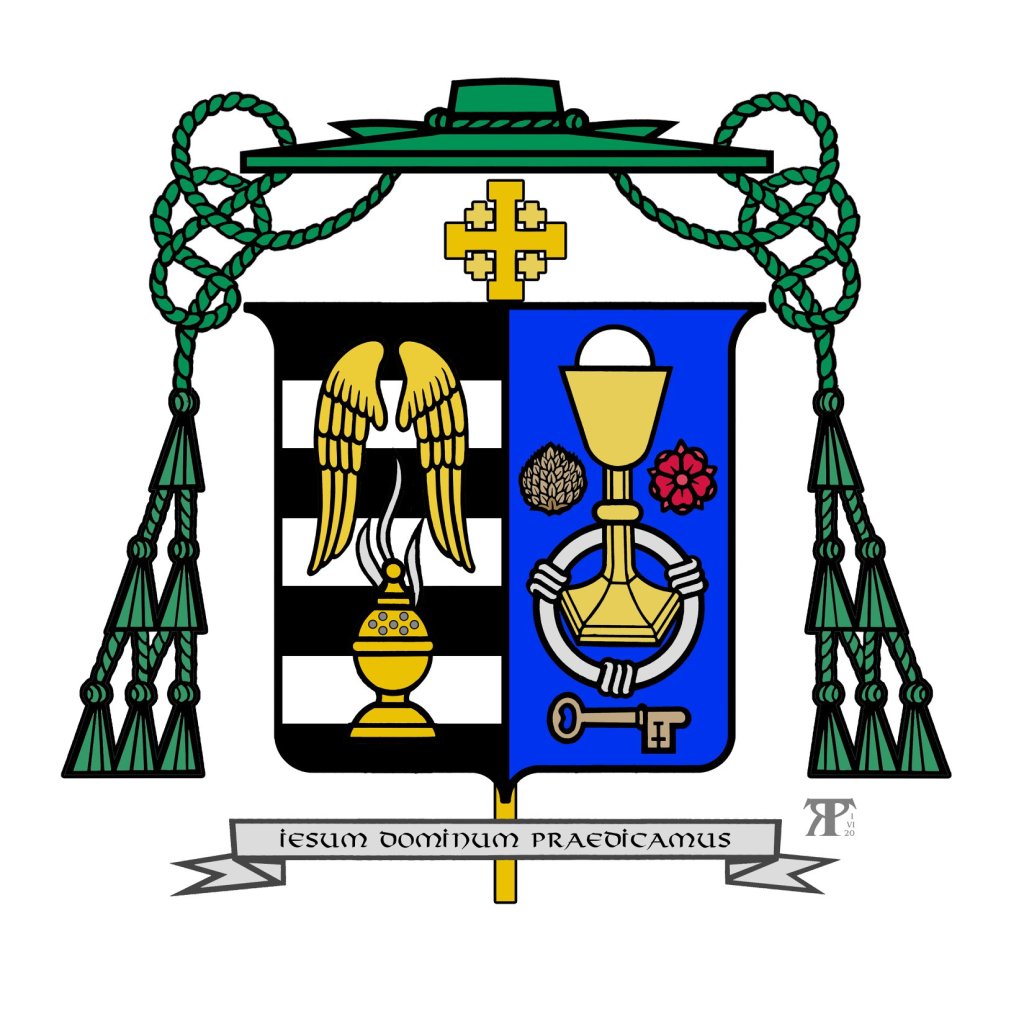
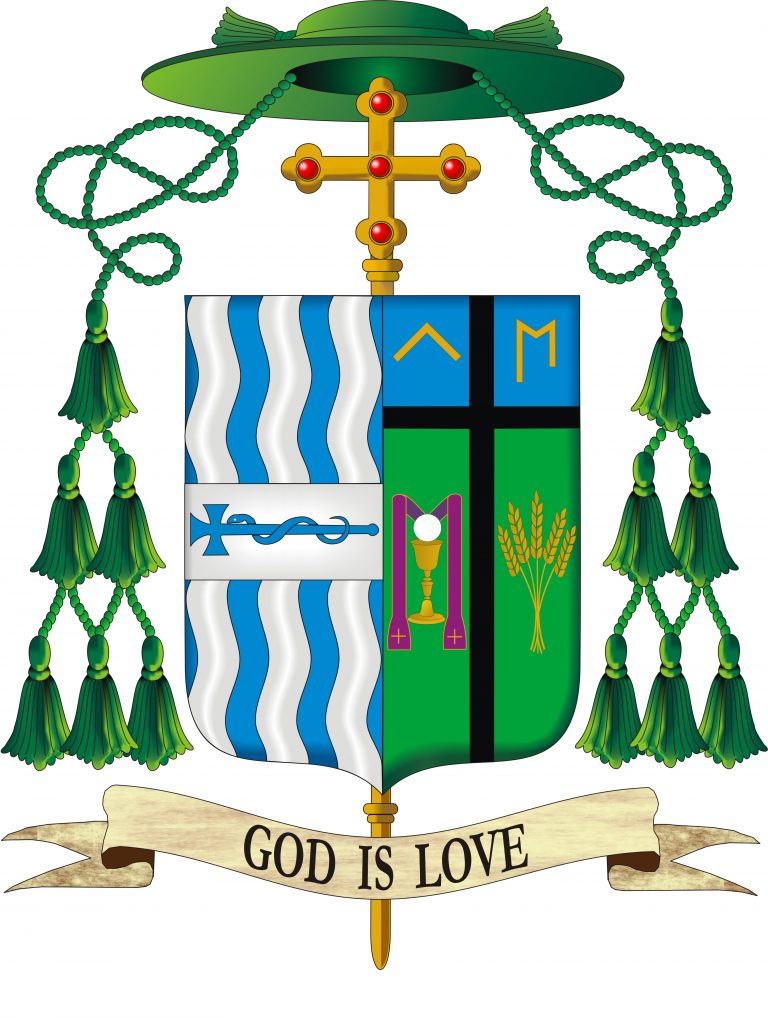
In light of the recent announcement that the Duke and Duchess of Sussex (aka Prince Harry & Meghan) will be stepping back from duties as senior royals and, consequently no longer styling themselves as “royal highness” not a few people have contacted me to ask out of curiosity if this in any way will have an impact on the coats of arms they both use.
The simple answer is, “No”.
As the grandson of the sovereign Prince Harry employs a coat of arms that indicates he was born a grandson of the sovereign. British royal heraldry is different than many other countries in that the sovereigns children and grandchildren generally bear the royal arms differenced by a variety of labels of either three or five points and the points are charged with marks of difference. That’s really rather boring if you asked me but that’s what they do and they haven’t asked me!
So, when he turned 18 Harry was granted his own arms depicting the royal arms difference by a label of five points the first, third and fifth of which are charged with a red escallop shell. The shell is a charge borrowed from the coat of arms of his late mother, Diana (neé Spencer).
His supporters were also charged with the label for difference and the arms are surmounted by a special coronet used by the children of the heir to the throne. In addition, the royal crest is also charged with the label for difference.
Upon marrying his wife Harry was created Duke of Sussex. Nothing in his coat of arms was modified to reflect this title. Consequently, there is nothing to change in his coat of arms to reflect his new status of stepping down from a senior position in the royal family. He is still a grandson of the sovereign and son of the heir to the throne; he is still the Duke of Sussex; he is still actually an “HRH” but will choose not to style himself as such.
In fact, even after his grandmother passes away and he is the son of the sovereign and, indeed, even after his father passes away and he is the brother of the sovereign the crown used on his arms will remain unchanged as the crown for the child of the heir is identical to the crown used by children of the sovereign and siblings of the sovereign.
On December 8, 2019 His Holiness Pope Francis appointed Fernando Cardinal Filoni as the VIII Grand Master of the Equestrian Order of the Holy Sepulchre of Jerusalem. With that his predecessor, Edwin Cardinal O’Brien became Grand Master Emeritus of the Order.
Heraldic use in the EOHS is somewhat unclear. There are various sources all claiming to be definitive accounts of the heraldic privileges of the Order but, in fact, since most only exist online none can truly be said to be definitive.
Since 1949 when Cardinals of the Holy Roman Church have been appointed by the Pope as Grand Masters they have observed the heraldic convention, like other orders, of marshaling their personal arms to those of the Order by means of quartering them. No one has disputed their right to do so or that this has been the usual manner. There remains a question, however, of whether or not to marshal the armorial bearings of Grand Masters Emeriti in the same way, or, as the usual heraldic custom would suggest, to have them revert to using their personal arms alone.
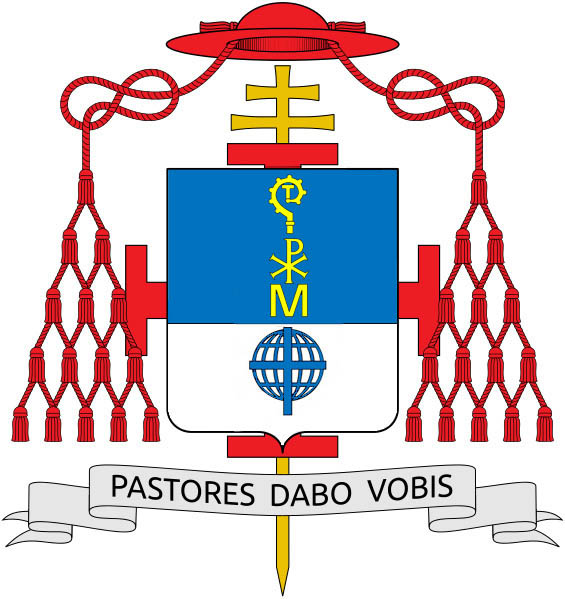
Cardinal O’Brien’s coat of arms is of particular interest in this question because of his unfortunate and erroneous habit of retaining armorial elements from his previous postings in his coat of arms each time he has been assigned to undertake a new position. So, the arms he assumed when first ordained Auxiliary Bishop of New York have long ago been abandoned. After he concluded his tenure as Archbishop of of the Military Archdiocese, USA he kept the open globe from the archdiocesan achievement of the US Military and incorporated it as a base into his personal arms when he moved to Baltimore. In an even worse move, when he left Baltimore as its archbishop to go to Rome as Pro-Grand Master and later Grand Master of the EOHS he kept his coat of arms entirely as they had been in Baltimore, impaled with the arms of the See of Baltimore, for which he had absolutely no right whatsoever as he was no longer the Ordinary of that archdiocese. It is important to remember that the custom of bishops impaling their personal arms with those of their See does not mean that the arms of the jurisdiction becomes a part of their own coat of arms. Rather, it is a means of marshaling, that is to say, depicting two separate coats of arms on the same shield to illustrate a relationship between the two, in the case of bishops to indicate that they are “married” to their diocese and exercise jurisdiction over it. If they should leave that diocese they no longer enjoy that right.
So, we see that the arms of the See of Baltimore never should have been included in Cardinal O’Brien’s arms as Grand Master of the EOHS. In the case of the globe from the arms of the US Military Archdiocese at least it can be said that rather than marshaling his arms to those of the Military Archdiocese what O’Brien did was to borrow a charge and incorporate it into his own personal arms which is arguably a better practice and, thus, acceptable.
There are probably those who assume it is acceptable for the cardinal simply to continue using the same achievement he used as Grand Master. They would be wrong. No one in an emeritus position is entitled to heraldically represent jurisdiction they no longer exercise. I have seen some sources that would claim a Grand Master Emeritus, indeed any cleric, may quarter his personal arms with those of the Order. I believe this is false. The convention has always been that quartering the personal arms with those of the Order is the prerogative of the Grand Master alone. I have seen no definitive official source that allows for any cleric to quarter their arms with the arms of the Order.
Accordingly, and logically, the only other recourse would be for Cardinal O’Brien to bear his personal arms alone like other members of the College of Cardinals who have retired; to exclude the arms of the See of Baltimore over which he ceased to have any jurisdiction long ago; to retain the globe from the arms of the See of the US Military as it is now a charge incorporated into his personal arms; to indicate his continued membership in the EOHS by means of placing the cross of the Order (the Jerusalem cross) behind the shield. This, unfortunately, leaves him with a rather unfortunate personal armorial achievement. (below)
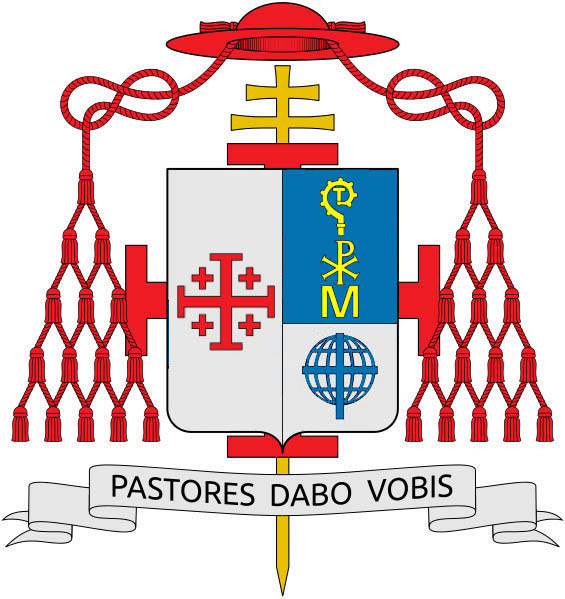
There is a good argument to be made for one other possibility. Certain officials of the Order and members of a particular rank within the Order, namely Knights & Dames of the Collar; Lieutenants; Members of the Grand Magistry and Grand Priors, impale their arms with the arms of the Order. It can be argued that the Grand Master Emeritus is both a Knight of the Collar and, honorarily at least, still considered a Member of the Grand Magistry. By that logic a Grand Master Emeritus might impale his personal arms with those of the Order rather than quarter them and this would leave Cardinal O’Brien with an achievement that looks a bit less empty. (below)
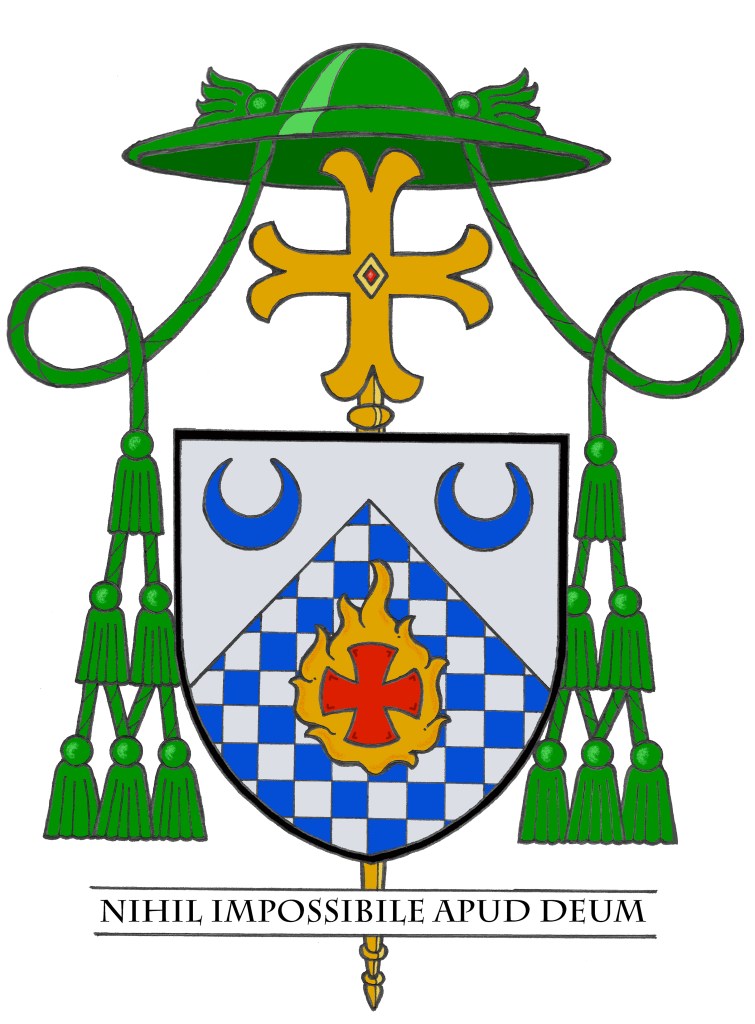
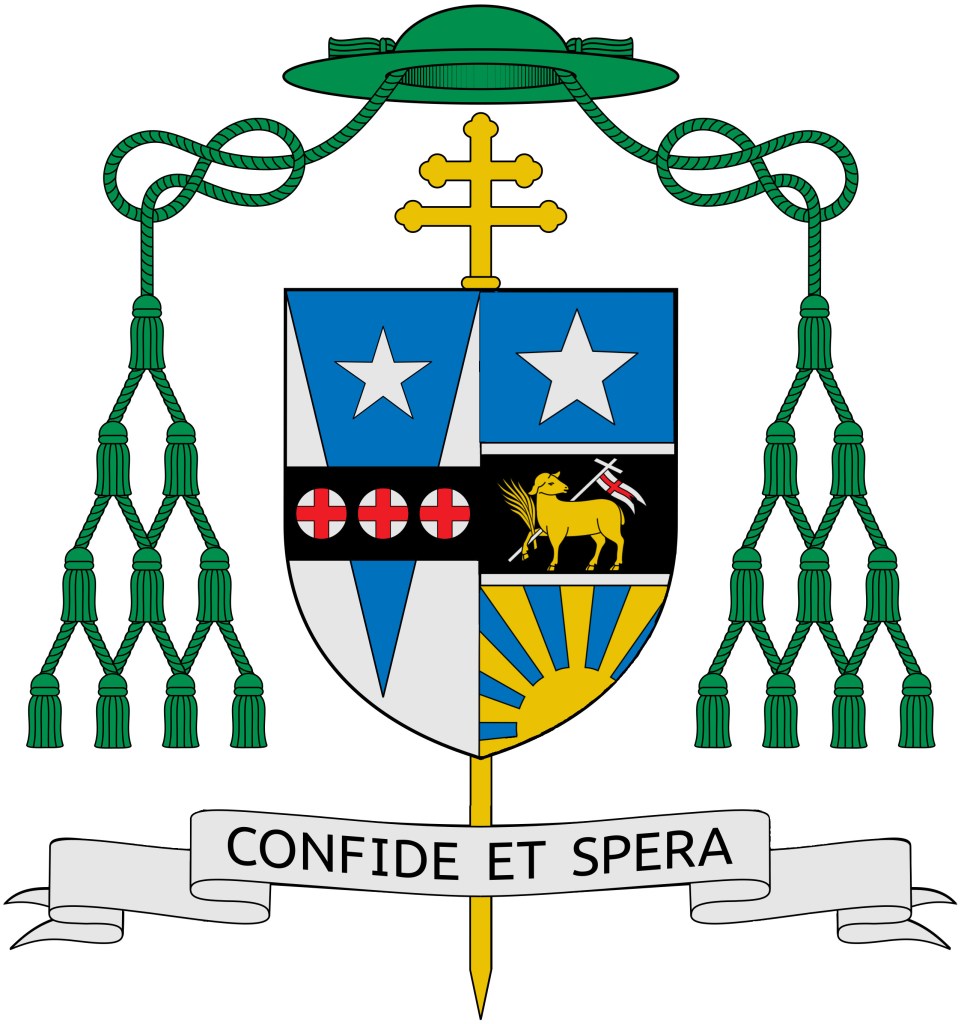
On January 5 Msgr. Vincent Jordy (58) from Perpignan, France, a priest and Auxiliary Bishop of Strasbourg and from 2011-2019 Bishop of Saint Claude will be installed as the 66th Archbishop of Tours.
Unlike so many of his confreres in the French episcopate he actually bears a coat of arms:
Of course as an archbishop, the cross will now be a patriarchal cross with two horizontal bars. The fact that he doesn’t use a galero is his personal choice. As has been mentioned on this blog before, the galero is not an essential part of a bishop’s coat of arms and may be omitted if desired. The one and only distinguishing external ornament essential for a bishop’s coat of arms is the episcopal or archiepiscopal cross placed behind the shield.
Pope Francis has appointed 73 year-old Cardinal Fernando Filoni, Prefect of Propaganda Fide from 2011 to the present, who now becomes Prefect Emeritus of the same Dicastery, as the new Grand Master of the Equestrian Order of the Holy Sepulchre. Cardinal Filoni was a priest of the Diocese of Nardó, Italy and was ordained in 1970. In 2001 he was ordained a titular archbishop by St. John Paul II and was Apostolic Nuncio to Iraq from 2001 to 2006 and lived in Baghdad during the war of 2003. For a year, he was the Pope’s ambassador to the Philippines before being called to the Secretariat of State as Substitute, a post he held until 2011. In 2012 he was created a Cardinal by Pope Benedict XVI.
His experience in the Middle East will be valuable in his new role, as the Order of the Holy Sepulchre cooperates particularly with the Middle Eastern Christian communities and supports them with many projects.
In a statement, Cardinal O’Brien expressed his great appreciation for the Pope’s decision, and said he is particularly happy that Cardinal Filoni has been chosen as his successor: “His long and extensive partoral and administrative service in our Universal Church”, Cardinal O’Brien said, “will be precious in guiding the Order on its future path”.
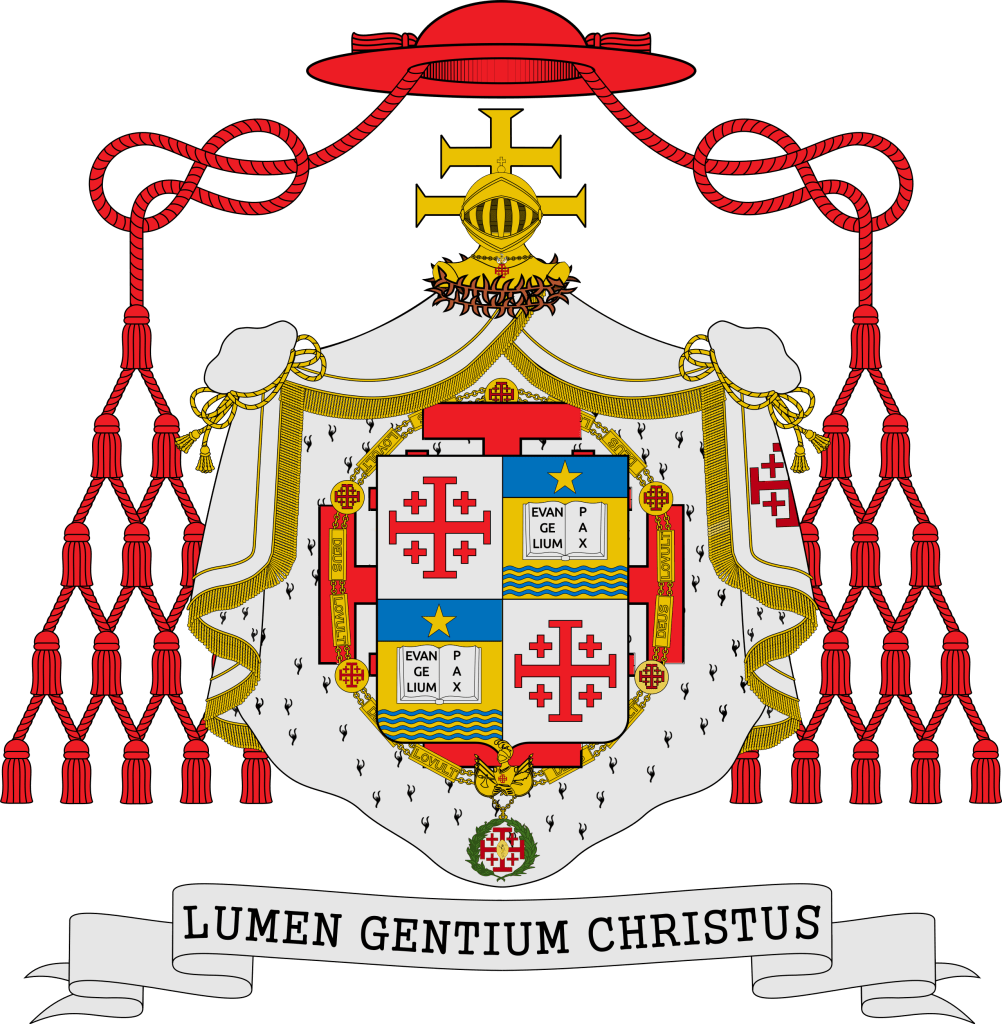
The custom of the EOHSJ is that the Grand Master quarters his personal arms with the Jerusalem cross of the Order, red on a silver field, which is used as the armorial bearings of the Order itself. The shield is surrounded by the Grand master’s collar and placed on the cross of the Order. The white mantle of the Order also ensigns the shield and the patriarchal cross of an archbishop is included as well as the cardinal’s galero. In addition, the usually secular helm is also included sitting not on a torse but on a crown of thorns recalling the Passion of the Lord.
Cardinal Filoni’s arms are those he assumed when he was promoted to titular archbishop in 2001. The are much simpler and also a marked improvement over the personal arms of his immediate predecessor whose achievement was horribly ill-advised and included elements from offices he had formerly held including the entire coat of arms of the Archdiocese of Baltimore …which he no longer held! Cardinal Grand master Filoni’s arms make a welcome change.
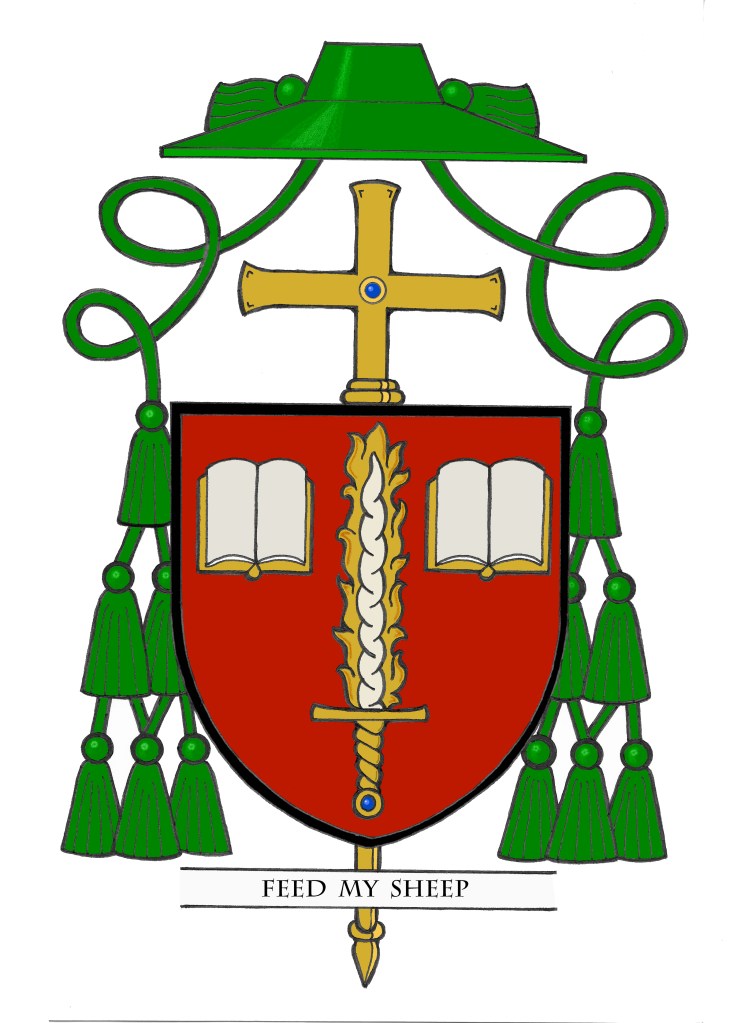
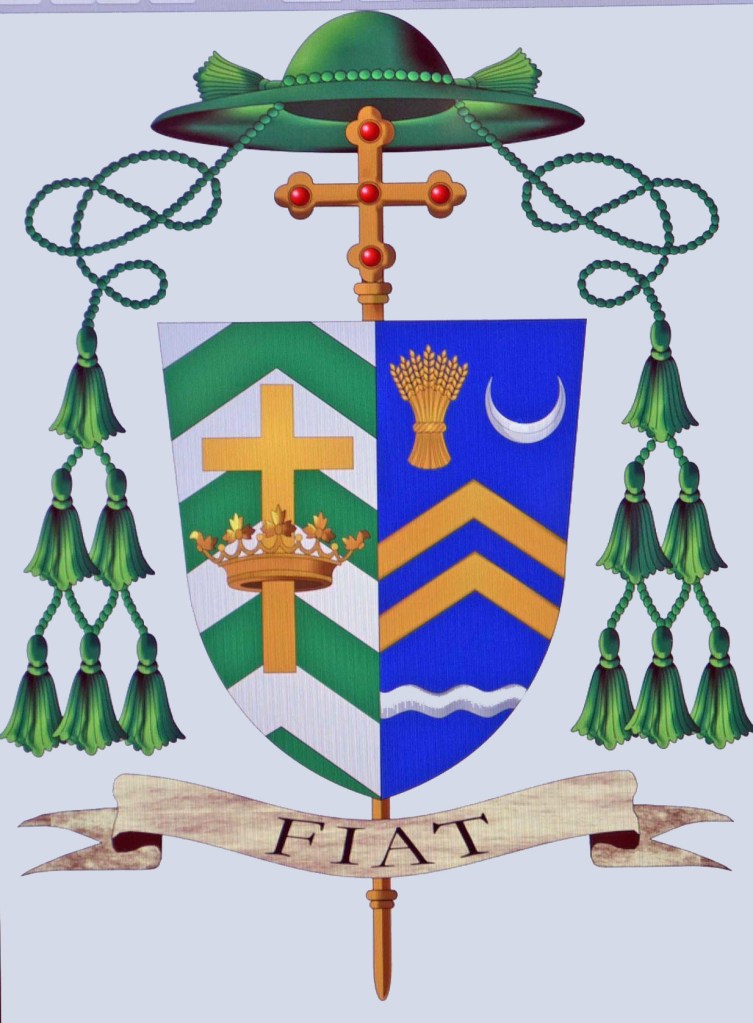
On Wednesday, November 20, the Most Rev. Austin Vetter (52), a priest of the Diocese of Bismarck, North Dakota, was ordained a bishop and installed as the 12th Bishop of Helena, Montana. He was formerly a Spiritual Director at the Pontifical North American College in Rome, the seminary which he himself attended. Like so many other American bishops coming from that source he decided to have his coat of arms designed and emblazoned by an amateur heraldist, a man with another profession, who has begun to work extensively in the field of ecclesiastical heraldry due to his many contacts in Rome. The results are usually somewhat disappointing – not bad; not incorrect; not poorly rendered – but just drab, unimaginative and a ceaseless repetition of the same things over and over again plugged into a basic template making all of them appear, essentially, the same.
From the program prepared for the Ordination we read the following description prepared by the person who designed the coat of arms: “Bishop Vetter’s personal coat of arms blends images representing his origins: the crescent moon is for the Blessed Mother, the Immaculate Conception, patroness of the United States, the Diocese of Bismarck, and the Pontifical North American College (Bishop Vetter’s alma mater where he also later served on faculty); the sheaves of wheat which combine the concept of the Eucharistic symbol and the principle product of the farm where Bishop Vetter grew up; a “wavy barrulet,” the water representing “the spring of water welling up to eternal life” (John 4:14) and the Missouri River which begins in Montana and flows through Bismarck, North Dakota; and a “gemel in chevronwise,” one of them recalling the rafter holding the roof of the church which is set upon the foundation of the apostles with Christ Jesus as the cornerstone (meaning protection) and the second representing the Rocky Mountains of Montana.
The color blue (Azure) symbolizes the separation from the worldly values and the ascent of the soul toward God, therefore the run of the Celestial Virtues which raise themselves from the things of the earth toward the sk y. It als o represents the Blessed Mother and the “Big Sky” of Montana. The silver (Argent) of the crescent symbolizes the transparency and the purity of the Virgin Mary. The garb, sheaves of wheat, is in gold (Or), the first among the noble metals, then the symbol of the first of the Virtues , the Faith which enables us to believe in the Eucharistic Host, fruit of wheat, real body of Christ.”
Yeah…blah.
The second paragraph which goes on and on about the symbolism of the colors betrays an error that many amateur heraldist make. Namely, assuming that there are definite meanings assigned to different colors in heraldry. There aren’t. Perhaps, the armiger has chosen to assign meanings to certain colors for himself personally but if that is the case the explanation should stipulate that, as in, “The bishop feels that the color blue means XYZ to him because…” Otherwise, it’s simply made up out of whole cloth.
Another interesting thing in the explanation which goes to my point about the repetition in this person’s designs is the explanation of the use of the “gemel”. In heraldry the word gemel means “twin”. It is a term taken from Scottish heraldry primarily and does not describe a particular charge or object. Rather, it is an adjective that describes certain ordinaries or subordinaries as being depicted twinned, or in a pair. So, it’s not an object, a gemel “chevron wise” (i.e. arranged in the shape of a chevron). Instead, it should be blazoned “Two chevronels gemel”, that is, two thinner chevrons paired.
What is also interesting is this explanation of the coat of arms of a bishop this same artist did several years ago, “The chevron is an heraldic device, best described as an inverted “V”; it signifies the rafter, which holds the roof of the church, and symbolizes the concept of protection.” Does that sound familiar? Perhaps it is supposed that every bishop must have a chevron of some kind in his coat of arms as a symbol of a church? Are there no other symbols of a church, or of the Church, or of protection?
This bishop’s last name – Vetter – comes from the German for “cousin” and yet there was no attempt to try and symbolize that. His first name, Austin, is derived from the name Augustine and yet none of the symbols associated with that saint were used. Why do I point this out? Because a coat of arms is first and foremost a mark of personal identification. As I have written here numerous times, it is not a CV in pictures! It’s not supposed to be about where you are from, where you lived, where you went to school, etc. It is, instead, supposed to identify you, personally. So, using charges that in some way alluded to his name or family name, while far from a necessity in any coat of arms, might have proven a better starting point and certainly would have made for a mark of identity that was more personal.
Instead, there is another cookie-cutter coat of arms. And yet the question persists of “Why are so many bishops’ coats of arms so poorly done?” It is, I believe, because too many bishops are content to copy what they have seen before for the sake of “getting it done” instead of consulting with someone who is well versed in heraldic science as well as someone who can provide real heraldic art instead of something using a computer generated template. This coat of arms, like others is not, as I wrote above, bad, incorrect or poorly rendered. But, it is rather disappointing.
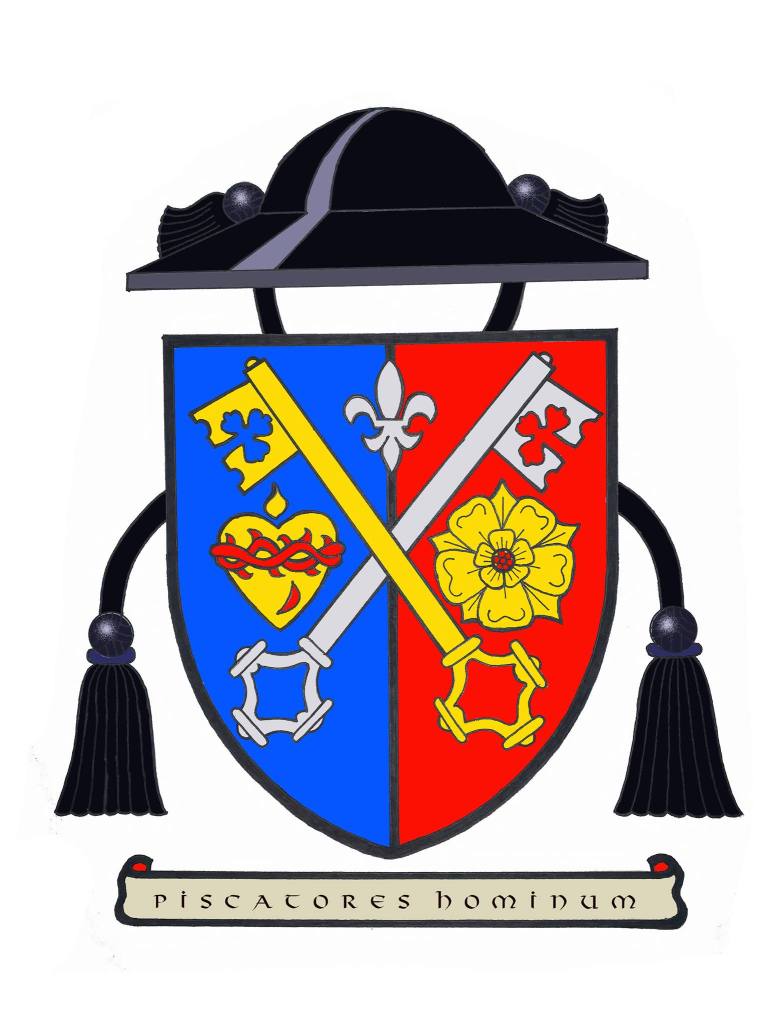
These are the armorial bearings I recently designed to be assumed by an American priest. The blazon is:
Divided per pale Azure and Gules; overall two keys in saltire, blades to chief with notches forming the outline of a trefoil, the dexter Or and the sinister Argent; between in chief a fleur-de-lis Argent; to dexter the Sacred Heart of Jesus Or, enfiled of a crown of thorns and wounded Gules enflamed Or; to sinister a rose Or, seeded Gules. The shield is ensigned with a priest’s galero with cords and two tassels all Sable. Below the shield on a scroll is the motto, “Piscatores Hominum”.
On October 16 the Most Rev. Shane Mackinlay (54), a priest of the diocese of Ballarat, was ordained a bishop and installed as the Eighth Bishop of Sandhurst, Australia.
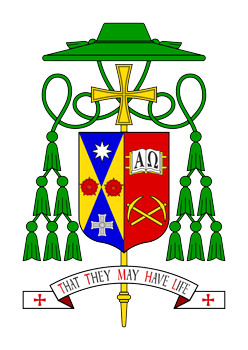
His coat of arms is blazoned: Gules, two pickaxes in saltire, blades upwards Or; in chief an open book Argent bound Or with the Greek letter Α on the dexter page and the Greek letter Ω on the sinister page both Sable; impaling Per saltire or and azure on the former in fess two roses gules, in chief an estoile (eight-pointed star) and in base a representation of the Paderborn Cross argent.
The crossed pickaxes are the tools of goldmining, which was integral to the founding of both Ballarat and Bendigo. The bible comes from the arms of Catholic Theological College and reflects its motto, Tolle lege, the admonition that prompted St Augustine to take up and read the bible, which led to his baptism. In the arms of the see the gold of the field represents the goldfields, which are located within the diocese. The blue and the roses represent the Virgin Mary, Mother of God, who, under the title Our Lady of Good Counsel, is Patroness of the Diocese. The Paderborn Cross at the base is an ancient Christian symbol discovered in an eighth-century grave beneath the Cathedral at Paderborn, Germany, which was the home city of Dr Henry Backhaus, the pioneer priest of the Bendigo Goldfields.
The diocesan arms were designed by myself and Bishop Shane’s personal arms were designed by Richard d’Apice AM KCSG and myself and both are illustrated by Sandy Turnbull.
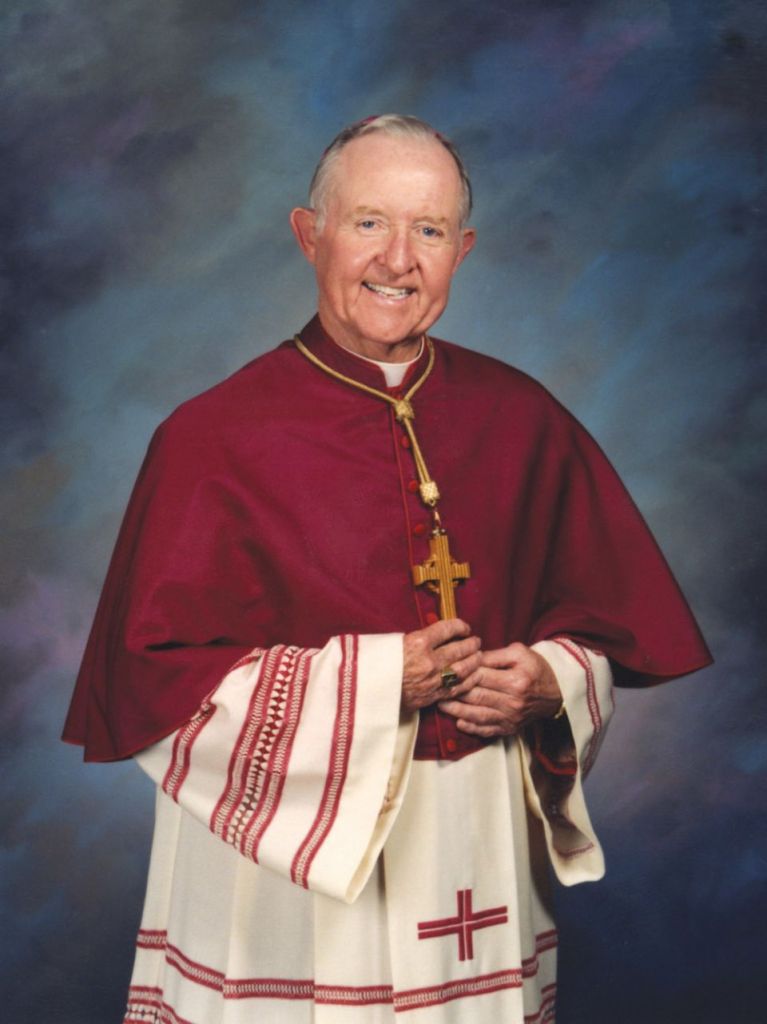
On September 27, 2019 the Most Rev. John J. Snyder (93) a priest of Brooklyn and for 21 years the IX Bishop of St. Augustine, Florida passed away. He was buried on October 1.
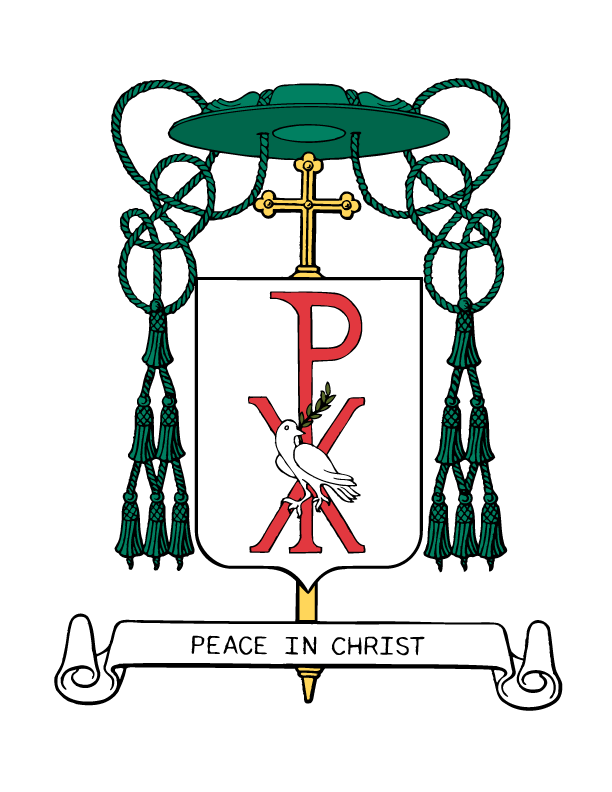
The coat of arms (below) which he assumed in 1972 at the time he was ordained Titular Bishop of Forum Popilii and Auxiliary Bishop of Brooklyn and which, after 2000, he once again used very simply illustrates the motto he chose for himself, “Peace in Christ”.
The Most Reverend Josu Iriondo, (80) formerly a Canon Regular of the Most Holy Savior of the Lateran, later incarnated as a priest of the Archdiocese of New York and retired Auxiliary Bishop of New York was appointed to be a bishop on October 30, 2001 and ordained the Titular Bishop of Alton and Auxiliary of NY on December 12, 2001 while the city was still reeling from the horrible terrorist attacks of 9/11. In his assumed coat of arms Bishop Iriondo decided to commemorate those horrible events and the faith that helped many cope with them by incorporating an image from Ground Zero into his coat of arms. There was a cross made of the remnant I-beams of one of the fallen towers that rescue workers erected over the site. That cross of steel I-beams was used as the image of the cross making up the principal charge of the bishop’s coat of arms.
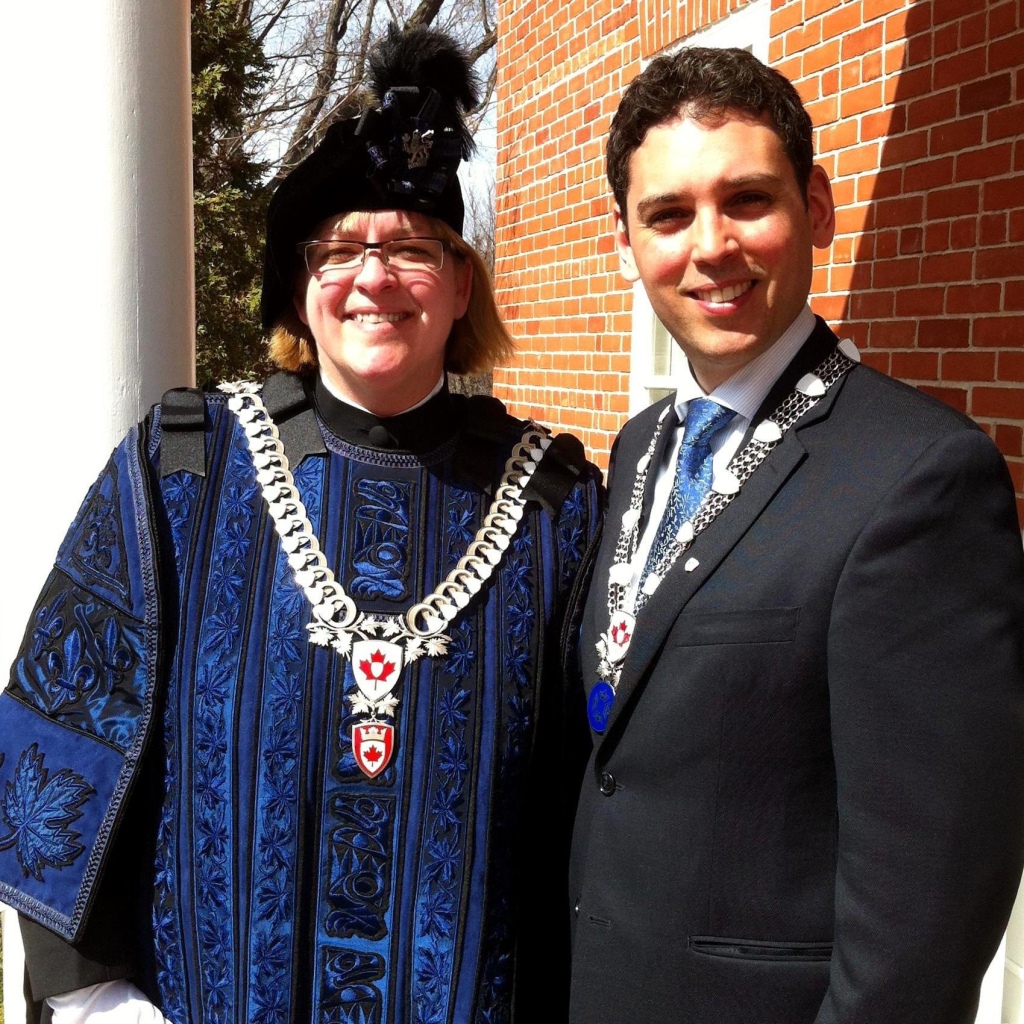
On August 27 Monsignor Carl Reid, PA, (68) a Canadian who converted to Catholicism in 2012, was installed as the second Ordinary of the Personal Ordinariate of Our Lady of the Southern Cross in Australia. His personal arms were granted by the Canadian Heraldic Authority and are impaled with the arms of the Ordinariate. Richard d’Apice (in consultation with myself) assisted the Canadian heralds with the design of the personal arms. Mr. d’Apice and I designed the arms of the Ordinariate as well.
The unusual use of the crozier has been a precedent set among the Personal Ordinariates after their establishment by Pope Benedict XVI. It derives from the use of the crozier to denote Ordinary Jurisdiction while at the same time leaves off the sudarium (veil) attached to the crozier in abbatial arms which has become a symbol proper to abbots. Msgr. Reid exercises full Ordinary Jurisdiction and makes use of the pontificalia while celebrating the Sacraments like a bishop but does not possess the episcopal office. NOTE: The Personal Ordinary for the UK does not make use of a coat of arms and the Personal Ordinary for N. America is a bishop.
The artwork is by the talented Australian, Sandy Turnbull.
The Most Reverend Paul D. Etienne (60) who had been translated from Archbishop of Anchorage to Coadjutor of Seattle last April has now succeeded to the See of Seattle as of September 3, 2019. On that date Pope Francis accepted the resignation of Archbishop Peter Sartain for health reasons and Etienne becomes the 10th Metropolitan Archbishop of Seattle.
His coat of arms (above) combines the arms of the See of Seattle with his personal arms. It’s nice to see he didn’t once again change them as he did when going from Cheyenne (where he originally served as a bishop) to Anchorage. At that time I was very outspoken in my criticism of that decision. There is no such criticism this time around.
On August 8, Rev. Douglas Lucia (56) a priest of Ogdensburg, NY was ordained a bishop and installed as the 11th Bishop of Syracuse, NY. His coat of arms:
On Wednesday, August 21, the feast of St. Pius X, the Most Rev. Mark E. Brennan (72) until recently Auxiliary Bishop of Baltimore and Titular Bishop of Rusibisir, was installed as the 9th Bishop of Wheeling-Charleston, West Virginia. He succeeds the scandal ridden Bishop Michael Bransfield.
His coat of arms (above) is clearly a redesign of the coat of arms he assumed at the time he became a bishop. Normally, I am very critical of the practice of a bishop changing his coat of arms when transferring to a different assignment. A coat of arms is not “changeable” as it is a mark of personal identification.
However, Bishop Brennan’s originally assumed arms (below) were rather busy and it would have been difficult to impale them well with the diocesan coat of arms. Of course, it is well worth pointing out that while impalement, symbolizing that the bishop is “married” to his diocese, is the norm for diocesan bishops in the United States but it is not mandatory by any means. I would hazard a guess that when Bishop Brennan assumed his coat of arms he did not think that he would ever be called upon to serve as a diocesan bishop and thought his episcopal ministry would be lived out as an Auxiliary of Baltimore. That’s not an unusual assumption when you consider he was already 69 years old when he was appointed a bishop and the mandatory age at which bishops must submit a resignation is 75!
Nevertheless, his personal coat of arms has been redesigned to better harmonize and more easily be impaled with the coat of arms of the See of Wheeling-Charleston. In my opinion, my misgivings about redesigning arms aside, I think it is an improvement over the original coat of arms. The change of the motto, also not an absolutely necessary part of a coat of arms although erroneously thought to be so by many, is less problematic.
On July 25, 2019 the Most Rev. John Wilson (51), a priest and auxiliary bishop of Westminster was installed as the 11th Metropolitan Archbishop of Southwark. London is a unique city in that it contains two different ARCHdioceses, as well as also containing part of the territory of two dioceses. Everything south of the river Thames is in the Archdiocese of Southwark.
The archbishop employs the archdiocesan arms pictured below. They follow the more ancient custom in Britain of ensigning the shield with a bishop’s mitre rather than the more continental galero.
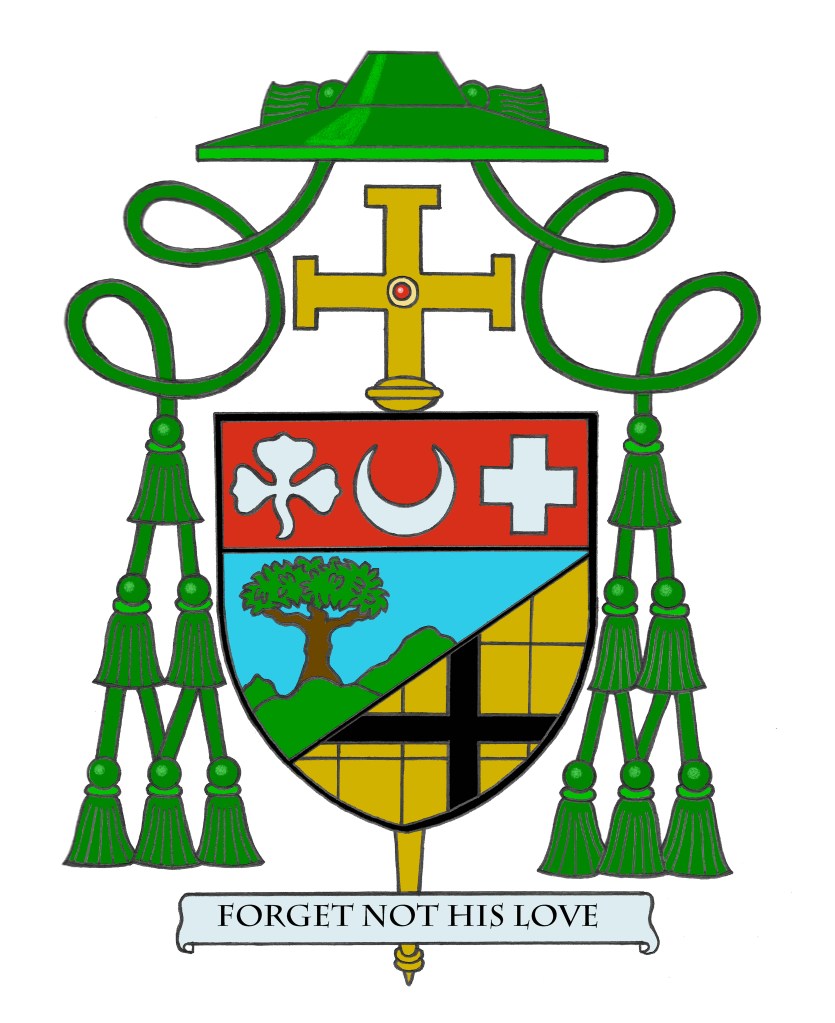
On July 26, 2019 the Most Rev. Robert Gruss (64), formerly Bishop of Rapid City, SD and prior to that a priest of Davenport, IA was installed as the seventh Bishop of Saginaw, MI. His coat of arms (below) is described on the diocesan website.
The Most Rev. Robert Christian, a Dominican friar, who has been the Auxiliary Bishop of the Archdiocese of San Francisco passed away on July 11, 2019 at age 70.
His coat of arms was assumed by him at the time of his episcopal ordination.
Umm…no. Sorry, but “beige” isn’t a heraldic color and, no, you may not just simply make up new rules and use whatever color you wish in heraldry. The science of heraldry limits the tinctures to be used and beige isn’t one of them. The Dominican cross and the usual Franciscan conformities (the arms of Christ and St. Francis crossed with each other) made for a nice combination of symbols for his Religious Community and the Archdiocese.