“May 29 saw the ordination and installation of the Most Rev. Michael Martin, OFMConv (62) as the fifth Bishop of Charlotte, North Carolina.
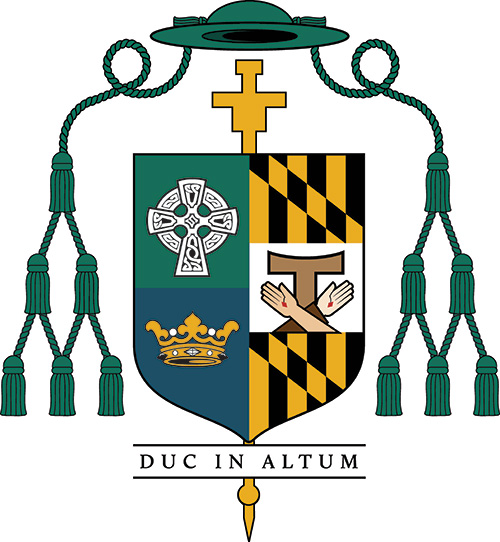
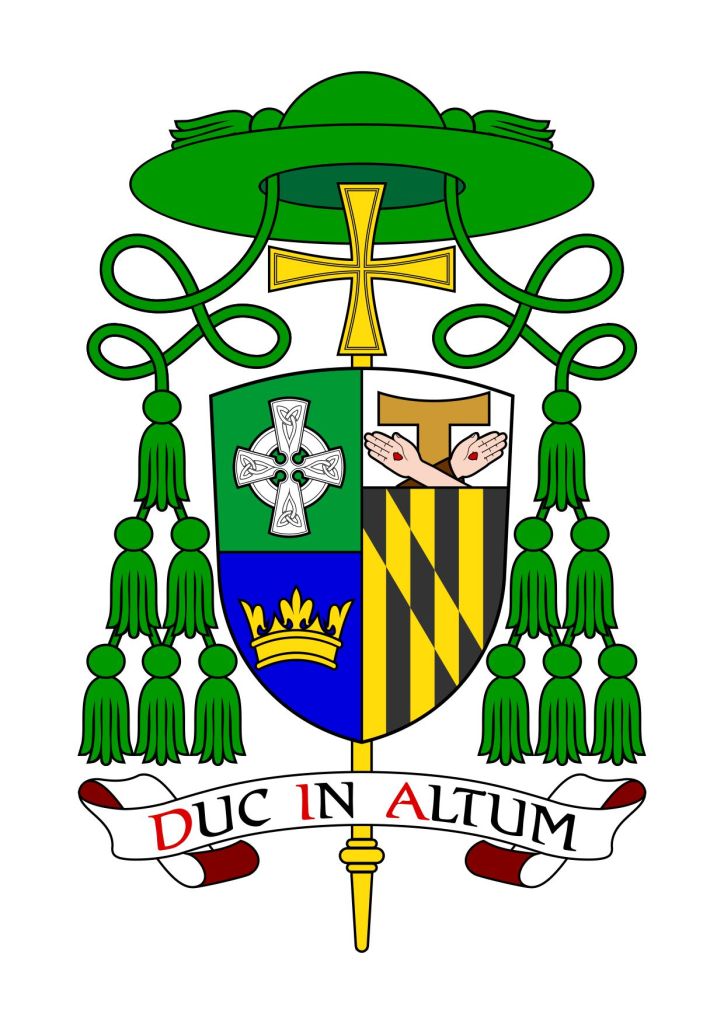
The diocesan website describes his personal arms, “To the viewer’s right is the Franciscan coat of arms. Featuring the traditional Franciscan Tau cross with two arms crossing one another, it is rich in symbolism. The two arms, one Christ’s and the other St. Francis of Assisi’s, both bear the stigmata. They symbolize God’s love and Francis’s loving response to the Word made incarnate, Taberski explained. It is an image found throughout the ministries, friaries, missions and sites served by the Franciscan order.
On the right side of the shield, the top (known as the “chief”) and the bottom (the “base”) feature references to George Calvert and his son Cecil Calvert – the first and second barons of Baltimore. The Calverts were among the first Catholics to arrive in colonial America. They established the then Province of Maryland as a safe place for English Catholics to emigrate to since they were no longer able to freely practice their faith at home. In the coat of arms, the use of six vertical stripes – alternately gold and black, with the diagonal stripe in color – recalls Bishop Martin’s hometown of Baltimore.”
A nice simple design but perhaps the arms of Calvert would have looked better depicted once in the main part of the field with the Franciscan symbols occupying a chief?“
Well, my friend and frequent collaborator, Mr. Sandy Turnbull of the Australian Heraldry Society, read that post and decided to have a bit of fun and create a new emblazonment of Bp. martin’s coat of arms that followed my advice. I’d say the result (below) speaks for itself. I was right! The whole achievement does look better as I suggested. See? One can’t just throw things onto a shield and call it heraldry. How the design is arranged—to be aesthetically pleasing as well as heraldically correct—is a large part of good heraldic design.
The varied armorial bearings of James Cardinal Gibbons. I often speak about the incorrect practice of a prelate deciding to change or modify his existing coat of arms. Even when arms are assumed (as opposed to granted by a heraldic authority) the bearer should not feel free to completely change them. Sometimes arms are augmented to reflect a new honor received or a change in status. However, completely changing a coat of arms, once assumed, should be avoided.
Gibbons was made Vicar Apostolic of North Carolina which did not yet have its own diocese, in 1868 and served there until he was made Bishop of Richmond, Virginia from 1872-1877. He bore the first coat of arms in both of those places. When he was made archbishop of Baltimore in 1877 he simply modified the external ornaments to reflect his promotion but still used the same shield depicting the seated Virgin Mary. Over the course of the next 44 years of his tenure in Baltimore he then changed his coat of arms no less than three times!
He adopted the arms showing the Holy Spirit descending from a cloud over the globe and also made use of an impalement depicting a pall (pallium). This would have been before the archdiocese had a coat of arms for itself and Gibbons was simply doing with this variant what many an archbishop had done. Namely, using an impalement with a pallium to indicate the status of a metropolitan archbishop.
In 1911, however, he changed his arms entirely again and adopted the coat of arms he bore until his death in 1921. These were done for him by Pierre Chaignon La Rose and I would think that what brought about the last change was the adoption of an archdiocesan coat of arms with which Gibbons’ personal arms were impaled. No doubt La Rose, who was fond of “correcting” coats of arms he didn’t like, convinced Gibbons to adopt the last design which was based on the arms of Gibbons used in Ireland (by a family the cardinal may or may not have had any connection to) differenced by the escallop shell, a symbol of St. James.
I have to admit his original coat of arms wasn’t very good and the final one he ended up with was rather good. But, the process of making many and varied changes throughout his life is not good at all.
The Most Rev. Joseph E. Strickland (65), originally a priest of Dallas, Texas, later incarnated to Tyler, Texas and since 2012 Bishop of Tyler was removed from that office on November 11, 2023 by the Roman Pontiff.
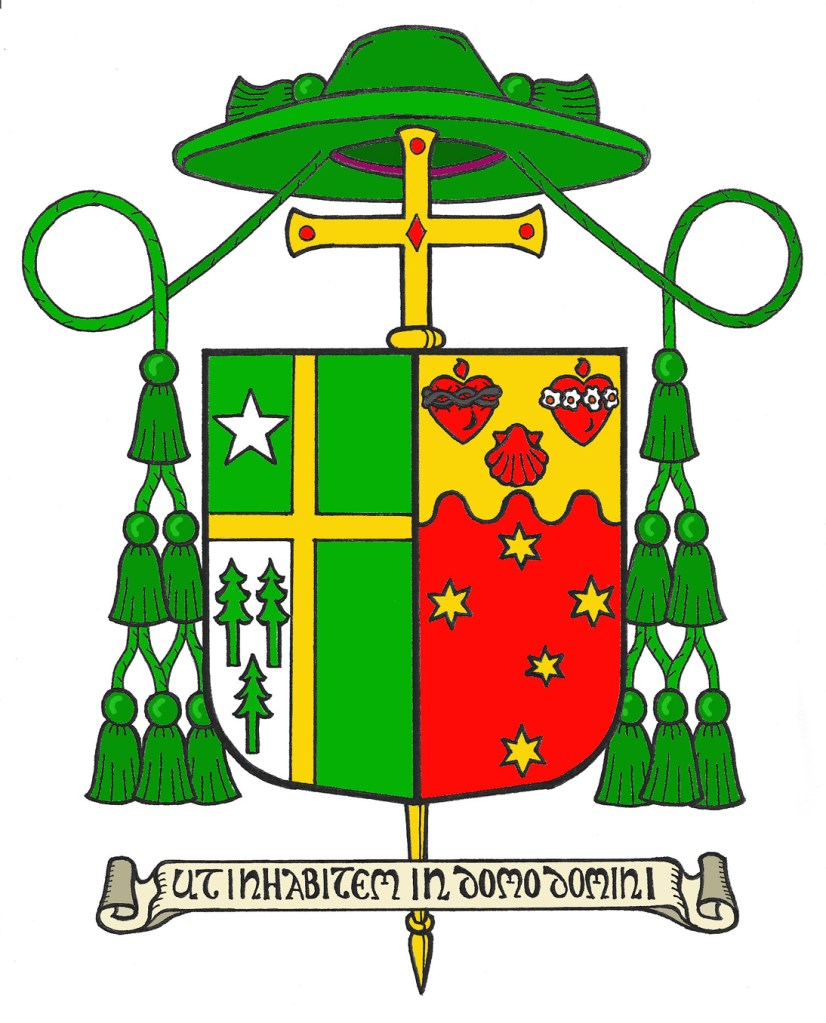
Back in 2012 when he was appointed as Fourth Bishop of Tyler I had the happy task of designing his coat of arms. Now that he has ceased to be the Bishop of Tyler his coat of arms will be modified to reflect that reality. He remains a bishop in the Church and, as such, retains the use of his armorial bearings. His coat of arms at the time of his ordination and installation was:
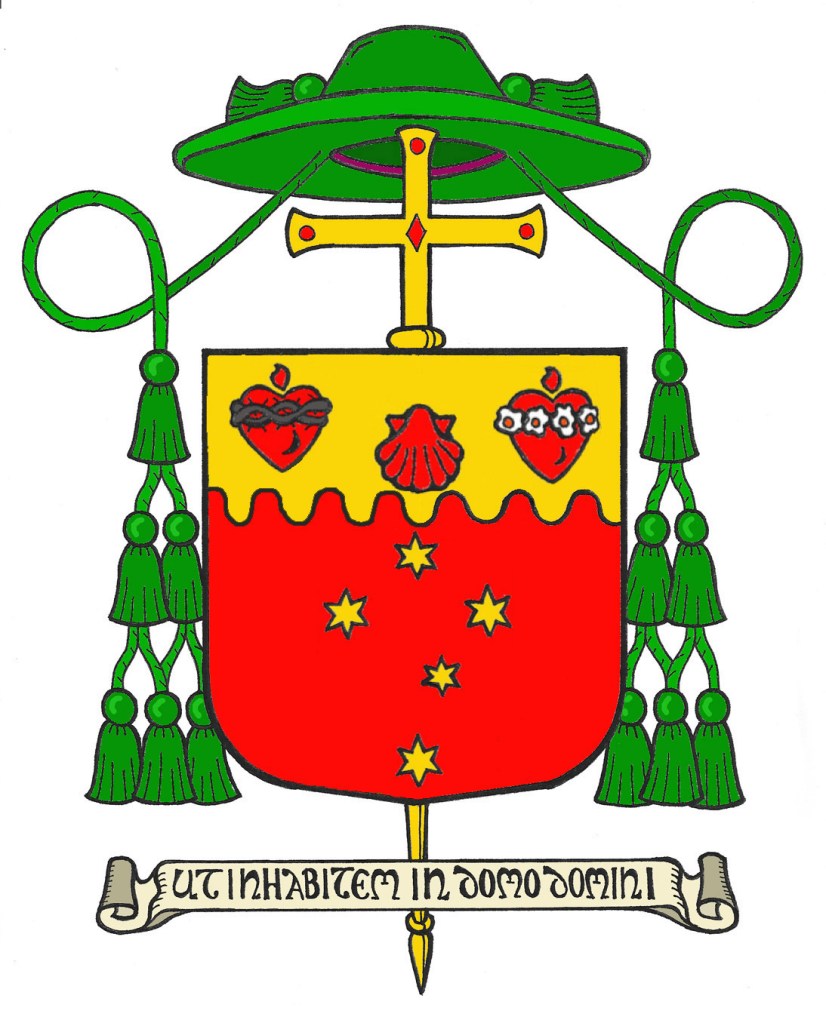
Now that he has been removed as Ordinary of Tyler, his armorial bearings will appear as this:
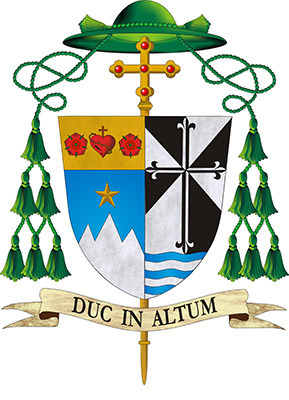
On October 12, the Most Rev. Stephen Maekawa, OP (55) a priest of the Order of Preachers (i.e. the Dominicans) living and working in Alaska was ordained a bishop and installed as the 10th Bishop of Fairbanks, Alaska.
His coat of arms is:
According to the diocesan website:
“In the right side of the shield (to the observer’s left), we find represented the coat of arms of the Diocese of Fairbanks. At the base, the North Star is suspended on a blue field over the mountains of Alaska, which appear in white. In the upper section, between two red roses on a field of gold, is the Sacred Heart of Jesus, titular symbol of the Cathedral of the diocese. The roses, representing St. Therese of Lisieux, patroness of the Alaska Missions, recall her promise, “After my death I will let fall a shower of roses.
In the left side of the shield (to the observer’s right) is the personal coat of arms of Bishop Maekawa. The black and white cross is the from the coat of arms of the Order of Preachers founded by St. Dominic in 1216. The waves represent the waters of baptism and the family name Maekawa which means “before the river.” The episcopal motto “Duc in Altum” is Jesus’ command to the Apostle Peter, “Put out into the Deep” which reminds us to trust in the Lord Jesus believing that all creation belongs to God: “The earth is the Lord’s and all it holds, the world and those who dwell in it.” (Ps 24:1)“
I think, unsurprisingly, the bishop has chosen a simple coat of arms reflecting his Religious community. It harmonizes well with the diocesan arms with which it is impaled. A nice design that doesn’t try to do too much–perhaps the single biggest error made by most new American bishops.
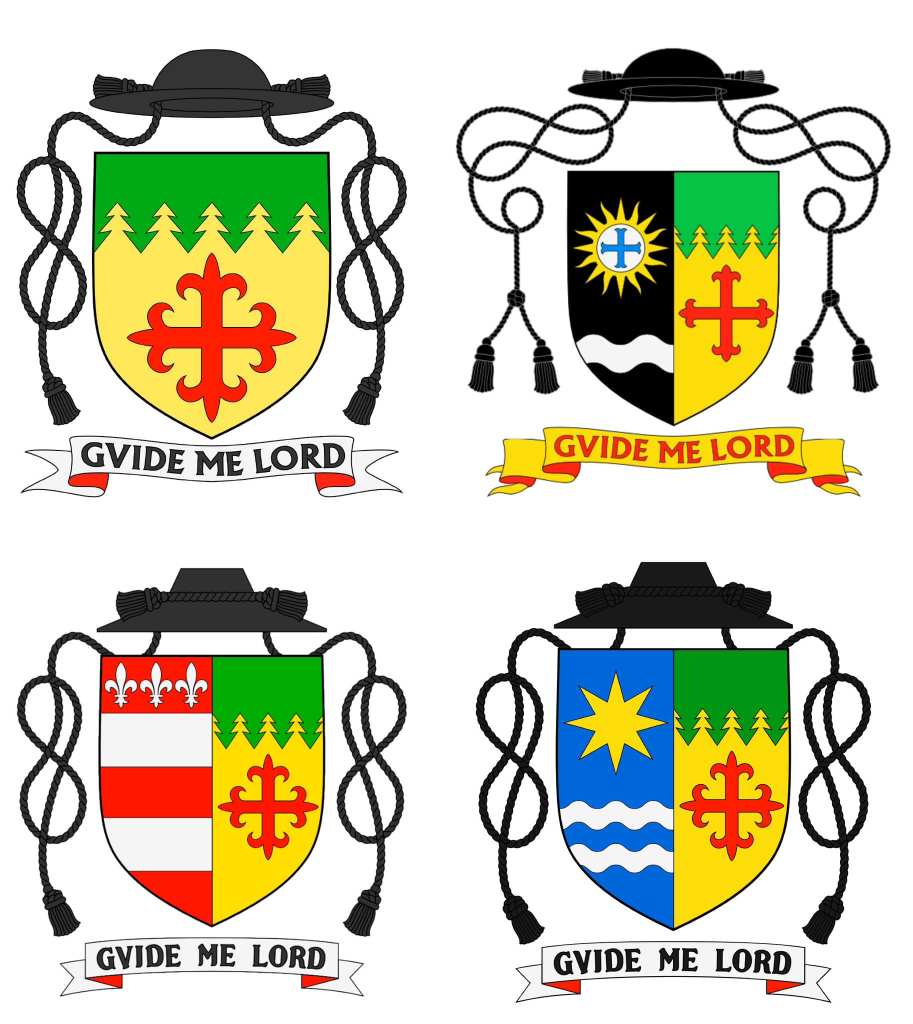
Throughout the course of my priesthood, after my time as a Parochial Vicar concluded and I began to be placed in charge of my assignments I also began the practice of 1) devising armorial bearings for the different places in which I have served and 2) marshaling those newly-devised coats of arms with my own. Having jurisdiction over the church or parish was then illustrated heraldically.
In the image above the first coat of arms (upper left) is my personal coat of arms assumed at ordination in 1997. The next image (upper right) shows my arms impaled with those of the Shrine of the Blessed Sacrament in Raritan, NJ where I served as the Sixth Rector (hence the four tassels instead of only two) from 2009-2015. The image at lower left shows my arms impaled with those of St. Joseph Church in Washington, NJ where I served as Administrator and then as the Twenty-Second Pastor from 2015-2023. During the last part of that time I was also Dean of the Morris Canal Deanery. The final image (lower right) shows my coat of arms impaled to the newly-devised parish coat of arms of St. Mary, Star of the Sea in South Amboy, NJ where I will serve as the Ninth Pastor from 2023 onwards.
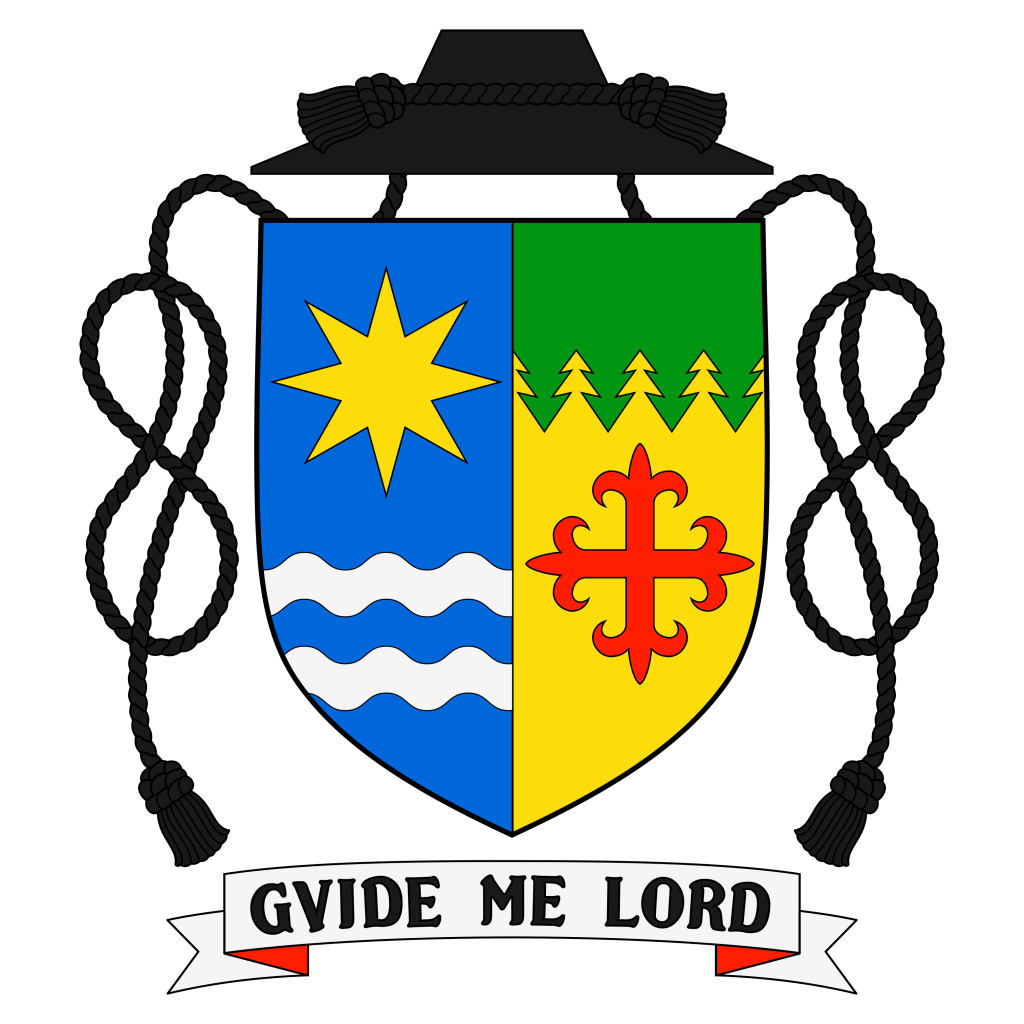
Next week I’m moving to a new assignment as Pastor of St. Mary Church in South Amboy, NJ. The parish was established in 1851 dedicated to St. Mary, Star of the Sea. In 1853 property for the present church was purchased and in 1854 the appointment of its first resident pastor occurred.
While the parish still is, and always has been, dedicated to Our Lady under the title of “Star of the Sea” it has always been known simply as St. Mary’s. That’s actually rather common. People like short hand and nicknames and many churches dedicated to various titles of Mary are known by their parishioners simply as St. Mary’s.
As I prepare to begin my tenure as Pastor I looked to designing armorial bearings as a symbol for the parish. This has been my custom for years. So, naturally I took as a starting point the canonical patronal title of the parish—St. Mary, Star of the Sea—to devise the coat of arms. That title lends itself very well to a clear and simple design evoking the parish’s patroness.
I know the parish will always be known with great affection as St. Mary’s. I hope we can also foster the occasional use of the beautiful name of its patroness, Star of the Sea (in Latin: Stella Maris).
As Pastor of the parish I will impale my own armorial bearings with those of the parish.
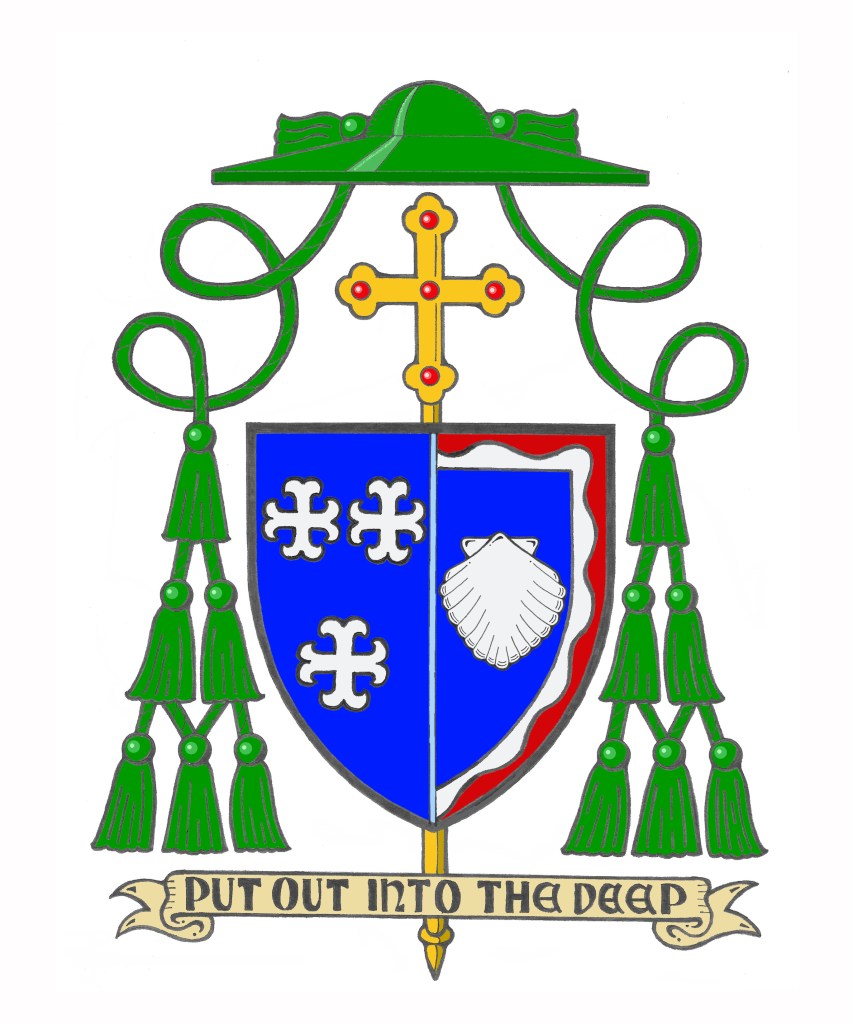
In 2018, the Most Rev. Richard Henning, a native and a priest of Long Island’s Diocese of Rockville Centre, NY (and a high school classmate of mine) became Auxiliary Bishop of that diocese. I was pleased and honored to assist him with the design of his personal coat of arms to be adopted upon ordination to the episcopate.
Last year, the Holy Father appointed him to be the Coadjutor Bishop of Providence, Rhode Island, just across Long Island Sound from his former diocese. A coadjutor bishop is appointed to share in the authority of the diocesan bishop in running the diocese and has the right of automatic succession to the See when the previous bishop dies or retires. (NOTE: there used to be such a thing as coadjutor without the right of succession, but such appointments are no longer made). Bishop Henning succeeded to the See of Providence on the first of May of this year upon the retirement of Bishop Thomas Tobin becoming the IX Bishop of Providence. So his armorial bearings have been altered to impale his personal arms with those of the See:
The arms of the Diocese of Providence are composed of a blue field on which are placed three silver (white) crosses with arms that appear to terminate in anchors. These crosses, heraldically known as “moline crosses,” are used to suggest an anchor. By employing the symbol of the State of Rhode Island this signifies that the Diocese of Providence encompasses all of the state it was established to serve. The crosses, three in number to signify The Trinity, are rendered in the traditional colors of water, blue and silver (white), because of the importance that water plays in the life of “The Ocean State.” These colors are also the traditional colors for the representation of the Blessed Virgin Mary, who, in her title of Our Lady of Providence, is Patroness of the Diocese and of the See City.
Bishop Henning’s personal coat of arms is composed of a design depicted in red (Gules), white (Argent) and blue (Azure) which are the national colors of the United States.
Both the blue background and the single escallop shell allude to the sea as evoking the Bishop’s own background and the shell is also borrowed from the coat of arms of the See of Rockville Centre, the diocese in which he was born and raised and which he served as a priest and auxiliary bishop. The shell image also recalls the Bishop’s heritage in the Diocese of Brooklyn, dedicated to its patron, St. James. The episcopal ordination of Bishop Henning took place on the eve of the Feast of St. James. In concert with the Bishop’s motto, the shell is a traditional symbol of baptism and pilgrimage. It is in the depths of these waters that Christians find their salvation in Jesus Christ.
The white wavy line surrounding the blue field is similarly taken from the arms of Rockville Centre and it alludes to the diocese’s location on Long Island, NY. Furthermore, it indicates the sea as the place where the barque of St. Peter, an image used to evoke the Church, is located.
The blue background also evokes the Bishop’s devotion to the Blessed Virgin Mary and his years of service as a Professor and Rector at the Seminary of the Immaculate Conception in Huntington, NY. The red wavy portion of the border evokes the Bishop’s devotion to the Most Sacred Heart of Jesus and his former service as the Director of the Sacred Heart Institute for the Ongoing Formation of the Catholic Clergy.
This situation was one of those times that chance presented a challenge. The bishop wanted to impale his arms with those of the See as is customary in N. America. In addition, he had no good reason to change the diocesan arms and no desire–correctly–to change his personal arms. Impaling them side-by-side presented an aesthetic challenge because they both employ blue fields. In addition, it is customary not to continue a bordure all the way around the field when the arms are impaled. Rather, there is a kind of dimidiation employed whereby the bordure is discontinued along the impalement line. In order to make the division between the two coats of arms more visible, and slightly less confusing a division line of very light blue (blue celeste, if you will) was employed for aesthetic reasons. This is really more of an artistic style choice rather than a heraldic one. Once again, it was my pleasure to assist him with this project.
The Most Rev. Edward Cullen, a priest of Philadelphia who served as Auxiliary Bishop there from 1994-1997 and who went on to become the Third Bishop of Allentown, PA from 1997-2009, passed away on May 9, 2023 at age 90. RIP.
The coat of arms he assumed upon becoming a bishop in 1994 is simple enough. Because so many bishops want to include as much symbolism as they can he decided against symmetry by having the garb and the star next to each other. The problem is that symmetry is an important aspect of heraldic art. It might have been better to place the star in the center between two garbs. Even though that increases the number of charges it provides for a more symmetrical look and avoids the appearance of a bunch of charges merely splayed across a shield. The garb may only represent one thing but having two of them would still have looked better.
Some might say, “But then it is as if they represent two separate things.” Only if you are being tiresomely literal. Solely for the sake of symmetry and a better composition and appearance, two garbs with a star between them would have been a better choice.
It is unfortunate that the personal arms and the diocesan arms both had fields Gules. But, sometimes that kind of thing happens. It would not have been a good idea to change the field in the personal arms to something else. Occasionally, the luck of the draw created some unfortunate combinations when marshaling arms together. That’s just the way it is. In such situations a bishop could consider not impaling his arms with those of the See or the artist could get creative with the depiction of the coat of arms by doing something like employing a division line of a color other than merely black to separate the two impalements.
Overall he had a nice coat of arms but with a little bit of help it could have been even better.
On April 4, the Holy Father accepted the resignation due to health reasons of the Most Rev. Michael Jackels, (68) Archbishop of Dubuque Iowa. His personal arms reflect his baptismal patron, St. Michael the archangel, combined with the unicorn from his paternal family’s coat of arms. When he first became a bishop his assumed arms impaled these two elements which was an odd choice. When he was translated to Dubuque he impaled his arms with those of the archdiocese and marshaled the other two elements in a manner that worked out to be aesthetically pleasing.
The Most Rev. Louis Tylka (51) a priest of Chicago who became Coadjutor Bishop of Peoria in 2020 succeeded to the See on March 3 after the retirement of Bishop Jenky. The armorial bearings I originally designed for him in 2020 will now be displayed as impaled with the coat of arms of the See of Peoria.
On December 29, 2020 His Holiness Pope Francis appointed the Most Rev. Dermot Farrell (66), a priest of the Diocese of Meath and since 2018 Bishop of Ossory, Ireland to be the 51st Metropolitan Archbishop of Dublin. He succeeds Abp. Diarmuid Martin.
He had already assumed a coat of arms as Bishop of Ossory. The image below is not official but was a cut and paste job by me to see what his arms as archbishop will look like. In Ireland the archbishops of Armagh (who is the Primate of All Ireland) and of Dublin (who is the Primate of Ireland) use arms of the See that appear identical because this stems from a time when all archbishops tended to use arms depicting a pall (pallium) and a cross as symbols of being an archbishop. The archiepiscopal insignia then later became associated with certain metropolitical & archiepiscopal sees and it remains so to this day, including some (like the Church of Ireland Diocese of Dublin, or the Anglican Archbishop of Canterbury) where it seems particularly incongruous. This is because the pallium is worn by Roman Catholic Metropolitan Archbishops as a symbol of sharing in the ministry of the Bishop of Rome (the Pope) and, as such, they receive it from him as a sign of their office.
Below we see what Archbishop Farrell’s coat of arms may well look like (or something close to this). I note that his predecessor, App. Martin, did not use a coat of arms.
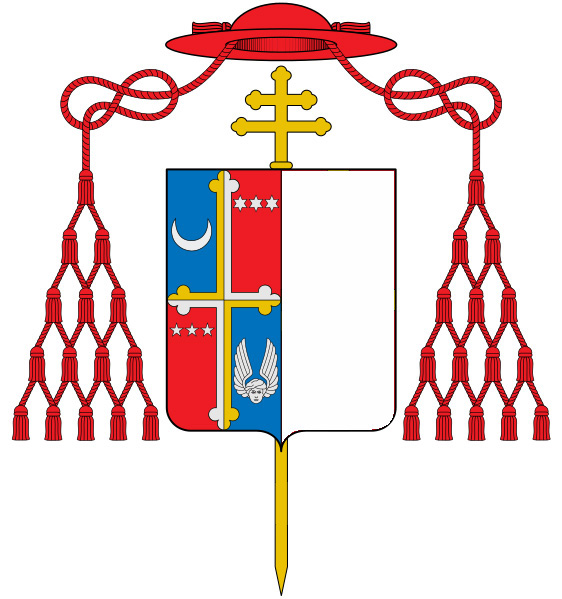
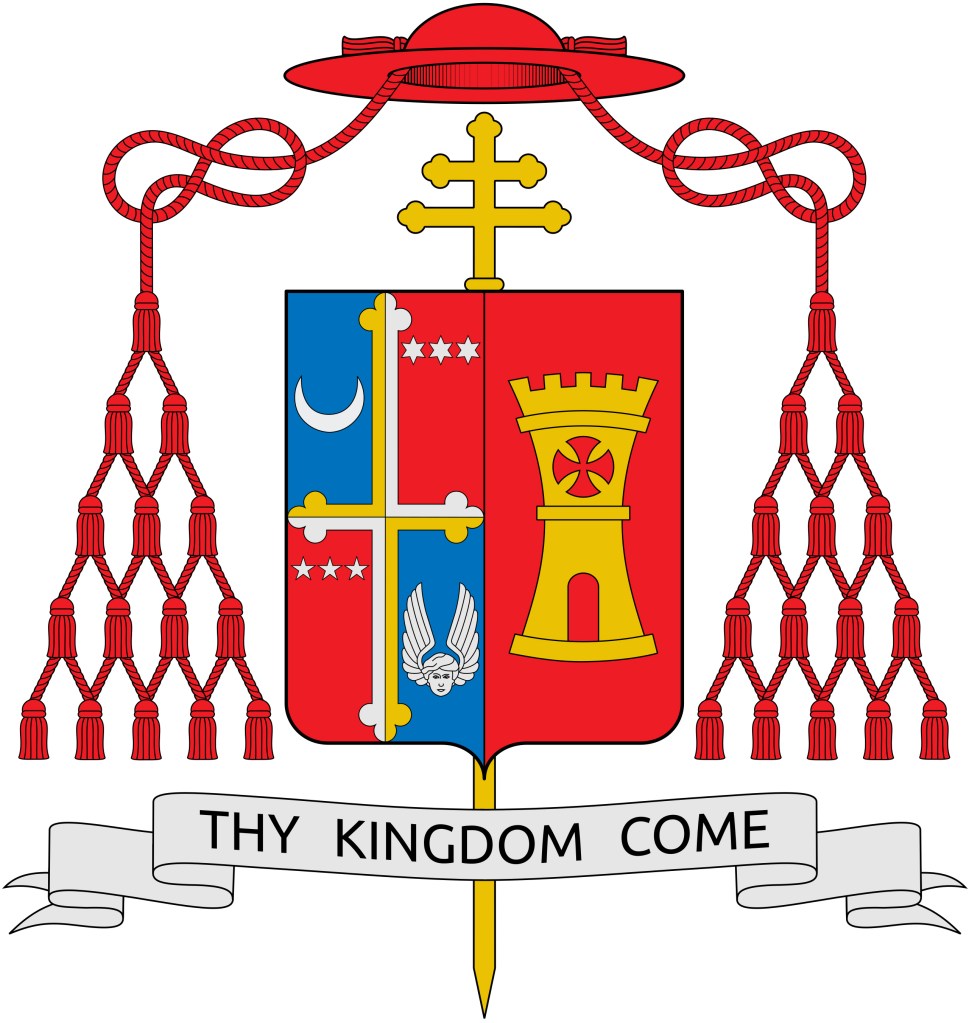
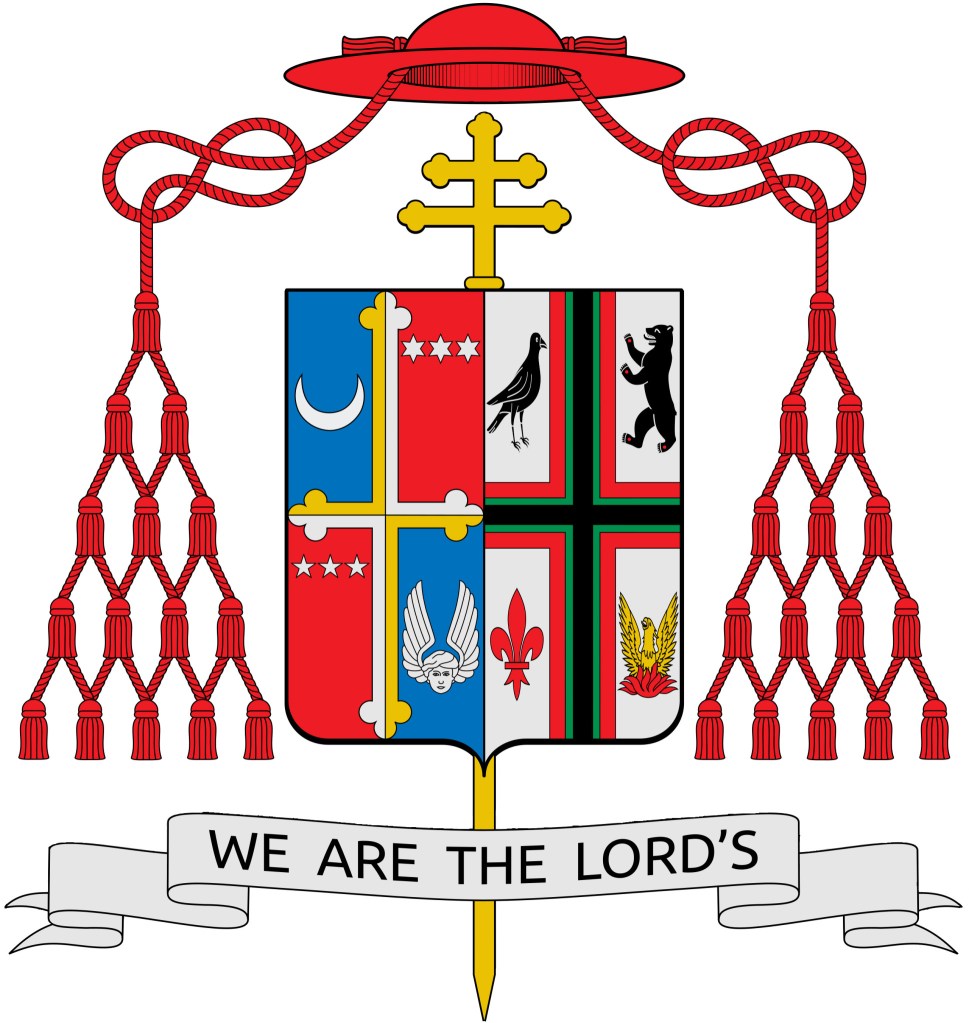
Here are the armorial bearings of the Archbishops of Washington, DC almost all of whom have been elevated to Cardinal with the notable exception of the first one, Archbishop Michael Curley who was also the Archbishop of Baltimore. At first the Archdiocese of Washington was part of the Archdiocese of Baltimore. Later, a dual archdiocese of Baltimore-Washington was created with Curley leading it. Eventually, Washington became a separate archdiocese but Curley was still appointed its archbishop making him, simultaneously, the archbishop of the oldest American diocese (Baltimore) and the newest at that time (Washington). A short time later Washington, DC received its own residential archbishop with the appointment of Patrick O’Boyle.
There is no coat of arms for Theodore McCarrick who is no longer a cardinal or even a cleric. A blank shield is used in place of his armorial bearings but his time in Washington in still noted because under Mr. McCarrick’s tenure the armorial bearings of the archdiocese were changed and that change, despite McCarrick’s disgrace, has been employed by his two successors as well. One can only hope that at some point in the future the original coat of arms of the archdiocese will be adopted again.
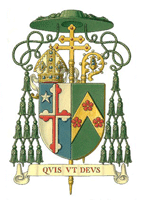
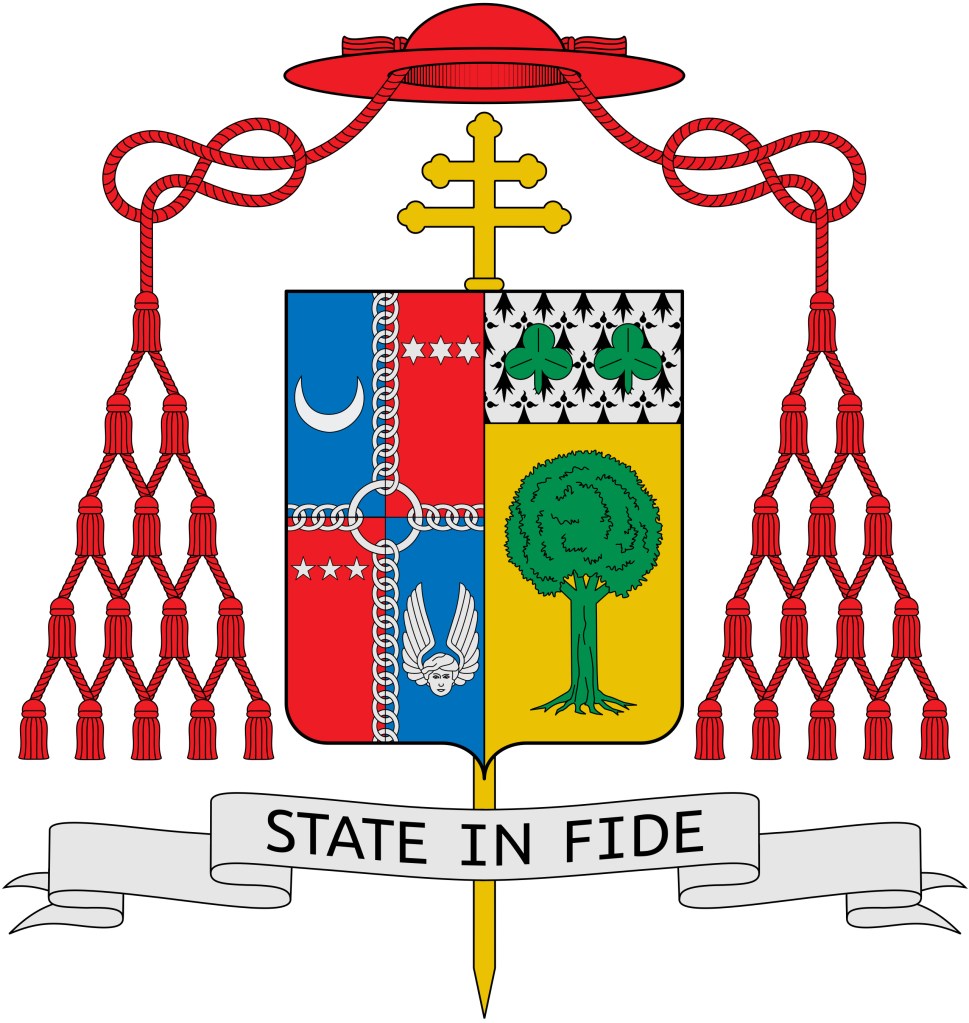
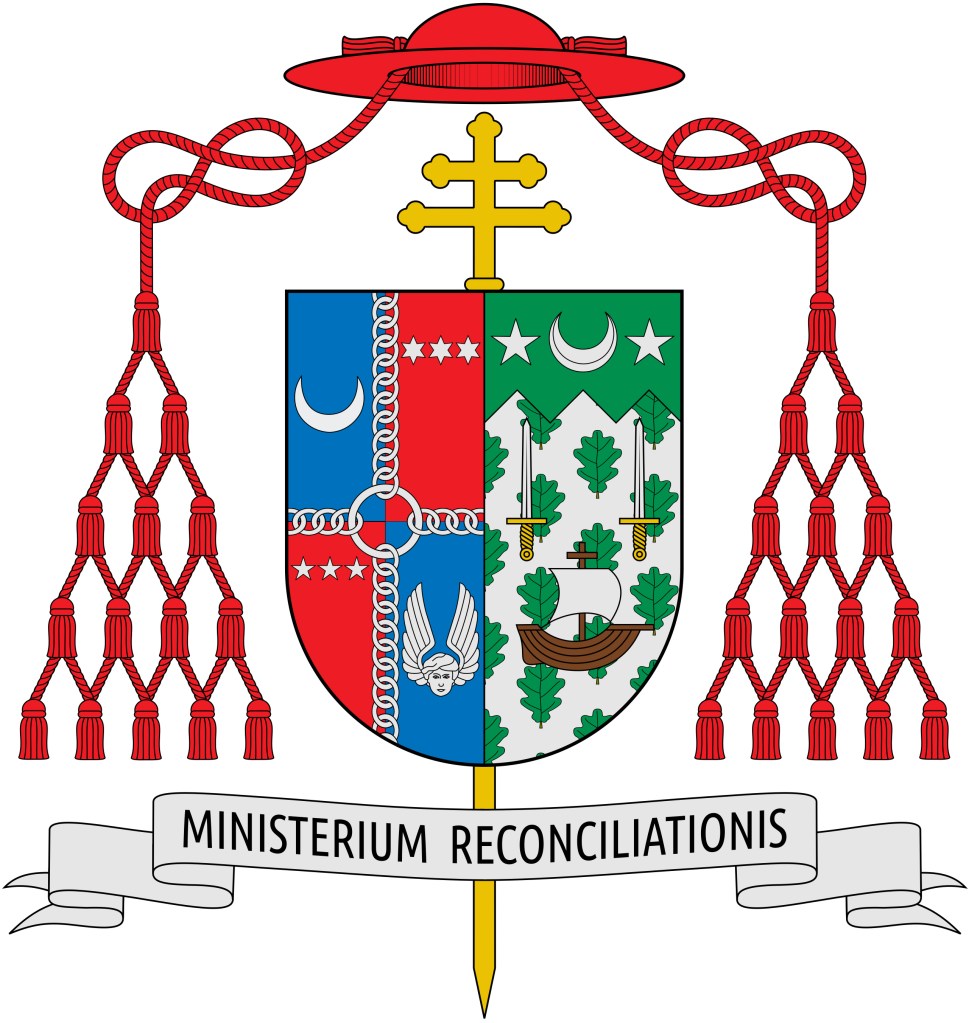
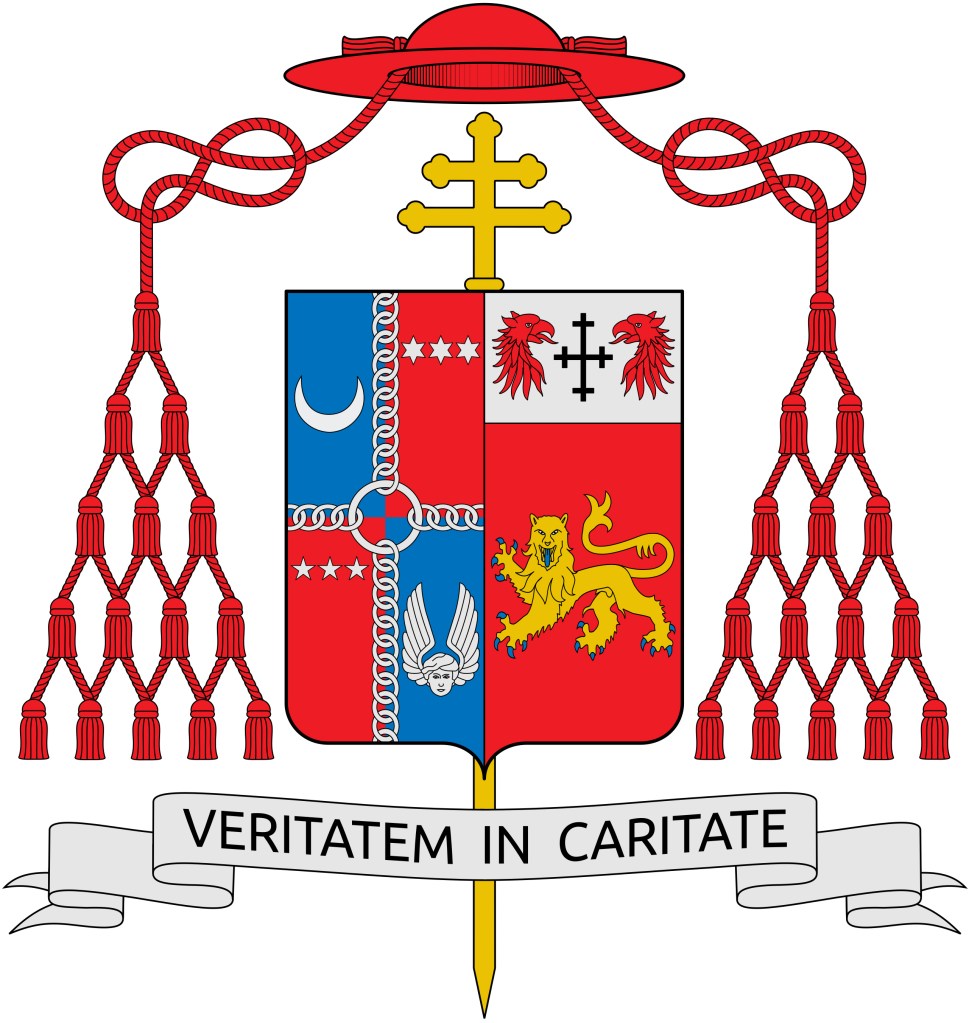
Archbishop Michael Curley (the archdiocesan arms hadn’t been adopted yet and Curley impaled his arms with those of Baltimore)Patrick Cardinal O’BoyleWilliam Cardinal BaumJames Cardinal HickeyArchdiocesan arms changed by Mr. Theodore McCarrickDonald Cardinal WuerlCardinal-Designate Wilton Gregory
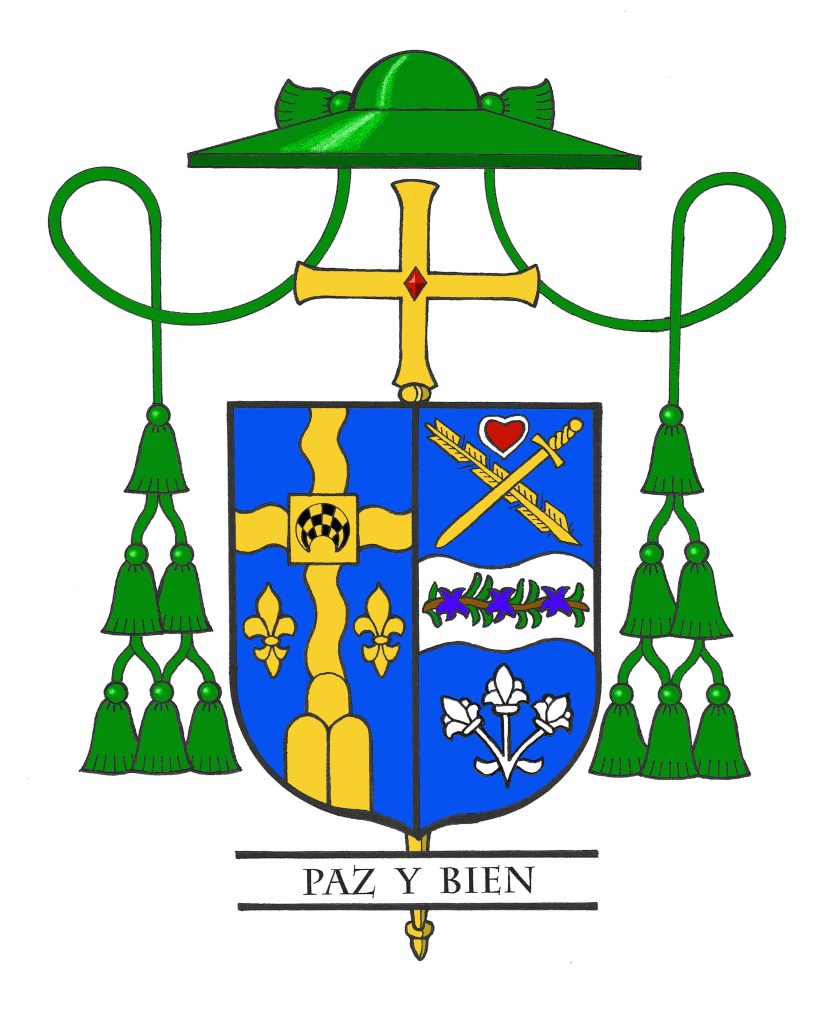
On September 29, the Most Reverend Ronald A. Hicks (53), a priest and Auxiliary Bishop of Chicago, will be installed as the Sixth Bishop of Joliet, Illinois.
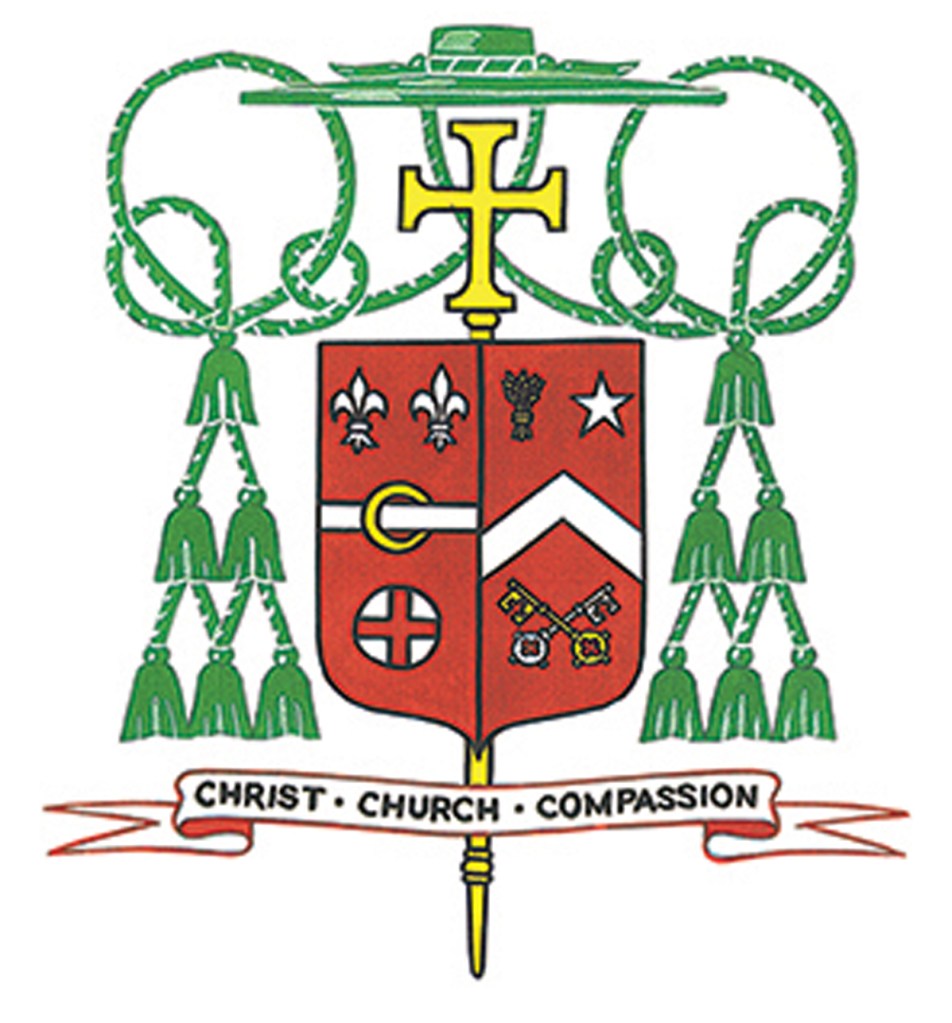
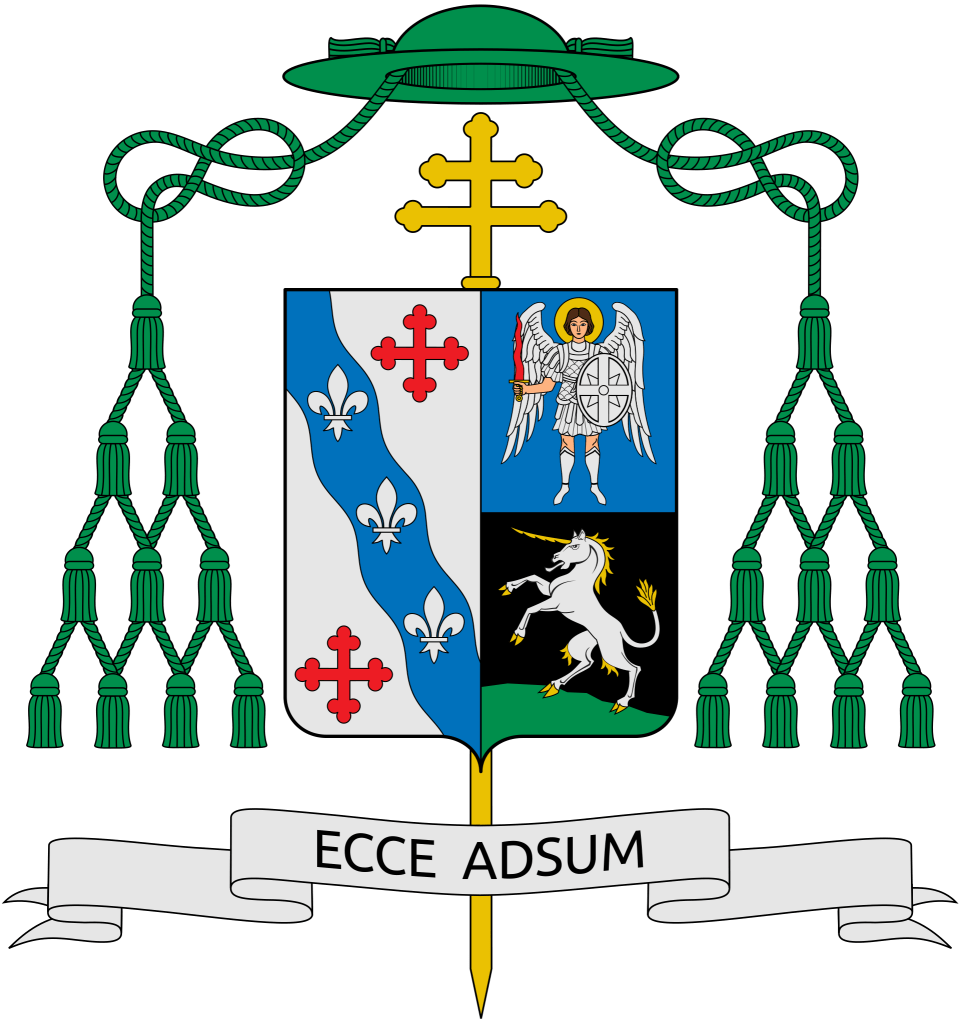
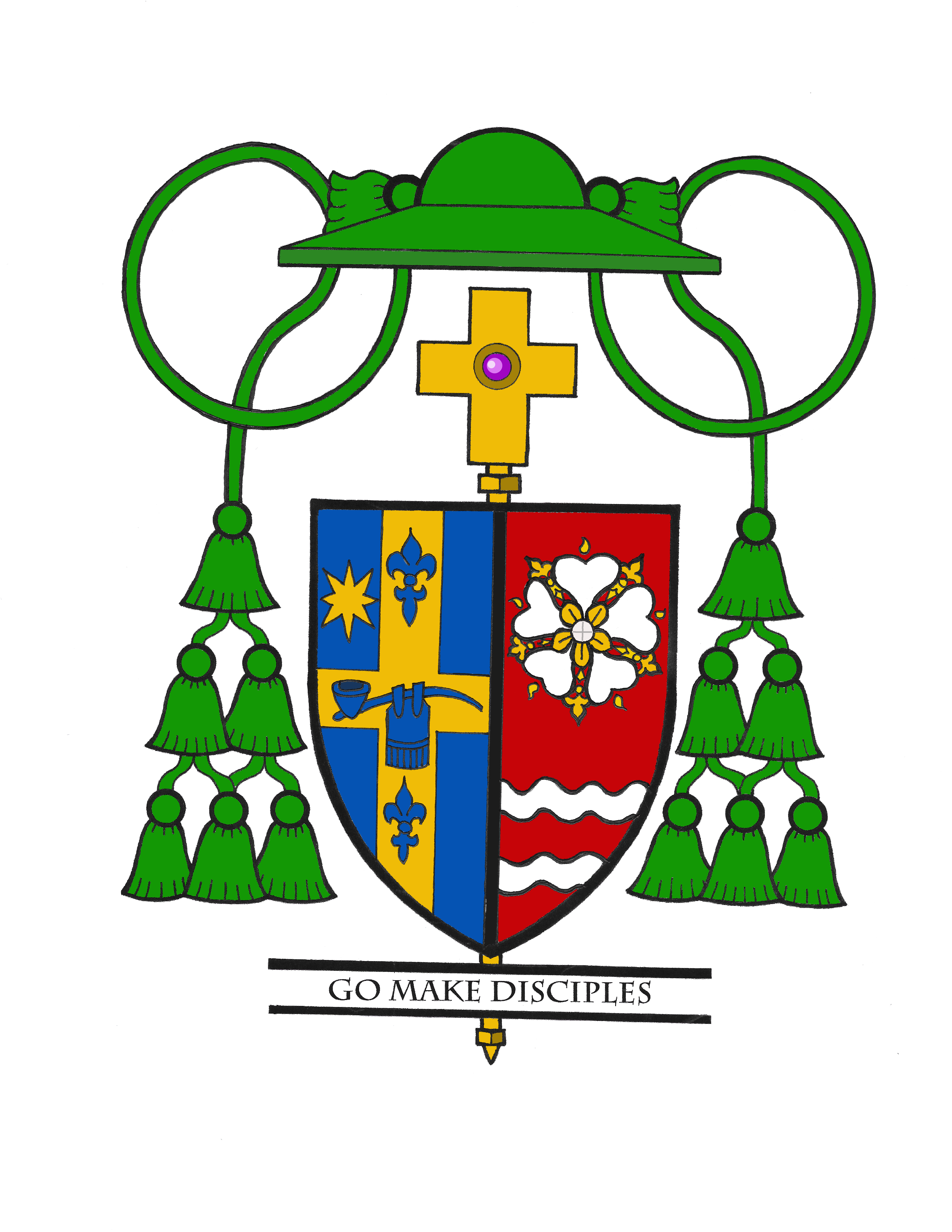
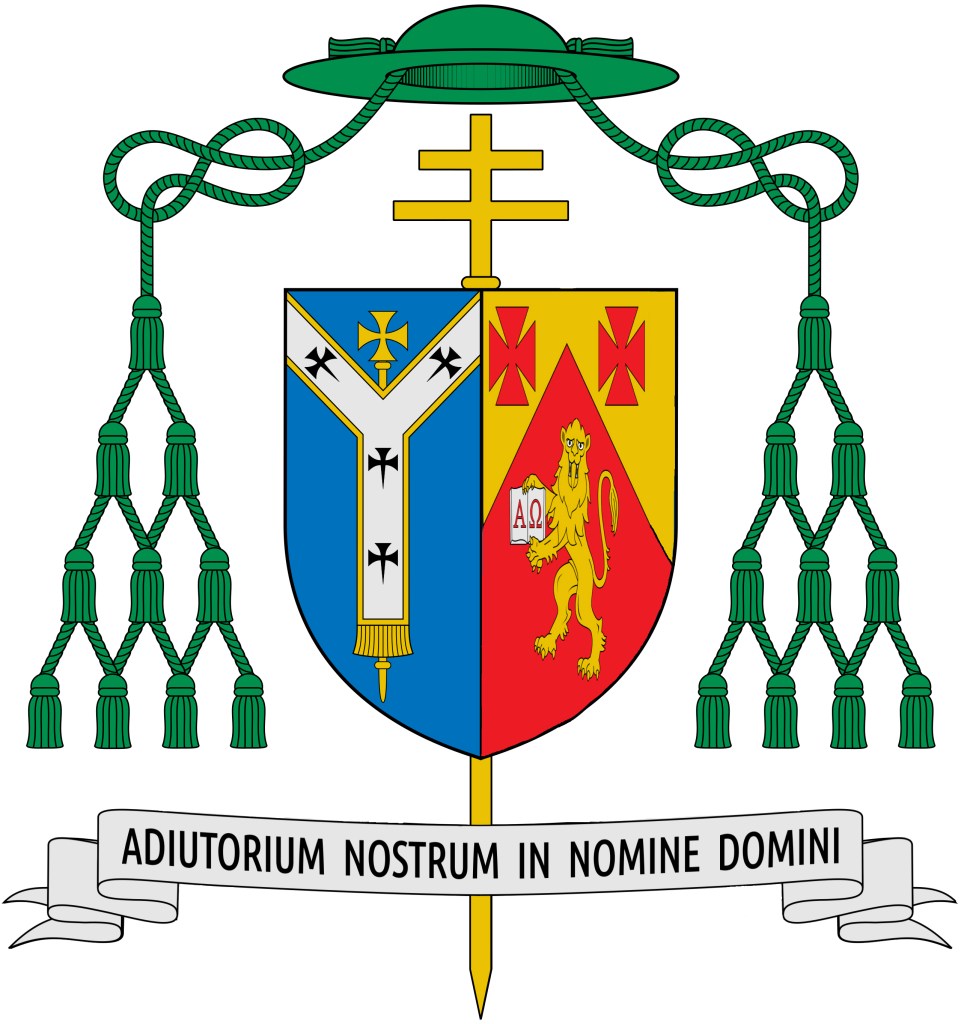
His personal coat of arms was assumed in 2018 when he became a bishop and was prepared at that time by the late Deacon Paul Sullivan. After being named to Joliet he asked me to help him by marshaling his existing arms with those of the See of Joliet.


 EXARANDORUM