Category Archives: Abbots & Abbesses

Another Ordinary Australian

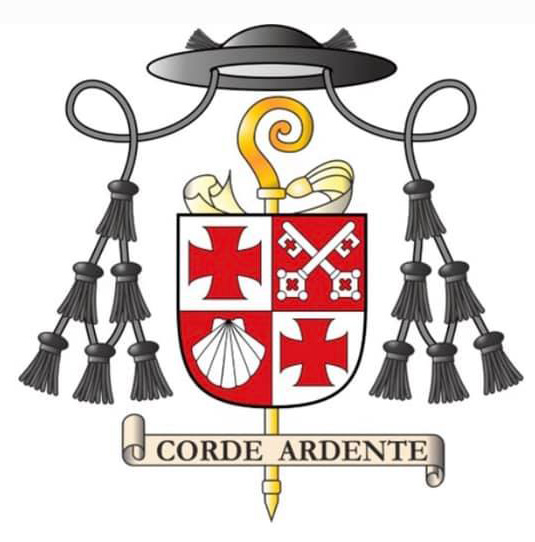
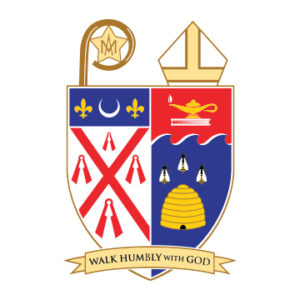
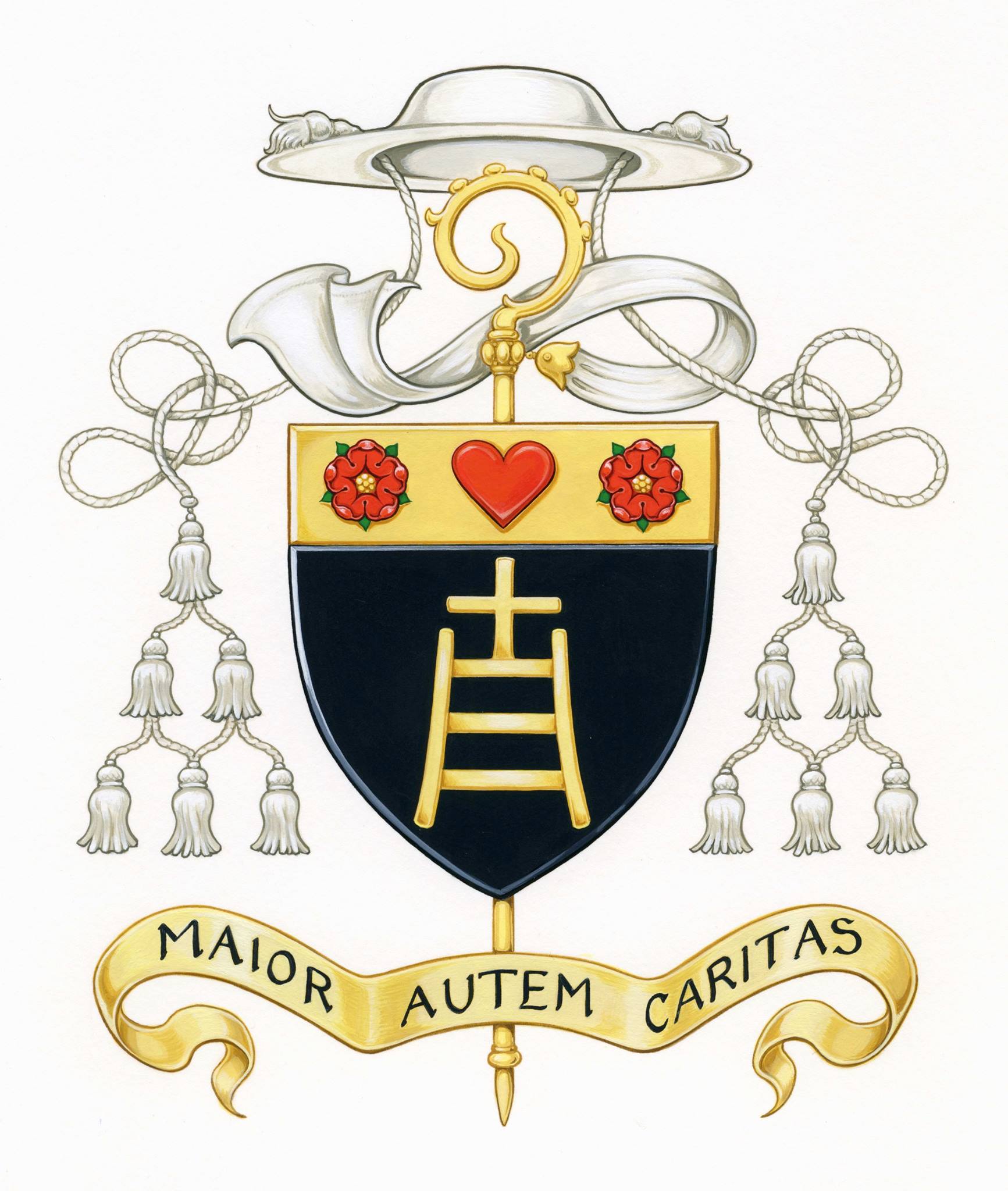
On August 27 Monsignor Carl Reid, PA, (68) a Canadian who converted to Catholicism in 2012, was installed as the second Ordinary of the Personal Ordinariate of Our Lady of the Southern Cross in Australia. His personal arms were granted by the Canadian Heraldic Authority and are impaled with the arms of the Ordinariate. Richard d’Apice (in consultation with myself) assisted the Canadian heralds with the design of the personal arms. Mr. d’Apice and I designed the arms of the Ordinariate as well.

The unusual use of the crozier has been a precedent set among the Personal Ordinariates after their establishment by Pope Benedict XVI. It derives from the use of the crozier to denote Ordinary Jurisdiction while at the same time leaves off the sudarium (veil) attached to the crozier in abbatial arms which has become a symbol proper to abbots. Msgr. Reid exercises full Ordinary Jurisdiction and makes use of the pontificalia while celebrating the Sacraments like a bishop but does not possess the episcopal office. NOTE: The Personal Ordinary for the UK does not make use of a coat of arms and the Personal Ordinary for N. America is a bishop.

The artwork is by the talented Australian, Sandy Turnbull.

New Austrian Provost

On April 9, 2019 the Augustinian Canons of Stift Herzogenburg in lower Austria elected Fr. Petrus Stockinger (37) to be their new Provost. In the world of Canons Regular some communities of canons are governed by Abbots. Others, like some Collegiate or Cathedral chapters, are governed by a Provost.

What is interesting for the purposes of this blog is that a Provost, who also enjoys the privilege of using pontificals, like an Abbot, also has the same heraldic privileges as an Abbot. These are, the black galero with black cords and twelve black tassels as well as the crozier with the sudarium attached. The armorial bearings of the newly-elected Provost are below.

Ad Multos Annos!

Abbess Hildegard Dubnick, OSB of Eichstätt

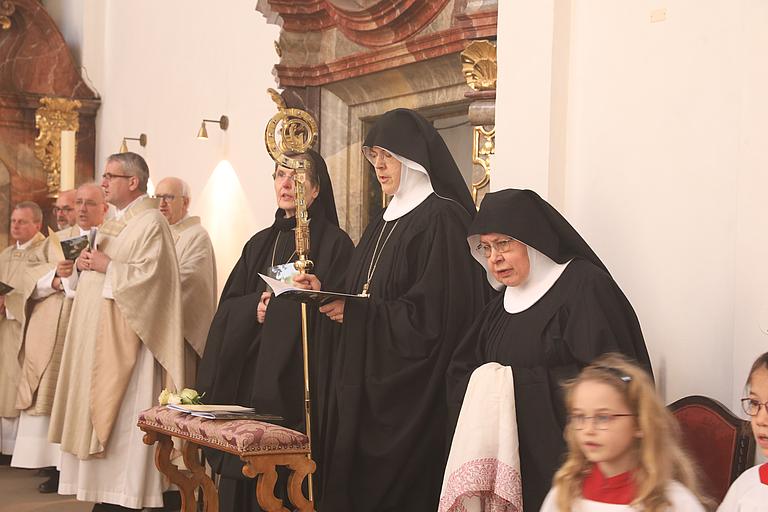
919px-Wappen_Hildegard_Dubnick.svgOn January 4, 2019 the nuns of St. Walburga Abbey in Eichstätt, Bavaria elected Mother Hildegard Dubnick, OSB, (57) an American and a nun at their daughter foundation, St. Walburga Abbey in Virginia Dale, Colorado, to succeed Mother Franziska Kloos, OSB who had served as Abbess of Eichstätt for 34 years and retired from office on December 27, 2018. Abbess Hildegard received the abbatial blessing from Bishop Gregor Maria Hanke, OSB of Eichstätt on February 23, 2019.

An abbess in the Catholic Church makes use of some of the same pontifical insignia as an abbot. Abbesses wear the pectoral cross and ring and also carry a crozier. In addition, they usually have a personal coat of arms. The coat of arms assumed by Mother Hildegard is described in an article from the Eichstätt Courier as:

“Mutter Hildegards Wahlspruch aus Psalm 47 (47,10 Vulgata) “Suscepimus Misericordiam Tuam” lautet übersetzt: “Wir haben dein Erbarmen empfangen.” Der Spruch umfließt ein Wappen mit drei Eichen im Mittelpunkt, deren Stamm sich aus Wasser speist. Es nimmt in den Eichen Bezug auf den tschechischen Nachnamen Mutter Hildegards, der übersetzt “kleine Eiche” bedeutet, ebenso auf ihren Geburtsort Oak Park in Illinois (USA) und stellt letztlich eine schöne Verbindung zu ihrem neuen Wirkungsort Eichstätt dar. Die drei Wellen versinnbildlichen den im Wahlspruch erwähnten Strom des Erbarmens und der Gnade Gottes, das Ölfläschchen weist hin auf das Geschenk des Walburgisöls, das am Grab der heiligen Walburga fließt.” Translated that is:

IMG_1867

Mother Hildegard’s motto from Psalm 47 (47.10 Vulgata) “Suscepimus Misericordiam Tuam” translates: “We have received your mercy.” The saying is on a scroll around a coat of arms with three oaks in the center, whose trunk is fed from water. The oaks refer to the Czech surname of Mother Hildegard, which means “small oak tree”, as well as to her birthplace Oak Park in Illinois (USA) and ultimately represents a beautiful connection to her new place of Eichstätt. The three waves symbolize the the river of mercy and grace of God mentioned in the motto, the bottle of oil points to the gift of Walburgis oil that flows at the tomb of St. Walburga.

Ad Multos Annos, Mother Hildegard!

csm_aebtissinnenweihe-15_4b3ccd2ad3


Grand Master of the Teutonic Order

1200px-insignia_germany_order_teutonic.svg

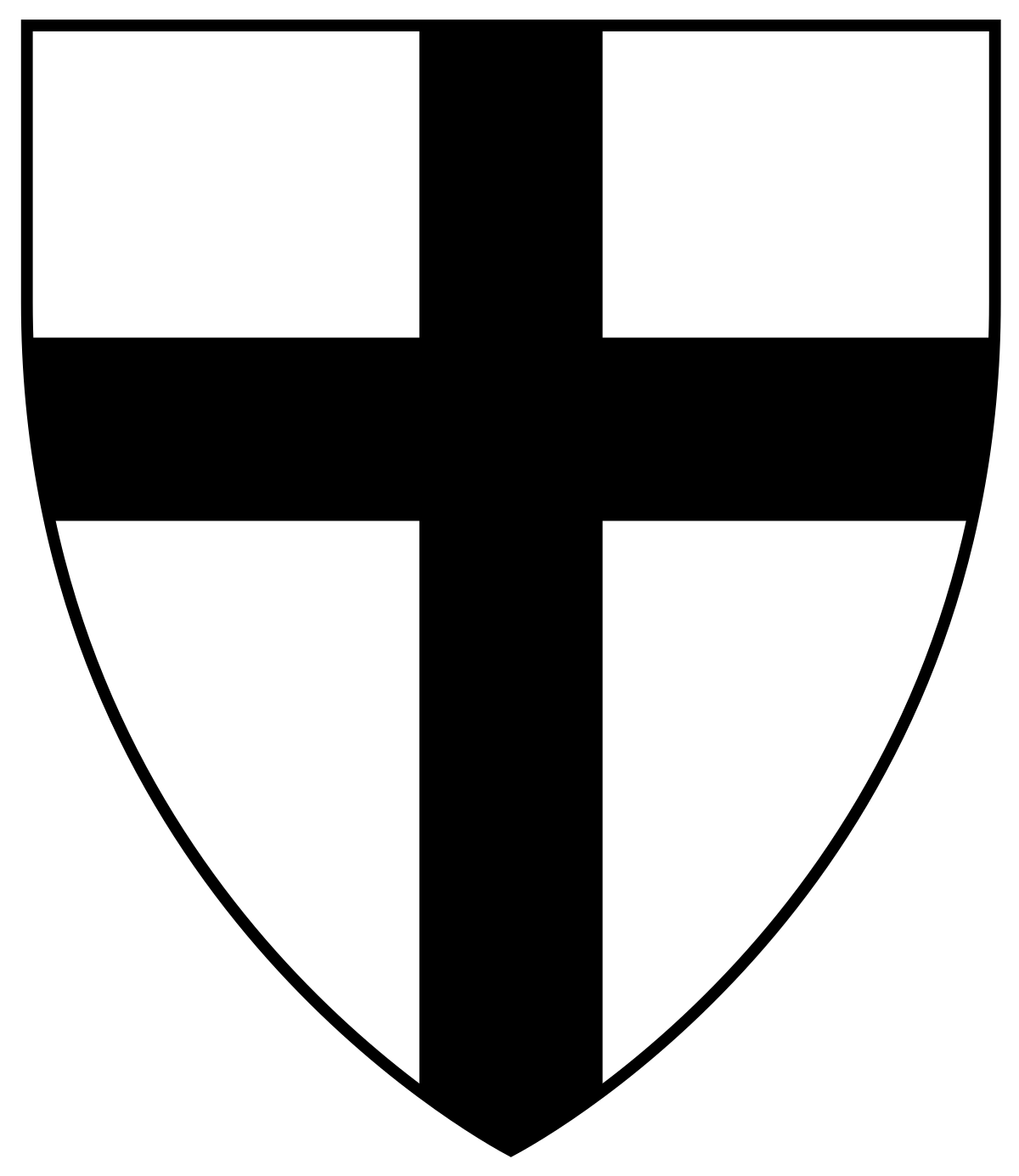
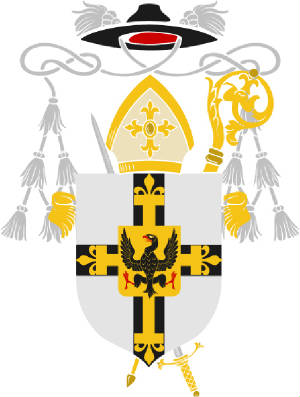
In August of 2018 the Teutonic Order (Deutscher Orden), a formerly medieval military order of chivalry which had, by the 20th Century, been transformed into a Religious Order, elected Fr. Frank Bayard, O.T. as its Grand Master. The Grand Master of the order has the rank of abbot. Fr. Bayard succeeds Fr. Bruno Platter who was elected as Grand Master of the Teutonic Order in 2000 and re-elected in 2006.

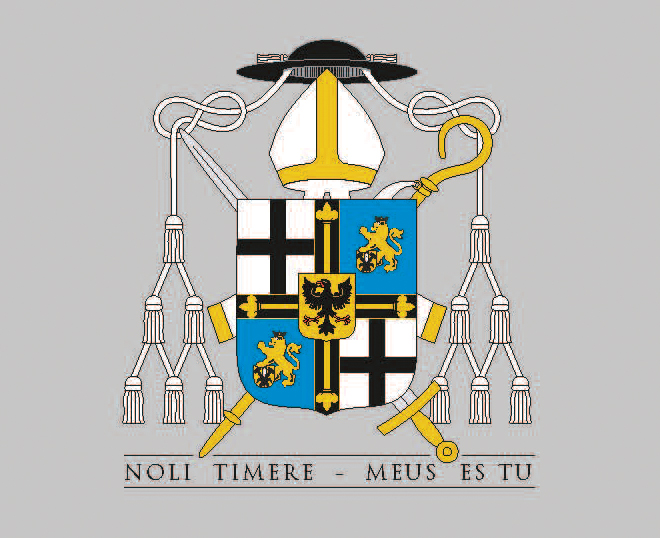
The coat of arms of the Grand Master is ensigned with the external ornaments of an abbot and the galero is black with cords and tassels that are white. deutscherordengm.jpg.w300h397By custom the mitre is also included in the achievement despite the 1969 Instruction from the Holy See stating otherwise. In addition, the secular sword is included which is tolerated given the order’s history as an order of chivalry prior to becoming a Religious Order within the Church. The arms of the Grand master traditionally follow a pattern which makes use of a basic shield depicting the arms of the order as used by the Grand Master which divides the field into four quarters by a sable cross charged with a gold cross fleuretty and an inescutcheon overall depicting Or, an imperial eagle Proper. In the first and fourth quarters the usual arms of the Order (Argent a cross throughout Sable) are placed. The personal arms of the individual Grand Master then occupy the 2nd and 3rd quarters of the shield.

In November, 2018 The Rt. Rev. Frank Bayard received the abbatial blessing from Christoph Cardinal Schönborn, O.P. of Vienna, where the headquarters of the Order is located. The arms assumed by Grand Master Bayard are:

abtsbenediktion2

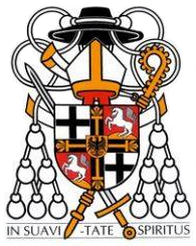
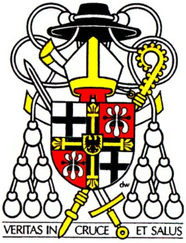
The coat of arms used by the previous two Grand Masters, Bruno Platter and Arnold Weiland followed the same pattern.

general-abbot-bruno-platter-grand-master-of-the-teutonic-order coat-of-arms-of-the-abbot-arnold-othmar-wieland-grand-master-of-the-teutonic-order-1988-2000

Norbertines in the USA

While neither of these abbots was elected very recently, within the last year there were two new Premonstratensian (aka Norbertine) abbots elected and blessed in the USA, one in Wisconsin and the other in Pennsylvania.

sna-radecki-coat-of-arms-300x300

The Rt. Rev. Dane J. Radecki, O.Praem elected on April 4, 2018 as the VII Abbot of St. Norbert Abbey in DePere, WI. He was blessed on July 11, 2018.

29177298_1599020133520476_268264765409722368_n

The Rt. Rev. Domenic Rossi, O.Praem, elected on January 23, 2018 as the IV Abbot of Daylesford Abbey in Paoli, PA. He was blessed on April 14, 2018.

Norbertine Cardinals

There have been fewer cardinals in the Church from the Order of Canons Regular of Prémontré (aka Norbertines) than there have been of other orders and, as far as I can tell, two of those known to be associated with that Order were Abbots in Commendam only. The Premonstratensian Cardinals are:

riche

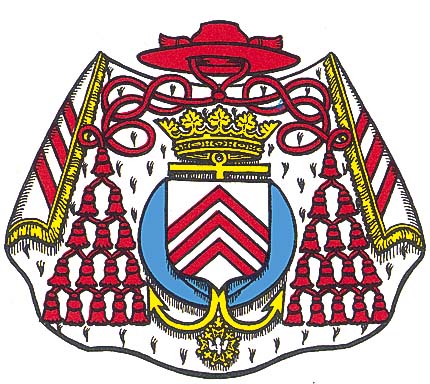
Armand Jean du Plessis, Duke de Richelieu, Bishop of Luçon, Commendatory Abbot of Prémontré, (also Territorial Abbot of Cluny and Abbot in Commendam of Citeaux)

mc BUCCA GIOVANNI 437

Johannes von Bucka, O.Praem. Archbishop of Olomouc

este2

Ippolito II d’Este, Archbishop of Auch, Archbishop of Arles, Commendatory Abbot of Prémontré

Benedictine Cardinals

Throughout the Church’s history there have been many members of the hierarchy who were members of Religious Communities. The present pope is a member of the Society of Jesus (Jesuits) and the first from that Order elected to the papacy. One of the oldest Orders in the Western Church is the Order of St. Benedict. Many monks have been made bishops and quite a few have been raised to the Sacred Purple as Cardinals. The following is by no means exhaustive but gives a sampling of some of the Benedictine Cardinals in recent history. (My gratitude to the fine website called Araldica Vaticana for many of these examples.

Enjoy!

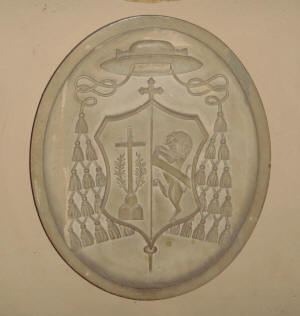
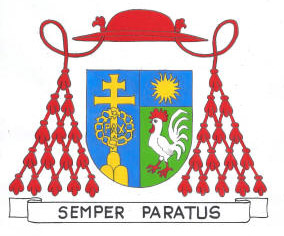
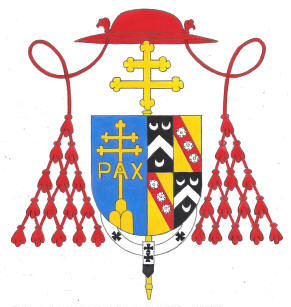
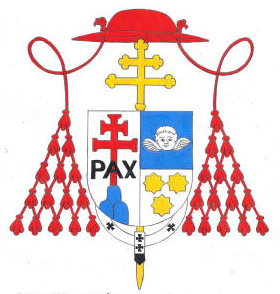
Chiaramonti CORRECTION Chiaramonti Pius VII0001

Gregory Cardinal Chiaramonte, OSB (later Pope Pius VII)

pitra_stemma2a

Jean Cardinal Pitra, OSB

Maria Nova card Schiaffino stemma

Placido Cardinal Schiaffino, OSB Oliv

Ganglbauer manteled0001

Celestine Cardinal Ganglbauer, OSB (Archbishop of Vienna)

SEP28 Gasquet

Aidan Cardinal Gasquet, OSB (Vatican Archivist)

DUSMET GIUSEPPE BENEDETTO

Bl. Giuseppe Cardinal Dusmet, OSB (Archbishop of Catania)

COA_cardinal_HU_Vaszary_Ferenc_Kolos2

Kolos Cardinal Vaszary, OSB (Primate of Hungary)

2015 Saraiva 07051845

Francisco de S. Luiz Cardinal Soraiva, OSB (Patriarch of Lisbon)

NOTE: Cardinal Soraiva also had a version of his arms with a galero but also used the triple tiara as was customary for the Patriarchs of Lisbon until very recently.

SERAFINI DOMENICO 05031918

Domenico Cardinal Serafini, OSB

Schuster design0001CCC

Ildephonse Cardinal Schuster, OSB (Abbot of St. Paul Outside-the-Walls and later Archbishop of Milan)

BB-05 SEREDI0001

Justinian Cardinal Seredi, OSB (Primate of Hungary)

Coat_of_arms_of_Joaquín_Anselmo_María_Albareda_y_Ramoneda.svg

Joachim Cardinal Albareda y Ramoneda, OSB (Vatican Librarian)

51CS) Stemma Card. Gut Benno Walter (1897-1970)

Benno Cardinal Gut, OSB

Image 3

Basil Cardinal Hume, OSB (Archbishop of Westminster)

archbishop-hans-hermann-cardinal-groer-of-vienna-1986-1995

Hans Herman Cardinal Groer, OSB (Archbishop of Vienna)

88155b

Paul Augustine Cardinal Mayer, OSB

Abbot-General of the Norbertines

abgen

The armorial bearings of the newly elected Abbot-General of the Order of Canons Regular of Prèmontrè (aka the Norbertines) the Most Rev. Josef Wouters, O.Praem., former abbot of Averbode. This coat of arms was originally designed by Luc Duerloo and contains charges on a fess normally associated with the Community at Averbode with the addition of personal symbols (the lance head and plow blade). The impalement here is with the arms of the Order. I understand that, as Abbot-General, he has decided to use some other arrangement which, oddly, combines the symbols for Averbode with the arms of the Order and omits any personal symbols whatsoever.

abgen2

+Rt. Rev. Giles Hayes, OSB R.I.P.

GILES5

The Right Reverend Giles Hayes, OSB (79) the Tenth Abbot of St. Mary’s Abbey in Morristown, New Jersey (founded in 1884 as St. Mary’s Abbey in Newark, a daughter house of St. Vincent Archabbey in Pennsylvania and later moved to Morristown) passed away on March 7, 2018.

He was elected Abbot in 2006 at which time he commissioned me to design and execute his abbatial coat of arms. He led the community until 2014.

The arms of the Abbey (in the first and fourth quarters above) are clearly based on those of the community’s motherhouse.

May he Rest in Peace.

Archabbots of St. Vincent

St. Vincent Archabbey in Latrobe, Pennsylvania, the oldest monastery in the United States, was founded in 1846 by monks from St. Michael’s Abbey in Metten, Bavaria under the leadership of Fr. Boniface Wimmer. They came to Pennsylvania funded by the Ludwigs-Missionverein, an organization started by the King Ludwig I of Bavaria to minister to German immigrants throughout the world.

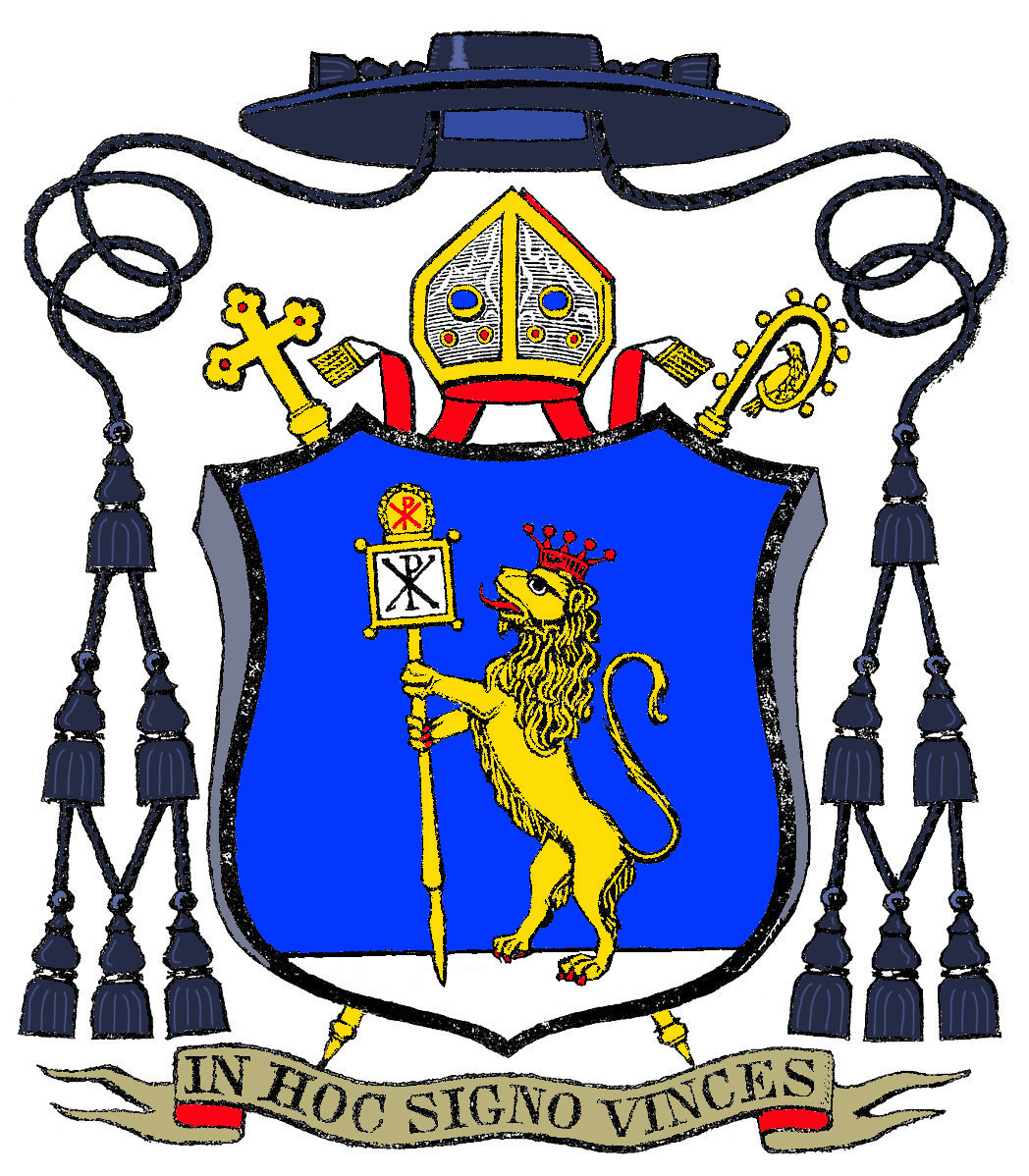
When the community had grown large enough to be elevated to the status of an independent abbey in 1855 it was decided to designate it an archabbey and Father Boniface was named Archabbot for life by Bl. Pius IX. His coat of arms (below) looks to be based in a quartering of the arms of the royal family of Bavaria, the House of Wittelsbach. The lion holding the banner of Christ was used not only by Archabbot Boniface as his coat of arms but also by the community as the heraldic symbol of the archabbey. It seems as though Wimmer’s first three successors, Archabbot Andrew Hintenach (1888-1892), Archabbot Leander Schnerr (1892-1918) and Archabbot Aurelius Stehle (1918-1930) also used this coat of arms. I have not been able to locate any other coats of arms for them.

Coat_of_Arms_of_Archabbot_Boniface_Wimmer2a

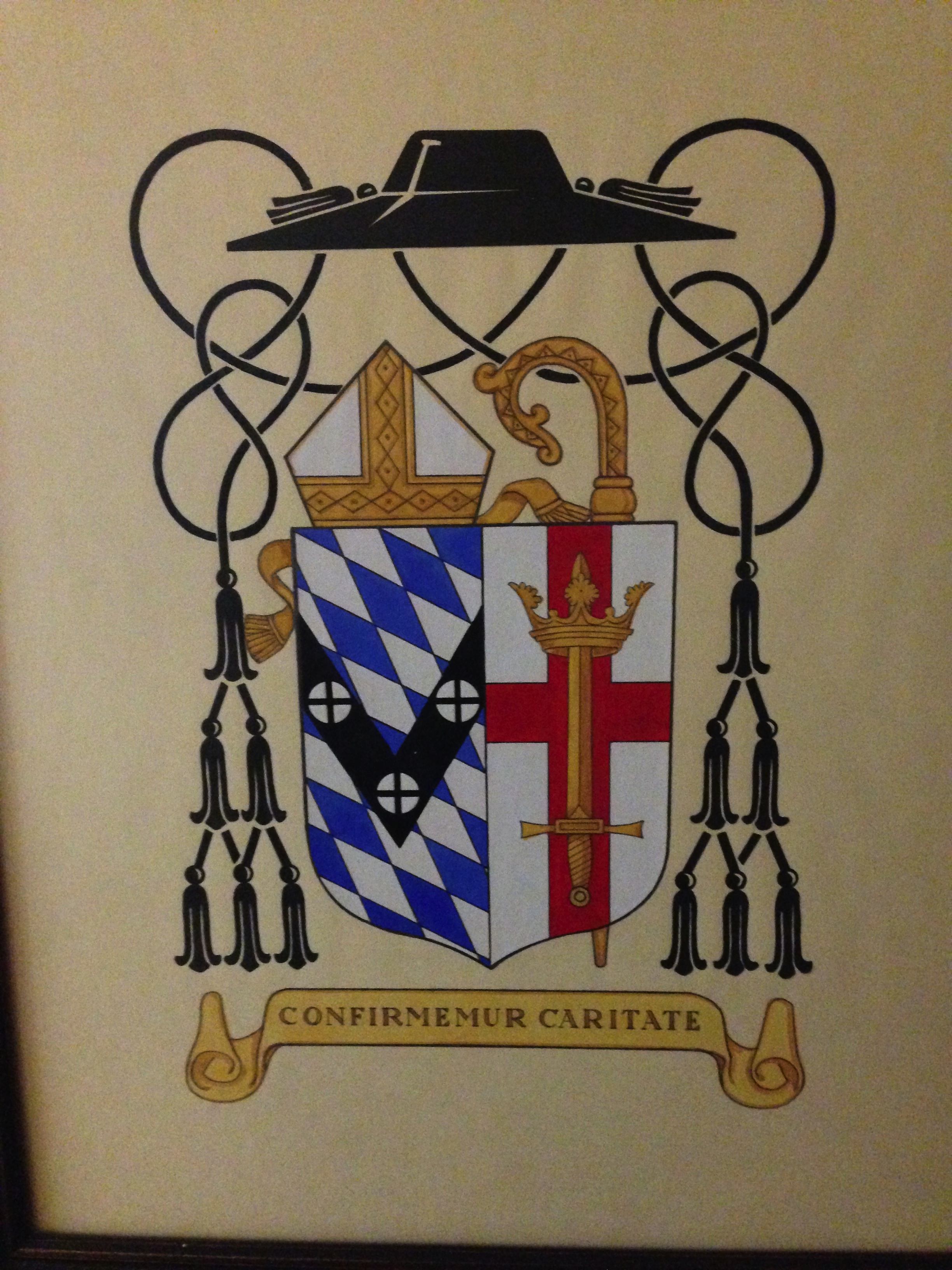
In 1930 with the election of St. Vincent’s fifth Archabbot, Alfred Koch (1930-1949), things changed. At that time the community decided to adopt a corporate coat of arms, which borrowed the blue and white fusils in bend from another Wittelsbach quartering and took the three plates on a black fess from the arms of William Penn, turned the fess into an inverted chevron (to create the letter “V” for “Vincent”) and charged the three plates with Benedictine crosses. Archabbot Alfred impaled this with a personal coat of arms. Thereafter, his successors did likewise.

Image 26

Archabbot Dennis Strittmatter (1949-1963)

Image 33

Coadjutor Archabbot Rembert Weakland (1963-1967) later Abbot-Primate and Archbishop of Milwaukee

Image 31

Archabbot Egbert Donavan (1967-1979)

Image 29

Archabbot Leopold Krul (1979-1983)

Image 37

Archabbot Paul Maher (1983-1990)

Image 35

Archabbot Douglas Nowicki (1991-present)

Image 5

During the tenure of Archabbot Egbert Bl. Paul VI changed the customary rules governing the external ornaments of prelates indicating that the mitre was no longer to be used in coats of arms. In addition, he called for the discontinuation of the crozier in arms of bishops. The crozier used to be included in the achievements of bishops in addition to the episcopal cross. Paul VI indicated in was the cross alone that would continue to be used in the arms of bishops and that the crozier should be excluded. This was interpreted by some, wrongly, to mean the crozier should no longer be used in the arms of abbots as well. However, it is the veiled crozier, not the galero, which indicates the rank of abbot in heraldry. Archabbots Leopold and Paul were advised incorrectly to leave the crozier out of their achievements. It was, however, restored to use in the coat of arms of Archabbot Douglas which was designed by me.

Abbot of Averbode

The Right Reverend Marc Fierens O.Praem. will be blessed and installed as the 53rd Abbot of Averbode, Belgium on March 11. This design was devised by the Abbot in consultation with with someone very well versed in heraldry. The drawing is by Prisca Van Dessel.

Averbode

It has long been customary for the Abbots of Religious Orders that wear a white or mostly white habit to use an abbatial galero that corresponds to the color of their habit. Since the Praemonstratensians wear a habit which is entirely white their abbots have traditionally used a white galero.

Personally, I have never agreed with this tradition. The color of the galero does not have to correspond with what is actually worn. Rather, in heraldry, color as well as number of tassels is an indication of rank. For example, bishops and archbishops use a green galero. This has its origin in the belief that the original color worn by bishops was green. However, when Roman purple was later adopted by bishops for their manner of dress the galero, which is after all symbolic, remained green for bishops and archbishops in heraldry.

Indeed, abbots do not, nor have they ever, wear a galero! It’s use in their heraldic achievements is purely symbolic. This is a further reason that it need not correspond to the color of their habit. The black galero with 12 tassels indicates the bearer is a Religious Superior, in this case an abbot, regardless of what we wears. The galero need not indicate the Order to which he belongs, just his rank. In abbatial heraldry it is the veiled crozier which indicates the arms are those of an abbot because the black galero with 12 tassels may be used by any Major Religious Superior of any Order, Institute or Congregation, as well as by secular Vicars General and Vicars Episcopal. Similarly, the galero that indicates the armiger is a priest is black with 2 black tassels regardless of whether the bearer is a secular clergyman or a member of a Religious Community. Franciscan priests do not use a brown galero, Sylvestrine priests do not use a blue galero,  Dominican priests do not use a white galero, etc. Nevertheless, among the Canons Regular of Premontré the canons, like their abbots, do indeed make use of a white galero.

I may not be in favor of it but it is, regardless of my personal opinion, a long-standing tradition in heraldry and done on a regular basis. The length of time this custom has been observed has made it into the commonly accepted practice. My contrary opinion is but wishful thinking on my part. I wish it otherwise and I have good reasons to support that opinion. Alas, it is not and I have to live with disappointment.

+Rt. Rev. Paul Maher, OSB: RIP

SVAA006

Archabbot Paul R. Maher, O.S.B., the tenth Archabbot of Saint Vincent Archabbey, Latrobe, Pennsylvania died Thursday, June 29, 2017, the Solemnity of Ss. Peter & Paul. He was 91 years old. A native of Latrobe, Pennsylvania, he served as Archabbot from 1983 until 1990.

Archabbot Paul received his early schooling in Latrobe, where he attended Holy Family School and was an altar server in Holy Family Parish. Having completed elementary school, he went to Saint Vincent Preparatory School for his secondary education. He graduated from Saint Vincent Prep in 1943, in the middle of the Second World War. Just turned 18 years old, he joined the U.S. Army Air Corps. For the next two years he served in the European Theater as tail gunner on a B-24 bomber. He flew 21 combat missions over southern Germany and Austria and was honorably discharged at the end of the war.

The influence of his older brother William, who had become a diocesan priest, and his older sister Rita, who became a Religious Sister of Mercy nun, helped him reach the decision to study for the Benedictine priesthood. In 1945 he returned to Saint Vincent and began his studies at Saint Vincent College as a candidate for the Benedictine Order. In 1947 he was admitted to the Order as a novice and made his simple profession of monastic vows on July 2, 1948. He professed solemn vows three years later, on July 11, 1951.

Archabbot Paul received his A.B. Degree from Saint Vincent College in 1950 and immediately began his studies of theology in Saint Vincent Seminary. In 1951 Archabbot Denis Strittmatter, O.S.B. sent the young Benedictine brother to Rome to complete his theological studies at the Pontifical Atheneum of Sant’ Anselmo. Two years later, he was ordained to the priesthood by Bishop Placido Nicolini, O.S.B., at the Basilica of Saint Francis in Assisi on June 21, 1953. After ordination, he continued graduate studies at Sant’ Anselmo for another four years, earning a Ph.D. in philosophy in 1957.

Upon completion of his doctorate, Father Paul returned to Saint Vincent, where he taught philosophy in the College and Seminary from 1957 to 1966, serving as chairman of the College’s Department of Philosophy from 1961 to 1966. During his years of teaching at Saint Vincent, he also served as moderator of one of the College’s residence halls (1958 to 1960), socius (superior) of the monastery’s junior monks (1960 to 1963), and vice rector of Saint Vincent Seminary (1963 to 1966).

In 1966, Archabbot Paul was named prior (superior) of Saint Vincent’s mission to China and a member of the faculty of Fu Jen Catholic University, Taiwan. He remained in Taiwan as monastic superior and university professor for seventeen years.

He was elected Archabbot on June 7, 1983, and on June 30, 1983, received the abbatial blessing in the Archabbey Basilica from Bishop William G. Connare of Greensburg, Pennsylvania. Among those present at his blessing were Archbishop Rembert Weakland of Milwaukee; Bishop Norbert Gaughan, auxiliary bishop of Greensburg; Bishop Rene Gracida of Corpus Christi, Texas; and the two retired Archabbots of Saint Vincent, Archabbot Egbert Donovan and Archabbot Leopold Krul.

Mark W. McGinnis, author of the book The Wisdom of the Benedictine Elders, described Archabbot Paul as a “very intelligent, highly experienced abbot who has the demeanor, gentleness, and openness of an ideal priest.” His brother monks would agree with this and add that he was an ideal monk: humble, generous, thoughtful of others, and devoted to the Benedictine life of prayer and work.

Following his retirement in 1990, Archabbot Paul became a parish assistant at Saint Benedict Church, Carrolltown, Pennsylvania, where he resided until 1996. He returned to the Archabbey that year to serve as guestmaster and archivist until 2009. Archabbot Paul was the son of the late William A. Maher and Edna G. (Hunt) Maher. He was one of twelve children, two of whom are currently residing in Latrobe.

He was a very humble man eschewing the use of pontificalia as he was entitled by his office. He only grudgingly agreed to have a coat of arms at the behest of the archivist of the community, the late Fr. Omer U. Kline, OSB. His coat of arms was designed in consultation with the late Br. Nathan Cochran, OSB of St. Vincent and alludes to the traditional Irish arms associated with the name Maher; his baptismal and monastic patron, St. Paul (the sword) and his missionary work via the double-barred Scheyern cross being used at St. Vincent as the “mission cross” given to those monks sent out into the mission fields. From a lack of correct heraldic custom the crozier (veiled or otherwise) was omitted from the achievement and the extra knots and loop of cords below the galero was a bit of license by the artist who wished to fill the space left by the lack of a crozier. The motto, “Resonare Christum” (Echo Christ) was also used by the late John Cardinal Wright of Pittsburgh.

May he rest in peace.


Benedictine Abbot Primate

Polan copy

Last September the Benedictine Confederation, more commonly referred to as the Order of St. Benedict, elected its 10th Abbot Primate since the institution of that office by Pope Leo XIII in 1893. They elected the fourth American monk to hold that office by choosing the Abbot of Conception Abbey in Missouri, Rt. Rev. Gregory J. Polan, OSB (67). He succeeded Notker Wolf and became Abbot of Sant’Anselmo and the Most Rev. Abbot Primate on September 10, 2016.

Seven of his eight predecessors bore a coat of arms as abbots and as Abbots Primate. Two of the Americans, Jerome Theisen, OSB a monk of St. John’s in Collegeville and Marcel Rooney, OSB also a monk of Conception chose not to be armigerous either as abbot or as Abbot Primate. (the fourth American was Rembert Weakland, OSB a monk of St. Vincent Archabbey in Pennsylvania and the Archbishop-Emeritus of Milwaukee)

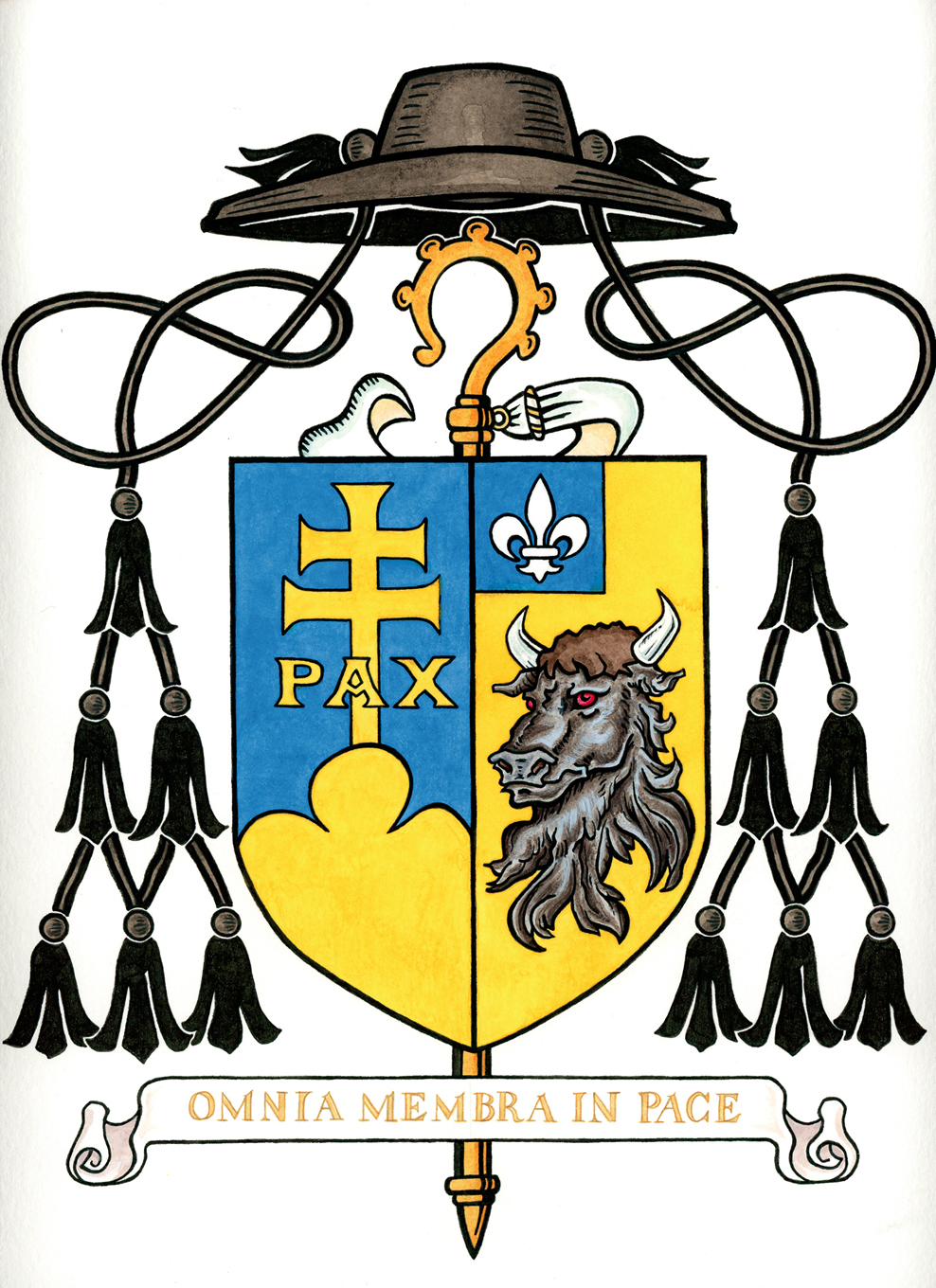
At the time he became Abbot of Conception in 1996 Abbot Gregory wasn’t particularly interested in a coat of arms. But the community had a heraldic tradition and one of the monks there devised arms for him to assume keeping it very simple. The plain gold field with the single charge of a black bull’s head is a symbol associated with the abbot’s family. This was then quartered with the arms of the abbey.

Upon his election as Abbot Primate the same monk who originally designed the arms decided to prepare something the abbot could use as Abbot Primate. The personal arms are “Or, a bull’s head erased Sable; on a canton Azure a fleur-de-lis Argent”. The addition of the small augmentation of the blue canton charged with a silver fleur-de-lis, borrowed from the arms of Conception Abbey, are employed as a way of paying homage to the abbot’s Motherhouse by augmenting his personal arms rather than changing the design entirely. These personal arms are then impaled with the arms used by the Order of St. Benedict, “Azure, issuing from a trimount a patriarchal cross, overall the word “PAX” all Or“. Note that sometimes the trimount is depicted as Vert (green) rather than Or (gold).

The shield is ensigned with the usual ornaments of an abbot: black galero with twelve black tassels and a veiled crozier. The previous Abbot Primate, Notker Wolf, commissioned an artist who depicted his arms with twenty black tassels. The thinking was that, as the head of the Order the Abbot Primate should have an ornament that indicated a higher rank like an archbishop’s hat having twenty tassels instead of the twelve used by other bishops. The problem with that line of reasoning is that the Abbot Primate is not the Abbot General of the Order of St. Benedict. He is merely a figurehead; a nominal “head” but really just a visible figure to promote communication within the Order and to act as a liaison between the Order as a whole and the Holy See. Leo XIII didn’t like the decentralized nature of the Benedictines. In reality each house under its own abbot is autonomous. What binds Benedictines together is that they follow the Holy Rule of St. Benedict. Eventually, houses began to band together into federations, now called Congregations, and each of those Congregations, some of which are international but many of which are structured along national lines, adopts Constitutions and a customary observed by all the houses within the Congregation. In addition, they elect a Praeses, or Abbot President, who acts as their canonical superior with jurisdiction. The Abbot Primate, however, does not have jurisdiction over the whole Order the way a Superior General does in other Religious Orders. So, he is merely a figurehead elected by the Abbots gathered in Congress.

Not possessing a higher rank, or greater authority, or jurisdiction over all Benedictines it makes no sense for the Abbot Primate’s galero to suggest so. The Abbot Primate remains an abbot like any other, indeed during his tenure (which is a four year term renewable by re-election) he is the abbot of the Abbey of Sant’Anselmo on the Aventine Hill housing the Anselmianum where students study about the sacred liturgy. Outside of heraldry the Abbot Primate is accorded certain honors to mark his position as the Primate, namely, he is permitted to wear the purple zucchetto instead of a black one and he is addressed as “Most Reverend” instead of the usual “Right Reverend” used by other abbots.

Bruno Heim mentions in his book, Heraldry In The Catholic Church that the Church never made provisions for Archabbots, Abbots General or Abbots Primate to use a galero different from other abbots. However, some authors argue that it is Archabbots (a title of honor that confers no greater jurisdiction or powers) should use a galero with twenty tassels like archbishops. The point is open to debate. I have always believed archabbots should use the galero with twenty tassels but I know of no instances where one actually does so. Therefore, despite the compliment paid to him by the artist who depicted Abbot Primate Notker’s coat of arms Abbot Primate Gregory’s arms use the traditional galero of an abbot with twelve tassels.

Both the design and the very nice artwork were done by Dom Pachomius Meade, OSB of Conception Abbey in Missouri.

Abbot of Conception, Missouri

On January 15 the Most Rev. James Johnston of Kansas City-St. Joseph, Missouri bestowed the abbatial blessing on the Rt. Rev. Benedict Neenan, OSB, the tenth abbot of Conception Abbey who was elected by the members of his community in November, 2016 to succeed Abbot Gregory Polan who had been elected as the Abbot Primate of the Benedictine Confederation.

0120coatofarms-abbotneemanosb

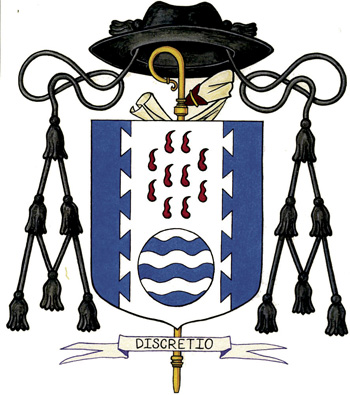
Abbot Benedict’s coat of arms, assumed upon election, are blazoned and explained as:

“Blazon: A field azure, a Canadian pale argent dovetailed, in chief ten goutte de sang (gules) (palewise two, three, three, two), in base a fountain (a roundle barry wavy argent and azure).”

The main charges of the shield (escutcheon) have particular significance for Abbot Benedict and his ministry to the monastic community. The circle with blue and white waves is called a fountain, and symbolizes the abbot’s hometown, Kansas City, the City of Fountains. The 10 blood droplets (goutte de sang) above it represent the self-sacrificial office of the abbot for the community. Ten droplets signify that he is the tenth abbot of Conception Abbey, which was founded in 1873. Abbot Benedict holds a doctorate in Church history and the two main charges —the fountain and the blood droplets — taken together evoke the Paschal Mystery that birthed the Church and which is the center of all human history, for “This is the one who came through water and blood, Jesus Christ, not by water alone, but by water and blood.” (1 John 5:6) Again, both the fountain and blood drops suggest baptism; the monastic life is often called a “second baptism” due to its deepening of the commitment to baptismal vows.

The white (argent or silver) division of the shield vertically is bordered in a dovetail pattern, calling to mind furniture joints. This alludes to the abbot’s training as a woodworker in Bavaria. The blue (azure) on either side of the central white composition represents the Blessed Virgin Mary. A traditional devotional image of the Virgin is the Madonna of Mercy, in which she spreads her mantle as protection over a group of the faithful. This symbolizes the patroness of the abbey’s protection over its monks.

-from the website of “The Catholic Key“.

Abbot Elias Lorenzo, OSB

The delegates to the general chapter of the American-Cassinese Congregation, from June 19-24, 2016 elected Father Elias Lorenzo OSB, monk of St. Mary’s Abbey, Morristown, NJ as their new Abbot-President (Abbot-Praeses). For seven years Abbot President Elias had been Prior at Collegio Sant’Anselmo, Rome. Thursday, June 23, 2016, the Rt. Rev. Douglas R. Nowicki OSB, Archabbot of St. Vincent Archabbey, Latrobe, PA, motherhouse of the congregation, conferred the abbatial blessing during the chapter. Abbot Elias returned to Sant’Anselmo for the Congress of Abbots, September 2016 and thereafter he will reside in Morristown.

elias3m


Shortly after his election, Abbot Elias contacted me to ask that I assist him in designing his coat of arms. The explanation I also provided for him is:

The shield is divided by a line shaped like a chevron. This creates the general shape alluding to a mountain, in this case Mount Carmel, the mountain associated with the prophet Elijah from whom the name Elias is derived. The large tongue of fire in the center of the lower portion of the shield (referred to as “in base”) combined with the mountain allude to St. Elias.

In addition, the blue and silver (white) checked pattern also has a multi-layered meaning. The American-Cassinese Congregation was founded by Benedictines from St. Michael’s Abbey in Bavaria. The motherhouse of the Congregation, St. Vincent Archabbey in Pennsylvania, makes use of the blue and silver fusils (a kind of elongated diamond pattern) from the coat of arms of Bavaria in its own coat of arms. Several other monasteries in the Congregation which are daughter houses or grand-daughter houses of St. Vincent also make use of this pattern. One such abbey is St. Mary’s in Morristown, New Jersey. At this monastery Abbot Elias entered monastic life, made his profession of vows and was ordained. In his coat of arms the blue and silver (white) fusils have been turned sideways forming a grid of blue and white squares or checks. The grid pattern suggests the gridiron on which St. Lawrence was roasted alive as the means of his martyrdom. This is an allusion to the Abbot’s surname, “Lorenzo” which in Italian means “Lawrence”. The grid of blue and white squares combined with the fire represents St. Lawrence while at the same time the blue and white squares are a slightly differenced reference to the coat of arms of St. Mary’s Abbey as well as Bavaria in general as the homeland of the Congregation’s founders.

At the center of the flame there is a red rounded cross. This cross is taken from the coat of arms of Sant’Anselmo in Rome where, for seven years before his election as Abbot-President, the armiger was serving as Prior of the monastic community.

Above the chevron in the upper portion of the shield (referred to as “in chief”) there are two blue crescents. The crescent has long been associated with Our Lady in particular under her title of the Immaculate Conception. That title is also the one by which Mary is the Patroness of the United States of America. While the Congregation is made up of American monasteries as well as some communities outside the U.S. it was, nevertheless, founded in the U.S. so the reference to the patroness of that country is fitting. In addition, crescents appear in the coat of arms of St. Mary’s Abbey and the coat of arms of the Delbarton School, the Abbey’s principal apostolate, both of with which Abbot Elias is closely associated.

The motto below the shield is taken from Luke 1:37 and is translated as, “Nothing is impossible with God”.

The shield is also ensigned with those external ornaments that indicate the bearer is an abbot. The gold (yellow) crozier is placed vertically behind and extending above and below the shield. Attached to the crozier is a veil or sudarium. Widely used in the Middle Ages it is rarely seen in actual use today. It dates from a time when abbots were already making use of the crozier as a sign of their authority but had not been granted the privilege of full pontificals which would have included liturgical gloves. The purpose of the sudarium was originally practical; it shielded the metal of the crozier from dirt and perspiration from the hands. Later, it became merely symbolic and has been retained in heraldry as distinguishing the crozier of an abbot. The use of pontificals by an abbot is regulated in the Motu Proprio, “Pontificalia Insignia” of June 21, 1968 (Acta Apostolicae Sedis 60 (1968) 374-377 Not 4 (1968) 224-226). Because abbots make use of the crozier they may use it as an external ornament in their coats of arms. The prohibition against the use of croziers in heraldry found in the Instruction of the Secretariat of State of the Holy See, “Ut Sive” of 31 March, 1969 (Acta Apostolicae Sedis 61 (1969) 334-40) does not apply to abbatial heraldry. Above the shield is the ecclesiastical hat, called a galero which, in heraldry, replaces the martial helmet, mantling and crest. The galero is black with black cords pendant from it and twelve black tassels arranged in a pyramid shape on either side of the shield. “The hat with six pendant tassels (green, purple or black) on each side is universally considered in heraldry as the sign of prelacy. It, therefore, pertains to all who are actually prelates…Prelates who are regulars do not, as a rule, wear purple. (Abbots’) ceremonial garb is normally black and, in consequence, their heraldic hats are also black.” (Heim, Bruno B., Heraldry in the Catholic Church, 1978, page 114).

St. Benedict’s Abbey, Still River

StillRiver4

The monastic community of St. Benedict in Still River, Massachusetts decided recently to modify their existing coat of arms which was originally designed by the late, great, Dom Wilfrid Bayne, OSB of St. Anselm’s Abbey in Rhode Island. The coat of arms was designed some sixty plus years ago for the St. Benedict Center on Bow and Arrow streets in Cambridge, MA which was the origin of the community that eventually grew into St. Benedict’s Abbey today. There was originally no external ornament in the achievement. The community simply bore a shield with the coat of arms.

The decision was undertaken recently to add an abbatial crozier as an external ornament to bring the achievement into conformity with what is usual for a monastery with the rank of Abbey. While it is the usual custom to depict a sudarium, or veil, pendant from the crozier in the coat of arms of an abbot usually when depicting the arms of an abbey, a corporate body, the sudarium is omitted.

Mother M. Angelica, RIP

On Easter Sunday, March 27, 2016, Mother M. Angelica Rizzo, PCPA passed away. She was the Abbess of the Poor Clares of Perpetual Adoration in Alabama and the Foundress and first CEO of EWTN, the global Catholic television and radio network.

Several years ago she adopted a coat of arms. (below in black and white and in color) It is significant in that despite Poor Clare abbesses not making use of a crozier they are, nevertheless, entitled to use one as a heraldic emblem with the veil attached correctly. In addition, the chaplet surrounding the shield indicates the arms of a Professed Religious and the crown of thorns surrounding the shield is also common in the heraldic achievements of female religious.

May she rest in peace.

w006a  rita

Abbess of Regina Laudis

The coat of arms used by the Third Abbess of the Abbey of Regina Laudis in Connecticut, Rev. Mother Lucia Kuppens, OSB. She was elected February 1 of 2015 and received the abbatial blessing on the following May 10th from the Archbishop of Hartford.

AbbesLucia

The Abbess describes the design (executed by Mother Alma Egger, OSB) as follows:

The book symbolizes my maternal ancestry, one hundred percent Irish, from Galway in the west of Ireland. A strong Celtic influence permeated my home. From these roots I received my love of the word, of poetry, of learning, education, culture, and music. The book could be interpreted to represent Scripture, or The Rule, literature itself or the works of Shakespeare, the particular focus of my doctoral dissertation. On a practical level, the book refers to much of my work in the Abbey, which includes supporting others in their studies, hosting student groups, directing the Monastic Internship Program, and when called for, writing about the Abbey. My Clothing and Profession ceremonies were both on the Advent feast of “O Sapientia” in celebration of Wisdom. The book is open, conveying the imagination and intellect open to the Wisdom of the Holy Spirit.

The roof truss at the top of the shield symbolizes my paternal ancestry. The dominant national identity in my father’s family was Alsatian, from northeastern France, just a stone’s throw from the German border. They were a people who suffered and survived much in war, as their borders continually changed. From my father’s family comes a rootedness in the earth, an appreciation of manual work, a respect for practical solutions and love for what is essential in life. From him comes my attraction to the other main area of my monastic service, the Cellarer’s Office. Until fairly recently my father worked all over the Abbey helping repair and build things. Through my involvement with a Lay Oblate Community (The Closed Community) prior to entering the Abbey, I had many experiences of participating in building on the Abbey land, notably the Chapter House on the Hill. Since 2009 I have been working with others to renovate the original monastic buildings and envision this being a major work for the whole community for the next ten years.

Continuity with Lady Abbess and Abbess David is represented by the wavy line in the center that marks the pine hill, which was on both of their shields as well. The hill is the central feature of our land. It is where our church was built and it represents the spiritual center and heart of the monastery. The three stars, which also appeared on Abbess David’s shield represent the continued commitment to build the triadic nature of our authority structure composed of Abbess, Prioress, and Subprioress.

The consecration lamp is an ancient and rich symbol of consecrated virginity and therefore seemed an apt symbol for representing the light of St. Lucy, Virgin and Martyr. Each nun receives such a lamp, made by our potter, at the time of her Consecration, when the church bestows its blessing and affirmation on the fruitfulness of her vows. The burning oil lamp symbolizes the gift of self, consumed in the fire of love. Two flames rise from this lamp symbolizing for me that the gift of one’s love to Christ is never solitary, but is given in relationship to others. The consecration lamp unifies the whole shield, mediating between the speculative and practical polarities of my genealogy and bringing our attention to the meaning of the motto, which is taken from the Office of St. Scholastica, sister of St. Benedict and a consecrated virgin. As told in the Dialogues of St. Gregory the Great, one night she prevailed on her brother to disobey his Rule and instead of returning to his monastery, stay with her talking and praying. Though she did not tell him why, she knew her death was near. He refused her, but her tears of supplication to God caused a sudden storm that prevented St. Benedict from leaving. Thus in that moment, she prevailed over him and St. Gregory says of her, ‘Plus potuit quia plus amavit,’ which is translated: ‘She was able to do more because she loved more.’ The banner of the motto embraces the whole shield and all the symbols on it, signifying that all we do is possible only through love and the grace of God.

Why the decision to use a simple oval shield alone without the external ornament of the veiled crozier pale wise behind the shield is a mystery. It is the only heraldic ornament that would mark this as the coat of arms of an abbess. Without it, these are simply the arms of a woman and a motto. Similarly, the previous abbess’ coat of arms used no crozier but employed supporters! It causes one to wonder if there is a lack of proper heraldic knowledge amongst the nuns. It is a shame they have not been advised better.

The abbey itself has a fine coat of arms designed and emblazoned by the late great practitioner of the science and art of heraldry, Dom Wilfrid Bayne, OSB, a monk of Portsmouth Abbey in R.I.

crestTrans